As with every Sam Harris podcast, you might want to skip the first five minutes, and turn up the speed – but though this is positied as a conversation about AI, there is lots her (especially in the first interviews) about the origins of systems thinking / complexity / cybernetics.
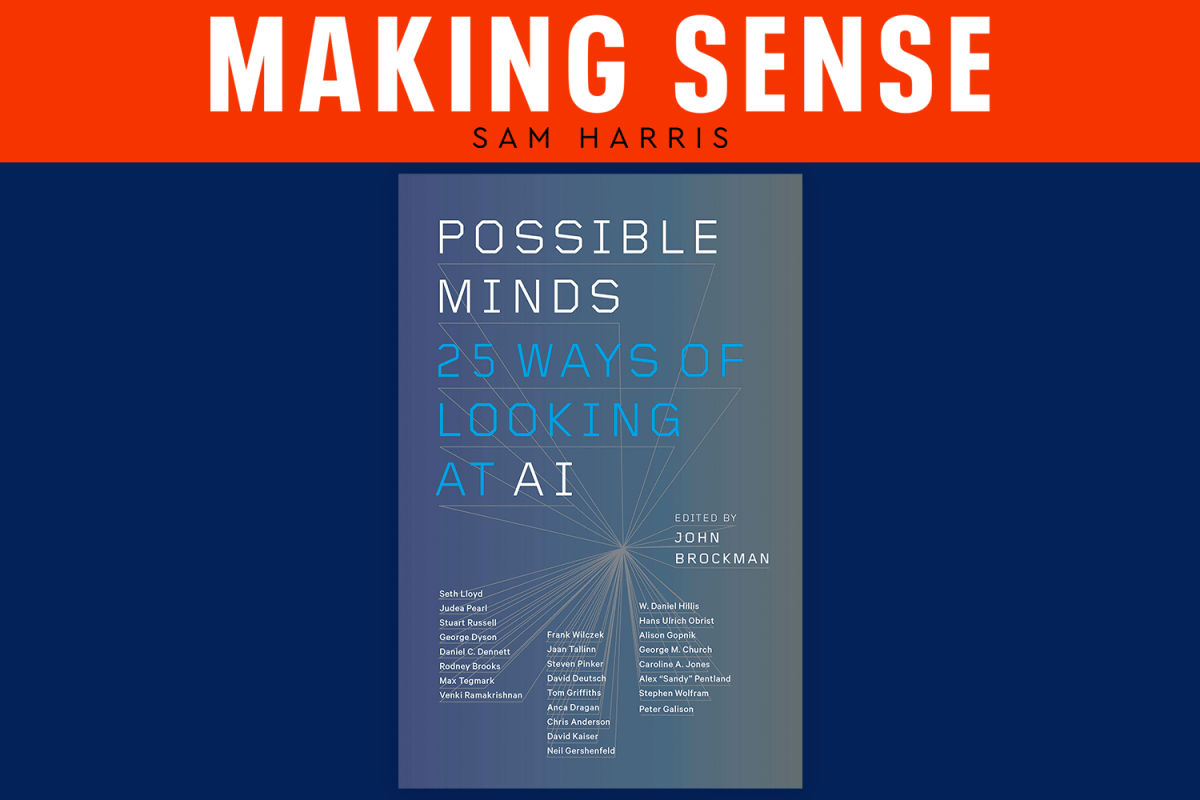
In this episode of the Making Sense podcast, Sam Harris introduces John Brockman’s new anthology, “Possible Minds: 25 Ways of Looking at AI,” in conversation with three of its authors: George Dyson, Alison Gopnik, and Stuart Russell.
Alison Gopnik is a developmental psychologist at UC Berkeley and a leader in the field of children’s learning and development. Her books include The Philosophical Baby.
Stuart Russell is a Professor of Computer Science and Engineering at UC Berkeley. He is the author of (with Peter Norvig) of Artificial Intelligence: A Modern Approach, the most widely used textbook on AI.
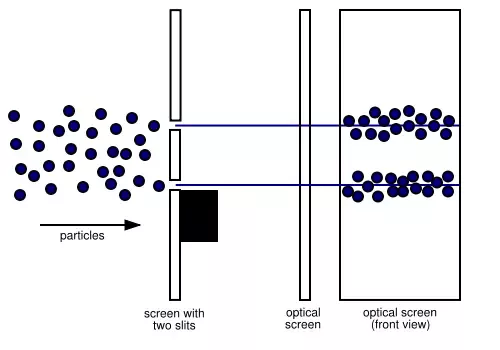
According to Barad’s theory of agential realism, the universe comprises phenomena, which are “the ontological inseparability of intra-acting agencies”. Intra-action, a neologism introduced by Barad, signals an important challenge to individualist metaphysics. For Barad, phenomena or objects do not precede their interaction, rather, ‘objects’ emerge through particular intra-actions. Thus, apparatuses, which produce phenomena, are not assemblages of humans and nonhumans (as in actor-network theory). Rather, they are the condition of possibility of ‘humans’ and ‘non-humans’, not merely as ideational concepts, but in their materiality. Apparatuses are ‘material-discursive’ in that they produce determinate meanings and material beings while simultaneously excluding the production of others. What it means to matter is therefore always material-discursive. Barad takes her inspiration from physicist Niels Bohr, one of the founders of quantum physics. Barad’s agential realism is at once an epistemology (theory of knowing), an ontology (theory of being), and an ethics. For this, Barad employs the term onto-epistemology. Because specific practices of mattering have ethical consequences, excluding other kinds of mattering, onto-epistemological practices are always in turn onto-ethico-epistemological.
Much of Barad’s scholarly work has revolved around her concept of “agential realism,” and her theories hold importance for many academic fields, including science studies, STS (Science, Technology, and Society), feminist technoscience, philosophy of science, feminist theory, and, of course, physics. In addition to Bohr, her work draws a great deal on the works of Michel Foucault and Judith Butler, as demonstrated in her influential article in the feminist journal differences, “Getting Real: Technoscientific Practices and the Materialization of Reality.”
Barad’s original training was in theoretical physics. Her book, Meeting the Universe Halfway, (2007), includes a chapter that contains an original discovery in theoretical physics, which is largely unheard of in books that are usually categorized as ‘gender studies’ or ‘cultural theory’ books[citation needed]. In this book, Barad also argues that ‘agential realism,’ is useful to the analysis of literature, social inequalities, and many other things. This claim is based on the fact that Barad’s agential realism is a way of understanding the politics, ethics, and agencies of any act of observation, and indeed any kind of knowledge practice. According to Barad, the deeply connected way that everything is entangled with everything else means that any act of observation makes a “cut” between what is included and excluded from what is being considered. Nothing is inherently separate from anything else, but separations are temporarily enacted so one can examine something long enough to gain knowledge about it. This view of knowledge provides a framework for thinking about how culture and habits of thought can make some things visible and other things easier to ignore or to never see. For this reason, according to Barad, agential realism is useful for any kind of feminist analysis, even if the connection to science is not apparent.
Barad’s framework makes several other arguments, and some of them are part of larger trends in fields such as science studies and feminist technoscience(all can be found in her 2007 book, Meeting the Universe Halfway):
She defines agency as a relationship and not as something that one “has.”
The scientist is always part of the apparatus, and one needs to understand that his/her participation is needed in order to make scientific work more accurate and more rigorous. This differs from the view that political critiques of science seek to undermine the credibility of science; instead, Barad argues that this kind of critique actually makes for better, more credible science.
She argues that politics and ethical issues are always part of scientific work, and only are made to seem separate by specific historical circumstances that encourage people to fail to see those connections. She uses the example of the ethics of developing nuclear weapons to argue this point, by claiming that the ethics and politics are part of how such weapons were developed and understood, and therefore part of science, and not merely of the “philosophy of science” or the “ethics of science.” This differs from the usual view that one can strive for a politics-free, bias-less science.
Nevertheless, she argues against moral relativism, which, according to Barad, uses science’s “human” aspects as an excuse to treat all knowledge, and all ethical frameworks, as equally false. She uses Michael Frayn‘s play, Copenhagen, as an example of the kind of moral relativism that she finds problematic.
She also rejects the idea that science is “only” a language game or set of fictions produced only by human constructions and concepts. Although the scientist is part of the “intra-action” of the experiment, humans (and their cultural constructs) do not have complete control over everything that happens. Barad expresses this point by saying, in Getting Real, that although scientists shape knowledge about the universe, you can’t ignore the way the universe “kicks back.”
Bob Horn still has his site: Bob Horn – which includes (for example) the very excellent “The Little Book of Wicked Problems and Social Messes – DRAFT” PDF amongst other systems murals.
Text from the info box on the mural tells the story
What is this?
Interactive mural of the history of the ideas of cybernetics and general systems
Prepared by by Robert E. Horn, Stanford University,
for the 50th Anniversary of the
International Society for the Systems Sciences
Sonoma State University, July 9-14, 2006
The Project. This project is an ongoing
process of creating an information mural
that illustrates the fundamental ideas in
the history of cybernetics and general
systems. It was created with the help of a
group of students in Dr. Debra
Hammond’s systems class at Sonoma
State University. On the mural are key
quotes from the history of the field,
pictures of individuals who are credited
with first formulating these ideas, and
announcements of the key books and
journals of the field. In addition,
important conferences and other
important events are noted. This mural is
approximately 15 feet in length and three
feet high.
How it was used at the conference.
Part of the process of creating the
info-mural was discovering the patterns
for the key threads of historical
development and then rendering these as
visual patterns. For that, I looked for
help from other conferees. During part
of the conference I stood near the mural
and conversed with those who are
interested and put their suggestions on
the mural. I also made a formal
presentation in one of the parallel
sessions.
Status. The mural is in Version.1.0.
At the conclusion of the UnSymposium in Times Square, New York we asked, what is your unmet need? What new knowledge and perspective would make the greatest difference in your practice?
We were told to bring forth real-life case studies that reveal how organizations from all sectors are building agile, resilient and conscious enterprises, not caught up in vendors selling products, but in pragmatic ways that you can apply in a practical manner in your own organization.
Bring your own topic or help solve a problem similar to one you are experiencing and gain a deeper understanding of RA’s core tools and frameworks, after the UnSymposium.”
Embark on a two-day exploration of designing organizations for the 21st century, with a program that’s built around experiential learning, critical discussion, and practical actions for your own organization -there will be something for everyone!
The Heidelberg’s City Convention Hall, located by the river Neckar. It is the most distinctive landmark of the Old Town district. Heidelberg has a long tradition of cultural and academic exchange of knowledge. If you have been there before you know, but if you haven’t Heidleberg Castle and the Old Bridge is unforgettable.
Neckarstaden 24, 69117 Heidelberg, Germany
Be a part of the community where you will discover pragmatic solutions !
Today’s post is a follow-up to an earlier post, Solving a Lean Problem versus a Six Sigma Problem: In today’s post, I am looking at “The Ashby Space.” The post is based on the works of Ross Ashby, …
My last post was a review of Mark Graban’s wonderful book, Measures of Success. After reading Graban’s book, I started rereading Walter Shewhart’s books, Statistical Method from the Viewpoint of Qu…
The weaker the average regulatory ability and the larger the average uncertainty of available regulators, the more requisite hierarchy is needed in the organization of regulation and control for the same result of regulation
[Node to be completed]
The statement of the Law of Requisite Hierarchy by Arvid Aulin, is followed by:
“. . . . [In other words], the lack of regulatory ability can be compensated to a certain extent by greater hierarchy in organization.”
(Cybernetic Laws of Social Progress, p. 115)
paper (pdf) 1978 http://pespmc1.vub.ac.be/books/Aulin-LawofRequisiteHierarchy.pdf
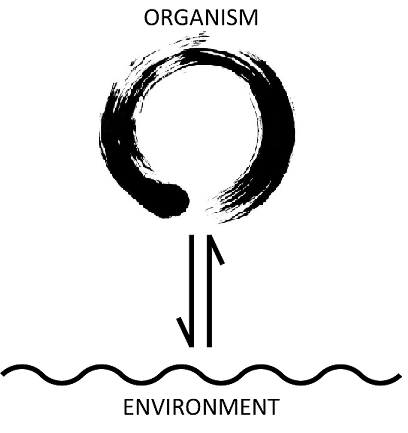
In today’s post, I am looking at the phrase “Organizational Closure” and the concept of autopoiesis. But before that, I would like to start with another phrase “Information Tight”. Both of these phrases are of great importance in the field of Cybernetics. I first came across the phrase “Information Tight” in Ross Ashby’s book, “An Introduction to Cybernetics”. Ross Ashby was one of the pioneers of Cybernetics. Ashby said: [1]Cybernetics might, in fact, be defined as the study of systems that are open to energy but closed to information and control— systems that are “information‐tight”.
This statement can be confusing at first, when you look at it from the perspective of Thermodynamics. Ashby is defining “information tight” as being closed to information and control. The Cybernetician, Bernard Scott views this as: [2]…an organism does not receive “information” as something transmitted to it, rather, as a circularly…
How can we design new services or strategies when the participation of marginalized stakeholders is vital to ethicality? How can we liberate people’s creativity so we can move from incremental improvements to more fundamental change?
To answer these questions, I have brought together insights from Russ Ackoff and Werner Ulrich to develop a new method that I call Critical Back-Casting.
Russ Ackoff, writing in the 1980s, is critical of organizations that focus on incremental improvements without ever asking whether they are doing the right thing in the first place. Thus, they are at risk of continually ‘improving’ the wrong thing, when they would be better off going for a more radical redesign. Ackoff makes two far-reaching prescriptions to tackle this problem. The first is participative co-creation: all parts of an organization should be involved in the redesign. This way, you can get whole-of-organization buy in for radical change, rather than the imposition of a top-down strategic plan. The second prescription is idealized design, and this represents a radical break from business-as-usual strategic planning.
Idealized design involves everybody in the organization working collectively to redesign it. However, rather than ask ‘how can we improve what we are doing?’, people are encouraged instead to imagine that their organization has ceased to exist, and they are on a task force to produce a design of something entirely new that will really meet the needs of citizens or customers. The task force only has to respect three constraints:
Technological feasibility – they can propose new technology, but it has to be possible to develop it (so no science fiction!).
Viability – when up and running, the system or service must be sustainable (initial investment costs can be disregarded though, as ideas always run ahead of investments).
Adaptability – the system or services must be capable of learning and adaptation into the future as things change.
The idea is to liberate people from the constraints of current assumptions and to stimulate creative thinking. While one might assume that different stakeholders will have very different visions of the ideal system or service, and will come into conflict, Ackoff says that this is not the case: there is invariably an overwhelming agreement on the ideal, with only relatively minor disagreements to resolve, and the consensus on the majority of issues generates sufficient trust for people to have confidence that remaining disagreements can be constructively addressed. My own experience suggests that Ackoff is right, and once the ideal design is generated, an action agenda can be created with practical steps toward implementation.
In modern management-speak, this approach is called ‘back-casting’ (starting with where you ideally want to be and then working backwards to the present day), and it is contrasted with ‘forecasting’, where people take what we have today as given and try to anticipate what will happen next. Ackoff’s books describe numerous examples of back-casting in practice, mostly in large multi-national industries, but also for city planning and other public sector change initiatives.
However, when I first read Ackoff’s work, I had some reservations. He talks about involving everyone in the organization, but in community contexts, participation usually needs to be much wider than formally constituted organizations, and this means facing up to the problem of marginalization. If marginalized stakeholders who are supposed to benefit from a service are not centrally involved in its design, the result can be something that is based on a simplified professional model of the typical service user, rather than accounting for the lived, diverse experiences of real people.
A way to address this is to draw on 12 questions, originally designed by Werner Ulrich (1994) in the context of empowering citizens to challenge professionally imposed designs. These questions can support both marginalized stakeholders and professionals in thinking through critical issues of governance and inclusion as they produce their ideal service or system design. My version of these questions, modified for use in back-casting, can be found below. I have used the word ‘service’, but it could equally well be ‘system’, ‘partnership’ or any other term that refers to a purposeful initiative. Because Werner Ulrich says that his questions stimulate critical thinking, I call their use with idealized design (and the three constraints listed earlier), Critical Back-Casting.
Here are the questions:
(1) Who or what should benefit from the service, and how?
(2) What should be the purposes of the service; i.e. what goals should it aim for in order to deliver to the beneficiaries?
(3) What should be the service’s key measures of success?
(4) Who should be seen as the key decision makers; i.e. have the authority to change who should benefit, what the purposes should be and how success should be measured?
(5) What components (resources, people, policies, etc.) should be under the authority of the decision makers?
(6) What is essential for delivery of the benefits and purposes, but should not be under the authority of the decision makers?
(7) Who, either in addition to or instead of the decision makers, should be involved in delivering the benefits and goals?
(8) What should count as expertise; i.e. who should be considered an expert and what should be their roles?
(9) What are the key factors that will guarantee (or increase the likelihood of) success?
(10) Who or what could be affected by the activities of the service; should the affected be represented in decision making, and (if so) how?
(11) To what extent should the affected be able to retain independence; i.e., opt out or neutralise the effects on them, and/or take actions of their own choosing?
(12) Upon what core values and assumptions should the service be based?
I have used Critical Back-Casting in approximately 20 projects, with various participants (e.g., homeless children, older people, children in residential care, people with mental health problems and many service providing stakeholders). Midgley (2000) provides a couple of detailed examples. Below, I offer several general reflections based on this experience.
Facilitation:
A facilitator is needed to make this work.
Once a facilitator has used the questions in several projects, they become internalized sufficiently to inform more free-form facilitation exercises, without the need to go through them systematically.
The questions:
For every question, 6-10 follow-up questions need to be asked to tease out details specific to the context.
The questions work equally well with professionals, ordinary citizens and people with marginalized identities who have had no previous experience of planning and management. Indeed, more frequently than not, ‘ordinary’ citizens and marginalized stakeholders find it easier to generate ideal designs than professionals, because the latter tend to be more disempowered by limitations built into their current organizations.
The process:
Expectations need to be managed. Ideally, the method is used in a real planning initiative where stakeholders can be confident that their ideas will inform action. If this is not the case (e.g., if the exercise is only going to inform recommendations for action that may or may not be implemented), then participants need to know this.
Power relations matter. If the participants don’t feel they can talk freely and openly in front of one another, the process will fail.
When free and open communication is not possible, an antidote is to run separate groups with different categories of stakeholder. However, when people see the far-ranging consensus that is produced, they usually want a follow-up workshop to bring the groups together, and this possibility needs to be planned into the process.
There are always moments in the flow of the discussion when it feels natural and necessary to deviate from the questions to look at what the structures for governance should be. This usually happens once people have realized that the meaningful engagement of stakeholders is necessary, and they want to look at how this can be accomplished.
Implementation:
Supporting people with action planning after the idealized design is essential.
Full implementation is more likely in the context of the design of new services rather than the reform of existing ones. This is not to say that the insights from back-casting are completely irrelevant to reform projects – they can provide a vision to work towards. However this has to be done more incrementally than might be ideal because the very survival of the organization is usually dependent on the continuous delivery of services. Nevertheless, full implementation in reform projects is possible when the organization or initiative is in dire trouble and radical change is the only realistic option for survival.
Finally, as long as people can talk freely, workshops using this approach are tremendously exciting (sometimes euphoric) because they almost always generate far-reaching insights. This is therefore a really useful approach for providing a foundation upon which to build further collaboration into the future.
Do you have related methods or experiences to share?
References:
Ackoff, R. L., Magidson, J., and Addison, H. J. (2006). Idealized Design: Creating an Organization’s Future. Wharton School Publishing: Upper Saddle River, NJ, USA.
Midgley, G. (2000). Systemic Intervention: Philosophy, Methodology, and Practice. Kluwer/Plenum: New York, USA.
Ulrich, W. (1994). Critical Heuristics of Social Planning: A New Approach to Practical Philosophy. Wiley: Chichester, UK.
Biography: Gerald Midgley is Professor of Systems Thinking in the Centre for Systems Studies, Business School, University of Hull, UK. He also holds Adjunct Professorships at the University of Queensland, Australia; the University of Canterbury, New Zealand; Mälardalen University, Sweden; and Victoria University of Wellington, New Zealand. He publishes on systems thinking, operational research and stakeholder engagement and has been involved in a wide variety of public sector, community development, third sector, evaluation, technology foresight and resource management projects. He is a member of the Co-Creative Capacity Pursuit funded by the National Socio-Environmental Synthesis Center (SESYNC).
The most destructive analogy in the last 100 years, says @DavidGelernter with @econtalker : “Post-Turing thinkers decided that brains were organic computers, that computation was a perfect model of what minds do, that minds can be built out of software, and that mind relates to brain as software relates to computer”. Interview states position that consciousness won’t be found in a computer.
In his famous 1950 paper about artificial intelligence, Alan Turing mentions consciousness, in passing, as a phenomenon associated with minds, in some ways mysterious. But he treats it as irrelevant. If you define the purpose of mind as rational thought, then consciousness certainly seems irrelevant. And for Turing, rational thought was indeed the purpose of mind.
Turing’s favorite word in this connection is “intelligence”: he saw the goal of technology not as an artificial mind (with…


















You must be logged in to post a comment.