From the “intelligent” processes we must first split off those that are peculiar to the living brain, but only because they are not commonly met with elsewhere. These processes are of interest but are neither intelligent nor stupid, neither good nor bad.
The “intelligent” processes <u>par excellence</u> are the goal-seeking–those that show high power of appropriate selection. Man and computer show their powers alike, by appropriate selection. But both are bounded by the fact that appropriate selection (to a degree better than chance) can be achieved only as a consequence of information received and processed.
Machines can be made as intelligent as we please, but both they and Man are bounded by the fact that their intelligence cannot exceed their powers of receiving and processing information.
This is the conference by Stafford Beer at Monterrey Tec where he explains the difference between the Reductionist Paradigm and the Cybernetic Paradigm. The presents the VSM and the importance of Asbhy’s Law of Requisite variety. 4 extra minutes have been added to end PART I
[Probably not the final word on this, but this is a synthesis of 40 years of research on large mammals in Yellowstone National Park – and the impact of the reintroduction of the wolves. Can’t find original paper free online]
Press release with quotes etc: https://www.sciencedaily.com/releases/2018/10/181016150722.htm
Letting nature take its course: Wolves in Yellowstone National Park
Date:
October 16, 2018
Source:
University of Alberta
Summary:
Since the reintroduction of wolves to Yellowstone National Park in 1995, the park’s ecosystem has become a deeply complex and heterogeneous system, aided by a strategy of minimal human intervention. The new study is a synthesis of 40 years of research on large mammals in Yellowstone National Park.
Share:
FULL STORY
Since the reintroduction of wolves to Yellowstone National Park in 1995, the park’s ecosystem has become a deeply complex and heterogeneous system, aided by a strategy of minimal human intervention. The new study is a synthesis of 40 years of research on large mammals in Yellowstone National Park, conducted by University of Alberta ecologist Mark Boyce.
“Yellowstone has benefited from the reintroduction of wolves in ways that we did not anticipate, especially the complexity of biological interactions in the park,” explained Boyce, professor in the Department of Biological Sciences and Alberta Conservation Association Chair in Fisheries and Wildlife. “How the vegetation in one valley responded to wolf recovery can be very different than in the next valley.”
Some of these complex interactions include the increasing influence of bears on the survival of elk calves, the relationships between wolves and hunters, as well as the recovery of willow, cottonwood, and aspen trees in different areas of the park. In addition, bison have replaced elk as the dominant herbivore on Yellowstone’s Northern Range, and bison numbers continue to increase.
“We would have never seen these responses if the park hadn’t followed an ecological-process management paradigm — allowing natural ecological processes to take place with minimal human intervention,” said Boyce.
However, Boyce explained, using the Yellowstone model in human-dominated systems would have a very different effect, and the top-down influence of wolves and other large carnivores cannot be expected to rescue ecosystems outside national parks or other protected areas.
“Human-dominated systems are very different and wolf recovery will not produce the same results because agriculture, livestock and hunting overwhelm the effects caused by large carnivores. We already have viable populations of wolves, bears, and cougars across much of Alberta but their influence varies depending on the extent of human alterations to the system.”
The reintroduction of gray wolves (Canis lupus) to Yellowstone National Park is the most celebrated ecological experiment in history. As predicted by population models, the rapid recovery of a wolf population caused both temporal and spatial variability in wolf–ungulate interactions that likewise generated temporal and spatial variation in the expression of trophic cascades. This has amplified spatial variation in vegetation in Yellowstone, particularly with willow (Salix spp.) and cottonwood (Populus spp.) in riparian areas, with associated changes in food webs. Increasing influences of grizzly bears (Ursus arctos), cougars (Puma concolor), and bison (Bison bison) are making what initially was predominantly an elk–wolf interaction into an increasingly complex system. Outside Yellowstone, however, humans have a dominant influence in western North America that overwhelms trophic cascades resulting in what appear to be bottom-up influences on community structure and function. Complex and unexpected ecosystem responses to wolf recovery in Yellowstone reinforce the value of national parks and other protected areas as ecological baseline reserves.
Maria and I introduce our book Customer Experiences with Soul: A New Era in Design by explaing how for us, the most disruptive word we can use in innovation is soul. For this reason we were really delighted to receive an invitation to speak about our work at this year’s Disruptive Innovation Festival,the world’s largest online festival of ideas.
The online event is curated by the Ellen MacArthur Foundation, a non-profit organisation whose mission is to accelerate the transition to a circular economy. It will be streamed live from the 6th to the 23rd of November, with a hugely interesting schedule of films, podcasts and live sessions.
The DIF enables participators from a global network to share, discover and learn from some of the world’s brightest start-ups, innovators and entrepreneurs.
The foundational philosophy of the event is that we should start to shift the focus from treating the symptoms to tackling the root causes by going back to the beginning and designing differently.
The three principles for a circular economy are:
Design out waste & pollution;
Keep materials and products in highest value use;
Regenerate natural systems.⠀
The three focal themes of this year’s festival are cities in transition, materials and design, and people and the economy. The festival will also be looking at the future of food, reimagining learning, reinventing business and thinking in systems. So some of the questions the festival will be seeking to answer include the following:
How might we design an economy that still functions for business, lifts people up to a standard of social living and has environmental benefits?⠀
As the economy continues to evolve, how can we ensure that people get access to the goods and services, materials and components they need to help them live and prosper?
What type of economy do we want to live in?⠀
With the 21st century economy already shifting away from a ‘bottom line’ approach to measuring success, and with computational power, digitisation and the mobile internet opening up endless new opportunities, how are businesses evolving to keep up with and take advantage of this shift?⠀
With their high concentration of resources, capital, data, and talent over a small geographic territory, could cities be uniquely positioned to drive positive change and a new transition?
What will it take to make tomorrow’s cities everything that we promise they’ll be today?⠀
How can we design more personalised methods of teaching and learning that tap into what it means to be human, rather than based on a production factory line?⠀
What are the implications of systems thinking in this new way for business, design and the wider economy?
How can we create systems of food production which avoid soil quality degradation, fossil fuel dependence and high losses?
For those people who may not be so familiar with the concept of the circular economy, there will also be a series of introductory talks designed to cover the most fundamental aspects of this approach to economics and design.
As part of both the People and the Economy and Reinventing Businessthemes, Maria and I will be discussing Customer Experiences with Soul on November 16th. We will look at what happens when you combine the best global design practices with Brazilian heart, Western philosophical insight and timeless Eastern spiritual wisdom.
We will be introducing our holistic framework for designers, corporate entrepreneurs, creative leaders and those starting a new business or initiative to explore the principles underlying the dynamics of soulful customer experiences. This was created in order to provide the guidance needed for developing, structuring and implementing customer experiences with soul, helping people to build and grow authentic businesses and organisations which honour what it is to be human in our world.
The festival was created to spark conversations with a global audience by inviting people to share disruptive ideas and stories relating to design, innovation, people and planet.
If you would like to join in, you can sign up for a MyDIF Account which allows you to comment and interact with other viewers during live sessions and on catch up afterwards. Additionally you can use the hashtag #thinkdif on social media to put your questions to the speakers and get involved in the debate.
Transcript of The Viable System Model & Related Pathologies
The Viable System Model – Typical Pathologies System ONE
Viable: Meaning, capable of independent existence.
What are the systemic invariances that explain viability?
The VSM distinguishes five sub-systems, each of which has a systemic role in interaction with the others to sustain the viability of the whole.
The purpose of these five sub-systems is to maintain the system in a state of homeostatic equilibrium, that is, under control, to ensure the system’s survival, both in the short and long term, by processes of learning, adaptation and evolution.
I went to an excellent meeting in the Spring at the Health Foundation led by Prof Rutter on complexity. It’s the new “thing” don’t you know. It made my brain hurt. A lot.
Much to reflect on. This blog covers the points I took from the meeting, and subsequent reflections
Part 1 – what’s the issue. some background, some definitions and the problem that is the starting premise
1. What do we mean by complexity
A complex system cannot be explained merely by breaking it down into its component parts because those parts are interdependent: elements interact with each other, share information and combine to produce systemic behaviour.
They exhibit ‘non-linear’ dynamics produced by feedback loops in which some forms of energy or action are dampened (negative feedback) while others are amplified (positive feedback).
It is impossible to precisely predict what changes might happen as a…
via Ivo Velitchkov on twitter (@kvistgaard) – no freely available version that I can find, yet.
The supply and demand of social systems: towards a systems theory of the firm
Author(s):
Vladislav Valentinov , (Leibniz Institute of Agricultural Development in Transition Economies,Halle, Germany)
Spencer Thompson , (Center of Development Studies, University of Cambridge, Cambridge, UK)
…Show less authors
Abstract:
Purpose
The economic theory of the firm apparently concurs with Niklas Luhmann’s theory of social systems with regard to the primary function of the firm to be complexity reduction, i.e. the alleviation of the cognitive burden on agents whose cognitive capacities are limited. At the same time, however, the theory of the firm ignores the attendant issues of societal sustainability emphasised by Luhmann. The paper aims to fill this gap.
Design/methodology/approach
Taking a theoretical approach, the paper builds on the conceptual construct of “the complexity-sustainability trade-off”, which combines two contrasting aspects of the relationship between a system and its environment, namely, the precariousness highlighted by Luhmann and the embeddedness highlighted by open systems theory. These themes are respectively reflected in the principles of complexity reduction and environmental dependence which constitute the trade-off.
Findings
Drawing inspiration from the classic Marshallian presentation of supply and demand in modern economics, the paper argues that the principles of complexity reduction and critical dependence translate into the demand for and supply of social systems. In the proposed systems-theoretic interpretation of the theory of the firm, demand and supply refer to the imperatives of achieving coordination and securing cooperation within the firm, respectively. Thus, in the theory of the firm, the complexity-sustainability trade-off manifests itself as a trade-off between coordination and cooperation.
Originality/value
The implicit focus of the theory of the firm on complexity reduction disregards the nature, importance and fragility of cooperation in real-world firms. In so doing, it impedes the authors’ understanding of unconventional types of business organisation, such as cooperatives. These defects can be corrected by reorienting the theory of the firm according to the proposed systems-theoretic approach, which holds that firms should not be governed or studied in isolation from their environment, as they too often are – and, accordingly, that apparently anomalous forms of organisation should be taken seriously, as they too often are not.
At the First Global Conference on Research and Implementation, held in Canberra, Australia, in September 2013, Gerald Midgley gave an introductory talk on systems thinking. Midgley is a British organizational theorist, professor of systems thinking, director of the Centre for Systems Studies at the University of Hull, and past president (2013-14) of the International Society for the Systems Sciences. Other presidents of the ISSS that I have already written about, sometimes fleetingly, include Ashby (1962-64), Stafford Beer (1971), Mead (1972), Checkland (1986), Ackoff (1987), Churchman (1989), Mitroff (1992, pointed out to me by David Ing, himself president in 2011-12), Linstone (1993), Nelson (2000), and Jackson (2001). So now it’s the turn of Midgley, whom I know indirectly through my work with Bob William as a co-author of Wicked Solutions. Midgley’s talk is superbly concise (just 23 minutes if we leave out the introduction and the questions), so I decided…
The introduction of a new idea is often framed with the observation that we cannot solve our existing problems with the same level of consciousness that created them. The subsequent call to action is frequently accompanied by an appeal to change our paradigms, and at other times a call to change our mental models. It is very easy to say these things, yet much more difficult to understand and more difficult still, to put into practice.
Holonomics is not a new idea per se; it is a new way of seeing, one which is able to comprehend the wholeness of economic systems. This way of seeing is not a ‘dogmatic annunciation’ but a ‘creative conception’ of economics which understands the deeply interwoven relationship with our planet’s ecosystem.
Photo: Simon Robinson
Hence our coining of a new definition for the word ‘holonomics’, which can be thought of as the combination of the words ‘whole’ and ‘economics’. If we look at the Greek origins of these words we find three components; ὅλος (holos — all, whole, entire, total), οἶκος (oikos — house) and νόμος (nomos — custom or law). Economics can be thought of as the understanding of the laws and customs of our home (oikos + nomos). We cannot have a limited view of our home, for home is a living planet of finite resources. Our understanding of economics has to encompass an understanding of the wholeness of nature and business systems in all their complexity, and this can only come from holonomic thinking.
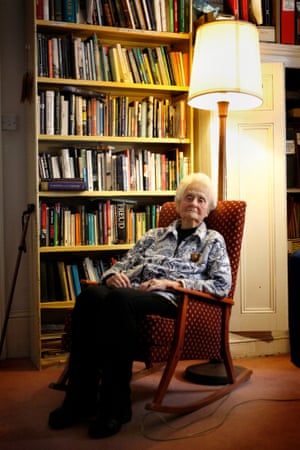
Mary Midgley in 2010. She campaigned for animal welfare and environmental awareness, and against the arms trade. Photograph: Sarah Lee for the Guardian
Mary Midgley, who has died aged 99, was an important writer on ethics, the relations of humans and animals, our tendency to misconstrue science, and the role of myth and poetry. From the mid-1970s onwards she published many books and articles in which she identified the limitations of only trying to understand things by breaking them down into smaller parts and losing sight of the many ways in which parts are dependent on the wholes in which they exist. These atomist and reductive approaches are particularly unhelpful when it comes to human self-understanding and, in trenchant and witty style, Midgley pointed the way to a saner and more helpful overview of ourselves and our world.
Her first notable article was The Concept of Beastliness, published in the journal Philosophy in 1973. It impressed Max Black, professor of philosophy at Cornell University, who in 1976 invited her to lecture there and encouraged her to expand her ideas into a book. The result was Beast and Man (1978), which was warmly received. In this article and book, she opened discussion of a question to which she returned many times, namely the implications of advances in science and evolutionary theory for understanding human behaviour.
It is clear that human achievements have their roots in abilities and patterns of response which we share with other animals. So we are not (as some existentialist thinkers have imagined) totally free to create ourselves. But, Midgley insisted, we should not extrapolate from this insight to some depressing biological determinism. More careful reflection shows that our biological endowment includes a capacity to develop a shared culture, and our culture in turn sustains individual creativity.
Other ramifications of these ideas are discussed in her later books, including Heart and Mind (1981), Animals and Why They Matter (1983), Wickedness (1984), Biological and Cultural Evolution (1984), The Ethical Primate (1994), The Solitary Self: Darwin and the Selfish Gene (2010) and Are You an Illusion? (2014).
Often the original impulse to her writing was polemical. In a Guardian interview of 2001 she said, “I keep thinking that I shall have no more to say – and then finding some wonderfully idiotic doctrine which I can contradict.” Her friends noted with amusement that one of the targets she attacked with particular vigour was the regrettable liability of humans to fall into overly combative debate. And she could herself be guilty of unsympathetic interpretation of her opponents. But her major targets were the tempting muddles to which we are all prone, in particular when we do not keep in check our tendencies to simplify and exaggerate.
Her article Gene Juggling, which appeared in Philosophy in 1979, was the start of a famously acrimonious debate with Richard Dawkins in which Midgley was accused of wilfully misrepresenting his claims about the “selfish gene”. It is true (as she herself acknowledged) that her tone was intemperate and that she did not give weight to his explicit claim that the phrase was intended only as a metaphorical way of presenting ideas in evolutionary theory. Nevertheless, it may be that she was right to think that the overall message conveyed by Dawkins’ memorable coinage was the misleading idea that our genes doom us to individual selfishness.
Another topic, which came to the fore in her later books, is the prediction by some scientific writers of future utopias, when science and technology will answer all our questions and solve all our problems. Here she had important points to make about the limitations of science, the significance of poetic and religious vision and the need to integrate our many sources of insight into the human condition. These and related ideas are explored in Evolution as a Religion (1985), Wisdom, Information and Wonder (1989), Science as Salvation (1990), Utopias, Dolphins and Computers (1996), Science and Poetry (2001) and The Myths We Live By (2003).
Mary Midgley at home in Newcastle, 2014. Photograph: Gary Calton for the Observer
Advertisement
Mary was born in London, the younger of two children of Lesley (nee Hay) and Tom Scrutton. Her father had served as a chaplain in the first world war and shortly after Mary’s birth became chaplain of King’s College, Cambridge. When she was five h moved to become vicar of Greenford, west London, where Mary and her elder brother, Hugh (later a distinguished art gallery director), were brought up.
In 1931, Mary was sent to Downe House. This progressive boarding school started in Charles Darwin’s old home, although by the time Mary was a pupil it had moved to Ash Green, near Newbury. She won a scholarship to Oxford to read Classical Greats and, arriving at Somerville College in 1938, became one of a strikingly able and forceful group of women philosophers. Elizabeth Anscombe had arrived at Oxford the year before, Iris Murdoch, who became a close friend, was an exact contemporary, and Philippa Foot arrived a year later. The work of this interesting quartet of thinkers has recently become the object of revived interest in the contribution of women to philosophy during the last century.
Mary graduated with a first in 1942 and for the remainder of the war worked mainly as a civil servant. From 1945-47 she was secretary to the classical scholar Gilbert Murray, after which she returned to philosophy, starting a thesis on the psychology of Plotinus. She tutored at Somerville and lectured at the University of Reading from 1948 until 1950.
At this point it looked as if an academic career of a familiar shape might be opening up. But instead, in 1950, she married a fellow philosopher, Geoffrey Midgley, whom she had first met in Oxford in 1945. He was lecturing at what later became the University of Newcastle upon Tyne, but was then King’s College of the University of Durham. He and Mary set up house together in Newcastle and had three sons over the next five years.
Mary turned to journalism, reviewing children’s books and novels for the New Statesman and the BBC Third Programme. She also read extensively in (among other things) psychology, anthropology, evolutionary theory and animal behaviour, becoming particularly interested in the views of such pioneers of ethology as Lorenz and Tinbergen. Her excellent autobiography, The Owl of Minerva (2005), gives a vivid account of this first half of her life.
It is unlikely that she would ever have become a professional philosopher in quite the mould of many of her contemporaries, since she had little taste for the logical and linguistic issues that were the focus of mainstream work in the 1950s and 1960s, and which remain the focus of much contemporary work. She said later that she was glad to have escaped when she did from the ambience of Oxford, finding it overly narrow and competitive.
Advertisement
The break in her career kept her very much aware of the need for philosophy in wider debate and, as she said herself, she was concerned “to bring academic philosophy back into its proper connection with life, rather than letting it dwindle into a form of highbrow chess for graduate students”.
In 1965 she returned to teaching philosophy, as a lecturer and later senior lecturer at Newcastle. It was not until this point, when she was over 50, that she began to publish the work for which she later became famous.
In 1980 she took early retirement to have more time to write and travel, and she was writing up to the end. Her final book What is Philosophy For? was published last month. Her work had already begun to be widely known at the time she retired, and she was invited to address numerous conferences and festivals. She became involved in campaigning for animal welfare (and for several years she chaired the RSPCA’s committee on animal experimentation), for environmental awareness and against the arms trade. She also appeared frequently on television and radio, presenting the case for animals and the environment and against scientific hubris. Her speaking and writing were always direct and vigorous and were informed by wide reading, a sharp critical intelligence and a gift for vivid metaphor. The drive of her thought is throughout sane and humane.
In 1995, she was awarded an honorary DLitt at Durham, in 2008 an honorary DCL from Newcastle and she was the recipient of the 2015 Edinburgh Medal.
For nearly half a century, she and her husband Geoffrey (himself a remarkable and admirable man) kept open house in Newcastle for friends, colleagues and pupils. At parties and frequent informal gatherings, tea, homemade beer and good whisky were freely dispensed while robust discussion flowed. She will be remembered and missed by many as an unfailing source of challenging ideas and generous friendship.
Geoffrey died in 1997. Mary is survived by their sons, Martin, Tom and David, and grandchildren, Tenzin, Sheridan and Jessica.
• Mary Beatrice Midgley, philosopher, born 3 September 1919; died 10 October 2018
To be healthy, organisations – like human beings – have to operate in balance. Going temporarily out of balance is OK, but if this goes on for too long, it’s dangerous. Just like riding a bike, the balance is the minimum organisations need to be able to move forward.
What kinds of things need to be balanced? There are three essential balances. The first one is between autonomy and cohesion, the second is about maintaining both stability and diversity, and the third is balancing between exploration and exploitation. The important thing to recognise here is that the nature of each balance will differ between organisations. And what needs to be done to restore balance will change over time. So we can’t be prescriptive or learn “best practice” from others. We can only give people the glasses to see what is going on and the knowledge that will help them maintain the balances in their organisations.
I’ve been doing the Essential Balances workshop for four years now. During the workshop, all three of them seem relatively easy to get, yet a bit more difficult to work with as a matter of habit. Based on the feedback I received from people actually using these glasses for organisational diagnosis and design, the first and the third balance, Autonomy-Cohesion and Exploitation-Exploration, come more naturally, while the second one, Stability-Diversity, creates some problems. All three of them and a few more will be explained in detail in the forthcoming book “Essential Balances in Organisations”, but until then, I’ll make some clarifications here. I hope it will be of use also for people who are not familiar with this practice.
Stability and Diversity. At first glance, it might be difficult to see it as a balance. In fact, it covers four dynamics. So, it might be easier to see it as four different balances. Different, yet somehow the same. And the key to it is exactly in these two words: different and same.
The main difficulty for understanding this balance comes from the fact that the concepts of stability and diversity operate in different dimensions. Stability is sameness in time, while diversity is difference in space (Time&Space is also another pair of glasses, used within the QUTE framework). When we say that the oil price is stable, we mean that it doesn’t change much over a certain period. Same for the temperature, sea level, people behaviour. Try searching for “is stable” in the news, and you’ll get mostly three types of results: one, applying it to the condition of a person in a hospital after some accident, second, referring to the political situation somewhere, and third about currency or growth rate.
Diversity, on the other hand, is used for difference in space. Specifically, it’s applied for the difference between separate things within something uniting or containing them. We use it for restaurant offerings, for teams when their members are of different ethnicity, age, and gender. And then in ecological context, we often hear the word “biodiversity”.
The balance between stability and diversity can be observed in the dimensions that they typically operate, in the opposite, or across. Before seeing that, it should be clarified that “balance” should not be understood only in terms of moderating between extremes. That’s why it is “Stability and Diversity”, not versus, or at least not always versus. This will become clearer when same and different is applied in time and space to reveal the four-in-one balances. And we start with the simplest case, taking only sameness and only time.
When sameness is used only in time, then stability can be seen as balance in itself. It can be applied to any other balance for being kept in time. The opposite of stability is instability. Instability is referring to stability, it is about stability. A plane flight is unstable when there is turbulence. In other words, instability is applied to flight, when stability is disturbed by turbulence. And here’s an important point. We would use instability only when there is a possibility for restoring the normal operation. We won’t apply it when there is a plane crash, for example. This would be the first (out of four) hidden balance: Stability (time) – Instability (time). Or, to use the other two words, maintaining the sameness, when it is challenged by difference. Maybe a more appropriate way of writing this variation would be with stability in the middle:
instability – stability – instability
It seems that using same and different in time and space works well so far. But that’s mainly because we allowed another pair of concepts to sneak in the game: good and bad. Stable is good, unstable is bad. Now, since good and bad have been revealed, let’s play with them. Let’s try for example to see stability – why not – as bad. The new combination looks like this: Stability (in time, is bad) – Diversity (in time, is good). It could be useful to see it this way for people who are comfortable wearing Stability-Diversity glasses, but not when communicating with people who are not. With those, something like “Rut – Innovation” would work better. And indeed, when organisations do something the same way and expect better results, that is not likely to happen. Worse, when they do that thing the same way, while their environment changes, they are increasingly unable to achieve the same results. Then a more neutral way to talk about this flavour of the balance would be as Stability-Change, while the biased versions Stability-Instability and Rut-Innovation retain their utility in specific contexts.
Just as it is with the other two essential balances, the scale matters here as well. Good and bad in “Stability (time, bad) – Diversity (time, good)” should be understood only at a certain scale. The way it is written above somehow implies a scale of years. After some innovation is implemented, the new state needs to be stabilised. Then, and probably for a shorter period, it would be “Stability (time, good) – Diversity (time, bad)”.
We tried “Stability is bad”. If we do the same with difference in time, this will bring the statement “Innovation is bad”. It may sound strange, but it is an actual strategy for some healthcare practices, as well as for companies like General Motors, Ford and American Airlines. It even has a name, exnovation.
So far, we saw Stability-Diversity in time, which can be looked at as Stability-Change, Stability-Instability, and Rut-Innovation. The first one is neutral, the second is when we want to maintain stability, and the third when stability is maintained in spite of the need for change. Now, the analogue for Diversity in space would be to look at it as a balance in itself. This balance can be better understood if called Diversity-Homogeneity. Too much diversity might be bad for stability in some cases, in others – the more the better.
The fourth dynamic is between Stability and Diversity, where stability operates in time and diversity in both space and time. This dynamic is a bit more complicated and it probably won’t get clear without examples. I’ll leave that for another post. For now, here’s a short description: having more diversity (space) or trying out different things (diversity in time) could be very important for maintaining stability (time). However, too much diversity in some cases can destabilise.
I hope this makes Stability-Diversity feel more natural. If not, here’s another way to think about it, which both syntactically and semantically looks more like a balance:
Homeostasis – Heterostasis
The word homeostasis is coming from the Greek ὅμοιος homoios, “similar” and στάσις stasis, “standing still”, to suggest the idea of “staying the same”. Hetero- comes from ἕτερος [héteros], “another”, and is often used as a prefix meaning “different”. This would give another way of thinking about Stability-Diversity as the ability to “maintain sameness” balanced with the ability to “maintain difference”.
We live in the age of the missing elephant. The American psychologist Don Michael was first to point out the implications of a world of boundless complexity, rapid change and uncertainty for the familiar tale of the blind men who if they could only pool their knowledge would have recognised the elephant. No longer. In today’s world there is little chance that any of us will ever know more than one small piece of the elephant, and there are now so many different pieces, they change so rapidly and they are all so intimately related one to another, that even if we had the technology to put them all together we would still not be able to make sense of the whole.
The missing elephant
The world we have created has outstripped our capacity to understand it. The scale of interconnectivity and interdependence has resulted in a step change in the complexity of the operating environment. These new conditions are raising fundamental questions about our competence in key areas of governance, economy, sustainability and consciousness. We are struggling as professionals and in our private lives to meet the demands they are placing on traditional models of organisation, understanding and action. The anchors of identity, morality, cultural coherence and social stability are unravelling and we are losing our bearings. This is a conceptual emergency.
One very human response is to give up the struggle to make sense of what is going on and to lapse into short term defensive strategies or longer term despair. Another is to strive to regain the comfort of control and coherence by reasserting old truths with more conviction and urgency, stressing fundamentals, ignoring inconvenient information, interpreting complexity in simple terms.
These responses can offer temporary adaptation and will quell anxiety for a while. But they can also dissolve into maladaptive neurotic and even psychotic routines. However understandable and human these responses are, they are pseudo-solutions, ultimately doomed to failure.
Not all responses to challenging times are dysfunctional. It is possible to face up to challenge and grow with and through it. Changed circumstances can be seized as opportunities for creative engagement and rather than generating resistance, generate a step change in learning and growth.
IFF, the International Futures Forum, is an international and multidisciplinary group originally convened in 2001 to come up with some touchstones of theory and practice to support a transformative response to today’s powerful times and to restore effectiveness in action. The following pages describe ten of the strategies that have emerged from this work to date: ten things to do in a conceptual emergency.

 Pdf
Pdf  Get this Article
 1961 Article


 Contact Us | Switch to single page view (no tabs)










You must be logged in to post a comment.