Watch party in London (£5 and the company of ‘high agency techno-optimists’ https://lu.ma/wp-experiencing-complex-systems
Georgina Voss’ book Systems Ultra: Making Sense of Technology in a Complex World is published by Verso in the UK and the US, in January 2024 https://gsvoss.com/systems-ultra
Georgina Voss will explore what a systems worldview is and how we experience and feel out our way within these structures.
By Centre for the Study of Existential Risk
Date and time
Tuesday, April 23 · 6 – 7:30pm GMT+1
Location
West HubJJ Thomson Avenue Cambridge CB3 0US United KingdomShow map
About this event
The Centre for the Study of Existential Risk are pleased to host a public lecture by Georgina Voss.
From finance to supply chains to payment platforms, our lives are increasingly defined by complex technological systems. Yet it can be surprisingly difficult to define what a system actually is, or what it feels like. In this public lecture, Georgina Voss will draw on storytelling and artistic practice to explore what a systems worldview is, what it does, and, crucially, how we experience and feel out our way within these structures.
Professor Emily So will act as discussant for the lecture. The event will be chaired by Dr Maya Indira Ganesh.
Speakers:
- Georgina Voss is an artist, writer, and educator, and author of ‘Systems Ultra: Making Sense of Technology in a Complex World’ (Verso 2024). She co-founded and led the creative studios Strange Telemetry, and Supra Systems Studio (University of the Arts London).
- Professor Emily So is Professor of Architectural Engineering in the Department of Architecture and Director of the Cambridge University Centre for Risk in the Built Environment (CURBE). Emily is a chartered civil engineer, specialising in urban risk and seismic safety, with notable work in earthquake casualty estimation and interdisciplinary collaborations. She contributed to an award-winning seismic-resilient building design in China (2017) and advises on disaster risk mitigation through SAGE. Recognized with the 2010 Shah Family Innovation Prize, Emily’s expertise spans diverse natural perils and international research initiatives.
- Dr Maya Indira Ganesh is an assistant teaching professor at the Institute of Continuing Education (ICE) where she co-directs the , co-directing the MSt in AI Ethics and Society. Her research, rooted in cultural studies and feminist scholarship, explores the societal implications of algorithmic/AI technologies.. At CFI, Maya investigates how technology design intersects with people, places, and organizations, focusing on ethical and responsible AI. She has over a decade of experience as a researcher and activist in gender justice, security, and digital freedom of expression.
Please note there are tickets available for online or in-person.
If you are unable to attend the lecture, please return your ticket before the event through Eventbrite.
Organized by
Centre for the Study of Existential Risk
411 following this creator
The Centre for the Study of Existential Risk is a multidisciplinary research centre within the University of Cambridge dedicated to the study and mitigation of existential risks that could lead to human extinction or civilisational collapse.
Experiencing Complex Systems: An evening with Georgina Voss Tickets, Tue, Apr 23, 2024 at 6:00 PM | Eventbrite
https://www.eventbrite.co.uk/e/experiencing-complex-systems-an-evening-with-georgina-voss-tickets-869133811627

 REVIEWING REVIEWING | MONDAY, APRIL 29 & 30. Two pop-up sessions in two time zones—hosted by Ryan Murphy—featuring Ray Ison, Peter Jones, Houda Khayame, Wendy Ross, Ruth Schmidt and Katelyn Stenger. Drop in:
  It’s timefor a pivot in how we approach securing improvements in the human condition—HAROLD NELSON
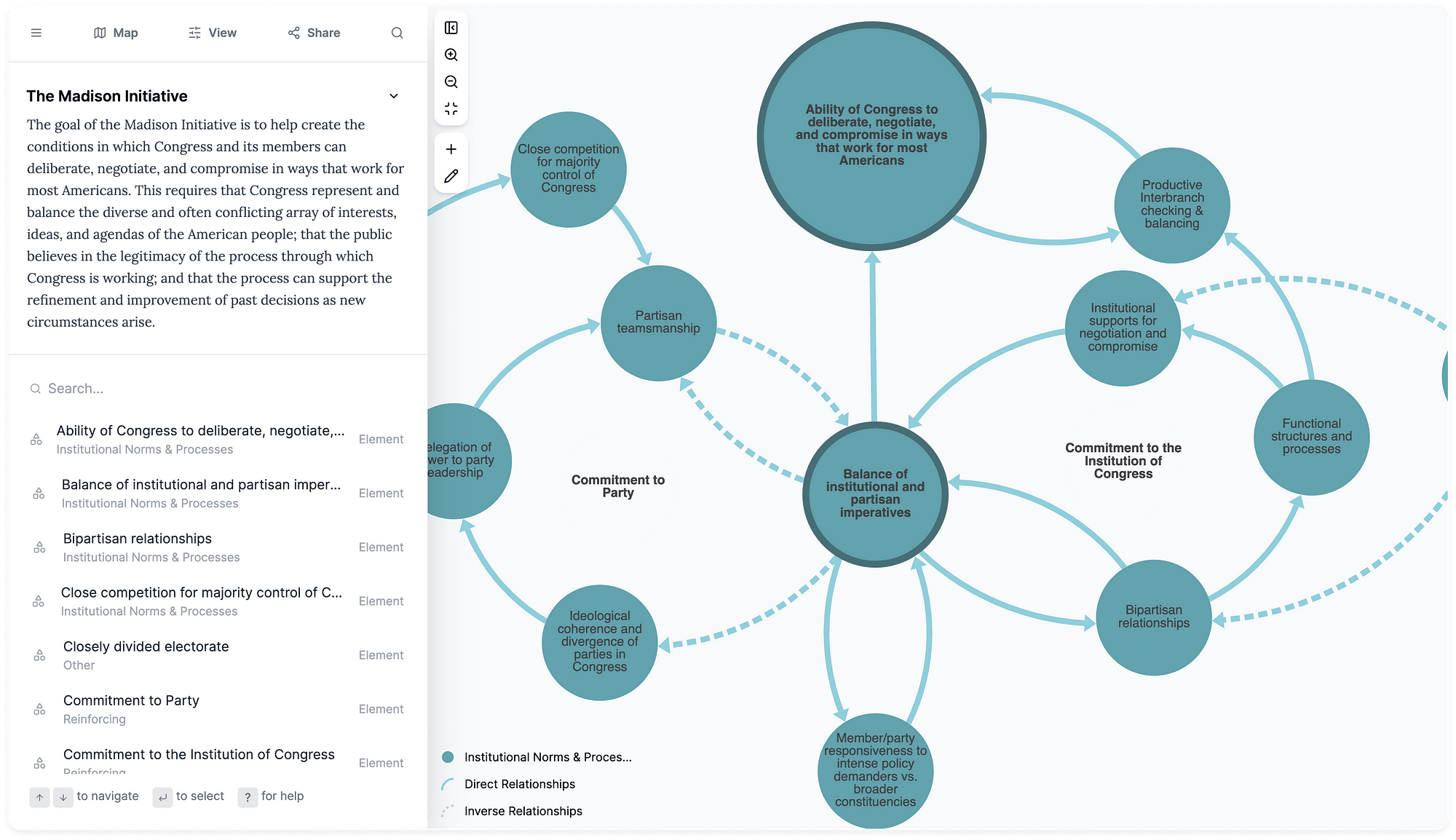 In the years since we lost Ryan, we’ve struggled to iterate on Kumu at the speed that you deserve. The UI still has some rough edges and there are longstanding bugs that we can’t easily fix. We’ve decided that it’s time for a rewrite.

You must be logged in to post a comment.