Since systems thinking in education is a common topic in this group (and perhaps its cousin or sister interdisciplinary thinking is welcome as well), I thought to post this little article from 1896, which describes one way to approach it. The following is the introduction. “Concentration , or the correlation of studies, is only the extension of the principle of the relativity of knowledge which has been current in the world since the rise of a philosophy of the sciences. The assumption of the relativity of knowledge is denial that knowledge is absolute At the same time it is an assertion that each province of knowledge is related to all others, that all the departments of human knowledge form one articulated body of which the various branches of learning form mutually dependent parts.”
Autopoietic theory had posited life-mind identity, while the role of materiality remained ambiguous. This identity has been cast in doubt. So: what is the unique contribution of mind in the context of matter and life? What if each makes a unique contribution to the organism? 1/n pic.twitter.com/aYIfShvELl
— Tom Froese, Embodied Cognitive Science Unit (ECSU) (@DrTomFroese) September 2, 2023
Irruption Theory: A Novel Conceptualization of the Enactive Account of Motivated Activityby Tom FroeseEmbodied Cognitive Science Unit, Okinawa Institute of Science and Technology Graduate University, 1919-1 Tancha, Onna-son 904-0495, Okinawa, JapanEntropy 2023, 25(5), 748; https://doi.org/10.3390/e25050748Received: 20 February 2023 / Revised: 27 April 2023 / Accepted: 27 April 2023 / Published: 2 May 2023(This article belongs to the Special Issue Brain Theory from Artificial Life)
Join us on Saturday, September 30th, as we celebrate the publication of Combining, the latest book by Institute of General Semantics Trustee Nora Bateson. The New York Society for General Semantics is pleased to host a reading and book signing with the author during her brief visit to New York City. The event is cosponsored by the Institute of General Semantics.
In Combining Nora Bateson invites us into an ecology of communication where nothing stands alone, and every action sets off incalculable consequences. She challenges conventional fixes for our problems, highlighting the need to tackle issues at multiple levels, understand interdependence, and embrace ambiguity.
Insisting on our collective responsibility to confront the looming threats to humanity’s survival, she advocates change through interdependencies and challenges us to rethink our perspectives on relationships, community, and the very essence of being human.
A blend of intellectual inquiry, essays, emotional engagement, storytelling, poetry and graphic art, Combining is an invitation to nurture genuine connections and navigate a world brimming with “Warm Data”—the interrelationships that integrate elements of every complex system. The book calls on us to shed our linear thinking and embrace “Aphanipoiesis” — the unseen ways in which life comes together to foster vitality and propel evolution.
In Combining, love, humor, curiosity, and vulnerability entwine amidst the trials of a world in flux. As we face the Polycrisis, Nora Bateson urges us to swerve from the traditional paths and to dismantle the illusions of fitting in. She beckons us to step into a world where learning, uncutness, and readiness converge, promising both revelation and revolution.
Nora Bateson is an award-winning filmmaker, artist, international lecturer, research designer, author, as well as President of the International Bateson Institute. She is the founder and creator of Warm Data and the practices of the Warm Data Lab and People Need People Online.
Nora wrote, directed, and produced the documentary, An Ecology of Mind, a portrait of her father, Gregory Bateson. Her work brings the fields of biology, cognition, art, anthropology, psychology, and information technology together into a study of the patterns in ecology of living systems. Her book, Small Arcs of Larger Circles published by Triarchy Press, UK, 2016 is a revolutionary personal approach to the study of systems and complexity.
Come join us for an inspiring and illuminating evening!
6 PM to 9 PM Saturday, September 30th at the historic Players Club in Gramercy Park.
Registration is free, but all attendees must be registered in order to gain admittance to the club. This includes any guests you might want to bring with you.
The program will take place in the Library on the 2nd floor of the club. Please note that, as an historic 19th century landmark, the site is not handicap accessible. Dress code is business casual and is strictly enforced, including no sneakers, shorts, ripped jeans, t-shirts).
May 22, 2020In this thread, I decided to share some of the papers -and occasionally books- from different fields that impressed me. They will be opinion-based works most of the time, rather than technical ones.
47) Villalobos and Ward (2015). Same as the above. This paper has a special emphasis on the conceptions of organizational closure and how autopoietic theory of Maturana is internally consistent -whereas enactivism not- … +https://t.co/YrRZMEfWiC
A Systems Theory of Marginalization and its Implications for Systemic Intervention: In this talk, Gerald Midgley will present the systems theory of marginalization that he has been developing and applying in systemic interventions for almost 30 years. This theory offers a generic model of marginalization processes that is equally relevant to relationships between people in small groups, organizations, communities and international relations. Both people and the issues that concern them can become marginalized. Gerald will share several strategies for challenging marginalization when it has negative consequences. However, some of these strategies have a dark side that needs to be acknowledged if our projects are not to have unforeseen side-effects. The theory will be extensively illustrated with practical examples of projects from the UK and New Zealand.
Professor Guy Claxton is a hugely influential academic, thinker and author of over 30 books on learning, intelligence and creativity, including Hare Brain, Tortoise Mind, Wise Up, What’s the point of school, Intelligence in the flesh, Educating Ruby and The Learning Power Approach. Guy previously appeared on the Rethinking Education podcast, an episode you can access here: / re07-guy-claxton .
0:01 / 2:26:28•IntroRethinking Education Podcast #16: Guy Claxton on neotraditional mythsRethinking Education320 subscribersSubscribed 12345678901234567890123456789 ShareDownloadClipSave157 views 24 Apr 2021Professor Guy Claxton is a hugely influential academic, thinker and author of over 30 books on learning, intelligence and creativity, including Hare Brain, Tortoise Mind, Wise Up, What’s the point of school, Intelligence in the flesh, Educating Ruby and The Learning Power Approach. Guy previously appeared on the Rethinking Education podcast, an episode you can access here: / re07-guy-claxton .
DataArt IT Museum unveils Ukrainian cybernetics founder’s exclusive memoirs to commemorate his centennial anniversary.
Dataart Publishes Ukrainian It Visionary Victor Glushkov’s Complete Memoirs For The First TimeDate8/24/2023 10:01:04 AM Share on Facebook Tweet on Twitter (MENAFN- EIN Presswire)DataArt IT Museum unveils Ukrainian cybernetics founder’s exclusive memoirs to commemorate his centennial anniversary.
How do systems-change approaches address the root causes of deeply entrenched societal problems rather than the symptoms only? What are examples of systems-change strategies led by social entrepreneurs in Africa? What are key learnings for key stakeholders to scale social innovation on the continent?
Ashoka is launching the Roots of Change report with 5 cases of Ashoka Fellows in Africa to demystify systems change and contextualize it for the African continent. The report also distills How To’s and insights for social change leaders, impact investors and philanthropists, and influential players such as corporates and governments to accelerate positive change.
Much still needs to be done to support systems-changers in Africa. Please help us spread the word!
Roots of Change: How Social Entrepreneurs Advance Systems Change in Africa
It’s six weeks to the SCiO Global mini-Conference and AGM on Wednesday 4th October 2023 – to be held online.
This is our first SCiO global meeting and we hope you will join us. The AGM will be held during the meeting – all can attend but only members can vote. ALL ARE WELCOME.
Details of speakers and sessions currently confirmed (not necessarily in this order!)
Whatever works – Adventures of a couple of systemic consultants in IT organizations – Ed van der Winden (SCiO NL)
In this light-hearted talk Ed van der Winden will share some of his experiences in trying to help IT departments move to a better place. A lot of systemic models have played a role in this: the talk will focus on examples of their practical use. Some of the more well-known models that will be discussed in this talk will be: The Viable System Model, causal loop diagrams and Fernando Flores’ conversations-for-action model. But also lesser known models have been used, such as the 4D-model for dealing with organizational stress (based on Perceptual Control Theory), Will McWhinney’s Paths of Change and the use of the makigami technique from Kaizen and Lean to ‘go to the gemba’.
The Purpose Thing…. – Patrick Hoverstadt
There is a split within Systems in both thinking and practice around purpose. Is it about ‘intention’ or is it about effects – the POSIWID position. This split is not limited to the field of systems, as an example it also splits the field of ethics, but for us in our discipline it has had enormous consequences. This talk will explore this from several angles – why the split exists, how different approaches are grouped either side of the split, how it has driven factionalism and mutual incomprehension in the past and how the split itself represents one of the most fundamental issues in systems thinking and presents a dilemma for the systems practitioner and one that needs to be worked with. Finally we’ll look at the resolution of this in practice.
New Meta-systems Thinking for Regenerative Leadership – Jan de Visch (SCiO Belgium)
Socially, we see a trend in organizations toward being more conscious and sustainable. The number of companies seeking to reduce their carbon footprint to zero is growing. To achieve this, new business and operational models are emerging, often focused on ecosystemic collaboration. Often a broad common ground is lacking, and one must cooperate in diversity.
The leadership required for this requires significantly better assessing the parties’ positions to influence ideas and solution developments in real time. Systemic thinking is a necessary requirement here but perhaps insufficient. Meta-systemic thinking is needed to handle the potential areas of tension in real-time and make evaluative comparisons between different systemic options. It is thinking based on assessing the blind spots in systemic thought processes.
Jan De Visch illustrates how this meta-systemic thinking leads to the estimation of new opportunities the way CEOs deal with climate challenges and develop a kind of regenerative leadership.
Additional sessions and speakers to be confirmed
SCiO Global mini-Conference and AGMWed 4 October 2023 09:00–13:00 GMT+1Organiser(s):SCiOEvent access:All welcome


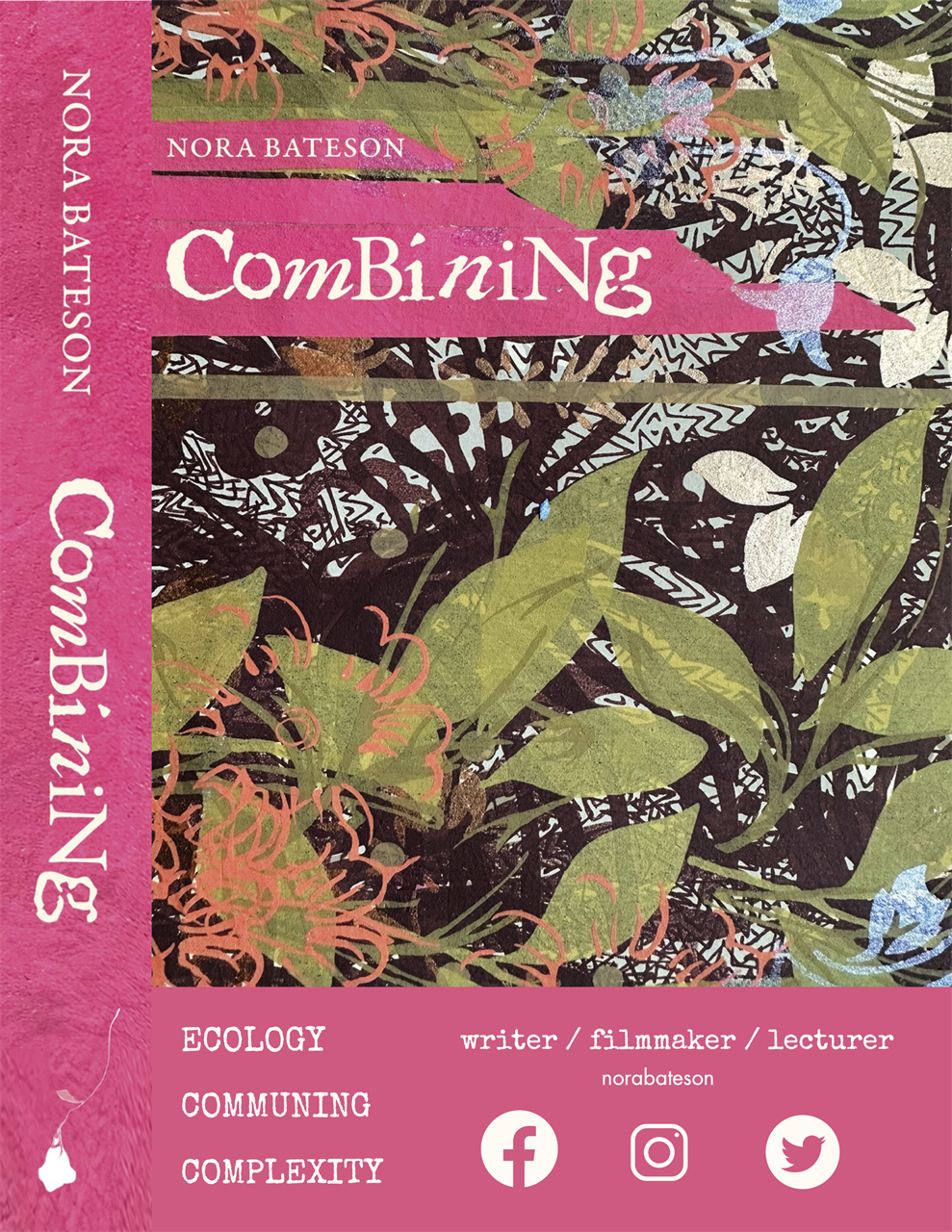 In Combining Nora Bateson invites us into an ecology of communication where nothing stands alone, and every action sets off incalculable consequences. She challenges conventional fixes for our problems, highlighting the need to tackle issues at multiple levels, understand interdependence, and embrace ambiguity.
 Systems Community of Inquiry
You must be logged in to post a comment.