A free online festival for people creating different systems for a better future
What does it really take to shift a system? Join us with 50 of the boldest system innovators from across the world as we take a deep dive into the practical realities of shifting systems towards better futures.
Do you have an experience of practicing Systems Thinking that you’d like to share? … any aspect of using methods, or of systemic intervention?
If so, would you like to speak at a SCiO Open Event (www.systemspractice.org), for about an hour, about your experience?
We run Open Events every two months, some face-to-face in London or Manchester, or Monday evenings via Zoom. If that’s appealing, please contact tony.korycki@systemspractice.org, to find out more.
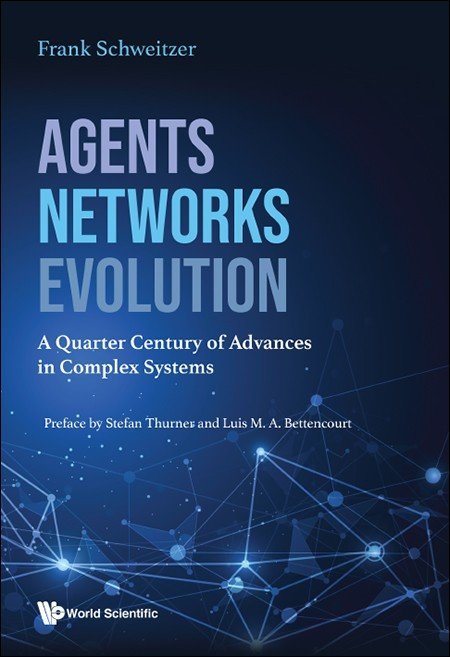
Scientific progress during the last three decades has greatly profited from our advances in understanding complex systems. Fundamental modeling approaches were considerably improved, particularly agent-based modeling, network science, nonlinear dynamics, and system science. At the same time, these approaches have been applied to and adopted by various scientific disciplines, ranging from physics and chemistry to engineering, molecular biology, economics, and the social sciences.
This book reflects the success of complexity science both from a historical and a modeling perspective. It uses 25 articles from different disciplines, published over 25 years, to demonstrate the power and problems of modeling complex systems.
The book’s four parts, Agent-based Models, Network Models, Models of System Dynamics, and Models of Evolution, each provide an informative synopsis of the respective modeling approach. An introductory overview summarizes each approach’s essential concepts, addresses the main research directions, and reviews applications in various disciplines. The selection of reprinted publications…
Mary Catherine Bateson: Composing a (Further) Life (1989, 2010)A Systems Library, Vol. 28Photo by Steve Johnson from PexelsIn this new addition to the Systems Library, I focus on two books — Composing a Life, and Composing a Further Life — published 20 years apart by the same author, Mary Catherine Bateson. Mary Catherine, who died early in 2021 at the age of 81, was the daughter of cyberneticist Gregory Bateson (1904–1980) and anthropologist Margaret Mead (1901–1978). The younger Nora, who was born of Bateson’s marriage to Lois Cammack, is Mary Catherine’s half-sister.
[I’ve seen the map itself many times, and this page at least once before – the famous ‘systems map’ (which is revealed to actually be an influence diagram) was recently used to illustrate https://stream.syscoi.com/2022/10/21/systems-change-all-things-to-all-people-beth-stout-renaisi/ – on facebook, Greg Brougham linked the main thing – which I see was authored by Philippe, Vandenbroeck, Dr Jo Goossens, Marshall Clemens – and the full documents are quite interesting]
Research and analysisReducing obesity: obesity system mapVisual representations of the different factors that influence levels of obesity.From:Government Office for SciencePublished17 October 2007
Visual representations of the different factors that influence levels of obesity.From:Government Office for SciencePublished17 October 2007Get emails about this page
This file may not be suitable for users of assistive technology.Request an accessible format.
Details
This report presents the visual representations of the obesity system map developed to understand the wide range of different factors that influence levels of obesity and how they interact.
The accompanying report includes a full description of the methodology used to create these maps and guidance on how to interpret them.
This report was commissioned as part of the Foresight project on tackling obesities.
With our man-made constructed environment humanity has left an unprecedented footprint in this so-called ‘Anthropocene’. With our built environment’s impact on the natural environment, especially because of our resource extraction and waste, not only have our construction activities impacted nature, it has fundamentally impacted human social organisation. This comes at a cost of meaningful experience.
Australian cybernetic: a point through timeat Theatre, National Library of Australia | Wednesday, 9 November 2022 from 6:00 PM to 7:00 PM (AUS Eastern Daylight Time)
Collapsing Time and Space: Seeing the Future in the Transatlantic TelegraphThis is the first of two public lectures by Professor Chris Morash of Trinity College Dublin.Written by: ANU School of Cybernetics18 Oct 2022EventsCollapsing Time and Space: Seeing the Future in the Transatlantic TelegraphREGISTER2 November, 6–7.15pm (This event is FREE but registration is essential)
The Cloud is Hungry and Thirsty: States of EntanglementThe ANU School of Cybernetics is proud to host this public lecture by Professor Chris Morash of Trinity College Dublin.Written by: ANU School of Cybernetics18 Oct 2022EventsThe Cloud is Hungry and Thirsty: States of EntanglementREGISTER3 November, 12.30–1.30pm (This event is FREE but registration is essential)
Fall 2022 – Power, Justice, and Systems Change Webinar SeriesYou are invited to an international conversation about power in the systems change field and the role of equity and justice work in changing systems.
This Friday, join the conversation!
On The Edge of Systems Change and socio-environmental transformation
FRI, OCT 28, 4:00PM (EST), On The Edge of Systems Change, from the Illuminate Network. A clubhouse chat With Ana Lucía Castaño Galvis & Luis Alejandro
Join Illuminate Network Doula, Luis Alejandro Tapia, in conversation with Ana Lucía Castaño Galvis about socio-environmental transformation, her journey to this work, and the development of creative solutions to social and environmental problems.
Ana Lucía is co-founder of Arare Corporation, a civil organization dedicated to support and nourish territorial organization and socio-environmental regeneration processes in Colombia and Latin America.
This is an opportunity for candid conversation with time and space for listeners to contribute thoughts via chat and to be “handed the mic,” to ask questions or share reflections.
When: October 28th, 4:00-5:00pm ET
Where: Illuminate Network Clubhouse
https://www.clubhouse.com/event/PN2yzB0l?utm_campaign=82uXVAvqLzLUQY8DlcaA7w-406634&utm_medium=ch_event
Download the Clubhouse app on your phone to join the conversation!
https://www.clubhouse.com/download?%24deeplink_path=join%2Filluminate-network%2FH9tZO1Rq%2FxjLJ2pw8&~campaign=82uXVAvqLzLUQY8DlcaA7w-379594&~feature=ch_invite&_branch_match_id=1093026583364426888&utm_campaign=82uXVAvqLzLUQY8DlcaA7w-379594&utm_medium=ch_invite&_branch_referrer=H4sIAAAAAAAAAxXK0QqCMBSA4aexO5WWoQYSQkWEEAVFdSNzndp0blPPXPT02d3Px88RzbAKQyZtxbUdIKDGBFKoJnRQ%2BdqAWnskegKYP5aGIs9qLZRHdkJK2wpFEXwF6HTfTLhP8XGcn7spP3VxIMYlMy%2FeMtoaKt4qS4i9XfOxK77F5XRPNpLRPHb%2BIk6XafQ%2FX0DR9pAxXgo1CoQfsey2bqMAAAA%3D
To be able to express some thing is to be unable to express others. To be able to do some thing is to be unable to do others. True omnipotence is an incoherent concept.
Moreover, the things I am able or unable to accomplish are themselves a function of my ability to discern and express—my ability to notice difference and represent difference. This enabling is to be expected. Language—as our representation system, our communication system, with its evocative figurative relations, accumulated reputational baggages, and system of lumpings versus splittings—underlies an enormous swathe of our reasoning and by extension our acting, particularly our acting-together-in-the-world. An implicit theory lurks behind each carving and resonance.
Concepts, scaffolded by language, are our meta-heuristics, the parts and piers which our tactics our built from, linking and bridging, assembled into structure from relation. They are the lines by which our rules are applied or disregarded…
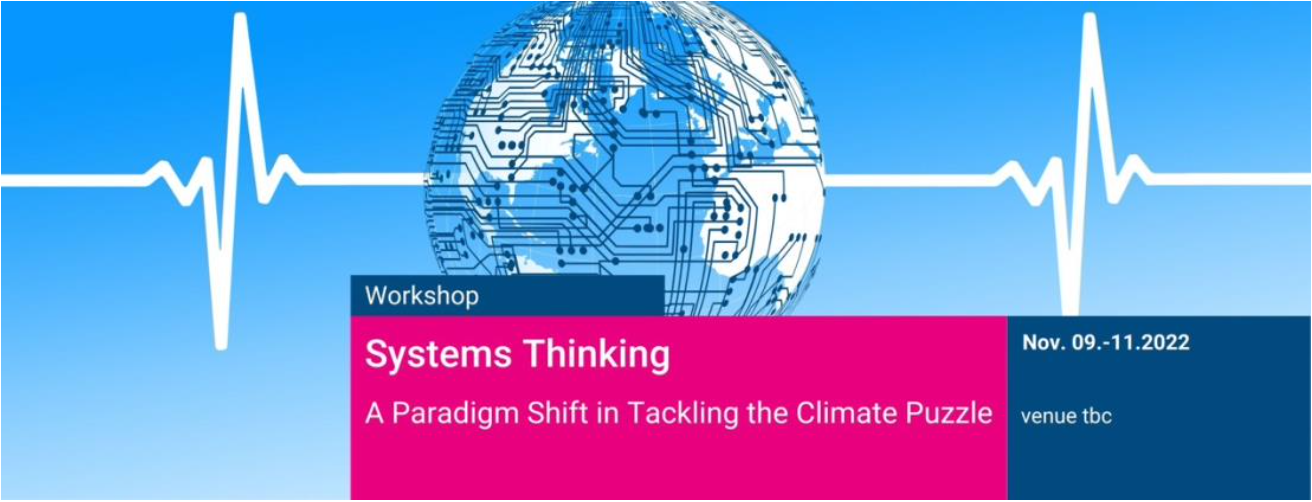
Workshop participation is free of charge. Travel costs, accommodation and meals during the workshop meals are provided by FNF.ABOUT THE WORKSHOP
All organisations face complex challenges and opportunities. Today’s challenges are often created at the intersection of social, technological, environmental, economic, governance and geo-political tensions. This has led to fragmentation of policy solutions that have unintentionally imposed burdens on employers, individuals, and the environment to harm the biosphere and the communities they were meant to protect. What if these burdens were avoidable? What if governments could equip themselves with better tools to tackle complexity? What contribution would you make if YOU had access to those same tools? Why is it a core liberal interest to acquire these tools?
What to expect? This workshop takes you on the start of a professional development journey. You’ll explore systems thinking, a scientific tool that helps remodel decision-making processes and tackle complex interdependent issues for sustainable viability.
Systems thinking is applied in many different fields of academic research. Brought down from theory into practice it is a most critical skill to meet multiple interdependent goals that empowers us to excel both as individuals and collectively. Systems thinking explores the boundaries of what we account for in decision-making, how to fully appreciate multiple stakeholder perspectives, and how to see organisations, communities, and the planet as an interdependent system. Accordingly, systems thinking is useful right across the private, public, voluntary and community sectors – especially when set up to achieve joint objectives that they cannot realise on their own.
For liberals, improving the interconnectivity of systems in different policy fields, reducing opportunity costs, and increasing performance is a natural ambition. Systems thinking provides freedom to achieve this ambition: breaking free from where such ambitions usually get stuck. For example, systems thinking can help components of a free-market economy to grow and become resilient in an increasingly competitive world, all the while building both social value and climate protection. Ideally, this process can accelerate action toward an equitable, just, inclusive, fair, and authentic net-zero world. This, in turn results in greater freedoms for all in an interdependent world.
Why should you join? You will dive in to a world of three-dimensional thinking that goes beyond your usual education and experience. You will raise your ability to understand the unknown unintended consequences and missed opportunities from decisions in the systems in which you live and work, and apply your insights flexibly to other and bigger problem fields, including global markets, climate change, and the environment. Learn how actions of each of us affects the many. Start thinking three-dimensionally and understand the feedback loops that can cause systemic problems to remain unsolved. Become a better decision-maker and problem-solver to harmonise operational functions and government policies. Advance positive action for the improvement of climate change, the amelioration of biosphere service levels and greater social justice, the greatest innovation today is a shift to systems thinking. Outline OUR EXPERTSChristopher Gleadle is CEO of The Paddy Ashdown Forum (PAF). He is a veteran consultant, speaker and trainer in critical systems thinking at the nexus of human, technical and natural systems. He has published substantially in the field and contributed ground-breaking tools, such as the Sphere Economy model, which is now a widely recognised method to apply systems thinking to economic problems. Chris specialises in teaching and promoting three-dimensional problem-solving at the interface of economic productivity, sustainability, the biosphere, and social justice.Prof. Dr. Gerald Midgley is Professor of Systems Thinking in the Hull University Business School. He also holds Adjunct Professorships at the University of Queensland, Australia; Mälardalen University, Sweden; the University of Canterbury, New Zealand; and Victoria University of Wellington, New Zealand. Gerald was Director of the Centre for Systems Studies at Hull from 1997 to 2003 and from 2010 to 2014. He has had more than 300 papers published on systems thinking, action research and stakeholder engagement, and has been involved in a wide variety of public sector, community development and resource management projects.Isabella Pucher is Director of Projects The Paddy Ashdown Forum (PAF). She is a former policy advisor and researcher with an extensive background on topics such as Europe, defence, trade, international relations, diplomacy, or Nordic Council, to name just a few. Isabelle draws on a diverse professional background from the Swedish Parliament as well as the House of Commons & House of Lords.Dr. Emma Saunders is General Manager at Genesis Biosciences an integral part of scientific innovation in the UK. With a background in Biochemistry and Genetics with Physiology, Emma Saunders drives industry-leading, performance-driven products and solutions surrounding technology and science: playing a direct role in addressing major challenges our world faces, from diagnosing and curing diseases, reducing hunger and poverty, and protecting the environment.Dr. Michael Walsh, is senior lecturer in Management, Work and Organisation at the University of Sterling. He is a member of the Sterling Institute for Health (and acted as its inaugural chair from 2009-2012), the Open Research Society and the Institute for Consulting. His expertise in critical systems thinking, action research and participative planning and problem solving underpins his research and development.







 View this email in your browser
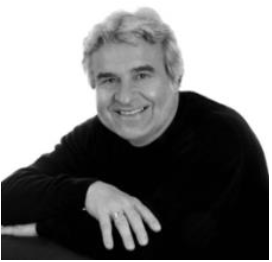 Christopher Gleadle is CEO of The Paddy Ashdown Forum (PAF). He is a veteran consultant, speaker and trainer in critical systems thinking at the nexus of human, technical and natural systems. He has published substantially in the field and contributed ground-breaking tools, such as the Sphere Economy model, which is now a widely recognised method to apply systems thinking to economic problems. Chris specialises in teaching and promoting three-dimensional problem-solving at the interface of economic productivity, sustainability, the biosphere, and social justice.
 Prof. Dr. Gerald Midgley is Professor of Systems Thinking in the Hull University Business School. He also holds Adjunct Professorships at the University of Queensland, Australia; Mälardalen University, Sweden; the University of Canterbury, New Zealand; and Victoria University of Wellington, New Zealand. Gerald was Director of the Centre for Systems Studies at Hull from 1997 to 2003 and from 2010 to 2014. He has had more than 300 papers published on systems thinking, action research and stakeholder engagement, and has been involved in a wide variety of public sector, community development and resource management projects.
 Isabella Pucher is Director of Projects The Paddy Ashdown Forum (PAF). She is a former policy advisor and researcher with an extensive background on topics such as Europe, defence, trade, international relations, diplomacy, or Nordic Council, to name just a few. Isabelle draws on a diverse professional background from the Swedish Parliament as well as the House of Commons & House of Lords.
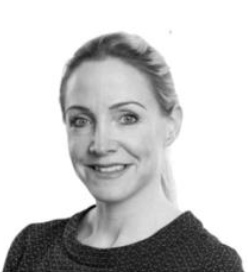 Dr. Emma Saunders is General Manager at Genesis Biosciences an integral part of scientific innovation in the UK. With a background in Biochemistry and Genetics with Physiology, Emma Saunders drives industry-leading, performance-driven products and solutions surrounding technology and science: playing a direct role in addressing major challenges our world faces, from diagnosing and curing diseases, reducing hunger and poverty, and protecting the environment.
 Dr. Michael Walsh, is senior lecturer in Management, Work and Organisation at the University of Sterling. He is a member of the Sterling Institute for Health (and acted as its inaugural chair from 2009-2012), the Open Research Society and the Institute for Consulting. His expertise in critical systems thinking, action research and participative planning and problem solving underpins his research and development.
 Systems Community of Inquiry
You must be logged in to post a comment.