
Searching for a Good RegulatorDoes a system have its own purpose, irrespective of what anyone says its purpose is? This a Stafford Beer thing, coined as a description of the parts department of Jaguar, which Stafford claimed was there to keep his car off the road. The Purpose of a System is What it Does: POSIWID.This stance gives most people cognitive indigestion. People have purposes, systems are supposed to do peoples’ bidding. Except we know that is not what happens.
Searching for a Good Regulator. Does a system have its own purpose… | by Aidan Ward | GentlySerious | Sep, 2022 | Medium
Category Archives: Discussion
A view or perspective on the world
Reality for a cybernetician:

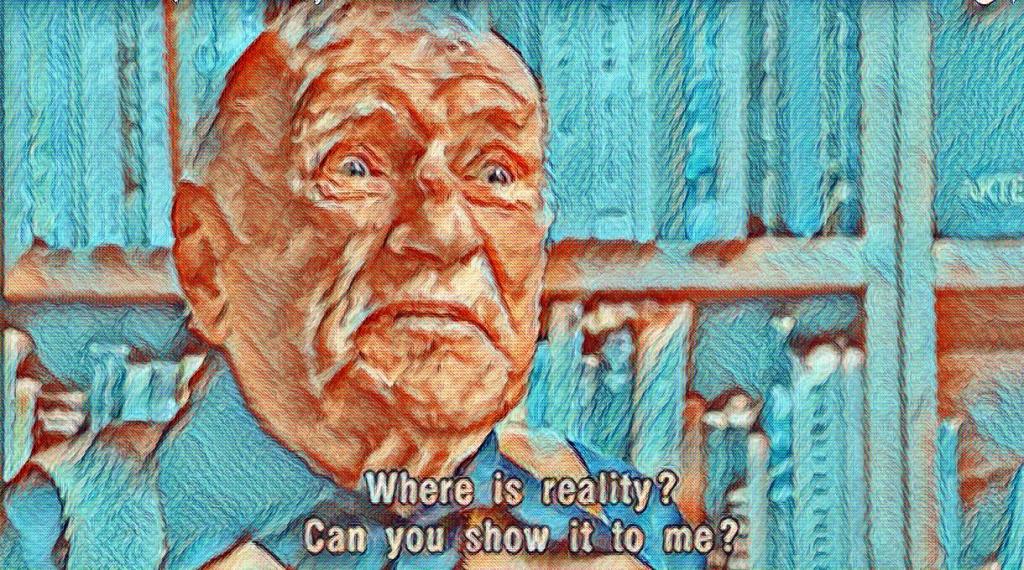
I am writing this post after a short break. My topic for the post is “reality”. I have always been fascinated with the idea of ontology in philosophy. It is loosely described as the study of existence or reality and it comes under metaphysics in philosophy. I have written about it many times before and it seems that there are always more and more nuances regarding it. I have come to see myself as a cybernetician, so today’s post is about reality for a cybernetician.
Another philosophical term that is thrown around a lot is epistemology, or the study of knowledge. I see ontology intertwined with epistemology. As a cybernetician, I see the existence of circularity between the two. Ontology, the study of reality, has a circular relationship with epistemology, the study of knowledge. Why is this the case? As a cybernetician, I am of the view that reality is…
View original post 990 more words
Book Pick: Stafford Beer & The Brain of the Firm – Caminao’s Ways
Book Pick: Stafford Beer & The Brain of the Firm
Book Pick: Stafford Beer & The Brain of the Firm – Caminao’s Ways
Vol. 5 No. 1 (2022): Creative Writing by and for Systemic Practitioners | Murmurations: Journal of Transformative Systemic Practice
Murmurations: Journal of Transformative Systemic Practice
Murmurations: Journal of Transformative Systemic Practice
Search
Systemic practitioners have much to say about the intricate activities of their working relationships. Every breath or intonation is a decision, infused with ethical, cultural, aesthetic and practical considerations. These papers show different forms of storytelling to engage readers in learning about the lives and practice of others and in reflexivity about their own practice.
Published: 24-09-2022
Vol. 5 No. 1 (2022): Creative Writing by and for Systemic Practitioners | Murmurations: Journal of Transformative Systemic Practice
Apart from the ‘blind men and the elephant’, and the ‘steersman/kybernetes’ what are some archetypal illustrations of systems thinking | complexity | cybernetics?
I like eg ‘Eppur si muove’ https://bit.ly/3BLbBw7 and
‘the evening star IS the morning star’ https://bit.ly/3qGh2Gc
In this LinkedIn post, I also commented ‘Obviously I should have used ‘flocking’ and ‘that obesity map’ too :-)’
John Siegrist said ‘Does the butterfly effect count? I believe Lorentz used to talk about chaos in weather forecasting? And of course there’s the Tulip Bulb Mania.’
Steve Whitla pointed out ‘
The Watt centrifugal governor – exemplifies how in a well-designed system going out of control is also the means of bringing itself back into control. I’ve used this quite a bit since I saw Stafford Beer draw one on a whiteboard to make the point … thermostats are a commoner example but they’re static – watching little globes spinning wildly round and round is more visceral. He added – watch from 35:30 https://www.youtube.com/watch?v=JJ6orMfmorg‘
Post | LinkedIn
What else? Boids, Game of Life?
Model-Dependent Realism | Hawking and Mlodinov
Model-Dependent Realism
Model-Dependent Realism | Science4All
THE ORIGIN OF THE UNIVERSE
2005
Stephen Hawking
STEPHEN HAWKING ON MODEL-DEPENDENT REALISM
Stephen Hawking on model-dependent realism – William Currie
STEPHEN HAWKING ON MODEL-DEPENDENT REALISM
Stephen Hawking on model-dependent realism – William Currie
The Grand Design – Stephen Hawking, Leonard Mlodinow (2010)Chapter 3. What Is Reality
What Is Reality – The Grand Design – Stephen Hawking, Leonard Mlodinow
How sound is Stephen Hawking’s model-dependent realism?
How sound is Stephen Hawking’s model-dependent realism? : askphilosophy
” We cannot ask if a #model corresponds to #reality because we have no independent test of what reality is. All we can ask is whether the #predictions of the model are confirmed by #observation ” — Stephen Hawking
Post | Feed | LinkedIn
Emergentism | Chapter 2: From Reduction to Emergence
Emergentism | Chapter 2: From Reduction to EmergenceBrendan Graham Dempsey7 hr ago52New Laws: Thermodynamics and Evolution
Emergentism | Chapter 2: From Reduction to Emergence
“Any old map will do” meets “God is in every leaf of every tree” | Statistical Modeling, Causal Inference, and Social Science
“Any old map will do” meets “God is in every leaf of every tree”
“Any old map will do” meets “God is in every leaf of every tree” | Statistical Modeling, Causal Inference, and Social Science
“Any old map will do” meets “God is in every leaf of every tree”
Posted on by Andrew
As a statistician I am particularly worried about the rhetorical power of anecdotes (even though I use them in my own reasoning; see discussion below). But much can be learned from a true anecdote. The rough edges—the places where the anecdote doesn’t fit your thesis—these are where you learn.
We have recently had a discussion (here and here) of Karl Weick, a prominent scholar of business management who plagiarized a story and then went on to draw different lessons from the pilfered anecdote in several different publications published over many years.
Setting aside an issues of plagiarism and rulebreaking, I argue that, by hiding the source of the story and changing its form, Weick and his management-science audience are losing their ability to get anything out of it beyond empty confirmation.
A full discussion follows.
Systems Thinking Ontario – 2022-09-19
2022-09-19
Systems Thinking Ontario – 2022-09-19
Too late for the session, but to preserve the links and record
2022-09-19
September 19 (the second Monday of the month) is the 103rd meeting for Systems Thinking Ontario. The registration is at https://global-elephants.eventbrite.ca .
Global Elephants in the Room: A reflexive prospective following 50 years of the Global Problematique
For September’s Systems Thinking Ontario, OCADU’s professor Peter Jones will share a preview of his talk for RSD11 on a world system perspective of the Club of Rome’s Global Problematique.
It has been 50 years since the original Limits to Growth report to the Club of Rome. Since then, many of the original controversies triggered by the dire scenarios produced by the Meadows research team have been accepted as current outcomes of their prediction, anchoring its position as prescient in climate and economic policies. The Limits to Growth project was based on the original Club of Rome prospectus know as the Global Problematique, a problem framing produced by Hasan Özbekhan, a first-generation social system thinker who advocated requisite variety and stakeholder engagement to resolve the problematique.
After 50 years the technocratic approaches of systems thinking still pervade methodology and design. The globalism inherent in the Problematique also remains; with rapidly developing new economies in the Global South, these assumptions ought to also be reconsidered. Why must the Problematique be situated as “global?” Even as Özbekhan’s stakeholder-centred vision may be achievable today, but now we must ask, who are the real stakeholders for these problems? Jones critiques the original view of “the global” as originating from the Club of Rome expert-centred framing and contrast the Western policy mindset with systemic design’s stakeholder-centred systems view. Jones will discuss the mappings from these studies and show an alternative non-Western frame with significant difference in priorities, if the Global South is centred instead of the West.
Venue:
- The link for a Zoom conference will be sent upon preregistration.
- Unfortunately, due to the pandemic OCADU, sLab (Strategic Innovation Lab), 205 Richmond Street West, Room 410 is not available!
Suggested pre-reading:
Özbekhan, H., Jantsch, E., & Christakis, A. N. (1970). The predicament of mankind: A quest for structured responses to growing world-wide complexities and uncertainties. Proposal to the Club of Rome. [Part 1 excerpt]
Christakis, A. N. (2006). A retrospective structural inquiry of the Predicament of Humankind. In Volume 1: Rescuing the enlightenment from Itself (pp. 93-122). Springer, Boston, MA. https://citeseerx.ist.psu.edu/viewdoc/download?doi=10.1.1.580.2313&rep=rep1&type=pdf
Christakis, A. N. & Diedrich J. (2022). Co-constructing Retrospective and Retroductive Global Problematiques Virtually with the Logosofia platform, in the context of the Climate Crisis: A report on the Gedanken Experiment. [manuscript]
Systems thinking in public policy: Making space to think differently – Catherine Hobbs – Integration and Implementation Insights
Systems thinking in public policy: Making space to think differentlySeptember 20, 2022By Catherine Hobbs
Systems thinking in public policy: Making space to think differently – Integration and Implementation Insights
Development and application of ‘systems thinking’ principles for quality improvement | McNab et al – BMJ Open Quality
Development and application of ‘systems thinking’ principles for quality improvement
Development and application of ‘systems thinking’ principles for quality improvement | BMJ Open Quality
Development and application of ‘systems thinking’ principles for quality improvement
On doing “being ordinary” – Sacks (2010) (Chapter 16) – Structures of Social Action, Ed Maxwell Atkinson
16 – On doing “being ordinary”Published online by Cambridge University Press: 05 May 2010ByHarvey SacksEdited byJ. Maxwell Atkinson
On doing “being ordinary” (Chapter 16) – Structures of Social Action
What we talk about when we talk about context | Dourish (2003)
[I urge you to get beyond the abstract, it is worth it!]
What we talk about when we talk about context
What we talk about when we talk about context | SpringerLink
What we talk about when we talk about context
Personal and Ubiquitous Computing volume 8, pages19–30 (2004)Cite this article
Abstract
The emergence of ubiquitous computing as a new design paradigm poses significant challenges for human-computer interaction (HCI) and interaction design. Traditionally, HCI has taken place within a constrained and well-understood domain of experience—single users sitting at desks and interacting with conventionally-designed computers employing screens, keyboards and mice for interaction. New opportunities have engendered considerable interest in “context-aware computing”—computational systems that can sense and respond to aspects of the settings in which they are used. However, considerable confusion surrounds the notion of “context”—what it means, what it includes and what role it plays in interactive systems. This paper suggests that the representational stance implied by conventional interpretations of “context” misinterprets the role of context in everyday human activity, and proposes an alternative model that suggests different directions for design.
Cybernetics Society Presidents Series 20 – Cybernetics and Tribal Dynamics – Omar Kharoti and James Bryant – YouTube
Presidents Series 20 Cybernetics and Tribal Dynamics
15 Sept 20220
Omar Kharoti discusses Cybernetics and Tribal Dynamics followed by James Bryant introducing a conversation about Discovering Cybernetics
(1) Presidents Series 20 Cybernetics and Tribal Dynamics – YouTube
How Claude Shannon’s Concept of Entropy Quantifies Information | Kevin Hartnett in Quanta Magazine
INFORMATION THEORY
How Shannon Entropy Imposes Fundamental Limits on Communication
What’s a message, really? Claude Shannon recognized that the elemental ingredient is surprise.
Kevin Hartnett
September 6, 2022
Abstractions blogcomputer scienceexplainersinformation theorymathematicsAll topics
If someone tells you a fact you already know, they’ve essentially told you nothing at all. Whereas if they impart a secret, it’s fair to say something has really been communicated.How Shannon Entropy Imposes Fundamental Limits on Communication
How Claude Shannon’s Concept of Entropy Quantifies Information | Quanta Magazine
 Systems Community of Inquiry
You must be logged in to post a comment.