
The Hierarchy of IllusionsMistaking what you have, or what you do, for who you areGeoff Marlow5 hr ago
The Hierarchy of Illusions – by Geoff Marlow
Category Archives: Discussion
A view or perspective on the world
Identity, Power, and Speech with Olúfẹ́mi Táíwò – The Dig
I’m quite taken by this – a very well-observed piece
Podcast
https://thedig.blubrry.net/podcast/identity-power-and-speech-with-olufemi-taiwo-2/
Article
https://www.thephilosopher1923.org/post/being-in-the-room-privilege-elite-capture-and-epistemic-deference
Dr. Brian Dermody – Geosciences – Utrecht University
Interesting links and perspective on systems literacy in the Netherlands.
h/t Thys van der Veer
Dr. Brian DermodyAssistant Professor GeosciencesCopernicus Institute of Sustainable DevelopmentInnovation StudiesDynamics of Innovation System
Dr. Brian Dermody – Geosciences – Utrecht University
Systems change theory and practice: a brief review and practical insights – Knight and Baldwin, 2022
Systems change theory and practice: a brief review and practical insights
The paper looks decent – I need to read again – but is worth it just for the excellent references.
Systems change theory and practice: a brief review and practical insightsA discussion paper about finding better ways to improve child and family wellbeing20 APR 2022Ruth Knight, Louise Baldwin
Systems change theory and practice: a brief review and practical insights
Insights and future directions for systems and complexity‐informed evaluation – Walton et al (2021)
Insights and future directions for systems and complexity-informed evaluationMat Walton,Emily F. Gates,Pablo VidueiraFirst published: 01 September 2021
Insights and future directions for systems and complexity‐informed evaluation – Walton – 2021 – New Directions for Evaluation – Wiley Online Library
Insights and future directions for systems and complexity-informed evaluation
Mat Walton,Emily F. Gates,Pablo Vidueira
First published: 01 September 2021
https://doi.org/10.1002/ev.20459
Abstract
With the increasing maturity of systems thinking and complexity science (STCS) within evaluation, this issue of NDE provides case examples of contemporary application. This article identifies themes across case examples to identify emergent patterns and opportunities for the continued development of evaluation practices that draw upon STCS. Each article describes STCS and its applications within specific evaluation contexts. Our review across cases identified three themes: (1) the importance of setting boundaries around what is included and excluded from within the STCS field in a specific evaluation; (2) using STCS concepts and theories to enhance program and evaluation theory, and (3) broadly drawing upon STCS to support changes in systems and develop capacity within organizations. While these implications show some promise for systems and complexity informed evaluation, they, more importantly, underscore the need for deeper engagement with STCS theories and methods while simultaneously remaining accessible for evaluators.
Renger – System Evaluation | Justevaluation
SYSTEM EVALUATION
System Evaluation | Justevaluation
International Society for the Systems Sciences, 66th Annual Conference, online conference 7-11 July 2022
Source:
Source
| International Society for the Systems Sciences, 66th Annual Conference. |
 |
| Featured speakers include: George Mobus, Vanessa Andreotti, Cynthia Kurtz, Bill Rees, Janet McIntyre, Tyler Volk, Bayo Akomolafe, David Holmgren, Dave Snowden, Peter Jones, Tony Hodgson, Raghav Rajagopalan, Megan Seneque, Paul Pangaro, Bill Seaman, Louise Allison, Alexander Christakis, and more!Registration: https://web.cvent.com/event/ace397ec-5052-469b-8949-f1d046e5478e/summary Conference Conversations: Anything you’d like to discuss about the upcoming ISSS conference?Please get in touch! conference@isss.orgHoward Silverman, 2021-2 VP Conferences |
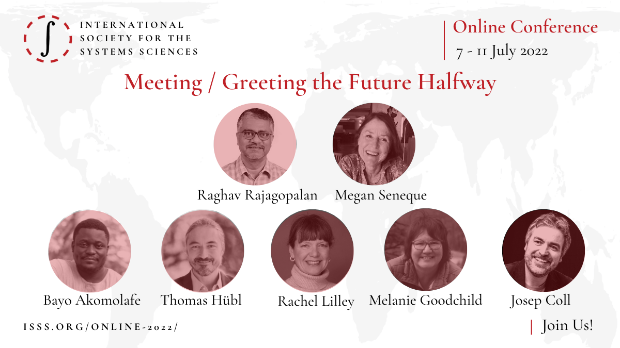
| Featured Session Meeting/Greeting the Future Halfway Hosted by Raghav Rajagopalan and Megan SenequeSystems thinking has gained critical recognition from world organisations, and scholars have redoubled efforts at global problem-solving. This panel examines the provocative possibility that we may need to pause and thoroughly reconsider our current responses. PANELISTSBayo Akomolafe: Public intellectual “passionate about the preposterous”, author of “These Wilds Beyond our Fences”.Thomas Hübl: Renowned teacher on collective and ancestral trauma, combines spiritualism and science. Conducts workshops on trauma-informed approaches, resilience, and mindfulness at Harvard. Rachel Lilley: Systems scholar – Research Fellow, University of Birmingham. Researches high-impact leader decision-making, applying mindfulness and behavioural insights.Melanie Goodchild: Complexity and relational systems thinking scholar. Moose clan, Biigtigong Nishnaabeg First nations in Ontario. Practitioner faculty, University of Vermont. Josep M Coll: Author, Buddhist and Taoist Systems Thinking. |
 |
| First Plenary |
 David Ing – Appreciating Systems Changes Via Multiparadigm Inquiry David Ing – Appreciating Systems Changes Via Multiparadigm InquiryThe subject of this session is systems change(s), as a whole, as distinct from a reduction into (i) systems and (ii) changes. An appreciative systems framework surfaces presumptions of (i) what are and are not systems changes; (ii) when, where, and for whom, systems changes are prioritized for attention; and (iii) how systems changes should be addressed. David Ing is a past president of ISSS and a research fellow at the Creative Systemic Research Platform Institute. |
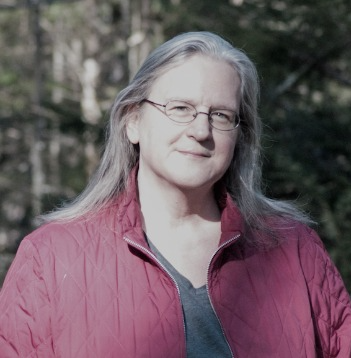 Cynthia Kurtz – An Introduction To The Confluence Toolset Cynthia Kurtz – An Introduction To The Confluence ToolsetHow do complex patterns affect our lives, families, teams, communities, organizations, and societies? Confluence is a set of thinking tools and a group exercise designed to help all of us make sense of how the twin forces of self-organization (spontaneous patterns) and organization (purposeful plans) flow together through the situations we face and the decisions we make. Cynthia Kurtz is an independent consultant specializing in Participatory Narrative Inquiry. |
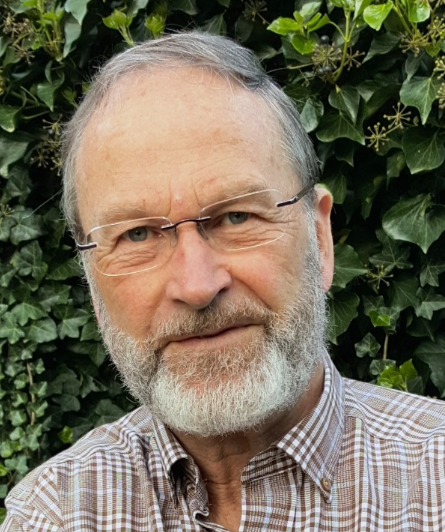 William Rees – Why Things Will Likely Get Worse: A Systems Perspective William Rees – Why Things Will Likely Get Worse: A Systems PerspectiveThe human brain is obsolete. Without a dramatic change of course, including a shift to systems-based eco-consciousness and a planned economic contraction, modern techno-industrial culture is likely to be ‘selected out’ by systemic negative feedback in coming decades. William Rees is Professor Emeritus at the University of British Columbia and former director of the School of Community and Regional Planning at UBC. |
| Second Plenary |
 George Mobus (Chair) – Past Presidents PanelIn this panel discussion we’ve invited several of the past presidents to share their insights and concerns with emphasis on the future of ISSS. I will start off with one or two starter questions and then let the panelists have a discussion among themselves. That discussion will be followed by a Q&A period for members to interact with the panelists.The panelists are:Mike Jackson, John Kineman, Stuart Umplby, Jennifer Wilby & Allenna Leonard George Mobus (Chair) – Past Presidents PanelIn this panel discussion we’ve invited several of the past presidents to share their insights and concerns with emphasis on the future of ISSS. I will start off with one or two starter questions and then let the panelists have a discussion among themselves. That discussion will be followed by a Q&A period for members to interact with the panelists.The panelists are:Mike Jackson, John Kineman, Stuart Umplby, Jennifer Wilby & Allenna Leonard |
 Vanessa Andreotti – Gesturing Towards Decolonial Futures: Resonances and Tensions at the Intersection with Systems Science Vanessa Andreotti – Gesturing Towards Decolonial Futures: Resonances and Tensions at the Intersection with Systems ScienceGesturing Towards Decolonial Futures (GTDF) is an arts/research collective that develops public pedagogies and artistic interventions at the interface of two sets of questions: 1) questions related to historical, systemic, and ongoing social and ecological violence, and 2) questions related to the unsustainability of modern-colonial systems and ways of being. This presentation will outline the work of the collective in relation to systems science and present examples of analytical and decision making tools that combine decolonial and systems approaches and concerns. |
| Vanessa Andreotti is a professor at the Department of Educational Studies at the University of British Columbia, holds a Canada Research Chair in Race, Inequalities and Global Change, and is the interim director of the Peter Wall Institute for Advanced Studies. |
 Tyler Volk – The Next Round Of Combogenesis Has Already Started Tyler Volk – The Next Round Of Combogenesis Has Already StartedThe aim of this talk is to frame and examine the world situation within the context of a big history cavalcade of what I have termed a “grand sequence” of combination and integration from the quanta of the standard model to the geopolitical state, which, I submit, has been the level of human history for thousands of years. But as many have noted, a new scale—that of the planetary–seems to be manifesting, perhaps haltingly, with steps forward and steps back. Tyler Volk is Professor Emeritus of Biology and Environmental Studies, New York University. |
| Third Plenary |
 Bill Seaman -Composing Systems for Advancing Advancing (Ranulph Glanville Memorial Lecture) Bill Seaman -Composing Systems for Advancing Advancing (Ranulph Glanville Memorial Lecture)This paper points to the creation and interfacing of networks of differing generative systems, for the advancement of knowledge production. Can we compose a set of creative approaches to “intelligent” generative systems— meta-meaning systems that explore human intelligence working in concert with Artificial Intelligence, to advance the fields of both human and artificial Intelligence in the creation of an even higher-order intelligent system of systems, to explore extremely complex problem sets? Bill Seaman is Professor of Computational Media, Arts and Cultures, Duke University, a member of the Duke Institute for Brain Sciences, and author/editor of The Architecture of Ideas: The Life and Work of Ranulph Glanville, Cybernetician. |
 Janet McIntyre-Mills – Balancing Individualism and Collectivism: A Multispecies Approach Janet McIntyre-Mills – Balancing Individualism and Collectivism: A Multispecies ApproachThe root causes of the big issues of the day: poverty, climate change and pandemics are lack of representation of multiple species, lack of accountability and the need for regeneration and sustainability which impacts food, water and energy insecurity. The paper makes the case that working with Indigenous people to protect forests is vital for our survival: indigenous forests absorb carbon and provide rich habitat for biological diversity and are more resilient than plantations that follow so-called ‘monocultures’. |
| Janet McIntyre-Mills is a retired academic: Adjunct Visiting Research Fellow, Adelaide University; Adjunct Associate Professor, Flinders University; Adjunct Professor Extraordinarius, University of South Africa; Research Associate, Universitas Padjadjaran. |
 David Holmgren – Permaculture: Systems Design For The Energy Descent Future David Holmgren – Permaculture: Systems Design For The Energy Descent FutureIn this keynote, I will outline the diverse influences on, and evolution of, permaculture as a design system, and reflect on how permaculture represents an under-recognised way in which the complexity and abstraction of system science has influenced society in ways which are: bottom up rather than top down, accessible and practical rather than obscure and theoretical, resource frugal rather than resource intensive, conceptually promiscuous rather than supportive of dominant structures and paradigms. David Holmgren is the co-originator of the permaculture concept following publication of Permaculture One, co-authored with Bill Mollison in 1978. |
| Holistic SIG Workshop at the Conference The Search to Include the Dark Side Creates more Holistic Systems ApproachesA bias towards the light side, inherited from the Age of Enlightenment, is preventing systems from dealing effectively with the largest issues we face, e.g. of lack of attention to wholes, e.g. earth systems, abuse of power at all levels from global to local, in all spheres e.g., social, political and technical.Since the Corvallis Conference, the SIEL SIG has been working with Peter Tuddenham’s Systems Literacy and Gary Smith’s Systems Integration to add a third level to Bill Smith’s AIC natural systems organizing process. The results add a third level to Bills, Purpose, and Power emphasis –the discovery that Order matters. It is the order of purpose and power elements that allows the organizing process to adapt in ways that include the sub-conscious contributions to the dark side of systems. The research also suggests the existence of stem-systems that move Systems Integration to Systems Coherence and Systems Literacy to the creation of a “Periodic Table of Living System Elements”. Three workshops focus on the practical implications of their thinking for individual ISSS members, SIG groups, and implications for the ISSS organization use AIC Color Maps to reveal the resulting patterns of lightness and darkness. The workshops will be presented on July, 8, 9, and 10 at 3:00 pm EDT. |
Conference News International Society for the Systems Sciences, 66th Annual Conference.
Source
The Ralph Stacey Memorial Lecture on Weds 5th October at the University of Hertfordshire, 6pm.

This is to give advance notice ofThe Ralph Stacey Memorial LectureonWeds 5thOctoberat the University of Hertfordshire,6pm. The day we have chosen is close both to his birthday and to the date of his death.

I will give a tribute to Ralph and his legacy and Patricia Shaw has agreed to give a response. We hope to turn the lecture into an annual event.
The lecture will be held at the Business School, de Havilland campus, where Ralph was an employee for 32 years. It will be live-streamed so that people can join remotely. For those interested and present in person, we may follow the lecture with an experiential group.
If you’re interested in attending/viewing then please save the date. Further details will follow.
In addition, the dates ofnext year’s conference are 2nd-4thJune 2023. I am assured…
View original post 9 more words
Results for Development – REQUEST: Organizational Learning and Systems Measurement Consultant
source:
source: Results for Development – REQUEST: Organizational Learning and Systems Measurement Consultant
REQUEST: Organizational Learning and Systems Measurement Consultant
REMOTE – UNITED STATES /
DOMESTIC – CONSULTANCIES /
CONSULTANT (STTA, TOR, SOW, EOI)
Results for Development (R4D) is a leading non-profit global development partner. We collaborate with change agents around the world — government officials, civil society leaders and social innovators — to create strong systems that support healthy, educated people. We help our partners move from knowing their goal to knowing how to reach it. We combine global expertise in health, education and nutrition with analytic rigor, practical support for decision-making and implementation and access to peer problem-solving networks. Together with our partners, we build self-sustaining systems that serve everyone and deliver lasting results. Then we share what we learn so others can achieve results for development, too.
REQUEST: Organizational Learning and Systems Measurement Consultant
source: Results for Development – REQUEST: Organizational Learning and Systems Measurement Consultant
Joint PhD opportunity: KU Leuven and University of Edinburgh, involving design, dementia and the preservation of dignity in residential care settings by building a better understanding of clients’ intimacy needs, through a participatory methodology
A unique, design-led, joint PhD project has arisen between KU Leuven and University of Edinburgh, involving design, dementia and the preservation of dignity in residential care settings by building a better understanding of clients’ intimacy needs, through a participatory methodology.
Full project details:
https://www.kuleuven.be/personeel/jobsite/jobs/60118258?hl=en&lang=en
The suitable candidate will be based in Belgium at Inter-ACTIONS research unit at the LUCA School of Arts, with scheduled placements in Edinburgh, working closely with colleagues from the School of Design and the School of Health & Social Sciences through our Advanced Care Research Centre (ACRC).
Questions or queries should be directed to either Dr. Niels Hendriks (KU Leuven) or Dr. Arno Verhoeven (Uni Edinburgh). Contact details can be found within the link above.
Deadline for submission is July 1.
The Nature of Complex Networks – Sergey N. Dorogovtsev, José F. F. Mendes – Oxford University Press

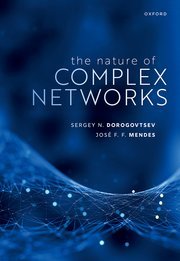
Sergey N. Dorogovtsev and José F. F. Mendes
Provides a systematic account of the statistical mechanics of complex networks
Covers recent trends, concepts, and theoretical techniques, and emphasises interdisciplinary strands
Broad appeal to researchers in complex systems including theoretical physicists and applied mathematicians as well as epidemiologists
Extensive bibliography and appendices offer excellent reference source for students and researchers
More at: global.oup.com
New Books Network podcast | Jessica M. Wilson, “Metaphysical Emergence”, OUP 2021
Jessica M. WilsonMay 20, 2022Metaphysical EmergenceOXFORD UNIVERSITY PRESS 2021
New Books Network | Jessica M. Wilson, “Metaphysical Emergence”…
New Books Network podcast | Mark Andrejevic, “Automated Media” (Routledge, 2019)
A lot in this – meta-rational perspectives, the psychoanalytic perspective, and a lot more.
See also review by Jakob Svensson: https://www.diva-portal.org/smash/get/diva2:1492898/FULLTEXT01.pdf
source and podcast
New Books Network | Mark Andrejevic, “Automated Media” (Routledge,…
Mark Andrejevic
Jun 24, 2022
Automated Media
ROUTLEDGE 2019
In this era of pervasive automation, Mark Andrejevic provides an original framework for tracing the logical trajectory of automated media and their social, political, and cultural consequences.
Automated Media (Routledge, 2019) explores the cascading logic of automation, which develops from the information collection process through to data processing and, finally, automated decision making. It argues that pervasive digital monitoring combines with algorithmic decision making and machine learning to create new forms of power and control that pose challenges to democratic forms of accountability and individual autonomy alike. Andrejevic provides an overview of the implications of these developments for the fate of human experience, describing the “bias of automation” through the logics of pre-emption, operationalism, and “framelessness.”
Automated Media is a fascinating and groundbreaking new volume: a must-read for students and researchers of critical media studies interested in the intersections of media, technology, and the digital economy.
Mark Andrejevic is Professor of Media Studies at Monash University where he heads the Automated Society Working Group in the School of Media, Film and Journalism. He is the author of Infoglut: How Too Much Information Is Changing the Way We Think and Know, iSpy: Surveillance and Power in the Interactive Era; and Reality TV: The Work of Being Watched, as well as numerous journal articles and book chapters on surveillance, popular culture, and digital media.
souce and podcast: Mark AndrejevicJun 24, 2022Automated MediaROUTLEDGE 2019
New Books Network | Mark Andrejevic, “Automated Media” (Routledge,…
System Diagrams: A Practical Guide – Bob Williams
Source
System Diagrams: A Practical Guide
System Diagrams: A Practical Guide
pdf is ‘contributionware’
Systems Diagrams: A Practical Guide.
The past few years have seen increased use of system diagrams. System diagrams provide an excellent way of clarifying complex situations and help to address identified problems. Potential users are spoilt for choice – there are literally dozens of different diagram based approaches.
However, there are not many easily accessible publications that describe how to match and use appropriate diagrams to particular tasks. Which is why System Diagrams; A Practical Guide came to be written.
The discussion of each approach is accompanied by a worked example and a set of questions that that the diagram addresses. There are also chapters on the role of diagrams in general; what constitutes a systemic inquiry and the overall nature of system diagrams.
System Diagrams; A Practical Guide covers six diagram approaches that between them cover a wide range of uses;
Rich Picturing. Useful when trying to get to grips with the complexity of a situation and work out which aspects you should be focusing on.
Influence Diagrams. Useful when you want to have a snapshot of what is influencing a particular issue or topic at a particular moment in time.
Causal Diagrams. Useful when you want to explore the possible consequences of specific causal relationships within a particular issue or topic over a period of time.
Cynefin. A diagram that helps you to think about and respond to a particular situation, or intervention, through five different framings; simple, complicated, complex, chaotic and confused.
Viable System Model (VSM). A diagram that helps to assess and ensure the viability of a purposeful activity, given the range of competing demands from different components of that endeavour.
Cultural Historical Activity System Model (CHAT). A diagram that guides a series of questions about how to people with different motivations can work together creatively and effectively, especially when responding to changing and challenging events.
Source: System Diagrams: A Practical Guide
Bob Williams
System Diagrams: A Practical Guide
Upcoming People Need People session & Screening of the Bateson Approach to Learning
Invitation to the First Oceania People Need People Session and the Screening of the Bateson Approach to LearningDear Benjamin Taylor, We have two exciting events coming up soon, for you to enjoy.Firstly a People Need People session for all the Bateson Anniversary event attendees in the Oceania timezone and the screening of the most recent live Anniversary event – the Bateson Approach to Learning.Read on for registration links and share with your community! With endless warmth, Fiona, Lesley, April & Nora
Upcoming People Need People session & Screening of the Bateson Approach to Learning
 Systems Community of Inquiry
You must be logged in to post a comment.