
Category Archives: Discussion
A view or perspective on the world
Into the Heart of Systems Change – Anneloes Smitsman PhD
From Anneloes’ post on facebook https://www.facebook.com/anneloes.smitsman/posts/10157357271563591?__xts__[0]=68.ARDnEpeoqAqOhb3nCQ-sWCO-W6nEvpSLZVY2yAx_brxFbdnJbyU574hxvw-8mNpr7ZQof6vJZLR80IsoFek3ftDJK2_2PDk0xjaO9lMN9qpX_NsraLHhUQ2ocGg7CKSnKH3E4cupMbriIKAEpQ_Q2Z4ZlADEZOZ107L2FUhp-UaUMMkRZlWSqfQKbxEsz3MDsYFBfksEFs54JdxHCA&__tn__=-R
Finally!! Today was the oral defence for the receiving of the degree of Doctor at the ICIS Maastricht University. With deep thanks to my supervisors Prof Pim Martens and Prof Alexander Laszlo for supporting me to “think outside the box” and write from the heart of systems science, and to my family and children and all the incredible people in my life who have supported me all those years and have contributed to the stories and insights of “Into the Heart of Systems Change” (you are all mentioned by name in the dissertation acknowledgement), and the oral defence committee for the “tough questions” and great feedback today.
- E-book version of the PhD dissertation – https://bit.ly/2rTwl2Z
- PDF download version of the dissertation – https://bit.ly/2DnbHuP
- Oral defence presentation – https://www.dropbox.com/s/8m1619yy333g9je/Into%20the%20Heart%20of%20Systems%20Change%20-%20PhD%20Dissertation%20by%20Anneloes%20Smitsman%20(PhD%20dissertation%202019).pdf?dl=0&fbclid=IwAR3Vre03hioJsO7g-J6QyF0YwJEteJ5iQzqgPthCXRSDWWfLtPO8DrtAMOQ
Source: Into the Heart of Systems Change
Systems Practice, Abridged – In Too Deep
Source: Systems Practice, Abridged – In Too Deep
Systems Practice, Abridged

When you’re making a system map in Kumu, it’s important to have skill and familiarity with the tool itself, but it’s equally important to have an understanding of the concepts of systems thinking.
You can learn these concepts and learn Kumu at the same time if you follow the Systems Practice methodology developed by The Omidyar Group. When we’re mapping systems ourselves, teaching systems skills, or simply brushing up on our own skills, this methodology is one of our all-time favorites.
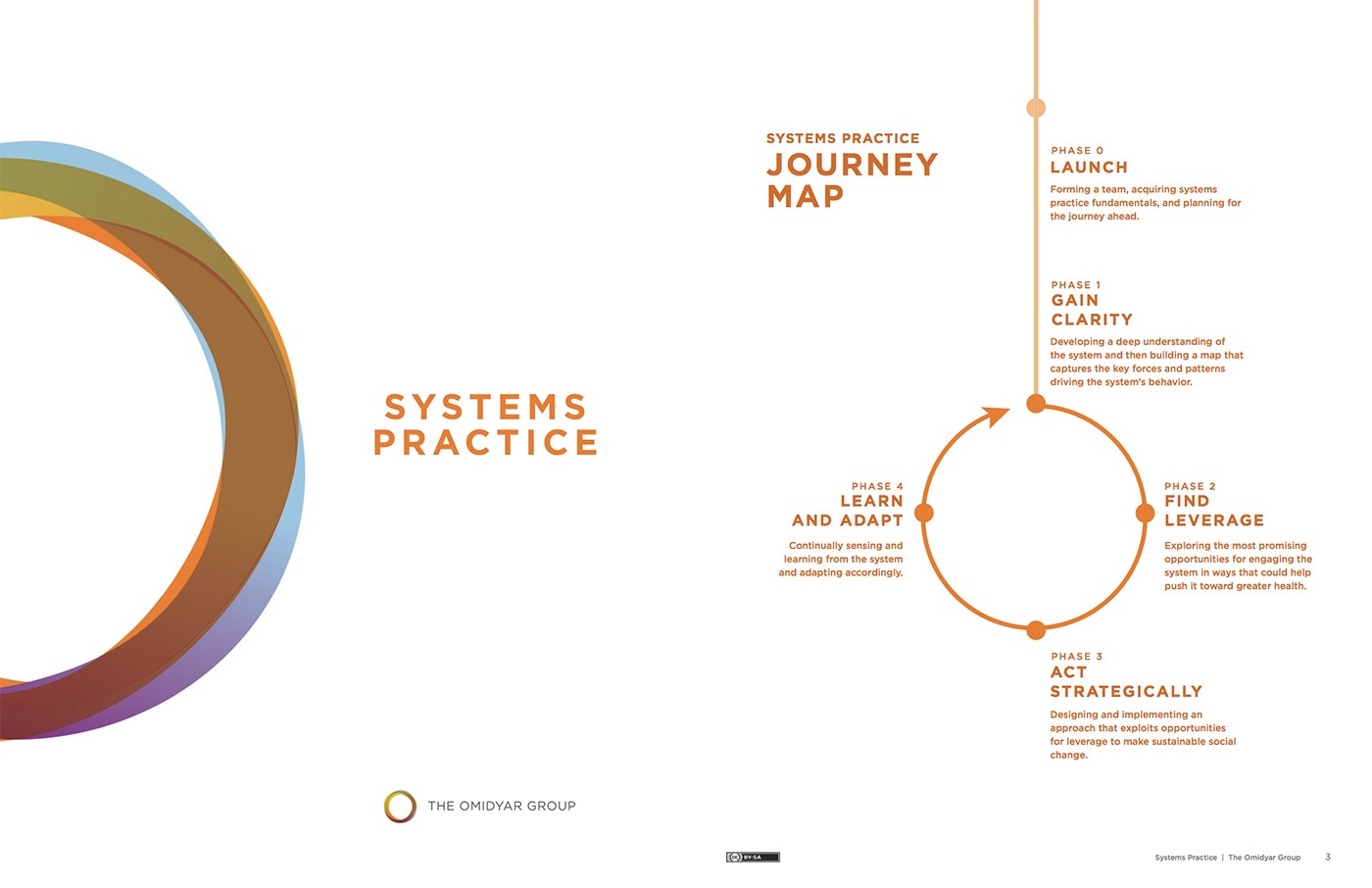
Notably, though, the Systems Practice methodology is time-consuming. The workbook itself is nearly 100 pages long, and it mandates weeks, if not months, of study and stakeholder engagement.
For serious system mapping work, spending this much time studying, thinking about, and mapping your system helps ensure you are addressing root causes rather than instituting quick fixes. In the long term, the time and resources you invest in Systems Practice will pay dividends.
But what if you’re not quite sold on the Systems Practice methodology yet? What if you haven’t encountered systems thinking before and just want to dip your toes in? Or what if you’re an expert or an educator with only a few hours to introduce Systems Practice to a fresh new group of systems thinkers?
At Kumu, we face this problem all the time! Whether we’re doing a product demo, giving one-on-one support to Kumu users, or leading day-long trainings, we rarely have more than a few hours to introduce Systems Practice, introduce Kumu itself, and get as close as possible to the first draft of a system map.
Give those constraints, and after plenty of trial and error, I’ve settled on an abridged version of Systems Practice that fits comfortably into a 2–4 hour session. In this article, I’ll share the main concepts and activities that comprise “Systems Practice, Abridged,” organized into the following sections:
- What is a Systems Practice?
- The power of mapping with Kumu
- Applying systems thinking
- Incorporating others’ perspectives
- Leverage and learning
Continues in source: Systems Practice, Abridged – In Too Deep
Why I hope we could do better than the Castellani complexity map
In response to this question on twitter (click link to see the full thread)…
…some of my thoughts on the challenges of the (rich in content, developed over the years) complexity map that is very popular. One of a continuing theme of me noodling on points of origin and confluence around #cybernetics, #complexity, and #systemsthinking – in fact, one broad field, I think…
So, first of all, what do I know? I’m not an academic, though I’ve dabbled at playing at it. I’m obsessive/passionate, but I haven’t done all the reading (few have), but anyway… (and I’ve included here learning that I have got from others better qualified than me, but all mistakes are mine, I haven’t named them because it’s a series of ongoing conversations and I don’t think they want to be engaged in pointless controversy).
Also, it’s a harder argument to make because as I’m arguing *congruence and continuity*, rather than difference, and people are used to argument about distinctions. My view is that #systemsthinking, #cybernetics, and #complexity are all part of the same family, with the same roots, the same family resemblances, and wherever you try to make a divide it is going to be proven artificial, because it is going to sweep *in* many things avowedly under a different label, and sweep *out* many things under the same label. More of complexity is realist, more of systems thinking is dispositional, more of cybernetics is dispositional, whatever.
Most people trying to make the distinction simply are sweeping in what they like, paper-tigering the rest, and therefore mischaracterising the ‘out group’ and giving ahistorical and unscientific boundaries. The distinction is often made in ignorance, but sometimes intentionally ‘wrecking synergy to stake out territory’, and either way, it does scholarship in the field a disservice.
Good word on this from Gerald Midgely https://www.facebook.com/groups/774241602654986/permalink/2067256553353478/
This is not to say that there are not tribes, sticking to their narrow ways in happy ignorance or denial of the systems/cybernetics/complexity world outside their window… nor that there aren’t truly intellectually curious and open people who see no boundaries and find value across the whole domain – in fact, most people who don’t already have an intellectual stake in seeing boundaries, and some who do, see the value across the piece also.
But the four quadrants of thinking threats are always there! https://www.dropbox.com/s/1ritpobdoexr5qy/four%20quadrants%20of%20thinking%20threats.pdf?dl=0
On the maps itself, I’d say that ‘systems’ is a common property of all circles in Castellani’s map, even more than complexity.
Then:
- The claim that complexity theory came up with the ideas of self-organisation, autopoeisis and emergence is simply untrue, it feels like blatant appropriation of existing work – likewise Bak’s ‘self organised criticality’ (he coined the term but not the concept)
- Strange attractors – there’s something like this too in Ashby’s Design for a brain, and of course Heinz von F’s eigenforms, 1981.
- Timelines and connections are dubious (but – to be fair – admittedly simplified and ‘one perspective’). And also it gets very mushy in the 21st Century – too soon to attempt anything scholarly here, one might say.
- Nonlinear in late 70s? Seems ridiculous.
- Scaling and self-similarity in the 1980s? These are all a lot earlier.
- Weaver in ‘complex systems theory’ not cybernetics? Yes, he defined ‘complexity’ in 1948 (not the late 60s or early 70s as it seems here), but he was a core cybernetician.
- Pitts too.
- And for some reason, Stafford Beer is placed in the 90s and under systems science, not cybernetics?
- No mention of the modern origins of all of this in the Macy conferences?
- No mentioned of Santa Fe being predicated on the work of Ashby in the 1940s
- Prigogine was the president of the international society of systems science…
- Would be nice to see Professor Derek Pugh who we think first coined ‘systems thinking’ c1970.
- Can’t see cellular automata in there – von Neumann 1950s, Varela 1988 and Liber Sogya, 16th Century (https://stream.syscoi.com/2019/05/14/tables-of-soyga-the-first-cellular-automaton-anders-sandberg/)
More historic quotes here https://stream.syscoi.com/2019/10/28/some-quotes-on-the-theme-complexitythinking-is-systemsthinking-is-cybernetics/
Our attempt to honestly attempt a mapping of the concepts, with precedents and antecedents, including thinkers, at https://kumu.io/koryckaa/scio-sysbok-v1 – but very incomplete and partial as of present!
Bunch of maps which I tend on first glance and intuitively to think are more rigorous here: https://www.dropbox.com/s/oo9x5tlcdpmb75a/systems%20maps.zip?dl=0
Patrick Hoverstadt and others are shortly coming out with a book on the core systems laws, which could be hugely impactful. Meanwhile, a limited version of these from www.systemspractice.org is more or less in the public domain (https://www.dropbox.com/s/ycmq9udawhydohx/SCiO%20-%20systems%20laws%20v0.2.pdf?dl=0) through workshops and development of the systems thinking practitioner apprenticeship – https://www.instituteforapprenticeships.org/apprenticeship-standards/systems-thinking-practitioner/
Or you could look to Len Troncale’s systems process theories and his set of isomophisms – see https://ingbrief.wordpress.com/2016/08/14/20160728-1110-len-troncale-systems-processes-theory-spt-and-its-prospects-as-a-general-theoretical-core-for-a-science-of-systems-and-sustainability-isss-2016-boulder/ – I’d love to get Len’s full slides from the Bertalanffy lecture at ISSS 2019.
Or go back to Gerald Midgley’s encyclopedia, or the other mega-systems reference guide.
And David Ing gives a masterful meta-perspective overview of the scale of the task in this 2011 presentation https://stream.syscoi.com/2019/04/21/2011-07-22-isss-incoming-presidential-address-coevolving-innovations-david-ing/
My point is that unless something uses some of these principles, it’s either not systems thinking – or it’s something *amazing* and new(ish). If it relies principally on these core ideas, it’s systems thinking(/cybernetics/complexity).
What any serious attempt in this space shows, IMHO, is the unity across and diversity within the field of cybernetics / systems thinking / complexity. i.e. if it works with, builds on, or adds to key systems laws, it’s in the field. If it doesn’t, it isn’t. And the rest is about predispositions, applications, interests, emotional tendencies, and tribalism.
Working with Stories – Cynthia Kurtz (2014)
Source: Working with Stories
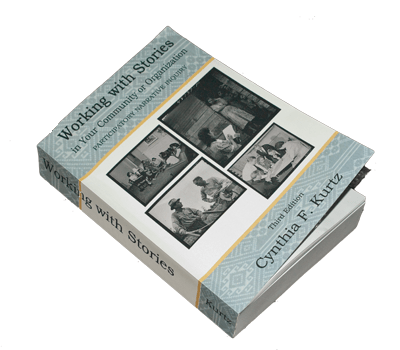
Working with Stories
in Your Community or Organization
Participatory Narrative Inquiry
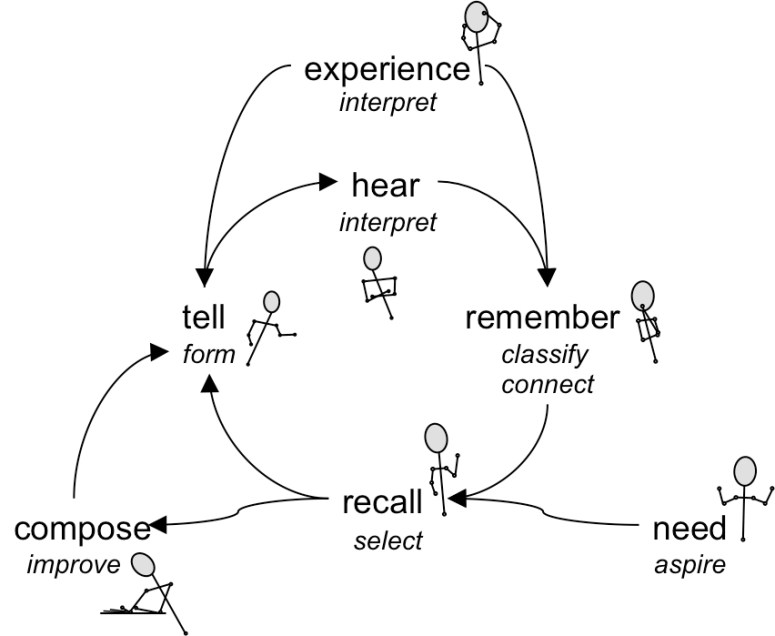
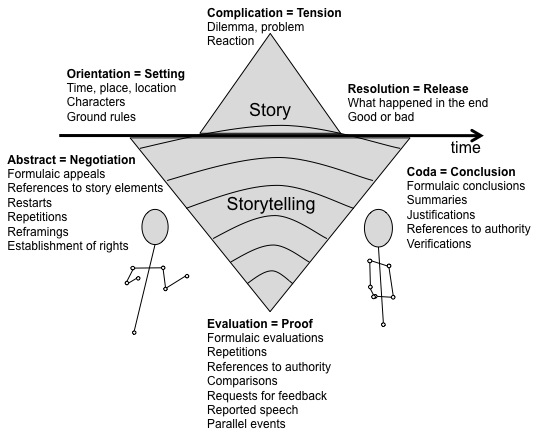
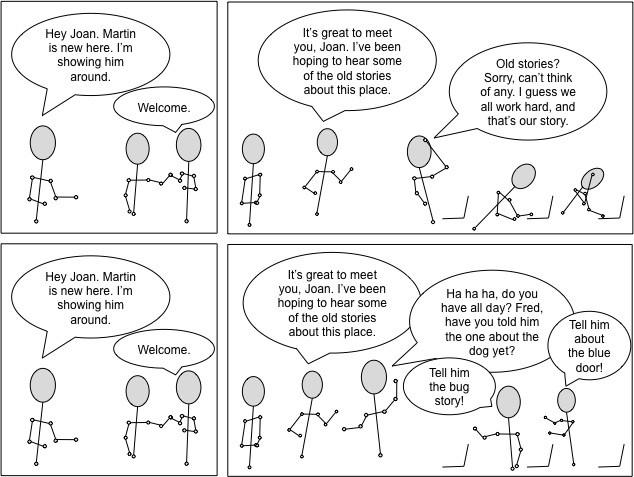
Working with Stories is a textbook that can help you use participatory narrative inquiry (PNI) in your community or organization. PNI methods can help you discover insights, catch emerging trends, make decisions, generate ideas, resolve conflicts, and connect people.
Explore the book
- Fundamentals
- Intro to PNI / Planning
- Collection
- Catalysis
- Sensemaking
- Intervention
- Return

Reader quotes
“I wanted to say thanks for making Working with Stories available. It’s an amazing piece of work, so simple (not the ideas, but the presentation) and unintimidating.”
“Your detailed description of [the sensemaking] process is so useful and helpful. It makes seasoned facilitators like me yearn to try out the ideas.”
“Over the past few months I have been reading, reflecting, and feasting on your experiences working with stories. I am really excited to have found Working With Stories because it seems like a rich set of options for our needs.”
“Your terminology and explanation of participatory narrative inquiry have helped me greatly in understanding what I want from my practice and what I might be capable of achieving in social change.”
“I have been returning to Working With Stories time and again over the past six months to help support a community project, and my printed copy is underlined, noted and dog-eared.”
Bibliographic citation
Kurtz, C. 2014. Working with Stories in Your Community or Organization: Participatory Narrative Inquiry. Third Edition. New York: Kurtz-Fernhout Publishing.
Like the book? Try the software!
NarraFirma is companion software to Working with Stories. The book describes the use of NarraCat, but I’ve since moved on to develop something even better. Many of the questions and recommendations you can find in NarraFirma come straight out of Working with Stories. So if you’re looking for practical help carrying out Participatory Narrative Inquiry projects, look no further.
About the author
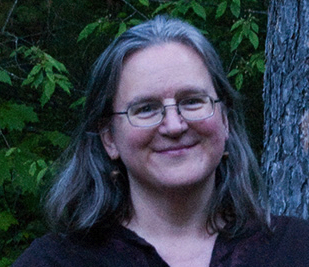 Cynthia Kurtz wrote the first edition of Working with Stories in 2008 and the second edition in 2009. She finished the greatly expanded third edition in 2014. She estimates that she put about 2.5 person-years into all three editions of the book. Crazy? Maybe.
Cynthia is a researcher, consultant, writer, and software developer. She has been helping communities and organizations work with their stories since 1999. She has consulted on more than eighty narrative projects for a variety of government agencies and for-profit and non-profit corporations. Working with a series of collaborators, Cynthia developed participatory narrative inquiry, an approach to story work that helps communities and organizations make better, more grounded decisions by making sense of their own stories.
You can read more about Cynthia’s professional history on her web site at cfkurtz.com. (Click on “Bio” in the menu for the full story.)
Source: Working with Stories
From Linda Booth Sweeney on the CLE K-2 systems dynamics mailing list – an example from work with young people, and a request for engagement
responses to Linda_Booth_Sweeney@post.harvard.edu please
Dear Friends and Colleagues
I’m writing to ask your thoughts on ways to bridge teens and adults from systems thinking experience to systems dynamics.
Here’s the scenario:
A few weeks back, I ran a one-day youth summit on systems change for a local group called SparkShare – https://www.sparkshare.org/
. We had 13 working groups from the Boston area focus on solving complex challenges in their communities — from vaping, substance abuse and racial bias to youth employment and safer streets. I worked with each group in advance to identify a strong systems statement and key factors. During the summit, I introduced one building block for systems change — helping the system see itself. We walked through a five-step tool (inspired by Michael Goodman and Daniel Kim) and built in plenty of opportunities to envision a different future, cross-pollinate between and among the groups, make real commitments for action and have fun.
You can see a short video clip of the young people’s reaction to the day. https://www.youtube.com/watch?v=MnwRBepvqoc&feature=youtu.be Kind of electric!
As you can see, a number of these teens (and many of the adults) soaked in the systems approach and were ready for more. These young people participate in these Sparkshare summits over the course of three years or more. I think the opportunity to help some of the teens bridge to the practical application of other systems change tools, including more rigorous system dynamics modeling is possible. The question is: how to make that happen? They are in schools around Boston with no explicit system dynamics curriculum.
I’m looking into two possibilities:
• High-impact, long-term ways for these students to develop real systems change and systems dynamics skills, beyond the introductory level,
• Access to a pod (or posse?) of practitioners, including system dynamics modelers who will help to frame (and possibly model) their issues to support their conversations with key stakeholders, community leaders and policy makers.
I look forward to hearing your thoughts.
Wishing you all happy, healthy and peace-filled holidays. 🙂
Linda
Creating a Shift in Leadership | Systemic Leadership Summit – online, 12-19 2020
I’m speaking as part of this, and have paid as an online guest in the past. It’s a series of video interviews with people interested in all aspects of ‘systemic leadership’.
Jennifer is a brilliant interviewer, so if you like the look of the speaker list, do consider it!
Source: Creating a Shift in Leadership | Systemic Leadership Summit 2020
[disclosure from Benjamin: as a speaker this is my referral link and I will get a share of any sales – if you share, please share this link: https://sls2020sp01.krtra.com/t/PYBIDA2rkjYf ]
Creating a shift in leadership
Online event January 12-19, 2020
Learn about the value of collective focused leadership, systems thinking based strategies for leading complex change, and evolving your organization to the next level.
An online event with a simple mission
We aim to create a shift in our leadership paradigm from the individual to the collective and dramatically grow and spread the transformation capabilities of leaders across the world.
How? By introducing you to a highly diverse, cutting edge and experienced group of influencers.
Slash Your Learning Curve
With 500+ Years of Leadership, Systemic Approaches and Transformation Strategies Straight From People Who’ve Done It.
Value-Packed Sessions
Interviews With Top Experts, Leaders & Entrepreneurs. See
the expert in a raw, authentic conversation about a topic in-depth.
No Pitch Summit
We aim to deliver value and to provide you with powerful and
inspirational material. Therefore our summit sessions are pitch free.
Systemic Leadership Summit 2019 Line-up

Founded and hosted by Jennifer Campbell
This is the fourth edition of the Systemic Leadership Summit, which was first launched January 2017. The online
event is broken down into 3 parts to help you accelerate your understanding and implement your learnings faster.
1. See The System
View your organization as a whole
Learn what systems are and what a systemic approach to leadership brings
to the table. Practice seeing your tribe as a system and discover what it costs you when you keep focusing on the parts in it.
2. Share the Space
Foster generative communication & interaction
Learn how to have dialogue from a place of real connection, deep listening and reflection. Tap into the wisdom and the different viewpoints that exist in the system you are part of.
3. Shape the Shift
Create Sustainable Solutions, Transform the System
Generate results from the collective intelligence and leadership of your tribe by co-creating from what emerges, rather than react to what has already happened in your systems environment.
See the System




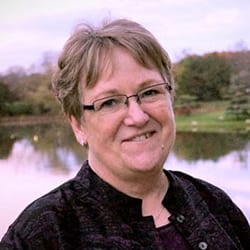
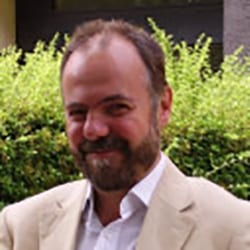
Dr. Glenda Eoyang
Human Systems Dynamics: See Complexity Differently, Take Adaptive Action
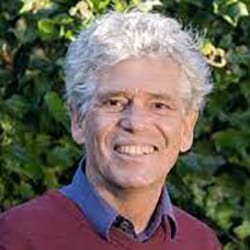


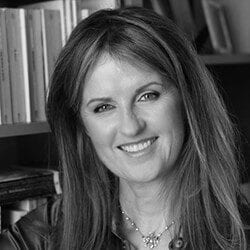
Share the Space


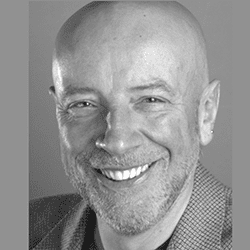


Shape the Shift
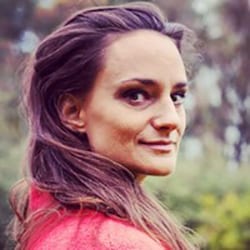
Wendy Mahoney
Why Innovation is Human, and how it is different from Disruption or Technology


Source: Creating a Shift in Leadership | Systemic Leadership Summit 2020
[disclosure from Benjamin: as a speaker this is my referral link and I will get a share of any sales – if you share, please share this link: https://sls2020sp01.krtra.com/t/PYBIDA2rkjYf ]
Leading Systems Change — Open Impact
Source: Leading Systems Change — Open Impact

Leading Systems Change: A Workbook for Community Practitioners and Funders
Download the full workbook or the executive summary here.

Click the image to download the full workbook.
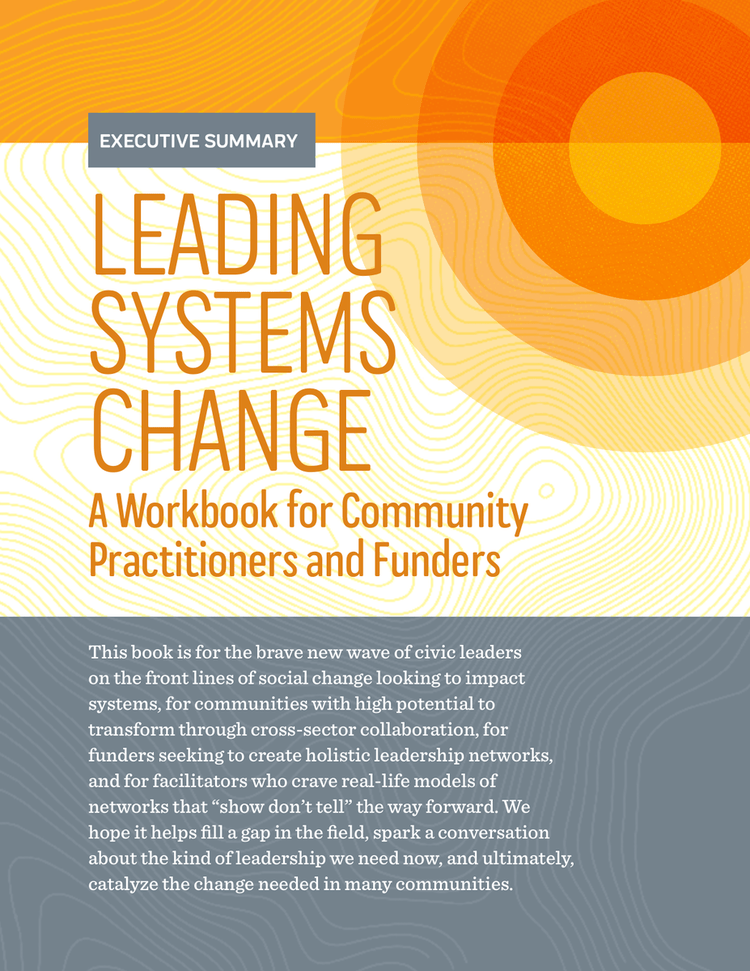
Click the image to download the executive summary.
We are living in a time of systemic problems in America—from rising income inequality and the opioid crisis, to increasing gun violence, to failing education and health systems, to extreme weather events induced by climate change. This has many social change leaders asking: Just how can we collaborate to change complex systems that no longer serve us? How can we re-build communities to have equity at their center? And what kind of leadership is required to change systems?
Our new book Leading Systems Change—by Open Impact co-founder Heather McLeod Grant and Adene Sacks of the With/In Collaborative—tackles these questions head-on. The book is based on two community change experiments we helped lead over the past six years in California’s Fresno and Stanislaus Counties, with funding from the James Irvine Foundation. Each New Leadership Network (NLN)—which engaged nearly 100 local leaders—comprised three weekend convenings designed to help diverse cohorts of leaders develop the new skills, mindsets, and tools needed to better understand their communities and act on local systems to drive greater impact.
In the book, we introduce the five foundational approaches we believe are essential to creating collaborative cross-sector networks for local systems change. The book includes an updated case study that walks readers through the process of building leadership networks, along with a number of tools, frameworks, and resources available for download—creating a playbook for other communities facing similar challenges. As we write, “We hope it helps fill a gap in the field, spark a conversation about what kind of leadership is needed now, and ultimately, catalyze the kinds of change needed in so many communities.”
Cybernetics in the Future – Introduction by Mary Catherine Bateson – YouTube (American Cybernetics Society, 2014)
Cybernetics in the Future – Introduction by Mary Catherine Bateson
Nora Bateson – There are some buzz words I think are worth questioning (the Ecology of Systems Thinking group on Facebook)
A good conversation opener and good responses (you have to join the open group to see I think) – and you all might want to join the Ecology of Systems Thinking and all the other groups:
systems thinking facebook groups at
the ecology of systems thinking https://www.facebook.com/groups/774241602654986
systems sciences https://www.facebook.com/groups/2391509563
Systems thinking network on LinkedIn
https://www.linkedin.com/groups/2639211
Nick Ananin’s systems thinking events map worldwide https://goo.gl/4PXkCg
There are some buzz words I think are worth questioning. The change-making world is prone to glomming onto words that are rather empty. I like to be careful with these words.
1. Trust — What is trust? I mostly see the word used when it is referring to something which is *not* there…When I walk across a room, I do not trust my feet to get me there– I just go. But when my ankle is sprained, then I notice how I used to trust my body. Do I really mean integrity? I need know that if you are not there for me, the choices you make are made with integrity.
2. Grief– A feeling that is only possible in its complexity. The term grief and the making-a-thing-of-it is a dangerous reductionism of the confusion, gratitude, love and joy that are also present in grief. The sorrow that is felt in these confusing times for the loss of biodiversity and democracy, and the enormous ache of knowing of some fraction of the pain caused by exploitation and extraction — is i think perhaps closer to a sense of betrayal. The systems that were supposed to offer structure within which it was possible to be a good person turned out to be traps within which it is only possible to be linked to the horror. Is the grief of witnessing a the breakdown of existing systems a sign of privilege? Are we mourning or recognizing that we’ve been duped by a lying, cheating, no good system?
3. Collective intelligence: This is not necessarily a good thing. There is nothing inherently good about collective intelligence. It can go either way. Remember that Nazi Germany was made possible through collective intelligence. Weinstein got away with sexual abuse for decades because of the collective intelligence of those around him keeping their mouths shut, capitalism, and racism are all products of collective intelligence. Beware.
4. Collaboration. If it is not mutual learning, collaboration can be very mechanistic. You do your thing, I will do mine…. that is not collaboration that leads to anything new. That is mechanism. Fine for military— not useful for finding new ways of living on this earth together. Improvisation is much more useful– I find.
5. Emergence. Ya…. don’t forget that emergency is also emergence. Mostly in emergency situations the romance of *emergence* wears off in a rush, and there are only binaries left. Emergence is not always lovely.
6. Mind-set. What the heck is this? There is nothing set. Only a vast interlinking abductive process— that is never static. Where is the edge of mind?
Reimagine Leadership 2030, Malmö 21 and 22 January 2020
Source: Reimagine
|
2030 marks the year by which nations agreed to secure a sustainable future in areas such as climate change and sustainble city development. In ten years time Sweden is also estimated to have clearly less resources for welfare and healthcare due to an ageing population and changed demographics. Efforts to meet these scenrious are being made and the Sustainable Development Goals inspire hope. But it also call for radical shifts in how leadership and organisations operate, with current approaches proving inefficient in responding to an ever more complex, fast-paced and uncertain landscape. We need to unlearn past patterns and habits while also re-imagining our own practices.
Decisive action is necessary for us to adapt and continue creating the conditions for prosperous organisations and a sustainable future to emerge. But what kind of action? How do we navigate when clear goals, well-defined strategy, and control mechanisms no longer seem to take us where we want to go? How do we prepare to successully create collaborative cultures in which it is ok to not have answers and certainty? We invite leaders, practitioners, acitivists and experts from various sectors to explore, learn and advance our work together. What do we need to do today to support the transformations our ambitions for 2030 call for? |
|
|
Complexity and Capacity
Experienced practitioners informed by complexity science share their learnings and host processes focused on what they see as most valuable for leaders right now. What makes transformational change possible? Get inspired, try out and get more comfortable with a wider sets of methods to support people in change. The program includes keynote-presentations, full group processes, parallel workshops and experimental sessions. The 15+ guests will share expertise, concrete methods and host processes supporting learning and designing unexpected experiences. |
Challenges and initiatives
We believe in learning by doing. Informed by knowledge and practices for organisational and systems change we focus on work and support each other to advance our thinking and strategies. We will work in parallale challange-tracks on how we establish processes to advance work that matters. Different aspects of the Sustainability Development Goals and organisational renewal will be covered. Tailored experiance
Participant take on an active role as learners and the programme lets you customize your experience. You can also choose how much you would like to participate. We recommend participation two days. You get the full experience including the more in-depth learning tracks with focus on application and practise-development. Participating one day is also possible. In collaboration with EFL – Executive Education Lund we also invite to a shorter seminar on Complexity, Leadership and Strategy – late afternoon the 21st . |

|
We welcome leaders and practitioners who work towards the SDGs within different sectors, those of you that strive for public sector or organisational renewal, complexity science thinkers and doers, and entrepeneurs, creatives and artists with an interest in societal change.
We look forward to co-creating this learning space with all of you! The invitation comes from people connected through Forward Malmö – a network of people and initiatives exploring how changemakers can learn and collaborate to create greater impact. The event is organised as a partnership with Malmöakademin – part of the network Forward Malmö and our learning partners in quest, the Kaospilot-school in Aarhus, Denmark, Cognitive Edge, Förnyelselabbet and Gro – Co-creating Sustainability. Welcome! |
A collation of Cybersyn links
One of these articles refers to ‘the often-ignored Cybersyn’ 😀
Gui Bonsiepe – designer and thinker en.wikipedia.org/wiki/Gui_Bonsi guibonsiepe.com/pdffiles/desco
Links:
newsocialist.org.uk/allende-projec
scottlocklin.wordpress.com/2019/02/26/cyb
99percentinvisible.org/episode/projec
newstatesman.com/world/2018/08/
wnycstudios.org/podcasts/otm/s
ventricles.simplecast.fm/69883df3
radioambulante.org/en/translation
meaningness.com/metablog/buddh
open.spotify.com/episode/5iFl7A
newbooksnetwork.com/eden-medina-cy
opengeography.wordpress.com/2015/03/09/cyb
culturalstudies.gmu.edu/articles/13213
richard-hall.org/2017/07/07/not
books.google.co.uk/books?id=_IFDD
https://model.report/s/tklgud/eyewar_-_cybernetics_and_project_cybersyn
https://model.report/s/eogcvf/project_cybersyn_-_stafford_beer_s_cybernetic_science_fictions_-_youtube
and from SysCoI:
https://stream.syscoi.com/2019/09/15/cybersyn-cybernetic-synergy-chilean-website/
https://stream.syscoi.com/2019/09/23/econpapers-the-pretence-of-knowledge-hayeks-nobel-prize-lecture-1974/
https://stream.syscoi.com/2019/08/07/the-desire-for-full-automation-toby-shorin-july-20199/
https://stream.syscoi.com/2019/04/08/cybersyn-metaphorum/
https://stream.syscoi.com/2018/09/22/cybersocialism-red-pepper/
https://stream.syscoi.com/2018/09/15/cybernetic-socialism-project-cybersyn-in-the-21st-century-the-world-transformed-mon-24-sep-liverpool-uk-part-of-a-fringe-event-around-the-uk-labour-party-conference/
https://stream.syscoi.com/2018/08/27/project-cybersyn-the-afterlife-of-chiles-socialist-internet/
Job opportunity – School of System Change Curator | Forum for the Future – deadline 11:59 pm EST on January 6, 2020
Fixed term contract one year
Closing date for applications: 11:59 pm EST on January 6, 2020.
Source: School of System Change Curator | Forum for the Future
General Intellect Unit podcast 038 – The Viable System Model
good takes, from a consistent and explicit perspective
Source: 038 – The Viable System Model
 |
|
Follow Share
|
Podcast of the Cybernetic Marxists. Examining the intersection of Technology, (Left) Politics, and Philosophy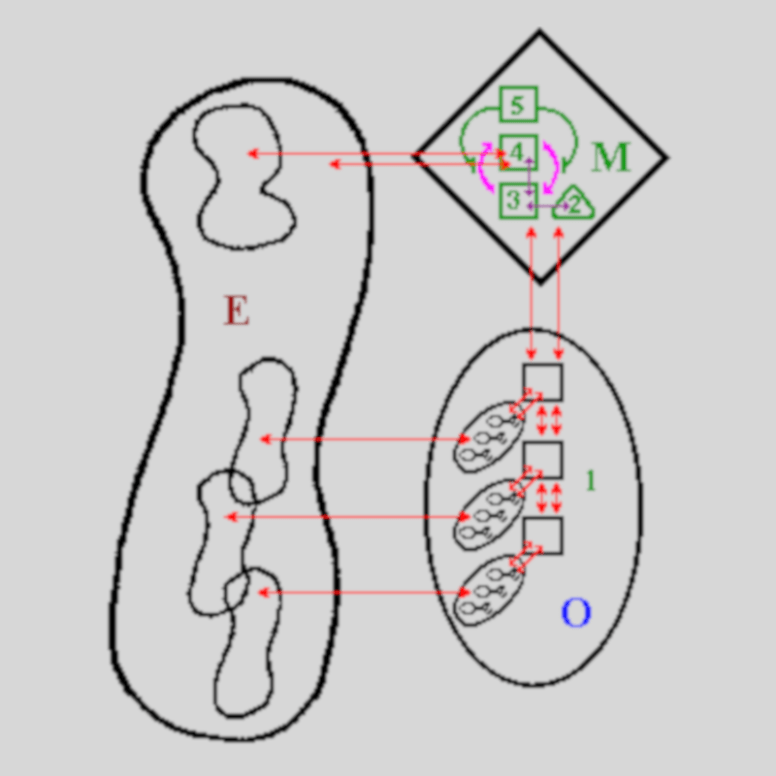
038 – The Viable System Model
July 15, 2019
In which we discuss the Viable System Model, by Stafford Beer. We read “The VSM Guide” by Jon Walker, and “The Viable System Model as a Framework for Understanding Organizations” by Raul Espejo and Antonia Gill.

If you like the show, consider supporting us on Patreon.
Links:
- A diagram of the VSM (on wikipedia)
- The Viable System Model as a Framework for Understanding Organizations
- The VSM Guide
- General Intellect Unit on iTunes
- http://generalintellectunit.net
- Support the show on Patreon
- https://twitter.com/giunitpod
- General Intellect Unit on Facebook
- General Intellect Unit on archive.org
Source: 038 – The Viable System Model
 Systems Community of Inquiry
You must be logged in to post a comment.