The meaning of the public good | Inquirer Opinion

The meaning of the public good

Aristotle wrote that the city-state is composed of citizens who constitute a community of individuals who are governed by a constitution. He thinks of the state constitution as one that is analogous to the soul of a living organism. It is the immanent principle that organizes the way of life of the people.

For the state to function well, a ruling authority acts as a lawgiver, who will govern the city-state the way a good craftsman would fashion his product. For Aristotle, the establishment of the state must aim at some good. In “Politics,” he writes that the good life is the goal of any political community.

Kant objects to Aristotle. For him, even the welfare of citizens cannot be the basis of the authority of the state. The good life, fashioned out of a political arrangement, will only serve as some form of imposition on citizens. “There is only one innate right,” Kant argues, and that is the freedom “from being constrained by another’s choice.”

Kant thus thinks it is wrong for the state to formulate any particular meaning of the good. To do so means that a ruler is simply taking away from citizens the capacity to make rational judgments about their own lives.

Freedom in the political sense is not about the freedom of the will. Rather, it is about the independence of the human being as an actor in the state. Kant is not concerned about the choices that individual subjects make, but by what others decide for their fellow citizens. For Kant, the use of human freedom must be properly guided by rationality. As a free and rational being, every person must be respected and not precluded from making his or her own decision. Yet Kant does not say that the state acts as some kind of an impediment to human freedom.

The existence of the state is based on a social contract. The citizens give the state the consent to be governed. As rational subjects, each individual possesses the ability to agree to the social contract that binds him or her to the agreement. The individual as a subject, however, cannot be coerced to become part of the social contract. The social contract exists because it guarantees the protection of the rights of the parties. It is not about the benefit that one stands to get, but the guarantee that one’s dignity as a person is respected.

In response, Alasdair MacIntyre in “After Virtue” endorses the Aristotelian ideal of shared ends. He criticizes the inability of the liberal tradition to go beyond the shackles of the Enlightenment. MacIntyre believes that it was wrong to abandon Aristotle’s ideal of the state. In particular, he attacks Nietzsche’s conception of the superman. The superman is a man with no history, not bound by values, and whose idea of individualism leads nowhere.

A problem now becomes apparent. There appears to be an obvious conflict between the values of the community and the idea of liberty. The meaning of the public good, indeed, can only be derived after we, as citizens, resolve this conflict.

Continues in source: The meaning of the public good | Inquirer Opinion

LEKTON – being a belated introduction by Warren S McCulloch to the LOGICAL STRUCTURE OF MIND. An inquiry into the philosophical foundation of psychology and psychiatry by Eilhard von Domarus

From the often fruitful CYBCOM google groups mailing list and I, like the electric monk, am posting it here in lieu of the time to read it properly.


Von Domarus, E. (1967). “The logical structure of mind (with an introduction by W. S. McCulloch)”. In L. O. Thayer (Ed.),Communication: Theory and Research. Springfield, IL: Chas. C. Thomas. https://ntrs.nasa.gov/archive/nasa/casi.ntrs.nasa.gov/19650017787.pdf

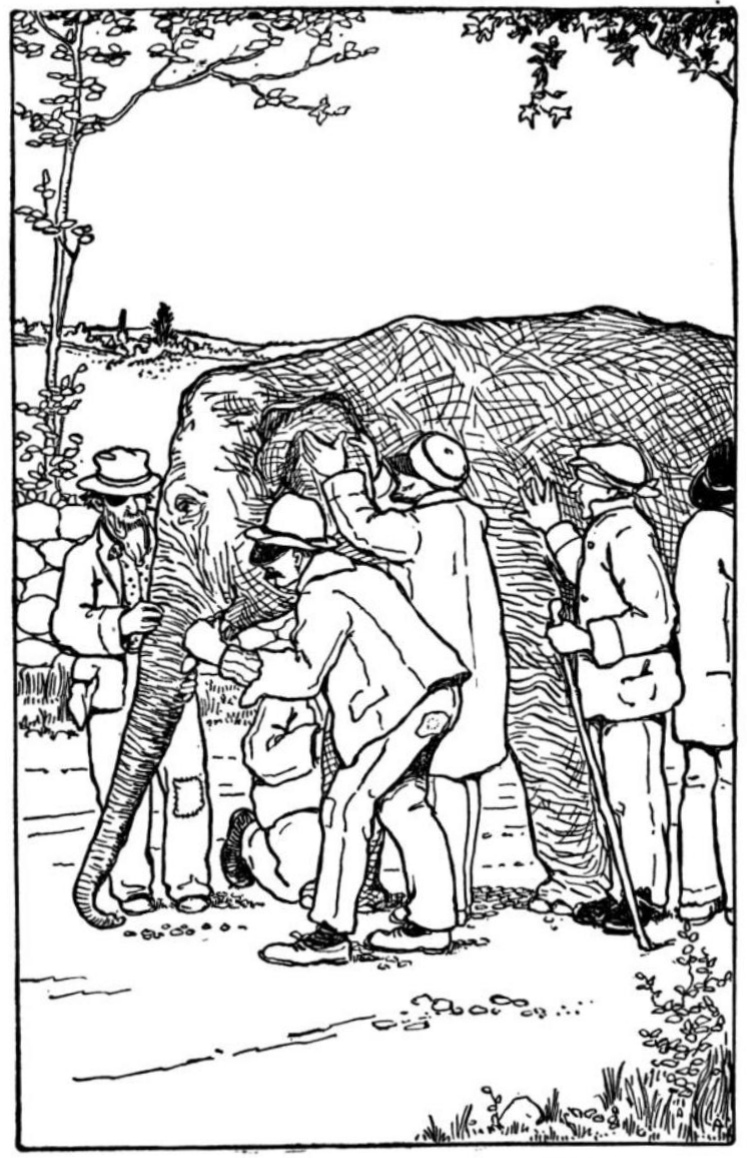
The blind men and the elephant – Wikipedia


Source: Blind men and an elephant – Wikipedia

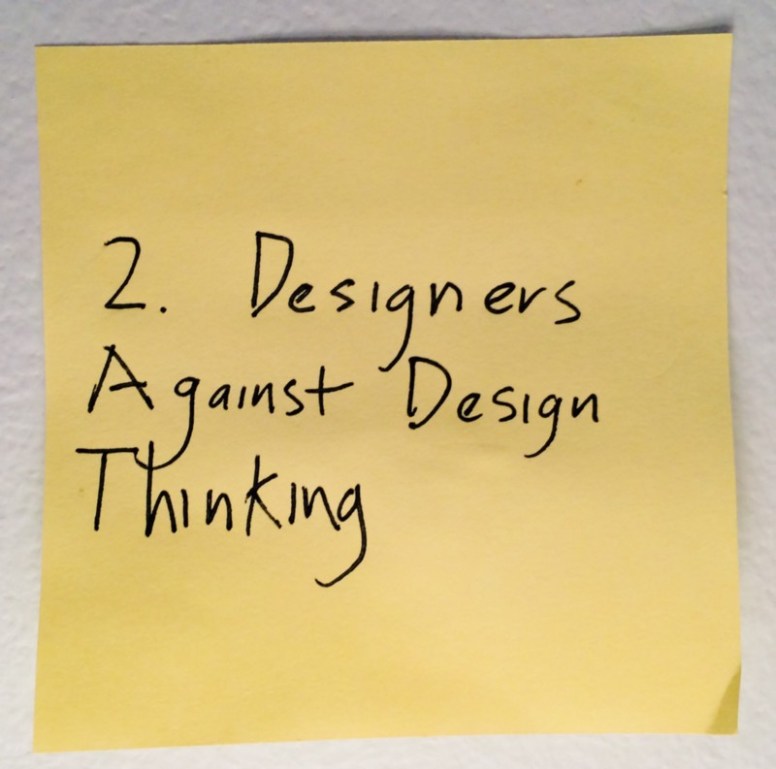
Design thinking as commercial repackaging

Design Thinking, says @STS_News, is mostly commercial repackaging. Is the @wburnett @DaveEvansDYL satire of Designing Your Life jokes and one-liners missed?

In the end, Design Thinking’s not about design. It’s not about the liberal arts. It’s not about innovation in any meaningful sense. It’s certainly not about “social innovation” if that means significant social change. It’s about COMMERCIALIZATION. It’s about making all education a shallow form of business education. [….]

Burnett’s first step was to found something called the “Life Design Lab” at the d.school and to create a new course, “Designing Your Life,” where he would begin rehearsing his satirical material. The conceit was that you could use Design Thinking as a form of self-help. He called the class d.life to lampoon Stanford’s ridiculous fashions and to skewer the idiocy of thinking a paint-by-numbers system for consulting could also be used to “design” human existence. [….]

Designing Your Life is full of wonderful satirical moments where Burnett and Evans unmask Design Thinking as a fraud.

“Design Thinking is Kind of Like Syphilis — It’s Contagious and Rots Your Brains” | Lee Vinsel | Dec. 6, 2017 | Medium at https://medium.com/@sts_news/design-thinking-is-kind-of-like-syphilis-its-contagious-and-rots-your-brains-842ed078af29

A later version (targeted more sharply at higher ed) appears as …
“Design Thinking Is a Boondoggle” | Lee Vinsel | May 21, 2018 | The Chronicle of Higher Education at https://www.chronicle.com/article/Design-Thinking-Is-a/243472

The book “Designing Your Life” (2016) is at https://designingyour.life/the-book/ .

An interview of Burnett and Evans suggests:

1. Be curious
2. Try stuff
3. Reframe problems
4. Know it’s a process
5. Ask for help

“5 Steps To Help You To Design Your Life” | Adi Gaskell | Sept. 16, 2016 | Forbes at https://www.forbes.com/sites/adigaskell/2016/09/16/5-steps-to-help-you-to-design-your-life/

Originally posted at https://plus.google.com/u/0/+DavidIng/posts/EyS1KggvsS8

Complexity Explorer Glossary

Source: Complexity Explorer

full text of Rethinking The Fifth Discipline: Learning Within the Unknowable Paperback – 22 Jul 1999 by Robert Louis Flood 

per Amazon:

‘Fifth Discipline’ is one of the very few approaches to management that has attained position on the International Hall of Fame. Professor Flood’s book explains and critiques the ideas in straight forward terms. This book makes significant and fundamental improvements to the core discipline – systemic thinking. It establishes crucial developments in systemic thinking in the context of the learning organisation, including creativity and organisational transformation. It is therefore a very important text for strategic planners, organisational change agents and consultants.
The main features of the book include:

  • a review and critique of ‘Fifth Discipline’ and systemic thinking
  • an introduction to the gurus of systemic thinking – Senge, Bertalanffy, Beer, Ackoff, Checkland, and Churchman

*a redefinition of management through systemic thinking
*a guide to choosing, implementing and evaluating improvement strategies
*Practical illustrations.
Robert Flood is a renowned and authoritative expert in the field of management. He has implemented systemic management in a wide range of organisations in many continents and lectured by invitation in 25 countries, including Japan and the USA. Professor Flood has featured on many radio and TV programs. His book Beyond TQM was nominated for the ‘IMC Management Book of the Year 1993’.

It takes a system to change a system

bweir2013's avatarSystems Leadership, Lessons & Learning

“….how would it be to have a space in which we as systems leadership developers, could come together and discuss our work?”

At the end of another day working with healthcare leaders intent on leading more effectively across their care system, one of the participants came up to me.

“I wanted to ask you,” she started, and then stopped.

pens 2

I glanced up from packing away my pens. She went on,

“The thing is…aren’t we just setting people up to fail?”

“Mmm…in what way?”

“Well, we come to a class like this and it’s great…we explore systems thinking, and the challenges of leading in systems, and we think about the behaviours of good system leaders – collaborating, listening to each other, valuing difference, adapting to VUCA conditions, asking questions – and then we go back with all that energy into our organisations and nobody wants to know…people talk over…

View original post 1,313 more words

Understanding Society: Social generativity and complexity – Daniel Little

Social generativity and complexity

The idea of generativity in the realm of the social world expresses the notion that social phenomena are generated by the actions and thoughts of the individuals who constitute them, and nothing else (linklink). More specifically, the principle of generativity postulates that the properties and dynamic characteristics of social entities like structures, ideologies, knowledge systems, institutions, and economic systems are produced by the actions, thoughts, and dispositions of the set of individuals who make them up. There is no other kind of influence that contributes to the causal and dynamic properties of social entities. Begin with a population of individuals with such-and-so mental and behavioral characteristics; allow them to interact with each other over time; and the structures we observe emerge as a determinate consequence of these interactions.

This view of the social world lends great ontological support to the methods associated with agent-based models (link). Here is how Joshua Epstein puts the idea in Generative Social Science: Studies in Agent-Based Computational Modeling):

Agent-based models provide computational demonstrations that a given microspecification is in fact sufficient to generate a macrostructure of interest…. Rather, the generativist wants an account of the configuration’s attainment by a decentralized system of heterogeneous autonomous agents. Thus, the motto of generative social science, if you will, is: If you didn’t grow it, you didn’t explain its emergence. (42)

Consider an analogy with cooking. The properties of the cake are generated by the properties of the ingredients, their chemical properties, and the sequence of steps that are applied to the assemblage of the mixture from the mixing bowl to the oven to the cooling board. The final characteristics of the cake are simply the consequence of the chemistry of the ingredients and the series of physical influences that were applied in a given sequence.

Now consider the concept of a complex system. A complex system is one in which there is a multiplicity of causal factors contributing to the dynamics of the system, in which there are causal interactions among the underlying causal factors, and in which causal interactions are often non-linear. Non-linearity is important here, because it implies that a small change in one or more factors may lead to very large changes in the outcome. We like to think of causal systems as consisting of causal factors whose effects are independent of each other and whose influence is linear and additive.

A gardener is justified in thinking of growing tomatoes in this way: a little more fertilizer, a little more water, and a little more sunlight each lead to a little more tomato growth. But imagine a garden in which the effect of fertilizer on tomato growth is dependent on the recent gradient of water provision, and the effects of both positive influencers depend substantially on the recent amount of sunlight available. Under these circumstances it is difficult to predict the aggregate size of the tomato given information about the quantities of the inputs.

One of the key insights of complexity science is that generativity is fully compatible with a wicked level of complexity. The tomato’s size is generated by its history of growth, determined by the sequence of inputs over time. But for the reason just mentioned, the complexity of interactions between water, sunlight, and fertilizer in their effects on growth mean that the overall dynamics of tomato growth are difficult to reconstruct.

Now consider the idea of strong emergence — the idea that some aggregates possess properties that cannot in principle be explained by reference to the causal properties of the constituents of the aggregate. This means that the properties of the aggregate are not generated by the workings of the constituents; otherwise we would be able in principle to explain the properties of the aggregate by demonstrating how they derive from the (complex) pathways leading from the constituents to the aggregate. This version of the absolute autonomy of some higher-level properties is inherently mysterious. It implies that the aggregate does not supervene upon the properties of the constituents; there could be different aggregate properties with identical constituent properties. And this seems ontological untenable.

The idea of ontological individualism captures this intuition in the setting of social phenomena: social entities are ultimately composed of and constituted by the properties of the individuals who make them up, and nothing else. This does not imply methodological individualism; for reasons of complexity or computational limitations it may be practically impossible to reconstruct the pathways through which the social entity is generated out of the properties of individuals. But ontological individualism places an ontological constraint on the way that we conceptualize the social world. And it gives a concrete meaning to the idea of the microfoundations for a social entity. The microfoundations of a social entity are the pathways and mechanisms, known or unknown, through which the social entity is generated by the actions and intentionality of the individuals who constitute it.

Source: Understanding Society: Social generativity and complexity

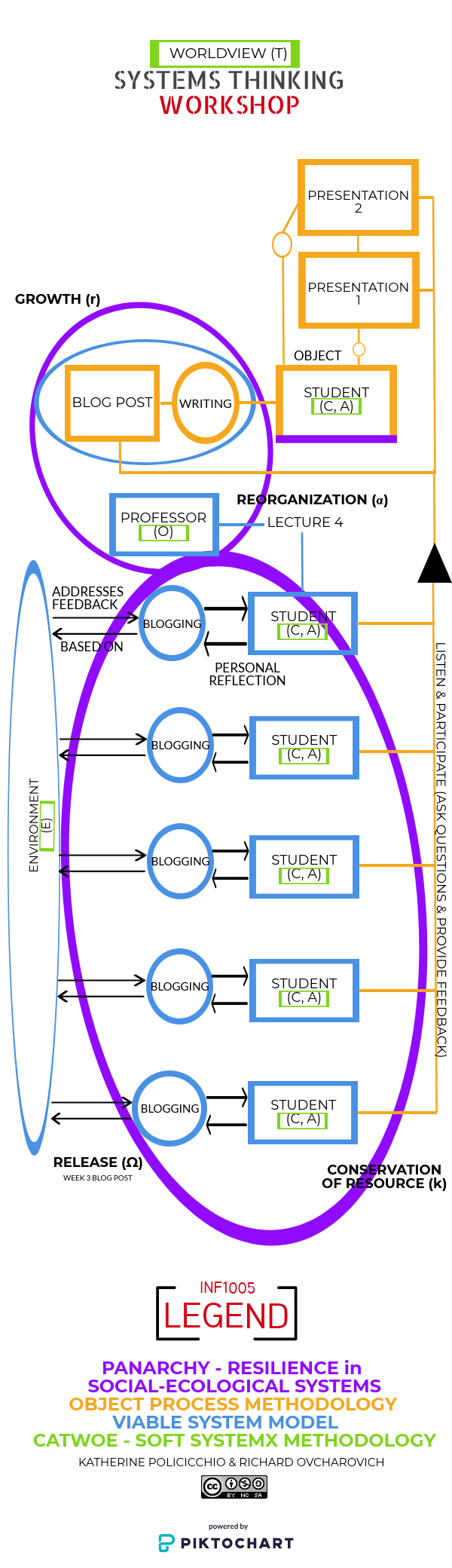
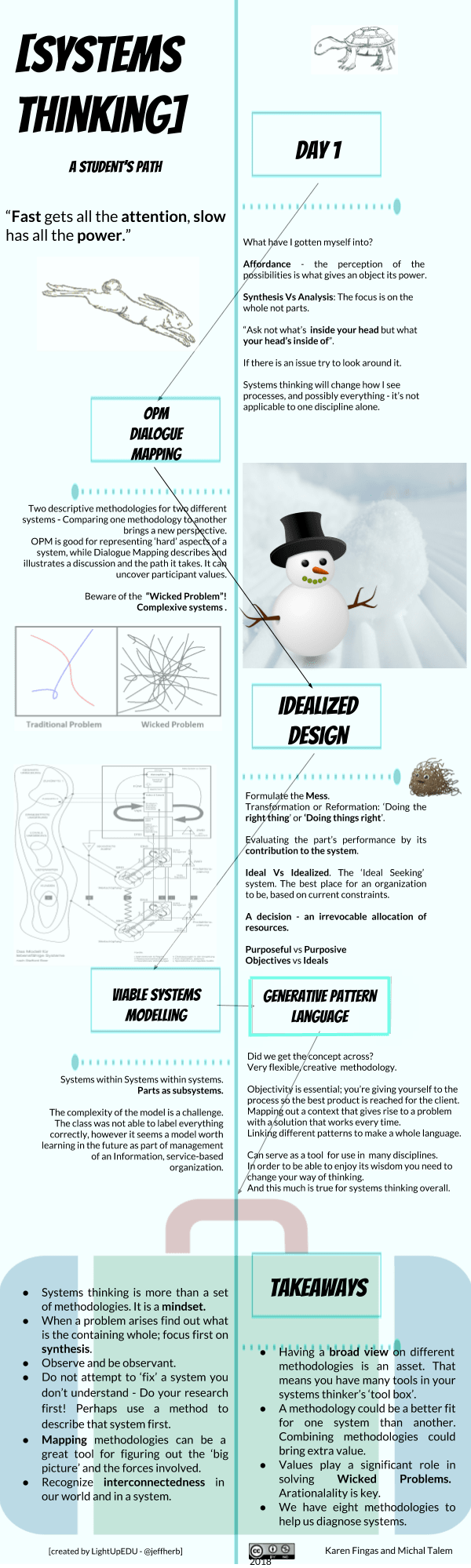
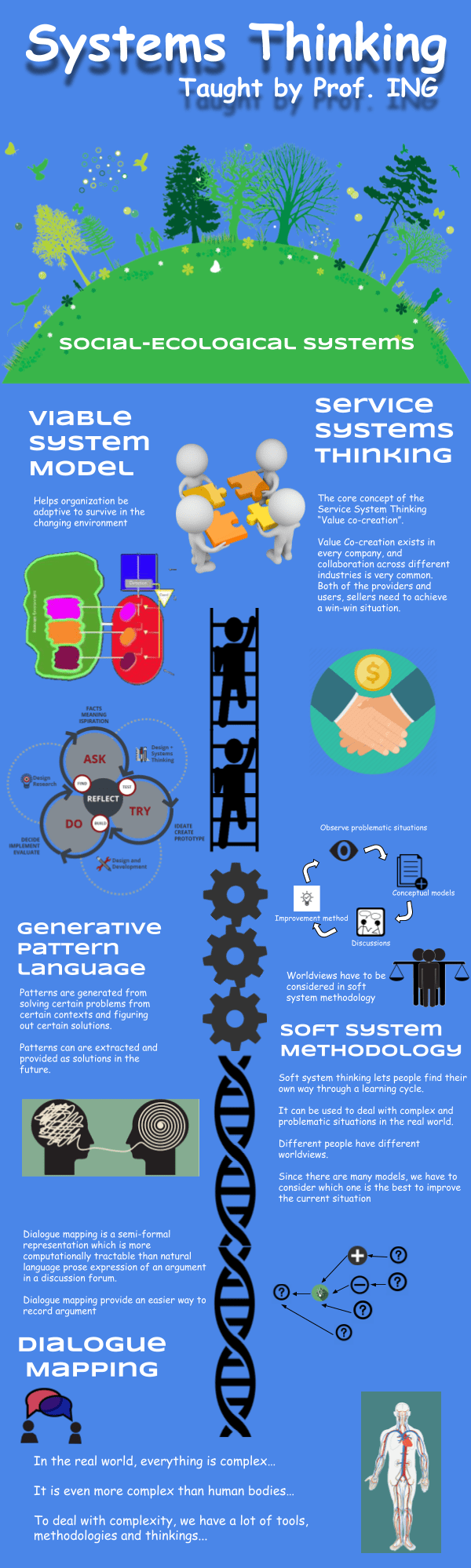
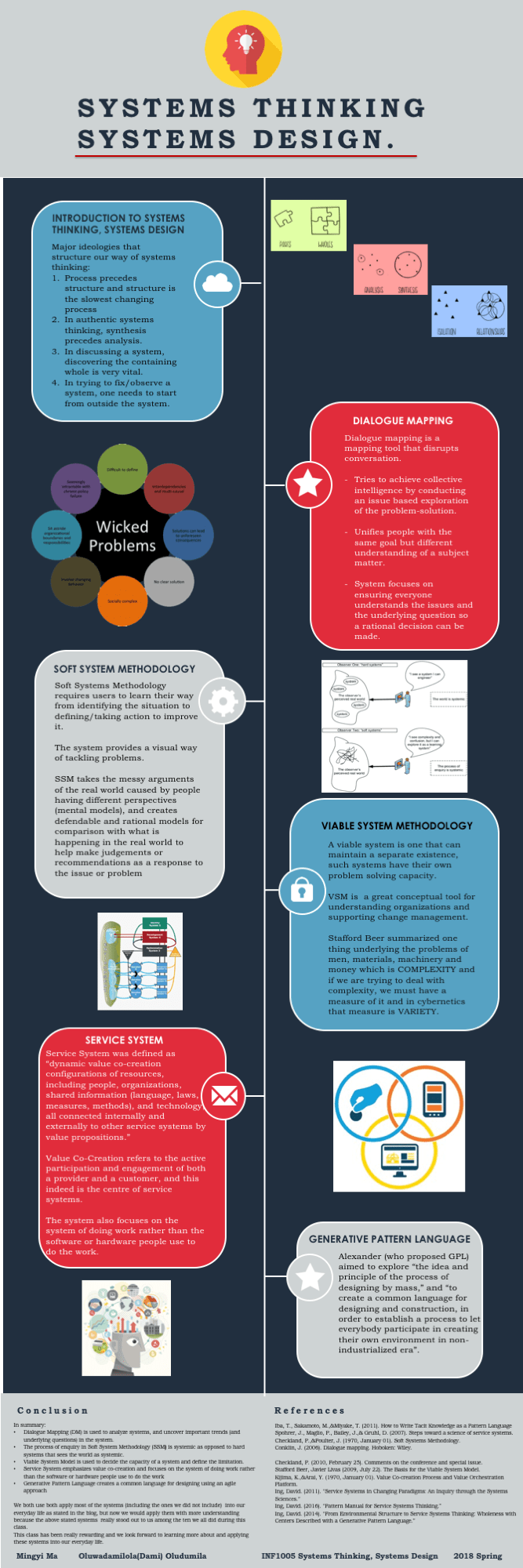
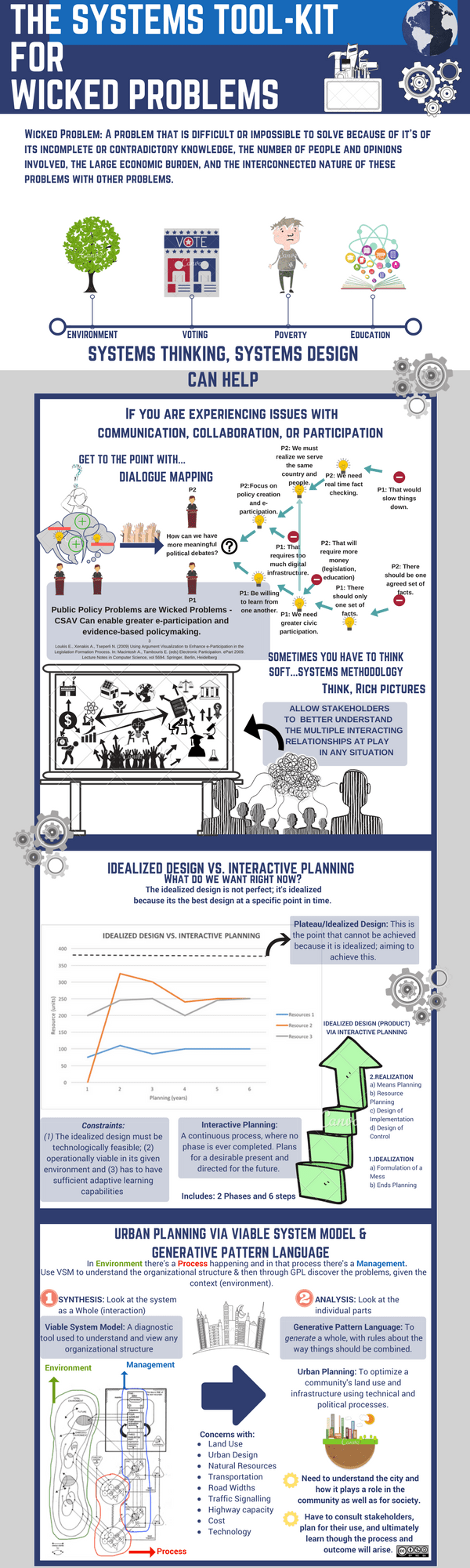
Eight infographics on Systems Methods (UToronto iSchool 2018) – Coevolving Innovations

[I love when David Ing shares his students’ infographics – truly rich sources of overview on systems thinking]

Learning only a single systems method is reductive.  A course that exposes breadth in a variety of systems methods encourages students to reflect on their circumstances-at-hand, and their explicit and implicit influences on guiding others in projects espousing systems thinking.  This was a premise behind the structuring of “Systems Thinking, Systems Design“, an Information Workshop (i.e. 6-week elective quarter course) offered to master’s students at the University of Toronto Faculty of Information (iSchool).

The first class day had a short course introduction focused on the history of the systems sciences, and a minimal orientation to the most basic concept in systems theory.  Then, for the four class days that followed, student groups led 8 presentation-facilitations on a research reference cluster (with the instructor on standby as a subject matter expert on the content).  The topics included:

  1. Object Process Methodology
  2. Dialogue Mapping
  3. Idealized Design
  4. Soft Systems Methodology
  5. Viable System Model
  6. Resilience in Socio-Ecological Systems
  7. Service Systems
  8. Generative Pattern Language

After each of the four days, students wrote Personal Appreciation Diary Logs (blog posts), mostly on the open web.  These provided feedback to the instructor for commentary (and some remediation) at the beginning of the subsequent class meeting.  We could review common understandings, difficulties and misconceptions about systems methods.

For the last (sixth) class meeting, each student group was asked to “prepare and present an infographic poster on their impressions about the system approaches most relevant to their research”.  The conclusions reflected different interests, experiences and orientations amongst the iSchool students.

Continues in source: Eight infographics on Systems Methods (UToronto iSchool 2018) – Coevolving Innovations

Cannon’s Polarity Principle:

Harish's avatarHarish's Notebook - My notes... Lean, Cybernetics, Quality & Data Science.

arrows

I recently read the wonderful book “On the Design of Stable Systems”, by Jerry Weinberg and Daniela Weinberg. I came across a principle that I had not heard of before called “Cannon’s Polarity Principle”. Cannon’s Polarity Principle can be stated as the strategy that a system can use to overcome noise by supplying its own opposing actions. If a system relies on an uncertain environment to supply the opposing factor to one of its regulatory mechanisms, that mechanism must have a much more refined model. By supplying its own opposing factor, it can get away with a much simpler model of the environment.

This principle is one of those things that is profound yet very simple. The Weinbergs give the example of a sticky knob on a gas stove to explain this idea. If the knob is sticky then it is tricky to raise the flame to the…

View original post 310 more words

Guest article: Complexity, Systems Thinking and Sociology, Alice Junqueira | Transition Consciousness Blog

GUEST ARTICLE: COMPLEXITY, SYSTEMS THINKING AND SOCIOLOGY, ALICE JUNQUEIRA

Alice Junqueira is a transdisciplinary professional who is currently an independent consultant specialising in gender, youth, sustainable development and culture. She also works on issues of climate change, socioeconomic inclusion, urban planning, human rights, public management and social participation.

I am very pleased to publish this article which is an updated edition which was previously published on Transition Consciousness in 2015.

Complexity, Systems Thinking and Sociology

When it comes to complexity and sustainability we often come across names such as Bertalanffy, Ilya Prigogine, Donella Meadows, Fritof Capra, and others, but we rarely come across complexity and systems theories through the “eyes” of Sociology.

How would we observe society if Sociology saw it as a system? This was one of the questions a German sociologist tried to answer. His name is Niklas Luhmman[1] and he started where many of others started, precisely in one of those names we often hear when studying and discussing sustainability: in Bertalanffy. He also read and incorporated ideas of other renowned authors from many areas of knowledge. He is known to have read thousands of books from Philosophy to Cybernetics, Sociology to Biology, Phenomenology to Psychology, and more.

Sounds interesting? It is. And it is

Continues in source: Junqueira | Transition Consciousness

Studies Show That People Who Have High “Integrative Complexity” Are More Likely To Be Successful – Michael Simmons

Studies Show That People Who Have High “Integrative Complexity” Are More Likely To Be Successful

A self-made billionaire studied Bill Gates, Steve Jobs, and Elon Musk. An eminent researcher interviewed Nobel Laureates. They each came to the same conclusion.

My 6’5” dad was black and grew up in one of the most dangerous cities in America. He sported a huge afro into the early ’90s, when he died at the age of 35 from lung cancer, one year younger than I am now.

My mother, a Jewish refugee from Poland, arrived in Brooklyn when she was 17 with no money and no English. She was essentially a single mother for most of my childhood.

That makes me a half-black, half-white, 6’5” man born into a half-Christian, half-Jewish family, and raised by a refugee.

So I watch the daily culture wars unfold with mixed feelings. Recently, I listened to a podcast about race in which my people were described as “the victims.” Then I listened to another podcast, and this one cast me on the side of “the oppressor.” The result is that I tend to feel like a chameleon and see both sides of many of the issues currently being debated. I used to feel like I should pretend to strongly take one side or the other. But as I’ve gotten older, I’ve come to embrace this ability to appreciate contrasting viewpoints without labeling one right and the other wrong.

And then I found four studies, independently conducted by four of the greatest thinkers of our time, that basically came to the same surprising conclusion: Many of the world’s top entrepreneurs — like Bill Gates, Steve Jobs, and Elon Musk — along with Nobel Laureates have a common, rare skill called “integrative complexity.” Integrative complexity is the ability to develop and hold opposing traits, values, and ideas and then integrate them into larger ones.

These findings go against conventional wisdom in the business world, which is that we should double down on our strengths and mitigate everything else. They are also opposed to conventional tribal wisdom that says we should pick one side of every polarity and vehemently fight for it.

Here are the four breakthrough studies on why integrative complexity is a key to success, personal growth, and cultural polarization.

Continues in source:  Studies Show That People Who Have High “Integrative Complexity” Are More Likely To Be Successful

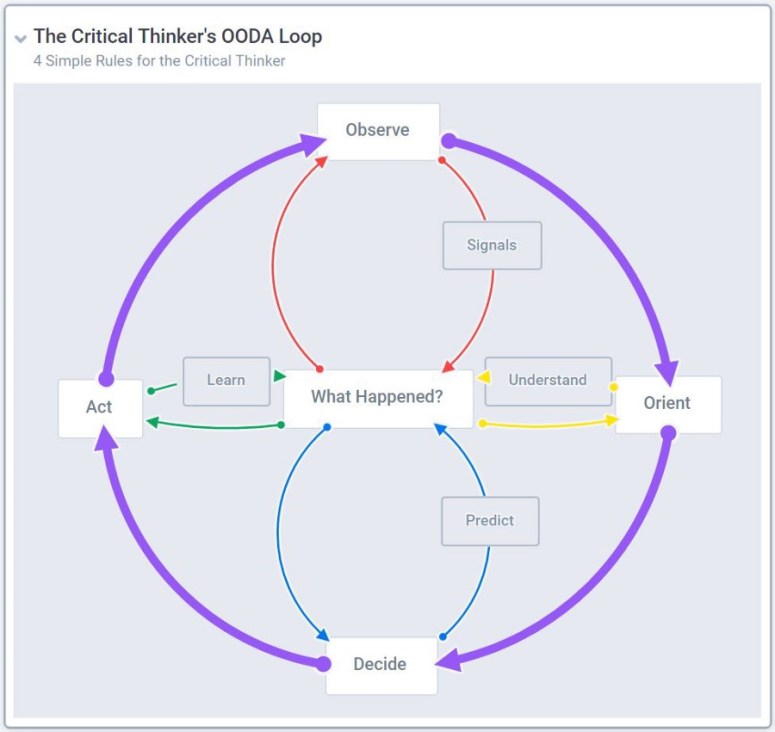
The Critical Thinker’s OODA Loop – Dr. Jamie Schwandt – Medium

The Critical Thinker’s OODA Loop

Summary: The Critical Thinker’s OODA Loop is a high-speed decision making and feedback process using simple rules to upgrade your critical thinking skills for a sharper mind.

As humans, we typically operate on cognitive autopilot. We rarely stop and reflect on how we interpret information and create mental models which replicate our perception of reality.

However, what do we do when our mental models fail to match reality?

Instead of changing our mental models, we simply ignore reality and operate throughout the day on implicit assumptions. These are hidden assumptions and not conscious choices. Our mental models allow us a simple way to cope with reality, yet we fail to confront reality when it is different than our mental model. Essentially, we have unknowingly created a ready-made default mechanism.[1]

So, what can we do?

We must first take time to reflect. By simply understanding how you interpret and perceive information differently than everyone else is a great first step. However, to truly upgrade your critical thinking skills, you must examine how thoughts arise in your mind and how they got there. Critical thinking is about asking yourself how you make choices. We can choose to believe something we hear or see; however, why do we choose to believe something we hear or see?

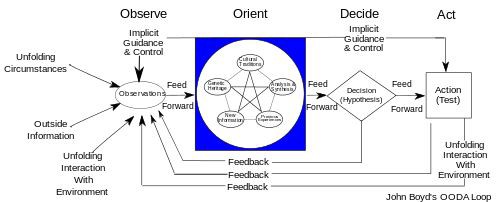
As a Red Team Member in the U.S. Army, I will explain how I upgrade my critical thinking skills using Colonel John Boyd’s OODA Loop as a framework for critical thinking. I will then demonstrate practical ways to upgrade your critical thinking skills for a sharper mind using tools and techniques from the University of Foreign Military and Cultural Studies (UFMCS) Center for Applied Critical Thinking (also known as the Red Team school) and The Applied Critical Thinking Handbook (also known as The Red Team Handbook).

What is Critical Thinking?

Critical thinking can be explained in a number of ways. Let’s quickly examine a few definitions.

  • “Critical thinking is a process, the goal of which is to make reasonable decisions about what to believe and what to do.” — Robert Enis
  • “Critical thinking means developing an ever better worldview and using it well in all aspects of your life. The essence of critical thinking is questioning and arguing logically.” — Gary Jason
  • “Critical thinking is searching for hidden assumptions, noticing various facets, unraveling different strands, and evaluating what is most significant. It implies conscious, deliberate inquiry, and especially it implies adopting a skeptical state of mind.” — Sylvan Barnet and Hugo Bedau

To me, critical thinking is as follows:

“Critical thinking is observing the world with an open and skeptical mindset with the goal of exploring all alternatives objectively (as much as possible). It is our ability to orient our mental models to view reality through an emotionless lens seeking the truth by questioning our own assumptions and deconstructing arguments logically. It is our ability to identify gaps and uncover what is missing to improve our quality of decisions. Finally, it is our ability to unravel different strands of significant information through a continuous stream of feedback so that we continuously destroy and create new mental models allowing us to act closer to reality.” — Dr. Jamie Schwandt

What is the OODA Loop?

I use John Boyd’s OODA Loop as a framework for critical thinking. It is similar to Swarm Intelligence, where we use simple rules to allow the collective intelligence to emerge. The simple rules are ObserveOrientDecide, and Act.

Continues in source: The Critical Thinker’s OODA Loop – Dr. Jamie Schwandt – Medium

SoSE 2018 – Paris


IEEE – 13th System of Systems Engineering Conference 

SoSE 2018

 JUNE 19-22, 2018 

Sorbonne Université – Campus Pierre et Marie Curie

PARIS, FRANCE


On behalf of the Organizing Committee of the IEEE – 13th System of Systems Engineering Conference, it is a great honor and pleasure to welcome you in Paris.

SoSE 2018 has vast ramifications in numerous engineering fields such as system management and engineering, control, multi-scale and multi-physics system modeling, risk analysis, safety, security, resilience, decision-making, interaction with humans, cooperation and coordination in competitive multi-systems, and in applications such as transportation, critical infrastructures, manufacturing, healthcare, environment, cyber-physical systems, defense, aerospace. The 2018 conference theme is “Systems of systems Management and Control: Frontiers between cyber, physical, and social systems”.

The program includes plenary sessions, panel sessions, regular and poster sessions, and exhibitions. The fourth day focuses on ongoing projects, research priorities and innovation strategies at European level in systems of systems engineer

Source: SoSE 2018 – Paris

Drawbacks to visual thinking • Meaning Guide – Mark Nicoll

Drawbacks to visual thinking

Drawbacks to visual thinking

I came across this question on Quora: “What are some drawbacks of visual thinking?” “Drawbacks”? It got me thinking…

Dave Gray answered the question directly and objectively, emphasising the need to match the right tool and thinking style to the right situation.  This is undoubtedly true, but I want to focus more on some of the problems and challenges faced by visual thinking practitioners themselves. In my experience, with the power and potential of visual thinking to create meaning comes the power and potential to generate sticky situations.

If you don’t know your stuff…

If you apply visual thinking to a subject you don’t really understand, it’ll be more obvious than if you’d just used vague abstract words. Verbally, anyone can waffle and seem like they know what they’re talking about. Visualising stuff means relating ideas to experience, and if the experience being visualised is lacking, it’ll be clearer for everyone to see. The trouble is, most people assume you’re there to add clarity. That’s a stressful place to be.

People interpret symbols differently

Though totally obvious, the fact that people have different points of view is easily overlooked, occasionally with consequences.


Black woman becomes white woman because soap? It might seem unbelievable that Dove failed to foresee how offensive this could be… but it seems they actually didn’t mean to make a racist advert. Perhaps you’re thinking this is actually an example of failing to think visually, like “how could they be so stupid!”? However, the problem has more to do with assuming that other people would look at their design and understand exactly what they intended them to understand (eg. that all skin is wonderful and equally deserving of their lovely soap). Confirmation bias and failing to fully consider the context are problems visual thinking is unlikely to fix.

Continues in source: Drawbacks to visual thinking • Meaning Guide

s
search
c
compose new post
r
reply
e
edit
t
go to top
j
go to the next post or comment
k
go to the previous post or comment
o
toggle comment visibility
esc
cancel edit post or comment