Andrew Koleros | American Journal of Evaluation – Oct 23 2018How to Design Better Programmes in Complex SystemsIN-DEPTH Share
A programme theory (or a ‘theory of change’) is a key tool used to inform the design and delivery of development programmes. A programme theory outlines the steps in a pathway, from intervention to impact, and explicitly identifies the key risks and assumptions along that pathway. This helps ensure that a programme is designed from a strong evidence base and adapted for a particular context. Developing a programme theory is now accepted as good practice in the design of any development intervention, and is often required by programme funders and commissioners.
But developing programme theories has become more complex in recent years. First, programmes themselves have become more complex and multi-faceted, comprising multiple interventions in multiple locations, and targeting multiple stakeholder groups. In addition, programmes are trying to catalyse change in complex settings and environments, where a diverse range of factors, both within and outside of the programmes’ control, is at play. A vacillating political landscape, unpredictable weather conditions and a changing security situation, for example, can all affect a programme’s ability to achieve results.
As complex programmes in complex settings become more common, it is increasingly important for programme designers to begin addressing some of this complexity in how they develop programme theory. So how can this be achieved in practice?
We propose three ways through which to better unpack some of this complexity in programme theory. We’ve codified our experience across a number of programmes and evaluations into a new approach called the Actor-Based Change (ABC) Framework, which is described in detail in a paper published in the American Journal of Evaluation.
We’ll be taking a short break to recharge our batteries over the winter holidays. ❄️
The next edition will be out on Thursday, January 7th, 2021 on Substack and on Wednesday, January 13th, 2021 here on LinkedIn.
Enjoy the holidays, stay safe and best wishes for 2021! 🎄
1. Sense & Explore
Curiosity fuels exploration. Curated resources that might come in handy.
Intersection Conference: Explore the recordings from the recent conference of the Enterprise Design community. Topics: Strategy, Business Architecture, Systems Thinking, Systems Design, Influencing Change etc.
Madden Science: Inspiring video inviting viewers to explore the question of “How has nature solved for different biological challenges? It also introduces the ideas of biological functions and biological strategies. Food for thought when dealing with complex organizational or individual challenges: “How would nature deal with [insert abstraction of challenge]?”
Aeon: This 17-min article written by professors Jessica Flack (Santa Fe Institute) and Cade Massey (Wharton) shows how little we all know about what makes teams effective. If team effectiveness is of any interest to you, we highly recommend reading it. Here are some excerpts:
“(…) Yet we shouldn’t be lured into thinking overall talent is the best predictor because it is the most important factor. It might be the best predictor because we’re not yet good at capturing the nuance of collective dynamics. Hints that this could be the case come from studies such as that of the management scholar Satyam Mukherjee and colleagues, in which they found that prior shared success can predict performance above and beyond what would be expected from the group’s composition and talent.
(…) Complicating matters, performance isn’t guaranteed even with the most gifted individuals, a constructive cultural environment and a resource-rich, ‘all details covered’ organization. Luck plays a role in performance, although its significance varies across domains. This is one of the main themes in the bookThe Success Equation (2012) by the investment strategist Michael Mauboussin.
(…) Given that chance’s role in performance varies, we might ask whether it’s possible to create circumstances that favour ‘good luck’. The sociologist Robert Merton in the 1950s coined the term ‘serendipitous sociocognitive microenvironments’ to capture the idea that some settings seem to promote creativity and exploration, and so facilitate chance-related positive discoveries.
(…) Let’s talk about statistics. The important statistics in basketball are supposed to be points scored, rebounds and assists. But nobody keeps statistics on other important things – the good fake you make that helps your teammate score; the bad pass you force the other team to make; the good long pass you make that sets up another pass that sets up another pass that leads to a score; the way you recognise when one of your teammates has a hot hand that night and you give up your own shot so he can take it. All of those things. Those were some of the things we excelled in that you won’t find in the statistics.
(…) Another key idea from complexity science that can provide the foundations for great teams is synchrony – the coordination in time of parts of a system, such as cells, individuals or nanobots. (…)Through synchronising their behaviour, the whole team could become ‘in flow’. (…) What are the neurophysiological dynamics underlying the hot hand that create this sense of flow or synchronicity across the motor control system? Though we don’t yet know, this is very likely a dynamical systems question about how populations or groups of neurons come to oscillate together – akin to how fireflies on a summer night coordinate their flashes.
(…) In his science fiction novel Solaris (1961), Stanisław Lem wrote:
We observe a fraction of the process, like hearing the vibration of a single string in an orchestra of supergiants. We know, but cannot grasp, that above and below, beyond the limits of perception or imagination, thousands and millions of simultaneous transformations are at work, interlinked like a musical score by mathematical counterpoint. It has been described as a symphony in geometry, but we lack the ears to hear it.”
From practice: On a lighter note, we’ve started using emojis in strategy development workshops. A deeper exploration is how might we link a variety of abstract concepts to simple visual elements so that anyone can easily participate in this type of conversations? (are we rediscovering hieroglyphs?)
If you’re exploring a similar track, just send me a direct message here on LinkedIn and let’s share experiences and insights.
Kumu: Here’s a causal loop diagram to explore, about the current pandemic situation. As Systems Thinking practitioners, we’re closely watching the space of tools that enable easy creation of diagrams like this one. Causal loop diagrams help you understand better the dynamics of a system and also to anticipate how things might evolve.
An alternative tool for easily creating diagrams is Miro. Here’s a snapshot of a causal loop diagram about virtual meetings that we created for a recent Managers Forum, in order to help the participating managers understand the dynamic that decreases meeting efficiency and effectiveness and then be able to identify leverage points to influence this system.
2. Sense & Connect
The wisdom is in the conversations. Opportunities to connect and learn together.
We’ll announce updates (and some surprises) in this social space in the next newsletter edition. Stay tuned!
3. Sense & Change
Understanding new concepts and putting them into practice.
Here is the first version of the Guide to Dynamic Stakeholder Mapping, including a thorough concept explanation, an overview of its practical use cases and guidance for deciding where to apply it in your work – Get the Guide
We’ll create an updated version of the guide by mid January, based on your feedback.
Thanks to all of you who supported us by joining the waiting list a couple of weeks ago. We will send you (by the end of this week) a separate e-mail with the 100% discount code for the guide and its future versions.
Thanks for reading
We hope you found something useful in this edition!
Please feel free to forward the newsletter to any colleagues who you think might benefit from these resources.
This newsletter is curated by Raluca and Bülent Duagi, the Sense & Change team.
As Strategy & Organization professionals, we’re using systems thinking and behavioral science to advise VPs, Directors and their teams to make their organizations more effective.
Our professional mission and intended legacy is:
Creating and sharing sustainable knowledge that helps people deal with the complex challenges they (will) face.
First published in e-Organisations & People Journal of the Association for Management Education and Development, Winter 2010, Vol. 17. No. 4.
Systemic Modelling: Installing Coaching as a Catalyst for Organisational Learning
Nancy Doyle, Paul Tosey and Caitlin Walker Introduction
In this article we introduce the background to our organisational coaching process, Systemic Modelling, outlining where it comes from, how it works as a cornerstone of organisational development work and some practical examples. We present a case study with one corporate client to illustrate how it can be implemented, plus the results of our first evaluation. We use stories, metaphors and examples to track the shift in thinking of a group of senior managers from a silo-mentality, blame or defence culture to networking, collaboration and creativity. We conclude with a reflection on the whole process and the impact team coaching had on organisational learning.
Gratitude. I want to thank Edinson Castaño, for creatively supporting this programme in the social arts, with his specific talents in Social Presencing Theater; my gratitude to Marcela Gavaldón Vela for holding the space in mindfulness, hatha yoga and wellness; and Isaac Santana, for his reliable facilitation skills. You held an inspiring holding space for learning. Thank you.
Introduction.
In the winter of 2019, UNODC[1] for Mexico and Central America decided to explore ways to strengthen its implementation scheme, through social innovation strategies.
The purpose was to align social innovation tools to the complexity of current global projects, in order to a higher level of efficiency in their execution. In the context of the “theory of change” frameworks, UNODC selected Theory U[2] given its holistic approach to change management, its innovative paradigm, robust method and concrete tools.
It was agreed that during a four month trial, a social prototype [3]would be designed and validated in order to research the role that “theory of change”[4] could play in making UNODC´s project cycle, more innovative, flexible and effective.
In the context of Theory U, focus fell on the development of five capacities: forge new strategic alliances; include system´s thinking; embrace innovation; test social prototypes; and generate an evolutionary cycle that could travel from “progress” to sustainability.
For this purpose a Theory U, “change laboratory”[5]was convened; it was composed of five “learning immersions”: a) an induction motivational process to Theory U; b) a three day workshop on the Theory U methodology for social change; c) small group sessions to link method with tools; d) a one day workshop to connect the theory U method to ongoing UNODC projects; and e) a certification process.[6]
In order to validate the theory-practice challenges, it was agreed that U methods and tools would be applied to concrete ongoing projects. For this purpose, UNODC selected the following projects: 1. Gender, violence and institutional response; 2. Institutional transparency and anti-corruption through a Budget Results methodologies and 3. UNAPS, Prisons in Mexico and the Mandela Human Right rules.
We will now proceed to present the full design and implementation of the “change laboratory”, as well as the lessons learned derived from the process.
explore how to relate, work and thrive in complexity
January 19th 2021 09.00-16.30 CET
2020 was a year of re-arrangements, the complexities being impossible to ignore. Our own fresh experiences of creatively adapting provide us with important perspectives and new questions. We have experienced that the systems set up to support us proved themselves outdated when pushed by the climate-crises, covid and growing inequalities.
Do we need to reframe the challenge and purpose that guide our work? What kind of action is needed now? How do we navigate when our well-defined strategy and control mechanisms are proving insufficient for a complex, fast-paced and uncertain landscape? How do we prepare to successfully create collaborative cultures in which it is ok to not have answers and certainty? The situation we are in calls for radical shifts in how leadership and organisations operate.
Welcome to start the new year by making sense of 2020 with peers, finding your starting position and intention moving ahead! Reimagine Leadership isa gathering for leaders, practitioners and activists from all sectors that share an ambition to embrace the complexity, responding more effectively to our challenges with strategy grounded in insights from complexity sciences and practices. How do we, in the midst of all this turmoil, create the conditions for prosperous organisations and sustainable futures to emerge?
I am involved in a project that involves helping people make a single choice among multiple technologies. They must commit to one, so there is no waffling. This is one more of many such exercises that I have been involved in over the course of my career, and I have never been fully satisfied with any of them. On an intuitive level, everyone knows they cannot make the best choice, but everyone thinks that they should be able to. I finally figured out why they cannot. I don’t mean that people are not smart enough. I mean that it is impossible. The behavior of complex systems makes it impossible.
A Workable, Effective Solution If there is a technology choice with a very few criteria, and it is absolutely clear what criterion is truly critical, and there is good data on performance, then yes, it is possible to make the best
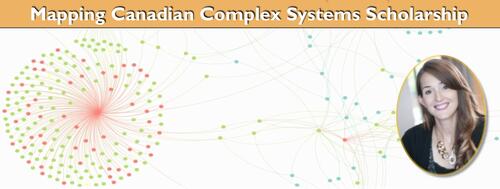
In this talk, Jinelle Piereder, PhD Candidate in Global Governance at Balsillie School of International Affairs, will draw out key insights from her forthcoming report—Mapping Canadian Complex Systems Scholarship: A Bibliometric and Network Analysis—including the thematic clusters of WICI member research, an evaluation of several bibliometric and network analysis tools, and the challenges around identifying (and measuring the impact of) complex systems research and scholars. Jinelle will also provide a tour of several interactive databases, reports, and maps so attendees can engage directly with the data and results of the project. This will also be an opportunity for participants/attendees to ask questions about the project results and discuss its recommendations to WICI.
As I always say, I think David Chapman is one of our greatest liiving cyberneticians, and I think this demonstrates why. Big ideas, patiently illustrated.
Understanding perception as meaning-saturated resolves several of the difficulties Part One found rationalism faces.
Recall from “Is this an eggplant which I see before me?” that the usual rationalist assumption is that perception’s job is to deliver an objective description of your physical environment. “Objective” would mean that it is independent of your theories, of your projects, and of anything that cannot be sensed at this moment, such as recent events. We saw that, for several in-principle reasons, this seems impossible.
Fortunately, that isn’t what we need from perception. In routine, practical activity, what we want perception to tell us is: what are the meaningful aspects of the situation we’re in right now? And what possibilities for ongoing activity do they suggest? The answers depend on what we know, what we can do, what we’re are up to right now, and what else is going on.
Unsurprisingly, then, scientific study of perception shows that it does not attempt to deliver objective descriptions; and shows how perception does operate on a task-dependent, contextual, meaning-saturated and knowledge-saturated basis.
The science is fascinating, and I’d love to review it in detail here, but that would take another book.1 Instead, I will explain just enough that you can understand how routine, reasonable activity cooperates with perception to address issues that rationality unaided cannot.
I will discuss only vision, because it’s the most important human sense, and the best understood scientifically. In this chapter, we’ll return to questions posed in “Is this an eggplant I see before me?” There we asked: what is the interface between perception and rationality? Here, our question will be: what is the interface between vision and reasonable activity? What is the division of labor? And the answer will be that they are intimately entwined, with no hard boundary between them. Seeing is an aspect of doing, not a separate, encapsulated function. This implies that what we perceive is, for better or worse, inevitably affected by what we are up to at the time.
Rationality also depends on perception, of course. We use perception in building objective, rational theories. However, this use is mediated through reasonableness, which limits how objective theories can be—as we’ll see in Part Three.
In Part Three, we’ll also come to understand how the nature and limits of perception and cognition force the rather awkward ways formal rationality must work in the material world. As a hint: how much of your technical, rational work could you do if you were blindfolded? Which parts can you do without looking at a computer screen or at your lab equipment?2 What does that tell you about the nature of rationality?
For a few years now I’ve been exploring with John Torday how the many profound aporia we live with (what we seem to accept as “wicked problems” – climate change, inequality, homelessness, educational problems, health, geopolitics, etc) result from some gap in our understanding of how human consciousness came to be: to put it simply, it is Bateson’s “gap between the way people think and the way nature works”. In excluding the possibility of a deeper and more coherent narrative, we have grown to believe that our profound problems cannot not exist. But I am now asking a question that was once asked by Jiddhu Krishnamurti to David Bohm – is it possible for humans to have no “problems” at all
Want to create recipes for transformation? Join the launch of the Cookbook for systems change!
17.12.20 | News
Photographer norden.orgMailFacebookLinkedinTwitterSign up to newsletterHow do we create innovative strategies that help us address the greatest societal challenges of our time? On 26 January you are invited to explore the key learnings from the new Cookbook for systems change – Nordic innovation strategies for sustainable food systems.
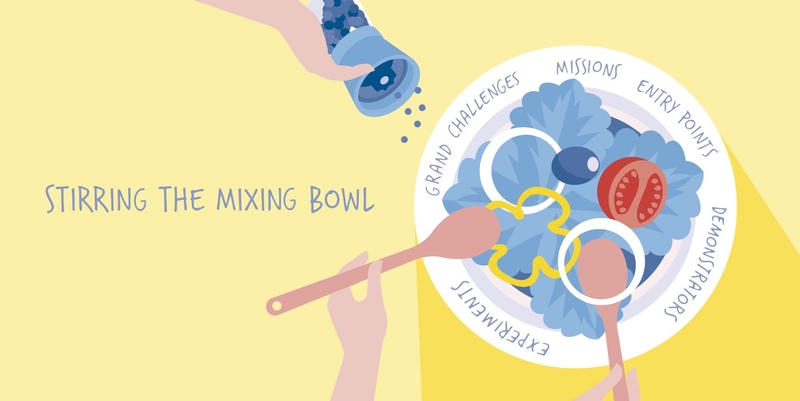
The Cookbook for systems change -Nordic innovation strategies for sustainable food, by Nordic Food Policy Lab of the Nordic Council of Ministers, Stockholm Resilience Centre and EAT, lays out an inclusive Nordic approach to research and innovation-oriented missions. By exploiting entry points and breaking grand challenges down into a portfolio of actionable place-based demonstrators, these Nordic innovation strategies provide a systemic approach to tackle complex challenges – starting with our food systems.
Momentum is building among policy-makers for the adoption of more experimental approaches.
Join us on 26 January!
Are you interested in learning about the approach, and how Nordic research and innovation agencies are collaborating to apply it in practice? Join us for the launch of this Cookbook and a special 2×30 minute crash course starting off with a debate on the need for a mission-based approach, followed by a tour of the Cookbook for systems change– Nordic innovation strategies for sustainable food.
The Cookbook for systems change is about the role that a strong public innovation system can play alongside the pathways towards sustainable food systems. The book provides the ingredients – templates for developing interventions, guides for how to get started and examples of cross-cutting projects – that can be used to create recipes for change. It also offers a new, emergent way to work with complex and dynamic systems.
Demystifying systems change: introducing a mission-approach to food systems transformation
The Cookbook for systems change is the result of a collaboration between the Nordic Food Policy Lab of the Nordic Council of Ministers, Stockholm Resilience Centre and EAT, and forms part of the joint initiative with the following organizations to establish a first shared Nordic mission:
Design and Architecture Norway
Danish Design Centre
EIT Climate-KIC
EIT Food
Formas
Innovation Norway
Nordic Innovation
Matis
Research Council Norway
Sitra
Vinnova
The Cookbook is funded by EIT Climate-KIC as a part of the Deep Demonstrations on Resilient Food Systems and Diets. It is written by Afton Halloran (editor), Amanda Wood, Florencia Aguirre, Marie Persson, Marius Weschke and Ove Kenneth Nodland.
This is a rapid review of the literature on the concept of systems leadership conducted for the National Leadership Centre in January 2020. The project has been delivered on an aggressive timeline and is not intended as a full systematic review of scholarly and other relevant literature. Instead, it is a scoping of the literature which uses a combination of academic databases and qualitative scholarly initiative to understand how scholars and practitioners are answering the following questions:
What is systems leadership and how is it defined in relation to other approaches to leadership?
What are the conditions of success and failure observed in public service delivery where systems approaches are used?
What behaviours and practices do effective leaders and organisations exhibit when they are tackling systemic issues?
How might these behaviours and practices be learned, encouraged and institutionalised? And how can factors leading to failure be limited?
1.1 This review is organised as follows:
Section 1 covers definitions.
Section 2 is about existing debates in social science literature that are pertinent when considering systems leaders and systems leadership.
Section 3 is about what behaviours and capabilities systems leaders are thought to exhibit and possible ways of categorising those qualities.
Section 4 is about how organisations can use systems thinking to respond to issues facing them.
Section 5 provides a high-level assessment on the state of existing research and recommendations for the NLC going forward.
Appendix 1 contains Google Trends analysis about use of the term “systems leadership” and other relevant concepts.
Appendix 2 contains a select list of useful resources and institutions and journals conducting high calibre research for those seeking further reading.
1.2 Research Methodology:
As stated, this is not a systematic review of the literature. Rather it is a bespoke and qualitative high-level review. It used a very large academic library database to conduct the search as well as more intuition-derived “snowballing” techniques, such as surveying the citations in particularly good articles. A brief overview of the approach taken is set out below.
Following agreement of the search terms with the NLC, the University of Oxford’s academic database Searching Oxford Libraries Online (SOLO) was used for searching for citations. This is one of the world’s most comprehensive library databases.
The databases of several renowned business journals were also used, most notably the Harvard Business Review and the MIT Sloan Management Review, entries in which are less likely to appear in SOLO searches.
In the initial scoping exercise, the search terms “systems leadership,” “public sector systems” and “complex systems” were used. These articles were reviewed before employing a “snowballing” method (pursuing references of references and using citation-tracking software) to find further relevant literature.
The search of the literature was generally restricted to articles published since 2008 in English. Since the number of articles yielded from searches is far greater than the number that are either relevant to the research and/or possible to review in a constrained time frame, a degree of discretion was required in choosing which articles to review.
Choices about which articles to focus on were based on publication type and reputation (e.g. Leadership Quarterly is a well-known journal with research output highly pertinent to this project) and subject or discipline area. Similarly, dictionary terms or very short newspaper articles identified through the database search were also excluded.
Literature from social science disciplines (e.g. sociology) and professional journals (e.g. business school research) was also deemed more useful to this research project than, for example, applied science journals.
Existing knowledge of the leadership studies field was also a factor in decisions of inclusion and exclusion of articles. For example, the work of the Harvard Kennedy School Center for Public Leadership is well-regarded, and its webpages were consulted for useful resources and references.
Searches made yielded many thousands of database entries of varying relevance to the review. In total, 148 items were identified for inclusion in the rapid review. In addition, advice was sought from several experts from inside and outside academia, several of whom are quoted in this review, and who provided further scholarly direction.
In sum, this rapid review is not comprehensive. Experience and scholarly instincts were used to focus in on what is likely to matter most to those studying systems leadership in policy contexts.
Act to live! Viability in times of uncertainty 14th Metaphorum Conference11-13 June 2021, Leuven, Belgium
A conference specifically focused around Stafford Beer and the Viable Systems Model and Team Syntegrity.
All problems, whether they are regarded as problems of recognition, or classification, or indeed decision, are problems about uncertainty.
Stafford Beer
Welcome one and all.
In the last nine months, the COVID19 pandemic has brought dramatic changes to all our lives. In this conference, we will be exploring the many and various ways in which Stafford’s ideas can help to address the exploding uncertainty of emerging social and business landscapes. We will focus on examples of innovative action research developing Beer’s theory and tools and critically reflecting on effective practice. For the first time, we will be introducing participatory design. We will be asking your views on the most interesting talks and giving more time to those which are the most popular. Everyone who registers will be asked to vote in the spring after the abstracts have been selected. Details will follow.
Venue
The 14th Metaphorum conference will take place in De Hoorn Conference Centre in Leuven1, Belgium. Leuven is a 15min train or drive from the Brussels Airport.
The pre-conference evening on Friday, 11 June, will be at another location, to be announced soon.
Program
Friday, 11 June
Get-together dinner and pre-conference session.
Saturday, 12 June
Morning: welcome, keynote, two parallel streams, each talk one hour (for the most popular talks), four talks in all.
Afternoon: sessions in format PechaKucha2presentation + discussion. There will be 3 parallel streams, each talk for half an hour, twelve talks in all.
Sunday, 13 June
Singletrack interactive session. Details will follow.
A detailed program will be published in the spring of 2021.
Accommodation
There are plenty of accommodation options in Leuven. An excellent combination in terms of price, quality, and proximity is Novotel Leuven. Accommodation is also offered at the conference venue, De Hoorn.
Call for Contributions
The theme of the conference is:
Act to live! Viability in times of uncertainty
Uncertainty requires action and learning from it.
Uncertainty implies the notion of not knowing. Knowledge in human affairs, surely those involving an uncertain future, only develops when taking the risk of action. The reflective practitioner, involving herself into the action and the research, embodying cybernetics, the art of governance, is invited to contribute to this Metaphorum conference.
The conference will provide her with a platform to discuss and deepen her research, hence applying to this call does not require a full-fledged paper, only a description of the environment, the aims and the actual status of her research/practice.
Those contributions which exemplify the generative character of the tools that Stafford Beer crafted will be selected for the longer time slots during the Saturday morning. How has the reflective practitioner made these models and concepts her own, to help her to deal with tensions and conflicts in the social systems in which she is actively involved?
As Leuven has been named the European Capital of Innovation 2020, the contributions should exemplify novel ways of using Stafford’s tools. In a world which has changed greatly since Stafford lived and worked, the continuing and future relevance of his work should be stressed.
To submit your proposal, select “Speaker” in your registration form.
Registration
Due to the inevitable uncertainty with Covid19 and vaccines, we are asking everyone who intends to attend, to register their interest now without paying the conference fee. Payment will be asked once we have more confidence that everyone can travel and that the conference can go ahead in June. The Fee will be £125.
If there is a problem and the conference has to be delayed, we will inform everyone as soon as we know, and reschedule the conference, probably at the same venue in Leuven, later in the year.
The £125 covers the venue for all day Saturday and Sunday. We will find another venue for Friday night. Sandwiches are provided on Saturday, but we will all need to buy the other meals and teas and coffees which will be available at the venue.
Brian Goodwin: Stuart is primarily interested in the emergence of order in evolutionary systems. That’s his fix. It’s exactly the same as mine, in terms of the orientation towards biology, but he uses a very different approach. Our approaches are complementary with respect to the same problem: How do you understand emergent novelty in evolution? Emergent order? Stuart’s great contributions are there.?
__________
STUART KAUFFMAN is a biologist; professor of biochemistry at the University of Pennsylvania and a professor at the Santa Fe Institute; author of Origins of Order: Self Organization and Selection in Evolution (1993), and coauthor with George Johnson of At Home in the Universe (1995).
Proving once again that it is always, always worth investigating the source of a classic quote (in this case: “A businessman once stated that ‘there is nothing as practical as a good theory’” (1943/1999, p. 336)) – very much like (to misquote):
Hacker: “neither a borrower nor a lender be, humphrey. William shakespeare”
This article examines how social psychology textbooks represent Kurt Lewin and his contribution to social psychology. Many textbooks describe Lewin as the father of social psychology, using a conventional, passive-voiced trope to do so. The rhetorical meaning of this trope is analysed to show that textbooks are invoking a collective memory, which closes down views of the past, rather than making a historical argument, which opens up the past for examination. This depiction of Lewin typically involves forgetting his critical views about statistics and experimentation. When textbooks cite Lewin’s famous motto “there is nothing as practical as a good theory,” they tend to ascribe it a special status. In doing so, they change its meaning subtly and treat it as a truth that needs no empirical validation. By their rhetoric, omissions, and avoidance of historical sources, textbooks recreate Lewin as a mythic figure rather than a historical one.
Quote above: An approach to interface design based on Heinz von Foerster’s Ethical Imperative where “choices” are distinguished from “options” — options are anything that is possible, while choices are only those options that are viable and well-suited to this user in this moment.
More and more, today’s AI makes the world we see and the world we live in — and we need to respond. In a presentation hosted by the AiTech Agora at TU Delft, Paul Pangaro responds with a proposal for collaboration that bridges AI and cybernetics with conversation.
“Pandemic” comes from “all” and “people”, meaning something negative that effects us all. While not biological, today’s AI foments polarization, pushes irrelevant products, spreads social bias, and surveils our lives. AI touches billions and sways more of us, in more invasive and uncontrolled ways, every day.
AI came out of cybernetics, a practice that evolved from a series of trans-disciplinary conversations called the Macy Meetings. This history offers a way forward.
Pangaro’s talk proposes how cybernetic models of conversation may enable the design of interactions that are cooperative, ethical, and humane, whether human-to-human or human–to-machine.





 Systems Community of Inquiry
You must be logged in to post a comment.