Neutral and niche forces as drivers of species selection

cxdig's avatarComplexity Digest

The evolutionary and ecological processes behind the origin of species are among the most fundamental problems in biology. In fact, many theoretical hypothesis on different type of speciation have been proposed. In particular, models of sympatric speciation leading to the formation of new species without geographical isolation, are based on the niche hypothesis: the diversification of the population is induced by the competition for a limited set of available resources. Interestingly, neutral models of evolution have shown that stochastic forces are sufficient to generate coexistence of different species. In this work, we put forward this dichotomy within the context of species formation, studying how neutral and niche forces contribute to sympatric speciation in a model ecosystem. In particular, we study the evolution of a population of individuals with asexual reproduction whose inherited characters or phenotypes are specified by both niche-based and neutral traits. We analyze the stationary state of the…

View original post 69 more words

Systems Change Is All about Shifting Power – Cyndi Suarez


Source: Systems Change Is All about Shifting Power – Non Profit News | Nonprofit Quarterly

Systems Change Is All about Shifting Power

October 1, 2019

Image by OpenClipart-Vectors from Pixabay

“How do you shift power in a system?” It is a question I hear and entertain more and more lately, as many of us in nonprofits have worked for decades to create systems change, more often than not with little or underwhelming result.

In the classic systems thinking essay, “Leverage Points: Places to Intervene in a System,” Donella Meadows writes, “Leverage points are points of power in a system.” So, systems change is all about shifting power. However, the implementation of systems change often ignores this central aspect.

Revisiting the top five leverage points in the system begins to illuminate the extent of the change that is brought just by even one of these. In increasing order of effectiveness, they are:

5. The power to set the rules of the system
4. The power to change or evolve the structure of the system
3. The power to set the goals of the system
2. The power to set the paradigm of the system
1. The power to transcend the paradigm of the system

Regarding the power to set the rules—incentives, punishments, constraints—Meadows writes, “If you want to understand the deepest malfunctions of systems, pay attention to the rules, and to who has power over them.” For example, capitalism is a system where the rules are designed by owners of corporations, run by corporations, for the benefit of corporations—which is why all others are made subordinate by it. Nonprofits, which themselves require a corporate board and leading executives that make organizational decisions, by design are systems where the power to make rules is monopolized by an elite, and thus, ultimately, are, at their core, not very different from for-profit corporations.

Meadows sees the ability to change the system, self-organization, as “the most stunning thing that living systems and social systems can do.” They do this by “creating whole new structures and behaviors.” She notes that in biological systems, “that power is called evolution.” The ability to self-organize is the foundation for resilience in a system. Meadows observes, “A system that can evolve can survive almost any change, by changing itself.” Self-organization relies on its own set of rules that govern “how, where, and what the system can add onto or subtract from itself under what conditions.” It balances what exists with new patterns that respond to current reality. However, as this leverage point is high up in the system, those who have this power oftentimes have the least incentive, or knowledge of how, to evolve the system. This is why the empowerment-speak of nonprofits rings so hollow.

The goals in a system determine its structure and rules, along with the other leverage points beneath these. Meadows writes, “Like all technologies, it depends upon who is wielding it, with what goal.” Further, goals are not what the system says, but what it does. System-level goals include survival, resilience, differentiation, and evolution. Often, people in a system do not know what the actual goals are. Sometimes this is intentional. I see this a lot in racial justice work, where the change goals are usually set by and for the dominant, or elites, in the system because they are the ones with the power to set those goals. This likely contributes to the common discrepancy between what we say and what we do, which is why understanding the power to set goals and who wields it is critical to any systems change work, including racial justice efforts. Not only are systems change processes inherently about power shifting, in our society, power shifting processes are inherently racial justice processes. When undergoing systems change, then, it is critical to understand that there need to be new, power-explicit, system-level goals, and these should be designed to address its power hierarchies.

Paradigms—models, patterns, or standards—are the source of systems. They shape the nature of reality in the system, goals, and everything that flows from these. Meadows illustrates: “The ancient Egyptians built pyramids because they believed in an afterlife. We build skyscrapers because we believe that space in downtown cities is enormously valuable.” It is harder to change the paradigm than just about anything else in the system. That’s why the ability to change paradigms is the highest leverage point. However, Meadows points out, “there’s nothing necessarily physical or expensive or even slow in the process of paradigm change…all it takes is a click in the mind, a falling of scales from the eyes, a new way of seeing.”

Meadows asks, “So how do you change paradigms?” And answers, “In a nutshell, you keep pointing at the anomalies and failures in the old paradigm, you keep speaking louder and with assurance from the new one, you insert people with the new paradigm in places of public visibility and power. You don’t waste time with reactionaries.” In my experience in the sector, the paradigm is set by the leading executives, especially the founding ones. In the typical hierarchical organization, the leading executives not only manage the staff beneath, but the board above. This system flaw—hindered communication—is a drawback to any system change because power preserves itself and, most powerfully, through control of the paradigm. That is why executive transitions are so challenging: the goal is change, but the practice—again, by those leading the change, usually the elite—is to control the change; to be seen to change while changing as little as possible.

Finally, as aforementioned, the highest leverage point in a system is the power to shift the paradigm. Meadows defines this as the power “to keep oneself unattached in the arena of paradigms, to stay flexible, to realize that no paradigm is ‘true,’ that everyone [has] a tremendously limited understanding of an immense and amazing universe that is far beyond human comprehension.” Though most of us cling to our paradigms, Meadows observes that “everyone who has managed to entertain that idea, for a moment or for a lifetime, has found it to be the basis for radical empowerment.” Appropriately, she calls this “mastery over paradigms.”

By now, system thinking has become deracinated, devoid of its true power implications. This quick review reminds us of what system change actually requires. What would it look like if systems change efforts, especially racial justice ones, were oriented around these five top leverage points? If they do not, then we should at least stop saying we are doing systems change work.

Source: Systems Change Is All about Shifting Power – Non Profit News | Nonprofit Quarterly

An exercise: meta-rational phenomena | Meaningness


Source: An exercise: meta-rational phenomena | Meaningness

An exercise: meta-rational phenomena

Title slide: Leveling Up Systems in a Whitewater World

As an experiment in communicating meta-rationality, I led an interactive unconference session with a brief presentation followed by an exercise discussion. I hope to develop a workshop on meta-rational thinking, and the exercise I posed might be a part of the curriculum.

Slides are here. The rest of this post explains the exercise, which won’t be clear from the slides alone.

Most of us who work with rational systems at a moderately advanced level also practice meta-rationality. “Meta-rationality” means not taking a rational system for granted, but reflecting on how it is working in practice, and acting more effectively better by going beyond its bounds.

Unfortunately, we are not usually particularly good at this. Because the category “meta-rationality” has rarely been pointed out, and its value has rarely been explained, it is not taught in classes; its methods are not studied by either theorists or practitioners; and so it is mainly overlooked and underdeveloped.

Continues in source: An exercise: meta-rational phenomena | Meaningness

Stanislaus County project brings new methods, people together | Modesto Bee

Hot lead from the Modesto Bee leads to the Leading Systems Change book http://newleadershipnetwork.org/book/ and detailed links to resources – http://newleadershipnetwork.org/tools-and-resources/

FOR ANYONE LEADING COMMUNITY CHANGE, THIS BOOK IS FOR YOU

A toolkit for 21st century social change

What’s Inside

This workbook is broken down into nine different chapters. These chapters are intentionally designed to help provoke thought and facilitate discussion for many different types of system change concepts. The first four chapters tell of the who, why and how of this book. Chapters 5, 6, and 7 educate about the Arc of Learning. The remaining chapters discuss how to take the knowledge, resources and tools you have as a leader or funder and to put it to action.


Source: Stanislaus County project brings new methods, people together | Modesto Bee


How Post-Its, Macklemore and design are helping build a better Modesto

 
Jaylen French and Bob Barzan brainstorming ideas at Designing the Future of Stanislaus County on Sept. 27 at Greens on Tenth.  MFIGUEROA@MODBEE.COM

What do Post-It notes, Macklemore and design have to do with making the valley better?

More than you might realize, according to a new book focused on the ways the Central Valley — particularly Stanislaus County — is tackling its most complicated problems. Government, business and community leaders gathered in downtown Modesto to discuss the new workbook, “Leading Systems Change,” Friday afternoon and learn from its methods.

The session highlighted the work of the New Leadership Network, a four-year, $1.5 million project from The James Irvine Foundation that seeks to train and develop emerging leaders. Stanislaus County was selected to host one of the networks, along with Fresno.

About 50 people were part of the local network, ranging from members of municipal government, law enforcement, nonprofits, businesses, educators and more.

Explore where you live.

Subscribe for 12 FREE weeks of unlimited digital access.

SAVE NOW

“It’s not often we have a book really written about our community,” said Marian Kaanon, President/CEO of the Stanislaus Community Foundation which is the network’s local operating partner. “It is nice to see our community represented in the way we know it and live it.”

The goal of the group is to harness creative ideas from a diverse range of people, and use that to spawn new ideas to address problems or bring innovations to a community.

MF Designing Future1.jpg
Thomas Both, Director of Designing for Social Systems at the Stanford d.school, addresses the room at Designing the Future of Stanislaus County on Sept. 27 at Greens on Tenth. Maria Figueroa MFIGUEROA@MODBEE.COM

Which is where the Post-Its come in. Some 50 people took part in the events, which used the “show, don’t tell”-method of discussing the New Leadership Network’s methods.

So as part of the event the audience got up out of their seats to brainstorm, with Post-It notes, on blank boards posing three open-ended topics. They were about creating ways to boost who feels included in public spaces, creating ways to inspire creative confidence in each other, and creating ways to tell our county’s story as inspirational and inclusive.

Questions and thoughts were then scrawled onto Post-Its and discussed. In Stanislaus County, those mass brainstorms have led to a few real-world projects already.

They include the Glorious Modesto project, which was inspired by Seattle rapper Macklemore’s music video “Glorious” which was filmed in and around Modesto with his grandmother, who lives here. The civic self-esteem effort includes T-shirts and postcards with funds used to support creative projects in the city.

“It’s about telling a different story about Stanislaus County. It’s about changing the perception of residents and mobilizing them to share better stories,” said Reggie Rucker, who is part of the network and works for the Downtown Modesto Partnership. “If a superstar can have that much joy in a single day in Modesto, who are we to not feel glorious about Modesto?”

MF Designing Future3.jpg
Amanda Hughes, Program Director for the Stanislaus Community Foundation, discusses ideas with group at Designing the Future of Stanislaus County on Sept. 27 at Greens on Tenth. Maria Figueroa MFIGUEROA@MODBEE.COM

The Modesto Design Collective (MO.DE), another community partner with the network, discussed the way design can be used to shape and change public perception. The Stanford d. School hosted some of workshops for network members. MO.DE just finished hosting Modesto Architecture & Design Week (MADWEEK), celebrating the region’s architecture and design.

“Collaborating on complicated issues with people we don’t work with everyday, that’s the secret sauce,” said New Leadership Network Program Director Adene Sacks.

For participants and network members like Lee Davis, who lives in Modesto and works as the co-director for the Center for Social Design at Maryland Institute College of Art, the experience is already having an impact.

“It fundamentally changes how a lot of us think about ourselves as change makers in the community,” he said.

Complexity and Macroeconomics – 27 November 10am London UK

Source: Event Details | Rebuild Macro

Wed, 27 Nov | The National Institute Of Economic and S

Complexity and Macroeconomics

We hold a one-day conference to discuss complexity science in macroeconomics, together with the OECD’s NAEC initiative.

Time & Location

27 Nov, 10:00
The National Institute Of Economic and S, 2 Dean Trench St, Westminster, London SW1P 3HE, UK

About the Event

We are holding a one-day conference to discuss complexity science in macroeconomics, being organised with the OECD’s New Approaches to Economic Challenges (NAEC) initiative. The event will be held at the National Institute of Economic and Social Research on the 27 November 2019.

More information on the speakers, agenda and how to register will be released shortly.

Source: Event Details | Rebuild Macro


Requisite visual variety … • Meaning Guide


Source: Requisite visual variety … • Meaning Guide

Requisite visual variety …

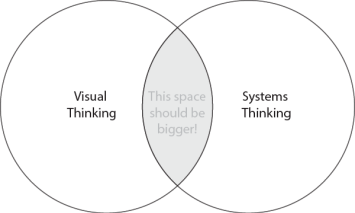
Visual thinking and Systems thinking

There are so many systems principles I wish someone had sat down and explained to me at the start of my career, but if I had to pick out one, it would probably be Ashby’s law of requisite variety. Stafford Beer called it the managerial equivalent of the law of gravity, and when you really get it, it is a bit of a Newtonian paradigm shift – suddenly a whole load of things make sense that didn’t make sense before.

Ashby’s law can be quite hard to get your head round if you’ve never heard of it before, but here’s a quick summary:

The world (as we perceive it) is made up of zillions of complex interacting systems. How complex is each system? Well, one way of defining that would be to count the number of states each system could be in, which is what Ashby calls the system’s variety. It’s a theoretical notion, because you can’t really count the number of states that anything but the most trivial of systems could be in, but that’s not the point. The point is that you can compare them. Two people have more variety than one person. A 16-bit computer processor has more variety than an 8-bit processor.

Now, Ashby’s law says that ‘only variety can destroy variety’. In other words, if you want to be able to exert control over something (i.e. reduce the number of states that it can be in), you need to be able to match that number of states yourself. You can only reliably manage something to the extent that you can match its complexity.

The problem is that, most of the time, you can’t!

Continues in source: Requisite visual variety … • Meaning Guide


Essential Balances in Organisations – interview with Ivo Velitchkov


Source: Essential Balances in Organisations

Essential Balances in Organisations

Interview by:   Frank Turley

With:              Ivo Velitchkov

Date:               September 2019

Essential Balances in Organisations

BIO 4

Frank: Let’s start directly with what are Essential Balances in Organisations?

Ivo: We are used to call organisations only the formal ones – companies, agencies, institutions, clubs. But this form of production is quite new, hardly a couple of centuries old. If we look a bit broader at things that have organisation, not only at those that are organisations, we can learn a lot. And there are good and bad news here.

Frank: What are the good ones?

Ivo: It turns out that organisations have common ways of functioning and remaining viable. So, the good news is that we can learn from thousands of years of evolution. What I find fundamental and yet largely ignored, are three essential balances that are common for organisms and for organisations and doesn’t depend on size, and – when it comes to organisations – whether they are hierarchical or flat, or what is their business model.

The bad news is that although the balances are common and only three are essential, there are infinite ways to maintain them. We cannot extract best practices and develop methodologies.

Frank: How can we use this knowledge then?

Ivo: To develop different thinking habits. I like the glasses metaphor here. We put on a new pair of glasses and we look at our organisations through them.

Frank: What’s the benefit of that?

Ivo: We can diagnose quickly when something is wrong, in the sense bad for the performance and viability of the company. More importantly, we can diagnose it early. As Machiavelli wrote in 16th century – “in the beginning a disease is easy to cure but difficult to detect, while in the course of time, it becomes easy to detect but difficult to cure.

Frank: Does it mean the skills you teach are only good for diagnosis?

Ivo: Not only. They are applicable for both diagnosis and design.

BIO 1Frank: And what are actually these three balances?

Ivo: The first balance is between autonomy and cohesion.

If there is not enough autonomy in different parts of an organisation, it is not effective, does not adapt quickly enough, and it won’t be resilient. But if there is no cohesion, the organisations are inefficient. They grow silos which pursue their own continuation and growth at the expense of the organisation.

Frank: So, the organisation is either in balance or not. And there is one such balance for each organisation?

Ivo: Unfortunately, not. That balance needs to be kept at various levels. Which means, there are many nested balances. You see, we think because we create organisations, we control them. But in fact, they have a mind of their own. That’s the first complication. And the second is that one organisation is made up of many nested and coupled organisations. And all these organisations have a mind of their own too, which makes them unpredictable. In other words, teams, projects, programs, units, departments, subsidiaries, they all need to maintain the balance, this one and the other two. By the way, although my focus is on the organisations, the importance of that balance does not stop at that level. Beyond organisational level the autonomy is exercised as the freedom of market initiative and action, and cohesion as coordination and regulation. Interestingly, the balance works not only at organisational and market level, but also – if we zoom in – we see it at personal level.

Frank: That’s very interesting. I’m curious to know more how the balance works at personal level, but we’ll leave that for another time. You said, it works equally at project level. For an agile team, there is a lot of autonomy, and no hierarchy or reports to bring cohesion. Then how the balance is achieved?

 Ivo: The cohesion of an agile team comes from the fixed size of sprints, retrospectives, roles and so on. Being agile does not guarantee balance. An agile team may or may not be able to maintain the balance. That’s not well understood. I see dysfunctional agile teams look for the problem at the wrong place like not following properly some kind of agile practice.

Frank: I see. Now, can you tell us about the other two balances?

Ivo: The second balance is that of stability and diversity.

BIO 2Stability in organizations is dynamic, yet viable organisations have the ability to maintain it, and to re-establish it when it is disturbed. When valuable people leave, others are recruited. When market share shrinks, new services are added, or new markets are explored. When a competitor is using and benefiting from a new technology, that or a better one is being adopted. But when organisations are disturbed in a way not experienced before, the balance can only be restored using novel means. That’s one reason for the need for diversity. It could be a diversity of different kind – people, ideas, experiments. Note that that’s not the typical way of looking at diversity, you know, as something solving an ethical issue or – worse – as a compliance problem.

Frank: What’s the third balance?

Ivo: The third balance is that between exploitation and exploration.

BIO 3On one hand, it’s a popular resource allocation dilemma. Should you exploit a resource, refine a technology and extend the offering to the existing clients? Or should you look for alternative resources, new technologies, and explore new markets? But it is equally a viability strategy. An animal needs to eat (exploit) to have the energy to look for more food (explore). A company needs a flow of resources now, so that it could finance research and innovation to ensure its viability in the future.

Frank: What’s the typical disbalance here?

Ivo: Organizations tend to over-exploit and under-explore. That’s natural: the expected results from exploitation are usually known, while the potential results from exploration are always unknown.

Frank: You are going to do a master class on that topic during the PMI Fair next week. What would that be and why you called it BIO?

Ivo: Yes, this will be a condensed 90 min version of the workshop, specially designed for the PMI fair. BIO stands for “Balances in Organisations”. With “bio” I’d like to emphasise the importance of understanding organisations as living beings.

Frank: Before the interview you told me that you are also writing a book.

Ivo: Yes. It’s now the fifth year I’m delivering this workshop but there are many important aspects and details that cannot be communicated this way. They are in the book. It will be published next year.

About Ivo

Dr. Ivo Velitchkov has been working for 23 years in the areas of Enterprise Architecture, Project Management, Business Strategy, Business Process Management, and Data Management. He’s been involved in them in various capacities: as entrepreneur, CEO of a software company, university professor, project and program manager, consultant and researcher.

Ivo is the author of the blog StrategicStructures.com, co-author of the book “Enterprise Architecture for Connected E-Government: Practices and Innovations”

Source: Essential Balances in Organisations


A live! scientific! debate about data, complexity, experience and social outcomes

The Gut-Brain Axis (Ethical Questions) | Leading in Context – Linda Fisher Thornton


Source: The Gut-Brain Axis (Ethical Questions) | Leading in Context

The Gut-Brain Axis (Ethical Questions)

By Linda Fisher Thornton

I am a long-time advocate of systems thinking. It has risen in importance as an increasing number of our greatest human challenges can’t be understood or resolved without it.

Today, I’m taking a look at new findings on the human microbiome, which is known to impact the brain in important ways. You may have already seen the recent news about advances in our understanding of the Gut-Brain Axis.

Hidden in the walls of the digestive system, this “brain in your gut” is revolutionizing medicine’s understanding of the links between digestion, mood, health and even the way you think.

— The Brain-Gut Connection, John Hopkins Medicine

The cells that make up our bodies are now better understood, and the current estimate is that only 43% of them are human (Adam Jezard, World Economic Forum). The rest of the cells are referred to as our microbiome.

Not All Bacteria and Viruses are Bad

We have traditionally thought of bacteria and viruses as always bad and tried to kill them off. “There is now a multitude of evidence to suggest that this kill-all approach isn’t working (Adam Jezard, World Economic Forum).”The reason that killing all the bacteria and viruses in our bodies is not good is that some of them are necessary for our health, and can actually help our bodies fight the bad ones. Antibiotics are a kill-all approach that also eliminates the good bacteria. When the good bacteria are gone, it’s easier for the bad bacteria to take over.

A Second Genome

“Prof Sarkis Mazmanian, a microbiologist from Caltech, argues: ‘We don’t have just one genome, the genes of our microbiome present essentially a second genome which augment the activity of our own” (James Gallagher, BBC). In the article, he goes on to say that what makes us human is “the combination of our own DNA, plus the DNA of our gut microbes (James Gallagher, BBC).” Clearly, we need to use systems thinking (and not cause-and-effect thinking) for this to make any sense.

How the Brain is Impacted

Here are some things we have learned about the multiple ways the microbiome impacts the functions of the brain:

“Insights into the gut-brain crosstalk have revealed a complex communication system that not only ensures the proper maintenance of gastrointestinal homeostasis, but is likely to have multiple effects on affect, motivation, and higher cognitive functions.”

“microbiota influences stress reactivity and anxiety-like behavior.”

Carabotti, Scirocco, Maselli and Severia, The gut-brain axis: interactions between enteric microbiota, central and enteric nervous systems, Annuls of Gastroenterology

There are clearly many reasons to protect the health of our microbiome. How do we do that? We can start by eating a healthy, high fiber diet. If we eat a healthy, high fiber diet, are the good bacteria in our microbiome safe if we don’t take antibiotics? Not so fast. According to a recent study, many of “the world’s rivers are contaminated with antibiotics” (Kara Fox, CNN).

Protecting the Microbiome

Now we know that the health of our microbiome is intricately connected to overall human health. It is not something to be treated as an invader. It should instead be treated with care. Individuals will need to reconsider how their diet and habits will impact the microbiome, and businesses will need to assess the positive or negative impact of their products.

Since our understanding of the microbiome and its importance to our health has advanced, the burden is now on all of us to adapt. Use the list of Ethical Questions below to determine the next steps.

Ethical Questions

  1. What kinds of meals, snacks and drinks are we serving in our food services, meetings, conferences and retreats?
  2. How could our products be impacting the gut microbiome?
  3. Do our products feed the bad bacteria or the good? How high is the sugar content? The fiber content?
  4. As we market our products, are we encouraging habits that support a healthy microbiome or an unhealthy one?
  5. What should we change about our products and marketing to align with new information about the microbiome and its impact on human health?

Resources:

How Your Gut Might Modify Your Mind, Chemical and Engineering News, American Chemical Society

Gut-Brain Psychology: Rethinking Psychology From the Microbiota–Gut–Brain Axis, Frontiers in Integrative Neuroscience


Source: The Gut-Brain Axis (Ethical Questions) | Leading in Context

Embodied Cognitive Science Unit (Tom Froese) | OIST Groups


Source: Embodied Cognitive Science Unit (Tom Froese) | OIST Groups

Embodied Cognitive Science Unit (Tom Froese)

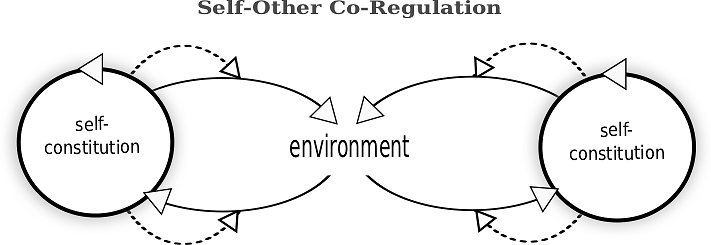
What is the mind? Traditionally, cognitive science has approached this question in terms of the hypothesis of a physical symbol system: the mind/brain is a computer, and cognition is computation. More recent approaches to cognitive science have questioned the adequacy of this hypothesis and have begun to advance alternative frameworks that substantially broaden the basis of the mind, leading to the rise of embodied, embedded, extended, and enactive (4E) cognition. These approaches develop in different ways a shared core commitment to the claim that agent-environment interaction is a foundational part of cognition, rather than just a secondary product of cognition. Together these approaches are broadly known as embodied cognitive science.

In this unit we pursue the implications of embodied cognitive science from the mind’s most basic expressions in adaptive behavior to its most complex manifestations in abstract thinking. Our interdisciplinary research is framed by a general interest in better understanding the major transitions from minimal cognition to human cognition, and our guiding insight is that changes in environmental mediation, especially sociocultural and technological mediation, have the potential to transform and potentiate the mind.

We employ a diversity of methods that are drawn from the intersection of computer science and complex systems theory: agent-based modeling, artificial neural networks, evolutionary robotics, time series analysis, virtual reality, sensory substitution interfaces, and human-computer interaction.

Latest Posts

Source: Embodied Cognitive Science Unit (Tom Froese) | OIST Groups


What is systems leadership, and how can it change the world? | World Economic Forum

#systemsleadership makes it to the World Economic Forum (via the CR Initiative (Corporate Responsibility I assume) at the Harvard Kennedy School. Longer report at https://www.hks.harvard.edu/sites/default/files/centers/mrcbg/files/Systems%20Leadership.pdf

Source: What is systems leadership, and how can it change the world? | World Economic Forum

Systems leadership can change the world – but what exactly is it?

Christiana Figueres, Executive Secretary of the United Nations Framework Convention on Climate Change (UNFCCC), gestures during a news conference after a week long preparatory meeting at the U.N. in Geneva February 13, 2015. The United Nations Climate Change Conference, COP21 or CMP11, will be held in Paris November 30 to December 11, 2015.
Christina Figueres’ leadership helped bring 195 countries together to sign the 2015 Paris Agreement
Image: REUTERS/Denis Balibouse

As world leaders and activists gather in New York this week to address the climate crisis and the faltering rate of progress toward the UN’s Sustainable Development Goals (SDGs), the calls for systemic change are getting ever louder. Systems change is an inspiring goal – but how can we achieve it?

Transforming a complex system – such as the energy, health or food system – is a monumental task requiring coordinated action by people with very different viewpoints. Systems-change initiatives often engage hundreds of organizations – governments, companies, civil society organizations, worker associations, research institutions and others – combining their capacities to achieve a shared goal.

These large-scale initiatives are often driven and supported by people who fit a certain profile – those who are able to catalyze and empower collective action among others, rather than controlling or directing the action themselves. These people are increasingly described as systems leaders.

A balancing act
A balancing act
Image: Harvard Kennedy School

We studied examples of systems leaders working on diverse issues around the world, and found some striking similarities. Systems leaders – whether they are global leaders or community activists, working in Europe, Asia, Africa or the Americas – often apply a similar set of tactics and have similar experiences leading large, complex initiatives. We summarized some of the key elements and success factors of systems leadership in a new report in the interest of encouraging others in the global community to apply and refine this approach.

Systems leadership: a tool for our times

Systems leadership is a set of skills and capacities that any individual or organization can use to catalyze, enable and support the process of systems-level change. It combines collaborative leadership, coalition-building and systems insight to mobilize innovation and action across a large, decentralized network.

Two very different examples illustrate what it can look like in practice. The 2015 Paris Agreement, signed by 195 countries with support from thousands of organizations, was spearheaded by Christiana Figueres, a global diplomat who emphasized practicality, flexibility and collaboration to bring stakeholders onboard, securing an historic agreement. At a more local level in Richmond, California, a community organizer named Najari Smith founded a new venture called Rich City Rides, galvanizing community members, local businesses and city government to address the interconnected challenges of employment, health and environmental sustainability among low-income communities of color in the city.

These two leaders operated in very different spheres, but they used some similar tactics: combining a deep understanding of the systemic issues they wanted to address; an ability to engage and align diverse stakeholders around shared goals; and an emphasis on empowering action and collaboration by a broad network of organizations.

Systems leaders apply an unusual combination of skills and attributes to mobilize large-scale action for systems change. Like many leaders, they tend to be smart, ambitious visionaries with strong skills in management and execution. Unlike traditional leaders, they are often humble, good listeners, and skilled facilitators who can successfully engage stakeholders with highly divergent priorities and perspectives. Systems leaders see their role as catalyzing, enabling and supporting widespread action – rather than occupying the spotlight themselves.

Systems leadership in action

The systems leadership approach is well-suited to complex challenges that require collective action, where no single entity is in control. However, the approach is challenging – involving high transaction costs, ambiguous outcomes and long timeframes. It is best applied to complex issues that cannot be solved through more direct means.

We distilled five key elements of the systems change process into the ‘CLEAR’ framework for leading systems change. These five elements are not necessarily sequential – they may overlap or repeat in cycles throughout the course of an initiative.

1. Convene and commit

Key stakeholders engage in moderated dialogue to address a complex issue of mutual concern. They define shared interests and goals, and commit to working together in new ways to create systemic change. For example, the We Mean Business Coalition engaged nearly 1,000 leading companies to advocate for ambitious, science-based climate policy, and has made over 1,500 action commitments.

2. Look and learn

Through system mapping, stakeholders jointly build a shared understanding of the components, actors, dynamics, and influences that create the system and its current outcomes, generating new insights and ideas. For example, The Global Alliance for Improved Nutrition targets specific gaps in the nutrition system, working to catalyze and scale market-based solutions, and targeting vulnerable populations who are most in need.

3. Engage and energize

Strong stakeholder engagement is built through continuous communication to build trust, commitment, innovation and collaboration. Inspiration, incentives and milestones help drive progress and maintain momentum. For example, the New Vision for Agriculture initiative engaged over 650 organizations and 1,500 individual leaders around the world, catalyzing action in 21 countries including over 90 value-chain projects.

4. Act with accountability

Shared goals and principles set the direction of the initiative, while measurement frameworks help track progress. Coordination and governance structures can be developed as initiatives mature. For example, the Every Woman Every Child movement mobilized hundreds of action commitments towards its global strategy, monitoring progress through a unified accountability framework, with oversight from a high-level steering group and coordination by a global secretariat.

5. Review and revise

Stakeholders review progress regularly and adapt their strategy accordingly. Adopting an agile, flexible, innovative and learning-centered approach allows for evolution and experimentation. For example, the 2030 Water Resources Group evolved its organizational structure through several stages, commissioning external evaluations to both review its progress and recommend opportunities to increase its impact.

While the CLEAR Framework appears quite structured, the reality of the systems change process is often messy and ambiguous. Many stakeholders describe the experience of systems leadership as a journey of discovery that evolves over time, leading to moments of discovery or insight – what we describe as ‘Aha! moments’ – that crystallize each step of the journey.

Mainstreaming the systems leadership approach

While the concept of systems leadership makes intuitive sense to many stakeholders, it is not yet widely embraced and practiced. Mainstreaming its application will require a broader and more coordinated effort to develop research, share knowledge and build capacity. A number of philanthropists, consultancies and academics are active on these fronts, but they are not always well-connected. New platforms are needed to connect practitioners and experts, share insights and accelerate learning to support a wider array of organizations in applying Systems Leadership to advance progress toward the SDGs.


Boids (Flocks, Herds, and Schools: a Distributed Behavioral Model) – background and update by Craig Reynolds


Source: Boids (Flocks, Herds, and Schools: a Distributed Behavioral Model)


Boids
Background and Update
by Craig Reynolds[You need to be using an Java-enabled browser to see this demo.]
(more information about this applet (and others) is available)

In 1986 I made a computer model of coordinated animal motion such as bird flocks and fish schools. It was based on three dimensional computational geometry of the sort normally used in computer animation or computer aided design. I called the generic simulated flocking creatures boids. The basic flocking model consists of three simple steering behaviors which describe how an individual boid maneuvers based on the positions and velocities its nearby flockmates:

separation diagram Separation: steer to avoid crowding local flockmates
alignment diagram Alignment: steer towards the average heading of local flockmates
cohesion diagram Cohesion: steer to move toward the average position of local flockmates


Continues in source: Boids (Flocks, Herds, and Schools: a Distributed Behavioral Model)


EconPapers: The Pretence of Knowledge – Hayek’s Nobel Prize Lecture, 1974

(The paper which Graham Berrisford alleges looks like a riposte to Stafford Beer’s CyberSyn – in any case, a useful and interesting piece of systems thinking)

By Friedrich von Hayek; Abstract: Lecture to the memory of Alfred Nobel, December 11,

Source: EconPapers: The Pretence of Knowledge

pdf: http://pavroz.ru/files/hayekpretence.pdf

Link to journal article: https://econpapers.repec.org/article/aeaaecrev/v_3a79_3ay_3a1989_3ai_3a6_3ap_3a3-7.htm

Towards a heart and soul for co-creative research practice: a systemic approach (multiple authors – 2019)


Source (includes pdf download): Towards a heart and soul for co-creative research practice: a sys…: Ingenta Connect


Towards a heart and soul for co-creative research practice: a systemic approach

The language of co-creation has become popular with policy makers, researchers and consultants wanting to support evidence-based change. However, there is little agreement about what features a research or consultancy project must have for peers to recognise the project as co-creative, and therefore for it to contribute to the growing body of practice and theory under that heading. This means that scholars and practitioners do not have a shared basis for critical reflection, improving practice and debating ethics, legitimacy and quality. While seeking to avoid any premature defining of orthodoxy, this article offers a framework to support researchers and practitioners in discussing the boundaries and the features that are beginning to characterise a particular discourse, such as the one that is unfolding around the concept of co-creation. The paper is the outcome of an online and face-to-face dialogue among an international group of scholars. The dialogue draws on Critical Systems Heuristics’ (Ulrich, 1994) questions concerning motivation (revealing assumptions about its purpose and value), power (interrogating assumptions about who has control and is therefore able to define success), knowledge (surfacing assumptions about experience and expertise) and legitimacy (disclosing moral assumptions). The paper ends by suggesting important areas for further exploration to contribute to the emerging discourse of co-creation in ways that support critical reflection, improved practice, and provide a basis for debating ethics and quality.

I.S.S. – Italian Systems Society

Source: I.S.S. – Italian Systems Society

s
search
c
compose new post
r
reply
e
edit
t
go to top
j
go to the next post or comment
k
go to the previous post or comment
o
toggle comment visibility
esc
cancel edit post or comment