Source: The Stacey matrix
Source: The Stacey matrix
American Society for Cybernetics Links Page: A selection of pointers to relevant materials on cybernetics and systems thinking.
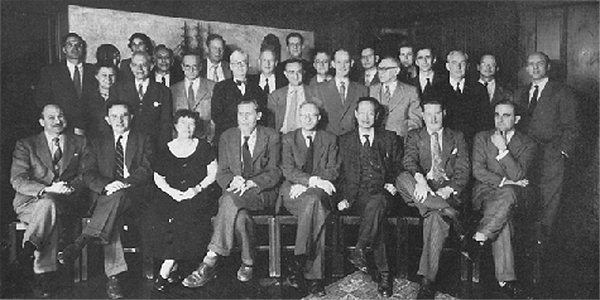
Source: Summary: The Macy Conferences
| Cybernetics … | |||||||||||||||
| “the science and art of understanding”… | – Humberto Maturana | ||||||||||||||
| “interfaces hard competence with the hard problems of the soft sciences” | – Heinz von Foerster | ||||||||||||||
 |
AMERICAN SOCIETY FOR CYBERNETICS | We stand | |||||||||||||
 ASC HOME |
FOUNDATIONSCoalescence of Cybernetics |
 on the shoulders of giants |
|||||||||||||
| BACK: History: Chapter 2 |
|
||||||||||||||
|
|
|
||||||||||||||
| ABOUT THIS SUMMARY | As previously mentioned, there is a lack of comprehensive documentation on the Macy Conferences. Part of this derives from the fact that the first five conferences – by all accounts the most lively and energizing – were never formally documented with published proceedings. Part of this derives from the fact that it was not until Steve Joshua Heims undertook his massive research decades after the fact that anyone addressed the Macy Conferences as a historical subject. Even Heims’ work, impressive though it is, doesn’t bother to give a uniformly detailed historical account of the conferences.This summary is not claimed to provide a comprehensive account of the conferences. It is simply a collated set of basic facts along with such illustrative tidbits as can be gleaned from Heims’ The Cybernetics Group, Dupuy’s Mechanization of the Mind, and other sources. | ||||||||||||||
Source: Summary: The Macy Conferences
A regular reminder that the CYBCOM mailing list exists – (https://groups.google.com/forum/#!forum/cybcom) – and contains gems like this
Source: The Truth – A Paskian Perspective – Google Groups
I tried to keep it short but Pask is a hard taslmaster!:-) The question is “how free of ambiguity is the analogy describing an event?”. Here goes:
If an observer or participant witnesses an event a concept is formed and a description may be produced. This process is subjective and private for the atoms that make us. The concept is interpreted by a participant and a description produced. However the description of an event in a particular context is limited by the perspectives of the recipient and the length of the observation time (aka Faith no less!). The test of the Truth of a description is in its applicability said Pask. In general the description will produce a new relation and the question is “Is the relation correct?” e.g. my name is Nick Green, or did the bus leave at ten o’clock, water boils at approximately 100 degrees C. More taxing might be e.g. “Did they like it?”.
Events can be caused spontaneously and thus are observable and respectable or they may require some preliminary act or stimulus to be produced in which case they are responsible (This is the difference between a classical measurement and a quantum measurement). Descriptions if shared and interpreted by another participant and found to be applicable can lead to Agreement or as meanings are refined, ambiguities are removed, agreement-to-disagree or separation (and thanks to Bernard Scott and the late Ranulph Glanville for pointing this out to me and, of course, Paul Pangaro whose thesis introduced the forces separating Concepts). Pask’s famous No Doppelgangers dictum insists that no two descriptions are the same unless great care is taken and agreed standard consensus methods or rituals performed eg integer counting with the Natural numbers.
But even then in some extreme limit all products are all different. Results are never identical at some level of precision. Perfect copies, like Truths, or correct descriptions are impossible. Enormous redundancies in systems are required to overcome these practical limitations. There is, as Pask once instructed me “No such thing as invariance” (Day one of my second job with him).
We proceed in practice by accepting a level of variance which is minimized as we remove ambiguity (by considering the precursor concepts and descriptions that are necessary). We consider the epistemology of the semantics we apply in producing our description. This is often called evidence.
We are actually intuitively using the scientific method here by comparing and describing, as unambiguously as possible, the differences. When we think we prune our entailment mesh of concepts (memories) to some necessary depth set by the level of ambiguity or imprecision participants can tolerate.
This all arises from applying ideas embodied in Pask’s axioms of Interactions of Actor Theory (see wiki). We seek replication of the description of a concept, we seek a consensus agreement amongst participants so that meanings can be more easily shared. This not only describes scientific method, it describes democracy! No doubts Gordon was deep. Many thought him genius. His colleagues, including me, were too often sceptical of this. His insistence on the “hard carapace” (implying systems make their own boundaries) and No Doppelgangers were barely appreciated by us. I stand to be corrected.
In the end he settled on a cooling Nature’s need to produce innovative coherences which participants (be they atomic, human or international) hope will persist. A principle we see Nature applying both in Cosmology and Evolution. Coherence being strictly defined as closed systems of spins with constant average phase angle shedding radiation to maintain both thermostasis or frequency of Interaction and thus equilbrium. These coherences exist as concepts in the brain or the states of persisting material objects when regarded as collections of interacting waves or messages. These days most physicists would agree (https://en.wikipedia.org/wiki/Physical_information). The information content of objects is increasingly seen as their fundamental property. This permits one to think of Cybernetics as “the study of the messages that atoms exchange”.
Pask favoured Rescher’s Coherence Theory of Truth but with the restriction that set boundaries and members exert a repulsive force. In his Last Theorem he stated “Like Concepts (or spins) repel and unlike attract”.
One lesson from this for web users is they cannot escape responsibility for their messages. We have to ask ourselves is the web’s pseudo anonymity really a good thing?
Best
N.
Source: Object Process Methodology – Wikipedia
Jump to navigationJump to search
 |
hideThis article has multiple issues. Please help improve it or discuss these issues on the talk page. (Learn how and when to remove these template messages)
|

Graphical contents: an example of a diagram in OPM

Graphical contents OPL: an example of the OPM language
Object Process Methodology (OPM) is a conceptual modeling language and methodology for capturing knowledge and designing systems, specified as ISO/PAS 19450.[1] Based on a minimal universal ontology of stateful objects and processes that transform them, OPM can be used to formally specify the function, structure, and behavior of artificial and natural systems in a large variety of domains.
OPM was conceived and developed by Dov Dori. The ideas underlying OPM were published for the first time in 1995.[2] Since then, OPM has evolved and developed.
The ontology of OPM and ontology of Navya-Nyāya an ancient Hindu school of thought in india are identical.
In 2002, the first book on OPM[3] was published, and on December 15, 2015, after six years of work by ISO TC184/SC5, ISO adopted OPM as ISO/PAS 19450.[1] A second book on OPM was published in 2016.[4]
via Complexity Explorer
Source: NERCCS 2020: Third Northeast Regional Conference on Complex Systems
NERCCS 2020: The Third Northeast Regional Conference on Complex Systems will follow the success of NERCCS 2019 and NERCCS 2018 to promote the emerging venue of interdisciplinary scholarly exchange for complex systems researchers in the Northeast U.S. region to share their research outcomes through presentations and post-conference online publications, network with their peers in the region, and promote inter-campus collaboration and the growth of the research community.
NERCCS will particularly focus on facilitating the professional growth of early career faculty, postdocs, and students in the region who will likely play a leading role in the field of complex systems science and engineering in the coming years.
NERCCS 2020: Third Northeast Regional Conference on Complex Systems at University at Buffalo, NY, April 1-3, 2020
Source: NERCCS 2020: Third Northeast Regional Conference on Complex Systems
Conference web page: https://events.tuni.fi/irspm2020/
And submissions still open until 14 November
Panel Chairs:
Elizabeth Eppel, Robyn Keast, Erik-Hans Klijn, Mary-Lee Rhodes and Joris Voets
Corresponding Chair:
Mary-Lee Rhodes, rhodesml@tcd.ie
Description:
In 2019, the IRSPM Board approved the establishment of a new Special Interest Group (SIG) on Complexity and Network Governance. IRSPM 2020 marks the first ‘official’ meeting of the SIG and the conveners are delighted to welcome submissions from scholars and practitioners on any of the key themes / questions that the Special Interest Group hopes to address. These are:
The Meta-governance question:
The Performance question:
The Leadership question:
The Comparative question:
The Methodological question:
The Practical question:
It is expected that the panel will run over several days of the conference, and we plan to have between 10 and 20 papers to allow for intensive discussion and development. We also plan to reserve one session for a discussion on how we might organize other activities throughout the year and upcoming special issues and handbooks relevant to the theme(s) of the SIG.
Another great piece of organisational systems thinking
Source: An unlikely tonic for organizational disorder – nuno borges – Medium



Many modern organizations are in a state of disorder. Prior success for the large enterprise generally ossifies through the preservation of structure, practices, and norms. As we rocket along the law of accelerated returns through the 21st Century, the world around us, the environment, is changing context so quickly that organizations struggle to synchronize their internal rate of change. A quick survey of the Fortune 500 over the last 50 years yields the graveyard of persistent disorder and change-averse behaviour. Organizations that refuse to acknowledge the growing complexity around them, and seek to preserve their tenuous hold on historical success, often simply die. This should not be misinterpreted as an unethical outcome, but rather, a natural consequence of a self-organizing system that lost the tension between environmental change and its own adaptive response.
This article will examine large hierarchical organizations struggling to adapt within their changing environment, and offer a set of perspectives, or an avoidance strategy, crafted from the lens of complexity. I will use Cilliers’ paper What we can learn from a theory of complexity? (2000) as a structural frame for constructing an approach. Sonja Blignaut has given similar critical treatment to this topic in her fantastic article 7 Implications of seeing organizations as complex systems.
Continues in source: An unlikely tonic for organizational disorder – nuno borges – Medium
Source: Encouraging Systems Change – Heart of the Art
The Life of Living Systems




I had briefly discussed OODA loop in my previous post. In today’s post, I will continue looking at OODA loop and discuss the cybernetic aspects of OODA loop. OODA loop was created by the great American military strategist, John Boyd. OODA stands for Observe-Orient-Decide-Act. The simplest form of OODA loop, taken from Francis Osinga, is shown below.
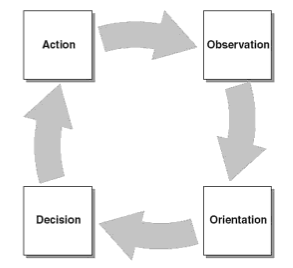
The OODA loop is a framework that can be used to describe how a rational being acts in a changing environment. The first step is to take in the available information as part of Observation. With the newly gathered information, the rational being has to gage the analyzed and synthesized information against the previous sets of information, relevant schema and mental models. The relevant schema and mental models are updated as needed based on the new set of information. This allows the rational being to better Orient itself for the next step…
View original post 1,694 more words
Source: Become a system change agent | Forum for the Future
We have a few last places available for Basecamp#8 Europe, kicking off in Brussels on 14th January 2020. Find out more about Basecamp#8 and how to apply here. Applications close on 17 November.
You can also express your interest for Basecamp#9 (USA, starting in Spring 2020) and Basecamp#10 (UK, starting in Autumn 2020) and other upcoming programmes in Asia through this form here.
Interesting chap https://en.wikipedia.org/wiki/Gerd_Gigerenzer
Presentation: https://ethz.ch/content/dam/ethz/special-interest/gess/chair-of-sociology-dam/documents/icsd2013/0_3_gigerenzer.pdf
Source: SMART HEURISTICS | Edge.org
[3.29.03]
What interests me is the question of how humans learn to live with uncertainty. Before the scientific revolution determinism was a strong ideal. Religion brought about a denial of uncertainty, and many people knew that their kin or their race was exactly the one that God had favored. They also thought they were entitled to get rid of competing ideas and the people that propagated them. How does a society change from this condition into one in which we understand that there is this fundamental uncertainty? How do we avoid the illusion of certainty to produce the understanding that everything, whether it be a medical test or deciding on the best cure for a particular kind of cancer, has a fundamental element of uncertainty?

Introduction by John Brockman
“Isn’t more information always better?” asks Gerd Gigerenzer. “Why else would bestsellers on how to make good decisions tell us to consider all pieces of information, weigh them carefully, and compute the optimal choice, preferably with the aid of a fancy statistical software package? In economics, Nobel prizes are regularly awarded for work that assumes that people make decisions as if they had perfect information and could compute the optimal solution for the problem at hand. But how do real people make good decisions under the usual conditions of little time and scarce information? Consider how players catch a ball—in baseball, cricket, or soccer. It may seem that they would have to solve complex differential equations in their heads to predict the trajectory of the ball. In fact, players use a simple heuristic. When a ball comes in high, the player fixates the ball and starts running. The heuristic is to adjust the running speed so that the angle of gaze remains constant —that is, the angle between the eye and the ball. The player can ignore all the information necessary to compute the trajectory, such as the ball’s initial velocity, distance, and angle, and just focus on one piece of information, the angle of gaze.”
Gigerenzer provides an alternative to the view of the mind as a cognitive optimizer, and also to its mirror image, the mind as a cognitive miser. The fact that people ignore information has been often mistaken as a form of irrationality, and shelves are filled with books that explain how people routinely commit cognitive fallacies. In seven years of research, he, and his research team at Center for Adaptive Behavior and Cognition at the Max Planck Institute for Human Development in Berlin, have worked out what he believes is a viable alternative: the study of fast and frugal decision-making, that is, the study of smart heuristics people actually use to make good decisions. In order to make good decisions in an uncertain world, one sometimes has to ignore information. The art is knowing what one doesn’t have to know.
Gigerenzer’s work is of importance to people interested in how the human mind actually solves problems. In this regard his work is influential to psychologists, economists, philosophers, and animal biologists, among others. It is also of interest to people who design smart systems to solve problems; he provides illustrations on how one can construct fast and frugal strategies for coronary care unit decisions, personnel selection, and stock picking.
“My work will, I hope, change the way people think about human rationality”, he says. “Human rationality cannot be understood, I argue, by the ideals of omniscience and optimization. In an uncertain world, there is no optimal solution known for most interesting and urgent problems. When human behavior fails to meet these Olympian expectations, many psychologists conclude that the mind is doomed to irrationality. These are the two dominant views today, and neither extreme of hyper-rationality or irrationality captures the essence of human reasoning. My aim is not so much to criticize the status quo, but rather to provide a viable alternative.”
— JB
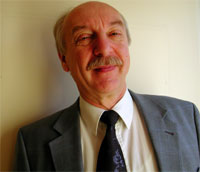
GERD GIGERENZER is Director of the Center for Adaptive Behavior and Cognition at the Max Planck Institute for Human Development in Berlin and former Professor of Psychology at the University of Chicago. He won the AAAS Prize for the best article in the behavioral sciences. He is the author of Calculated Risks: How To Know When Numbers Deceive You, the German translation of which won the Scientific Book of the Year Prize in 2002. He has also published two academic books on heuristics, Simple Heuristics That Make Us Smart (with Peter Todd & The ABC Research Group) and Bounded Rationality: The Adaptive Toolbox (with Reinhard Selten, a Nobel laureate in economics).
Continues with interview in source: SMART HEURISTICS | Edge.org
Source: Enough talk about system leadership, time for action | Comment | Health Service Journal
When “system leadership” first came to prominence about 10 years ago it was seen as the best way to tackle some of health’s most wicked issues. Leaders working collaboratively across the system – across organisational boundaries, it was argued, were essential to successfully addressing challenges like rising obesity and comorbidity that defy a single organisational response.
Far from being solved, these wicked issues have remained unresolved. Why? Because our approach to leadership hasn’t been fit for purpose.
In too many local health systems, leadership is inward looking, competitive and driven by institutional performance. Too often health and social care services remain fragmented and disjointed.
The NHS long-term plan is ambitious about the integration of care, and the potential of new models of care to overcome the most complex problems we face. The plans for developing system leadership need to match this ambition
The NHS People Plan is a tacit acknowledgement that past efforts have fallen short. It says, “we must do more to foster systems-based, cross-sector, multi-professional leadership, centred around place-based healthcare that integrates care and improves population health.”
What needs to be different this time? First, we need more boundary spanning leaders. This means deliberately creating leadership roles that encourage people and organisations to collaborate. Roles that shift people’s focus onto places and populations, rather than on organisational performance metrics.
In Hertfordshire and West Essex Sustainability and Transformation Partnership, which I chair, we have appointed a leader from one of our clinical commissioning groups and a leader from local government social care to share the STP lead role.
It’s early days, but I believe this sharing of leadership between the NHS and local authorities will help to break down barriers, accelerate progress and model system leadership behaviours. I believe we need more roles shared by organisations, accountable to place-based partnerships rather than single organisations.
Second, we need to develop and support our leaders differently. Our leaders must be equipped with the skills they need to work across boundaries: building relationships and trust, negotiation and sharing power, collaboration and facilitation.
In a new report for NHS Leadership Academy, SCIE looks at lessons from two innovative place-based leadership programmes: Frimley 2020 Leadership Programme (based in Frimley Integrated Care System) and Leaders in Greater Manchester, and both show a potential way forward.
Unlike traditional approaches, these two programmes deliberately lock their focus on place rather than organisations. In each programme, participants are encouraged to work together with other leaders on a place-based challenge to learn how to use the strengths of those living and working in the place to make lasting impact.
Each intentionally involves a mix of healthcare professionals, and participants from social care and the voluntary sector. External evaluations of these programmes are positive; Frimley 2020 won an HSJ award. However, the overall reach of these programmes is limited.
I am a firm believer that leadership of systems can only improve if decisions are grounded in the experiences of those who receive care and wider communities. So third, there is a need to up our investment in skilling up our leaders in citizen engagement – in genuine co-production. This means equipping people with the capabilities to involve people throughout the planning and delivery of services.
The NHS long-term plan is ambitious about the integration of care, and the potential of new models of care to overcome the most complex problems we face. The plans for developing system leadership need to match this ambition.
That means sustained investment in place-based leadership – including involving leaders from beyond the NHS – the creation of more boundary spanning leadership roles and the development of a cadre of leaders committed to co-producing the solutions with citizens.
 Paul Burstow is chair of the Social Care Institute for Excellence.
Source: Enough talk about system leadership, time for action | Comment | Health Service Journal
10.9707/1944-5660.1464
The impact of the inherent power imbalance in the grantmaker/grantee relationship has come into particular focus as equity and justice have become a greater priority for philanthropy. This article looks at the example of the McCune Charitable Foundation, which deliberately designed an emergent strategy approach that establishes clear goals and then created a platform to permit a reversal of that power dynamic, so that leadership for priorities comes from those closest to the work.
The authors launched a two-year project to research what emergence might look like in seven complex social-change initiatives, and how the strategy could grow agency and create more sustainable solutions in dynamic environments. When the leaders of these initiatives focused on creating the conditions for local leaders and nonprofits to decide what strategies to pursue, it tended to spur unanticipated approaches that responded to needs and opportunities in diverse, changing environments. At the same time, funders were able to establish goals while promoting “a marketplace of ideas.”
The McCune story illustrates how moving from a prescriptive strategy to an emergent one can shift the power imbalance between grantmaker and grantees, expand agency and ownership for complex social change, and potentially create a whole that is greater than the sum of its parts.

This work is licensed under a Creative Commons Attribution-Noncommercial-No Derivative Works 4.0 License.
Darling, M., Sparkes Guber, H., Smith, J., & Lewis, W. (2019). Designing for Emergence: The McCune Charitable Foundation Grows Agency Across New Mexico. The Foundation Review, 11(2). https://doi.org/10.9707/1944-5660.1464
A really interesting piece of systems thinking. I wonder if the attempt at understanding will be directed at:
Or a combination of all three? There could be an interesting meta conversation here.
Source: Looking for entrenchment in all the right places | Santa Fe Institute
Source: Looking for entrenchment in all the right places | Santa Fe Institute