A Brief History of Systems Science, Chaos and Complexity – Daniel Christian Wahl


Source: A Brief History of Systems Science, Chaos and Complexity

Image Source: Pixabay

A Brief History of Systems Science, Chaos and Complexity

Daniel Christian Wahl
Jul 8 · 6 min read

Since the beginning in the 1950s, when people like Ludwig von Bertalanffy and Kenneth Boulding developed the field of ‘General Systems Theory’ and Norbert Wiener and Jay Forrester developed the field of ‘Cybernetics’, there have been many attempts to break free from the reductionist paradigm and develop a more holistic and systemic understanding of the complexity of the world we live in.

Early systems thinkers were still ultimately aiming to improve their ability to better predict and control the system in question. The introduction of insights from chaos theory and non-liner mathematics into systems science sparked the development of complexity theory.

Interconnectedness, unpredictability, and uncontrolability are key characteristics of all complex dynamic systems. In dealing with complexity rather than mechanisms, the aim of science shifts from improving our ability to predict and control to aiming to better understand the dynamics and relationships of the systems we participate in so that our participation can be more appropriate.

“Complexity theory is becoming a science that recognizes and celebrates the creativity of nature. Now that’s pretty extraordinary, because it opens the door to a new way of seeing the world, recognizing that these complex dynamic systems are sensitive to initial conditions and have emergent properties. We have to learn to walk carefully in relation to these complex systems on which the quality of our lives depends, from microbial ecosystems to the biosphere, because we influence them although we cannot control them. This knowledge is new to our western scientific mentality…”.

— Brian Goodwin (et al., 2001, p.27).

The sciences of complexity are a variety of process-oriented areas of research exploring non-linear dynamics within complex systems. The simplest definition for a complex system is any system with more than three interacting variables. Complexity is thus a common feature of the world we inhabit.

When we speak about chaos theory it is important to understand that chaos does not refer to a state of absolutely incoherent disorder, rather “the scientific term chaos refers to an underlying interconnectedness that exists in apparently random events.” Briggs and Peat explain: “Chaos science focuses on hidden patterns, nuance, the sensitivity of things, and the rules for how the unpredictable leads to the new”(Briggs & Peat, 1999, p.2).

Chaos theory provides a radically different framework for studying complex dynamics. It highlights the limitations that are inherent in a reductionistic and mechanistic — linear cause and effect based — analysis of complex systems.

[castellani complexity map]

“Chaos theory teaches us that we are always a part of the problem and that particular tension and dislocation always unfold from the entire system rather than from some defective “part.” Envisioning an issue as a purely mechanical problem to be solved may bring temporary relief of symptoms, but chaos suggests that in the long run it could be more effective to look at the overall context in which a particular problems manifest itself.”

— Briggs & Peat (1999, pp.160–161)

In Seven Life Lessons of CHAOS, John Briggs and F. David Peat unfold seven lessons for embracing some of the deeper insights of chaos theory in our daily lives:

  • Be Creativeengage with chaos to find imaginative new solutions and live more dynamically.
  • Use Butterfly Powerlet chaos grow local efforts into global results
  • Go with the Flowuse chaos to work collectively with others
  • Explore What’s Betweendiscover life’s rich subtleties and avoid the traps of stereotypes
  • See the Art of the World: appreciate the beauty of life’s chaos
  • Live Within Timeutilize time’s hidden depths
  • Rejoin the Wholerealize our fractal connectedness to each other and the world.

In my 2006 PhD thesis I wrote a chapter on ‘Understanding Complexity: A Prerequisite for Sustainable Design’. The work seems to be gaining in significance and interest with the years. I am grateful that back then the lack of post-doctoral funding for the kind of trans-disciplinary work I was doing on ‘Design for Human and Planetary Health’ invited me to leave mainstream academia and work in the fruitful and fertile intersections of the disciplines and the sectors. It has helped me hone my neo-generalist skills in education, facilitation, whole systems design, consultancy, research, communication and weaving complex alliances and partnerships for transformative innovation and change.

The for me most significant insights I gained from systems science, chaos and complexity are summarized in these articles:

Facing complexity means befriending uncertainty and ambiguity
May God us keep from single vision and Newton’s Sleep! — William Blake (1802)
medium.com
Why do we need to think and act more systemically?
The power and majesty of nature in all its aspects is lost on one who contemplates it merely in the detail of its parts…
medium.com
Donella Meadows recommendations for how to dance with and intervene in systems
Donella H.Meadows was one of the co-authors of the 1972 Club of Rome Report on Limits to Growth which contributed to…
hackernoon.com
Avoiding extinction: participation in the nested complexity of life
Designing for positive emergence and planetary health?
hackernoon.com

In preparation for a recent keynote I gave at the 6th International Conference of Reporting 3.0 I summarised some of the lessons I learned in my by now 20 year exploration of how to embrace the paradox of emergence and design. On the one hand I believe it is vital to accepts uncertainty, not-knowing, and unpredictability fully to the point of deep humility. On the other hand, I also believe that we need to choose to act from the conviction that we can design for positive emergence in complex systems even if it is not an exact science and we cannot know with certainty how our efforts will turn out to affect transformative change.

How do we design for positive emergence in complex dynamic systems?

I believe we can live partially into the answer to this questions by charting pathways based on constant feedback generated by asking ourselves the following guiding questions. They might inform a deeper understanding of how to participate appropriately in these complex systems:

Who are the participants in the systems and what is meaningful to them?

Who is connected to whom & what are the qualities of their connections?

What information flows in the system & what is the quality of the information?

Which actors/agents/participants need to be engaged more/better?

What kind of qualitative and quantitative information needs to flow between participants?

What connections in the system need to be woven and nurtured?

Are we paying enough attention to context, relationships, patterns, qualities, uniqueness of place and health/wholeness?

This is not a complete nor definitive list, simply reflections on the way. Asking such questions can — I believe — contribute to the emergence of diverse regenerative cultures carefully adapted to the bio-cultural uniqueness of place. It can do so everywhere, but differently and appropriately.

If you like the article, please clap AND remember that you can clap up to 50 times if you like it a lot ;-)!

Daniel Christian Wahl — Catalyzing transformative innovation in the face of converging crises, advising on regenerative whole systems design, regenerative leadership, and education for regenerative development and bioregional regeneration.

Author of the internationally acclaimed book Designing Regenerative Cultures

Mega resources on cybernetics from Monoskop – including loads of pdf books

Wiki for Collaborative Studies of Arts, Media and Humanities

Cybernetics

A bibliographical genealogy of cybernetics in the United States, France, Soviet Union, and Germany in the 1940s and 1950s, followed by a selected bibliography on its impact across the sciences.

Source: Cybernetics – Monoskop


Another example – Cybernetic Volume 1, No. 1, Summer-Fall 1985

Click to access Cybernetic_Vol_1_No_1_1985.pdf


Books books books

(click ‘previous entries’)

Digital library of arts and humanities

Source: Cybernetics — Monoskop Log


The Recurring Case of ‘Recursion’: a pattern for making sense of the world | Ideas on CBC Radio, 20 June 2019

Go to link for the podcast!


Source: The Recurring Case of ‘Recursion’: a pattern for making sense of the world | CBC Radio


Ideas

The Recurring Case of ‘Recursion’: a pattern for making sense of the world

People are fascinated to see the same thing on multiple levels, says author

Recursion is a pattern found anywhere, from the branches of trees to the branches of mathematics, even in broccoli florets. (Dan Kitwood/Getty Images)

It runs across cultures, through science, mathematics and art. It’s as common as the branches on a tree or the layers of a Russian doll — but it’s also vital to the way humans think and communicate: it’s ‘recursion’, or what some scientists call ‘self-similarity.’

“It’s important because some people think it defines our species,” says Michael Corballis, of the University of Auckland.

“One has to be a little bit in awe of how it evolved,” Corballis adds.

He sees the recursive process as key to our journey from simple organisms to complex creatures with infinite possible thoughts.

Recursion involves nesting a structure within another structure, or embedding one sequence inside another, whether it’s a sequence of words, events, or physical objects.

A spiral staircase in Nantes, France represents recursion — a sequence inside a sequence inside a sequence… (Loic Venance/AFP/Getty Images)

It’s one way to describe how almost any type of progress or evolution occurs.

“You start with a primitive creature not much more than a molecule in a mud swamp… and you’ve invented this extraordinarily complicated organism that’s capable of bringing the world into its own head and manipulating it.”

Corballis argues the amazing results of recursion — and the difficulty understanding how it works — leads some people to attribute our existence to a deity.

Beneficent spiral

Research at Newcastle University points to a possible source for a particular recursive ability in the human mind: our skill at conceiving of the minds of others.

“What we suggest is that the hemispheres of the brain, as they become very different from one another in function, and take on different jobs … in a sense, we get the hemispheres acting as parallel mirrors,” says Rachael Bailes, a cognitive scientist who studies evolutionary linguistics.

“If my left hemisphere can represent my right hemisphere, it can also represent yours,” Bailes adds. “That’s when things take off in this beneficent spiral of representing others.”

Ideas
Recursion also shows up in how we talk: Rachel Bailes
00:00 01:06

Cognitive scientist Rachael Bailes points out how a simple desire to refer to a nearby laptop could prompt complex, recursive descriptions. 1:06

Bailes suggests the prompt for this development in our evolution might be tool use, which led to humans becoming more right-handed or left-handed, unlike other primates.

Recursive predictability

Geoffrey West is a theoretical physicist and the author of Scale: the Universal Laws of Growth, Innovation, Sustainability, and the Pace of Life in Organisms, Cities, Economies, and Companies. He believes that recursion is ubiquitous across natural and human society.

He points out how details such as the length of a creature’s aorta, the number of offspring it produces, and its lifespan — and many other aspects of its internal structure — follow a set of rules with predictable results.

Artist Yayoi Kusama’s infinity mirrored room called, Let’s Survive Forever. (Yayoi Kusama/Maris Hutchinson, EPW Studio/AGO)

“Despite the fact that the whale lives in the ocean and a giraffe has a long neck and mice scurry around… they are [to a great extent] scaled versions of one another,” says West.

He explains that the networks on which living creatures are based all need to solve the same problems of filling space and using energy efficiently.

“The structure that most reflects that is in fact this recursive, self-similar structure,” West says. “It’s no accident that almost all the networks that sustain life have this self-similar property.”

Source of delight

Aside from its importance in biology, art, music, computing, and more, recursion is also important as a source of delight.

Douglas Hofstadter, author of Gödel, Escher, Bach: An Eternal Golden Braid, notes the long-standing popularity of toys such as Russian dolls, which bring joy to children by hiding smaller versions of an object inside larger ones.

“Any kind of struck or nested inside another structure is something that humans have always found amusing,” Hofstadter says.

“It’s not something that I think would amuse a dog. I don’t think a dog would be particularly amused by Russian dolls but children are. There’s something about the human makeup that finds it charming and fascinating to see the same thing on multiple levels.”

Guests in this episode:

  • Rachael Bailes teaches cognition and evolutionary linguistics at Newcastle University. Her work includes studying mirror neurons and ‘meta-representation’ in human brains.
  • Michael Corballis researches language and the brain at the University of Auckland. He is the author of The Recursive Mind: The Origins of Human Language, Thought, and Civilization.
  • Douglas Hofstadter directs the Center for Research on Concepts and Cognition at at Indiana University. His first book was Gödel, Escher, Bach: an Eternal Golden Braid, published in 1979. More recent work includes I Am a Strange Loop.
  • Geoffrey West is the author of Scale: The Universal Laws of Growth, Innovation, Sustainability, and the Pace of Life in Organisms, Cities, Economies, and Companies. He is a former president of the Santa Fe Institute.

**The episode was produced by Mark Dance, with help from Tom Howell.

Brains, selves and spirituality in the history of cybernetics – Andy Pickering, 2008 (revised from 2007)

“This what I like about cybernetics: it was and is nowhere in the Cartesian space of human exceptionalism. It reminds us that we are performative stuff in a performative world—and then elaborates fascinatingly on that.”


Source: https://ore.exeter.ac.uk/repository/bitstream/handle/10036/81576/ASU-spirit.pdf?sequence=2&isAllowed=y


BRAINS, SELVES AND SPIRITUALITY IN THE HISTORY OF CYBERNETICS

andy pickering

sociology & philosophy
university of exeter

a.r.pickering@exeter.ac.uk

templeton workshop, ‘transhumanism and the meanings of progress,’ arizona state university, 24-25 april 2008

this essay is a revised version of a paper presented at the max planck institute for history of science, berlin, 3 november 2007—my presentation at ASU will frame it more precisely in relation to the theme of the templeton workshop

My research in the history of cybernetics in Britain has taken me to strange and unexpected
places. Grey Walter’s 1953 popular book, The Living Brain, is, on the one hand, a down-to-earth,
materialist and evolutionary story of how the brain functions. I know how to deal with that. But it
is also full of references to dreams, visions, ESP, nirvana and the magical powers of Eastern yogi,
such as suspending the breath and the heartbeat—siddhis as they are called. I never knew what to
make of this, except to note how strange it is and that respectable scientists don’t write about such
things now. But then I realised that I should pay attention to it. Walter was by no means alone on
the wild side. All of the other cyberneticians were there with him. In his private notebooks Ross
Ashby, the other great first-generation cybernetician in Britain, announced that intellectual
honesty required him to be a spiritualist, that he despised the Christian image of God and that
instead he had become a ‘time worshipper.’ Gordon Pask wrote supernatural detective stories.
Stafford Beer was deeply absorbed by mystical number-systems and geometries, happily sketched
out his version of the great chain of being, taught Tantric yoga and attributed magical powers like
ASU-spirit.doc
p. 2
11/8/09
levitation to his fictional alter ego, the Wizard Prang. Echoing Aldous Huxley on mescaline,
Gregory Bateson and R D Laing triangulated between Zen enlightenment, madness and ecstacy.
Strange and wonderful, surprising stuff. What is going on here? I want to try to sort this out, and
tie it back to a distinctive conception of the human brain.1
Meditating on the history of cybernetics has helped me see just how deeply modern thought is
enmeshed in an endlessly repetitive discourse on how special we are, how different human beings
are from animals and brute matter. It is, of course, traditional to blame Descartes for this human
exceptionalism, as we might call it.2 But while we may no longer believe we have immortal and
immaterial souls, the human sciences seem always to have been predicated on some immaterial
equivalent that sets us apart: language, reason, emotions, culture, the social, the dreaded
knowledge or information society in which are now said to live. This sort of master-narrative is
so pervasive and taken for granted that it is hard to see, let alone to shake off and imagine our
way out of. This is why we might learn from cybernetics. It stages a non-dualist vision of brains,
selves and the world that might help us put the dualist human and physical sciences in their place
and, more importantly, to see ourselves differently and to act differently. Let me talk about how
this goes.
We should start with the brain. The modern brain, as staged since the 1950s by AI for example, is
cognitive, representational, deliberative—the locus of a certain version of human specialness.
And the key point to grasp is that the cybernetic brain was not like that. It was just another organ
of the body, an organ that happens to be especially engaged with bodily performance in the
world. In this sense, the human brain is no different from the animal brain except in mundane
specifics: Ashby, for example, noted that we have more neurons and more neuronal
interconnections than other species, making possible more nuanced forms of adaptation to the
environment. And, of course, the defining activity of first-generation cybernetics was building
little electromechanical models of the performative brain—Walter’s tortoises and Ashby’s
homeostats—thus completing the effacement of difference between humans on the one side and
1 A much fuller treatment of the topics to follow (and much else) complete with citations to sources is to be
found in my forthcoming book: Sketches of Another Future: The Cybernetic Brain, 1940-2000 (Chicago:
University of Chicago Press, forthcoming).
2 The canonical transhumanist dream of downloading consciousness to a computer is, of course, a species
of human exceptionalism writ very large. My idea here is to explore a different mode of being in the world
and where it might lead us, especially across spiritual terrain.
animals, machines and brute matter on the other. This what I like about cybernetics: it was and is
nowhere in the Cartesian space of human exceptionalism. It reminds us that we are performative
stuff in a performative world—and then elaborates fascinatingly on that. Now I want to try to
make sense of some of these elaborations as they bear on non-Cartesian understandings of minds,
selves and spirit.


Continues in source: https://ore.exeter.ac.uk/repository/bitstream/handle/10036/81576/ASU-spirit.pdf?sequence=2&isAllowed=y


What is Management Cybernetics? – Barry Clemson (including 22 laws published 1984)

includes the 22 ‘laws’ of which he says:

Allenna Leonard and I articulated these 22 “laws” in 1982 or 1983. I hope we can think about this again in the near future and perhaps add a few more.


Source: What is Management Cybernetics? – Barry Clemson


What is Management Cybernetics?

Big OrganizationsManagement CyberneticsSystems (How things really work) By  October 28, 2011 Tags:  No Comments

Cybernetics, according to Stafford Beer, is the science of effective organization. Clear as mud, you say!

For example, a bacterium that was not effectively organized would quickly die. An ecosystem that was not effectively organized would very shortly be something else. A poorly organized human nervous system would not be able to regulate breathing, heart rate, speech, vision, etc. etc. etc. A poorly organized computer operating system would frequently crash and might have lots of security issues (sounds sort of like Windows, doesn’t it … sorry, as a devoted Mac user I couldn’t resist that one. I’ll try to behave from now on).

Effective organization is the basic requirement for the survival of a complex system.

What makes something a “complex system”?

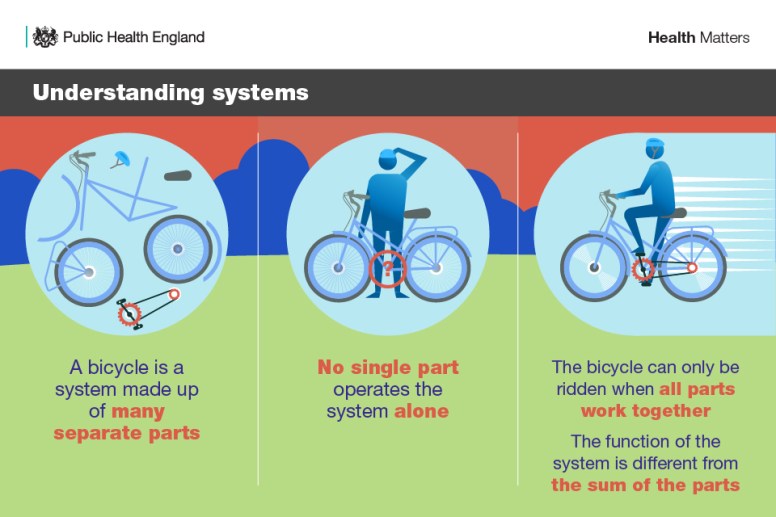
“Complex system” is hard to define precisely but a common sense definition will do for now. A complex system has many parts which interact in ways that produce results that none of the parts alone can produce. Examples of complex systems include personal computers, a dog, a human being, an organization, and an eco-system.

Restating our original definition we might say that cybernetics is the science of effective organization for complex systems. When you apply the laws of cybernetics to the management of organizations you get management cybernetics. Stafford Beer spent about 60 years working out the implications of cybernetics for management. He wrote about eight books and hundreds of papers on the subject.

In my 1984  introductory book on management cybernetics I said that most books with the words “science” and “management” in the title are neither scientific nor good management. I claimed that management cybernetics, on the other hand, is good science and teaches us how to co-operate with the natural order of things rather than continuously bloodying our heads on stone walls. In that 1984 book, Allenna Leonard and I listed 22 laws, principles, and theorems of management cybernetics. Ern Reynolds then suggested a very useful exercise: paste the name of your organization in place of the word “system” in the 22 laws, principles and theorems. You will then have a useful cybernetic description of your organization.

Here are the 22 laws, principles and theorems.

1. System Holism Principle: A system has holistic properties possessed by none of its parts. Each of the system parts has properties not possessed by the system as a whole.

2. Darkness Principle: no system can be known completely.

3. Eighty-Twenty Principle: In any large, complex system, eighty percent of the output will be produced by only twenty percent of the system.

4. Complementarity Law: Any two different perspectives (or models) about a system will reveal truths about that system that are neither entirely independent nor entirely compatible.

5. Hierarchy Principle: Complex natural phenomena are organized in hierarchies with each level made up of several integral systems.

6. Godel’s Incompleteness Theorem: All consistent axiomatic foundations of number theory include undecidable propositions.

7. Entropy – the Second Law of Thermodynamics: In any closed system the differences in energy can only stay the same or decrease over time; or, in any closed system the amount of order (or organization) can never increase and must eventually decrease.

8. Redundancy of Information Theorem: Errors in information transmission can be protected against (to any level of confidence required) by increasing the redundancy in the messages.

9. Redundancy of Resources Principle: Maintenance of stability under conditions of disturbance requires redundancy of critical resources.

10. Redundancy of Potential Command Principle: In any complex decision network, the potential to act effectively is conferred by an adequate concatenation of information.

11. Relaxation time Principle: System stability is possible only if the system’s relaxation time is shorter than the mean time between disturbances.

12. Circular Causality Principle One: Given positive feedback (i.e., a two-part system in which each stimulates any initial change in the other), radically different end states are possible from the same initial conditions.

13. Circular Causality Principle Two: Given negative feedback (i.e., a two-part system in which each part tends to offset any change in the other), the equiibrial state is invariant over a wide range of initial conditions.

14. Feedback dominance theorem: For high gain amplifiers, the feedback dominates the output over wide variations in input.

15. Homeostasis Principle: A system survives only so long as all essential variables are maintained within their physiological limits.

16. Steady State Principle: If a system is in a state of equilibrium (a steady state), then all sub-systems must be in equilibrium. If all sub-systems are in a state of equilibrium, then the system must be in equilibrium.

17. Requisite Variety Law: The control achievable by a given regulatory sub-system over a given system is limited by 1) the variety of the regulator, and 2) the channel capacity between the regulator and the system.

18. Conant-Ashby theorem: Every good regulator of a system must be a model of that system.

19. Self-Organizing Systems Principle: Complex systems organize themselves; the characteristic structural and behavioral patterns in a complex system are primarily a result of the interactions among the system parts.

20. Basins of Stability Principle: Complex systems have basins of stability separated by thresholds of instability. A system “parked” on a ridge will “roll downhill”.

21. Viability Principle: Viability is a function of the balance maintained along two dimensions: 1) autonomy of sub-systems versus integration of the system as a whole, and 2) stability versus adaptation.

22. Recursive System Theorem: If a viable system contains a viable system, then the organizational structure must be recursive; or, in a recursive organizational structure, any viable system contains, and is contained in, a viable system.

Allenna Leonard and I articulated these 22 “laws” in 1982 or 1983. I hope we can think about this again in the near future and perhaps add a few more.

Chapter eight of my cybernetics book elaborates on these laws and provides lots of examples. My short essay on “Systems Thinking” is a companion piece to this one.


Contact me: I love to hear from readers. Email me at cyberneticapress at gmail dot com. Thanks, Barry Clemson

Coming Concepts: The Cybernetic Glossary for new management – Allenna Leonard (1990/revised 2004)

pdf

Source: https://i2s.anu.edu.au/wp-content/uploads/2009/10/cybernetic_glossary.pdf


Marco Valente on LinkedIn sparked another big discussion on ‘Complexity theories and Systems Thinking: parallels and differences’…

This was over a year ago, but in a recent discussion with Dave Snowden on twitter, it got resumed… I can’t recommend the article per se (though it seems entirely honestly and constructively meant) but the comments are Quite Interesting:

https://www.linkedin.com/feed/update/urn:li:article:8370213503392053397/?commentUrn=urn%3Ali%3Acomment%3A(article%3A8370213503392053397%2C6323841743901036544)&replyUrn=urn%3Ali%3Acomment%3A(article%3A8370213503392053397%2C6553869821061267456)


Autopoiesis Today – Milan Zeleny – and whole of Cybernetics Forum from the American Society for Cybernetics 1981 special autopoeisis issue

https://www.univie.ac.at/aoc/asc/Periodica/X_2_3_1981.pdf#page=9

Limits to growth – Meadows et al, 1972 – full book (pdf)


Click to access Limits-to-Growth-digital-scan-version.pdf

Murmurations: Journal of Transformative Systemic Practice


Source: Murmurations: Journal of Transformative Systemic Practice

A journal for relationally attuned and systemic social constructionist practitioners and practitioner-researchers with a commitment to social responsibility in community, leadership, therapy, education, organisations, health and social care.

Vol 2 No 1 (2019): Volume 2, Issue 1

Published: 2019-04-23

Editorial

i-iii

Lines of flight

Justine van Lawick

1-13

With wings outstretched

Leah Karen Salter

14-27

Children in the Crossfire

Tahereh Barati

28-37

“Each Leaving Something for the Other”

Craig Whisker, Graham Allan, Christopher Chua, Sandie Forsyth, Pam Morrison

38-50

An epilogue to two films

Alys Mendus

51-60

Being Systemic as a Way of Life

Chiara Santin

97-110

Reflections on “Qualitative Research as Activism”

Marilena Karamatsouki, Mark Huhnen, Leah K Salter, Sarah Helps

111-118

View All Issues 

System Effects from Dr Luke Craven


Source: System Effects


When trying to change the world around us, we tend to assume everyone experiences the world in the same way.

That assumption is spectacularly—and scientifically—wrong.

Individuals’ lives are complex, unique and varied. The tools and methodologies we use to understand and address the issues impacting individuals must recognize that complexity.

System Effects helps decision makers respond to complex problems while at the same time embracing the uniqueness of individual experience.

Introducing System Effects

System Effects is a research methodology developed by Dr Luke Craven at UNSW Canberra, that captures the varied nature of individual experience to enable better intervention design. The System Effects platform was developed by Kumu in collaboration with Luke.

Drawing on soft systems, fuzzy cognitive mapping, and graph theory, System Effects can be used to ask a range of questions about a given issue, focusing on how different impacts, barriers, and enablers exist and are perceived within the system that surrounds it.

By beginning from the user-understanding of complex systems, the methodology helps re-centre lived experience in social science and policymaking practice.

System Effects supports the design of effective interventions by giving decision-makers tools to understand patterns that emerge across groups and communities, while at the same time emphasising the varied nature of individual experience.

How does it work?

Starting from a common focus, participants are asked to explore the barriers, impacts, and enablers present in their own lives. The result of this process is a personal systems map that captures the individual’s unique understanding and experience of the issue.

We can then layer these individual maps to build a picture of the wider community experience. Aggregating maps this way ensures no individual variable or causal connection is ignored, while highlighting the shared experiences emerging at the population-level.

By beginning from the user-understanding of complex systems, the methodology helps to re-centre lived experience in social science and policymaking practice.

How can it help me?

The results of the System Effects process can be used to:

  • Inform policy and program design

    How can policies most effectively address complex systems, given the diversity of individual experience?

  • Guide intervention implementation

    How can the implementation of policies and programs be effectively tailored to the systemic dynamics of particular contexts?

  • Evaluate systemic impacts

    How can we assess the systemic impact of particular interventions and their interactions with the contexts in which they are deployed?

How has it been used before?

System Effects is being applied to a wide range of issues by national, state, and local decision makers across the world.

  • Understanding the barriers to job market entry in Oslo, in partnership with the Norwegian Labour and Welfare Administration (NAV)
  • Understanding the systemic impact of disaster events in Sydney, in partnership with Resilient Sydney and the NSW Office of Emergency Management
  • Supporting social workers to deliver systemic care to persons facing homelessness in Newcastle, UK, in partnership with Newcastle City Council
  • Supporting the development of policy to prevent food borne disease in Cambodia, in partnership with the International Livestock Research Institute (ILRI) and USAID
  • Supporting effective environmental stewardship in New York, in partnership with the US Forest Service

Run your own System Effects survey

System Effects surveys are available through our online platform for $700/survey*. Each survey explores a single dimension (impacts, enablers, or barriers) of a particular focus and includes an unlimited number of responses.

If you would like help facilitating the survey process, we offer consulting services at $200/hour or $2000/day. Please email info@systemeffects.com to discuss options and explore which route is best for your project.

* All prices in USD

Shifting the conversation from symptoms to systems

preload

Guardians vs. Gardeners: Relocating wolves to help balance ecology — Ideas from CBC Radio (Highlights) — Overcast

More on the continuing saga of wolves – too many, not enough, just right, artificial or natural (see also parachuting cats).

Source: Guardians vs. Gardeners: Relocating wolves to help balance ecology — Ideas from CBC Radio (Highlights) — Overcast

Guardians vs. Gardeners: Relocating wolves to help balance ecology

March 12, 2019


#383

Frequilibrium and the myth of patient safety…

ComplexWales's avatar

Who designed the roof currently over your head? There’s several tonnes of it, dangling there. Who built the roof and how qualified or experienced were they? There are all sorts of designs, materials and ways of putting it together. How likely are you to survive that bloody big thing landing on your head?

To be honest, nobody cares. You’ve probably never given those questions a single thought, ever, despite the number of roofs you’ve been under. Unless of course, you design and build the odd roof, or you’re one of those very rare people who have been under one when it collapsed and survived. Nobody really cares about safety in general and neither should they, because in normal life safety is passive, it’s a hygiene factor at best. Safety is also weirdly context dependent. What’s safe one day is not the next day and nothing obvious has changed. When safety…

View original post 2,800 more words

Systems thinking: a cautionary tale (cats in Borneo) – YouTube

A classic

Find more details in this book “Parachuting Cats into Borneo”: https://goo.gl/JsRJ74 Learn about sustainability for free with short animation videos! Find all sustainability videos and join the community on http://sustainabilityillustrated.com and http://www.youtube.com/learnsustainab… Subscribe to receive the latest videos: http://alturl.com/jc8u6 Become a patron: http://www.patreon.com/sustainability. Extra info & links below… Twitter: http://twitter.com/Sustain_Illustr Facebook: http://www.facebook.com/sustainabilit… Videos are created by Alexandre Magnin using years of experience drawing and working as a sustainability consultant with businesses and communities: http://www.amcreative.org ** This video about systems thinking tells the story of “Operation Cat Drop” that occurred in Borneo in the 1950’s. It is a reminder that when solutions are implemented without a systems perspective they often create new problems. Thank you to The Natural Step Canada and all our patrons for supporting us. Resources: http://catdrop.com/ http://en.wikipedia.org/wiki/Operatio… http://en.wikipedia.org/wiki/Systems_… If you are interested to learn more about systems thinking, check out the Top 15 Systems Thinking Books http://agile.dzone.com/news/top-15-sy… and follow Gene Bellinger @SystemsThinking. Narration: Sarah Brooks Music “The Messenger” by Silent Partner Thank you to our volunteer for Portuguese subtitles: André Ribeiro Winter

SysBoK – a systems body of knowledge, from SCiO (work in progress)

SysBoK is a connected Systems Thinking Body of Knowledge from Systems & Complexity in Organisations (SCiO), www.scio.org.uk.

Rather than attempting to define rigidly the key concepts in Systems Thinking, SysBoK is designed to explore the relationships between these concepts, in particular which are Precedents to a Systems Thinking concept, and which are Dependent Derivatives. This model also includes examples and references for each concept.

Source: SCiO SysBoK v1 • Default view • Kumu


s
search
c
compose new post
r
reply
e
edit
t
go to top
j
go to the next post or comment
k
go to the previous post or comment
o
toggle comment visibility
esc
cancel edit post or comment