Advances on the Resilience of Complex Networks (Complexity Special Issue)

cxdig's avatarComplexity Digest

A common property of many complex systems is resilience, that is, the ability of the system to react to perturbations, internal failures, and environmental events by absorbing the disturbance and/or rebuild to maintain its functions. Nowadays, understanding how complex systems demonstrate resilience is critical in many different fields, because examples of collapses and crises caused by low resilience are more and more spreading all over the world including transportation, financial, energy, communication, and ecological systems.

Therefore, in the last decade, the topic of resilience has grown a lot in popularity. Studies on resilience are popular in multiple disciplines, such as ecology, environmental science, computer science, engineering, management science, economics, and phycology. They investigate resilience of a broad variety of complex systems involving individuals, teams, ecosystems, organizations, communities, supply chains, financial networks, computer networks, and building infrastructures.

Despite this multidisciplinary nature, two main perspectives in the conceptualization of resilience are recognized…

View original post 243 more words

Tesler’s Law of Conservation of Complexity:

Harish's avatarHarish's Notebook - My notes... Lean, Cybernetics, Quality & Data Science.

Tesler

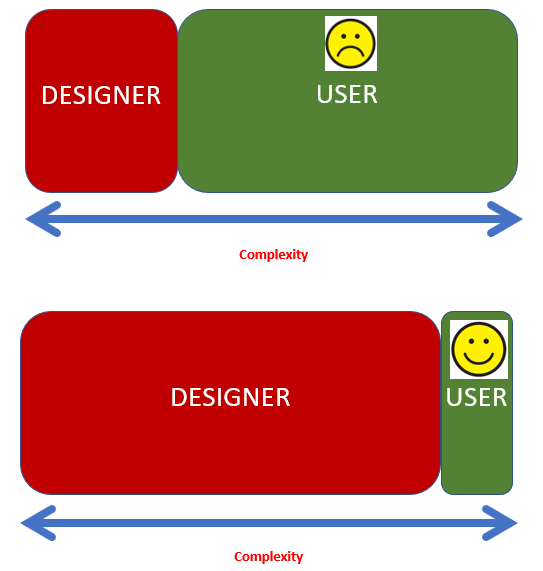
In today’s post, I am looking at Tesler’s Law of Conservation of Complexity. Larry Tesler, who came up with the law, worked at Xerox PARC, Apple, Amazon, and Yahoo in different capacities. He was one of the brains behind “cut/copy and paste” functionality in word processors. The basic premise of the law is as follows:

“Every application has an inherent amount of irreducible complexity. The only question is: Who will have to deal with it—the user, the application developer, or the platform developer?”

This is an important idea in the user interaction with a software application. One of the best examples to explain this further comes from Dan Saffer’s excellent book, “Designing for Interaction.” Think of the email application. It needs a “From address” and a “To address”. Without either of these two items, the email cannot be sent. All, if not most, email applications will automatically populate…

View original post 994 more words

Quick check here – is anyone reading this?

I am pretty comfortable with being an outlying example of the 1% rule (https://en.wikipedia.org/wiki/1%25_rule_(Internet_culture)), but it is nice to know there’s someone out there?
Linda Booth-Sweeney was always my check and confirmation over at model.report 😀

AND REMEMBER – *anyone* can +BECOME A CONTRIBUTOR+ – just sign up in the top bar here and you can post anything systems-related…

cheers
Benjamin

#systemschange

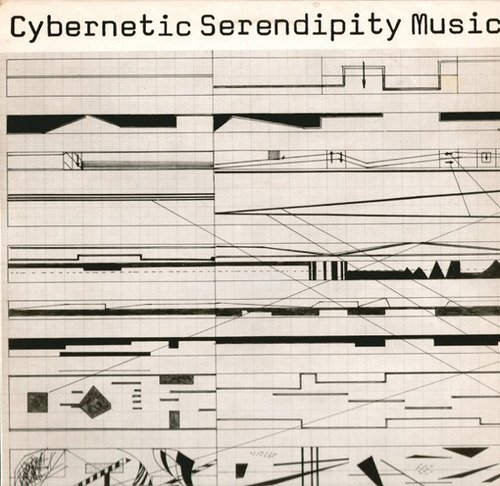
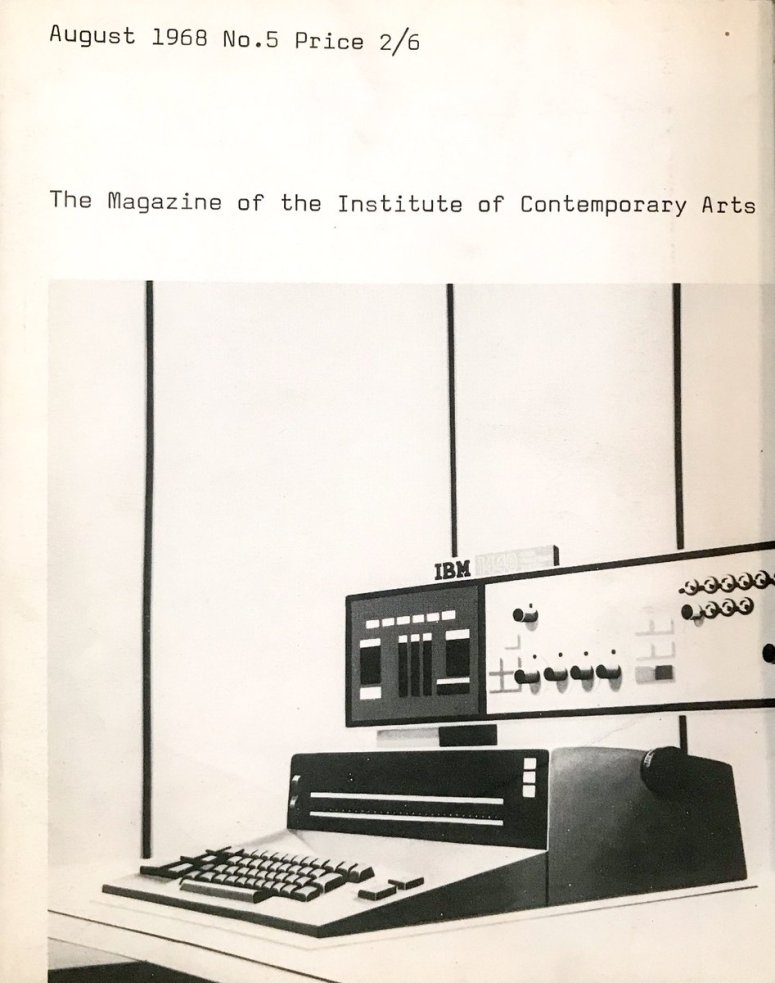
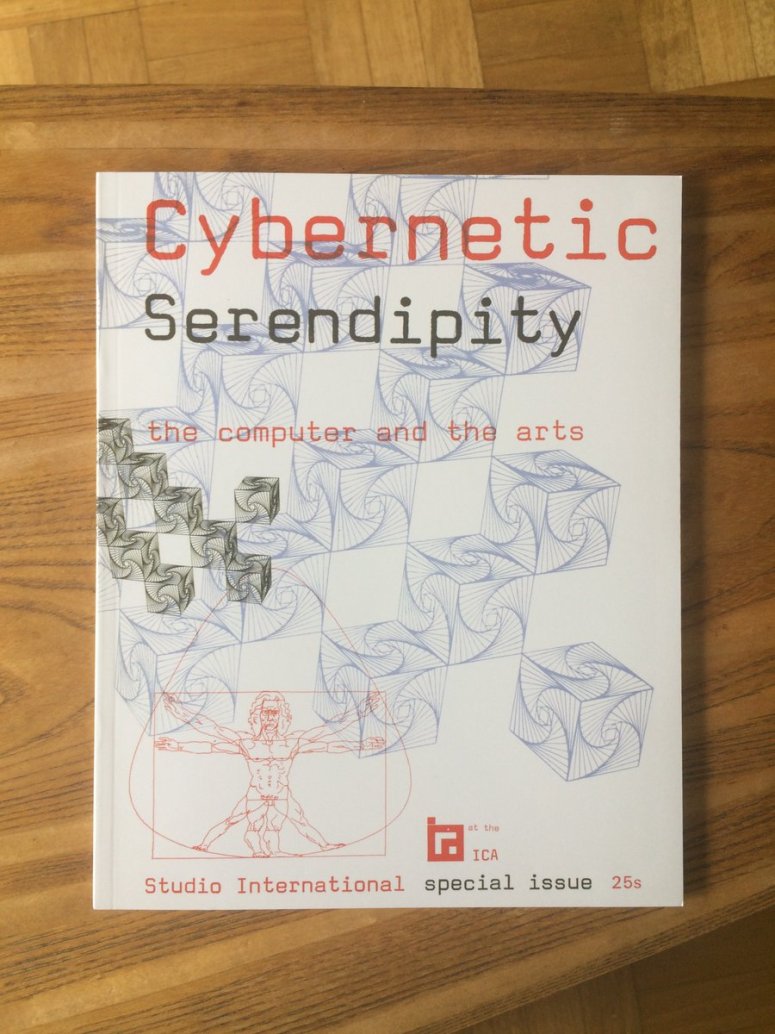
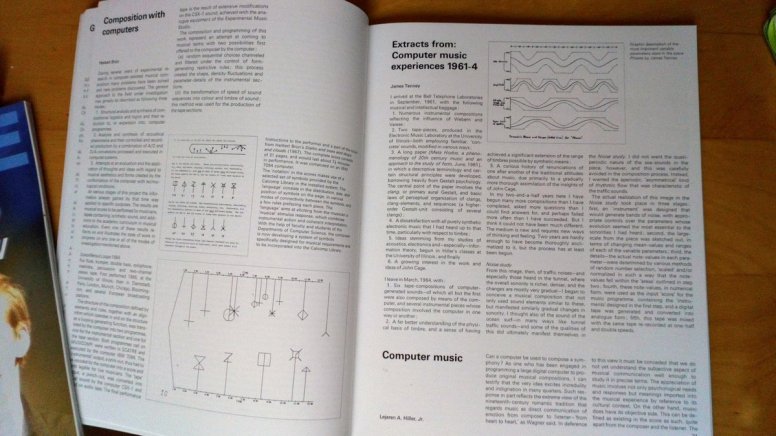
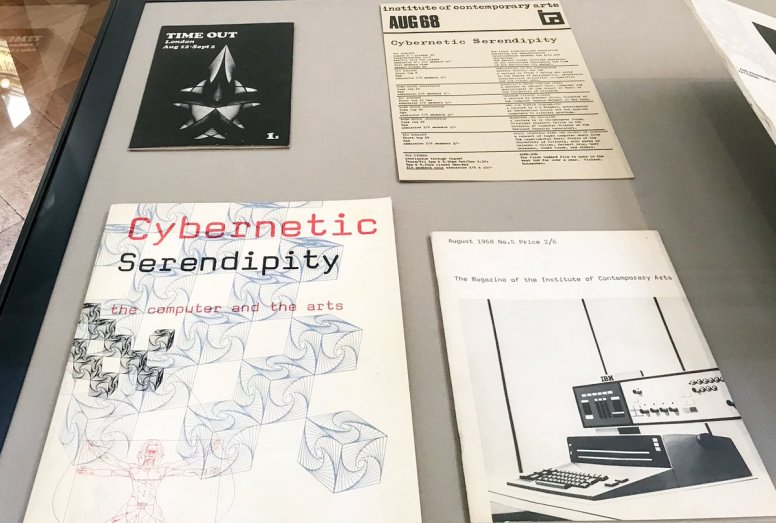
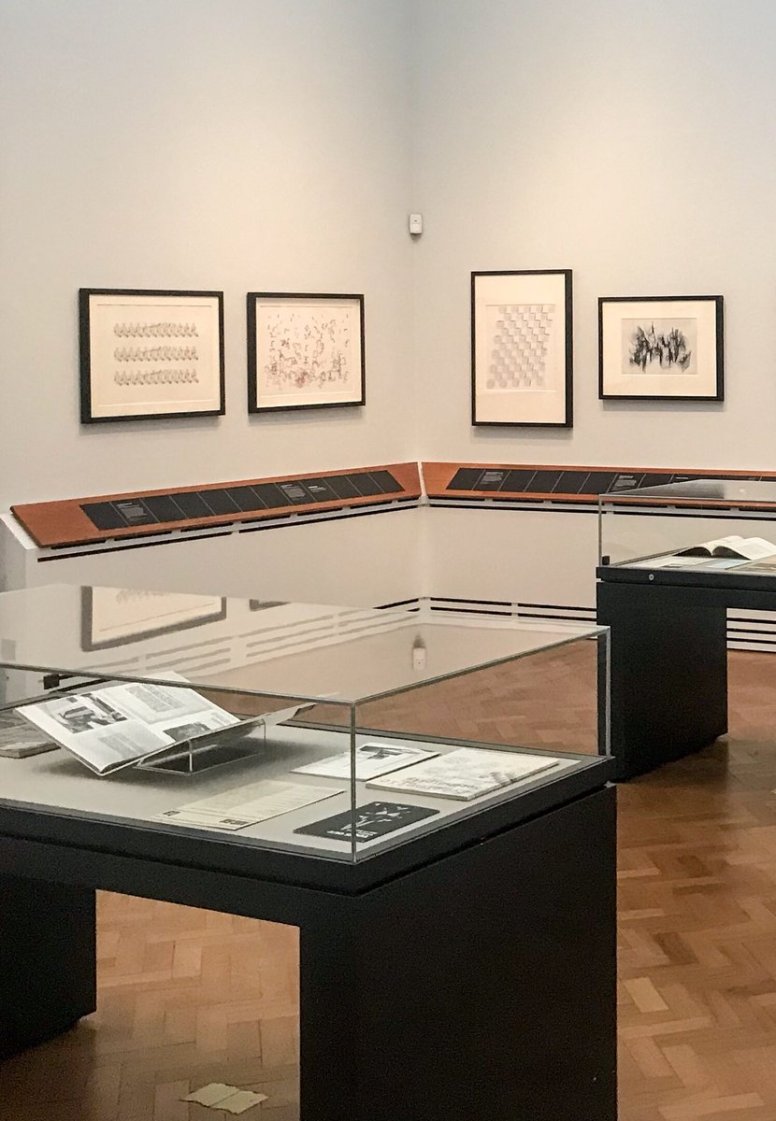
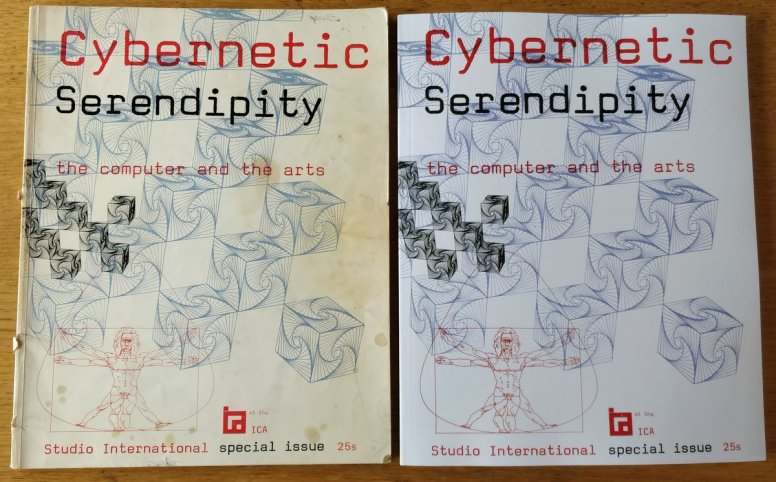
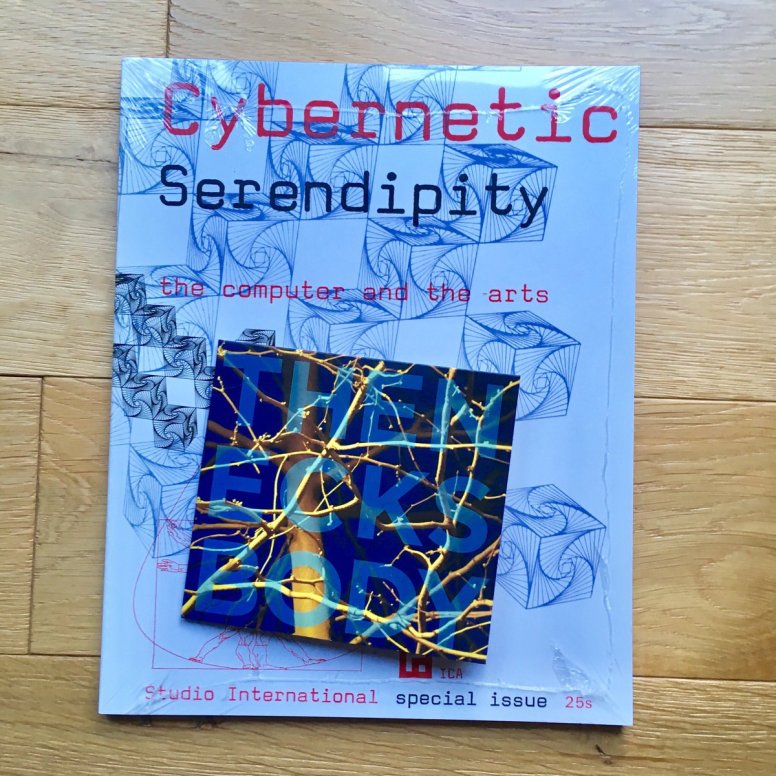
cybernetic serendipity 50th anniversary and Chance and Control exhibition at the Victoria and Albert Museum (with many pics)

https://www.vam.ac.uk/exhibitions/chance-and-control-art-in-the-age-of-computers

https://twitter.com/hashtag/ChanceandControl?src=hash

cybernetic serendipity – Twitter Search

Autonomy and Enactivism

Xabier Barandiaran's avatarXabier E. Barandiaran

Screenshot_enactivism-autonomy
I have finished the last revision of journal paper entitle “Autonomy and Enactivism“. It explores the conceptual tension between the concept of autonomy (self-organized closure of neural activity) and the sensorimotor constitution of cognition. I have long witnesses a generalized confusion, whose roots I explore in the paper, between two major schools of enactivism (the cognitive science paradigm that focuses on sensorimotor coupling and self-organized dynamics of brain, body and environment). On the one hand what I have called “sensorimotor enactivism”, a school that has gained momentum thanks to the work of Alva Noë and Kevin O’Regan on sensorimotor contingencies. On the other hand what I have called “autonomist enactivism” with a particular focus on biological embodiment and the self-organized nature of brain and body. The gap between both schools has being growing recently, partly motivated by the lack of a clear notion of sensorimotorly constituted neurodynamic autonomy…

View original post 464 more words

Commitment-based or promise-based management – Flores and Winograd plus Vision Consulting (Glennon and Spinosa) later

In the category of ‘is it really systems thinking?’ ‘well, I don’t know, but I’m putting it here anyway’ is commitment-based management. I include a bunch of good links below and would value comments and questions on my commentary here.

This is one of only two management/leadership systems I have *ever* come across which (1) has been actually implemented across whole organisations, in full and (2) has led to significant performance improvements. The other is Jacques’ stratified systems theory and later versions of this in requisite organisation and MacDonald et al System Leadership Theory. Interestingly, both are significantly about clarification of limits and scope of discretion, and engaging discretionary activity. The latter seems to me potentially more ‘complete’ and blending structure, management, and leadership, and technical and social solutions, whereas commitment-based management seems more like an integrative mechanism that could increase performance in any context, but might not shift all those other elements.

I suspect that a third is ‘command and control management’, as originally conceived and named – The Puritan Gift has some potential evidence of this, but I would welcome more.

It can of course be argued – quite powerfully – that some forms of distributed management, as set out for example in Reinventing Organisations, and other documented examples of cooperative and related forms (Gore, that orange company in California). However, while these are great examples of organisational success and sometimes of transformation, I’m not convinced that there is any replicable system (such as Holacracy sets out to be) behind this. Nor am I convinced that the ‘teal’ philosophy or similar provides this kind of potential.

Some will make claims for ‘lean’ and Deming-based management systems. Again, there’s a potential category argument here – are they operations and coordination interventions ‘only’? Do they actual comprise a management/leadership model?

Some might also make claims for Beyond Budgeting, but I think they are weaker in terms of being an actual ‘methodology’. I am sure I am missing some approaches.

Of course, all these are just attempted solutions to the problems of organisational coherence and coordination and managing both hierarchies and networks and their emergent properties, and all are context-dependent and specific. Perhaps I’m just more impressed that commitment-based management and Jacquesian approaches have succeeded in making traditional hierarchies highly functioning. Oh, and ‘agile’ (much like project management) seems to me to be a tactical solution to the same kind of coordination problems.

NB that I do have good evidence that the application of the Viable Systems Model across whole organisations has had similarly impressive effects – but this is more of an organisational structure question than a management or leadership approach, from my perspective

Commitment-based management

https://www.managementexchange.com/hack/commitment-based-management-20-making-and-keeping-commitments

Managing By Commitments – 5 Disruptive Practices To Improve Execution
By David Arella – CEO at 4 Spires, Inc.
June 24, 2011 at 5:40pm

Summary
Failure to execute is the key 21st century management problem. Current work-norms are dysfunctional. There is one profoundly simple thing we can change that will dramatically improve execution – we need to get better at making and keeping commitments. Simple, but radical practices are described. New supporting systems are coming.

Problem
The biggest problem today is not creating visions, nor developing plans. The real problem is a failure to execute. Balls get dropped, deadlines are missed, deliveries are half-done, priorities constantly change, projects overrun budgets, initiatives don’t get accomplished. And it’s easy to see why. We have an overload of messages and communication to wade through. Communication about execution is more and more conducted remotely, not face-to-face or even in real time. Coordination is more difficult as organizations become more and more matrixed, and as the need for collaboration increases, personal accountability becomes more diluted and unclear. Employee engagement is in decline. A return to 20th century command and control hierarchy will not work, as today’s workforce wants more influence over decisions that effect their day to day work, not less. The solution is to develop new processes that both improve execution and simultaneously create more commitment.

Solution
Managing by Commitments – A Brief History

Managing by commitments is not a new idea. Commitment Based Management was first introduced as an innovative management practice in the 1980’s with the work of Fernando Flores (UC Berkeley) and Terry Winograd (Stanford). They described a “conversation for action” where two parties make an explicit agreement to deliver a specific outcome by a certain date. The core idea was that the performer was required to negotiate a specific commitment, leading to more buy-in to meeting the commitment and therefore better results and a more collaborative environment. The process of a virtuous conversation between the requester and the performer was defined in three stages: negotiation, delivery, and assessment. Early implementations to enable this process were eventually perceived as too prescriptive and confining, but the core idea offered profound promise.

Twenty-five years later the need for coordination and collaboration has grown many-fold. Accountability is even more diffused. Communication overload has reached epidemic proportions with new and multiple channels operating at once, but the communication is unstructured and not presented in a useful context. Technology advancements enable better access and easier adoption. It’s time to reinvent and reinvigorate management by resurrecting the core principles and practices of Commitment Based Management, but with better implementations.

Commitments Drive Better Execution

There is one profoundly simple thing we can change that will dramatically improve execution – we need to get better at making and keeping commitments. It’s as simple as saying what you’re going to do and then doing what you said. Simple, but not easy.

Scrutiny reveals that our common work norms do not support this principle. In fact, many common work practices actually get in the way. People make vague requests. Actual performers are unspecified. Delivery dates are proposed without confirmation – if they are mentioned at all. Agreements to deliver, when they are obtained, shift and derail without clear dialog. Expressions of satisfaction with the delivery, or of dissatisfaction, are absent. Closure is rarely achieved.

Even worse than these mechanical flaws, we are all familiar with the attendant interpersonal breakdowns. Team members are silent about their cynicism toward a proposed request. Real engagement by employees is lacking, and there is little incentive for contributing any discretionary effort. People work on their favored assignments and leave other tasks to decay. Low trust that deliveries will be met on time forces a need for backup systems and frequent check-ups by “management”.

We all have accepted this dysfunction for a long time. Isn’t it time to disrupt the old system and try something new? Let’s get back to basics and recreate our working relations around the foundational principle of “say what you’re going to do, and do what you said”.

Negotiating a commitment, rather than being coerced or given an assignment has powerful implications. Accountability is increased since the performer has ownership over the commitment (because they had a real part in creating it). Clarity and transparency build trust between both parties. “Requestor” confidence is increased many fold. The quality of the ensuing dialog between performer and requestor removes vague assumptions and instead forms clear and realistic agreements. Our word creates a bond with the other person.

Five Disruptive Practices For Making and Keeping Commitments

Managing by commitments can be readily implemented with a small set of repeatable and observable behaviors. The behaviors are simple, but profound. They are as obvious as they are radical. The following 5 disruptive practices describe what such an approach would look like:

1. Make requests, not assignments. This practice is not limited to hierarchical roles; requests go down, up, and sideways within and outside organizations. Other roles include stakeholders and observers, but let’s be clear on who is being asked to deliver what to whom.

The requester formulates an explicit request (i.e. in the form of a question, not a statement). For example, “Bill, can you get the spec to me by August 1?”; not “Bill, I need the spec by August 1.” Bill responds by making sure he understands the specific details and expectations associated with the request. A clear request is composed with a specific due date.

2. Negotiate clear agreements. This is the part about “saying what you’re going to do.” For delivery dates that you cannot meet, make a counter-promise you can keep. The requester changes from a position of hope (i.e. “I assigned this task to Bill with an August 1 due date, and I’m hoping he will deliver.”), to a position of confidence (i.e. “Bill said an August 1 delivery was really a problem for him, but he committed to getting it to me by August 5”).

Decline the request if you know you will not or cannot deliver. Make no mistake, however, this is a radical notion. Allowing team members at any level to “decline” requests from upper management would be a very disruptive concept in most organizations today. And yet, where performers never have the ability to say NO, there is not the possibility of a committed YES. The practice of negotiating commitments is not one most workers are adept at or even comfortable with; some personal courage is called for. This practice puts the performer more on a peer-to-peer footing with the requester, but yields clear accountability.

3. Keep communication going during the delivery stage. Stuff happens along the way. Agreements are not guarantees that the delivery date will be met, but agreements must be honored in a manner that is far different than failing to deliver on an assignment dropped on your lap without dialog. Having made a promise to deliver, the performer is now obliged to alert their customer as soon as anything comes up that may interfere with meeting their agreement. An observable hallmark of this practice is early notice of potential problems with meeting a commitment.

4. Present the deliverable explicitly. The performer makes a clear statement saying “Here is what I said I would deliver” or “This is why I could not deliver”. This is the essence and evidence of accountability. In our current work norms, this step is frequently “fudged”. Deliveries that are nearly complete slide in more or less on the day they were hoped for. It is rare for a performer to make a clear statement that today I am delivering on the agreement we made.

5. When the requester, always acknowledge and assess the delivery. Honesty and truth demand an assessment as to whether the delivery met the original expectations. Answering the question – were you satisfied? – completes the cycle and assures closure. This underutilized practice is the minimum quid pro quo to the effort of the performer and serves to represent the customer’s accountability to honor the agreement. Moreover, these are the “golden moments” when feedback can enhance both future performance and trust. End-of-year performance reviews have lost much of their value, and this practice heightens the value of more continuous performance feedback.

[a little more in the original]

http://www.vision.com/our-approach/commitment-based-management.aspx
[prime European based proponents and appliers of the model]
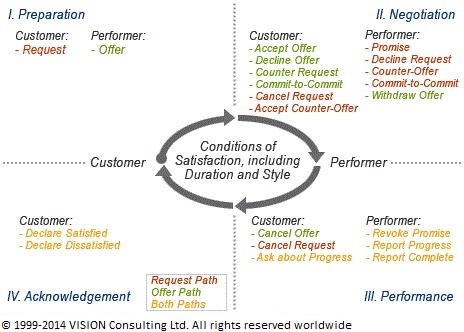
loop_2014

Excellent Art Kleiner piece on Flores:
https://www.strategy-business.com/article/09406

Harvard Business Review articles:
https://hbr.org/2003/06/managing-by-commitments
https://hbr.org/2007/04/promise-based-management-the-essence-of-execution

http://www.conversationsforaction.com/
The original thinking as from Fernando Flores

Click to access commitment_based_management_.pdf

pdf overview

A video:

Participatory Mapping: presenting spatial knowledge of local communities

[Someone has asked me about Participatory Mapping – which seems systems thinking-adjacent, or practice-related at least – does anybody know it well and want to recommend technology or methodology? Benjamin]


Participatory Mapping

What is Participatory Mapping?

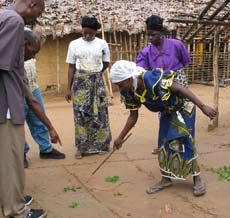
Participatory mapping – also called community-based mapping – is a general term used to define a set of approaches and techniques that combines the tools of modern cartography with participatory methods to represent the spatial knowledge of local communities. It is based on the premise that local inhabitants possess expert knowledge of their local environments which can be expressed in a geographical framework which is easily understandable and universally recognised. Participatory maps often represent a socially or culturally distinct understanding of landscape and include information that is excluded from mainstream or official maps. Maps created by local communities represent the place in which they live, showing those elements that communities themselves perceive as important such as customary land boundaries, traditional natural resource management practices, sacred areas, and so on.


What criteria is there to recognise and denote community maps? 

Participatory mapping is defined by the process of production.The processes used to create the maps can be as valuable as the maps themselves. Participatory maps are planned around a common goal and a strategy for use and are often made with input from an entire community in an open and inclusive process. The higher the level of participation by all members of the community, the more beneficial the outcome because the final map will reflect the collective experience of the group producing the map.

Participatory mapping is a product that represents the agenda of the community. Participatory mapping is map production undertaken by communities to show information that is relevant and important to their needs and is mainly for their use.

Participatory mapping produces maps which depict local knowledge and information.The maps contain a community’s place names, symbols, scales and priority features that represent local knowledge systems.

Participatory mapping is not defined by the level of compliance with formal cartographic conventions. Participatory maps are not confined by formal media; a community map may be a drawing in the sand or may be incorporated into a sophisticated computer-based GIS (geographic information system). Whereas regular maps seek conformity, community maps embrace diversity in presentation and content. That said, to be useful for outside groups such as state authorities, the closer the maps follow recognised cartographic conventions, the greater the likelihood that they will be seen as effective communication tools.

(CTA and IIED, 2006)

Why is it useful? 

In recent years, there has been a growing effort to promote community engagement in decision-making processes concerning natural resource management. Participatory mapping has emerged as a powerful tool that allows remote and marginalised communities to represent themselves spatially, bringing their local knowledge and perspectives to the attention of governmental authorities and decision-makers. For this reason, participatory mapping is commonly used to create maps that represent land and resource use patterns, hazards, community values and perceptions, to gather information on traditional knowledge and practices, to collect data for assessments or monitoring, to present alternative scenarios and to empower and educate stakeholders.

MappingForRights

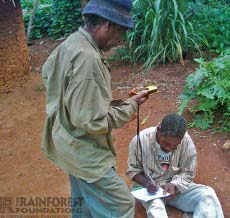
MappingForRights, an initiative of the Rainforest Foundation UK (RFUK) and local partners, is intended to enable forest communities themselves to demonstrate their presence in the forest; decision-makers and the private sector to take account of and recognise this presence; and to assist the international community in designing programmes concerned with those rights and ensure that forest communities are equitable beneficiaries of future developments.

Since it was launched in 2011, it has supported hundreds of forest communities across the region to produce maps of their lands and resources covering over five million hectares. In 2016, MappingForRights was recognised by the UN Framework Convention on Climate Change (UNFCCC) as part of the UN Momentum for Change awards.

View this short video to find out more about participatory mapping in the Congo Basin


Source: Participatory Mapping: presenting spatial knowledge of local communities

On Evaluating the Scientific Contribution of the Apollo Moon Missions Via Information Theory: A Study of the Scientist-Scientist Relationship – Mitroff and Mason | Management Science

[Via David Ing. Academic paywall, unfortunately]

On Evaluating the Scientific Contribution of the Apollo Moon Missions Via Information Theory: A Study of the Scientist-Scientist Relationship

Published Online:https://doi.org/10.1287/mnsc.20.12.1501

This paper describes the difficulties in evaluating large-scale scientific programs. These difficulties are illustrated through a single case study of the Apollo moon program. The paper describes some of the results of a three and a half year investigation into the beliefs of 42 of the most eminent scientists who studied the moon rocks. The effect of the Apollo missions on the beliefs of the scientists with respect to certain key scientific hypotheses is measured by means of information theory. The paper shows why greater collaborative efforts between the physical and the social sciences are required if there are to develop better tools of evaluation, and ultimately, if we are to develop more informed models of science. The study [Mitroff, Ian I. 1974. The Subjective Side of Science: A Philosophical Enquiry into the Psychology of the Apollo Moon Scientists. Elsevier, forthcoming.] on which this paper is based documents the tremendous role that “irrational” factors play in the attainment of scientific objectivity. We need better models of science that are based, if only in part, on what scientists actually do.

Source: On Evaluating the Scientific Contribution of the Apollo Moon Missions Via Information Theory: A Study of the Scientist-Scientist Relationship | Management Science

David Snowden: Profiles in Knowledge Published on July 12, 2018 – Stan Garfield on LinkedIn

A very thorough profile of Mr Snowden
This is the 26th article in the Profiles in Knowledge series featuring thought leaders in knowledge management. This is also my 400th blog post.

Dave is a self-described “proud curmudgeon and pragmatic cynic” and the founder and chief scientific officer of Cognitive Edge. I have been quoting Dave in my blog since I started it in 2006. I first met him at KMWorld 2006, and have seen him there most years ever since. If you haven’t heard him in person, you should watch his videos and listen to his podcasts.

Background
1. LinkedIn
Currently working on the application of natural sciences to social systems thought the development of a range of methods and the SenseMaker software suite. Started work in an NGO post University and then moved onto HR & Training in the late 70s when he started working with computers. That together with a diploma from The Certified Accountants got him a job as Development Accountant in the same firm where he headed up the Treasury function and was responsible for computerization. An MBA in financial management saw him move into consultancy and software designing decision support systems in what became Data Sciences where he became a General Manager (creating MURCO) and the Corporate Business Development Manager where he created the Genus Program (and integration of JAD/RAD, Object Orientation and Legacy Management) which was one of the main components in the turnaround of that company. IBM acquired the company 1997 and after that his more public career started.

Specialties

Sense making
Knowledge Management
Complexity Science applied to organizations
Narrative
Experience

Cognitive Edge – Founder and Chief Scientific Officer, 2004 – Present
Cynefin Centre IBM – Director, 2002 – 2004
IBM, Director Institute for Knowledge Management, 2000 – 2002
Data Sciences, 1984 – 1997
Education

Middlesex University – MBA, Financial Management, 1985
Lancaster University – BA, Philosophy, 1975

Continues in source (LinkedIn account required): https://www.linkedin.com/pulse/david-snowden-profiles-knowledge-stan-garfield/

via www.gurteen.com and Dave Gurteen’s newsletter

Improvisation Blog: Does cybernetics understand complexity?

Saturday, 11 August 2018

Does cybernetics understand complexity?

I’m writing a paper about music at the moment and questioning my understanding of the word “complex”. That’s a bit embarrassing for someone who considers themselves a cybernetician – a subject which is fundamentally concerned with complexity. This is a moment where I have to ask myself if I really understand what “complex” means.

This is the definition of complexity that I have believed up until this point, in a beautifully argued explanation by Ross Ashby:

“The word ‘complex’, as it may be applied to systems, has many possible meanings, and I must first make my use of it clear. There is no obvious or preeminent meaning, for although all would agree that the brain is complex and a bicycle simple, one has also to remember that to a butcher the brain of a sheep is simple while a bicycle, if studied exhaustively (as the only clue to a crime) may present a very great quantity of significant detail. Without further justification, I shall follow, in this paper, an interpretation of ‘complexity’ that I have used and found suitable for about ten years. I shall measure the degree of ‘complexity’ by the quantity of information required to describe the vital system. To the neurophysiologist the brain, as a feltwork of fibers and a soup of enzymes, is certainly complex; and equally the transmission of a detailed description of it would require much time. To a butcher the brain is simple, for he has to distinguish it from only about thirty other ‘meats’, so not more than log2 30, i.e., about five bits, are involved. This method admittedly makes a system’s complexity purely relative to a given observer; it rejects the attempt to measure an absolute, or intrinsic, complexity; but this acceptance of complexity as something in the eye of the beholder is, in my opinion, the only workable way of measuring complexity.” (Ashby, 1973 – “Some peculiarities of Complex Systems”, Cybernetic Medicine, Vol 9, no. 1)

On the face of it, this is perfectly sensible. But there are things in life which are not like bicycles or brains, butchers or detectives.

If I was to point to three problems with Ashby’s view, they are:

  1. The problem of reference and meaning: Ashby sees information as being about something – the brain to the butcher is information about something, just as it is to the brain surgeon.
  2. The problem of ergodicity – Ashby’s examples are inanimate and static in the information they present – but nothing in life is really like this, and neither are observers (or what a friend of mine calls “systems of reference”). Whatever information is conveyed and how we think about information is not ergodic. That means that the features of its “alphabet” are different from one moment to the next.
  3. The problem of the non-arbitrariness of the diachronic emergence of understanding. This is the really tricky one, but basically the fact that human agree on distinctions, that we are capable of love, that somehow we resonate with each other in the face of phenomena is not the product of a kind of random search for coherence in the manner of Ashby’s “homeostat”. There seems to be some underlying principle which guides it.

Music and education are where these problems become most apparent. Bach’s music, for example, is often called “complex” because of its counterpoint. But if you examine it closely, all Bach’s music is simply an elaboration of chords which are rather like a hymn. And what Bach does with the chords is not to add entropy (or disorder); instead, he adds and overlays new patterns, or redundancies! His complexity arises from the interaction of redundancy. If he added entropy, the music would never have any coherence. But there’s something else. These emergent patterns are not random. Each of them appears to be a re-articulation of some fundamental symmetry which is expressed through the whole thing – even when they appear to be initially “surprising”. The music is holographic in the way that Bohm describes. Its aesthetic closure appears to be arrived at when sufficient redundant descriptions are overlaid and coordinate rather like different colours of the spectrum combine to make white light.

Cybernetics has no understanding of how this might happen as far as I can see. We need something else.

1 comment:

Paul Hollins said…

As ever Mark a thought provoking post. although on this occasion I’m not sure that I agree with your conclusion from a cybernetic perspective.

Ashby’s position on complexity was a useful starting point in cybernetics but Beer took Ashby’s position much further and I would argue Beer’s positions that did not assume ergodic states in information, quite the contrary, Beer suggested regulation , amplification or attenuation to achieve a homeostatic system state surely if the assumption was ergodic little or no regulation would be required. Beer talks in his example of humans and rope tension of the unpredictability, randomness of the complex system and how this is amplified the larger (more complex humans contributing) it becomes. I like the concept of not random emergent patterns you present in the musical context which is broadly form my perspective is evident in most ecological systems.

Thanks Mark and a re -read of Beer !

Comments please in course: Improvisation Blog: Does cybernetics understand complexity?

Latest issue of Adaptive Behavior!

Daniel Schmachtenberger – Solving The Generator Functions of Existential Risks, Part 1 — Future Thinkers Podcast — Overcast

[very interesting podcast – he certainly packs a lot in!]
FTP057: Daniel Schmachtenberger – Solving The Generator Functions of Existential Risks, Part 1
0:0058:24
July 17, 2018
Daniel Schmachtenberger talks about the underlying generator functions of existential risks and how we can solve them. Show notes: http://futurethinkers.org/generator This episode is sponsored by: https://futurethinkers.org/qualia Support Future Thinkers: http://futurethinkers.org/support Check out our merch store: https://www.redbubble.com/people/futurethinkers

Calvin Pava’s Legacy: Sociotechnical Systems Design for the “Digital Coal Mines” – Douglas Austrom and Carolyn Ordowich

[Thanks to David Ing]
Calvin Pava
Sociotechnical Systems Design for the “Digital Coal Mines”
Douglas Austrom, Ph.D.
Kelley School of Business, Indiana University (daustrom@indiana.edu)
and
Carolyn Ordowich STS Associates, Princeton, NJ (carolord@comcast.net)
Submitted to:
Enduring Thoughts of the Thinkers of Organizational Change
Palgrave Macmillan
Change Thinkers
Handbook
(publication 2018)
Abstract

Calvin Pava made an extraordinary contribution to the future of work design and organizational change in the 21st century. He reconceptualized traditional STS methodology for nonroutine work analysis and design as the design of deliberations and discretionary coalitions focused on collaboration among disparate people where tension, disagreement, and conflict improve the value of the ideas, expose the risks inherent in the plan, and lead to enhanced trust among the participants. Pava provided us with a model for a flexible and scalable organizational architecture based on the precepts of self-regulation; it is a template for combining and integrating self-managing work teams (routine work), project teams (hybrid work) and discretionary coalitions (non-routine work) into a “network” organization. He also recognized that our increasingly turbulent environment requires viewing organizational change less as an event and more as an ongoing dynamic of iterative design.

Pava’s work in the 1970’s and early 1980’s is also an especially effective fit for the 21st century and a digital era that requires tapping into networks of value, connecting information sources, and bridging internal as well as external boundaries. He foresaw addressing more complex problems with sociotechnical design enhanced by information and communication technology leading to more robust solutions. But Pava also recognized the dilemma advanced technology posed: it could be designed for the flourishing of mankind or to manipulate people and engender passivity in the rest of society, and he strongly warned us to exercise organizational choice in order to disobey the new digital technocratic imperative.

Key Words
Sociotechnical Systems Design, Non-routine Knowledge Work, Deliberations, Discretionary Coalitions, Technocratic Imperative

Calvin Pava’s Legacy: Sociotechnical Systems Design for the “Digital Coal Mines”. Available from: https://www.researchgate.net/publication/319472658_Calvin_Pava’s_Legacy_Sociotechnical_Systems_Design_for_the_Digital_Coal_Mines [accessed Aug 09 2018].

Complicating the Narratives with PNI | PNI Institute

Helping people see the world through each other’s eyes, overcoming personal barriers, and connecting people to prevent or resolve conflict are core propositions of participatory narrative inquiry. So it is for good reasons that conflict resolution will be the October topic in our 2018 series of monthly PNI talks. So there must be a good reason to write a blog post on this topic now. Well, there is ….

Every once in a while an article emerges that stands out. Last week that was Complicating the Narratives by veteran journalist Amanda Ripley. She describes her inquiry into the role of journalism with respect to conflict.

Maybe it is best if you read the article first, but for those who don’t, I will briefly set the scene. Amanda starts her story with what happened when Oprah Winfrey hosted an episode of the television show 60 Minutes in which 14 people – half Republican, half Democrat – were invited to talk about topics of disagreement. For example: Twitter, President Trump, health care, and the prospect of a new civil war.

The attempt failed, largely due to Winfrey’s failure to address the contradictions and thereby enrich the conversation. The result was dull and superficial television. This set Ripley off into a (re)search project ranging from soul searching to talking with diverse people whose jobs involve handling conflict. She spoke to psychologists, mediators, lawyers, rabbis, researchers of conflict, and other people who know how to disrupt toxic narratives and get people to reveal deeper truths. Probably unknowingly, Ripley did a PNI project.

Central to her story is what that all means for the journalists’ role:

The lesson for journalists (or anyone) working amidst intractable conflict: complicate the narrative. First, complexity leads to a fuller, more accurate story. Secondly, it boosts the odds that your work will matter — particularly if it is about a polarizing issue. When people encounter complexity, they become more curious and less closed off to new information. They listen, in other words.

Complicating the narrative is – of course – something PNI excels at.

Complicating the narrative means finding and including the details that don’t fit the narrative — on purpose.

In the first half of the article, Ripley describes her voyage by citing the people she spoke to and commenting on her conversations. In her search for ways to enrich the journalist approach, she encountered ideas on how ‘intractable conflict’ emerges and how to handle it. She took 50 hours of conflict resolution courses. That opened her eyes to what she didn’t know and couldn’t do:

I’m embarrassed to admit this, but I’ve been a journalist for over 20 years, writing books and articles for Time, the Atlantic, the Wall Street Journal and all kinds of placesand I did not know these lessons. After spending more than 50 hours in training for various forms of dispute resolution, I realized that I’ve overestimated my ability to quickly understand what drives people to do what they do. I have overvalued reasoning in myself and others and undervalued pride, fear and the need to belong. I’ve been operating like an economist, in other words — an economist from the 1960s.

She also visited a Difficult Conversations Lab that studies the effect of reading prior information before entering a discussion and learned how to become a ‘conversation whisperer’. She concluded that is essential to revive complexity in a time of false simplicity. All very PNI like.

The question of course is how to revive complexity. In the second half of the article, Ripley lists six strategies journalists can use to complicate the narrative. All of these strategies feature nuance, fuel contradiction, and raise ambiguity.

The core of this article is an attempt to map these six strategies onto existing PNI practices. The article has two aims: to lay the foundation for PNI practitioners who want to reach out to journalists; and to connect to journalists who want to embrace PNI methods.

Continues in source: Complicating the Narratives with PNI | PNI Institute

The complexity of citizen experience: ‘system effects’ mapping for intervention design – Luke Craven

The complexity of citizen experience: ‘system effects’ mapping for intervention design

System Effects is a methodology developed by UNSW Canberra Researcher Dr. Luke Craven to explore the ‘user’ or citizen experience of complex phenomena, such as climate resilience, poor health, or job market access. The method is proving to be useful for citizen and user engagement worldwide, and Luke details its varied applications and processes for us here. 

The System Effects methodology emphasises the varied nature of social phenomena, their causes and consequences, while at the same time giving policymakers tools to understand the complex nature of how those varied factors manifest at the community — or population — level. System Effects can be used to support the design, implementation and evaluation of interventions aimed at changing the structure of complex adaptive systems to drive particular outcomes. By beginning from the ‘user’ understanding of complex systems, the methodology helps to re-centre lived experience in social science and policymaking practice.

UNSW has produced a great video summary of the method, and Luke writes about it in detail for Power to Persuade below:

Developed as part of my PhD that focused on developing new tools to understand and address food insecurity from a systems-based perspective, System Effects is increasingly being applied to a whole range of issues by national, state, and local governments across the world. For example it is being used to:

  1. understand the barriers to job market entry in Oslo, in partnership with the Norwegian Labour and Welfare Administration (NAV);
  2. understand the systemic impact of disaster events in Sydney, in partnership with Resilient Sydney and the NSW Office of Emergency Management;
  3. support social workers to deliver systemic care to persons facing homelessness in Newcastle, UK, in partnership with Newcastle City Council;
  4. support the development of policy to prevent food borne disease in Cambodia, in partnership with the International Livestock Research Institute (ILRI) and USAID, and;
  5. support effective environmental stewardship in New York, in partnership with the US Forest Service.

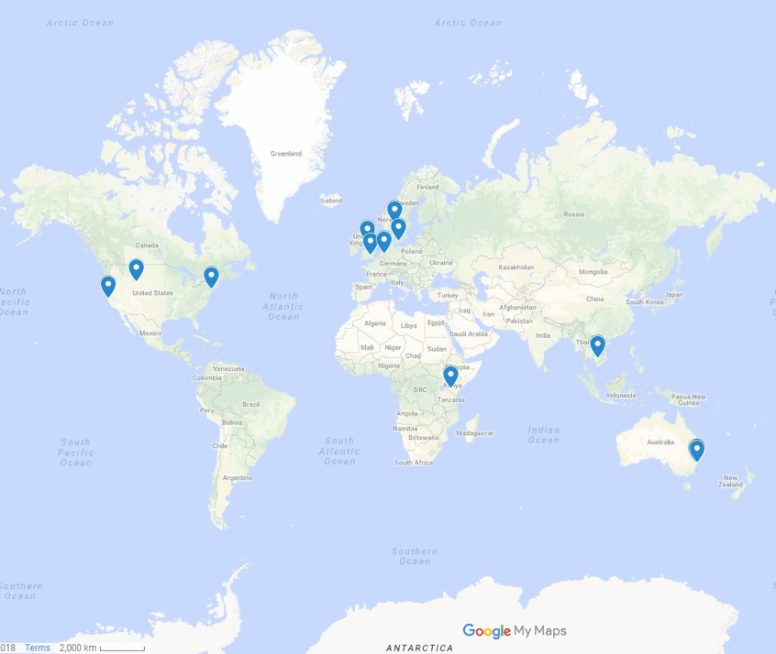
The above is just a snapshot of the diversity of issues and decision contexts in which System Effects is currently used, with a more detailed picture in the map below.

System effects distributions.png

Figure: Where is System Effects being used?

But what exactly is System Effects and how does it work? The methodology draws on soft systems methodologyfuzzy cognitive mapping, and graph theoretical analysis. Its objective is to aggregate and quantify participant-generated system models of a given problem (e.g. poor health or malnutrition) and its determinants to inform intervention design.

The participant-led approach begins by asking research participants to visually map or depict the range of variables they perceive be causes of the problem at hand; drawing arrows between the variables to indicate causality.

Once completed, the researcher creates an adjacency matrix for each participant response, using a coding scheme to ensure consistency in the factors present across the community. The foundation of this method is that individual participant maps represent network diagrams, with the barriers between them acting as ‘nodes’ and the connections between them as ‘edges’ or links.

Continues in source: The complexity of citizen experience: ‘system effects’ mapping for intervention design | The Mandarin – The Mandarin

s
search
c
compose new post
r
reply
e
edit
t
go to top
j
go to the next post or comment
k
go to the previous post or comment
o
toggle comment visibility
esc
cancel edit post or comment