
As much as possible, Dave Snowden records every speaking engagement and makes it available as a podcast accompanied by slides. They are listed in chronological order for your convenience.
Recent Updates Page 353
EJOR Special Issue on Community Operational Research
EJOR Special Issue on Community Operational Research: Home
Special Issue of the European Journal of Operational Research

 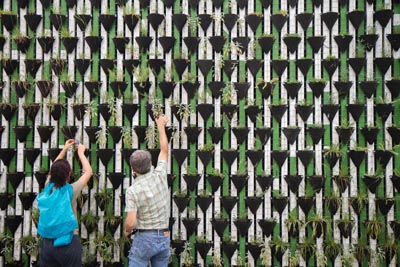 |
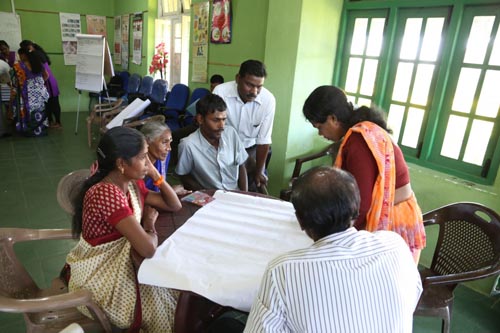 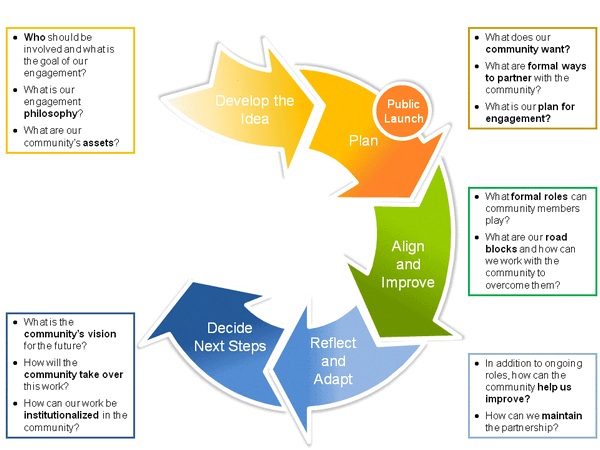 |
Community Operational Research (COR) is based on meaningful engagement with communities to bring about transformational research and practice along with community empowerment and social change. We work directly with communities to identify, formulate, model and solve problems in which decisions and choices are the core focus. Our training and practice cross disciplinary, application and methodological boundaries: we are planners, engineers, management scholars, policy analysts and many others. The purpose of this website is to introduce you to a special issue of European Journal of Operational Research titled “Community Operational Research: Innovations, Internationalization and Agenda-Setting Applications” which has appeared in August 2018. The 31 papers in this special issue address issues in rural development, theory and methodology, working with youth, urban planning and many other areas. They represent applications of decision modeling that are more familiar to persons with traditional training in operations research and the management sciences, as well as those that reflect progressive notions of how qualitative analysis and a systems view can support positive community change.
Sometimes the perspective of authors in this special issue is on what decisions to make to achieve particular outcomes: How can we design design an energy generation strategy for a small town that balances environmental sustainability, economic sustainability and local energy autonomy? What are new ways to ensure access to nutritious and affordable food in lower-income, primarily immigrant communities that combines behavior changes by residents with new services by stores and government agencies? How can we develop a peace education program in an area rife with political and other violence in which young people learn of alternatives to violence to solve conflicts?
Other times the authors in this special issue seek to examine events that have already occurred to learn how a community-engaged decision modeling perspective can explain what we have observed: If co-production of health care through community engagement and shared responsibility for health care fail in one place after succeeding in another place, could a better understanding of doctors’ professional identities combined with putting key stakeholders at the center of system redesign result in improved outcomes in the future? In the wake of a destructive tsunami and subsequent rebuilding, how can an arts-based methodology help us understand how a community in crisis draws on social networks, cultural practices and collective interventions to build from within?
Continues in source: Home – EJOR Special Issue on Community Operational Research – Research Guides at University of Massachusetts Boston
Action Research: Its Foundations in Open Systems Thinking and Relationship to the Scientific Method | John Barton, John Stephens, Tim Haslett
[A hugely valuable paper unearthed by David Ing]
ORIGINAL PAPER
Action Research: Its Foundations in Open Systems Thinking and Relationship to the Scientific Method
John Barton, John Stephens, Tim Haslett
Published online: 22 August 2009
Springer Science+Business Media, LLC 2009
Abstract
This paper considers those interpretations of action research that can be traced to Kurt Lewin at the Research Center for Group Dynamics at the University of Michigan,and the work in social ecology by Emery and Trist at the Tavistock Institute. It locates the logical basis of these interpretations in the philosophy of pragmatism, particularly as it relates to Peirce’s inferential logic and inquiry system. Drawing on this argument, and on the significant developments in approaches to systemic thinking over the past 40–50 years,a normative set of criteria is established for action research. The paper concludes that both positivist science (which relates to closed systems thinking) and action research (which relates to open systems thinking) are essential to any complete scientific approach.
Keywords
Action research, Open systems, Scientific method, Peirce, Pragmatism, Abduction
Full paper in source (academia.edu something-wall): Action Research: Its Foundations in Open Systems Thinking and Relationship to the Scientific Method | Tim Haslett – Academia.edu
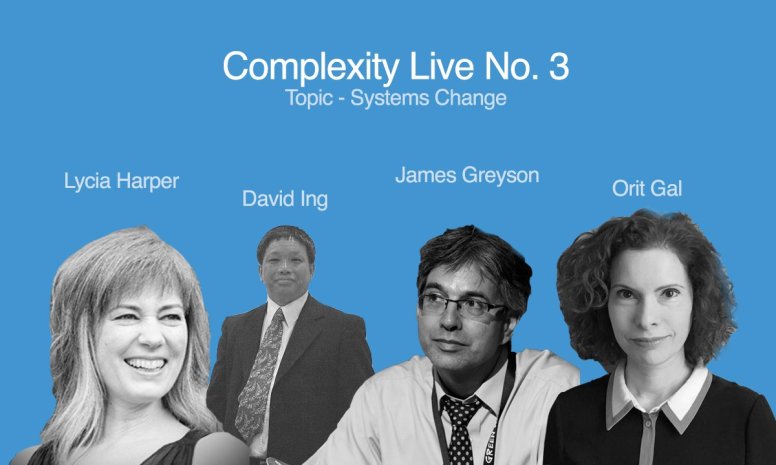
Complexity Live: Systems Change – 10 August 6pm GMT / 1pm Eastern Time
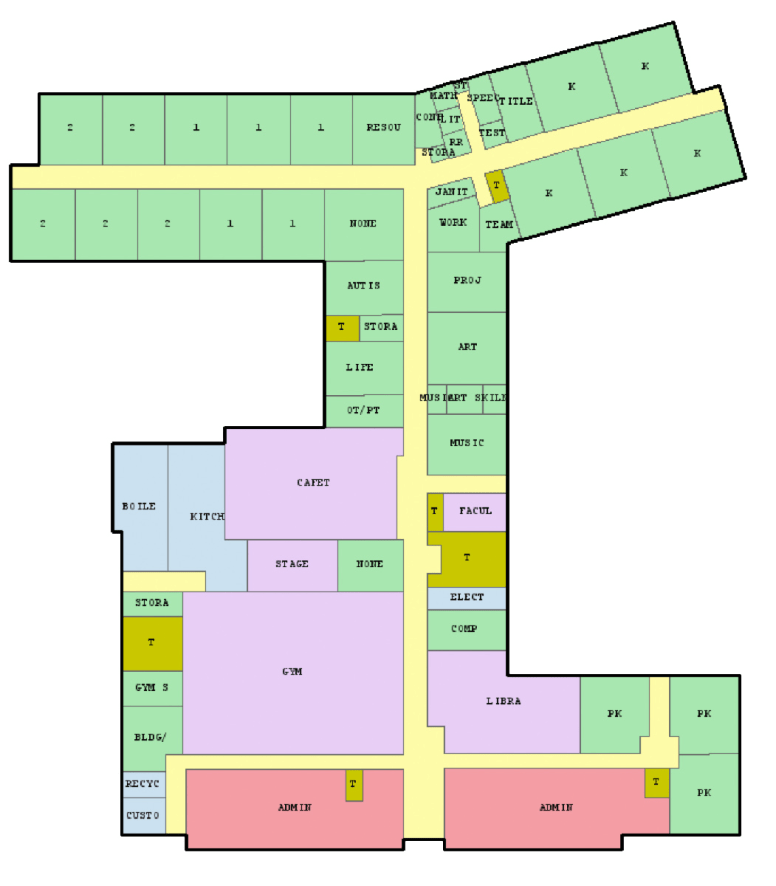
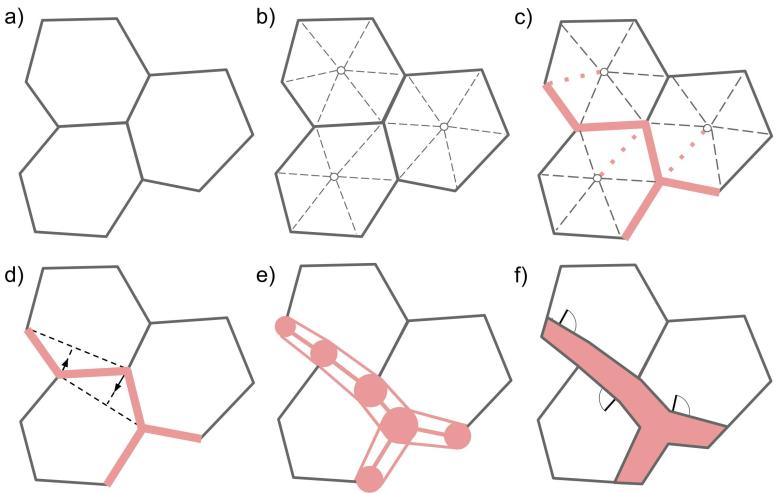
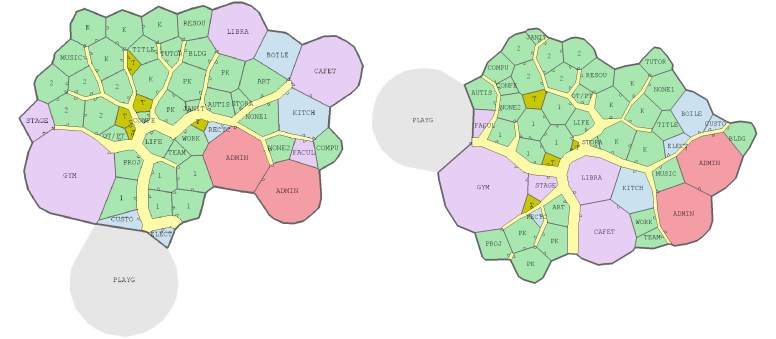
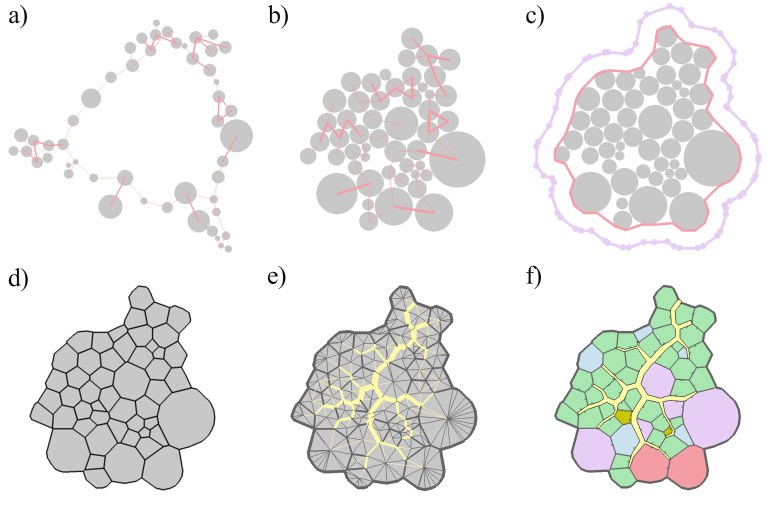
Joel Simon – evolving floorplans
infed.org | Chris Argyris: theories of action, double-loop learning and organizational learning

Chris Argyris: theories of action, double-loop learning and organizational learning. The work of Chris Argyris (1923-2013) has influenced thinking about the relationship of people and organizations, organizational learning and action research. Here we examine some key aspects of his thinking.
contents: introduction · life · theories of action: theory in use and espoused theory · single-loop and double-loop learning · model I and model II · organizational learning · conclusion · further reading and references · links · cite
Chris Argyris has made a significant contribution to the development of our appreciation of organizational learning, and, almost in passing, deepened our understanding of experiential learning. On this page we examine the significance of the models he developed with Donald Schön of single-loop and double-loop learning, and how these translate into contrasting models of organizational learning systems.
Continues in source: infed.org | Chris Argyris: theories of action, double-loop learning and organizational learning
General complexity: A philosophical and critical perspective

In this paper we argue that a rigorous understanding of the nature and implications of complexityreveals that the underlying assumptions that inform our understanding of complex phenomena are deeply related to general philosophical issues. We draw on a very specific philosophical interpretation of complexity, as informed by the work of Paul Cilliers and Edgar Morin. This interpretation of complexity, we argue, resonates with specific themes in post-structural philosophy in general, and deconstruction in particular. We argue that post-structural terms such as différance carry critical insights into furthering our understanding of complexity. The defining feature that distinguishes the account of complexity offered here to other contemporary theories of complexity is the notion of critique. The critical imperative that can be located in a philosophical interpretation of complexity exposes the limitations of totalising theories and subsequently calls for examining the normativity inherent in the knowledge claims that we make. The conjunction of…
View original post 60 more words
UK Cybernetics Society 50th anniversary conference – 22 September
|
50th Anniversary Conference |
The Conference will be held on Saturday 22nd September 2018
The Council Room, King’s College, 152-170 Strand, London WC2R 1ES
|
See more including speaker profiles and abstracts in source: The Cybernetics Society

The Power of Profit in Ecology | Timothy F.H. Allen | 2017 | TEDxMadison
Ecologists can learn from economists, says Timothy F.H. Allen, paying attention to return on effort. This video is a refined presentation of ideas based in hierarchy theory and the collapse of complex societies, jointly researched with Joseph Tainter and published in Supply-Side Sustainability.

[3:40] This is a resource that gives you a lot of gain for minimal effort. We call them high gain. High gain systems are wasteful. They’re local because they sit on the hot spot of the resource. They’re ephemeral because the hot spot doesn’t last very long. And they’re dynamical. You can describe them in terms of the dynamics of the situation. [….]
[04:18] … whereas tomatoes are all tomatoes all the way, basil consists of leaves — which you want — and these stalks and stems and flowers and things that you don’t. So we have to approach basil quite differently. We have to treat it as a low quality resource.

[04:40] It’s low gain. That is to say, you put in a lot of effort. You tend to be prudent. The resource is consumed in a dispersed way. The resource tends to be long lasting and structural.
[04:57] And so that in this way, basil is reduced down, processed, increased in quality, until we just have
the leaves. [….][05:30] I have a good colleague, Joe Tainter. He’s written a wonderful book in 1988 called The Collapse of Complex Societies. And his basic premise is that societies are problem-solving units, and they solve problems by complexifying. In the beginning you don’t get a lot of benefit for complexification. Then you get a lot. But in the end, there’s a diminishing return on effort. So over time, we consume a resource. It collapses. It becomes too expensive. We then indulge in some sort of a substitution.
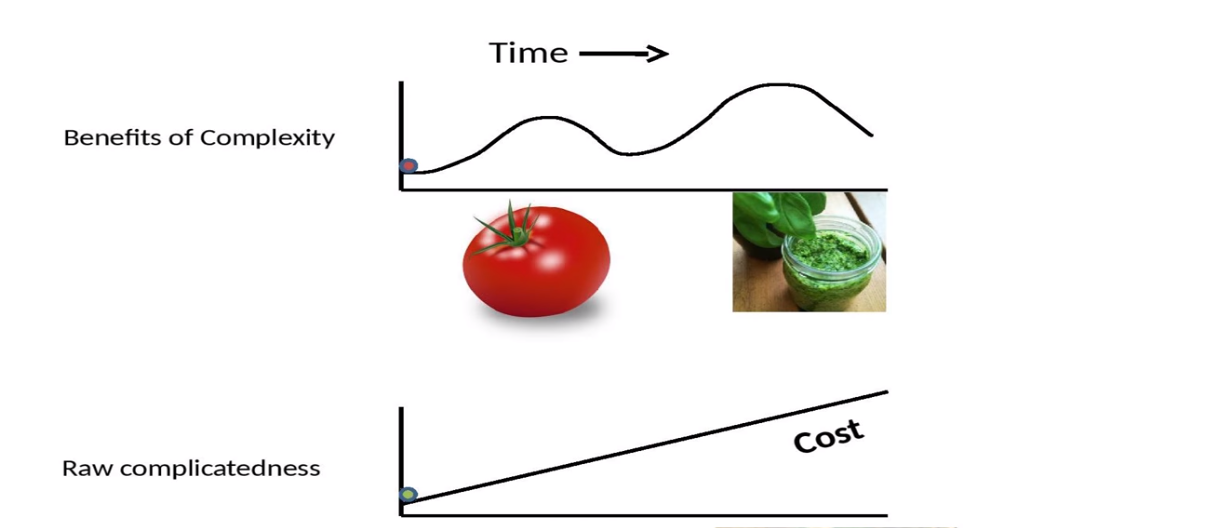
[06:07] Notice though that the cost over time keeps on going up. Relative complicatedness is a different manner. Notice the way that we get more and more complicated and difficult to deal with, but but then all of a sudden, you change your strategy.
[11:30] Remarkably enough, hardly any systems go prudent [in their consumption]. […] As long as there is a high gain resource in the vicinity, they will use it. All systems do that. All systems are wasteful. [….]
[12:15] We never look after our resources. Once you’ve gotten to this prudent use, then, all of a sudden, instead of living in your food, you move out to get the food and bring it back again.
Here’s an abstract from a similar talk from Allen, on “Introducing the Concept of Profit Across Ecology“, given in 2016 at the U. of Georgia.
Ecologists often speak of resource use, but not of profit. Return on effort is neglected. Ecologists are so doom and gloom because their systems are seen as going round a cycle from establishment to demise as resources run out. Sometimes they lead to death and extinction, but economists know better that resources do not run out; usually they just get more expensive in the next pass around the cycle. There are successive cycles of increasing efficiency. Some cycles are predictable from rate-dependent energy gradients (high gain), and whole other systems are predicted from rate-independent constraints on those flows (low gain). We have examples from ants, termites, birds, the Roman Empire and prevailing global ecology.
References
The Power of Profit in Ecology | Timothy F.H. Allen | 2017 | TEDxMadison at https://www.youtube.com/watch?v=rhVlJDH3pTE
“Confronting economic profit with hierarchy theory: The concept of gain in ecology” | Timothy F. H. Allen, Peter C. Allen, Amy Malek, John Flynn, Michael Flynn | 2009 | Systems Research and Behavioral Science at https://doi.org/10.1002/sres.998
“Insights into Service Coming from Biology” | Timothy F. H. Allen | ISSS 2012 San Jose at http://isss.org/world/sanjose-2012-retrospective#plenary-allen
“Insights into the Relationship Between Products and Services Coming from Biology” | Timothy F. Allen, Duncan Shaw, Peter C. Allen, James Spohrer | 2013 | Systems Research and Behavioral Science at https://doi.org/10.1002/sres.2216
Considering Appropriate spatial-temporal Scale — bigger and faster isn’t always better! Daniel Christian Wahl
Considering Appropriate spatial-temporal Scale — bigger and faster isn’t always better!
An excerpt from ‘Exploring Participation’ (D.C.Wahl, 2002)
In their book Ecological Design, Sim Van der Ryn and Stuart Cowan introduce the concept of ‘scale-linking’. They argue that since we traditionally have studied the world using the language, metaphors and tools of a single discipline at a time, we have been predisposed to “seeing process on a single scale”.
Van der Ryn and Cowan believe that this approach is insufficient in capturing the underlying phenomena, since:
“Nature’s processes are inherently scale linking, for they inherently depend on the flow of energy and materials across scales. … Global cycles link organisms together in a highly effective recycling system crossing about seventeen tenfold jumps in scale, from the ten-billionth of a meter (the scale of photosynthesis) to ten thousand kilometres (the scale of the Earth itself).”139
In their opinion:
“Scale-linking systems imply a holism in which everything influences, or potentially influences everything else — because everything is in some sense constantly interacting with everything else. Nature is infused with the dynamical interpenetration of the vast and minute, an endless dervish mixing. Matter and energy continually flow across scales, the small informing the large and the large informing the small …
Unless we work with nature’s own finely tuned scale-linking systems we endanger the stability of life on the planet… If we are to properly include ecological concerns within design, we must take seriously the challenge offered by scale linking. We need to discover ways to integrate our design processes across multiple levels of scale and make these processes compatible with natural cycles of water, energy, and material.”140
— Van der Ryn & Cowan
Van der Ryn and Cowan argue that fractal geometry provides a tool to study the geometry of scale linking, as it helps to connect remarkable ranges of scale “from twig to tree, from rivulet to watershed.”141 They see our failure not to pay attention to scale-linking and therefore not to match the human flows of energy and materials to the limits of a particular landscape as a critical cause of the current environmental crisis. [Note: This is an excerpt from my 2002masters dissertation in Holistic Science at Schumacher College. Be mindful that I wrote this 15 years ago and enjoy!]

Continutes in source: Considering Appropriate spatial-temporal Scale — bigger and faster isn’t always better!
Systems thinking open access articles from MDPI
See below for a rich list of articles. I note from a quick google that MDPI is a not entirely uncontroversial publisher (https://en.wikipedia.org/wiki/MDPI seems balanced) – broadly it seems that they are not on ‘predatory journals’ lists but their academic quality has sometimes been called into question. However, some interesting titles here and you can judge for yourself.




It’s a wicked problem, stupid! (revisited) | CSL4D
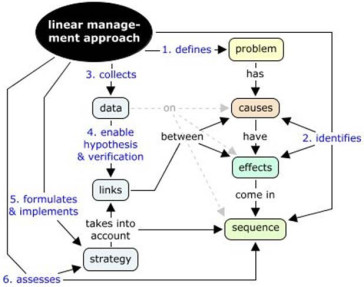
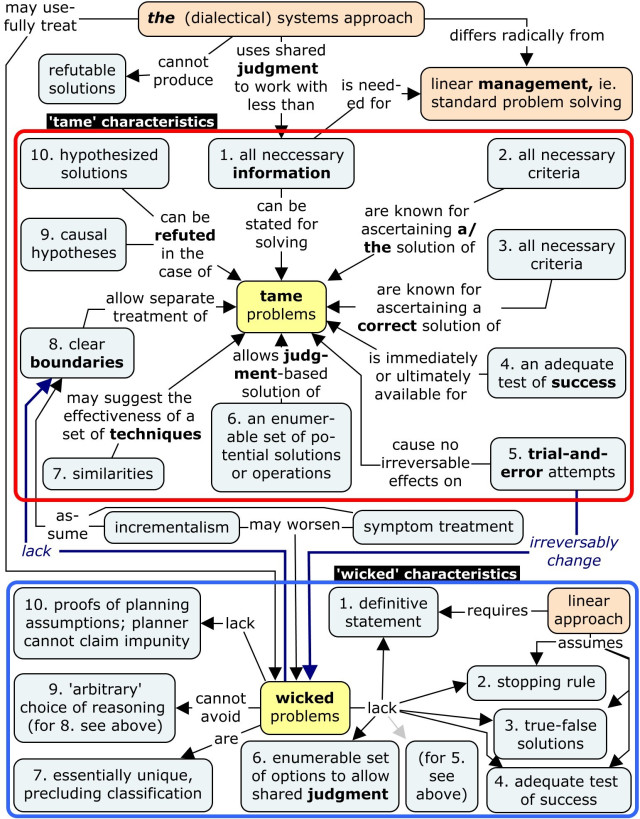
A bit over 5 years ago I first learned about wicked problems. So I looked at the oft-cited seminal article by Rittel & Webber of 1973 and tried to make sense of it (see old post). There was a lot of information in the article, which made it a bit confusing. The most often quoted part of the article is the list of ten characteristics of wicked problems. These ten points seem to be clear to most people, but to me it remained a bit cryptical. Time for a second effort. I will make use of a second paper by Rittel entitled ‘On the planning crisis’ of 1972 (presented 1971). The reader must bear with me, because both papers are very long (on average over 8240 words each), rich and profound. I am pretty sure the essence of Rittel’s work has been properly condensed now. Here we go.
[Continues in source]: It’s a wicked problem, stupid! (revisited) | CSL4D
Ritual anti-structure as an alternate pathway to social complexity
“There is growing dissatisfaction with the traditional approach to the evolution of complex societies, which treated it principally as a sequence of transformations toward political centralization driven by the construction of increasingly vertical hierarchies by a powerful elite.”
[Aha! As I suspected, yet more proof that lazy tropes are lazy tropes… if anyone gives you a linear progressive narrative of history, they’re selling something. Don’t buy it! Don’t buy it!]
Connecting the Purpose(s) – Intelligente-Organisationen
Connecting the Purpose(s)

The VSM as a Way of Looking at the World and How to Align Visions in Order to Create a Unifying Meta-Purpose
The discussions about the so called „Organizational Purpose“ have reached in recent years a new level – at least in my perception. Of course there always was (and will be) a never ending debate about what the „true“ purpose of an organization might be. I am pretty sure, that it is crucial to distinguish between the imagined/visionary purpose and the results an organization „really“ achieves. The imagined/visionary purpose is here purely a mental projection or a bet on how the future might look like. There is the definition of Stafford Beer who said that the purpose of an organization is what it does – in short POSIWID. This distinction is important, because people often mix up the Purpose of an Organization and its Vision. In this respect I am a great fan of looking at the Imagined Purpose (aka Vision) and Achieved Purpose (aka Production) separately.
For the Reflective Practitioner, who does not only want to understand how the „thing“ works, as an Expert would do, two questions arise: what should one do with the above mentioned distinction in the real world, in a real company with existing constraints? How to deal with the difference of the imagined outcomes and truly achieved goals?
For me and my cognitive biased brain the VSM offers an elegant, plausible and aesthetic way to understand this pseudo-paradox and connect the different functional and systemic (Sub-) Purposes of a System (in the context of the VSM).
Micro Excursion I
Elegance, Plausibility and Aesthetics are not necessarily parameters in a scientific way of thinking. They could promote the distribution of Bullshit and must be treated with greatest skepticism. Nevertheless I use them as indicators, if a solution is simple enough, but not too simple (in order to re-phrase Albert Einstein).
How can the VSM help to connect the different Functional (skill and task related) and the Systemic (VSM-like) Purposes of an Organization?
This question might sound quite academic, but out there in the wild life of business I do see an urging relevance for the topic mentioned in the headline. It needs in economic/social systems an integrated way to connect the Functional Purpose of the different units with the VSM-System-specific responsibilities. It’s about enabling a „Holistic Whole“. The following example might be useful to illustrate the application of the VSM for this matter.
Continues in source: Connecting the Purpose(s) – Intelligente-Organisationen
Improvisation Blog: Redundancy and the Communication of Meaning in Music: Bach’s 3-part Invention (Sinfonia) no. 9 in F minor
Saturday, 21 July 2018
Redundancy and the Communication of Meaning in Music: Bach’s 3-part Invention (Sinfonia) no. 9 in F minor
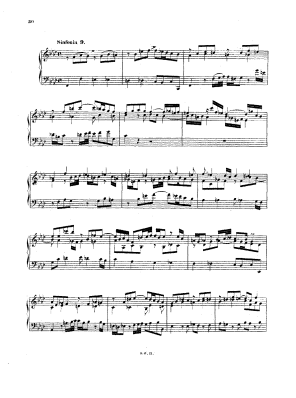
Hindemith chose Bach’s F minor 3 part invention for analysis to demonstrate his theory of composition in “The craft of musical composition”. It is a fascinating piece – one of Bach’s most chromatic and expressive pieces of keyboard writing, and rather like other extraordinary musical moments (like Wagner’s musical orgasm in Tristan), it raises the question “What is going on?”. I like Hindemith’s theory very much (although not as much as I like his music!), but his analysis sent me on my own analytical journey through the lens of information theory.

What happens in music, I believe, is the unfolding of a structure where multiple constraints are interwoven and overlaid. Information theory can provide some insight into this (as is discussed in a very recent paper from Loet Leydesdorff, myself and Inga Ivanova in the Journal of the Association for Information Science and Technology: https://onlinelibrary.wiley.com/doi/full/10.1002/asi.24052), and particularly the meaningfulness of the communication.
When considering music from the perspective of information theory, there are three fundamental problems to be overcome:
- Music has no object of reference. So how is meaning communicated without reference?
- Music emerges over time, producing novelty and unfolding a diachronic structure which appears to be linked to its synchronic structure. For this reason, music is not ergodic, unlike the use of letters in a language: its entropy over one period of time is not the same as its entropy over a different period of time.
- Music’s unfolding novelty is not arbitrary: novelty in music appears to be a symmetry-breaking process similar to that found in epigenesis where both synchronic and diachronic symmetries gradually define structure
The first page of Bach’s music looks like this:

Here’s a performance:
The piece is fugal, and obviously in three parts, there is a very bare texture, and this bareness seems to contribute to the expressiveness of the music. However, there is a harmonic structure which is articulated throughout the piece, and a reduction of the harmonic written as chords per beat, looks something like this:

This kind of harmonic reduction is very common in music analysis as a method for getting at the “deep structure” of music (particularly in Schenker). It is typical of Bach’s music that the harmonic reduction is very much like a chorale (hymn). In trying to understand how Bach’s music works, we can start by asking about the relation between the harmonic reduction and the finished piece.
At first glance, from an information theory perspective, the block chords of the reduction seem to remove a considerable amount of entropy which exists in the movement of parts in the original. It does this by compressing the variety into single “beats”, which taken as an entirety have an entropy of 1. However, the variety compression makes more apparent the shifting harmonies. Written in chord symbols, this is an extended I (tonic) – V (dominant) – I (tonic) movement, interspersed with diminished chords (which are harmonically ambiguous) and a oscillation between major and minor chords. But if one was to calculate the entropy of the harmony, it wouldn’t be that great.
Continues in source: Improvisation Blog: Redundancy and the Communication of Meaning in Music: Bach’s 3-part Invention (Sinfonia) no. 9 in F minor
 Systems Community of Inquiry
You must be logged in to post a comment.