Duality, dualism, duelling and Brexit – Ray Ison and Ed Straw

Taking this opportunity to rethink a part of government crucial to a fair and dynamic society would be good politics. Whitehall is no more capable of doing this than Brussels.
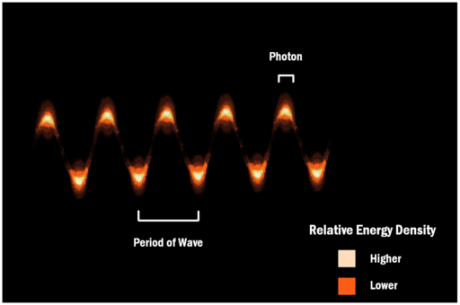
Light can be treated as both a wave and a particle depending on the experiment we, as observers, use to examine its behaviour. This apparent paradox was described for many years as the ‘wave–particle dualism’, implying that they were incompatible and irreconcilable phenomena.

Dualism describes antagonistic or negating opposites: mind/matter, objective/subjective, Brexit/Remain. Two concepts form a dualism when they belong to the same logical level and at that level are perceived as opposites. The logic behind this dialectic is negation. Negation takes a proposition p to another proposition not-p. Not-p is interpreted intuitively as being true when p is false, and false when p is true. This fuels pugilistic media interviews and adversarial politics. Modern duels are fought with dualisms.This fuels pugilistic media interviews and adversarial politics. Modern duels are fought with dualisms.

Such dualistic thinking is a product of the prevailing objectivist Cartesian world view, with its orthodox logic, under which we are still brought up. In science, it was not until it was recognized that phenomena we observe in ‘nature’ are not independent of our acts of observing them, that this wave/particle paradox was resolved by appreciating that their behaviours are in fact complementary and constitute a duality rather than a dualism. Taken together they do not negate each other but create a unity or a coherent whole.

‘It seems as though we must use sometimes the one theory and sometimes the other, while at times we may use either. We are faced with a new kind of difficulty. We have two contradictory pictures of reality; separately neither of them fully explains the phenomena of light, but together they do.’ Albert Einstein

Reframing conceptual pairs as dualities rather than dualisms stimulates relational thinking and practice. Following this logic the following pairs need not be understood as self-negating but expressions of key elements or concepts in a relational dynamic in which the whole is different to the parts: control – autonomy; constraint – freedom; environment – system; social world – biophysical world; yin – yang. When recognized as pairs participating in a relational dynamic, the operational possibilities open up and may be greater,  more rewarding and exciting.

[Continues… and delves into “Brexit” at headline link]

Hard, Soft…or Laminated? from Squire to the Giants

[A romp through a historic narrative of hard, soft, and combined systems theories – and then another ‘bit’ of and perspective on systems thinking in the comments. Squire to the Giants is on of the excellent blogs that arose at least partially from the cult-like excitement of John Seddon’s Vanguard lean approach and the branding of it as ‘systems thinking’, and has always sought to give a rich overview of the systems thinking universe (hence the ‘Giants’) – recommended].

This post is about something that I find very interesting – Systems Thinking as applied to organisations, and society – and about whether there are two different ‘factions’….or not. I’ve had versio…

Source: Hard, Soft…or Laminated? | Squire to the Giants

Holobiont – definition from wikipedia

From Aidan Ward’s excellent blog on Medium at https://medium.com/@aidan.ward.antelope

Holobionts are assemblages of different species that form ecological units. Lynn Margulis proposed that any physical association between individuals of different species for significant portions of their life history is a symbiosis. All participants in the symbiosis are bionts, and therefore the resulting assemblage was first coined a holobiont by Lynn Margulis in 1991 in the book Symbiosis as a Source of Evolutionary Innovation.[1] Holo is derived from the Ancient Greek word ὅλος (hólos) for “whole”. The entire assemblage of genomes in the holobiont is termed a hologenome.

History[edit]

In 1992, David Mindell subsequently used the word holobiont in a BioSystems article in general reference to host-microbe symbioses.[2] This was followed in 1993 by its use in another BioSystems article by R. Jorgensen.[3] The word rested dormant for about a decade. Forest Rohwer, Victor Seguritan, Farooq Azam, and Nancy Knowlton adopted the term in a figure legend to describe the complex relationships between various microbes and coral in 2002.[4] In this system, the zooxanthellaedetermine the light level required by the coral holobiont and a complicated web involving the Bacteria, Archaea and fungi recycles its nitrogen. The word holobiont has been increasingly used since then, with its next appearance in 2005.[5] It has been popularized by the hologenome concept.[6] All macrobes, animals and plants, are today deemed holobionts consisting of the host plus its entire microbial community,[7][8][9][10] and these associations can be transient or stable.[11][12][13]

Relationship to viromes and microbiomes[edit]

Holobionts are traditionally divided into three major divisions: 1) viruses, 2) unicellular microbes and 3) the macrobial host. Collectively, the viruses make up the viromeand microbes make up the microbiome. There is no specific terminology for other multicellular organisms associated with the holobiont other than symbiont. The collective genomic DNA and RNA of a holobiont is called a hologenome.

Versus hologenome[edit]

Holobionts are considered multipartite ecological entities, whereas hologenomes are multigenomic entities that encode holobiont phenotypes. Here, the word hologenome follows a conceptual continuum from words such as chromosome and genome. The terms are therefore structural definitions relating to host-microbial assemblages and their genomes.

Versus superorganism[edit]

Superorganisms are organisms consisting of many individuals and was first applied to the eusocial insects (Wheeler 1928).[14] An ant colony is a superorganism. Holobionts are assemblages of many different species. Each ant is an individual holobiont consisting of the ant, fungi, bacteria, etc. However, ″superorganism″ has also been used as a synonym for ″holobiont″[15].

See also

Apithology as a counterpart to pathology

Wellness is to disease, as apithology is to pathology, writes @willvarey @apitholo.

Apithology is a word created to describe a timeless concept in a modern context. It is not known whether the word apithology also has an ancient meaning. It has been formed as an entirely new term to describe a distinct and novel conception. The term originally emerged from the development of a field of practice that in essence is the counterpart to its opposite, being the research field of pathology. The origin of the word apithology itself derives from the etymology of its basic elements. By contrasting the etymological roots of these two counterpart terms one can understand the complementary nature of their relationship in representing two distinct horizons in one conjoined system of meaning.

Will Varey | “Apithology: An Emergent Continuum” | Aspects of Apithology, Vol. 1, No. 1 | 2014 at https://apitholo.com/

Aspects of Apithology, vol. 1, no. 1

#apithology, #pathology

VSM training for Armenian farmers – YouTube video – Nareg Karekinian

Via Patrick Hoverstadt on LinkedIn – who says:

For all those who still believe the old myth that VSM is difficult to get across, this is from Nareg Karekinian training farmers in Armenia to use VSM on an agricultural development project.

Jane Jacobs and Dark Age America

Jane Jacob’s thinking via @peterlaurence from New York to Toronto (1971), and Systems of Survival (1992) to Dark Age Ahead (2004).

Like Cities and the Wealth of Nations, it is no coincidence that Jacobs wrote Systems of Survival in the wake of the Reagan/Thatcher era. As an analysis of the “moral foundations of commerce and politics,” Systems rejected the idea that government should be run like a business. Inspired by Plato’s Republic, Jacobs sought to show that commerce and governance required two completely different moral systems and that the idea of applying the moral system appropriate to business to government was, at best, deeply misguided. At worst, it was an invitation to the systemic corruption that resulted from the inappropriate mixing of moral systems’ values and activities in inappropriate contexts. For example, while trading and elling are appropriate in the marketplace, government officials are expected not to sell votes, collude with corporate interests and serve private donors, or profit from office or the markets that they are charged with regulating. For these reasons, “officials are forbidden to take a job in a business they have regulated, or a job lobbying former guardian colleagues, until a year or two has elapsed after they have left government service.” 29

[….]

Following her study of morality and corruption, Jacobs’s sequel to Systems, The Nature of Economies (2000), was a hopeful book. Drawing, among other scientific and economic sources, on Gaia: A New Look at Life on Earth (1979/95) by James Lovelock, The Next Economy (1983) by Paul Hawken, Biomimicry (1997) by Janine Benyus, Symbiotic Planet: A New View of Evolution (1998) by Lynn Margulis, and the research that led to Cradle to Cradle: Remaking the Way We Make Things (2008) by William McDonough, Jacobs sought to revive the harmonious classical relationship between ecology (oecology) and economics (oikonomia).

[….]

In retrospect, …, Jacobs accurately predicted the cultural decline represented by the Trump regime. Indeed, she could well have been speaking of 2017 when she wrote,

Legions of hired liars labor to disconnect reality from all manner of images — images of personalities, of legislation, of corporations, of places, and of activities. Spin-doctors, virtuosos of deceptive image making and damage control, have become authoritative spokespersons in political campaigns and troubled institutions, able not only to disconnect reality but to construct new reality. 35

Jacobs concluded Dark Age Ahead by observing that the United States “has often been equated with Rome by historians and social commentators seeking modern lessons from Rome’s mistakes.”36 But she was not hopeful that the nation would recover from its spiral of decline.36

Peter L. Laurence | “Jane Jacobs and Dark Age America” | (draft of a forthcoming publication) at https://www.academia.edu/35989759/Jane_Jacobs_and_Dark_Age_America

Peter L Laurence

#dark-age-ahead, #jane-jacobs, #nature-of-economies, #systems-of-survival