APM Systems Thinking SIG chair interview – Certes

source:

APM Systems Thinking SIG chair interview – Certes

APM Systems Thinking SIG chair interview

20TH DECEMBER 2018

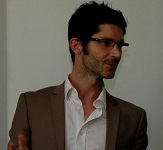
Interview with Dr Michael Emes MEng PhD MIET MAPM MINCOSE, APM Systems Thinking Specific Interest Group (SIG) chair.

Why is systems thinking important to you?
Systems thinking helps me get to grips with challenging problems. Having too narrow a focus leads to solutions that aren’t effective in the long term. I’ve learnt this from my project work, from teaching and from research.

How is systems thinking relevant to the project managers of today?
To some extent, systems thinking is part of project management’s DNA. Projects are systems of activities with critical inter-dependencies and ‘hard’ systems thinking can help to optimise projects to minimise use of resources for example. But systems thinking really adds value when you realise that the world of projects is imperfect and uncertain, not deterministic, and has a significant human dimension where ’soft’ systems thinking comes into play. Not only do tasks often take longer to complete than anticipated due to unforeseen events and re-work, but we often start projects without a clear understanding of what the project’s objectives are. Systems thinking gives us the tools to attempt both complicated projects (with many interfaces and distributed supply chains – such as building a new aircraft) and complex projects (where stakeholders don’t agree on the fundamental objectives – such as building a new runway for London or using IT to deliver improved healthcare services). Ultimately, systems thinking helps us to do a better job of managing risk and project scope.

continues in source

An Epistemological Foundation for Communication – Krippendorff – 1984 – Journal of Communication – Wiley Online Library

An Epistemological Foundation for Communication

Klaus KrippendorffFirst published: September 1984

https://onlinelibrary.wiley.com/doi/abs/10.1111/j.1460-2466.1984.tb02171.x

pdf: https://repository.upenn.edu/cgi/viewcontent.cgi?article=1560&context=asc_papers

NAE Website – Policing as a Complex System

source:

NAE Website – Policing as a Complex System

Santa Fe Institute@sfiscience·“How might #policing be reengineered to achieve a substantial reduction in the use of deadly force?” Treating US policing as the decentralized #ComplexSystem it is, Brendan O’Flaherty & SFI’s @rajivatbarnard (both at @columbia_econ) write for @theNAEng:

ARINA | TIP – The Integral Process for Working on Complex Issues

source:

ARINA | TIP – The Integral Process for Working on Complex Issues

The Integral Process For Working On Complex Issues tm  (TIP)

Called “TIP” for short, this is a mature, research-based process for groups of any size, in any settings, to deal with thecomplex issues, questions, and decisions they must grapple with.

Its powerful effectiveness comes from its design, using critical thinking and core processes of healthy change and development. This is how it fosters healthy change and development as people work on issues of any kind. This is why TIP is rated “5” on the Scale of Public Interactions.

Its common steps and templates empower users to address any issue. This means it is replicable for use on a wide variety of issues and transportable to any setting, at any scale.  

This process can transform perspectives, assumptions, cultures, relationships, system change efforts, and therefore how public or organizational business is done. It transforms how issues are understood and addressed.  This isn’t magic. Rather, it results from many years of action research and issue analyses, and mature use of solid theory.

Full pdf: http://www.global-arina.org/Documents/TIP%20Introductory%20Booklet%202006-2007.pdf

Case study: https://integral-review.org/more-perspectives-new-politics-new-life-how-a-small-group-used-the-integral-process-for-working-on-complex-issues/

Systems Change Alliance : “conversation between Sacred Activism leader, Andrew Harvey and Systems Change vanguard, Roar Bjonnes. Friday 29th Jan at 20h UTC

FRIDAY, JANUARY 29, 2021 AT 8 PM UTC – 9 PM UTC

Radical Regeneration: Sacred Activism and Systems Change – A conversation with Andrew Harvey

Free  · Facebook liveMoreAboutDiscussionInterestedInvite

Details

 Systems Change Alliance

Friday, January 29, 2021 at 8 PM UTC – 9 PM UTC

Duration: 1 hr

Public 

Andrew Harvey is a world-renowned author of more than 30 books and the Founder and Director of The Institute for Sacred Activism, an international organization focused on inviting concerned people to take up the challenge of our contemporary global crises by becoming inspired, effective, and practical agents of institutional and systemic change, in order to create peace and sustainability.Sacred Activism is a transforming force of compassion-in-action that is born of a fusion of deep spiritual knowledge, courage, love, and passion, with wise radical action in the world. Harvey believes that the large-scale practice of Sacred Activism can become an essential force for preserving and healing the planet and its inhabitants.Harvey was born in India in 1952 and lived there until he was nine years old. At the age of 21, he became the youngest person to be awarded a scholarship at All Soul’s College, England’s highest academic honor. But he soon became disillusioned with academic life and returned to India where a series of spiritual experiences initiated his spiritual journey. He has studied Buddhism, Sufism and Hinduism extensively and written many books on these subjects as well as translated the poetry of Rumi
and Kabir.Harvey speaks extensively throughout the world and has received many honors for his writings, including the Benjamin Franklin Award and the Mind, Body, Spirit Award.Join the conversation live on Facebook or YouTube or catch it later in our Films archive. 

https://t.co/3xsLejbQJR?amp=1

https://t.co/qiSQmAStzJ?amp=1

Stuart Umpleby: The Unknown Ashby – Ultrastability (Club of Remy video)

Cryptographic Nature – Krakauer (2015)

David Krakauer

I consider the many ways in which evolved information-flows are restricted and metabolic resources protected and hidden — the thesis of living phenomena as evolutionary cryptosystems. I present the information theory of secrecy systems and discuss mechanisms acquired by evolved lineages that encrypt sensitive heritable information with random keys. I explore the idea that complexity science is a cryptographic discipline as “frozen accidents”, or various forms of regularized randomness, historically encrypt adaptive dynamics.

Subjects:Populations and Evolution (q-bio.PE)
Cite as:arXiv:1505.01744 [q-bio.PE]
 (or arXiv:1505.01744v1 [q-bio.PE] for this version)

Submission history

From: David Krakauer [view email
[v1] Thu, 7 May 2015 15:27:25 UTC (15 KB)

source:

[1505.01744v1] Cryptographic Nature

Strange Attractor – an overview | ScienceDirect Topics

Wikipedia:

https://en.wikipedia.org/wiki/Attractor#Strange_attractor

Strange Attractor

Strange Attractor – an overview | ScienceDirect Topics

Collection of systems/complexity links regarding ‘evaluation’

Inspired by a question in the Ecology of Systems Thinking facebook group from Helena Luisa Pms – https://www.facebook.com/groups/ecologyofsystemsthinking/permalink/3670574453021672/

And a response from Marc Rettig (his link at bottom), here are my recommended links for ‘evaluation’:

http://www.bobwilliams.co.nz/systems.html

And there’s a lot here, much of which leads to blogs and/or people with an ongoing consistent interest in evaluation (from ‘complexity’ – CECAN and Human. Learning. Systems., to international ‘development’, to ‘systems change’ – Tamarack Institute, SSIR etc) – I would say it’s worth opening each of these for a quick scan:
https://stream.syscoi.com/2020/11/20/human-learning-systems/
https://ssir.org/articles/category/measurement_evaluation
https://www.hpma.org.uk/2021/01/13/webinar-thoughts-on-system-leadership-wednesday-17th-march-at-10am/
https://stream.syscoi.com/2020/12/27/palladium-how-to-design-better-programmes-in-complex-systems-andrew-koleros-american-journal-of-evaluation-2018/
https://stream.syscoi.com/2020/11/08/system-thinker-notebook-james-shelley/
https://stream.syscoi.com/2020/11/05/qualitative-process-evaluation-from-a-complex-systems-perspective-a-systematic-review-and-framework-for-public-health-evaluators-mcgill-et-al-2020-and-another-take-on-systems-and-vs-comple/
https://stream.syscoi.com/2020/10/14/evaluation-in-a-systems-perspective-of-planning/
https://stream.syscoi.com/2020/10/09/cecan-webinar-capturing-social-dynamics-for-evaluation-trajectory-based-qualitative-comparative-analysis-11-november-2020-1300-1400-gmt-with-lasse-gerrits-and-sofia-pagliarin/
https://www.tamarackcommunity.ca/library/topic/evaluation
https://stream.syscoi.com/2020/09/16/inclusive-systemic-evaluation-for-gender-equality-environments-and-marginalized-voices-ise4gems-a-new-approach-for-the-sdg-era-un-women-headquarters/
https://www.tavinstitute.org/projects/systems-thinking-at-the-tavistock-institute-past-present-and-future/
https://stream.syscoi.com/2020/08/27/evaluating-system-change-a-planning-guide/
https://stream.syscoi.com/2020/08/14/we-cant-include-everything-and-everyone-so-what-to-do-on-boundaries-evaluation-uncertainty/
https://evaluationuncertainty.com/2020/07/29/looking-for-input-on-next-steps-what-do-research-and-theory-in-complexity-and-systems-tell-us-about-evaluation-practice-and-evaluation-theory/
https://stream.syscoi.com/2020/07/19/covid%e2%80%9019-how-a-pandemic-reveals-that-everything-is-connected-to-everything-else-sturmberg-2020-journal-of-evaluation-in-clinical-practice-wiley-online-library/
https://stream.syscoi.com/2020/06/16/developing-a-systems-perspective-for-the-evaluation-of-local-public-health-interventions-theory-methods-and-practice-nihr-school-for-public-health-research/
https://onlinelibrary.wiley.com/doi/abs/10.1111/jep.12065

Notes on Principles-Focused / Developmental Evaluation What is it like to bring rigor to evaluation when working in complexity and uncertainty, with emergent approaches? Marc Rettig Following Oct 24, 2017 · 13 min read This is a place for me to gather and organize notes, which I’m making public in case it helps someone else. These notes (which will keep changing over coming months) are an input to a further process of synthesis.

Notes on Principles-Focused / Developmental Evaluation | by Marc Rettig | Rettig’s Notes | Medium

Improvisation Blog: Ashby on Reconstructability

So many interesting ideas here, I’ve posted the whole blog entry – but I urge you to subscribe at the link below!

source:

Improvisation Blog: Ashby on Reconstructability

What do education, cybernetics, music, technology and philosophy have in common?

Friday, 22 January 2021

Ashby on Reconstructability

The following quotes are taken from the introduction by George Klir to Roger Conant’s “Mechanisms and Intelligence: Ashby’s writings on Cybernetics”, which can be downloaded here: http://www.rossashby.info/Ashby-Mechanisms_of_intelligence.pdf

The balance between the reduction of complexity to a model and nature itself was a key point for Ashby. Datafying things “throws away information”, as he puts it, but on the one hand, this is essential for science, whilst on the other hand, good science cannot lose sight of the ways in which a model might be used to reconstruct the complexity from which it is derived. 

In most data analytic work today, there is much reduction. And then it stops – and assumes that the reduction can be used to shape the reality – that is the mode of Facebook, Cambridge Analytica, etc. But reconstruction is essential, otherwise, how are we to know that it is these variables and not those that we should be attending to?

This also means that a “system” is not a thing-in-the-world, but rather an idea. As Ashby puts it, it is a “set of variables”:

“At this point we must be clear about how a ‘system’ is to be defined. Our first impulse is to point at the pendulum and to say ‘the system is that thing there.’ This method, however, has a fundamental disadvan­tage: every material object contains no less than an infinity of vari­ables and therefore of possible systems. The real pendulum, for in­stance has not only length and position; it has also mass, temperature, electric conductivity, crystalline structure, chemical impurities, some radio-activity, velocity, reflecting power, tensile strength, a surface of moisture, bacterial contamination, an optical absorption, elas­ticity, shape, specific gravity, and so on and on. Any suggestion that we should study ‘all’ the facts is unrealistic, and actually the attempt is never made. What is necessary is that we should pick out and study the facts that are relevant to some main interest that is already given. …The system now means, not a thing, but a list of variables.”

And then here is the problem of reconstructability: 

“systems models which have recently been developed in many different areas are almost invariably constructed from subsystems. While the subsystems, each associated with a subset of the set of variables of the overall system, are often well validated models of the phenomena involved, the question of the ability to reconstruct the overall system from the given subsystems is almost never raised. It seems that there has been a tendency among many systems modellers to take the reconstructability for granted. It is clear that without an analysis by which the reconstruction ability of systems model is determined, the model is likely to be fundamentally incorrect and might be vastly misleading.”

But I think this is the remarkable thing: the whole enterprise is not about “complexity”, but “simplicity”. Reflecting that the variety of the scientists will always be overwhelmed by the variety of nature, he suggests that the whole point of science is to find effective approaches to simplification:

“…system theory (is) the attempt to develop scientific principles to aid us in our struggles with dynamic systems with highly interacting parts, possibly exceeding 10^100 who faces problems and processes that go vastly beyond this size. What is he to do? At this point, it seems to me, he must make up his mind whether to accept this limit or not. If he does not, let him attack it and attempt to find a way of defeating it. If he does accept it, let him accept it wholeheartedly and con­sistently. My own opinion is that this limit is much less likely to yield than, say, the law of conservation of energy. The energy law is essentially empirical, and may vanish overnight, as the law of conserva­tion of mass did, but the restriction that prevents a man with resources of 10^100 from carrying out a process that genuinely calls for more than this quantity rests on our basic ways of thinking about cause and ef­fect, and is entirely independent of the particular material on which it shows itself. If this view is right, systems theory must become based on methods of simplification, and will be founded, essentially, on the science of simplification. …The systems theorist of the future, I suggest, must be an expert in how to simplify.”

source:

Improvisation Blog: Ashby on Reconstructability

Ben Sweeting: Architectural roots of ecological crisis – Systemic Approach to Architectural Performance

source:

Ben Sweeting: Architectural roots of ecological crisis – Systemic Approach to Architectural Performance

continues in source, with video:

JANUARY 22, 2021 BY SYSTEMICAPPROACHTOARCHITECTURALPERFORMANCE Ben Sweeting: Architectural roots of ecological crisis

Ben Sweeting: Architectural roots of ecological crisis – Systemic Approach to Architectural Performance

2021 Systems Centred Theory Conference – In a Different World: Dealing with Differences Differently – Online • March 13-19, 2021

source:

Welcome to the 2021 SCT Conference
An Innovative Approach to Sustainable Change
In a Different World:Dealing with Differences DifferentlyOnline • March 13-19, 2021
Early bird rates til February 15!
Click here for full details of the online2021 Systems-Centered Training Annual Conference
Dear SCT Friends & Colleagues,
Systems-Centered Training offers a systems model for psychotherapy with individuals, couples, families and groups, and for work with organizational teams and organizations-as-a-whole. SCT methods and tools provide groups (and the professionals who work with them) with ways to identify, clarify and explore the impact of system dynamics.
If this sparks your curiosity, we’d love for you to join us in our first-ever online conference.
Register by February 15 to take advantage of the lower rates for early registration.
Full details of the 2021 Systems-Centered Training Annual Conference are now available on the SCTRI website. You can review the program and register.

We look forward to seeing you there!Janneke MaasDayne NarrettaJane Steinberg, and Debbie Woolf2021 Conference Co-Directors
Click here to learn more and register
Please help us tell others about the conference by sharing this email with colleagues & friends using the “Forward this email” link at the bottom of this email & by posting this to social media using the buttons at the bottom. The brochure & flyer are also available to download – see the links below. A personal recommendation from you is our best promotion.
Click the links below to download the brochure & flyer:BrochureLetter size flyerA4 size flyer

source:

Systems-Centered Training  Annual Conference March 13-19, 2021  In a Different World: Dealing with Differences Differently SCTRI is presenting this online conference through its Training and Resource Center

Welcome to the 2021 SCT Conference

The VSM Guide: Case Study 3 – One Mondragon Co-operative

source:

The VSM Guide: Case Study 3 – One Mondragon Co-operative

Case Study 3:

ONE MONDRAGON CO-OPERATIVE

This case study is a diagnosis.I visited Mondragon in February 1991 in order to look at the way they handle federations of co-operatives. However, much of what I learned about the organisation of a single enterprise was of such relevance to the use of the VSM, that I felt bound to include it in these case studies.Many of the conclusions I made concerning Suma have been reached by the Mondragon co-ops, presumably by entirely different routes.And in many cases they have adopted practical solutions which fit in exactly with some of my more theoretical proposals.

BACKGROUND

My visit to Mondragon was primarily to study the way that they manage to get 173 different co-ops to collaborate. However, the structure of their manufacturing plants has been changing recently, and these changes were of direct relevance to the conclusions I have been coming to through VSM diagnosis.

Mondragon are the most successful group of co-ops that I know, and during the visit I made in February 1991 I was continuously impressed by their commitment to both co-operative ideals and to state-of-the art production techniques. All the factories are full of computer controlled machine tools and robots. They have huge warehouses run entirely by computer. And most of the steel presses and control gear are made by other factories within the Mondragon group.

continues in source:

The VSM Guide: Case Study 3 – One Mondragon Co-operative

What ‘systems thinking’ actually means – and why it matters today | World Economic Forum – Christian Tooley

What ‘systems thinking’ actually means – and why it matters for innovation today

What ‘systems thinking’ actually means – and why it matters today | World Economic Forum

…and quite some critique of this piece when someone shared it on LinkedIn:

https://www.linkedin.com/posts/systemsthinkingalliance_what-systems-thinking-actually-means-activity-6757182084651061248-yss8

Impact Lab Open Series: Demystifying Systems Change – YouTube

Impact Lab Open Series: Demystifying Systems Change

Impact Lab Open Series: Demystifying Systems Change – YouTube
Demystifying Systems Change“Some people might say in that case it’s not a system change approach, but here I’m going to argue the opposite, that it’s also systems change because when we are addressing symptoms of wicked, broader problems, we are also planting the seeds for structural change, that small is beautiful, and experiments are valuable.” – Dr Paulo SavagetSystems are constantly changing – though not always coordinated, intentional or for the better. In October 2020, the Systems Change Observatory (SCO) postdoctoral researchers, Dr Sudhir Rama Murthy and Dr Paulo Savaget, led an Impact Lab Open Series on Demystifying Systems Change. Some key takeaways: ‘the system’ is deeply interconnected, and greater than the sum of its parts. Systemic problems are often self-reinforced, evolving and cannot be solved by a single organisation.
Watch the recording
Building on this introductory session, in December 2020, Sudhir and Paulo, co-delivered a full Impact Lab module on systems change. Paulo introduced the idea of systems hacking:  whilst systems thinking often emphasises the importance of understanding the full picture and root causes, sometimes we need to reframe systemic problems to also see and address their symptoms – even if that means acting in ‘incomplete’ ways, or having to ‘muddle through’.

Sudhir introduced a supply chain perspective on systems change – which can offer clarity around system boundaries, interconnectedness, and performance. This session highlighted corporate responses to COVID-19 through localisation of their supply chains.