You can watch the slides with animations here: http://www.strategicstructures.com/?p=1511
Short description
=============
It is often said that organisations are full of paradoxes. But this refers to contradictions and tensions. It is understood as something that needs to be taken care of. When organisations are looked at as social systems, however, it becomes clear that they are only possible because of paradoxes, and particularly paradoxes of self-reference. Understanding how these paradoxes create and maintain organisations is an important skill for practitioners trying to make sense of what’s going on and improve it. The basic generative organisational paradox is that of decisions. It brings new light not only on decision patterns and dependencies, but also on understanding the nature of objectives, power, and relations with clients.
CECAN Webinar: The Human, Learning, Systems approach to managing in complexity
CECAN Webinar: The Human, Learning, Systems approach to managing in complexity
Tuesday 1st October 2019, 13:00 – 14:00 BST
Presenter: Dr Toby Lowe, Senior Lecturer in Public Leadership and Management, Newcastle Business School
You are warmly invited to join us for the following CECAN Webinar…
Webinar Overview:
The webinar views the challenge of creating complexity-informed evaluation by seeing it as a public management challenge. How can public management adopt a more complexity-informed approach? The session will outline an emerging complexity-informed approach to public management: the Human, Learning, Systems (HLS) approach. The HLS approach involves public services responding to the variety of human need through bespoke service provision, using learning as the engine for performance improvement and stewarding the health of the systems which produce social outcomes.
Human
One of the three key tasks of managing work in an HLS way (including funding and commissioning of work) means creating the conditions in which people can build effective human relationships.
This means understanding human variety, using empathy to understand the lives of others, recognising people’s strengths, and trusting those who do the work. Variety, Empathy, Strengths and Trust (VEST).
Learning
In complex environments people are required to learn continuously in order to adapt to the dynamic, ever-changing nature of the work. In complex environments, there is no simple interventions which “works” to tackle a problem. “What works” is an on-going process of learning and adaptation.
It is the job of managers to enable staff to learn continuously as the tool for performance improvement. This means using measures to learn, not for reward/punishment. It means creating the conditions where people can be honest about their mistakes and uncertainties. It means creating reflective practice environments between and across peer groups.
This requires funders/commissioners to fund for learning and adaptation, not for “results”.
Systems
The outcomes we care about are not delivered by organisations. They are produced by whole systems – by hundreds of different factors working together. The final job of managers is therefore to act as Systems Stewards – to enable actors in the system to co-ordinate and collaborate effectively – because that it was will enable positive outcomes to emerge.
The HLS approach has recently been outlined in this report.
Presenter Biography (Dr Toby Lowe, Senior Lecturer in Public Leadership and Management, Newcastle Business School):
My purpose as an academic is to help improve the funding, commissioning and performance management of social interventions (across the public, private and voluntary sectors). My research team has used complexity theory to create a critique of New Public Management approaches, particularly highlighting the problems created by attempts to use Outcome-Based Performance Management (e.g. Payment by Results) in complex environments.
We have also developed a new complexity-informed paradigm for the funding, commissioning and performance management of social interventions, and are undertaking action research programmes with public and voluntary sector funders and delivery organisations to explore how this paradigm is implemented in practice, and to support the development of a Community of Practice around this new paradigm.
My team is also conducting working as a Learning Partner for the Lankelly Chase Foundation’s inquiry into place-based system change. In this context we are exploring how learning functions as a mechanism for system change.
I began my academic life as a political philosopher (my PhD is in the concept of community in political theory). After completing my PhD I worked in both the public and voluntary sectors for 15 years. My previous job before returning to academia was as Chief Executive of Helix Arts, a North East charity specialising in participatory arts practice with marginalised groups.
From 2015-2018 I worked at Newcastle University Business School, and Open Lab. In this context I also worked with PhD students at Open Lab exploring the role of digital technology in enabling people and organisations to reflect on their performance, and to contribute to learning in complex systems.
How to Join:
This talk will take place via a Zoom Webinar – please click hereto register for a place.
After registering, you will receive a confirmation email containing information about joining the webinar. In case you are unable to attend, a recording of the webinar will be uploaded to our website following the event.
pdf direct link https://www.researchgate.net/profile/Polinpapilinho_Katina/publication/323202439_Systems_theory-based_construct_for_identifying_metasystem_pathologies_for_complex_system_governance/links/5b365aa0aca2720785f69eff/Systems-theory-based-construct-for-identifying-metasystem-pathologies-for-complex-system-governance.pdf
The theoretical construct definitive of the manner of operation of that class of systems that includes living systems. This term, combined from the Greek auto- (self) and poiesis(creation/production), was coined by Maturana in (approximately) 1972 (Cf. Maturana & Varela, 1980, p. xvii). Often loosely translated as ‘self-creation’ or ‘self-production’, the term connotes the process or dynamic by which an autopoietic machine / system maintains its autopoietic organization (via intrinsic processes of production of components realizing this particular organization). More specifically, autopoiesis is attributed to a machine (delineated as a a network of processes) which through that network of processes produces the components that:
“(1) through their interactions and transformations continuously regenerate and realize the network of processes (relations) that produced them; and(2) constitute it (the machine) as a concrete unity in the space in which they [the components] exist by specifying the topological domain of its realization as such a network.”
(Varela, 1979, p. 13)
In the primary literature, autopoiesis is not directly defined as a process. Instead it is defined indirectly, on the basis of how an ‘autopoietic machine’ operates. There are, in fact, very few instances in the primary literature where ‘autopoiesis’ is substantively treated in and of itself, and then only as a process characteristic of ‘self-production’ or ‘homeostatic organization’ — constructs themselves framed mechanicistically with respect to the subject system’s architectonics. For example, Varela (1979, pp. 24-26) comes closest to addressing ‘autopoiesis’ directly in the course of discussing productions of relations in a given system:
“What makes this system a unity with identity and individuality is that all the relations of production are coordinated in a system describable as having an invariant organization. In such a system any deformation at any place is compensated for …by keeping its organization constant as defined by the relation of the productions that constitute autopoiesis. The only thing that defines the cell as a unity (as an individual) is its autopoiesis, and thus, the only restriction put on the existence of the cell is the maintenance of autopoiesis.”(Varela, 1979, p. 26, emphasis in the original)
“…[A]utopoiesis may arise in a molecular system if the relations of production are concatenated in such a way that they produce components specifying the system as a unity that exists only while it is actively produced by such concatenation of processes. This is to say that autopoiesis arises in a molecular system only when the relation that concatenates these relations is produced and maintained constant through the production of the molecular components that constitute the system through this concatenation.”
(Varela, 1979, pp. 26-27)
NOTE: Given the above distinctions and qualifications about the nature and origin of the construct ‘autopoiesis’, the details on what makes a composite unity (system) ‘autopoietic’ are therefore to be found under the entries for autopoietic machine and autopoietic organization.
The strict, though indirect, definition of autopoiesis proposed in the early papers was intended to provide a basis for overcoming vague or problematical characterizations of living systems — particularly those which represented vitalistic explanation of biological phenomena. As Maturana (1980a, p. 45) put it, the construct of autopoiesis:
“…resulted from the direct attempt … to provide a complete characterization of the organization that makes living systems self-contained autonomous unities, and that makes explicit the relations among their components which must remain invariant under a continuous structural transformation and material turnover.”
This passage reinforces the viewpoint that it is the constitutive organization of an autopoietic system which is primary in delineating autopoiesis. This is reflected even in the less formal popular account given in The Tree of Knowledge (Maturana & Varela, 1987, 1992):
“When we speak of living beings, we presuppose something in common between them; otherwise we wouldn’t put them in the same class we designate with the name ‘living.’ What has not been said, however, is: what is the organization that defines them as a class? Our proposition is that living beings are characterized in that, literally, they are continually self-producing. We indicate this process when we call the organization that defined them an autopoietic organization.“(Maturana & Varela, 1992, p. 43, emphasis added)
Having said that, Maturana and Varela proceed (as they have consistently done in the more formal literature) to delineate the autopoietic organization as the basis for ‘indicating’ the process of ‘autopoiesis.’
These last quotations illustrate a point which has proven somewhat problematical over the years. As mentioned at the outset, ‘autopoiesis’ has in fact been delineated and formally defined in terms of the constitution and operational character of an autopoietic machine or system. This definitional approach was entirely consistent with the mechanicistic perspective from which Maturana and Varela initially proceeded. To have invoked an ephemeral ‘autopoiesis’ (e.g., as a processual or qualitative referent) would have arguably entailed sliding into the sort of vitalistic explanation which they explicitly opposed and stringently avoided.
In other words, ‘autopoiesis’ is an abstract construct known solely in relation to a machine / system of a particular constitution which maintains its key constitutive character over time. Strictly speaking, autopoiesis has not been positively defined as a type of process in and of itself, even though it is clear in the context of its primary literature (e.g., Maturana & Varela, 1980) that it is the dynamic or process evidenced by, and reciprocally preservative of, the autopoietic organization / autopoietic machine. Nonetheless, it became common practice (even on occasion by Maturana and Varela themselves) to allude to ‘autopoiesis’ as a rhetorical shorthand connoting (in terms of process) the constitutive and operational details of a particular system. This is most evident when addressing the dynamics of an autopoietic system — i.e., when the processes manifest in the autopoietic network comprise the referential foreground, and the mechanics of the network itself are relegated to the background.
Given the above-cited conditions, it is possibly understandable, though definitely somewhat ironic, that this indirectly- or allusively-defined shorthand term should become the de facto label for the essence of Maturana and Varela’s work, as well as a common label for that work itself (Cf. 2. below). So long as such invocations retain (or at least can be linked to) the sort of mechanicistic context in which the process ‘autopoiesis’ is definitively framed, this is not problematical. What is problematical is explanatory invocation (and reliance upon) the process or dynamic of ‘autopoiesis’ absent this context. To invoke ‘autopoiesis’ (e.g., as ‘self-production’) without concomitantly explaining the constitutive elements of the system(s) for which such invocation is made, is to deny any basis for evaluating the applicability of the construct (as it was defined originally). The most well-known example of such an invocation would be that of German sociologist Niklas Luhmann, who adopted ‘autopoiesis’ as a processual construct in analyzing social systems, yet never (to date) bothered to explain what in his view are the key constitutive elements (e.g., ‘organization’, ‘structure’) by which such an application might be assessed in terms of Maturana and Varela’s clear-cut definitional criteria.
The explanatory risk in invoking ‘autopoiesis’ absent attention to the machine / system manifesting it has two distinguishable (but admittedly intertwined) components. The first is that an observer may simplistically project the feature ‘autopoiesis’ onto a unity with which she has insufficient or imperfect observational engagement upon which to base its ascription. Phrased another way, stripping the processual construct away from the machine manifesting it opens the possibility of its mistaken attribution to something only partially or indirectly observed. Varela (1979) provides some illustration for this type of risk in writing of recognizing an autopoietic system (as distinct from autonomous systems in general):
“In general, the actual recognition of an autopoietic system poses a cognitive problem that has to do both with the capacity of the observer to recognize the relations that define the system as a unity, and with his capacity to distinguish the boundaries that delimit this unity in the space in which it is realized (his criteria of distinction). Since it is a defining feature of an autopoietic system that it should specify its own boundaries, a proper recognition of an autopoietic system as a unity requires that the observer perform an operation of distinction that defines the limits of the system in the same domain in which it specifies them through its autopoiesis. If this is not the case, he does not observe the autopoietic system as a unity, even though he may conceive it.”(Varela, 1979, p. 54)
The second, but related, explanatory risk has to do with ascribing autopoiesis to systems with which the observer / explainer may have ‘proper’ observational engagement, but for which the observer ignores addressing the key features of the autopoietic organization by which the process of autopoiesis is defined. Varela (1979) also addresses this issue in passing, during his discussion of ascribing autopoiesis to other (autonomous) systems (i.e., systems of similar apparent constitution or apparent mode of operation, but not ‘living systems’). Varela notes that other systems, being autonomous, entail:
“…assertion of the system’s identity through its functioning in such a way that observation proceeds through the coupling between the observer and the unit in the domain in which the unity’s operation occurs.What is unsatisfactory about autopoiesis for the characterization of other unities … is also apparent from this very description. The relations that characterize autopoiesis are relations of productions of components. … Given this notion of production of components, it follows that the cases of autopoiesis we can actually exhibit, such as living systems or model cases …, have as a criterion of distinction a topological boundary, and the processes that define them occur in a physical-like space…
Thus, the idea of autopoiesis is, by definition, restricted to relations of productions of some kind, and refers to topological boundaries. These two conditions are clearly unsatisfactory for other systems exhibiting autonomy.” […of which Varela specifically mentions animal societies and human social institutions — Ed.]
(Varela, 1979, p. 54, emphasis in the original)
The difference between autonomy and autopoiesis is that autopoietic systems must produce their own components in addition to conserving their organization . Autonomous machines need only exhibit organizational closure, and they are not required to produce their own components as part of their operation.
A term invoked by Maturana (1978) in summarily characterizing autopoietic systems. He states autopoietic closure “… is the condition for autonomy in autopoietic systems in general, and that it “… is realized through a continuous structural change under conditions of continuous material interchange with the medium.” With regard to the thermodynamic constraints relevant to the physical space, “… autopoietic closure in living systems does not imply the violation of these constraints, but constitutes a particular mode of realization of autopoiesis in a space in which thermodynamic constraints are valid.”
This term is used only within one paragraph in this paper, and as such it’s somewhat difficult to discern whether it is being used as (a) a summary term for the ‘mode of closure’ evidenced in autonomous / autopoietic systems generally, or (b) a specific analogue to more clearly delineated constructs such as operational closure or organizational closure. Because the term is invoked specifically to discuss autonomy , one might make a case that it connotes organizational closure. However, there is no evidence beyond this to suggest such a linkage between the two constructs.
A machine / system which is a member of the class of autonomous systems and which meets the requirement of being organized (defined as a unity ) as a network of processes of production, transformation and destruction of components that produces the components which:
(i) through their interactions and transformations regenerate and realize the network of processes (relations) that produced them; and (ii) constitute it as a concrete unity in the space in which they exist by specifying the topological domain of its realization as such a network. (Maturana & Varela, 1980, p. 135, Cf. : Varela, 1979, p. 13)
Any unity meeting these specifications is an autopoietic machine / system, and any such autopoietic system realized in the physical space is a living system. The particular substantiation of a given unity — its structure — is not a sufficient factor for making the system “living”. The key feature of a living system is maintenance of its organization, i.e, preservation of the relational network which defines it as a systemic unity. Phrased another way, ‘…autopoietic systems operate as homeostatic systems that have their own organization as the critical fundamental variable that they actively maintain constant.’ (Maturana, 1975, p. 318)
Varela, Maturana & Uribe (1974) provide a concise set of criteria for autopoietic machine, arranged as a 6-point key by which one may proceed step-by-step in evaluating autopoiesis for a given unity. This key is illustrated in Table AutoKey below.
TABLE AUTOKEY:
A Six-Step Key for Determining Whether a Given Unity is Autopoietic
(Varela, Maturana & Uribe, 1974, pp. 192-193)
1. Determine if:
The unity has identifiable boundaries (via interactions)
If so:Proceed to 2.
If not:“The unity is indescribable and we can say nothing.” (p. 192)
2. Determine if:
“…there are constitutive elements of the unity, that is, components of the unity.” (p. 192)
If so:Proceed to 3.
If not:“…the unity is an unanalyzable whole and therefore not an autopoietic system.” (p. 192)
3. Determine if:
…the unity is a mechanistic system, that is, the components properties are capable of satisfying certain relations that determine in the unity the interactions and transformations of these components.” (p. 192)
If so:Proceed to 4.
If not:“…the unity is not an autopoietic system.” (p. 193)
4. Determine if:
“…the components that constitute the boundaries of the unity constitute these boundaries through preferential neighborhood relations and interactions between themselves, as determined by their properties in the space of their interactions.” (p. 193)
If so:Proceed to 5.
If not:“…you do not have an autopoietic unity because you are determining its boundaries, not the unity itself.” (p. 193)
5. Determine if:
“…the components of the boundaries of the unity are produced by the interactions of the components of the unity, either transformation of previously produced components, or by transformations and/or coupling of non-component elements that enter the unity through its boundaries.” (p. 193)
If so:Proceed to 6.
If not:“…you do not have an autopoietic unity.” (p. 193)
6. Determine if:
“…all the other components of the unity are also produced by the interactions of its components as in 5.
If so:“…you have an autopoietic unity in the space in which its components exist.” (p. 193, emphasis in the original)
If not:“…and there are components in the unity not produced by components of the unity as in 5., or if there are components of the unity which do not participate in the production of other components, you do not have an autopoietic unity.” (p. 193)
Autopoietic machines are the opposite of allopoietic machines, which are defined in terms of a purpose other than maintenance of their own organization. However, an observer can ascribe allopoietic ( allo-referred) status to an autopoietic machine within a subsuming context. Autopoietic machines may be described or manipulated as components of “…a larger system that defines the independent events which perturb them … [and] can in fact be integrated into a larger system as a component allopoietic machine, without any alteration in its autopoietic organization.” (Varela, 1979, p. 16) (See Also: higher-order, second-order, third-order) Conversely, an observer may analytically decompose an autopoietic machine, treating each of its “…partial homeostatic and regulatory mechanisms as allopoietic machines (submachines) by defining their input and output surfaces.” (Varela, 1979, p. 17) Such a decomposition does not sum up (as a collection of allopoietic submachines) to an appropriate description of autopoietic machines, because it “…does not reveal the nature of the domain of interactions that … [autopoietic machines] … define as concrete entities operating in the physical universe.” (Varela, 1979, p. 17)
A term used by Varela (1979, p. 13) to denote that “…particular network of processes (relations) of production of components …” which characterizes an autopoietic machine / system.
autopoietic organization
The generic term denoting the organization characterizing autopoietic machines / systems. The term “…simply means processes interlaced in the specific form of a network of productions of components which realizing the network that produced them constitute it as a unity.” (Maturana & Varela, 1980, p. 80)
“An autopoietic organization constitutes a closed domain of relations specified only with respect to the autopoietic organization that these relations constitute, and thus it defines a space in which it can be realized as a concrete system, a space whose dimensions are the relations of production of the components that realize it.”(Maturana & Varela, 1980, p. 135)
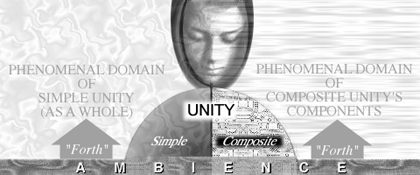
Note that this “autopoietic space” is not isomorphic with the general physical space which is the context for realization of the composite unity . Perhaps the best interpretation is to consider an autopoietic space to be analogous to a state space (a depictive construct for a system’s attributes). Maturana and Varela (1980, pp. 90 ff.) ascribe three dimensions to the autopoietic space, corresponding to the three classes of relations of production.
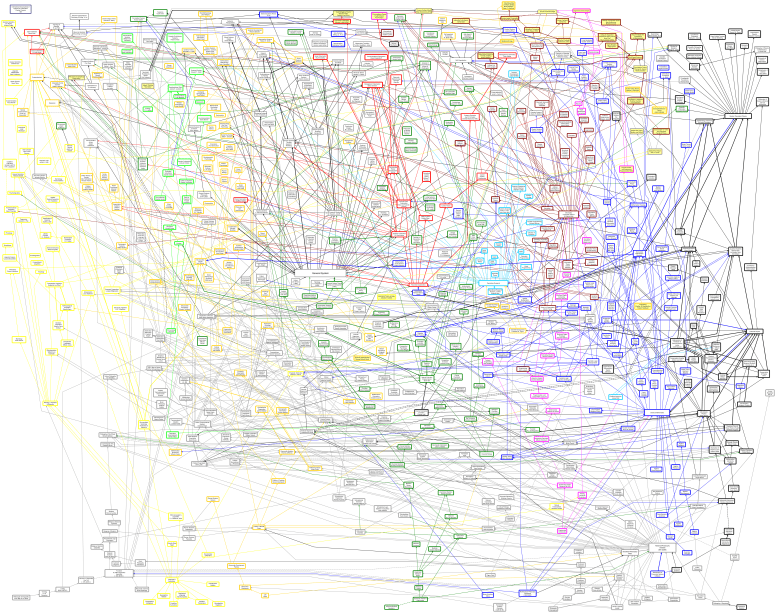
In terms of systems thinking, an extensive map of related work and their influences is presented by the International Institute for General Systems Studies (IIGSS, 2001). This map was originated by E. Schwarz in 1996. It includes the influences of researchers in the domains of mathematics, physics, computer science, engineering, cybernetics, systemics, biology, ecology, sociology and philosophy fromancient times to the present.
With the permission of Jeffrey Yi-Lin Forrest (director of IIGSS), we update the map and add recent work in the field of cybernetics, systemics and coordination. Because the latest source files of that map are missing, we completely redraw it. We choose graphml, an open source format for graph design.
Legend of Map
The map encompasses different nodes and edges. The nodes denote topics, such as scientific work or research areas. Major influences between the topics are illustrated by directed edges. The map uses a color-code to show the major scientific realm of nodes and edges:
white: general system
red: cybernetics
black: physical sciences
blue: mathematics
dark red: computers & informatics
green: biology & medicine
yellow: symbolic systems
orange: social systems
light green: ecology
gray: philosophy
cyan: systems analysis
purple: engineering
History
Following list illustrates the origin and updates from the map.
Originated in 1996 by Dr. Eric Schwarz, Neuchâtel, Switzerland.
Extended in 1998, including items from the “The Story of Philosophy” by Will Durant (1933).
Elaborated in 2000-2001 from many sources for the International Institute for General Systems Studies.
Extended in 2016 by Benjamin Hadorn, Fribourg, Switzerland.
Your contribution: Feel free to extend and correct the graph. Please send an updated version to us in order to keep a current version online.
Thanks.
The spread of traffic jams in urban networks has long been viewed as a complex spatio-temporal phenomenon that often requires computationally intensive microscopic models for analysis purposes. In this study, we present a framework to describe the dynamics of congestion propagation and dissipation of traffic in cities using a simple contagion process, inspired by those used to model infectious disease spread in a population. We introduce two novel macroscopic characteristics of network traffic, namely congestion propagation rate b{eta} and congestion dissipation rate {mu}. We describe the dynamics of congestion propagation and dissipation using these new parameters, b{eta}, and {mu}, embedded within a system of ordinary differential equations, analogous to the well-known Susceptible-Infected-Recovered (SIR) model. The proposed contagion-based dynamics are verified through an empirical multi-city analysis, and can be used to monitor, predict and control the fraction of congested links in the network over time.
The concept of the regulation of the internal environment was described by French physiologist Claude Bernard in 1865, and the word homeostasis was coined by Walter Bradford Cannon in 1926.[5][6] In 1932, Joseph Barcroft a British physiologist, was the first to say that higher brain function required the most stable internal environment. Thus, to Barcroft homeostasis was not only organized by the brain—homeostasis served the brain.[7] Homeostasis is an almost exclusively biological term, referring to the concepts described by Bernard and Cannon, concerning the constancy of the internal environment in which the cells of the body live and survive.[5][6][8] The term cybernetics is applied to technological control systems such as thermostats, which function as homeostatic mechanisms, but is often defined much more broadly than the biological term of homeostasis.[4][9][10][11]
Claude Bernard, The “Milieu Intérieur”, and Regulatory Physiology
Frederic L. Holmes
History and Philosophy of the Life Sciences
Vol. 8, No. 1 (1986), pp. 3-25
Abstract
Claude Bernard’s idea of the ‘milieu intérieur’ has been incorporated into modern physiology as a fundamental unifying concept. Bernard developed his conception, however, with a framework of nineteenth century concerns that differ in important ways from those of the present. This article summarizes the origins of Bernard’s idea, the contemporary issues in physiology to which it was a response, and the gradual evolution of the idea in his thought up until the end of his career. Only in the late stages of development did Bernard make regulatory mechanisms central to the idea of the internal environment, even though he had himself much earlier made important discoveries concerning specific physiological regulatory systems. The paper discusses Bernard’s views on physiological regulation, comparing them to the views of other pioneers in this field particularly those of Carl Bergmann.
Research review From Claude Bernard to Walter Cannon. Emergence of the concept of homeostasis
Steven J. Cooper
Roots of current conceptions of the regulation of states of the body through negative feedback mechanisms are traced back to Bernard’s ideas on active stabilisation of bodily states against disturbances from the outside, revived by Henderson and Haldane, and crystallised in Cannon’s concept of homeostasis.
2008
A. Querido and J. van Gijn ‘The Wisdom of the Body’: the Usefulness of Systems Thinking for Medicine
Abstract
An attempt is made to evaluate the application of system thinking to medical
problems. Two examples clarify the difference between the atomistic
approach and considering the organism as a whoIe. After elucidation of the
roots of system thinking – especially in connection with natural systems –
some consequences of the integrative approach for both the theory and the
practice of medicine are discussed, as weIl as its significance for medical
education.
Homeostasis is a central pillar of modern Physiology. The term homeostasis was invented by Walter Bradford Cannon in an attempt to extend and codify the principle of ‘milieu intérieur,’ or a constant interior bodily environment, that had previously been postulated by Claude Bernard. Clearly, ‘milieu intérieur’ and homeostasis have served us well for over a century. Nevertheless, research on signal transduction systems that regulate gene expression, or that cause biochemical alterations to existing enzymes, in response to external and internal stimuli makes it clear that biological systems are continuously making short-term adaptations both to set-points, and to the range of ‘normal’ capacity. These transient adaptations typically occur in response to relatively mild changes in conditions, to programs of exercise training, or to sub-toxic, non-damaging levels of chemical agents; thus the terms hormesis, heterostasis, and allostasis are not accurate descriptors. Therefore, an operational adjustment to our understanding of homeostasis suggests that the modified term, Adaptive Homeostasis may be useful especially in studies of stress, toxicology, disease, and aging. Adaptive Homeostasis may be defined as follows: ‘The transient expansion or contraction of the homeostatic range in response to exposure to sub-toxic, non-damaging, signaling molecules or events, or the removal or cessation of such molecules or events.”
Homeostasis is a core concept necessary for understanding the many regulatory mechanisms in physiology. Claude Bernard originally proposed the concept of the constancy of the “milieu interieur,” but his discussion was rather abstract. Walter Cannon introduced the term “homeostasis” and expanded Bernard’s notion of “constancy” of the internal environment in an explicit and concrete way. In the 1960s, homeostatic regulatory mechanisms in physiology began to be described as discrete processes following the application of engineering control system analysis to physiological systems. Unfortunately, many undergraduate texts continue to highlight abstract aspects of the concept rather than emphasizing a general model that can be specifically and comprehensively applied to all homeostatic mechanisms. As a result, students and instructors alike often fail to develop a clear, concise model with which to think about such systems. In this article, we present a standard model for homeostatic mechanisms to be used at the undergraduate level. We discuss common sources of confusion (“sticky points”) that arise from inconsistencies in vocabulary and illustrations found in popular undergraduate texts. Finally, we propose a simplified model and vocabulary set for helping undergraduate students build effective mental models of homeostatic regulation in physiological systems.
in 2007, a group of 21 biologists from a wide range of disciplines agreed that “homeostasis” was one of eight core concepts in biology (14). Two years later, the American Association of Medical Colleges and Howard Hughes Medical Institute in its report (1) on the scientific foundations for future physicians similarly identified the ability to apply knowledge about “homeostasis” as one of the core competencies (competency M1).
From our perspective as physiologists, it is clear that homeostasis is a core concept of our discipline. When we asked physiology instructors from a broad range of educational institutions what they thought the “big ideas” (concepts) of physiology were, we found that they too identified “homeostasis” and “cell membranes” as the two most important big ideas in physiology (15). In a subsequent survey (16), physiology instructors ranked homeostasis as one of the core concepts critical to understanding physiology.
If, as these surveys indicate, the concept of homeostasis is central to understanding physiological mechanisms, one would expect that instructors and textbooks would present a consistent model of the concept. However, an examination of 11 commonly used undergraduate physiology and biology textbooks revealed that this is not necessarily the case (17).
Thanks for curating and presenting this. I have been exploring, as a practitioner with a slight romantic yen for academia, ‘systems thinking’ for some time. In that universe, like Terry Pritchett tree frog, the moment you think you have got it sussed, you see a new ring of leaf-edges on the horizon. This has now opened up huge horizons for me, and as a meta model for meta cognition, explaining for example why consultants shouldn’t codify method (and, perhaps, why method /can’t/ be codified). As a teaching tool I think it could be one of the best.
It was fun and slightly punctured my bubble to read some of the comments, with the technical discussions over the rule base for the game and the possibilities of human-created non-human ‘intelligence’. I think, though worthy and meaningful, they miss the point. The point, for me, is that the rules are contestable. This post is like the inflection point between the early Wittgenstein (‘the world is everything that is the case’ and the bit about the ladder we climb and pull up after ourselves, and ‘whereof we cannot speak, thereof we must pass over in silence – the logical absolutist sucked into dualism by the mystical) and latter Wittgenstein – word games and language acts (basically a meaningful reassertion of ‘it’s tortoises all the way down). Cool.
Thank you, glad you liked it! I expect to write much more about meta-systematic cognition in coming months. If you haven’t already seen it, this post is an abstract overview, and most of the other recent posts in the metablog are also relevant.
I didn’t mention in this post that I am drawing heavily on Robert Kegan’s adult developmental theory, which makes meta-systematicity “stage 5” of cognitive development.
Kegan was an academic experimental psychologist at Harvard, but for the past 20 years seems to have put most of his energy into management consulting for executive development. I know little about that work (although I intend to learn more soon). You might want to look into it.
Right. This is a key to “stage 5” in Kegan’s scheme. Everything in reality is both nebulous (vague, ambiguous, constantly-changing) and patterned. Systems and methods rely on patterns, and tend to break down in the face of nebulosity. Skill in working with nebulosity is meta-systematic “fluidity.”
the inflection point between the early and later Wittgenstein
Right, exactly. Wittgenstein was one of the first people to begin to understand these issues (in Philosophical Investigations). Heidegger did so also, a bit earlier, and perhaps in greater depth, although considerably less clearly.
Snakes all the Way Down: Varela’s Calculus for Self-Reference and the
Praxis of Paradise
André Reichel*
European Center for Sustainability Research, Zeppelin University, Friedrichshafen, Germany
This contribution seeks to commemorate Francisco Varela’s formal conceptions of self-reference, providing an overview of his writings while shedding some light in the praxis of self-reference, from where a future research agenda can be derived. The architecture of Varela’s thinking, determined by the interrelated notions of autopoiesis, autonomy, closure and self-reference, was examined. The emphasis was on the development and expansions of his calculus for self-reference from George Spencer Brown’s Laws of Form. After dealing with some of the criticism launched at both works, an appraisal of the praxis of self-reference of Varela’s thinking in action was given. The outlook rounds up this contribution, shedding some light on a possible future research agenda for the formalization of theory and praxis of self-reference.
Keywords Francisco Varela; self-reference; Laws of Form; closure; autonomy
“If everybody would agree that their current
reality is a reality, and that what we essentially
share is our capacity for constructing a reality,
then perhaps we could agree on a metaagreement for computing a reality that would
mean survival and dignity for everybody on
the planet, rather than each group being sold
on a particular way of doing things. Thus,
self-reference is, for me, the nerve of this logic
of paradise . . .”
Humans communicate using systems of interconnected stimuli or concepts — from language and music to literature and science — yet it remains unclear how, if at all, the structure of these networks supports the communication of information. Although information theory provides tools to quantify the information produced by a system, traditional metrics do not account for the inefficient and biased ways that humans process this information. Here we develop an analytical framework to study the information generated by a system as perceived by a human observer. We demonstrate experimentally that this perceived information depends critically on a system’s network topology. Applying our framework to several real networks, we find that they communicate a large amount of information (having high entropy) and do so efficiently (maintaining low divergence from human expectations). Moreover, we show that such efficient communication arises in networks that are simultaneously heterogeneous, with high-degree hubs, and clustered, with…
The Basis for the Viable System Model / Stafford Beer // Javier Livas
Stafford Beer explains the basic thinking behind the creation of the Viable System Model. The stuff of management is complexity and variety is the scientific name used to quantify complexity. Amplifiers and filters allow managers to exercise control over the process and then over the environment. Beer evokes Hegel’s thinking and the cybernetic paradigm which were mentioned in the first part of the conference also on YOUTUBE.
It is said that the Macy Conferences were the most important meetings of minds for the purpose of understanding control of human behavior. They are also considered as the breeding ground for Cybernetics and breakthroughs in Systems Theory. In essence, they brought “systems thinking” to the awareness of a cross-disciplinary group of intellectuals.
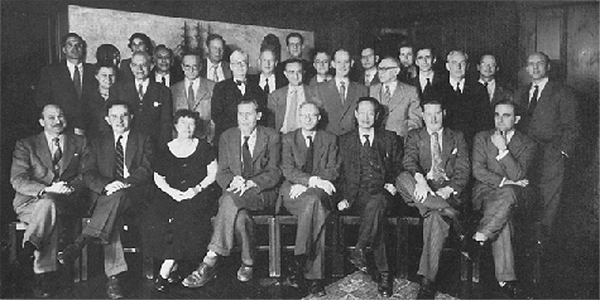
The Macy Conferences were ten meetings of scholars from different academic disciplines held in New York between 1946 and 1953. They were initiated and organised by Warren McCullochand the Josiah Macy, Jr. Foundation. The main purpose of these meetings was to set the foundations for a general science of the workings of the human mind.
The first conference, which was entitled “Feedback Mechanisms and Circular Causal Systems in Biological and Social Systems” was attended by an unprecedented network of great minds at the time:
William Ross Ashby; psychiatrist and a pioneer in cybernetics
Gregory Bateson; anthropologist, social scientist, linguist, visual anthropologist, semiotician and cyberneticist
Julian Bigelow; pioneering computer engineer
Heinz von Foerster; biophysicist, scientist combining physics and philosophy and architect of cybernetics
Lawrence K. Frank; social scientist
Ralph W. Gerard; neurophysiologist and behavioral scientist known for his work on the nervous system, nerve metabolism, psychopharmacology, and biological basis of schizophrenia
Molly Harrower; pioneering clinical psychologist
Lawrence Kubie; psychatrist
Paul Lazarsfeld; sociologist and founder of Columbia University’s Bureau for Applied Social Research
Kurt Lewin; psychologist, often regarded as the founder of social psychology
Warren McCulloch (chair); psychatrist, neurophysiologist and cybernetician
Margaret Mead; cultural anthropologist
John von Neumann; one of the foremost mathematicians of the 20th century
Walter Pitts; logician and co-author of the paper that founded neural networks
Arturo Rosenblueth; researcher, physician, physiologist and a pioneer of cybernetics
Leonard J. Savage; mathematician and statistician
Norbert Wiener; mathematician and founder of cybernetics
An incredible collection of guests attended the Cybernetics Group sessions during their seven years of existence. Among them were Max Horkheimer, the head of the Frankfurt School, and Claude Shannon, “the father of information theory”.
The foundation for the conferences was laid in May 1942, when the key participants met to exchange ideas, which created the enthusiasm and motivation to hold the Macy Conferences a few years later after the war. Attendance for the initial small meeting was by invitation only, and the two topics on the agenda were hypnotism and conditioned reflex. As soon as the war ended, Bateson contacted Fremont-Smith, pushing for some sort of conference to follow up on the concepts from the 1942 meeting.
Unfortunately, there is a lack of comprehensive documentation on the Macy Conferences. Part of this derives from the fact that the first five conferences were never formally documented with published proceedings.
Follow the links below to find out more in-depth information about the Macy Conferences (which also served as sources for this blogpost):
The purpose of this research is to explore the principles and concepts of systems theory in pursuit of a collection of complex systems archetypes that can be used for system exploration and diagnostics. The study begins with an examination of the archetypes and classification systems that already exist in the domain of systems theory. This review includes a critique of their purpose, structure, and general applicability. The research then develops and employs a new approach to grounded theory, using a visual coding model to explore the origins, relationships, and meanings of the principles of systems theory. The goal of the visual grounded theory approach is to identity underlying, recurrent imagery in the systems literature that will form the basis for the archetypes.
Using coding models derived from the literature, the study then examines the interrelationships between system principles. These relationships are used to clearly define the environment where the archetypes are found in terms of energy, entropy and time. A collection of complex system archetypes is then derived which are firmly rooted in the literature, as well as being demonstrably manifested in the real world. The definitions of the emerging complex systems archetypes are consistent with the environmental definition and are governed by the system’s behavior related to energy collection, entropy displacement, and the pursuit of viability.
Once the archetypes have been identified, this study examines the similarities and differences that distinguish them. The individual system principles that either define or differentiate each of the archetypes are described, and real-world manifestations of the archetypes are discussed. The collection of archetypes is then examined as a continuum, where they are related to one another in terms of energy use, entropy accumulation, self-modification and external-modification.
To illustrate the applicability of these archetypes, a case study is undertaken which examines a medium-sized organization with multiple departments in an industrial setting. The individual departments are discussed in detail, and their archetypical forms are identified and described. Finally, the study examines future applications for the archetypes and other research that might enhance their utility for complex systems governance.
DOI 10.25777/6xmx-r674
Recommended Citation
Akers, Walter L.. “An Approach for the Development of Complex Systems Archetypes” (2015). Doctor of Philosophy (PhD), dissertation, Engineering Management, Old Dominion University, DOI: 10.25777/6xmx-r674
https://digitalcommons.odu.edu/emse_etds/18
The motivation for this multi-part series is solely my observation that much of the writing on complexity theory seems to have arbitrarily ignored the vast systems theory literature. I don’t know whether this omission is deliberate (i.e., motivated by the political need to differentiate and promote one set of topical boundaries from another; a situation unfortunately driven by a reductionist funding process) or simply the result of ignorance. Indeed, Phelan (1999) readily admits that he was “both surprised and embarrassed to find such an extensive body of literature [referring to systems theory] virtually unacknowledged in the complexity literature.” I am going to assume the best of the complexity community and suggest that the reason systems theory seems to have been forgotten is ignorance, and I hope this, and subsequent, articles will familiarize complexity thinkers with some aspects of systems theory; enough to demonstrate a legitimate need to pay more attention to this particular community and its associated body of literature. The upcoming 11th Annual ANZSYS Conference/Managing the Complex V Systems Thinking and Complexity Science: Insights for Action (a calling notice for which can be found in the “Event Notices” section of this issue) is a deliberate attempt to forge a more open and collaborative relationship between systems and complexity theorists.
There are undoubtedly differences between the two communities, some of which are analyzed by Phelan (1999). Six years on from Phelan’s article, I find that some of the differences he discusses have dissolved somewhat, if not entirely. For example, he proposes that systems theory is preoccupied with “problem solving” or confirmatory analysis and has a critical interpretivist bent to it, whereas complexity theory is exploratory and positivist. Given the explosion in the management science literature concerning the application of complexity to organizational management I would argue that the complexity community as a whole is rather more inclined to confirmatory analysis than it might have been in 1999. I think that part of Phelan’s assessment that complexity theory is positivist comes from his characterization of complexity as a preoccupation with agent-based modelling. Again, this may well have been an accurate assessment in 1999, but I find the assessment a little too forced for 2005. See for example Cilliers (1998) and Richardson (2004a) for views of complexity that explore the limitations of a positivist-only view of complexity. Also, refer to Goldstein’s introduction “Why complexity and epistemology?” in this issue for reasons as to why a purely positivistic characterization of complexity theory is no longer appropriate. I think it is still valid to suggest that there are philosophical and methodological differences between the systems and complexity communities, although, if one looks hard enough there is sufficient diversity within the communities themselves to undermine such simplistic characterizations in the first place.
Of course there are differences between systems theory and complexity theory, but there are also many similarities. For example, most, if not all, the principles/laws of systems theory are valid for complex systems. Given the seeming lack of communication between complexity and systems theorists this series of articles will focus on the overlaps. The first few articles will review some general systems laws and principles in terms of complexity. The source of the laws and principles of general systems theory are taken solely from Skyttner’s General Systems Theory: Ideas and Applications, which was recently republished (Skyttner, 2001).
The second law of thermodynamics
The second law of thermodynamics is probably one of the most important scientific laws of modern times. The ‘2nd Law’ was formulated after nineteenth century engineers noticed that heat cannot pass from a colder body to a warmer body by itself. According to philosopher of science Thomas Kuhn (1978: 13), the 2nd Law was first put into words by two scientists, Rudolph Clausius and William Thomson (Lord Kelvin), using different examples, in 1850-51. Physicist Richard P. Feynman (Feynman, et al., 1963: section 44-3), however, argued that the French physicist Sadi Carnot discovered the 2nd Law 25 years earlier – which would have been before the 1st Law (conservation of energy) was discovered!
Simply stated the 2nd Law says that in any closed system the amount of order can never increase, only decrease over time. Another way of saying this is that entropy always increases. The reason this law is an important one to discuss in terms of complexity theory is that it is often suggested that life itself contradicts this law. In more familiar terms – to complexologists at least – the phenomena of self-organization, in which order supposedly emerges from disorder, completely goes against the 2nd Law.
There are several reasons why this assertion is incorrect. Firstly, the 2nd Law is concerned with closed systems and nearly all the systems of interest to complexity thinkers are open; so why would we expect the 2nd Law to apply? What if we consider the only completely closed system that we know of: the Universe? Even if it is True that the entropy of the Universe always increases this still does not deny the possibility of local entropy decrease. To understand why this is the case we need to understand the nature of the 2nd Law itself (and all scientific laws for that matter). The 2nd Law is a statistical law. This means it should really be read as on average, or on the whole, the entropy of closed systems will always increase. The measure of disorder, or entropy, is a macroscopic measure and so is the average over the whole system. As such there can be localized regions within the system itself in which order is created, or entropy decreases, even while the overall average is increasing. Another way to say this is that microlevel contradictions to macrolevel laws do not necessarily invalidate macrolevel laws. The 2nd Law and the self-organizing systems principle (which will be covered in a later installment) operate in different contexts and have different jurisdictions.
Despite the shortcomings of applying the 2nd Law to complex systems, there are situations in which it is still perfectly valid. Sub-domains, or subsystems, can emerge locally within a complex system that are so stable that, for a period, they behave as if they were closed. Such domains are critically organized, and as such that they could qualitatively evolve rather rapidly. However, during their stable periods it is quite possible that the 2nd Law is valid, even if only temporarily and locally.
The complementary law
The complementary law (Weinberg, 1975) suggests that any two different perspectives (or models) about a system will reveal truths regarding that system that are neither entirely independent nor entirely compatible. More recently, this has been stated as: a complex system is a system that has two or more non-overlapping descriptions (Cohen, 2002). I would go as far as to include “potentially contradictory” suggesting that for complex systems (by which I really mean any part of reality I care to examine) there exists an infinitude of equally valid, non-overlapping, potentially contradictory descriptions. Maxwell (2000) in his analysis of a new conception of science asserts that:
“Any scientific theory, however well it has been verified empirically, will always have infinitely many rival theories that fit the available evidence just as well but that make different predictions, in an arbitrary way, for yet unobserved phenomena.” (Maxwell, 2000).
In Richardson (2003) I explore exactly this line of thinking in my critique of bottom-up computer simulations.
The complementary law also underpins calls in some complexity literature for philosophical/epistemological/methodological/theoretical pluralism in complexity thinking. What is interesting here is how the same (or at least very similar) laws/principles have been found despite the quite different routes that have been taken – a process systems theorists call equifinality. This is true for many of the systems laws I will discuss here and in future installments.
System holism principle
The system holism principle is probably the most well known principle in both systems and complexity communities, and is likely the only one widely known by ‘outsiders’. It has it roots in the time of Aristotle and simply stated it says “the whole is greater than the sum of its parts”. More formally: “a system has holistic properties not manifested by any of its parts and their interactions. The parts have properties not manifested by the system as a whole” (Skyttner, 2001: 92). This is one of most interesting aspects of complex systems: that microlevel behavior can lead to macrolevel behavior that cannot be easily (if at all) derived from the microlevel from which it emerged. In terms of complexity language we might re-label the system holism principle as the principle of vertical emergence. (N.B. Sulis, in this issue, differentiates between vertical and horizontal emergence).
The wording: “the whole is greater than the sum of its parts” is problematic to say the least. To begin with the use of the term “greater than” would suggest that there is some common measure to compare the whole and its parts and that by this measure the whole is greater than the sum of those parts. I think this wrong. An important property of emergent wholes is that they cannot be reduced to their parts (a reversal of the system holism principle), i.e., wholes are qualitatively different from their parts (other than they can be recognized as coherent objects) – they require a different language to discuss them. So, in this sense, wholes and their component parts are incommensurable – they cannot be meaningfully compared – they are different! Of course, if mathematicians do find a way to bootstrap (without approximation) from micro to macro – a step that is currently regarded by many as intractable – then maybe a common (commensurable) measure can be applied. What we really should say is “the whole is different from the sum of its parts and their interactions”.
The issue of commensurability is an interesting one and crops up time and time again in complexity thinking. Indeed, it was the focus of a recent ISCE conference held in Washington (September 18-19, 2004). One way to make the incommensurable commensurable is to abstract/transform the incommensurable entities in a way that allow comparison. As long as we remember that it is the transformed entities that are being compared and not the entities themselves (as abstraction/transformation is rarely a conservative process) then useful comparisons can indeed be made.
One last issue with the system holism principle: the expression “the whole is greater than the sum of its parts” implies that, although the problem of intractability prevents us from deriving wholes from parts, in principle the whole does emerge from those parts (and their interactions) only, i.e., the parts are enough to account for the whole even if we aren’t able to do the bootstrapping itself. In Richardson (2004b) the problematic nature of recognizing emergent products is given as a reason to undermine this possibility. In that paper, it is argued that the recognition of wholes as wholes is the result of applying a particular filter. Filters remove information and so the resulting wholes are what is left after much of reality has been filtered out – oddly enough, what remains after the filtering process is what is often referred to as ‘reality’. So, molecules do not emerge from atoms, as atoms are only an idealized representation of that level of reality (a level which is determined by the filter applied) and as idealizations are not sufficient in themselves to account for the properties of molecules (which represent another idealization). An implication of this is that there exists chemistry that cannot be explained in terms of physics – this upsets of whole unification-of-the-sciences programme. Only in idealized abstractions can we assume that the parts sufficiently account for the whole.
Darkness principle
In complexity thinking the darkness principle is covered by the concept of incompressibility. The darkness principle says that “no system can be known completely” (Skyttner, 2001: 93). The concept of incompressibility suggests that the best representation of a complex system is the system itself and that any representation other than the system itself will necessarily misrepresent certain aspects of the original system. This is a direct consequence of the nonlinearity inherent in complex systems. Except in very rare circumstances nonlinearity is irreducible (although localized linearization techniques, i.e., assuming linearity locally, do prove useful).
There is another source of ‘darkness’ in complexity theory as reported by Cilliers (1998: 4-5):
“Each element in the system is ignorant of the behavior of the system as a whole, it responds only to information that is available to it locally. This point is vitally important. If each element ‘knew’ what was happening to the system as a whole, all of the complexity would have to be present in that element.” (original emphasis).
So, there is no way a member of a complex system can ever know it completely – we will always be in the shadow of the whole.
Lastly there is the obvious point that all complex systems are by definition open and so it is nigh on impossible to know how the system’s environment will affect the system itself – we simply cannot model the world, the Universe and everything.
Eighty-twenty principle
The eighty-twenty principle has been used in the past to justify the removal of a large chunk of an organization’s resources, principally its workforce. According to this principle, in any large, complex system, eighty per cent of the output will be produced by only twenty per cent of the system. Recent studies in Boolean networks, a particularly simple form of complex system, have shown that not all members of the network contribute to the function of the network as a whole. The function of a particular Boolean network is related to the structure of its phase space, particularly the number of attractors in phase space. For example, if a Boolean network is used to represent a particular genetic regulatory network (as in the work of Kauffman, 1993) then each attractor in phase space supposedly represents a particular cell type that is coded into that particular genetic network. It has been noticed that the key to the stability of these networks is the emergence of stable nodes, i.e., nodes whose state quickly freezes. These nodes, as well as others called leaf nodes (nodes that do not input into any other nodes), contribute nothing to the asymptotic (long-term) behavior of these networks. What this means is that only a proportion of a dynamical network’s nodes contribute to the long-term behavior of the network. We can actually remove these stable/frozen nodes (and leaf nodes) from the description of the network without changing the number and period of attractors in phase space, i.e., the network’s function. Figure 1 illustrates this. The network in Figure 1b is the reduced version of the network depicted in Figure 1a. I won’t go into technical detail here about the construction of Boolean networks, please feel free to contact me directly for further details. Suffice to say, by the way I have defined functionality, the two networks shown in Figure 1 are functionally equivalent. It seems that not all nodes are relevant. But how many nodes are irrelevant?
Figure 2 shows the frequency of different sizes of reduced network. The experiment performed was to construct a large number (100,000) of random Boolean networks containing only ten nodes, each having a random rule (or transition function) associated with it, and two randomly selected inputs. Each network is then reduced so that the resulting network only contains relevant nodes. Networks of different sizes resulted and their proportion to the total number of networks tested was plotted. If we take an average of all the networks we find that typically only 60% of all nodes are relevant. This would suggest a one hundred – sixty principle (as 100% of functionality is provided by 60% of the network’s nodes), but it should be noted that this ratio is not fixed for networks of all types – it is not universal. This is clearly quantitatively different from the eighty-twenty ratio but still implies that a good proportion of nodes are irrelevant on average. What do these so-called irrelevant nodes contribute? Can we really just remove them with no detrimental consequences? A recent study by Bilke and Sjunnesson (2001) showed that these supposedly irrelevant nodes do indeed play an important role.
One of the important features of Boolean networks is their intrinsic stability, i.e., if the state of one node is changed/perturbed it is unlikely that the network trajectory will be pushed into a different attractor basin. Bilke and Sjunnesson (2001) showed that the reason for this is the existence of the, what we have called thus far, irrelevant nodes. These ‘frozen’ nodes form a stable core through which the perturbed signal is dissipated, and therefore has no long term impact on the network’s dynamical behavior. In networks for which all the frozen nodes have been removed, and only relevant nodes remain, it was found that they
Fig. 1: An example of (a) a Boolean network, and (b) its reduced form
The nodes which are made up of two discs feedback onto themselves. The connectivity and transition function lists at the side of each network representation are included for those readers familiar with Boolean networks. The graphics below each network representation show the attractor basins for each network. The phase space of both networks contain two period-4 attractors, although it is clear that the basin sizes (i.e., the number of states they each contain) are quite different.
were very unstable indeed – the slightest perturbation would nudge them into a different basin of attraction, i.e., a small nudge was sufficient to qualitatively change the network’s behavior. As an example, the stability (or robustness) of the network in Figure 1a is 0.689 whereas the stability of its reduced, although functionally equivalent network, is 0.619 (N.B. The robustness measure is an average probability measure indicating the chances that the system will move into a different attractor basin if a single bit of one node, selected at random, is perturbed. The measure ranges from 0 to 1 where 1 represents the most stable. The difference in robustness for the example given is not that great, but the difference does tend to grow with network size – we have considered networks containing only ten nodes here).
Prigogine said that self-organization requires a container (self-contained-organization). The stable nodes function as the environmental equivalent of a container, and indeed one of the complex systems notions not found in systems theory is that environmental embodiments of weak signals might matter.
Fig. 2: The relative frequency distribution of reduced network sizes
So it seems that, although many nodes do not contribute to the long term behavior of a particular network, these same nodes play a central role as far as network stability is concerned. Any management team tempted to remove 80% of their organization in the hope of still achieving 80% of their yearly profits, would find that they had created an organization that had no protection whatsoever to even the smallest perturbation from its environment – it would literally be impossible to have a stable business.
Summing up
As mentioned in the opening paragraphs of this article, my aim in writing this series is to encourage a degree of awareness with general systems ideas that is currently not exhibited in the ‘official’ complexity literature. In each installment I will explore a selection of general systems laws and principles in terms of complexity science. When this task has been completed we might begin to develop a clearer understanding of the deep connections between systems theory and complexity theory and then make a concerted effort to build more bridges between the two supporting communities – there are differences but not as many as we might think.
Notes
The website for the recent ISCE Event Inquiries, Indices and Incommensurabilities, held in Washington DC last September (2004) is: http://isce.edu/ISCE_ Group_Site/web-content/ISCE%2oEvents/Washington_2004.html. Selected papers from this event will soon appear in a future issue of E:CO.
References
Bilke, S. and Sjunnesson, F. (2001). “Stability of the Kauffman model,” Physical Review E, 65: 016129-1.
Cilliers, P. (1998). Complexity andpostmodernism: Understand complex systems, NY: Routledge.
Cohen, J. (2002). Posting to the Complex-M listserv, 2nd September.
Feynman, R. P, Leighton, R. B. and Sands, M. (1963), The Feynman lectures on physics: Volume 1, Reading, MA: Addison-Wesley Publishing Company.
Kauffman, S. (1993). The origins of order: Self-organization and selection in evolution, New York, NY: Oxford University Press.
Kuhn, T. (1978), Black-body theory and the quantum discontinuity, 1894-1912, The University of Chicago Press.
Maxwell, N. (2000). “A new conception of science,” Physics World, August: 17-18.
Phelan, S. E. (1999). “A note on the correspondence between complexity and systems theory,” Systemic Practice and Action Research, 12(3): 237-246.
Richardson, K. A. (2003). “On the limits of bottom-up computer simulation: Towards a nonlinear modeling culture,” Proceedings of the 36th Hawaiian international conference on system sciences, Jan 7th-10th, IEEE: California.
Richardson, K. A. (2004a). “The problematization of existence: Towards a philosophy of complexity,” Nonlinear Dynamics, Psychology, and Life Science, 8(1): 17-40.
Richardson, K. A. (2004b). “On the relativity of recognizing the products of emergence and the nature of physical hierarchy,” Proceedings of the 2nd Biennial International Seminar on the Philosophical, Epistemological and Methodological Implications of Complexity Theory, January 7th-10th, Havana International Conference Center, Cuba.
Skyttner, L. (2001). General systems theory: Ideas and applications, NJ: World Scientific.
Weinberg, G. (1975). An Introduction to general systems thinking, New York, NY: John Wiley.










 1
1 







Thanks for curating and presenting this. I have been exploring, as a practitioner with a slight romantic yen for academia, ‘systems thinking’ for some time. In that universe, like Terry Pritchett tree frog, the moment you think you have got it sussed, you see a new ring of leaf-edges on the horizon. This has now opened up huge horizons for me, and as a meta model for meta cognition, explaining for example why consultants shouldn’t codify method (and, perhaps, why method /can’t/ be codified). As a teaching tool I think it could be one of the best.
It was fun and slightly punctured my bubble to read some of the comments, with the technical discussions over the rule base for the game and the possibilities of human-created non-human ‘intelligence’. I think, though worthy and meaningful, they miss the point. The point, for me, is that the rules are contestable. This post is like the inflection point between the early Wittgenstein (‘the world is everything that is the case’ and the bit about the ladder we climb and pull up after ourselves, and ‘whereof we cannot speak, thereof we must pass over in silence – the logical absolutist sucked into dualism by the mystical) and latter Wittgenstein – word games and language acts (basically a meaningful reassertion of ‘it’s tortoises all the way down). Cool.