What have most system strategies been missing? An understanding of Networks of Networks and System Shifting Networks! This slide deck from my recent talk starts to integrate systems and network approaches to transformation. https://lnkd.in/e7mhJxVz
All creative commons so feel free to slice and dice for your needs.
Systems Research and Behavioral Science: Volume 42, Issue 1Pages: 1-259January/February 2025Previous IssueGO TO SECTIONExport Citation(s)ISSUE INFORMATIONFree AccessIssue InformationPages: 1-2 First Published: 26 February 2025AbstractPDFRequest permissionsEDITORIALFree to ReadFestschrift for Mike JacksonAshish Dwivedi, Gerald MidgleyPages: 3-10 First Published: 07 January 2025AbstractFull textPDFReferencesRequest permissionsINTERVIEWFree to ReadA Life of Systems Thinking: Michael C. Jackson in Conversation With Matt Lloyd and Rajneesh ChowdhuryMichael C. Jackson, Matt Lloyd, Rajneesh ChowdhuryPages: 11-22 First Published: 03 December 2024AbstractFull textPDFReferencesRequest permissionsRESEARCH ARTICLEOpen AccessAccommodation and critique: A necessary tensionAlistair J. Smith, Gerald MidgleyPages: 23-50 First Published: 25 November 2024AbstractFull textPDFReferencesRequest permissionsOpen AccessThe resonance of Mike Jackson’s work with the use of systems ideas in community operational researchRebecca J. M. Herron, Zoraida Mendiwelso-Bendek, David E. Salinas Navarro, Eliseo Vilalta-Perdomo, Miles W WeaverPages: 51-68 First Published: 22 December 2024AbstractFull textPDFReferencesRequest permissionsFree to ReadEmpowering Managers to Adopt Multimethodological Intervention Strategies to Address Complex Problematic SituationsJeffrey Scales, Karyne Ang, Shankar SankaranPages: 69-82 First Published: 26 November 2024AbstractFull textPDFReferencesRequest permissionsFree to ReadPragmatic ontology—Enhancing the philosophical foundation of critical systems thinking/practiceZhichang ZhuPages: 83-97 First Published: 28 October 2024AbstractFull textPDFReferencesRequest permissionsFree to ReadCreative-Becoming Holism: Reflections on and Development of Creative Holism in the Case of Science EducationChenjia Xu, Dongping FanPages: 98-110 First Published: 21 November 2024AbstractFull textPDFReferencesRequest permissionsFree to ReadThe Complementarity of Programme Logic and Critical Systems Heuristics: Critical Systems Practice for the Evaluation of Emergency Relief in AustraliaPatrick McKennaPages: 111-122 First Published: 04 December 2024AbstractFull textPDFReferencesRequest permissionsOpen AccessApplying critical systems thinking through phronetic pluralism: Learning from human learning systems and the adaptive learning pathwayHannah Hesselgreaves, Catherine Hobbs, Max French, Rob Wilson, Toby LowePages: 123-141 First Published: 26 November 2024AbstractFull textPDFReferencesRequest permissionsFree to ReadEnhancing collaborative advantage through critical systems thinking: An augmented viable system model intervention in a cross-sector partnership social policy contextAndrea Clark, John Brocklesby, Arun EliasPages: 142-156 First Published: 16 November 2024AbstractFull textPDFReferencesRequest permissionsOpen AccessRevisiting Critical Systems Thinking: Enhancing the Gaps Through Sustainability and Action MethodologiesMohammed Albakri, Trevor Wood-HarperPages: 157-170 First Published: 21 November 2024AbstractFull textPDFReferencesRequest permissionsFree to ReadRevisiting the Viable System Model as an emancipatory systems approachAngela EspinosaPages: 171-188 First Published: 25 November 2024AbstractFull textPDFReferencesRequest permissionsOpen AccessMode 2 critical systems practice for complex safety decisions: Reflections from New Zealand’s dairy industryDaniel Norris, Jeff Foote, Richard GreatbanksPages: 189-205 First Published: 11 October 2024AbstractFull textPDFReferencesRequest permissionsFree to ReadThe Utility of Critical Systems Practice: A Supply Chain Practitioner PerspectiveDaniell Wilden, John Hopkins, Ian SadlerPages: 206-218 First Published: 24 December 2024AbstractFull textPDFReferencesRequest permissionsFree to ReadTranscending Systems Thinking: Critical Systems Integration and What’s Love Got to Do With ItLouis KleinPages: 219-234 First Published: 03 December 2024AbstractFull textPDFReferencesRequest permissionsOpen AccessTowards a More Holistic and Pluralistic Critical Systems Thinking: The Dimension of ‘Hé’ (和)Wenxian Hetty SunPages: 235-241 First Published: 28 November 2024AbstractFull textPDFReferencesRequest permissionsOpen AccessTowards Transformative Supply Chain Research and Practice: A Critical Systems PerspectiveAmanda Gregory, Jonathan Atkins, Ashish DwivediPages: 242-259 First Published: 26 December 2024AbstractFull textPDFReferencesRequest permissions
Abstract: Since Cannon, inspired by Bernard’s discussion of the conditions required for free and independent life, introduced the term homeostasis, many have embraced it as the main theoretical principle guiding physiology and medicine. Nonetheless, critics have argued that homeostasis is too limiting and have advanced a variety of alternative concepts such as heterostasis, rheostasis, and allostasis. We argue that the critics target a much narrower understanding of homeostasis put forward by the cyberneticists and that Bernard and Cannon embraced a far broader understanding that can accommodate the alternatives advanced by the critics and provide an integrated theoretical framework for physiology.
NEW PAPER (2025), REDISCOVERING BERNARD AND CANNON: RESTORING THE BROADER VISION OF HOMEOSTASIS ECLIPSED BY THE CYBERNETICISTSPublished open-access in Philosophy of ScienceAbstract: Since Cannon, inspired by Bernard’s discussion of the conditions required for free and independent life, introduced the term homeostasis, many have embraced it as the main theoretical principle guiding physiology and medicine. Nonetheless, critics have argued that homeostasis is too limiting and have advanced a variety of alternative concepts such as heterostasis, rheostasis, and allostasis. We argue that the critics target a much narrower understanding of homeostasis put forward by the cyberneticists and that Bernard and Cannon embraced a far broader understanding that can accommodate the alternatives advanced by the critics and provide an integrated theoretical framework for physiology.
The way in which researchers conceptualise and thus define stress shapes the way in which they approach the task of mapping the brain’s stress control pathways. Unfortunately, much of the research currently being done on stress neurocircuitry is occurring within a poorly developed conceptual framework, a framework that limits the depth of the questions that our studies ask, and even our ability to fully appreciate and make use of the data that they yield. Consequently, any attempt to improve our conceptual framework merits close attention. In that regard it is notable that in recent years it has been argued that the concept of homeostasis should be supplemented by the concepts of allostasis (literally ‘stability through change’) and allostatic load (in effect, the cost of allostasis). One of the purported benefits of this change has been that it will clarify the concept of stress. A close review of the arguments leads us to conclude that the introduction of the concept of allostasis has largely occurred as a result of misunderstandings and misapprehensions concerning the concept of homeostasis. In terms of understanding how the organism operates, it is not clear that the concepts of ‘allostasis’ or ‘allostatic load’ offer us anything that was not already apparent, or at least readily derivable, from an accurate reading of the original concept of homeostasis. Not surprisingly then, these more recently proposed concepts also offer little help in clarifying our understanding of stress. Indeed, rather than clarifying the concept of stress, the primary effort appears to be directed at subsuming the concept of stress within the concept of allostasis, which has the inadvertent effect of collapsing the study of homeostatic responses and stress responses together. This seems to be out of step with the fact that there is now considerable evidence that the brain does indeed possess certain pathways that merit the title of ‘stress neurocircuitry’. The attempt to subsume the concept of stress within the concept of allostasis is also counter-productive in that it distracts stress researchers from the important task of developing conceptual frameworks that allow us to tackle fundamental issues such as how the organism differentiates stressful from non-stressful challenges.
Very honoured Mike asked me to write a foreword for his excellent book (and the breathtaking speed at which he published is also impressive) – my foreword is only a first iteration, but the book is the real deal – I highly recommend it.
This episode of Book Talks features Lynn Rasmussen, founder of The Maui Institue and author of “Seeing: A Field Guide to the Patterns and Processes of Nature, Culture, and Consciousness.” Lynn is a systems theorist and researcher with over 25 years of conversations and collaborations with cutting-edge systems scientists and thinkers. With roots in public health and community service, she applies her knowledge of systems to the environmental, cultural, and economic crises facing her island home. In “Seeing,” Lynn distills the work of hundreds of scientists, theorists, and systems thinkers to the essentials of systems science. She illustrates how nature-based patterns work in everyday life and helps readers to understand how nature’s complex systems work generally, and we can better organize ourselves. Learn more about the book: http://www.seeingfieldguide.com/ Learn more about the Maui Institute: http://www.mauiinstitute.org Book Talks with Colors of Influence focuses on fiction and nonfiction works highlighting issues of diverse identities, equity and inclusion, social justice, Indigenous ways of being, and decolonial approaches to the struggle for liberation. I talk to authors whose works contribute to a nuanced understanding of various cross-cultural contexts of our shared humanity and common dreams. The works featured in this web series reveal essential truths about the authors’ unique perspectives. Submit your book for a review or author interview https://forms.gle/ZrQf6CLQcroLiG6e8 Colors of Influence blog: https://colorsinfluence.blogspot.com Colors of Influence on Reedsy: https://reedsy.com/discovery/user/mai…
Colors of Influence Book Talks: Lynn Rasmussen, author of “Seeing: A Field Guide “Colors of Influence14 subscribersSubscribed1ShareDownloadClipSave19 views 17 Feb 2025This episode of Book Talks features Lynn Rasmussen, founder of The Maui Institue and author of “Seeing: A Field Guide to the Patterns and Processes of Nature, Culture, and Consciousness.” Lynn is a systems theorist and researcher with over 25 years of conversations and collaborations with cutting-edge systems scientists and thinkers. With roots in public health and community service, she applies her knowledge of systems to the environmental, cultural, and economic crises facing her island home.In “Seeing,” Lynn distills the work of hundreds of scientists, theorists, and systems thinkers to the essentials of systems science. She illustrates how nature-based patterns work in everyday life and helps readers to understand how nature’s complex systems work generally, and we can better organize ourselves. Learn more about the book: http://www.seeingfieldguide.com/ Learn more about the Maui Institute: http://www.mauiinstitute.org Book Talks with Colors of Influence focuses on fiction and nonfiction works highlighting issues of diverse identities, equity and inclusion, social justice, Indigenous ways of being, and decolonial approaches to the struggle for liberation. I talk to authors whose works contribute to a nuanced understanding of various cross-cultural contexts of our shared humanity and common dreams. The works featured in this web series reveal essential truths about the authors’ unique perspectives.Submit your book for a review or author interview https://forms.gle/ZrQf6CLQcroLiG6e8 Colors of Influence blog: https://colorsinfluence.blogspot.com Colors of Influence on Reedsy: https://reedsy.com/discovery/user/mai…
“What worries me about AI is that we’ve got this huge potential for summarizing information and expanding simple instruction sets but instead we’re going to use it to send more emails.”
Dr Claude Shannon is one of the most influential scientists you’ve likely never heard of whose work laid the foundations for the information age.
To explain the significance of Dr Shannon’s impact on modern computing, we’re joined by Jimmy Soni, author of “A Mind at Play: How Claude Shannon Invented the Information Age” and “The Founders: The Story of PayPal and the Entrepreneurs Who Shaped Silicon Valley”.
For events, please click on the flags or group titles below to go to the ones that interest you. Please remember that you can attend online events organised by any of the SCiO groups if they are held in a language you speak/understand (and you are a member if it is a member-only meeting). Further details of events may be available by clicking on the event titles below and you can also book each event directly from the Book now text
Please note that some groups post events and add details quite late, so it is always worth checking the website – also for changes to dates and times. Please click here to see all the events in a browser.
There are now thirteen courses live on our Learning Management System. For UK civil servants the courses will be available through the UK Government’s System Thinking Interest Group’s learning hub.
A series of presentations of general interest to Systems and Complexity in Organisation’s members and others.
SCiO organises Open Meetings to provide opportunities for practitioners to learn and develop new practice, to build relationships, networks hear about skills, tools, practice and experiences. This open meeting explores specific application of systems thinking practice methods and learning, with five sessions. The programme for the day is given on the website:
SCiO’s Development Event offer an opportunity to draw upon the collective expertise of SCiO members in a friendly and supportive atmosphere. By taking Development Events online, using the Zoom meeting platform, we aim to make them accessible to more SCiO members
Development Events are both for members who are just starting out on a journey to explore Systems Thinking approaches, and for those who have many years of exploration and practice.
Members only; FREE; Online event; English; BOOK NOW
SCIO-NL komt elke 1e of 2e vrijdag van de maand live bijeen, afwisselend in Vianen (Hagenweg 3c) of in Woerden (Pelmolenlaan 2). Er staan geen vaste onderwerpen op de agenda (daarvoor organiseren we specifieke andere meetings), maar de ervaring leert dat er altijd wel een interessant gesprek op gang komt over een systemisch onderwerp. Toegankelijk voor iedereen die de jaarlijkse fee voor de live-bijeenkomsten (€50,-) hiervoor betaald. En voor gasten. Neem contact op via ed@doitogether.nl als je interesse hebt, maar nog geen lid van de club bent
NL Members + guests; Free; Hagenweg 3c, Vianen, Netherlands; Dutch; BOOK NOW
SCIO-NL komt elke 1e of 2e vrijdag van de maand live bijeen, afwisselend in Vianen (Hagenweg 3c) of in Woerden (Pelmolenlaan 2). Er staan geen vaste onderwerpen op de agenda (daarvoor organiseren we specifieke andere meetings), maar de ervaring leert dat er altijd wel een interessant gesprek op gang komt over een systemisch onderwerp. Toegankelijk voor iedereen die de jaarlijkse fee voor de live-bijeenkomsten (€50,-) hiervoor betaald. En voor gasten. Neem contact op via ed@doitogether.nl als je interesse hebt, maar nog geen lid van de club bent.
NL Members + guests; Free; Pelmolenlaan 2, Woerden (At the Office) 5, Woerden, Netherlands; Dutch; BOOK NOW
De interactie met grote groepen (klanten, medewerkers, leveranciers, burgers …) is voor veel leidinggevenden een uitdaging. Hoe betrek je grote groepen in het oplossen van probleem én waarborg je dat ze eigenaarschap opnemen?
Dit is de vertrekvraag van Olaf Hermans. Hij ontwikkelde zijn inzichten aan Penn State University (US) waar hij doctoreerde op het thema meta-cognitie en wat klanten en werknemers rapporteren over wat ze echt hebben met merken en organisaties, en hoe ze zich bewust zijn van hun loyale bijdragen aan dat merk, die organisatie en die relatie….
Wie können Unternehmen über Nachhaltigkeit hinausgehen und aktiv zur Regeneration ökologischer, sozialer und wirtschaftlicher Systeme beitragen? Und worin liegt überhaupt der Unterschied zwischen Nachhaltigkeit und Regeneration? Dieser Vortrag beleuchtet Grundlagen, aber auch Hebel und Ansätze die Organisationen nutzen können, um diesen Wandel in ihren Strukturen und Prozessen zu verankern. Marcel Rößner ist ein selbstständiger Organisationsberater, der sich seit 2022 intensiv mit dem Thema regeneratives Wirtschaften beschäftigt. Mit seinem Blog regenerative-unternehmen.de, der 2023 online ging, bietet er eine fundierte Plattform zur Auseinandersetzung mit regenerativen Ansätzen in der Unternehmenspraxis……
All welcome; Kostenlos; Online event; German; BOOK NOW
SCiO Finlandin kirjakerho kokoontuu jälleen 23.4.2025 klo 17 alkaen. Tervetuloa mukaan!
Paikka: Aalto yliopiston kampus, Maarintie 8, Espoon Otaniemessä. Tavataan pääaulassa, josta siirrymme yhdessä huoneeseen 1593. Saavuthan ajoissa!
Käsiteltävä kirja: Patrick Hoverstadt: The Fractal Organization: Creating sustainable organizations with the Viable System Model. Tilaisuuden alustaa ja vetää Jani Mattsson…….
All welcome; Free; 8 Maarintie, 02150 Espoo, Finland; Finnish; BOOK NOW
As India is poised to become the third largest economy, there is a pressing need to look at the state of organisations and people within them. That this constitutes a critical enquiry is evidenced from the low percentage of organised sector workers in the country’s workforce, the dearth of industrial innovation, and other alarming socio-economic indicators. Social research in organisations has looked at the cultural intricacies within organisations, and the challenges hence produced. The differences between East and West is evident from such research, especially relating to organisational behaviour. This is particularly significant because entrepreneurs and the managerial elite are either educated in the West or based on Western paradigms imported by mainstream management education. In our own experience as change practitioners, we have witnessed how such socio-cultural phenomena, largely unacknowledged, impinge on organisational success and individual well-being. We have seen how they hamper knowledge creation, growth and innovation, and lead to stressful workplaces.
Critical studies that foreground decolonisation have called for the uncovering of indigenous knowledge. Western paradigms operate tacitly within organisations and are usually imposed from elite standpoints. While there may be disparate accounts of indigenous knowledge, a coherent perspective, let alone methodology, is largely missing. It is in such a context that we seek to explore a ‘critical organisational praxis’. Here, we invoke Freire’s ideas of dialogue and problematisation, and the principles of organisational cybernetics. We seek to develop a theory of critically intervening in organisations at all levels to improve dialogue, and for ways to enable an interplay between multiple epistemologies (Western and indigenous) that may exist in an organisation.
We envisage the scope of such a praxis to include theoretical research about the nature of the Indian organisation, and the development of methods of intervening at various levels. In this presentation, we put forth our experiences in trying to bring to life some of these ideas while examining the nature of our own work.
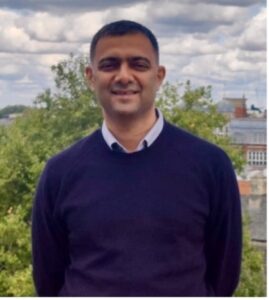
Sujay is Chief Scientific Officer at Efion – a consulting practice focused on helping organisations embrace systemic thinking and enhance participation. He is also an independent researcher looking at approaches to intervene effectively in the Indian / Global South context, informed by critical and cyber-systemic perspectives. In past avatars, he has been an entrepreneur, business process consultant, and electronics & communications engineer.
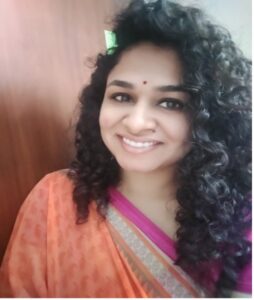
Ushma Desai
Ushma is an Organization Development and Culture Consultant, committed to radically humanizing organizations. As a woman navigating the cultural and corporate landscape of Indian organizations for over a decade, she has witnessed first-hand the profound impact of power structures, oppression, and disconnection. These experiences form the heart of her approach towards co-creating spaces for safe dialogue and shared meaning-making within organizations. She has a post graduate diploma in Organisational Development and Change from Tata Institute of Social Sciences (TISS), and is currently training to complete a diploma in Transactional Analysis from South Asian Association of Transactional Analysts (SAATA).
Exploring a critical organisational praxis – invoking cybernetic thinking, indigenous knowledge and decolonisationMarch 5, 2025ContentAs India is poised to become the third largest economy, there is a pressing need to look at the state of organisations and people within them. That this constitutes a critical enquiry is evidenced from the low percentage of organised sector workers in the country’s workforce, the dearth of industrial innovation, and other alarming socio-economic indicators. Social research in organisations has looked at the cultural intricacies within organisations, and the challenges hence produced. The differences between East and West is evident from such research, especially relating to organisational behaviour. This is particularly significant because entrepreneurs and the managerial elite are either educated in the West or based on Western paradigms imported by mainstream management education. In our own experience as change practitioners, we have witnessed how such socio-cultural phenomena, largely unacknowledged, impinge on organisational success and individual well-being. We have seen how they hamper knowledge creation, growth and innovation, and lead to stressful workplaces.Critical studies that foreground decolonisation have called for the uncovering of indigenous knowledge. Western paradigms operate tacitly within organisations and are usually imposed from elite standpoints. While there may be disparate accounts of indigenous knowledge, a coherent perspective, let alone methodology, is largely missing. It is in such a context that we seek to explore a ‘critical organisational praxis’. Here, we invoke Freire’s ideas of dialogue and problematisation, and the principles of organisational cybernetics. We seek to develop a theory of critically intervening in organisations at all levels to improve dialogue, and for ways to enable an interplay between multiple epistemologies (Western and indigenous) that may exist in an organisation.We envisage the scope of such a praxis to include theoretical research about the nature of the Indian organisation, and the development of methods of intervening at various levels. In this presentation, we put forth our experiences in trying to bring to life some of these ideas while examining the nature of our own work.Registration link:https://us02web.zoom.us/meeting/register/tZYrc-6orTIpE93LPq621YbrVdLr1sIF4afhSujay Dinnalli & Ushma DesaiSujay DinnalliSujay is Chief Scientific Officer at Efion – a consulting practice focused on helping organisations embrace systemic thinking and enhance participation. He is also an independent researcher looking at approaches to intervene effectively in the Indian / Global South context, informed by critical and cyber-systemic perspectives. In past avatars, he has been an entrepreneur, business process consultant, and electronics & communications engineer.Ushma DesaiUshma is an Organization Development and Culture Consultant, committed to radically humanizing organizations. As a woman navigating the cultural and corporate landscape of Indian organizations for over a decade, she has witnessed first-hand the profound impact of power structures, oppression, and disconnection. These experiences form the heart of her approach towards co-creating spaces for safe dialogue and shared meaning-making within organizations. She has a post graduate diploma in Organisational Development and Change from Tata Institute of Social Sciences (TISS), and is currently training to complete a diploma in Transactional Analysis from South Asian Association of Transactional Analysts (SAATA).




You must be logged in to post a comment.