
Just to give him his due! https://en.wikipedia.org/wiki/Ilya_Prigogine
Nobel prize lecture: https://www.nobelprize.org/uploads/2018/06/prigogine-lecture.pdf
A view or perspective on the world
Just to give him his due! https://en.wikipedia.org/wiki/Ilya_Prigogine
Nobel prize lecture: https://www.nobelprize.org/uploads/2018/06/prigogine-lecture.pdf
source:
(PDF) A methodology for supporting strategy implementation based on the VSM: A case study in a Latin-American multi-national | Angela Espinosa, Andrea C Martinez, and Ana Guzmán – Academia.edu
Innovative Applications of O.R.A methodology for supporting strategy implementation basedon the VSM: A case study in a Latin-American multi-nationalAngela Espinosaa,b,⇑, Ezequiel Reficcob,1, Andrea Martínezb,1, David Guzmánb,1aHull Business School, Hull University, Cottingham Rd., Hull HU6 7RX, United KingdombLos Andes School of Management, Calle 21 # 1-20, Bogota, Colombiaa r t i c l e i n f o Article history:Received 16 July 2013Accepted 17 June 2014Available online 26 June 2014Keywords:(I) OR in developing countries(S) Complexity theoryProblem structuring (P)Viability theoryOrganizational redesigna b s t r a c tSoft OR tools have increasingly been used to support the strategic development of companies atoperational and managerial levels. However, we still lack OR applications that can be useful in dealingwiththe‘‘implementationgap’’,understoodasthescarcityofresourcesavailabletoorganizationsseekingto align their existing processes and structures with a new strategy. In this paper we contribute tofilling that gap, describing an action research case study where we supported strategy implementationin a Latin American multinational corporation through a soft OR methodology. We enhanced the‘Methodology to support organizational self-transformation’, inspired by the Viable System Model, withsubstantive improvements in data collection and analyses. Those adjustments became necessary tofacilitate second order learning and agreements on required structural changes among a large numberof participants. This case study contributes to the soft OR and strategy literature with insights aboutthe promise and constraints of this soft OR methodology to collectively structure complex decisions thatsupport organizational redesign and strategy implementation.
full article in source:
(PDF) A methodology for supporting strategy implementation based on the VSM: A case study in a Latin-American multi-national | Angela Espinosa, Andrea C Martinez, and Ana Guzmán – Academia.edu
source1:
The big bike helmet debate: ‘You don’t make it safe by forcing cyclists to dress for urban warfare’ | Cycling | The Guardian
This is really a great case study for anyone looking for a systems thinking topic for students – or serious research. In either case, have them do a simple cause-and-effect diagram first using maximum creativity and thinking, to see if anything they intuit maps to the reality.
Prejudice, opinions, beliefs, passion, science, disputed science, contextual sensitivity, and deep nebulousity. What is a policy-maker to do?
Some things that seem fairly clear:
What seems very clear is that teenage car drivers and their passengers should definitely wear helmets and neck braces.
Personally, I favour the requirement to make all cars absolutely as safe and protected as possible, as long as all the drivers are situated at street level in a balsa-wood box with a dagger embedded in the steering wheel.
PS I have had two bad cycle accidents in my younger days – once I was doored by a car and did a flying somersault over the top of the car door, and once my bottom bracket snapped and left me sliding under and into the back of a car in front. Both times I was greatful to be wearing a helmet, which I habitually do.
The big bike helmet debate: ‘You don’t make it safe by forcing cyclists to dress for urban warfare’
The big bike helmet debate: ‘You don’t make it safe by forcing cyclists to dress for urban warfare’ | Cycling | The Guardian
An article: https://www.cyclehelmets.org/1249.html from a whole dedicated website: https://www.cyclehelmets.org/0.html
NB this was prompted by the current (as of 1 January 2021) UK Prime Minister being accused of something for cycling seven miles from home (two women were cautioned and fined recently for meeting up five miles from each of their homes… were they exercising? Did it matter they brought tea? Were they on a bench chatting? Was it really a picnic? Did they need three police cars to arrest them? etc) – and in this stock phot from 2013, he is helmetless – though I have definitely seen him wearing one in such a manner that it was pointless anyway.


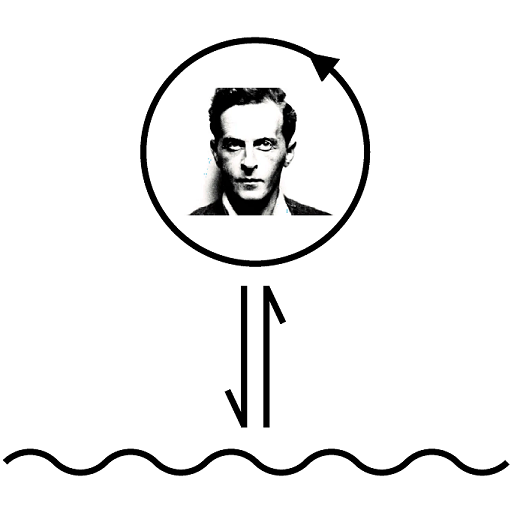
In Tractatus Logico-Philosophicus, Wittgenstein wrote the following:
“The world of the happy man is a different one from that of the unhappy man.”
He also noted that, if a lion could talk, we would not understand him.
As a person very interested in cybernetics, I am looking at what Wittgenstein said in the light of autopoiesis. Autopoiesis is the brainchild of mainly two Chilean biologist cyberneticians Humberto Maturana and Francesco Varela. Autopoiesis was put forth as the joining of two Greek words, “auto” meaning self, and “poiesis” meaning creating. I have talked about autopoiesis here. I am most interested in the autopoiesis’ idea of “organizational closure” for this post. An entity is organizationally closed when it is informationally tight. In other words, autopoietic entities maintain their identities by remaining informationally closed to their surroundings. We, human beings are autopoietic entities. We cannot take in information as a commodity. We…
View original post 640 more words
source
Everything I Know | The Buckminster Fuller Institute

During the last two weeks of January 1975 Buckminster Fuller gave an extraordinary series of lectures concerning his entire life’s work. These thinking out loud lectures span 42 hours and examine in depth all of Fuller’s major inventions and discoveries from the 1927 Dymaxion house, car and bathroom, through the Wichita House, geodesic domes, and tensegrity structures, as well as the contents of Synergetics. Autobiographical in parts, Fuller recounts his own personal history in the context of the history of science and industrialization.
The stories behind his Dymaxion car, geodesic domes, World Game and integration of science and humanism are lucidly communicated with continuous reference to his synergetic geometry. Permeating the entire series is his unique comprehensive design approach to solving the problems of the world. Some of the topics Fuller covered in this wide ranging discourse include: architecture, design, philosophy, education, mathematics, geometry, cartography, economics, history, structure, industry, housing and engineering.
Everything I Know was made available online at archive.org/details/buckminsterfuller.
The printed work below is a transcript of those lectures. Painstakingly typed word for word from audiotapes, these transcripts are minimally edited and maximally Fuller. In that vein you will run into unique Bucky-isms: special phrases, terminology, unusual sentence structures, etc. Because of this, as well as the sheer volume of words, we expect you may find places that need editing, refining and improving. Therefore, we invite you to participate! We hope that by your using it as an active resource you can, through your comments, suggestions and feedback, become a participant in the process of annotating, editing, footnoting, updating and illustrating the information it contains. This way it will become progressively more useful to more and more people. The more it is used the more useful it can become! Send us your edits by simply sending us a copy of the page(s) that you think need changes, marked with your suggestions and edits by mail or fax. We will then make the appropriate adjustments to be integrated and published in the newer versions of the work over time.
We are grateful to make this work available and look forward to its evolution into an evermore useful, refined, and expanded document.
— The Buckminster Fuller Institute
First Edition
Published by the Buckminster Fuller Institute
Contact us for more Information
Copyright © 1997 Estate of R. Buckminster Fuller
All proceeds from the sale of this publication go directly to the Buckminster Fuller Institute to further their work.
content in source:
Everything I Know | The Buckminster Fuller Institute

Science seeks the basic laws of nature. Mathematics searches for new theorems to build upon the old. Engineering builds systems to solve human needs. The three disciplines are interdependent but distinct. Very rarely does one individual simultaneously make central contributions to all three — but Claude Shannon was a rare individual.
Read the full article at: www.quantamagazine.org
source:
Systems Change & Deep Equity: Pathways Toward Sustainable Impact, Beyond “Eureka!,” Unawareness & Unwitting Harm – Change Elemental
ARTICLE
July 15, 2020SHERYL PETTY, MARK LEACH
Equity, Systems Change
“Systems Change pursued without Deep Equity is, in our experience, dangerous and can cause harm, and in fact leaves some of the critical elements of systems unchanged. And ‘equity’ pursued without ‘Systems Change’ is not comprehensive at the level of effectiveness currently needed.”
Sheryl Petty
Transformative change towards love, dignity, and justice requires deeply embedding equity into all systems change efforts.
And yet, there are many ways a deep equity perspective has not been integrated into the systems change field and as a result, many systems change efforts have caused harm. We have learned in our work that systems change without equity is not systems change.
This monograph by Sheryl Petty, Movement Tapestries, and Mark Leach, Change Elemental, illuminates essential dimensions of approaches to Systems Change, which are intimately connected with Deep Equity. It also offers ideas about how to bring racial — and other intersecting aspects of equity — more deeply and centrally into your systems change work. The combination of the systems change and deep equity fields is critical work for the next phase of our human evolution, to become the societies we hope for in our deepest hearts.
We hope you will join us on our shared journey toward greater love, healing, and systems transformation.
*If you have trouble downloading the monograph using the download button below, please email cocreate@ChangeElemental.org.
source:
Systems Change & Deep Equity: Pathways Toward Sustainable Impact, Beyond “Eureka!,” Unawareness & Unwitting Harm – Change Elemental
source:
Viable Tribes: Jonathan Huxley – YouTube
4 Jan 2021
Metaphorum Webinar Series 2020-2021
Viable Tribes: Jonathan Huxley 5 views•4 Jan 2021 1 0 SHARE SAVE Meta Phorum 7 subscribers SUBSCRIBED Metaphorum Webinar Series 2020-2021
Viable Tribes: Jonathan Huxley – YouTube
source: http://www.ecologyandsociety.org/vol12/iss1/art23/
 |
| Home | Archives | About | Login | Submissions | Notify | Contact | Search |
| E&S HOME > VOL. 12, NO. 1 > ART. 23 Copyright © 2007 by the author(s). Published here under license by The Resilience Alliance. Go to the pdf version of this articleThe following is the established format for referencing this article: Brand, F. S., and K. Jax. 2007. Focusing the meaning(s) of resilience: resilience as a descriptive concept and a boundary object. Ecology and Society 12(1): 23. [online] URL: http://www.ecologyandsociety.org/vol12/iss1/art23/ SynthesisFocusing the Meaning(s) of Resilience: Resilience as a Descriptive Concept and a Boundary ObjectFridolin Simon Brand 1 and Kurt Jax 21Institute for Landscape Ecology, Technische Universität München, Germany, 2Department of Conservation Biology, UFZ-Environmental Research Centre Leipzig-Ha AbstractIntroductionA Typology for Definitions of ResilienceCategory I: Descriptive conceptCategory II: Hybrid conceptCategory III: Normative conceptResilience as a Descriptive Ecological ConceptResilience as a Boundary ObjectDiscussionResponses to this ArticleAcknowledgmentsLiterature Cited ABSTRACT This article reviews the variety of definitions proposed for “resilience” within sustainability science and suggests a typology according to the specific degree of normativity. There is a tension between the original descriptive concept of resilience first defined in ecological science and a more recent, vague, and malleable notion of resilience used as an approach or boundary object by different scientific disciplines. Even though increased conceptual vagueness can be valuable to foster communication across disciplines and between science and practice, both conceptual clarity and practical relevance of the concept of resilience are critically in danger. The fundamental question is what conceptual structure we want resilience to have. This article argues that a clearly specified, descriptive concept of resilience is critical in providing a counterbalance to the use of resilience as a vague boundary object. A clear descriptive concept provides the basis for operationalization and application of resilience within ecological science. Key words: boundary object; definition; descriptive concept; ecological resilience; resilience; sustainability; typology. INTRODUCTION The concept of resilience is one of the most important research topics in the context of achieving sustainability (Perrings et al. 1995, Kates et al. 2001, Foley et al. 2005). First introduced as a descriptive ecological term (Holling 1973), resilience has been frequently redefined and extended by heuristic, metaphorical, or normative dimensions (e.g., Holling 2001, Ott and Döring 2004, Pickett et al. 2004, Hughes et al. 2005). Meanwhile, the concept is used by various scientific disciplines as an approach to analyze ecological as well as social-ecological systems (Anderies et al. 2006, Folke 2006). As such, it promotes research efforts across disciplines and between science and policy. However, both conceptual clarity and practical relevance are critically in danger. The original descriptive and ecological meaning of resilience is diluted as the term is used ambiguously and in a very wide extension. This is due to the blending of descriptive aspects, i.e., specifications of what is the case, and normative aspects, i.e., prescriptions what ought to be the case or is desirable as such. As a result, difficulties to operationalize and apply the concept of resilience within ecological science prevail. This, in turn, impedes progress and maturity of resilience theory (cf., Pickett et al. 1994:57). The success of the concept in stimulating research across disciplines on the one side and the dilution of the descriptive core on the other raises the fundamental question what conceptual structure we want resilience to have. This article is divided into four parts. The first section offers a typology to structure the numerous definitions of resilience proposed within sustainability science. Using this typology as a background, the second section investigates in more detail a descriptive, ecological concept of resilience viewed from both a formal and an operational perspective. Subsequently, the third section examines the use of resilience as a rather vague boundary object and points to some chances and pitfalls. The fourth section concludes with final thoughts on the recent conceptual development and a fruitful conceptual structure of resilience. |
continues in source: http://www.ecologyandsociety.org/vol12/iss1/art23/
These are the ones I subscribe to – please add or improve in the comments!
Titles marked with a * indicate those which currently have no contemporary episodes published (as of 2021-01-07) – most of these of course are defunct (but have a back catalogue), but not all will be
(See https://stream.syscoi.com/2020/10/08/who-are-our-fellow-travellers/ for my definition of ‘fellow travellers’)
– My podcasts coming soon (which should sort of be a mix of all of these since these are the water I swim in)
**Broadly systems/cybernetics/complexity/sensemaking**
– **Sensemaking (ish) – and ‘game b’ ish**
– **Buddhism (post-traditional etc)**
– **’System change’ / social change:**
– **Environment/permaculture**
– **Other fellow travellers (safety differently and Strong Towns)**
– **Generally intellectual stuff**
– **’Intellectual Dark Web’**
– **Misc – interviews, surprising perspectives, world-building, digging beneath the surface (business, design etc)**
– **Shamanism**
– **Philosophy**
– **Language**
– **History**
– **Business and economics**
– **Rationalism and sciencing**
– **Methods (service design, lean, agile, change management etc)**
– **Cyber-security and espionage (*almost* fellow traveller topics):**
– **spirituality and that**
(left out – comedy, pop culture, and public sector shows)
source
Mary Catherine Bateson: Living with Cybernetics – YouTube
Adler Looks Jorge in the American Cybernetics Society group on LinkedIn
We honor our memory of Mary Catherine Bateson, cultural anthropologist and friend to the ASC. 1938 – 2020
Mary Catherine Bateson: Living with Cybernetics
16 Dec 2018
As the guest speaker at the ASC dinner meeting at the 2014 Conference in Washington DC, Mary Catherine Bateson, daughter of Gregory Bateson and Margaret Mead, shared two stories about her mother orienting her to cybernetics as a young child. One story is about first-cybernetics when talking about analyzing systems, the second about second-cybernetics when focusing on observing one’s observing.
source:
Mary Catherine Bateson: Living with Cybernetics – YouTube
source:
An Invitation to Dinner with the Family of Systems Disciplines – Community.Vitechcorp.com
Systems are truly a family affair. As the concept of systems becomes more significant in the way we think and solve problems, it is increasingly apparent that there are several disciplines, which “specialize” in the study and design of systems. Each discipline views systems from its own perspective, which is related to its purpose and reason for existence. Just as family members gathered for dinner approach the topics of conversation differently given their interests and backgrounds, the systems disciplines consider aspects of systems concepts differently, and use them in different ways. Each of them individually and all of them together have things to offer us in advancing our knowledge and practice of thinking about systems.
Understanding the many facets and perspectives in considering systems will help today’s systems engineers as we wrangle complexity, confront wicked problems, and craft innovative answers to problems that span the socio-technical world. It is worthwhile to consider the variety of systems disciplines and what they have to offer.
continues in source:
An Invitation to Dinner with the Family of Systems Disciplines – Community.Vitechcorp.com
source:
Family Resemblance vs. Polymorphism
Installed: 30 Apr 2011
Updated: 11 Jan 2019 (major additions re parametric polymorphism).
24 Mar 2017; 2018 ….; 14 Jul 2018
30 Mar 2016; 16 Jul 2016; 12 Sep 2016; 18 Dec 2016
21 Mar 2016 added “Polymorphism of design requirements” and a few edits.;
9 Mar 2016 added “creativity”
19 Apr 2014; 24 Apr 2014; 23 Oct 2015 (Reformatted/minor additions);
This paper is
HTML:
http://www.cs.bham.ac.uk/research/projects/cogaff/misc/family-resemblance-vs-polymorphism.html
PDF:
http://www.cs.bham.ac.uk/research/projects/cogaff/misc/family-resemblance-vs-polymorphism.pdf
A partial index of discussion notes is in
http://www.cs.bham.ac.uk/research/projects/cogaff/misc/AREADME.html
This is one of several papers related to the “Computational Qualia” project summarised here by Ron Chrisley:
https://www.researchgate.net/project/Computational-qualia
full article in source:
Family Resemblance vs. Polymorphism
source:
Vish (game) – Wikipedia
From Wikipedia, the free encyclopediaJump to navigationJump to search
In the game of Vish (short for vicious circle), players compete to find circularity in dictionary definitions.[1] Irish mathematician and physicist, John Lighton Synge, invented the multi-player, refereed game to emphasize the circular reasoning implicit in the defining process of any standard dictionary.
source:
Vish (game) – Wikipedia
During this year 2020, and for the first time in the history of the series of Conferences sponsored by the Complex Systems Society, the CCS series, the annual meeting was organized virtually in the period December 7-11, 2020 and the young researchers CCS2020 Warm Up sessions on December 4, 2020. This Conference is in line with the series of meetings previously held in Singapore (2019), Thessaloniki, Greece (2018), Cancun, Mexico (2017), Amsterdam, Netherlands (2016), Tempe, Arizona, USA (2015), Lucca, Italy (2014), and more meetings in previous years. All these past meetings have delivered the highest quality of presentations, the most up-to-date findings, have been attended by the pioneers in the field of Complex Systems, as well by young aspiring students, numbering an attendance of close to one thousand. Our purpose is to deliver a well-tailored and focused event of the highest scientific and organizational standards, and for the first time…
View original post 244 more words

 Systems Community of Inquiry
You must be logged in to post a comment.