Category Archives: Discussion
A view or perspective on the world

When a Machine Breaks…:

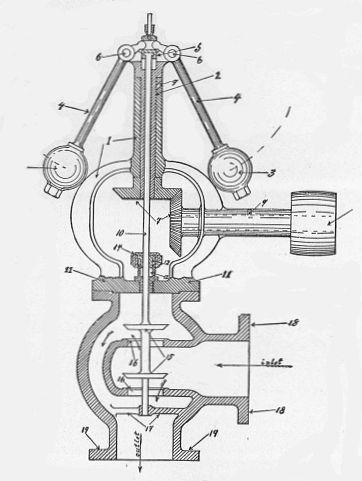
In today’s post, I am looking with more depth at the ideas of Cybernetics with relation to Ross Ashby, one of the pioneers of Cybernetics.
In particular, I am looking at one of the Ashby aphorisms:
When a machine breaks, it changes its mind.
This is a very interesting observation from a Cybernetics standpoint. Ashby defined a machine as follows:
It is a collection of parts which (a) alter in time, and (b) which interact with on one another in some determinate and known manner.
A designer designs the machine specific to an environment. This means that the designer has encoded a model of the environment into the machine so that when certain perturbations are encountered, the machine reacts in a certain manner. The variety that is estimated to be “thrown” at the machine is captured by the designer, and appropriate responses are encoded into the parts or the circuitry…
View original post 786 more words
Back to Basics — Values Transfer into Intelligent Systems through Conway’s Law | It’s About Empathy – Connection Ties Us Together
source:
Back to Basics — Values Transfer into Intelligent Systems through Conway’s Law | It’s About Empathy – Connection Ties Us Together
Back to Basics — Values Transfer into Intelligent Systems through Conway’s Law

One of the interesting hypotheses that DEFINITELY NEEDS MORE WORK, BUT IS LIKELY TRUE is the idea that, through Conway’s Law, values from the social organization transfer into the products developed by organizations will inherently embody the values that those organizations hold. We can revisit the Intermediate Corollary in these three slides, which say:
continues in source:
Back to Basics — Values Transfer into Intelligent Systems through Conway’s Law | It’s About Empathy – Connection Ties Us Together
Debora Hammond – The Science of Synthesis – epxloring the social implications of general systems theory (book, 2003)
full book:
Conscious Organization Conference, 11am-2:30pm EDT, October 28-30, 2020
A continuation of the Requisite Agility movement (I’m part of RA, though not this conference) – drop me a line as I have a few free tickets, and a price reduction code once they’ve gone. Benjamin
source:
Conscious Organization Conference

CONSCIOUS ORGANIZATION
October 28th – 30th, 2020
11:00 am – 2:30 pm daily (US Eastern Time) Live onlineREGISTER NOW
It’s Time to Build Conscious Organizations
The Classical Renaissance, a period of artistic, architectural, and scientific discovery, was launched by the Black Death of the 14th Century.
Our Renaissance, the Renaissance of the 2020 global pandemic, spearheaded by leaders like you, is a period of elevated empathy, emotional resiliency, and consciousness manifest in your organizations that lighten the hearts and minds of your people and your clients.It is time to lead your people differently by elevating the consciousness of your leadership and your organizations – uplifting the hearts and minds of your people and your clients.
When your leadership is more conscious, you show more emotional intelligence, empathy, emotional resiliency, and self-awareness in the way you lead your team and serve your clients. You will also discover yourself doing good works for society and the world. During this live online event, you will learn how our speakers lead from a higher level of consciousness and achieve breakthroughs in performance while having a positive impact in their organizations, in their teams, in their families, in society, and in the environment.
Attain access to your inner intuition and intelligence to achieve your highest potential as a leader! KNOW MORE
Join Us As We Uncover The Five Realms Of Consciousness:

- Self-Consciousness: Being at one and true to ourselves and our innate potential.
- Mutual-Consciousness: The unconditional “love” that exists between people.
- Communal-Consciousness: Organisations and communities of shared awakening.
- Global-Consciousness: The awakening and flourishing of our collective humanity.
- Cosmic-Consciousness: The spiritual source of oneness beyond time, space, memory and humanity.
OUR SPEAKERS
15 global thought leaders are going to lead an online conference over 3 days on October 28th -30th, 2020 to inspire the renaissance of our lifetime. Our legacy. Our mark on destiny.

Anand MehrotraSattva Yoga Academy

Henry YampolskyVirginia Tech

Annemarie BrownThe Sattva Collection

Selena DelesieDelesie Solutions Inc

Kashmir BirkThe True North

Michelle N. MooreMindEQuity Inc

Asta RaamiINNERVERSITY

Dame Janét Ahava Group Global

Tathagat VarmaWallmart Labs India

Tomas BjörkmanEkskäret Foundation

Anita NowakEmpathy Expert

Jeffrey DeckmanCapability Accelerators

Scott W. AmblerProject Management Institute

Jackie RobergeMindfulness-based Leadership
Geordie KeittKeitt Consulting Group, LLC

Kathryn SheridanSustainability Consult
Get your Ticket
If you know how you are going to shape the renaissance flowing out of this pandemic,
Please join us to share your vision and positivity.
ALL ACCESS+ RECORDINGS
$49
- ✔ Access to all video & MP3 recordings
- ❌ Audio downloads
- ❌ PDFs: Transcripts of all session
- ❌ RA Annual Membership worth $ 95
ALL ACCESS PREMIUM
$89
- ✔ Access to all video & MP3 recordings
- ✔ Audio downloads
- ✔ PDFs: Transcripts of all session
- ✔ Requisite Agility Annual Membership worth $ 95
What This Event Will Do For You
Learn
Discover how to manifest a Conscious Organization as a powerful new vehicle for ethical business. You will find the necessary tools, tactics, and practices for your organization to survive and thrive in the days after. Understand the power of conscious leadership as the new paradigm.
Inspire
Implement the conscious organization immediately – starting with yourself! Feel inspired and motivated to elevate your intentions, bring consciousness to life, and during the event, you will feel inspired and motivated to create the legacy of our Renaissance
Transform
Go beyond changing your organization, and instead transform it. As you and your organizations emerge from pre-crisis chrysalis, spread your wings to become the leaders and organizations you aspire to see in the days after. Begin your transformation journey with the guidance and companionship of teachers and participants from around the world.
Support Your Employees To Develop Conscious Organisations
Get in touch with our team for a custom proposal for your branding and marketing by sponsoring this amazing eventCONTACT US
Sponsors and Partners





Get in touch with our team for a custom proposal for your branding and marketing by sponsoring the RA Journey.BECOME A SPONSOR
A global pandemic is a terrible thing to waste. This is our time!
Please join us for three days to explore and create the future, now!
Footer newsletter
Sign up for the latest updates.
Stay tuned with the latest Requisite Agility news and updates:
book in source: Buy Ticket CONSCIOUS ORGANIZATION October 28th – 30th, 2020 11:00 am – 2:30 pm daily (US Eastern Time) Live online
Conscious Organization Conference
Open Global Mind – Sensemaking Together
source:
Open Global Mind
Sensemaking Together
- Are you drowning in the info-flood?
- Why is our collective memory so bad? Why are we so easy to spin?
- Why are so many groups locked up in mortal combat over ideas?
- Instead, how might we govern together, well?
Open Global Mind is a project to build communities and platforms that will help us make sense of the world — together.
source:
Open Global Mind
— Open MIND
source:
— Open MIND
an edited collection of 39 original papers and as many commentaries and replies. The target papers and replies were written by senior members of the MIND Group, while all commentaries were written by junior group members. All papers and commentaries have undergone a rigorous process of anonymous peer review, during which the junior members of the MIND Group acted as reviewers. The final versions of all the target articles, commentaries and replies have undergone additional editorial review.
Besides offering a cross-section of ongoing, cutting-edge research in philosophy and cognitive science, this collection is also intended to be a free electronic resource for teaching. It therefore also contains a selection of online supporting materials, pointers to video and audio files and to additional free material supplied by the 92 authors represented in this volume. We will add more multimedia material, a searchable literature database, and tools to work with the online version in the future. All contributions to this collection are strictly open access. They can be downloaded, printed, and non-commercially reproduced by anyone.
include
The Cybernetic Bayesian Brain
From Interoceptive Inference to Sensorimotor Contingencies
https://open-mind.net/epubs/the-cybernetic-bayesian-brain/OEBPS/bk01.html
source:
— Open MIND
Entropy | Model-Based Approaches to Active Perception and Control | Pezzulo et al, 2020
source:
Entropy | Free Full-Text | Model-Based Approaches to Active Perception and Control | HTML
Open AccessArticle
Model-Based Approaches to Active Perception and Control
by Giovanni Pezzulo *, Francesco Donnarumma,Pierpaolo Iodice,Domenico Maisto andIvilin Stoianov
Institute of Cognitive Sciences and Technologies,
Entropy
2017, 19(6), 266; https://doi.org/10.3390/e19060266
Abstract
There is an on-going debate in cognitive (neuro) science and philosophy between classical cognitive theory and embodied, embedded, extended, and enactive (“4-Es”) views of cognition—a family of theories that emphasize the role of the body in cognition and the importance of brain-body-environment interaction over and above internal representation. This debate touches foundational issues, such as whether the brain internally represents the external environment, and “infers” or “computes” something. Here we focus on two (4-Es-based) criticisms to traditional cognitive theories—to the notions of passive perception and of serial information processing—and discuss alternative ways to address them, by appealing to frameworks that use, or do not use, notions of internal modelling and inference. Our analysis illustrates that: an explicitly inferential framework can capture some key aspects of embodied and enactive theories of cognition; some claims of computational and dynamical theories can be reconciled rather than seen as alternative explanations of cognitive phenomena; and some aspects of cognitive processing (e.g., detached cognitive operations, such as planning and imagination) that are sometimes puzzling to explain from enactive and non-representational perspectives can, instead, be captured nicely from the perspective that internal generative models and predictive processing mediate adaptive control loops.Keywords: embodied cognition; active perception; active inference; model-based systems
continues in source:
Entropy | Free Full-Text | Model-Based Approaches to Active Perception and Control | HTML
Transforming systems is key to policy gains – The Hindu BusinessLine
source:
Transforming systems is key to policy gains – The Hindu BusinessLine
Transforming systems is key to policy gains
Arun Maira | Updated on September 11, 2020 Published on September 11, 2020
Understanding the food system is a complex process – MA Sriram
The Eat Right India initiative shows how large-scale change can be facilitated by a small govt agency like FSSAI
Two Indian initiatives have found places amongst the ten best global initiatives selected by the Rockefeller Foundation for its Food Systems Vision Prize 2050. One is the Naandi Foundation’s work with tribal communities in Araku in South India. The other is ‘Eat Right India’, the countrywide movement for food systems change being shaped by the Food Safety and Standards Authority of India (FSSAI).
The capability to implement large-scale change in complex systems is the key for India to realise the benefits of any well-thought-out policy or plan. The National Education Policy is the most recent example of a far-reaching policy wherein all commentators are concerned about how it will be implemented.
continues in source:
Transforming systems is key to policy gains – The Hindu BusinessLine
Professor Tracey Osborne Taking on Complex, Grand Challenges in Climate and Social Justice | Newsroom
source:
Professor Tracey Osborne Taking on Complex, Grand Challenges in Climate and Social Justice | Newsroom
Professor Tracey Osborne Taking on Complex, Grand Challenges in Climate and Social Justice


By Lorena Anderson, UC MercedSeptember 9, 2020

Professor Tracey Osborne
The world is a complex place, and humanity faces major challenges. Climate change mitigation might be the most difficult, in large part because of the interdependency of living things and their ecosystems.
How do people transform economic systems so they are also sustainable for people and the planet?
“If we don’t consider how everything connects from a systems perspective, we’re not going to solve grand challenges such as climate change,” Professor Tracey Osborne said. “Not even close.”
continues in source:
Professor Tracey Osborne Taking on Complex, Grand Challenges in Climate and Social Justice | Newsroom
Bridgers, support programme — The Systems Sanctuary
source:
Bridgers — The Systems Sanctuary
OUR PROGRAMS
Bridgers
Part of the work of Illuminate, cultivating the field and practice of systems change.
“My Peer Input session was a highlight – it came at a time when I was second-guessing my approach to, and gut feelings about, collaboration for systems change. ”
— PARTICIPANT, COHORT 1 , IN THE THICK OF IT
What’s the deal?
Bridgers is a peer-learning cohort for people who are working to create systemic change and are working from non-dominant spaces and communities. This will be a place to share inquiry, key learning and practices, build alliances and camaraderie.
We know there are stories to be shared about what it takes to be a bridge for systems change. This will be a place to go deep, to shine light on diverse practices and different ways of knowing, so we may see collective patterns, challenges and identify the subtleties that are the opportunities for change.
Who is this for?
The Community Bridges Cohort is open to anyone working in context of non-dominant spaces, identities and communities and acts as a ‘bridge’ to places of dominant power and influence across the incumbent system.
As a practitioner you have experience code switching, translating, moving across “borders” to engage broader system actors in their work. You draw on multiple ways of knowing and practices. You are deeply in the middle of a complex project and are facing multiple challenges in doing this work.
You might be doing systems change work, but might not call it that. You have momentum and movement in your initiative. You have faced systemic obstacles and barriers that feel like ceilings, limitations and isolation.
We are open to applications from people who resonate with this call, but are not sure if they meet the criteria. Feel free to reach out.
We welcome applications from people all over the world.
What will it involve?
- We convene peer learning circles in a monthly basis virtually via Zoom
- Each peer session session is 1.5 hours long
- 1 hour buddy call with another participant between calls
- Commitment to a total of 7 peer sessions and individual reflective practice & light homework
Why peer-to-peer learning?
Our experience has taught us that sitting down with colleagues and really digging into the detail of practice, what is emerging day to day, is the most valuable use of time.
You will be meeting people who implicitly understand what you’re talking about, who have ideas you can borrow and who will become a valuable network for years to come. Our role is to the create the conditions where you can connect meaningfully together, then get out of the way. This will be hosted.
What will happen on the calls?
Each session involves small group gatherings of up to 8 people with a different person sharing a challenge each month, followed by peer-to-peer coaching. Through this process we surface shared inquiry, exchange learning, resources and support.
We are joined by guest speakers and practitioners to support you in spirit, mind and body.
We will illuminate personal experiences and the connections to the systemic nature of the challenges we are aiming to shift, we will share systems change practices to help identify paths forward.
We will explore these barriers and start to think collectively about what practices are we uncovering and what are we learning about shifting outdated power structures and cultures towards new creativity, new freedom and a new way of being.
You will be in a Cohort with people who understand you and who get it. You will feel you are not alone in this. It will be inspiring, cathartic, infuriating and good fun. Join us!
Proposed dates of calls
Calls will take place October 2020 – March 2021 on the last Wednesday and Thursday of each month.
source:
Bridgers — The Systems Sanctuary
System Dynamics Review August 2020
source:
Issue Information – 2020 – System Dynamics Review – Wiley Online Library

Issue Information Free Access
Issue Information
First published: 19 August 2020 https://doi.org/10.1002/sdr.1633
Systems Dynamics Society
 |
| Email to SD Society members: New Issue of the System Dynamics Review We are pleased to announce the table of contents for Volume 36, Issue 2 of the System Dynamics Review (April/June 2020) Issue InformationMain ArticlesAssessing the efficacy of group model building workshops in an applied setting through purposive text analysis by Nicholas Valcourt, Jeffery Walters, Amy Javernick-Will, and Karl LindenUnderstanding model behavior using the Loops that Matter method by William Schoenberg, Pål Davidsen, and Bob Eberlein Open AccessThe Lake Urmia vignette: a tool to assess understanding of complexity in socio‐environmental systems by Kirsten Davis, Navid Ghaffarzadegan, Jacob Grohs, Dustin Grote, Nivousha Hosseinichimeh, David Knight, Hesam Mahmoudi, and Konstantinos TriantisNotes and InsightsEQUILIBRIUM game: a virtual field trip through a complex system by Christian Neuwirth Open AccessMembers receive full access to all past and present journal articles by logging in to the Society site, visiting our System Dynamics Review page, and pressing the Members Only Access button. |
Issue Information Free Access Issue Information First published: 19 August 2020 https://doi.org/10.1002/sdr.1633
Issue Information – 2020 – System Dynamics Review – Wiley Online Library
Innovation Community of Practice: Systems Spectrum Sessions (a collaboration between States of Change and UNDP), 1-5 October 2020
source:
Webinar Registration – Zoom
FacebookTwitterLinkedInMicrosoft (Outlook)TopicInnovation Community of Practice: Systems Spectrum Sessions (a collaboration between States of Change and UNDP)DescriptionWelcome to the “Global Track” of the Ministry of Change Innovation CoP Week!
From Monday, October 5th through Friday, the 9th we have a special set of curated sessions designed to walk across a spectrum of systems change and transition practices. From field practitioner cases, to less obvious ways of approaching complex challenges, we hope you join.
The style is casual- no sage on a stage- but deeply curious as we get serious about unlearning and uncovering new ways of working and generating impact.
Here’s what we have in store for you to select as you wish. Join one or all-
Session 1, October 5 at 3:30pm ICT =
Inclusive Systems Innovation:
big collaborations and small circles with Kelly Ann McKercher of Beyond Sticky Notes AND Felicty Tan and Reycel Hyacenth Bendaña of wesolve.
Session 2, October 6 at 3:30pm ICT =
Navigating Systems Transitions:
the view from data labs with Petrarca Karetji, UN Pulse Lab – Jakarta AND Enrico Gaveglia, UNDP Philippines, Pintig Lab
Session 3, October 7 at 3:00pm ICT =
Long-termism for policymaking with Ella Saltmarsh, The Long Time Project
Session 4, October 8 at 3:30pm ICT =
The Learning Curve:insights from COVID to climate change with Climate KIC AND States of Change
Session 5, October at 3:30pm ICT =
A letter to my younger (innovator) self with States of Change AND UNDP
book at source:
Webinar Registration – Zoom
States of Change Blurring the boundary between nature and humankind – 8 October2020, London 2pm – online
Oct 8, 2020 02:00 PM in London
source:
Meeting Registration – Zoom
Blurring the boundary between nature and humankind.
From the wildfires around the world to the compelling links between Covid-19 and climate change it feels right to ask: is the way we think of nature and culture as two separate things all wrong? Could we reimagine this divide and instead shape different possible futures, ones based on the concept that humankind and planet Earth are entirely intertwined? And if it was, so what? Might that change the way we design policies or act to decarbonise our economies, and if it could, what direction could that take us?
Join Javier Guillot in this workshop to explore how these different ways of thinking might come to define how we act in the face of climate change and the other major challenges of our time. This intimate session is capped at 20 spaces and is very much a space to pose questions.
8 October.
Bogota 8am | New York 9am | London 2pm | Bangkok 8pm.Time
Oct 8, 2020 02:00 PM in London
book at source:
Meeting Registration – Zoom
systems thinking mind map in ‘the brain’ – Jerry Michalski
In the systems science group on facebook – https://www.facebook.com/groups/2391509563/permalink/10158396670634564/
Andrew Suttar asked: Does anyone know of a mind-map showing the relationships between the pioneers/founders of cybernetics? – https://www.facebook.com/groups/2391509563/permalink/10158396670634564/
This occasioned several useful links and Jerry Michalski’s ‘The Brain’ systems map: https://app.thebrain.com/brains/3d80058c-14d8-5361-0b61-a061f89baf87/thoughts/60df588b-b9fe-9c29-ee72-da8e528477dd/notes
 Systems Community of Inquiry
You must be logged in to post a comment.