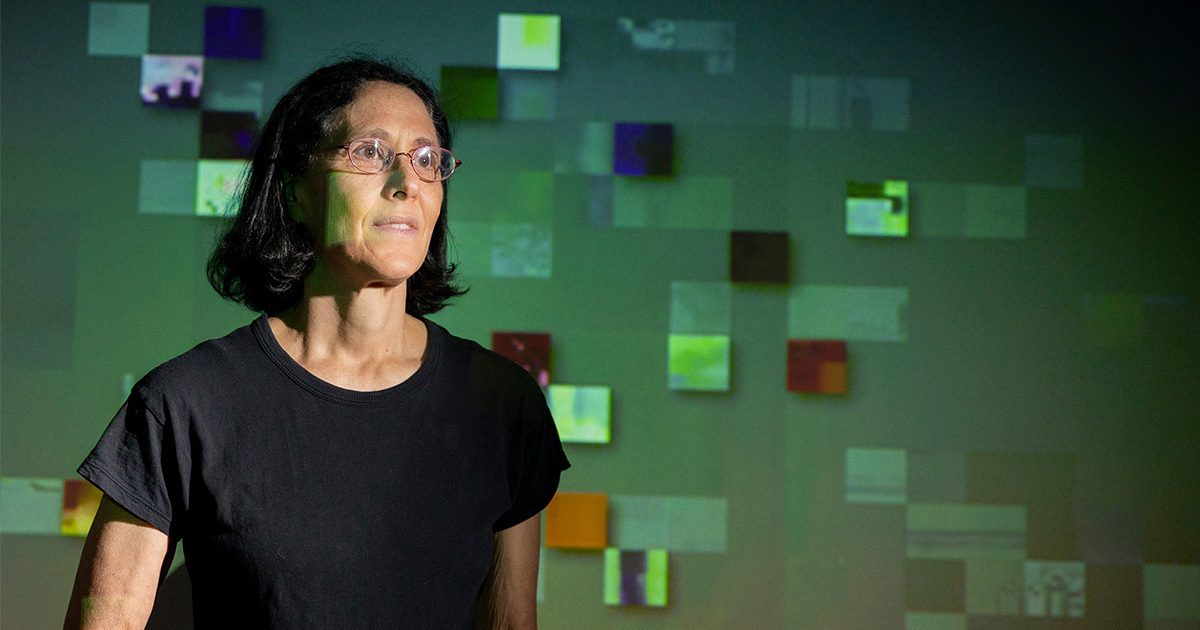
Critical Systems Thinking: What has been done and what needs doing – Tue 22 Jun 2021 at 12:00 UK time with Prof Michael C Jackson – the third event in the jubilee celebrations of 50 years of Systems Thinking in Practice at The Open University

JUN 22 Critical Systems Thinking: What has been done and what needs doing

Critical Systems Thinking: What has been done and what needs doing Tickets, Tue 22 Jun 2021 at 12:00 | Eventbrite

JUN

22

Critical Systems Thinking: What has been done and what needs doing

by The Open University, Faculty of STEM FollowingFree

Event Information

Professor Michael C Jackson presents the third seminar to critically examine what has been done and what needs doing in systems thinking.

About this event


		Critical Systems Thinking: What has been done and what needs doing image

Welcome to the third event in the jubilee celebrations of 50 years of Systems Thinking in Practice at The Open University!

In the wake of the pandemic, confronted by human-induced climate change and exposed to a gamut of vulnerabilities within our societies, many commentators call for investment in thinking and acting differently, particularly with systems thinking in practice, or STiP. The Open University (OU, based in the UK) is well-placed to respond to this imperative of our times because it has been one of the significant investors in STiP education over the last 50 years. In 1971 a new academic department was created; Systems thinking practitioners (STPs) collaborated to design and then present a new undergraduate course called Systems behaviour (T241). This was a pioneering achievement in the UK’s first supported open, distance teaching university. Worldwide, there have been nearly 50,000 OU STiP students.

Fifty years on, the OU has a thriving postgraduate suite of qualifications in systems thinking in practice (STiP) and extensive experience in designing and delivering STiP education and scholarship. In 2021, the OU celebrates this continued unique pioneering tradition of fostering STiP capabilities for lifelong learning and managing change in broad-ranging professional contexts with nearly 250 graduates in recently named degrees.

Please join us through 2021 to celebrate this unique achievement and add your support to what has become an urgent global need – the more excellent capability to think and act systemically. We will have a series of events, blogs and engaging discussions that you are welcome.

Want to keep learning about STiP? Check out our OpenLearn platform that offers free courses on hundreds of subjects, including STiP!

#OUSTiP #OUSTiP50

Professor Jackson’s topic:

Critical Systems Thinking and Practice: What has been done and what needs doing

In 1979 the four UK universities that had groups or departments teaching ‘systems’ – Aston, City, Lancaster, and the Open University – established the UK Systems Society (UKSS). Number 3 of the UKSS Newsletter (June 1980) has a map of the distribution of the membership by postcode. Professor Jackson will discuss the research programme in critical systems thinking and practice that developed at Hull in the early 1980s and has continued for 40 years. He will assess what has been achieved and what still needs to be done and will relate the work at Hull to what has happened in systems thinking elsewhere in the UK, particularly at the Open University.


		Critical Systems Thinking: What has been done and what needs doing image

Get to know…Professor Michael C Jackson

Michael C. Jackson is an Emeritus Professor at the University of Hull and MD of Systems Research Ltd. He graduated from Oxford University, gained an MA from Lancaster University and a PhD from Hull, and has worked in the civil service, in academia and as a consultant. Between 1999 and 2011, Mike was Dean of Hull University Business School, leading it to triple-crown accreditation. Mike has been President of the International Federation for Systems Research and the International Society for the Systems Sciences. He was editor-in-chief of Systems Research and Behavioral Science for 26 years. Mike is a Companion of the Association of Business Schools, a Chartered IT Professional, and a Fellow of the British Computer Society, the Cybernetics Society, the Chartered Management Institute, the Operational Research Society, the International Federation for Systems Research, and the International Academy for Systems and Cybernetic Sciences. He has received many awards, two honorary degrees, and has been a visiting professor at numerous international universities. In 2011 he was awarded an OBE for services to higher education and business. In 2017 he received the Beale Medal of the UK Operational Research Society for ‘a sustained contribution over many years to the theory, practice, and philosophy of Operational Research’. Mike is known as a key figure in the development of ‘critical systems thinking’ – a topic on which he has published ten books and over 150 articles. His latest book ‘Critical Systems Thinking and the Management of Complexity’ was published by Wiley in April 2019.

Designing temporal networks that synchronize under resource constraints

cxdig's avatarComplexity Digest

Yuanzhao Zhang & Steven H. Strogatz
Nature Communications volume12, Articlenumber:3273 (2021)

Being fundamentally a non-equilibrium process, synchronization comes with unavoidable energy costs and has to be maintained under the constraint of limited resources. Such resource constraints are often reflected as a finite coupling budget available in a network to facilitate interaction and communication. Here, we show that introducing temporal variation in the network structure can lead to efficient synchronization even when stable synchrony is impossible in any static network under the given budget, thereby demonstrating a fundamental advantage of temporal networks. The temporal networks generated by our open-loop design are versatile in the sense of promoting synchronization for systems with vastly different dynamics, including periodic and chaotic dynamics in both discrete-time and continuous-time models. Furthermore, we link the dynamic stabilization effect of the changing topology to the curvature of the master stability function, which provides analytical insights into synchronization on…

View original post 35 more words

De Profundis: Ranulph Glanville’s Transcendental Framework for Second-order Cybernetics | Müller – (2015)

De Profundis: Ranulph Glanville’s Transcendental Framework for Second-order Cybernetics 1 Karl Müller 270 Views 22 Pages 1 File ▾ Ranulph Glanville was a prolific writer, a magic designer, an avant-garde musician, a cybernetician of the first-and of the second-order, a philosopher in disguise, to name only a few roles. His contributions to second-order cybernetics and to areas like design, philosophy, conversation theory, methodology or games, with the tools and perspectives of his version of second-order cybernetics were collected under the title The Black B∞x in three volumes in edition echoraum (Glanville, 2009, 2012, 2014) and were ordered and arranged by Ranulph Glanville himself so that they allow a general and systematic overview on this very large, diverse, and impressive corpus. In this short essay I will undertake a systematic attempt to make this work more easily accessible for others, including myself, and to provide a special location for Ranulph Glanville within the research program of second-order cybernetics in particular and within the research tradition of radical constructivism in general. It will become my central thesis in this article that Ranulph Glanville’s special role and function was to provide a meta-approach to all the available research programs in radical constructivism. This framework was transcendental in nature and focused on the conditions of the possibility for observation, for communication, for language, for knowledge or for learning to emerge at all. Thus, Ranulph Glanville reserved a unique place for himself that, at the same time, turned out to be magic for his explorations and very difficult to grasp for his intellectual environment.

(PDF) De Profundis: Ranulph Glanville’s Transcendental Framework for Second-order Cybernetics 1 | Karl Müller – Academia.edu

The Cybernetics of Brand Tickets, Tue 22 Jun 2021 at 18:00 UK time – CybSights

JUN 22 The Cybernetics of Brand

The Cybernetics of Brand Tickets, Tue 22 Jun 2021 at 18:00 | Eventbrite

JUN 22

The Cybernetics of Brand

by CybSights: The Insights Series Following

Event Information

What cybernetics tells us about brand and brand about cybernetics and what these together tell us that is important.

About this event

The Insights Series is an eclectic and learned collection of monthly events on the 4th Tuesday of each month hosted by Cybernetics Society. There will be lectures, seminars, conversations, debates, participation, all advancing our knowledge of cybernetics and related disciplines and their applications to real world needs. Speakers present their own views, without formal endorsement.

Cybernetics is the science of achievement, the great meta-discipline of our time.

The CybSights Insights series is normally curated and hosted by the Secretary, Angus Jenkinson, FCybS. Attendance is free. Non-members are invited to make an optional donation or to Join.

In this session we welcome an Australian.

We are particularly delighted to be able to welcome Tim Falkiner with his experience in town planning, law, and legilstion with ‘homeskooled’ cybernetics.

The Cybernetics of Brand

In this talk, I am interested in exploring three different aspects of the topic of ‘brand’. Firstly, what does cybernetics tell us about brand. Brand is an energetic concept and important operational and commercial aspect of the contemporary business world and indeed of more than just businesses — political parties, politicians, cities, even countries. What is it and how does it relate to identity and other fundamentals? The second aspect is what looking at this might tell us about cybernetics. What is the distinctive go of cybernetics? Sometimes looking into the detailed examples is a good way to learn and think.

But there is a third and possibly even a fourth aspect. What does it tell us about companies themselves? What might that tell us about the world, human and natural? And the nature of the their systemic organization? And then there is the distinctiveness of cybernetics itself — let us say as ‘a brand’ in the field of systemic thinking.

My interest in this is not merely academic or scholarly or even technical. Businesses and companies are a huge part of our world — huge in terms of their influence, power to do good or ill, and so contribution to the essentials and failures of modern civilisation. Billions of people are employed by and dependent on them and they are getting tougher to manage as they get bigger and more complex. ‘Brand’ matters to citizens, consumers, policy makers, leaders.Businesses and companies are a huge part of our world

I am going to relate brand to customers, to value, to values; to processes and organization; to identity and purposes and why we are all here. And in this also to other classic management questions like culture, business model, and intelligent systems.

But I would also like to look at such fundamental questions as observers and how they see the world and what that means practically and scientifically. How do we need to rethink scientific method itself given the pragmatic reality and empirical fact of “brand” as a contemporary world phenomenon? A competent science should be able to deal with it. Does science have the requisite variety in its methods? Is it fit for purpose?

And to make sure that there is some usefulness for those who would like something useful I will try to share some practical approaches. And I will try to do so by taking actual situations and not just abstract notions.

By the way I will be speaking in another forum on a related topic at about the same time but with a special interest in VSM and so in this one, although I will refer to Stafford Beer’s Viable System Model, it will not be the main focus.

General Systems Theory – von Bertalanffy (1968)

Systems Thinking – Valerie Iles

Briefing Paper One: Systems thinking This briefing paper gives: the origins of systems thinking, a definition of systems thinking and of a system, the history of systems thinking and its major tenets, some of the major systems approaches, problems with systems thinking,  insights afforded by systems thinking, and references.

Systems Thinking

An pretty good introduction

Job opportunity: Postdoctoral Researcher in Computational Modelling, @PANDEM2H2020 project. System dynamics/computational modelling to design resource planning analytics to support pandemic planning.

snuigalway and @DSIatNUIG are hiring a Postdoctoral Researcher in Computational Modelling to work on our exciting @PANDEM2H2020 project. The role involves the use of system dynamics/computational modelling to design resource planni

(2) Jim Duggan on Twitter: “Link to the application information here: https://t.co/L5SVTtgBzJ” / Twitter

Information (word doc):

https://t.co/L5SVTtgBzJ?amp=1

How To Win At Risk By Using Systems [Dynamics] – The System Is Down – Andy Patton

why is it always still Systems Dynamics, I wonder?

source:

How To Win At Risk By Using Systems Thinking – The System Is Down

How To Win At Risk By Using Systems Thinking

Systems Thinking gives you an advantage in almost every area of life – even the game of Risk.

Andy Patton7 hr ago35

Systems thinking is a way of viewing complicated networks in reality in terms of the relationships between the parts and the whole. It is about thinking holistically about such relationships so as to (1) truly understand how they work and (2) change them for the better.

The best strategies in life (and in games) come from systems thinking. This is the case because things are far more complicated than they seem at first glance and it takes careful attention to come to know them. Systems thinking offers names and categories for understanding the complexity of reality—and you can’t really know anything without first giving it a name.

continues in source

How To Win At Risk By Using Systems Thinking – The System Is Down

Systems Thinking Ontario – 2021-06-14

source:

Systems Thinking Ontario – 2021-06-14

2021-06-14

June 14 (the second Monday of the month) is the 91sh meeting for Systems Thinking Ontario. The registration is on Eventbrite at https://synthesis-map-expo-2021-1.eventbrite.ca.

Synthesis Map Expo 2021 (#1), Strategic Foresight and Innovation program

Every year Systems Thinking Ontario hosts a series of summer evening events for presentations of synthesis maps (complex systems maps) created in systemic design courses in OCAD University graduate programs.

  • This first evening, June 14, we have three presentations.
  • The second evening, July 12, we’re considering to have another three presentations.
  • The third evening, August 9, we’re holding if there is more interest

Synthesis maps are rich visualizations that illustrate the real-world complexity of systemic challenges, and typically used to not only “map system problems” but to propose design recommendations for systems change and policies (from health to public policy, from service experiences to social change) from evidence gathered in stakeholder research. Policymakers and organizational stakeholders use synthesis maps for strategic advising, long-term planning, and considering interventions for social and systemic challenges (wicked problems).

While we are still sorting out the final slate of presenters, we are expecting:

  • Emerging Possibilities for Users in a Web 3.0 Social Media Ecology (Frontiers for Facebook?)
  • New Economics Team – Social Purpose Economy in Canada
  • TBD

Venue:

  • The link for a Zoom conference will be sent upon preregistration.
  • It’s really too bad that we can’t use the OCADU Visual Analytics Lab to meet in person!

Suggested pre-reading:

What are Synthesis Maps and Gigamaps? at https://slab.ocadu.ca/project/synthesis-maps-gigamaps

ASC Series #7: Partial Memories of Mary Catherine Bateson – Nora & Sevanne Tickets, Sun, Jun 20, 2021 at 12:00 PM EST

We start with Jude Lombardi interviewing Mary Catherine’s daughter Sevanne and sister Nora and then you tell us your story.

ASC Series #7: Partial Memories of Mary Catherine Bateson – Nora & Sevanne Tickets, Sun, Jun 20, 2021 at 12:00 PM | Eventbrite
American Society for Cybernetics just announced a new event
ASC Series #7: Partial Memories of Mary Catherine Bateson - Nora & Sevanne
 
 ASC Series #7: Partial Memories of Mary Catherine Bateson – Nora & Sevanne Sunday, June 20, 2021 at 12:00 PM

Centre for Sustainability Transitions webinar – Rethinking – Thursday June 10, 13:00-14:00 (Standard South African Time)

Webinar Invite: Rethinking Public Governance for Systems Change

Webinar Registration – Zoom
CST WEBINAR SERIESYou are invited to join the CST webinar on
 Rethinking Public Governance for Systems ChangeThursday, June 10th
from 13:00-14:00 
(Standard South African Time)This webinar will take place online.
Register in advance for this webinar:
https://maties.zoom.us/webinar/register/WN_gqeYRy8ZRS6O8oVtkhsRMA
Join the CST webinar for a discussion on
 Rethinking Public Governance for Systems ChangeFor nearly 10 years, the Western Cape Economic Development Partnership (EDP) has been working with local and provincial government to build its capacity to meaningfully collaborate across spheres of government, across departments of government, and between government and the private sector and civil society. Specifically, the EDP has been interested in understanding how governance innovation could become a lever for systems change.
This webinar will focus on lessons learnt from EDP practice, drawing on the example of the Western Cape Government Whole of Society Approach Project, to unpack the opportunities for, and challenges of, implementing innovative governance practices.

Presenter: Rushka Ely (development practitioner at Western Cape Economic Development Partnership (EDP))
Discussants: Rika Preiser (CST)This webinar will take place online.
Register in advance for this webinar:
https://maties.zoom.us/webinar/register/WN_gqeYRy8ZRS6O8oVtkhsRMA
Rushka Ely is a development practitioner with a focus on local, city, and town-scale challenges, processes, and solutions. She leads a number of programmes for the Western Cape Economic Development Partnership (EDP), a government support organisation enabling collaboration across governments, sectors, and regions. This role builds on her experience working within the South African government, having been a part of the green economy team at Western Cape Government.
Rushka has extensive experience working with local and regional governments, as well as the private sector and civil society and has worked on a range of developmental challenges such as economic development, regional collaboration, housing, urban development, and governance. 

View from the Left Eye – Modes of Observing:

Harish's avatarHarish's Notebook - My notes... Lean, Cybernetics, Quality & Data Science.

I was introduced to the drawing above through Douglas Harding who wrote the Zen book, “The Headless Way.” The drawing was drawn by Ernst Mach, the 19th Century Austrian physicist. He called the drawing, “the view from the left eye.” What is beautiful about the drawing is that it is sort of a self-portrait. This is the view we all see when we look around (without using a mirror or other reflective surfaces). If we could draw what we see of ourselves, this would be the most accurate picture. This brings me to the point about the different modes of observing.

Right now, you are most likely reading this on a screen of some sort or perhaps you are listening to this as a podcast. You were not paying attention to the phone or computer screen – until I pointed it out to you. You were not paying attention…

View original post 1,105 more words

Metaphorum Webinar Series June-November 2021

The program for the end of the year is detailed below. See more details of each webinar at our webpage <a https://metaphorum.org/metaphorum-webinar-series

Metaphorum is inviting you to a scheduled Zoom meeting.
https://us02web.zoom.us/j/81943981395?pwd=UldHZ0RESGVPQTE2RDNoSWU2UWt2Zz09
Meeting ID: 819 4398 1395
Passcode: 758276

You can find the recordings of previous webinars and details on forthcoming webinars, on our webpage.

Metaphorum Webinar Series

METAPHORUM WEBINAR SERIES

JUNE-DECEMBER 2021 PROGRAM

Date Speaker Title
June 9th Markus Schwaninger Covid19 Pandemic – Dealing with the Unpredictable: Crisis Management in a Federation
June 23rd Angus Jenkinson What Is the Identity of an Organisation?
July 7th Panagiotis Panagiotakopoulos
The role of VSM in designing and managing future-fit organisations
July 21st Alfonso Reyes A.
A new organisational from for a trans-disciplinary university. The case of Universidad de Ibagué
Aug 4th Maurice Yolles Mindset agency theory. Prof. M Yolles
Sept 29th Pam Sydelko A Viable System Model Board Game for Designing Interagency Responses to Wicked Problems
Oct 13th Robin Asby Thinking Systems
Nov 10th Mark Lambertz "Let's build a productive social system by connecting people’s needs and technology’s capabilities – and get the job done.”

Managing Failure: Systems Thinking and the Butterfly Effect | Manufacturing.net

Managing Failure: Systems Thinking and the Butterfly Effect Failure may not always be completely preventable, but with the right thinking and PLM platform, it should always be manageable. May 18th, 2021 Mark Reisig

Managing Failure: Systems Thinking and the Butterfly Effect | Manufacturing.net

Via John Pourdehnad, who adds: FYI. PLM is the PRODUCT LIFECYCLE MANAGEMENT module sold by SAP 

Managing Failure: Systems Thinking and the Butterfly Effect

https://www.manufacturing.net/operations/blog/21440005/managing-failure-systems-thinking-and-the-butterfly-effect

The 2021 Texas power crisis was the result of many things—being unprepared for an extreme snowstorm, inadequately winterized power equipment, power grids isolated to the state, and so on. However, it’s fair to say this crisis was largely a miscalculation of risks. It was a failure to predict and mitigate a series of compounding factors, which led to a break under pressure. We can call it a failure in Systems Thinking.

After the fact, it’s easy to say that Texas should have winterized their wind turbines, but that’s only one detail—the crisis was the sum of much more. All power took a hit, including coal and nuclear. Worse, gas production froze along with pipelines.

As heating demands rose sharply, the lack of natural gas was problematic as many of Texas’s power plants rely on gas to generate their electricity, thus the power grids going offline was inevitable. The halt of gas production was perhaps the biggest culprit in the power crisis, but the broader system—particularly electrical infrastructure across much of the state—had little recourse without it. It was an inability to mitigate undesirable emergent behaviors and cross-dependencies that resulted in catastrophic failure.

Again, a failure in Systems Thinking. 

Systems Thinking says nothing lives in isolation. Everything affects everything. It’s like the butterfly effect of chaos theory, which isn’t to say butterflies set off chain reactions that blow volcanos or cause tsunamis, but that the Earth is a complex and interlinked system, where even something as small as a butterfly is moving with everything else.

The idea of managing complexity in systems is nothing new—System Thinking has been around for decades. The challenge now is that many organizations still aren’t giving Systems Thinking its proper due, sometimes with a great cost. This is true even of PLM and its users, but vendors are catching up.

The concept of the butterfly effect was first used to describe the impossibility of predicting the weather far into the future, because weather systems are too complex for us to track every proverbial butterfly. Similarly, it is impossible for any one person to fully understand today’s design complexity, which is increasing at an ever-accelerating pace. No one can or should predict every little variant or mistake on their own. So rather than chasing butterflies, we can govern our design complexity with effectively applied Systems Thinking.

We do this with a modern PLM platform capable of tracking all life cycles of the system, from conception and design to operation and maintenance.

Because of rising complexities in today and tomorrow’s products, with more functionality and more variance of functionality, often the design of a product has become the design of a system with many different implementations. PLM platforms came from the mechanical world that focused on just the product. Now they’re evolving to meet a world of systems—a world where you have to have to manage everything about a system as a system of systems first, without knowing the details of the design of products.  

We apply Systems Thinking to how we look at what PLM is managing. Because everything affects everything, it is critical the platform be able to connect the product at all stages to a system model, such as with a Digital Thread. Tools have to be able to show their data models to PLM data models. Whatever system PLM is going to manage in the future, it has to do so in the context of a data model of that system, where every change goes through said model. The system model is the connective tissue sitting inside PLM and everything in PLM connects through it. That is the crux of Systems Thinking.

PLM used to manage just design data. Now we’re managing design intent, which drives design data. We can’t predict the outcome of every storm, so we should instead prepare to mitigate their effects.

Steven Jobs once said, “You can’t connect the dots looking forward; you can only connect them looking b

ackwards.” Predicting the future—and future failures like in Texas—requires full traceability from the beginning—in short, with a Digital Thread and the platform to support it. This is the strength of a PLM Platform, as they not only manage design data, but also the system across the entire lifecycle from the start to any indefinite point in the future. 

Failure may not always be completely preventable, but with the right thinking and platform, it should always be manageable.

Mark Reisig is the Vice President of Product Marketing at Aras.

A simple guide to chaos and complexity – Rickles, Haw, Shiell (2007)

‘a classic but a bit out of date’

A simple guide to chaos and complexity

A simple guide to chaos and complexity

Dean RicklesPenelope Hawe, and Alan ShiellAuthor informationArticle notesCopyright and License informationDisclaimerThis article has been cited by other articles in PMC.Go to:

Abstract

The concepts of complexity and chaos are being invoked with increasing frequency in the health sciences literature. However, the concepts underpinning these concepts are foreign to many health scientists and there is some looseness in how they have been translated from their origins in mathematics and physics, which is leading to confusion and error in their application. Nonetheless, used carefully, “complexity science” has the potential to invigorate many areas of health science and may lead to important practical outcomes; but if it is to do so, we need the discipline that comes from a proper and responsible usage of its concepts. Hopefully, this glossary will go some way towards achieving that objective.Keywords: nonlinear dynamics, chaos theory, complexity

continues in source:

A simple guide to chaos and complexity