
Soft Systems Methodology: Puzzles and Organisations by Neil Richardson Published: 26 June 2021
Soft Systems Methodology: Puzzles and Organisations
Recent Updates Page 187
Cybernetics Society AGM Keynote 2021: Delia Pembrey MacNamara – and other CybSoc videos
Cybernetics Society AGM Keynote 2021: Delia Pembry MacNamara
Cybernetics Society AGM Keynote 2021: Delia Pembry MacNamara – YouTube
See the rest of the channel at
https://www.youtube.com/channel/UCdp8cnKqLZxkgM8fmCO7TCA
Minimal physicalism as a scale-free substrate for cognition and consciousness | Fields, Glazebrook, Levin (2021)
Minimal physicalism as a scale-free substrate for cognition and consciousness
Minimal physicalism as a scale-free substrate for cognition and consciousness | Neuroscience of Consciousness | Oxford Academic
Minimal physicalism as a scale-free substrate for cognition and consciousness
Chris Fields, James F Glazebrook, Michael Levin
Neuroscience of Consciousness, Volume 2021, Issue 2, 2021, niab013, https://doi.org/10.1093/nc/niab013
Published: 02 August 2021 Article history
Abstract
Theories of consciousness and cognition that assume a neural substrate automatically regard phylogenetically basal, nonneural systems as nonconscious and noncognitive. Here, we advance a scale-free characterization of consciousness and cognition that regards basal systems, including synthetic constructs, as not only informative about the structure and function of experience in more complex systems but also as offering distinct advantages for experimental manipulation. Our “minimal physicalist” approach makes no assumptions beyond those of quantum information theory, and hence is applicable from the molecular scale upwards. We show that standard concepts including integrated information, state broadcasting via small-world networks, and hierarchical Bayesian inference emerge naturally in this setting, and that common phenomena including stigmergic memory, perceptual coarse-graining, and attention switching follow directly from the thermodynamic requirements of classical computation. We show that the self-representation that lies at the heart of human autonoetic awareness can be traced as far back as, and serves the same basic functions as, the stress response in bacteria and other basal systems.
Making Systems Thinking Accessible to all Generations, Geographies & Work Groups | Meetup – Systems at Play Thursday, August 12, 2021 3:00 AM BST
book at source:
Making Systems Thinking Accessible to all Generations, Geographies & Work Groups | Meetup

Register for the free event from this link: https://www.meetup.com/systems-at-play/events/279605763/
To view previous recording and subscribe to the Systems At Play youtube channel please visit https://www.youtube.com/channel/UCo3t9w3qN0JNOCoIQIEyFnw
Water’s Centre Website:
https://waterscenterst.org/
Thursday, August 12, 2021
Making Systems Thinking Accessible to all Generations, Geographies & Work Groups
David WitneyHosted by
David Witney and 2 othersSystems At PlayPrivate group?Thursday, August 12, 2021
3:00 AM to 4:00 AM BST
Add to calendar
Online event
Link visible for attendeesReport this event
Details
Making Systems Thinking Accessible to All Generations, Geographies and Work Groups
Tracy is joining us from the US so we have had to adjust our regular timing to a lunch session for those in Australia.
Over the past few decades, the Waters Center for Systems Thinking has been a go-to organisation for systems thinking in primary and secondary education throughout the United States and beyond.
Their practical, creative and customised approach has generated an expanded network throughout diverse sectors including government agencies, medical and health system science educators, social justice advocates, and business and community organisations.
This session will provide a glimpse into Waters Center methodologies and will actively engage participants along the way.
About Tracy
As President of the Waters Center for Systems Thinking (nonprofit), Tracy Benson Ed.D leads a team of experienced systems thinking educators who provide ST capacity building, coaching and facilitation to a wide range of education, government, for-profit, and community-based organizations.
Her previous 25+ years career in education included teaching and administrative positions at all levels spanning early childhood through higher education.
As a researcher, consultant and author of several books, Tracy’s passion and commitment echo the Waters Center’s mission:
To make the benefits of systems thinking accessible to everyone.
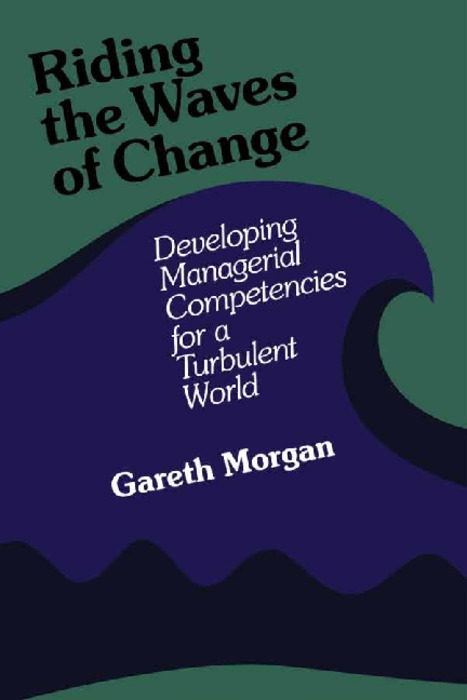
Riding the Waves of Change: Developing Managerial Competencies for a Turbulent World – Gareth Morgan (1988)
Riding the Waves of Change
Riding the Waves of Change
Riding the Waves of Change
View/Open
191042_Riding_the_waves_of_change_010614_FINAL.pdf (12.83Mb)
Date
2013
Author
Metadata
Show full item recordIn developing managerial competencies it s not enough to “look in the rear view mirror”, project past trends, and just do what’s worked in the past. It’s crucial to look ahead, and position for the future. In today’s world competence rests in our attitudes, values and mindsets, not just in technical skills. Riding the Waves of Change, first published in 1988, still resonates today. New preface 2009.
Understanding and investigating relationality in the capability approach – Owens et al (2021)
Understanding and investigating relationality in the capability approach John Owens,Vikki A. Entwistle,Luke K. Craven,Ina Conradie
Understanding and investigating relationality in the capability approach – Owens – – Journal for the Theory of Social Behaviour – Wiley Online Library
Boundary Objects: A Field Guide – Sveta Stoytcheva
Alan Watts – Being in the Way – Ep. 2 – Dropping Out From Karma – Be Here Now Network 2021
Alan Watts – Being in the Way – Ep. 2 – Dropping Out From Karma
Alan Watts – Being in the Way – Ep. 2 – Dropping Out From Karma – Be Here Now Network 2021
We need a bit of Watts or Ram Dass here every now and again, I’m contractually obliged or you’ll think I’ve gone straight 😉
This struck me (especially the Daoist part) as particularly systems-y.
Please note I have spare you the very exciteable conversation between Jordan Peterson and John Vervaeke – not becuase I didn’t get a lot of good notes out of it (the robust organisations model as a metaphor for good team capabilities and an explanation for the evolution of personality types?), but becuase if I am shouting ‘just shut up and let him talk!’ multiple times at JBP, I can only imagine the reaction it would get in the groups…
Power & Systems Change: A Conversation between Anna Birney & Adam Kahane | Forum for the Future
book at:
Power & Systems Change: A Conversation between Anna Birney & Adam Kahane | Forum for the Future
Power & Systems Change: A Conversation between Anna Birney & Adam Kahane
Join the conversation – book your free ticket.
Date: 9 September 2021
Time: 16:00 – 17:00 BST | 17:00 – 18:00 CEST | 08:00 – 9:00 PT | 11:00 – 12:00 ET
Power is an increasingly prominent question for systems change practitioners and yet it is often difficult to engage with or to fully understand.
As consciously powerful actors in the field, Anna Birney (School of System Change) and Adam Kahane (Reos Partners) speak to the importance of acknowledging and being aware of your own power as a facilitator, and the dynamics of relationships, participation and how that contributes to transformation.
This webinar will be a conversation between the two based on their experience and reflections, inviting others into the inquiry on power and its role in systems change.
New Report: Bridging the fields of feminist and systems practice | Tatiana Fraser and Juniper Glass (2020)
New Report: Bridging the fields of feminist and systems practice 29 October 2020 We are happy to share a new report by PhiLab member Juniper Glass. She has co-authored a new piece based on 3 years of working with feminist organizations across Canada.
New Report: Bridging the fields of feminist and systems practice | Philab
full pdf: https://static1.squarespace.com/static/5a0b2bbb80bd5e8ae706c73c/t/5f62b391191e4255845d66f6/1600304027998/Gender_Ecosystems+_Final.pdf
Ecofeminism and Systems Thinking – 1st Edition – Anne Stephens (2015)
Ecofeminism and Systems Thinking By Anne Stephens Copyright Year 2013 Paperback £31.99
Ecofeminism and Systems Thinking – 1st Edition – Anne Stephens – Rout
Ecofeminism and Systems Thinking
By
Anne Stephens
full pdf: https://researchonline.jcu.edu.au/28213/1/28213_Stephens_2.pdf
ISBN 9781138952829Published September 18, 2015 by Routledge144 Pages 10 B/W Illustrations
Format Paperback Hardback VitalSource eBook Quantity SAVE ~ £8.00was £39.99GBP£31.99 Add to Cart Add to Wish List
Prices & shipping based on shipping country
Skip Product MenuBook DescriptionTable of ContentsAuthor(s)
Book Description
This book brings together two vitally important strands of 20th-century thinking to establish a set of simple and elegant principles for planning, project design and evaluation. It explains the backgrounds of cultural ecofeminism and critical systems thinking, and what we find when they are systematically compared. Both theories share a range of concepts, have a strong social justice ethic, and challenge the legacy of modernity. The book takes theory into practice. The value of the emergent principles of feminist-systems thinking are described and demonstrated through four chapters of case studies in community development settings. The principles can be used to influence project design and outcomes across a range of disciplines including project management, policy, health, education, and community development. This book has much to offer practitioners who seek to create more socially just and equitable project and research outcomes.
Table of Contents
Part A 1. Introduction 2. Ecofeminism and Systems Theory 3. Comparing and Contrasting Ecofeminism and Systems Thinking 4. Principles of Feminist-Systems Thinking. Part B 5. Case Study 1: Exploring FST Principles in Community Development: The Carrot on a Stick Early Health Intervention Program 6. Case Study 2: The Yarrabah Kinship Gardens 7. Case Study 3: Evaluating Changes: Community Awareness Growth and Change 8. Case Study 4: Greening the Economy: Mapping and Identifying Ways to Transform a Regional Economy 9. Drawing Conclusions and the Value of the Feminist-Systems Thinking Framework
Author(s)
Biography
Anne Stephens is a Senior Researcher with The Cairns Institute at James Cook University.
Can ‘Approach X’ be used to tackle Wicked Problems?

An invitationto examine claims of design and planning approaches
to effectively ‘solve’ wicked problems.
Thorbjørn Mann 2021
(This post is the first part of several attempts to explore the question, in comments or further posts)
The question whether certain design and planning approaches can be used to ‘solve’ or ‘tackle’ wicked problems [1] is an issue raised anew with each new ‘approach’ being brought out on the market. Such claims have been made for widely popular ‘thinking’ ways — ‘systems thinking, ‘design thinking’, ‘holistic thinking’, ‘sociocracy’ and Pattern Language [2], for example:
The question may have to be restated somewhat. Of course every such approach ‘can’ be used to try to address wicked problems. If we only have one tool, that will be the one we will, indeed must use. But the real question is about the validity or plausibility of claims that an approach will reliably be effective
View original post 2,038 more words
What might Coordinated System-Wide Climate Emergency Activity look like?

Context
As we know, the response to the climate change emergency is such a ferociously complicated system problem that no-one can solve it on their own; all must play a part. But the disparate nature of different organisations and the very many different things that need to happen can mean that we end up (potentially) pulling in different directions and confusing the general public who are less close to the whole thing.
I wanted to paint a vision of what coordinated action could look like, to provoke discussion.
Let’s Suppose…
That in a place, let’s call it Snorbenden, the multiple active community groups, local employers who cared about this, the council, other public institutions, decided that they would coordinate their various activities, for a year, around a theme of air quality. I’ve just taken air quality as an example, but the rationale could run along the lines of:
- It’s important…
View original post 1,142 more words
What is work? What’s your definition?

It’s a deeply cybernetic concept – and it’s incredibly useful to realise this.
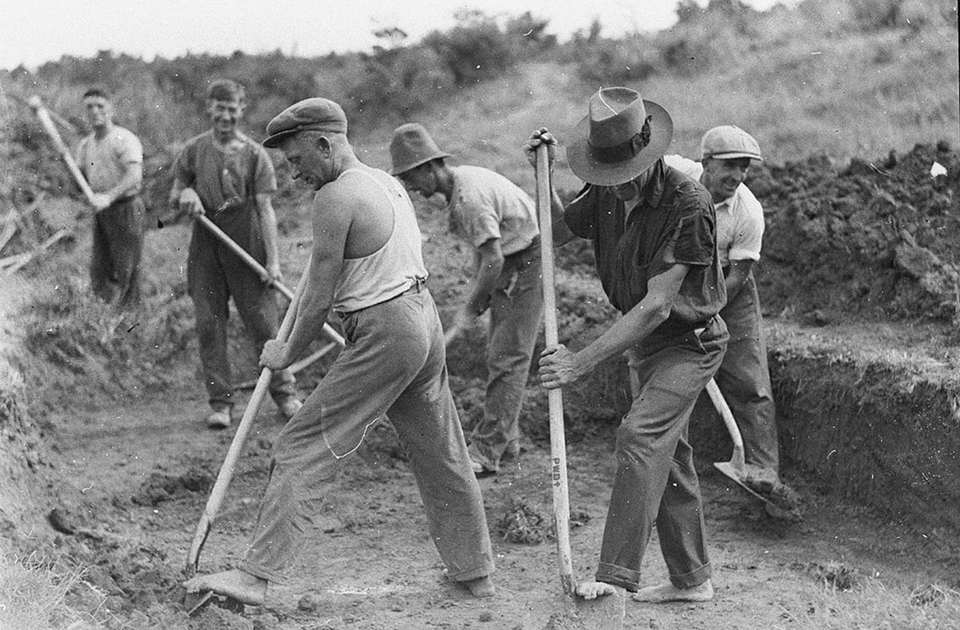
Work is:
>> ‘effort, to a purpose, using judgement and discretion, within boundaries, over time’. <<
(This is based on two definitions by Elliott Jacques, given with citations below).
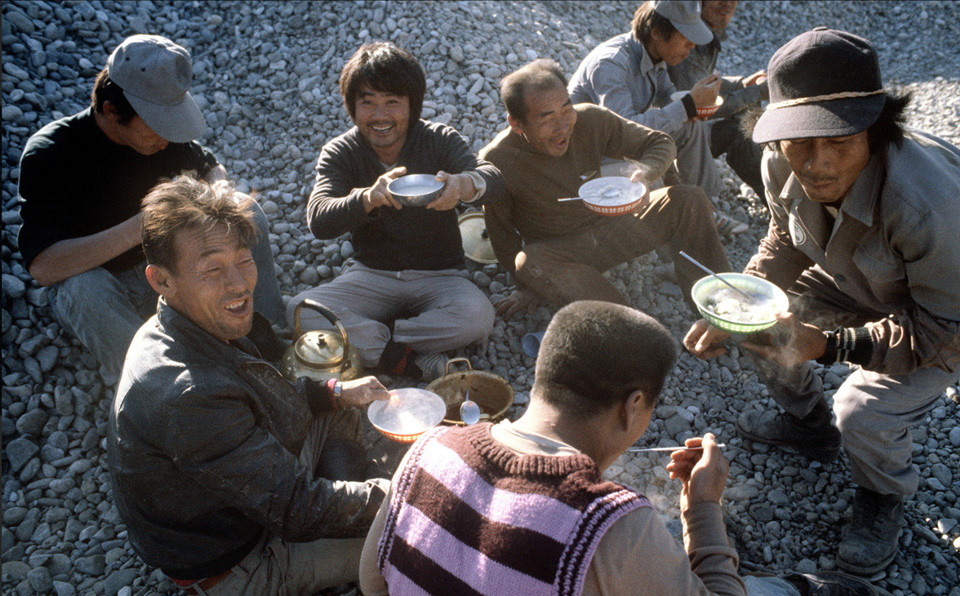
This formal definition turns out to be deeply cybernetic, and very helpful in thinking about this engagement. It relates to the ideas of ‘purpose’, ‘the situation’, and ‘sensemaking’.
Critical elements here are:
Purpose.
A fundamental and powerful idea. The intent to achieve something.
Purpose depends on context, framing, understanding, level of thinking and much more. The purpose and the context must…
View original post 408 more words
New Books Network | Martin Reynolds and Sue Holwell, “Systems Approaches to Making Change: A Practical Guide” (2020)
Martin Reynolds and Sue Holwell (Retired) Jul 27, 2021 Systems Approaches to Making Change: A Practical Guide SPRINGER 2020
New Books Network | Martin Reynolds and Sue Holwell, “Systems…


You must be logged in to post a comment.