Via the Santa Fe Institute Complexity Explorers Facebook group – Nagarjuna as a philosopher of complexity theory

via Complexity Explorers (by SFI)


Do you know of any philosopher who has applied complexity theory to ontology, epistemology or phenomenology? I kind of know of one.
In buddhist thought, one of the most fundamental notions is that of pratītyasamutpāda, or “dependent co-origination”. I cannot help seeing a close similarity to Complex Systems’ philosophy.

I find particularly fascinating the works of an early buddhist scholar: Nāgārjuna (around 150–250 AD). He tried to work out the implications of this notion of “dependent origination” in relation to basic convictions such as personal identity (our sense of “self”), or the conventional way we conceive and perceive entities in general, as being more autonomous and separated than they actually are.

A very related notion is that of śūnyatā or emptiness. If all entities depend on other entities and/or sub-entities to exist (just like in a complex system), no entity can be considered to have an “essential nature” beyond this inter-connected network of causes and effects. According to him, ultimately our persistency to ascribe individuality and separatedness to objects is the result of a perceptual bias and nothing more (or an “illusion” as buddhist like to say).

Here are two nice links which go in depth into Nagarjuna’s philosophy.

https://plato.stanford.edu/entries/nagarjuna/

What is cybernetics?

Someone asked me this.

Cybernetics is…
The official definition from Wiener is ‘the scientific study of control and communication in the animal and the machine.” (This gets us into a lot of trouble with people for whom ‘control’ is a bogeyman).

Or
…the study of purposeful (or goal directed) behaviour
(Sometimes adding ‘in complex situations’ though in fact it’s in any situation)
…’the art of steering’ or ‘steersmanship’ from the Greek root in kubernetes (it’s still the best metaphor, I think)
…this links to various definitions around ‘governance’ or governing etc
…the study of circular causality (also sometimes self-directed control)
..the study of recursion
…the study of what might have happened, but didn’t
…or versions using regulation or self-regulation as the key…
Self-correction is also central, as is explorative creation and maintenance of meaning.

Wikipedia has Umpleby’s list of definitions which is good:
https://en.m.wikipedia.org/wiki/Cybernetics

Pangaro’s is good too: https://www.pangaro.com/definition-cybernetics.html

Britannica cites unusual ‘key people’ but is good https://www.britannica.com/science/cybernetics

Principia Cybernetica offers a good one: ‘organization independent of the substrate in which it is embodied.’
(Principia Cybernetica describes itself as philosophy, seeking to answer the big questions of life; I think thereby it might fall foul of not seeing the circular, embodied and self-referential nature of language – which usually means these are not meaningful ‘questions’ – this is why I think Wittgenstein was a cybernetician and why I get such a big kick out of https://meaningness.com/metablog/bongard-meta-rationality which I think is on the same tracks)

And Clemson’s ‘What is management cybernetics’ (www.barryclemson.net/what-is-management-cybernetics/) cites Beer: “the science of effective organization”. Effective, of course, relates to viability, to ‘independent of the substrate’, to steering, governing, and to *intentional* behaviour (which I’d prefer to goal-directed or ‘purposeful’).

For ‘what is science’, I get “the intellectual and practical activity encompassing the systematic study of the structure and behaviour of the physical and natural world through observation and experiment.”
So science can only be achieved through cybernetic means, of course, being purposeful, but I’d say that cybernetics is a particular type of science focused on effective behaviour (using the above), and here effective includes the second-order cybernetic concept of seeing the observer as an intervener in the system, and the potential of self-reflection.

#cybernetics

What I Learned from Ranulph: A Grateful Tribute to Ranulph Glanville – Lissack, 2015

via What I Learned from Ranulph: A Grateful Tribute to Ranulph Glanville

What I Learned from Ranulph: A Grateful Tribute to Ranulph Glanville

  • September 2015
The first thing Ranulph Glanville taught me about cybernetics would prove in the end to be the most prophetic: namely that Winston Churchill was the first practicing cyberneticians. I suspect that most if not all of the readers of this article are already shaking their heads. What could Lissack be talking about? Ranulph told me this when describing a speech Churchill gave in the House of Lords chamber when the British Commons was discussing whether or not to rebuild the Palace of Westminster. ” On the night of May 10, 1941, with one of the last bombs of the last serious raid, our House of Commons was destroyed by the violence of the enemy, and we have now to consider whether we should build it up again, and how, and when…. We shape our buildings, and afterwards our buildings shape us. Having dwelt and served for more than forty years in the late Chamber, and having derived very great pleasure and advantage therefrom, I, naturally, should like to see it restored in all essentials to its old form, convenience and dignity.” (Winston Churchill, 1943) ” We shape our buildings, and afterwards our buildings shape us. ” In that one sentence were a host of pearls of cybernetic wisdom – the role of context, the role of affordances, the importance of action, ideas shaping action, actions shaping ideas, circularity, and the role of the observer. And, Churchill said it five years before Weiner’s first book. Thus, Churchill was the first practicing cybernetician (under modern usage – ignoring Ampere’s 1834 definition). Ranulph cautioned, however, that Churchill himself would have been opposed to the label. Which was Ranulph’s second lesson to me: many of those who are most successful in incorporating cybernetics into their world view and their affordances for action are highly resistant to the label cyberneticians and often to the very topic of cybernetics. These people live cybernetics. It is a part of who they are and of what they do. They do not study the subject. They do no not write great tracts about critical ideas and alternative formulations. They do not spend time trying to sort out the vagaries of difference between systems science, complex systems, and cybernetics. They never heard of Science 1 and Science 2. And, they do not care. They live their lives. Cybernetically. It was only fitting then that Ranulph’s final ASC conference would be entitled ” Living in Cyberentics. ” To the Ranulph I knew cybernetics was about acting, thinking, and then acting again. It was about life. Paul Pangoro captured this idea in a video which I played at that 2014 conference: I believe that cybernetics is an exceptionally great way of characterizing how the world works. Where by world we mean the world that humans inhabit.


pdf available from source: What I Learned from Ranulph: A Grateful Tribute to Ranulph Glanville

Also Larry Richards piece from the same volume: https://www.academia.edu/31026902/What_I_Learned_from_Ranulph_Glanville

Comparing OODA & other models as Operational View C2 Architecture – Grant and Kooter (2005)

via (PDF) Comparing OODA & other models as Operational View C2 Architecture Topic: C4ISR/C2 Architecture | Tim Grant – Academia.edu


10TH INTERNATIONAL COMMAND AND CONTROL RESEARCH AND
TECHNOLOGY SYMPOSIUM
THE FUTURE OF C2
Comparing OODA & other models as Operational View C2 Architecture
Topic: C4ISR/C2 Architecture
Tim Grant * and Bas Kooter **
Point of contact: Tim Grant

  • Royal Netherlands Military Academy

P.O. Box 90.002, 4800 PA Breda, The Netherlands
Tel: +31 76 527 3261 / Fax: +31 76 527 3259
TJ.Grant@mindef.nl
** MultiNeeds b.v.
Mokkabruin 12, 2718 NE Zoetermeer, The Netherlands
Tel: +31 79 361 9099 / Fax: +31 79 361 8873
MultiNeeds@planet.nl
Abstract
Boyd’s Observe-Orient-Decide-Act (OODA) loop is a model of decision-making created
from observing jet fighter pilots in combat. Over the course of time, OODA has been adopted
by other military services, has influenced the development of grand concepts such as
manoeuvre warfare, “shock and awe”, and network-centric warfare (NCW), and is widely
taught in officer training. In essence, OODA has become an accepted business process model
for military Command & Control (C2). This makes it a leading candidate for the operational
view of C2 systems architecture.
Boyd was interested in strategy, not C2 systems architecture. Before OODA can be adopted
as a guiding paradigm for C2 systems architecture, it is prudent to critically review its
suitability. The purpose of this paper is to compare OODA with other candidate C2 business
process models and with the needs of NCW, identifying how OODA should be re-engineered.

College Publications – Systems book series

via College Publications – Systems


Systems 

Founding Editor: Harold “Bud” Lawson

Editors:

Jon P. Wade
(coordinator), Neil Carhart and Wolfgang Hofkirchner

The Systems series publishes books related to Systems Science, Systems Thinking, Systems Engineering and Software Engineering.

Systems Science having its contemporary roots in the first half of the 20th century is today made up of a diversity of approaches that have entered different fields of investigation. Systems Science explores how common features manifest in natural and social systems of varying complexity in order to provide scientific foundations for describing, understanding and designing systems.

Systems Thinking has grown during the latter part of the 20th century into highly useful discipline independent methods, languages and practices. Systems Thinking focuses upon applying concepts, principles, and paradigms in the analysis of the holistic structural and behavioral properties of complex systems – in particular the patterns of relationships that arise in the interactions of multiple systems.

Systems and Software Engineering Systems Engineering has gained momentum during the latter part of the 20th century and has led to engineering related practices and standards that can be used in the life cycle management of complex systems. Software Engineering has continued to grow in importance as the software content of most complex systems has steadily increased and in many cases have become the dominant elements. Both Systems and Software Engineering focus upon transforming the need for a system into products and services that meet the need in an effective, reliable and cost effective manner. While there are similarities between Systems and Software Engineering, the unique properties of software often requires special expertise and approaches to life cycle management.

Systems Science, Systems Thinking, as well as Systems and Software Engineering can, and need to, be considered complementary in establishing the capability to individually and collectively “think” and “act” in terms of systems in order to face the complex challenges of modern systems.

Systems Series Editorial Board

Gabriele Bammer (Australia)*
Yaneer Bar-Yam (USA)*
Johan Bendz (Sweden)
Gerhard Chroust (Austria)*
John Collier (South Africa)*
Cihan H. Dagli (USA)
Yagmur Denizhan (Turkey)*
Irina Dobronravova (Ukraine)*
Timothy L.J. Ferris (Australia)
Klaus Fuchs-Kittowski (Germany)*
Ramsés Fuenmayor (Venezuela)*
Donald S. Gelosh (USA)
Patrik Godfrey (UK)
John Gøtze (Denmark)
Amanda Gregory (UK)*
Ernesto Grün (Argentina)*
Jifa Gu (China)*
Debora Hammond (USA)*
Cecilia Haskins (Norway)
Enrique G. Herrscher (Argentina)*
Francis Heylighen (Belgium)*
Cliff Hooker (Australia)*
Anders Jensen-Waud (Australia)
Magdalena Kalaidjieva (Bulgaria)*
Helena Knyazeva (Russia)*
George Lasker (Canada)*
Allenna Leonard (Canada)*
James Martin (USA)
Gary Metcalf (USA)*
Gerald Midgley (New Zealand)*
Gianfranco Minati (Italy)*
Edgar Morin (France)*
Matjaz Mulej (Slovenia)*
Yoshiteru Nakamori (Japan)*
Andreas Pickel (Canada)*
David J Pym (UK)
Jack Ring (USA)
Michel St. Germain (Canada)*
Markus Schwaninger (Switzerland)*
Sarah Sheard (USA)
Hillary Sillitto (UK)
Janet Singer (USA)
Len Troncale (USA)*
Martha Vahl (UK)*
Dinesh Verma (USA)
Gertrudis van de Vijver (Belgium)*
Charles Wasson (USA)
Jennifer Wilby (UK)*
Rainer E. Zimmermann (Germany)*

Members marked with as asterisk (*) are also members of the Exploring Unity Through Diversity Editorial Board.

This series is a cooperative enterprise between College Publications, the School of Systems and Enterprises at Stevens Institute of Technology and the Bertalanffy Center for the Study of Systems Science (BCSSS).

For further information concerning the Systems Series see http://www.collegepublications.co.uk/systems/

Stevens Institute of Technology Logo Bertalanffy Center for the Study of Systems Science Logo

Volume 9:

Creating, Analysing and Sustaining Smarter Cities
A Systems Perspective

Ian Abbott-Donnelly and Harold “Bud” Lawson, eds

978-2-84890-209-1

View Details 

Volume 8:

Using Systems Thinking to Solve Real-World Problems

Jamie P. Monat and Thomas F. Gannon

978-1-84890-235-0

View Details 

Volume 7:

Software Engineering in the Systems Context
Addressing Frontiers, Practice and Education

Ivar Jacobson and Harold Bud Lawson, eds

978-1-84890-176-6

View Details 

Volume 6:

Architecting Systems. Concepts, Principles and Practice
Concepts, Principles and Practice

Hillary Sillitto

978-1-84890-154-4

View Details 

Volume 5:

Parcours au Pays des Systèmes

Harold ”Bud” Lawson. Traduit de l’anglais par Brigitte Daniel-Allegro

978-1-84890-143-8

View Details 

Volume 4:

Measuring Organisational Efficiency
in collaboration with Micael Frenck

Francisco Parra-Luna and Eva Kasparova, eds

978-1-84890-126-1

View Details 

Volume 3:

Beyond Alignment
Applying Systems Thinking in Architecting Enterprises

John Gøtze and Anders Jensen-Waud, eds

978-1-84890-116-2

View Details 

Volume 2:

A Discipline of Mathematical Systems Modelling

Matthew Collinson, Brian Monahan, David Pym

978-1-904987-50-5

View Details 

Volume 1:

A Journey Through the Systems Landscape

Harold ‘Bud’ Lawson

978-1-84890-010-3

View Details 

Statistical Consequences of Fat Tails: Real World Preasymptotics, Epistemology, and Applications, by Nassim Nicholas Taleb

cxdig's avatarComplexity Digest

The book investigates the misapplication of conventional statistical techniques to fat tailed distributions and looks for remedies, when possible.
Switching from thin tailed to fat tailed distributions requires more than “changing the color of the dress”. Traditional asymptotics deal mainly with either n=1 or n=∞, and the real world is in between, under of the “laws of the medium numbers” –which vary widely across specific distributions. Both the law of large numbers and the generalized central limit mechanisms operate in highly idiosyncratic ways outside the standard Gaussian or Levy-Stable basins of convergence.
A few examples:
+ The sample mean is rarely in line with the population mean, with effect on “naive empiricism”, but can be sometimes be estimated via parametric methods.
+ The “empirical distribution” is rarely empirical.
+ Parameter uncertainty has compounding effects on statistical metrics.
+ Dimension reduction (principal components) fails.
+ Inequality estimators (GINI or quantile contributions)…

View original post 59 more words

New website for IFSR – the International Federation for Systems Research

[corrected post – I had inadvertently posted the ISSS page *on* the IFSR website]

via IFSR

new website and new info

(currently lacking member body www.systemspractice.org – but that is being remedied!)

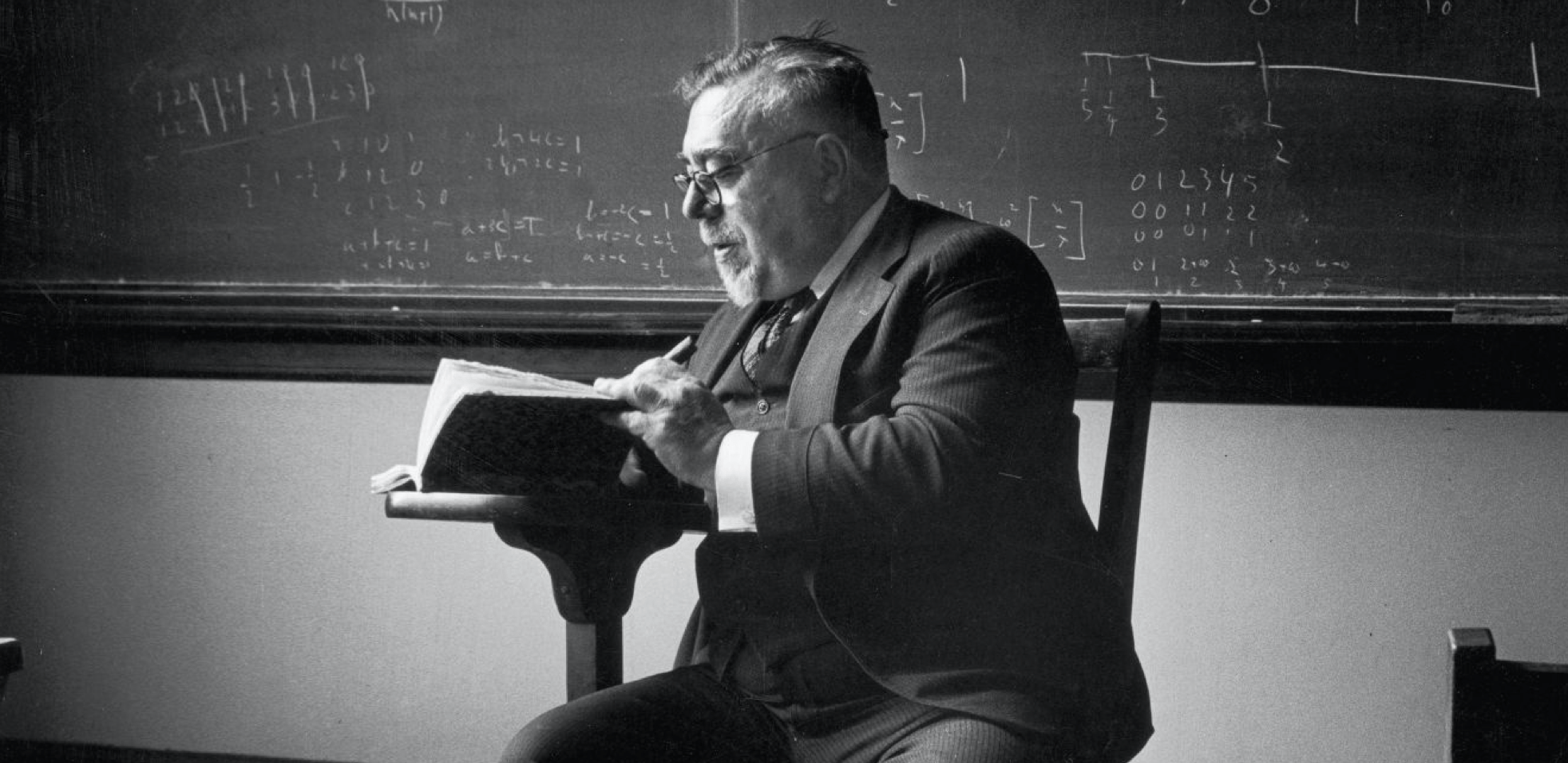
The Absent-Minded Father of Cybernetics, Norbert Wiener

via The Absent-Minded Father of Cybernetics, Norbert Wiener

The Absent-Minded Father of Cybernetics, Norbert Wiener

Jørgen Veisdal

Jørgen Veisdal
Following
Mar 7 · 30 min read

“When we met, was I walking to the faculty club or away from it? I’m wondering, because in the latter case I’ve already had my lunch”

merican mathematician Norbert Wiener (1894–1964) was by all accounts, a very peculiar man. After graduating from high school at 11 years old, he entered Tufts College and within three years was awarded an A.B. in mathematics. Before the age of 18, Harvard had awarded him a Ph.D. for his dissertation in mathematical logic. Described by author Sylvia Nasar as

“An American John von Neumann, a polymath of great originality who made stunning contributions in pure mathematics and then embarked on a second and equally astounding career in applied mathematics”

Wiener would be the man to give modern meaning to the word ‘feedback’ through his invention of cybernetics (the study of regulatory systems) which has since birthed revolutionary subfields such as artificial intelligence, computer vision, robotics, neuroscience, and many more.

Collective Impact Forum | Evaluating Systems Change Efforts: Where to Start

via Collective Impact Forum | Resources

Evaluating Systems Change Efforts: Where to Start

Evaluating the impact of long-term systems change work is always complex- there is no one-stop primer or resource that will truly encompass the questions that need to be asked and the data collection methods to use. Evaluating complex initiatives or evaluating programs in complex environments requires the application of a systems lens and a set of principles of practice, as well as attending to the particular contextual characteristics of each case.

Where does one start then when looking at your own systems change work and how to learn from its design and implementation? What do you need to think about when gauging your progress and the initiative’s intended effects, influence, and impact?

Join FSG and the Collective Impact Forum for this discussion with Hallie Preskill and Joelle Cook who lead FSG’s Strategic Learning and Evaluation practice, as we delve into how evaluating system change is different from evaluating programs, and talk about some of the core evaluation principles needed when advancing systems change work.

Webinar Presentation: Access a copy of the webinar presentation at the link on the left of this page. (Logging into your Forum account will be necessary to download.)


Webcast Guests:

• Joelle Cook, Director, FSG
• Hallie Preskill, Managing Director, FSG
Related Resources


Disturbance in human gut microbiota networks by parasites and its implications in the incidence of depression, Ramirez-Carrillo et al (2020) | Scientific Reports

via Complexity Digest

source: Disturbance in human gut microbiota networks by parasites and its implications in the incidence of depression | Scientific Reports


Scientific Reports

Disturbance in human gut microbiota networks by parasites and its implications in the incidence of depression

Understanding the Power of Position: A Diagnostic Model – Michael Sales

via Social Systems

a brilliant exposition of of Barry Oshry’s core work.

Australasian Change Days September 11 – 13 2020, Perth, Australia

via Australasian Change Days | Welcome to the Australasian Change Days


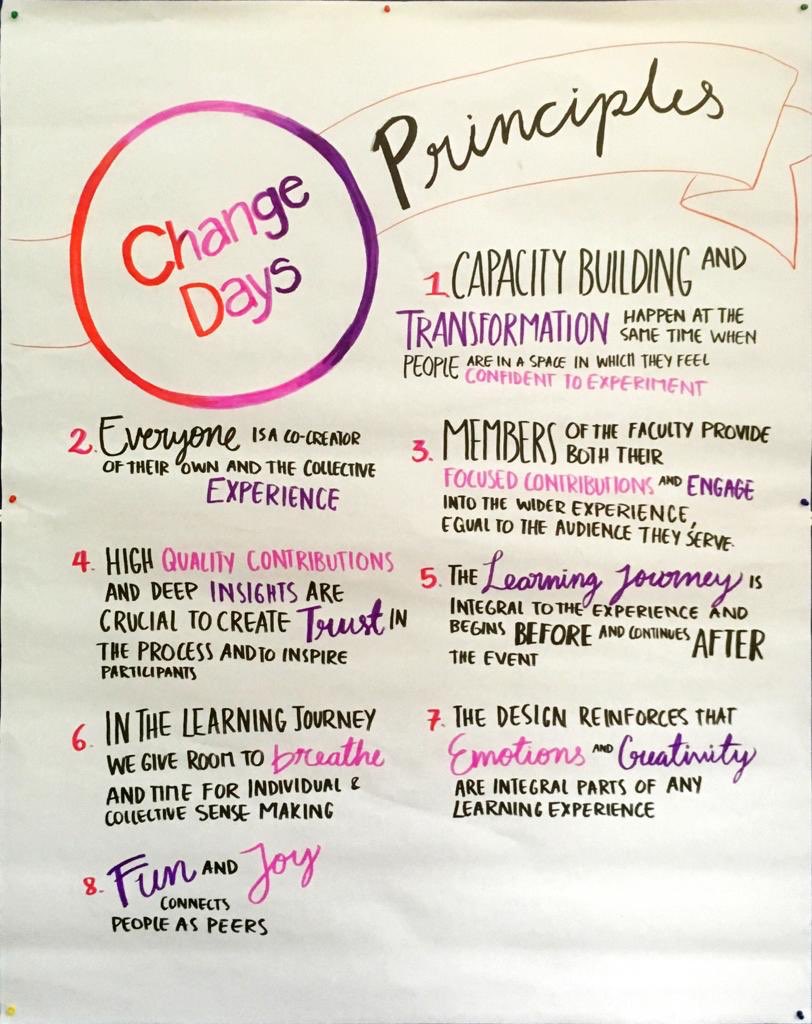
About Change Days

BUILDING CONNECTEDNESS

Do you lead change or strive to make a difference?

What if we bring our collective effort to bear in new ways to address increasingly complex challenges?

Somewhere between a conference and a festival is the space for Change Days.

Come and be a part of the first Australasian Change Days in Perth, Western Australia, a city that is both the most isolated capital city in the world AND in the same time zone as 60% of the world’s population.

The Australasian Change Days Community (ACDC) will

•  Provide a unique space and opportunity for people who are passionate about change to: connect, share, debate, learn and evolve the practice of Change Management.

•  Be a place where participants share and learn from and with an inclusive, evidence-based community of practice, looking to experiment with leading edge approaches to lead change in organisations and communities

•  Invite participants to create connections with others based on shared values

•  Give space and time to foster new connections (making friends) and nurturing existing connections (strengthening existing friendships)

Every facilitator is a participant!

Be part of the ACDC changemaker tribe by offering a 1 ½ hour interactive workshop session, piece of art, or a learning journey before, during or even after the conference contributing with your experience, excitement and energy to the effort of building Connectedness.

What can you add to the topic of Connectedness? We want to include a breadth of topics related to the theme, not just those deemed traditional “Change Management”.

If you would like to host a pre or post conference workshop then contact me below.


We are more connected and more

fragmented than ever before

Absorbed by light

Three figures sit next to each other on a bench, displaying the typical characteristics of smartphone users: their heads are bent, fingers typing and swiping, and their faces are lit up by their phone screens. While their bodies are physically present, their minds are elsewhere.

‘Absorbed by Light’, designed by the British Gali May Lucas and executed by Berlin-based sculptor Karoline Hinz.

The phone and computer screens that, literally and figuratively, light up our lives are irresistible. We read new messages immediately and want easy access to our social media, useful apps, and browser. Our smartphones are with us all the time – in bed, on the toilet, in the train, at our desk. They are an extension of our contact with our families, friends, and even people on the other side of the world. And as a result, we engage ourselves more with the virtual and superficial reality than with each other and the real world around us, something Lucas makes painfully clear. Actively involving the audience in the ‘story’ is a recurring feature in the work of the British artist, who works in Amsterdam as a graphic designer.


Continues in source Australasian Change Days | Welcome to the Australasian Change Days

Constellations

perspectivainsideout's avatarINSIDE OUT

“It is vital to reawaken the wisdom of the body.” – Mark Vernon introduces Constellations

The body has its own intelligence. It can sound strange to put it like that because we live in an age that has become preoccupied with computers as the paradigm of smartness. This approach values the sort of intelligence that solves problems, calculates and works with concepts. But it’s increasingly being recognised that there are other ways of knowing, and that the body plays a key part.

One way it is showing up is in the cognitive sciences. For example, Philip Barnard of Cambridge University has developed a model to understand how the mind works that includes the body. It draws on empirical research in psychology and sees the body as connected to what Barnard calls the ‘implicational subsystem’.

This implicit mode of understanding is particularly active when we are interacting with the world…

View original post 656 more words

The Impact Gaps Canvas – Tacklingheropreneurship

via The Impact Gaps Canvas – Tacklingheropreneurship

“The nucleolus makes the machines that make the machines that do virtually everything. The cell tour in the Animated Textbook ‘Life’ thus goes from the nucleolus outward, structurally AND functionally, so students can appreciate the cell as a whole”

via (1) Smart Biology on Twitter: “The nucleolus makes the machines that make the machines that do virtually everything. The cell tour in the Animated Textbook ‘Life’ thus goes from the nucleolus outward, structurally AND functionally, so students can appreciate the cell as a whole #biology #animation #education https://t.co/J80D6yCYZN” / Twitter


s
search
c
compose new post
r
reply
e
edit
t
go to top
j
go to the next post or comment
k
go to the previous post or comment
o
toggle comment visibility
esc
cancel edit post or comment