
What science can do for democracy: a complexity science approach Don Ross Patricia Palacios Karoline Wiesner 2020, Humanities and Social Science Communications
(1) (PDF) What science can do for democracy: a complexity science approach | Don Ross, Patricia Palacios, and Karoline Wiesner – Academia.edu
Monthly Archives: May 2021
Colloquium on Complex and Biological Systems – Events – Professur Biologische Physik – University of Potsdam, Fridays until 23/7/2021
source:
Colloquium on Complex and Biological Systems – Events – Professur Biologische Physik – University of Potsdam
Colloquium on Complex and Biological Systems
Participating groups: Theoretical Physics, Statistical Physics,
Nonlinear Dynamics, Biological Physis,
Mathematical Modelling, Systems Biology
Time: Fridays 10:15 – 11:45 h
Location: 2.28.0.108 –> Zoom
SS 2021
Centro de ciencias de la complejidad,UNAM
El Centro de Ciencias de la Complejidad (C3) es un espacio de encuentro en la UNAM donde buscamos reunir a los científicos, artistas, humanistas y técnicos de Facultades, Escuelas, Centros e Institutos para colaborar y enfrentar, con un enfoque integrador, desafíos transdisciplinarios de relevancia nacional aprovechando la sinergia resultante de la interacción entre diferentes áreas del conocimiento.
Con la creación del C3, la UNAM busca apoyarse en su enorme capital científico y técnico para integrar, el rigor y el espíritu inquisitivo que caracterizan a la investigación científica, a la búsqueda de soluciones para los complejos desafíos que enfrenta el país.
Misión
Estamos comprometidos con la sociedad para la solución de problemas complejos a través de proyectos trans-disciplinarios, de la formación de recursos humanos y del desarrollo de conocimiento en las ciencias de la complejidad.
Visión
Ser un centro académico adaptable que promueve la sinergia en la generación y gestión de proyectos con enfoque sistémico que impacta en el avance de las ciencias de la complejidad y en la comprensión, prevención de problemas sociales y ambientales.
Ser un espacio de encuentro que integra capital intelectual para investigar y solucionar problemas complejos, de relevancia social, de forma flexible, pertinente y adaptativa.
https://www.c3.unam.mx/
Coarse-graining as a downward causation mechanism – Flack (2017)
Coarse-graining as a downward causation mechanism Show affiliations
Coarse-graining as a downward causation mechanism – NASA/ADS
Coarse-graining as a downward causation mechanism
Show affiliations
Abstract
Downward causation is the controversial idea that `higher’ levels of organization can causally influence behaviour at `lower’ levels of organization. Here I propose that we can gain traction on downward causation by being operational and examining how adaptive systems identify regularities in evolutionary or learning time and use these regularities to guide behaviour. I suggest that in many adaptive systems components collectively compute their macroscopic worlds through coarse-graining. I further suggest we move from simple feedback to downward causation when components tune behaviour in response to estimates of collectively computed macroscopic properties. I introduce a weak and strong notion of downward causation and discuss the role the strong form plays in the origins of new organizational levels. I illustrate these points with examples from the study of biological and social systems and deep neural networks.This article is part of the themed issue ‘Reconceptualizing the origins of life’.
Publication: Philosophical Transactions of the Royal Society A: Mathematical, Physical and Engineering Sciences, vol. 375, issue 2109, p. 20160338 Pub Date: November 2017 DOI: 10.1098/rsta.2016.0338 Bibcode: 2017RSPTA.37560338F
An introduction to complex system science – Roli (2015)
An introduction to complex system science ∗
[PDF] An introduction to complex system science ∗ | Semantic Scholar
An introduction to complex system science
- A. Roli
- Published 2015
∗I am grateful to Prof. Silvana Bettelli Biolchini, who disclosed to me the beauty of science and introduced me to fractals, chaos and dynamical systems when I was a student at the high school. I would like to dedicate her these notes, hoping that she will enjoy reading them, remembering those pioneer times in which we had to wait a whole day to get the first fractal image on a computer monitor. campus.unibo.itSave to LibraryCreate AlertCiteLaunch Research FeedShare This Paper
Heinz von Foerster’s Demons The Emergence of Second-Order Systems Theory | Clarke (2009)
h/t Harish Jose
Heinz von Foerster’s Demons The Emergence of Second-Order Systems Theory
(PDF) Heinz von Foerster’s Demons The Emergence of Second-Order Systems Theory | Bruce Clarke – Academia.edu
Heinz von Foerster’s Demons The Emergence of Second-Order Systems Theory
Bruce Clarke 2009, Emergence and Embodiment: New Essays on Second-Order Systems Theory (Duke).65 Views14 Pages1 File ▾Constructivism,Cybernetics,Systems Theory,Niklas Luhmann,Second-Order Cybernetics …more ▾Show more ▾“Heinz von Foerster’s Demons: The Emergence of Second-Order Systems Theory” examines some of the prehistory of neocybernetics by reading von Foerster’s key 1959 paper on self-organization through the hindsight of his early-1970s work that launched second-order cybernetics proper. Not one but two Maxell’s Demons bind thermodynamic to informatic self-organization in the 1959 paper, and his own creation, the Man with the Bowler Hat, links that earlier paper with “On Constructing a Reality” of 1973, by way of contrasting the singularity of metaphysical solipsism with the multiplicities of epistemological constructivism. Not only does it take multiple Demons to conceptualize negentropy in informational systems; it also takes the co-construction of at least two operationally-closed observers to produce a reality: “reality appears as a consistent reference frame for at least two observers.” The concluding section of the essay unfolds this powerful statement from the 1959 paper as a prefiguration of the neocybernetic concept of reentry, by which the systems/environment dyad recurs upon and ramifies within the system itself. In Luhmann’s theory, the dyad of mutually closed psychic and social systems is capable of interpenetration and meaningful resonance just because they share this same paradigmatic operation, becoming “two observers” that construct out of their coupled autonomies the world as a reference frame for psychic and social realities.
Models, networks and algorithmic complexity – Ruffini (2016)
source:
[1612.05627] Models, networks and algorithmic complexity
[Submitted on 13 Dec 2016]
Models, networks and algorithmic complexity
I aim to show that models, classification or generating functions, invariances and datasets are algorithmically equivalent concepts once properly defined, and provide some concrete examples of them. I then show that a) neural networks (NNs) of different kinds can be seen to implement models, b) that perturbations of inputs and nodes in NNs trained to optimally implement simple models propagate strongly, c) that there is a framework in which recurrent, deep and shallow networks can be seen to fall into a descriptive power hierarchy in agreement with notions from the theory of recursive functions. The motivation for these definitions and following analysis lies in the context of cognitive neuroscience, and in particular in Ruffini (2016), where the concept of model is used extensively, as is the concept of algorithmic complexity.
| Subjects: | Machine Learning (cs.LG) |
| Report number: | STARLAB TECHNICAL NOTE, TN00339 (V0.9) |
| Cite as: | arXiv:1612.05627 [cs.LG] |
| (or arXiv:1612.05627v1 [cs.LG] for this version) |
Submission history
From: Giulio Ruffini [view email]
[v1] Tue, 13 Dec 2016 00:54:03 UTC (1,693 KB)
Beyond the Great Reset – Systems Change Alliance, May 15, 2021 FREE LIVESTREAM
Beyond the Great Reset The Systems Change Summit May 15, 2021 FREE LIVESTREAM
Beyond the Great Reset – Systems Change Alliance
 |
 Beyond the Great Reset: Beyond the Great Reset:The Systems Change SummitDear friends, Beyond the Great Reset: the Systems Change Summit is happening tomorrow! To those of you who have registered, thank you for your vote of trust, and to those who haven’t, today is the last opportunity to join us for a day of great talks by some of the best thinkers and activists of our time, and to participate in creating a joint Declaration for Planetary Systems Change!The Full LineupHear from this great lienup of speakers on how we can create a world beyond “corporate sustainability” and move toward regenerative cultures and needs-based economies. First Session |
| 7.00-8.00 UTCHelena Norberg-Hodge Strengthening Local Economies worldwide – The path to healing ourselves and the planet  |
8.00-8.45 UTCSohail Inayatullah Alternative Futures for Capitalism  |
| 8.45-9.30 UTCByron Joel The Great Reset: Sovereignty and Servitude in the Age Of Surveillance  |
Discussions and Networking Event |
| 11.00-13.00 UTCSpeed Networking Get paired up with a different systems changemaker every few minutes, or use the gather.town space freely to start conversations on your own! 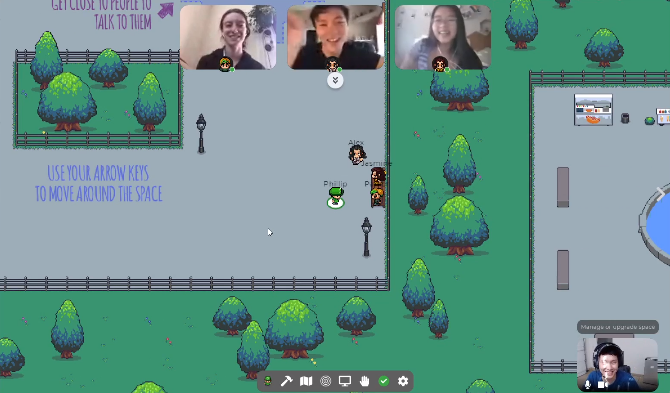 |
Second Session |
15.00-15.45 UTCClare Politano Technology as a Commons: Why Systems Change Requires Cooperative Technology  |
| 15.45-16.30 UTCDaniel Christian Wahl Regenerative Cultures and Economies of Place  |
16.30-17.15 UTCRichard Heinberg Clean Energy Shift  |
Discussions and Networking Event |
| 17.30-19.30 UTCDiscussions and Speed Networking Participate in the discussion rooms to help co-create the Planetary Declaration for Systems Change, or join the networking rooms if you are in a more social mood! |
Third Session |
20.00-20.45 UTCJames Quilligan The Global Shift to Distributive Value: From Supply-Side to Needs-Based Economies  |
20.45-21.30 UTCEmily Kawano Solidarity Economy and System Change  |
21.30-22.30 UTC Priscella Kinney Environmental and Community Stewardship  |
| All the talks will be livestreamed and are free to watch, but you can also opt to join the gather.town virtual space, which will be open for 24 hours, to freely interact with other summit participants, join discussions and participate in structured networking!Learn More and Register Here |
Talking Systems – Organisational Design in a Systems Context (Dr Naomi Stanford)- NHS Leadership Academy, 15 July 2021 2-3pm BST
source and booking at:
Talking Systems – Organisational Design in a Systems Context
Talking Systems – Organisational Design in a Systems Context
15 July 2021 2:00pm – 3:00pm BST (+01:00)
Location TBC
FREE
We are delighted that Dr Naomi Stanford has agreed to launch our Talking Systems series of events for 2021-22.
Naomi is a leading light in her field, as her biography amply demonstrates. She is an internationally recognised organization design practitioner, teacher, and author.
During her earlier UK career, Dr Stanford was an employee of large multinational companies, including Price Waterhouse, British Airways, Marks & Spencer, and Xerox. She then moved to the US working as an organization design consultant to a range of organizations in the government, non-profit and private sectors.
Six years ago she returned to the UK work in the government sector as a Civil Servant. Naomi is now free-lancing as an organization design consultant. Currently she is writing a third edition of her Economist book A Guide to Organization Design. Additionally, she writes books, articles, speaks at conferences, and tweets regularly on organization design.
Her website can be found at http://www.naomistanford.com; she tweets from the following account – @naomiorgdesig
For this session, Naomi will be addressing the challenges of practising “organisation design” in a system context – and will touch upon the highly topical issue of org design in relation to “hybrid working”.
As ever with these hour-long sessions, Naomi will initially be invited to offer some insights into her recent experiences in the field and her latest thinking on her topic. Thereafter, we will engage her in conversation, using themes and questions submitted by the audience in advance of the session. We will also use the chat box in real-time to channel further questions to Naomi in the course of that exchange. Just before the end, we will invite her to sum up on the basis of the discussion that we have had.
We hope that you are able to find the time to join us for what promises to be a fascinating session.
Festival of Complexity 2021 – Complexity Institute 14 May-11 June 2021
Starts tomorrow!
Complexity Festival 2021 – Complexity Institute
Festival of Complexity 2021
Festival of Complexity 2021:
“Between certainties and uncertainties”
Festival disseminated online on complexity and systemic approach
The Complexity Festival is the national event, completely self-financed, dedicated to deepening, debating and disseminating the issues of complexity and the systemic approach
The new edition of the Complexity Festival is now at the starting blocks. From mid-May to mid-June 40 events are scheduled to discuss the theme chosen for the 2021 edition: “Between certainties and uncertainties”. After 2020, the watershed year between a before and after pandemic, 2021 is the year of awareness, not only to ask ourselves what to do, but also to “map new territories” with the support of the complex paradigm.
How to interpret the dynamics we have and are going through in all fields of human life? What compasses do we have? How to move in that gray area between certainties and uncertainties, inspired by the principles of complexity to build new paths and ask new questions?
The events of the Festival will be an opportunity to debate, starting from the logic of complexity and the systemic approach.
When
From 14 May to 11 June 2021, in two time slots: from 18 to 19:30; from 9pm to 10.30pm.
How
The events will all be held online; each promoter will make its web meeting platform available, providing access information in time.
Thing
Within the 2021 theme “Between certainties and uncertainties”, the themes explored will be many, such as neuroscience, psychology, law, health, anthropology, online disinformation, algorithms, polarization, environment, counseling, social sciences, uses of technology, geopolitics , learning, leadership, literature, artificial intelligence.
Who
The promoters are numerous also this year: In addition to the Complexity Institute, there will be Sipre Parma, Dedalo ’97, Complexity Education Project, Pordenone Design Week, Circle of women – Misterbianco, UDI – Catania, CHANGE Institute, SOLE Committee (Health, Opportunities, Jobs, Ecology), Complexity Circle Padua, The Talking Hands Parma, Giada Li Calzi, Speira Association, Chiara Veneri, Sum Project, Rebecca Silvia Rossi and SIPRe.
The program of the first week of the Festival of Complexity
(14 – 21 May):
Friday 14 May 2021 – 9:00 pm – 10:30 pm
The turning point, from absolute certainty to the relationship between certainty and uncertainty, in scientific knowledge
Opening event of the Complexity Festival with Giuseppe Gembillo
Monday 17 May 2021 – o re 6:00 pm – 7:30 pm
Space bales and talking crickets
Organized by the Staff of the Festival della Complessità and by Fulvio Forino
Hours 21:00 to 22:30
White Privilege
Organized by SIPRe Parma
Tuesday 18th May 2021
18:00 – 19:30
Surfing or drowning in information overload . An aperitif with a little chat about complexity – #AperiCep 1: the power of digital infrastructures
Organized by the Complexity Education Project
Hours 21:00 to 22:30
From Boccaccio to complexity: crazy stuff!
Organized by the Dedalo ’97 Association and 20 cents of psychiatry
Wednesday 19th May 2021
18:00 – 19:30
The health you expect: Fulvio Forino interviews Pippo Noto
Arranged by Giada Li Calzi
Hours 21:00 to 22:30
Certainties and uncertainties between mind and body. Dialogue between neuroscience, psychotherapy and law
Arranged by Rebecca Silvia Rossi
Thursday 20 May 2021
18:00 – 19:30
Design and Complexity. A look at the contemporary post-industrial project in the light of the complex scenarios in which we live
Organized by Pordenone Design Week and Complexity Education Project
Hours 21:00 to 22:30
The iridescent mirror: paths and experiences to educate to complexity
Organized by Cerchio delle Donne – Misterbianco and UDI Catania
Friday 21st May 2021
Hours 21:00 to 22:30
Between certainties and uncertainties in our complex era
Event organized by the Staff of the Complexity Festival with Pierluigi Fagan
Find all the events of the 2021 edition at this link:
https://www.festivalcomplessita.it/festival-della-complessita-2021-calendario-eventi/
Watch the presentation video of the Festival of Complexity 2021:


Complexity Institute – Recognize the present to explore the future
source:
Complexity Institute – Recognize the present to explore the future
WHO WE ARE
The Complexity Institute is a social promotion association founded in 2010 whose purpose is to spread complex thinking and ethics in behavior to help people and organizations to better understand the context in which they live in order to be an active and co-generating part. .The Scientific Committee includes scholars and experts in complex systems, including: Edgar Morin, one of the greatest philosophers of complexity, Pier Luigi Luisi, professor at ETH Zurich and internationally renowned scholar on the emergency of life, Alberto Felice De Toni, former rector at the University of Udine, President of the CRUI Foundation and professor of Management of Complex Systems. The President of the Complexity Institute is Marinella De Simone and the Vice President is Dario Simoncini.to know more
WHAT DO WE DO
The Complexity Institute has organized for six years, from 2013 to 2018, the Complexity Management Summer School and the Complexity Management Winter Lab, with the active participation of teachers, experts, managers and professionals from all over Italy on the issues of complexity applied to organizations. Since 2014, it has organized the Complexity Literacy Meeting every year, a three-day national event in which books are presented by authors and readers in a complex perspective, with dialogues and discussions between all the participants.
In March 2020, during the lockdown, he published an instant e-book online with the contribution of 18 authors entitled “The complexity of a pandemic”, which in a few days exceeded 3000 downloads from the site.
Between April and July 2020 he organized 12 weekly web-meetings dedicated to the complexity of the future that awaits us, and from October to December 2020 he organized the Complexity Literacy Meeting “Readings for a new world” with 10 web-meetings, to which a total of more than 5000 people are registered.
From March to April 2021 it held a series of web-meetings dedicated to the theme “Complexity in action – 8 levers to change the world”. The themes of the 8 evenings are inspired by the 8 principles of the Global Enaction Manifesto.The Complexity Management Executive Master 2021/2022 will take place from September 2021 to April 2022.
Systems Thinking in the wild; some examples
Critics are right; so much of systems thinking out there in the wild is still Peter Senge / systems dynamics / stock-and-flow / naive systems mapping. Not that I’m critical of all these examples, but it’s good to do a survey occasionaly.
Modern materials handling:
COVID-19, Systems Thinking and Preparing for the Next Pandemic
We now know that disruptions are inevitable. To handle the next pandemic effectively, decision makers need to grasp what worked, what didn’t and why
https://www.mmh.com/article/covid_19_systems_thinking_and_preparing_for_the_next_pandemic
“Systems thinking posits that managers make better decisions if they know how a system works; that is, if they pull lever “Y” what happens to the rest of the system? Systems thinking presupposes three prerequisites: An understanding how elements in a system interact to affect performance, access to information to assess tradeoffs, and insight into constraints. When managers fail to use systems thinking, they tend to make myopic decisions with costly, even painful, outcomes.”
NiemanLab
How systems thinking is guiding El Tímpano’s reporting on health & overcrowded housing
“We convened reporters and editors from KQED, El Tecolote, The Oaklandside, Reveal, The Mercury News, and Bay City News, using a systems thinking tool called the “iceberg model” to collaboratively map the structures, policies, and ideas fueling Oakland’s overcrowded housing crisis. Participants broke into small groups and brainstormed examples for each layer of the iceberg, pictured below.”
“From there, we began to create what systems thinkers call “feedback loops” — visual representations of self-perpetuating patterns, in this case, those related to overcrowding and poor health outcomes among Oakland’s Latino and Mayan immigrant communities. Through this process, we were better able to understand how different factors, such as access to rent relief, can have a domino effect, either improving tenants’ ability to live in healthy conditions, or driving further overcrowding.”
That course: an intro to systems thinking for journalists
https://www.systems.journalismdesign.com/a-basic-introduction
Brookings.edu
A health-data ecosystem to protect against public-health threats May 6
“The health industry is a complex socioeconomic-technical enterprise with numerous disparate and intertwined entities, which is why it has been particularly difficult to institute the types of structural changes that benefit other sectors. Achieving better health outcomes from more efficient care using a health-data ecosystem is going to require concerted and collaborative efforts from a wide range of public and private entities. A requirements-driven systems engineering approach that couples systems thinking and the systems engineering life cycle is required to marshal this effort’s focus and energy.”
“The key first step in this approach is the designation of a lead organization to shepherd its design.”
TEDx
Steven Woodsmall·TEDxLakeJunaluska
Systems Thinking is Not Optional: Lessons From a Pandemic
Applying Senge’s ‘laws’ of systems thinking from the Fifth Discipline
Klaus Krippendorff: Why Problem-Solving Becomes A Problem? – YouTube
Klaus Krippendorff: Why Problem-Solving Becomes A Problem?
Klaus Krippendorff: Why Problem-Solving Becomes A Problem? – YouTube
A Club of Remy session
Relating Systems Thinking & Design (RSD10) symposium, 3-6 November 2021, partially on-line/Delft University of Technology – and call for papers
Relating Systems Thinking & Design Symposium Playing with tensions Welcome! Welcome to RSD10, the 10th Relating Systems Thinking & Design Symposium, which will be hosted by Delft University of Technology, The Netherlands. RSD10 offers a platform for discussing ongoing work with peers and presents the state-of-the-art in the systemic design field. The theme of this year’s symposium is Playing with Tensions. Dates Nov 3 — Nov 6 2021 Location Delft, The Netherlands
Relating Systems Thinking & Design
Relating Systems Thinking & Design Symposium
Playing with tensions
Welcome!
Welcome to RSD10, the 10th Relating Systems Thinking & Design Symposium, which will be hosted by Delft University of Technology, The Netherlands. RSD10 offers a platform for discussing ongoing work with peers and presents the state-of-the-art in the systemic design field. The theme of this year’s symposium is Playing with Tensions.
Dates
Nov 3 — Nov 6 2021
Location
Delft, The Netherlands
Playing with Tensions
Embracing new complexity, collaboration and contexts in systemic design
The fate of all complex adapting systems in the biosphere – from single cells to economies – is to evolve to a natural state between order and chaos, a grand compromise between structure and surprise.
Stuart Kauffman, At Home in the Universe
Complex systems do not lend themselves to much simplification. Systemic designers have no choice but to embrace complexity, and in doing so, embrace opposing concepts and the resulting paradoxes. It is at the interplay of these ideas that they find the most fruitful regions of exploration.
The main conference theme explores design and systems thinking practices as mediators to deal fruitfully with tensions. Our human tendency is to relieve the tensions, and in design, to resolve the so-called “pain points.” But tensions reveal paradoxes, the sites of connection, breaks in scale, emergence of complexity. Can we embrace the tension, the paradoxes as valuable social feedback in our path to sustainable and just futures?
We invite you to come and play with tensions in systemic design at the forthcoming Relating Systems Thinking & Design (RSD10) symposium. This hybrid symposium will take place 3-6 November 2021 and will be partially on-line and partially happening at Delft University of Technology. You can find more information about the Call for Papers here.
Restricted Complexity, General Complexity Morin (2016)
Restricted Complexity, General Complexity Edgar Morin Why has the problematic of complexity appeared so late? And why would it be justified?
[cs/0610049] Restricted Complexity, General Complexity
 Systems Community of Inquiry
You must be logged in to post a comment.