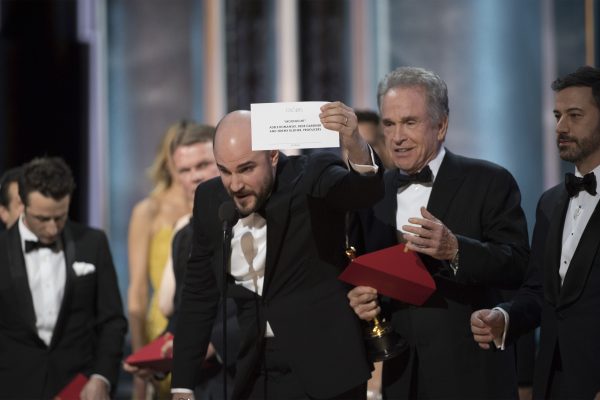
THE OSCARS(r) – The 89th Oscars(r) broadcasts live on Oscar(r) SUNDAY, FEBRUARY 26, 2017, on the ABC Television Network. (ABC/Eddy Chen) JORDAN HOROWITZ, WARREN BEATTY, JIMMY KIMMEL
We tell our children unsettling fairy tales to teach them valuable life lessons, but these Cautionary Tales are for the education of the grown-ups — and they are all true. Tim Harford (Financial Times, BBC, author of “Messy” and “The Undercover Economist”) brings you stories of awful human error, tragic catastrophes, daring heists, and hilarious fiascos.https://www.youtube.com/embed/8KeOxeuiZjs?feature=oembed
Galileo tried to teach us that adding more and more layers to a system intended to avert disaster often makes catastrophe all the more likely. His basic lesson has been ignored in nuclear power plants, financial markets and at the Oscars… all resulting in chaos. At the 2017 Academy Awards, Warren Beatty and Faye Dunaway famously handed the Best Picture Oscar to the wrong movie. In this episode of Cautionary Tales, Tim Harford takes us through all of the poor design choices leading into the infamous La La Land/Moonlight debacle, and how it could have been prevented.
“La La Land” producer Jordan Horowitz hands the best picture Oscar to “Moonlight” (CC BY-ND 2.0)
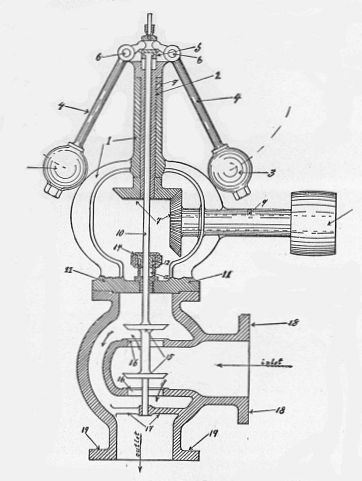
I’m automatically sceptical of anything that’s a theory of everything, that has this kind of graphics, or talks about cybernetics and mind (remembering the infamous ‘Psycho-cybernetics’), but hey ho…
The Cybernetic Theory of Mind: The Five Foundational Axioms8/20/20200 Commentsby Alex M. Vikoulov “I believe that new mathematical schemata, new systems of axioms, certainly new systems of mathematical structures will be suggested by the study of the living world.” –Stan Ulam
“New opinions are always suspected, and usually opposed, without any other reason but because they are not already common.” –John Locke
This introductory article summarizes the tenets of the Cybernetic Theory of Mind (CTM) with the five foundational axioms. All of these starting assumptions for the new ontological framework are discussed in my recent book The Syntellect Hypothesis: Five Paradigms of the Mind’s Evolution. Here I try to keep this summary short and simple for the reader, maximally leaning towards a more literary, “bookish” style rather than the overly scholarly one. Also, The Cybernetic Theory of Mind is a working title for my upcoming book to be published sometime next year for the general audience. It may be followed by academic papers to clarify some thorny issues that I intend to publish on my own or in collaboration. The CTM model, a proposed version of the theory of everything, I’m currently working on, is an integral multi-disciplinary ontological model that allows to draw a wide variety of predictions and deductions from the intersections of two or more foundational axioms therein. The CTM model also allows integration of further epistemic elements under its broad ontological umbrella as they come to be known. In this summary, the formulation of each foundational axiom is followed by five exemplary deductions per axiom.
The understanding of evolutionary processes is one the most important issues of scientific enquiry of this century. Scientific thinking in twentieth century witnessed the overwhelming power of the evolutionary paradigm. It not only solidified the foundations of diverse areas such as cell biology, ecology, and economics, but also fostered the development of several mathematical and computational tools to model and simulate how evolutionary processes take place.
Besides the application of the evolutionary paradigm and the discovery of the evolutionary features for diverse processes, there is another interesting aspect which touches upon the emergence of novel evolutionary processes. Generally, the emergence of an evolutionary process requires a complex transition between a prior form where no evolutionary process is undergoing and a posterior form where the evolutionary process has been triggered. Most advanced methods to understand the emergence of evolutionary processes require the consideration of systemic features such as self-organization, resilience, and…
Tuesday, September 29, 2020 5:30 PM to 7:00 PM EDT
Details
A free flow discussion about Concepts and Principles to understand “the most underutilized and underestimated” tool in the Lean toolkit, what we came to know in the Western world as “Value Stream Mapping – VSM”. Since everybody nowadays states they are doing VSM in their companies, we will try to go to the roots, understand VSM through the needs that brought this tool to life. Then we will be able to say if we are really “Learning to See”.
We are privileged to be guided on this session by a Lead global expert on VSM, based in Belgium.
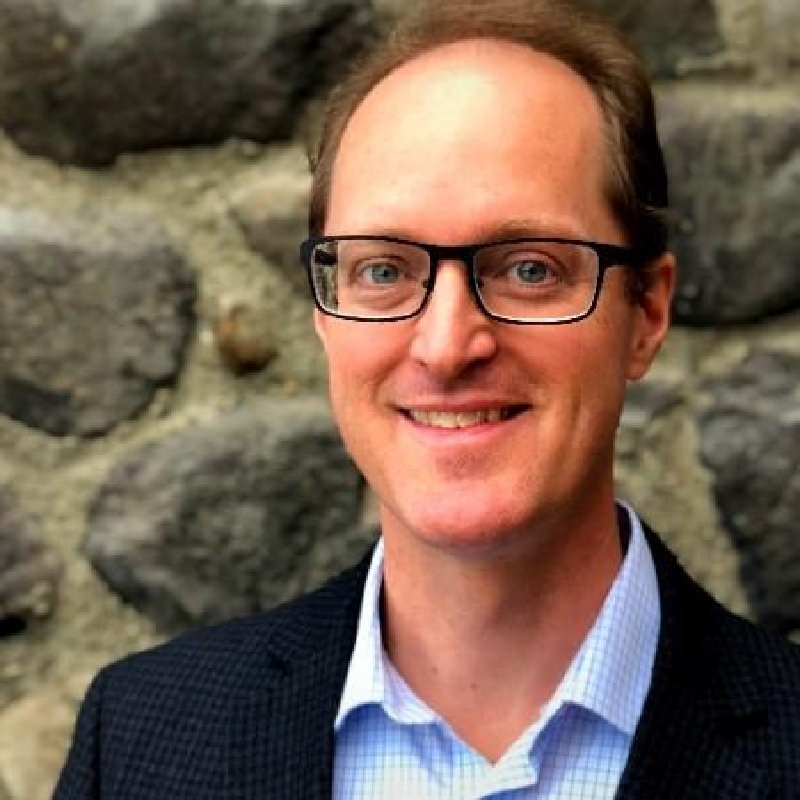
Dirk has more than 25 years of international experience in teaching and coaching implementations of lean/operational excellence in different manufacturing, healthcare and service industries throughout Europe, the Americas, Australia and Africa. Among his clients are companies such as Volvo, Mars, Philips, Daikin, Johnson&Johnson, Coca Cola, Amgen, Toyota, Delphi Technologies, TE Connectivity, AWS, etc. He works with executives, management, engineers, and employees in four languages and strongly believes in a teaching/coaching/mentoring approach to develop and empower people in order to get sustainable improvements and results. A major portion of his time he spends on improving flow and value stream design in and outside manufacturing.
For more than 10 years he combined his work in industry with academia at Ghent University (Belgium). As a professor of Industrial Engineering he taught and conducted research on productivity improvement, design of manufacturing and service operations and Lean/TPS. He was one of the founders of the first graduate Industrial Engineering program in Belgium and for five years also the program director of the “Master in Industrial Management” program. He guest lectured at several universities and business schools in the Netherlands, USA, Poland, Bulgaria, Mexico, Thailand and Israel. Currently he is in an academic sabbatical.
He holds a MS degree in Mechanical Engineering from The Royal Military Academy (Belgium), an MS degree in Industrial Management and a PhD in Industrial Engineering from Ghent University (Belgium).
Year and Degree2006, Doctor of Philosophy (Ph.D.), Bowling Green State University, Sociology.AbstractThe problem of collective action is the problem of free riders. Current theory argues that free riders are detrimental to group solidarity, and predict that free riders will be punished into compliance with cooperative group norms. Observational evidence from a variety of disciplines does not coincide with those predictions, however. Recent studies show that in many cases, 20%-40% of individuals will free ride regardless of the frequency and severity of punishment. This treatise seeksto explain the persistence of free riders by arguing that free riders perform latent functions in groups that actually maintain or increase group cohesion in naturally forming, long term groups. Analyzing theoretical work on the collective action problem from three disciplines – economics, evolutionary biology, and sociology – I show how drastically different approaches to the collective action problem converge on similar predictions about the nature and causes of free riding. I then show that these theoretical paradigms share a common origin from rational action models. I discuss why the current logic of rational action models are insufficient to offer a viable solution to the free rider problem. I then move beyond the traditional rational action approach by proposing an alternative kind of rationalisty which free riders pursue. Using game theory, I demonstrate the existence and utility of this new approach, and show how this alternative rationality contributes to a solution to the free rider problem by linking it to equilibrium theory. Equilibrium theory offers a means by which rational action models and functionalist models may be tied together in order to approach a solution to the free rider problem. I argue that free riders may perform functions in a group that serve to increase or maintain the solidarity of the group by tending the group toward a state of allostatic equilibrium. I argue that free riders validate or increase the status of productive group members; reduce the probability of incurrence of risk for productive group members; and increase group interdependence by driving down the group’s discount parameter. Through these functions, free riders may be seen as an adaptive mechanism by which a group might tend toward an equilibrium state in a dynamic environment.
In a radical reassessment of how the mind works, a leading behavioural scientist argues the idea of a deep inner life is an illusion. This is cause for celebration, he says, not despair
by Nick ChaterMain image: The conjuring trick of the mind. Illustration: Dominic McKenzie
Have you ever wondered why most systems maps are flat and two-dimensional whereas how we understand “the system” actually depends on the mental models and paradigms that Donella Meadows outlined in her 12 leverage points?
In the Developmental Perspectives and Systems Thinking workshop we organised on 14.9.2020 we explore how changing Developmental Perspectives (mental models and paradigms) affect how we view a real-life system.
Mikael Seppälä from Systems Change Finland spoke briefly about how Adult Developmental Psychology, Metamodernism and Integral Theory can inform Developmental Perspective taking. After that we did a few group exercises on perspective taking.
The main point of the discussion was to explore what it is like to get an experience of Systems Being which could be described as the experience of systems versus the systems maps that we use to describe them very often in Systems Thinking.
How can expanding our perspectives affect how we understand our systems?
In today’s post, I am looking with more depth at the ideas of Cybernetics with relation to Ross Ashby, one of the pioneers of Cybernetics.
In particular, I am looking at one of the Ashby aphorisms:
When a machine breaks, it changes its mind.
This is a very interesting observation from a Cybernetics standpoint. Ashby defined a machine as follows:
It is a collection of parts which (a) alter in time, and (b) which interact with on one another in some determinate and known manner.
A designer designs the machine specific to an environment. This means that the designer has encoded a model of the environment into the machine so that when certain perturbations are encountered, the machine reacts in a certain manner. The variety that is estimated to be “thrown” at the machine is captured by the designer, and appropriate responses are encoded into the parts or the circuitry…
One of the interesting hypotheses that DEFINITELY NEEDS MORE WORK, BUT IS LIKELY TRUE is the idea that, through Conway’s Law, values from the social organization transfer into the products developed by organizations will inherently embody the values that those organizations hold. We can revisit the Intermediate Corollary in these three slides, which say:
A continuation of the Requisite Agility movement (I’m part of RA, though not this conference) – drop me a line as I have a few free tickets, and a price reduction code once they’ve gone. Benjamin
11:00 am – 2:30 pm daily (US Eastern Time) Live onlineREGISTER NOW
It’s Time to Build Conscious Organizations
The Classical Renaissance, a period of artistic, architectural, and scientific discovery, was launched by the Black Death of the 14th Century.
Our Renaissance, the Renaissance of the 2020 global pandemic, spearheaded by leaders like you, is a period of elevated empathy, emotional resiliency, and consciousness manifest in your organizations that lighten the hearts and minds of your people and your clients.It is time to lead your people differently by elevating the consciousness of your leadership and your organizations – uplifting the hearts and minds of your people and your clients.
When your leadership is more conscious, you show more emotional intelligence, empathy, emotional resiliency, and self-awareness in the way you lead your team and serve your clients. You will also discover yourself doing good works for society and the world. During this live online event, you will learn how our speakers lead from a higher level of consciousness and achieve breakthroughs in performance while having a positive impact in their organizations, in their teams, in their families, in society, and in the environment.
Attain access to your inner intuition and intelligence to achieve your highest potential as a leader! KNOW MORE
Join Us As We Uncover The Five Realms Of Consciousness:
Self-Consciousness: Being at one and true to ourselves and our innate potential.
Mutual-Consciousness: The unconditional “love” that exists between people.
Communal-Consciousness: Organisations and communities of shared awakening.
Global-Consciousness: The awakening and flourishing of our collective humanity.
Cosmic-Consciousness: The spiritual source of oneness beyond time, space, memory and humanity.
OUR SPEAKERS
15 global thought leaders are going to lead an online conference over 3 days on October 28th -30th, 2020 to inspire the renaissance of our lifetime. Our legacy. Our mark on destiny.
Anand MehrotraSattva Yoga Academy
Henry YampolskyVirginia Tech
Annemarie BrownThe Sattva Collection
Selena DelesieDelesie Solutions Inc
Kashmir BirkThe True North
Michelle N. MooreMindEQuity Inc
Asta RaamiINNERVERSITY
Dame Janét Ahava Group Global
Tathagat VarmaWallmart Labs India
Tomas BjörkmanEkskäret Foundation
Anita NowakEmpathy Expert
Jeffrey DeckmanCapability Accelerators
Scott W. AmblerProject Management Institute
Jackie RobergeMindfulness-based Leadership
Geordie KeittKeitt Consulting Group, LLC
Kathryn SheridanSustainability Consult
Get your Ticket
If you know how you are going to shape the renaissance flowing out of this pandemic, Please join us to share your vision and positivity.
Discover how to manifest a Conscious Organization as a powerful new vehicle for ethical business. You will find the necessary tools, tactics, and practices for your organization to survive and thrive in the days after. Understand the power of conscious leadership as the new paradigm.
Inspire
Implement the conscious organization immediately – starting with yourself! Feel inspired and motivated to elevate your intentions, bring consciousness to life, and during the event, you will feel inspired and motivated to create the legacy of our Renaissance
Transform
Go beyond changing your organization, and instead transform it. As you and your organizations emerge from pre-crisis chrysalis, spread your wings to become the leaders and organizations you aspire to see in the days after. Begin your transformation journey with the guidance and companionship of teachers and participants from around the world.
Support Your Employees To Develop Conscious Organisations
Get in touch with our team for a custom proposal for your branding and marketing by sponsoring this amazing eventCONTACT US
Sponsors and Partners
Get in touch with our team for a custom proposal for your branding and marketing by sponsoring the RA Journey.BECOME A SPONSOR
A global pandemic is a terrible thing to waste. This is our time! Please join us for three days to explore and create the future, now!
an edited collection of 39 original papers and as many commentaries and replies. The target papers and replies were written by senior members of the MIND Group, while all commentaries were written by junior group members. All papers and commentaries have undergone a rigorous process of anonymous peer review, during which the junior members of the MIND Group acted as reviewers. The final versions of all the target articles, commentaries and replies have undergone additional editorial review.
Besides offering a cross-section of ongoing, cutting-edge research in philosophy and cognitive science, this collection is also intended to be a free electronic resource for teaching. It therefore also contains a selection of online supporting materials, pointers to video and audio files and to additional free material supplied by the 92 authors represented in this volume. We will add more multimedia material, a searchable literature database, and tools to work with the online version in the future. All contributions to this collection are strictly open access. They can be downloaded, printed, and non-commercially reproduced by anyone.
include
The Cybernetic Bayesian Brain
From Interoceptive Inference to Sensorimotor Contingencies
There is an on-going debate in cognitive (neuro) science and philosophy between classical cognitive theory and embodied, embedded, extended, and enactive (“4-Es”) views of cognition—a family of theories that emphasize the role of the body in cognition and the importance of brain-body-environment interaction over and above internal representation. This debate touches foundational issues, such as whether the brain internally represents the external environment, and “infers” or “computes” something. Here we focus on two (4-Es-based) criticisms to traditional cognitive theories—to the notions of passive perception and of serial information processing—and discuss alternative ways to address them, by appealing to frameworks that use, or do not use, notions of internal modelling and inference. Our analysis illustrates that: an explicitly inferential framework can capture some key aspects of embodied and enactive theories of cognition; some claims of computational and dynamical theories can be reconciled rather than seen as alternative explanations of cognitive phenomena; and some aspects of cognitive processing (e.g., detached cognitive operations, such as planning and imagination) that are sometimes puzzling to explain from enactive and non-representational perspectives can, instead, be captured nicely from the perspective that internal generative models and predictive processing mediate adaptive control loops.Keywords: embodied cognition; active perception; active inference; model-based systems
















 Systems Community of Inquiry
You must be logged in to post a comment.