The Hsue-Shen Tsien Think Tank: Adopting a Systems Science Approach to Address Complex Problems | Science | AAAS

A truly fascinating piece of sponsored material in Science magazine

Source: The Hsue-Shen Tsien Think Tank: Adopting a Systems Science Approach to Address Complex Problems | Science | AAAS

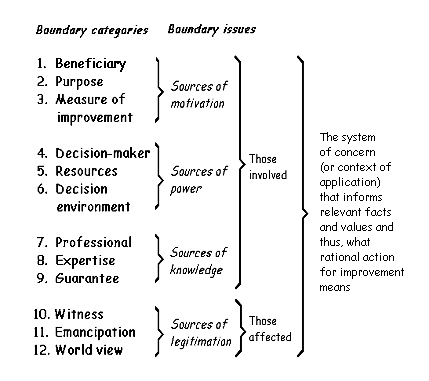
The Hsue-Shen Tsien Think Tank: Adopting a Systems Science Approach to Address Complex Problems

Hsue-Shen Tsien was the founder of systems science. He pioneered the development and application of systems thought, which began when he formulated systems engineering principles that were used in China’s aerospace industry, and continued as his ideas spread throughout Chinese education, industry, and government. A namesake think tank—the focus of this booklet—has emerged, which offers insights into areas as diverse as environmental management, policy-making, and education.

Yes, a Planned Economy Can Actually WorkNo, Walmart Is Not Evidence That Centrally-Planned Economies Work

Sharing this because it is one of the most important discussions around, and systems thinking needs to have a lot to say about economics (the intelligent free-market thinkers talk about markets as the bottom-up emergence of order) and organisational co-ordination (the Theory of the Firm demonstrates, I think, that the challenges of both internal and external co-ordination are about different responses to the same fundamental dynamics)


Mega-companies like Amazon and Walmart are already using large-scale central planning. We can wield that tool for good. Socialists need to renew our embrace of democratic planning and fight for a real alternative to capitalism.

Source: Yes, a Planned Economy Can Actually Work


It’s difficult to see how evidence of market failures or corporate success stories translates into the conclusion that a completely planned, socialist, non-profit economy is optimal.

Source: No, Walmart Is Not Evidence That Centrally-Planned Economies Work | Cato Institute


How interchangeable parts revolutionised the way things are made – BBC News


Source: How interchangeable parts revolutionised the way things are made – BBC News

How interchangeable parts revolutionised the way things are made

  • 8 hours ago
Illustration entitled "How To Charge A Musket" from A French Instruction Book Of 1776Image copyrightGETTY IMAGES

One sweltering afternoon in July 1785, officials, dignitaries and a few infuriated gunsmiths gathered at the Château de Vincennes, a splendid castle to the east of Paris.

They were there to see the demonstration of a new type of flintlock musket designed by Honoré Blanc, a gunsmith from Avignon so despised by his fellow makers, that he had been holed away in the dungeons of the château for his own protection.

Down in the cool of the castle cellars, Monsieur Blanc produced 50 locks – the lock being the firing mechanism at the heart of a flintlock weapon.

Briskly he took apart half of them and, with the insouciance for which the French are famous, he tossed their component parts into boxes.

There was a box for the mainsprings, a box for the hammers, a box for the faceplates and a box for the gunpowder pans.

A flintlock mechanismImage copyrightALAMY

Like a master of ceremonies ostentatiously agitating an urn full of numbered lottery balls, Monsieur Blanc shook these boxes to mix their components together. Then he calmly pulled out the parts at random and began to reassemble them into flintlocks.

What was he thinking?

Everyone present knew that each hand-crafted gun was unique. You couldn’t just jam a part from one gun into another and expect either to work. But they did. Blanc had taken enormous pains to ensure that all the parts were precisely the same.

It was a spectacular demonstration of the power of interchangeable parts.

Continues in source: How interchangeable parts revolutionised the way things are made – BBC News

The Foundations of Holonomics 9: Goethe’s Theory of Colours

Simon's avatarTransition Consciousness

In this series on the foundations of Holonomics we have been discussing the notion of ‘phenomena’ in relation to the manner in which we experience the world and the relationship between experience, perception and how we think about the world. We will now make the shift from intellectual investigation into an active way of exploring the world, an exercise which will help us experience the notion of a phenomenon directly.

Photo: Simon Robinson

The reason why Goethe’s Theory of Colour plays a prominent role in the Holonomics approach is that by actually carrying out these experiments with both our MBA students and also business executives, Maria and I have found that people are better able to explore the way in which scientific thinking impacts on the way in which they consider the natural world, and the extent in which our intellectual minds dominate over the other ways of knowing:…

View original post 2,478 more words

Changemaking – systems change website from Ashoka


Source: Changemaking – Changemaking

WHAT YOU WILL LEARN

What are Systems and how can we change them, making a deeper impact on the world around us, tackling problems that desperately need solutions.

HOW LONG WILL THIS TAKE

It’s fast and flexible! Three shorts films – not even 3 minutes each – pave the way to 6 easy-to-understand worksheets to complete on your own time.

Lots more in source: Changemaking – Changemaking

Jay Forrester – the beginning of systems dynamics – 1989

Source (pdf):Jay Forrester – the beginning of systems dynamics D-4165-1.pdf –

‘Banquet Talk at the international meeting of the Systems Dynamics Society Stuttgart, Germany’

Recommended to me by Mel Conway (that Conway! www.twitter.com/conways_law) – in a discussion about political power shift/phase transition modelling https://twitter.com/conways_law/status/1181286310444707844

“Jay Forrester in his early work with GE showed that what we thought of as “seasonal” was really oscillation caused by internal feedback.”

Bottom of p5 – looks like the real-life inspiration for the Beer Game.

Click to access D-4165-1.pdf

The InfoQ eMag – Taming Complex Systems in Production


Source: The InfoQ eMag – Taming Complex Systems in Production


The InfoQ eMag – Taming Complex Systems in Production

Software systems are becoming more complex, outages are becoming more expensive, and consumers are becoming less tolerant of downtime. All of this typically exerts a high mental (and physical) strain on operations engineers. Acknowledging the fragility of complex systems is the first step in building resilience into systems and people.

Further, to tame complexity and its effects, organizations need a structured, multi-pronged, human-focused approach, that: makes operations work sustainable, centers decisions around customer experience (tip: that’s what SLOs are for), uses continuous testing (yes, including in production), and includes chaos engineering and system observability.

In this eMag, we cover all of these topics to help you tame the complexity in your system and create a healthy working environment for people handling production.

Free download

DOWNLOAD PDF

The InfoQ eMag – Taming Complex Systems in Production include:

  • An Engineer’s Guide to a Good Night’s Sleep – Nicky Wrightson brings five tried and true techniques that helped her team at The Financial Times nearly eliminate out-of-hours support calls. This is not to say their system was fault-free, but rather that they were able to build a resilient technical and operational system. Wrightson highlights the importance of having teams that own their system, not just from a delivery point of view, but also the operational model and all the aspects supporting it. For instance, regularly practicing (injecting) failure scenarios recovery is fundamental to increase confidence of those supporting the system.
  • Designing Chaos Experiments, Running Game Days, and Building a Learning Organization – Speaking of failure scenarios and recovery, Daniel Bryant’s Q&A with prominent early adopters of chaos engineering from multiple organizations gives an overview of the benefits, challenges, and practices in this critical area for companies investing in seriously improving and learning from incident response. Reading this piece will help you separate the myth (chaos engineering is running random attacks in production) from the truth (chaos engineering is a principled practice of experimentation and information sharing that includes testing in production).
  • Sustainable Operations in Complex Systems with Production Excellence – Liz Fong-Jones stresses that production ownership (putting the team who develops a service on call) is not equivalent to production excellence. Without proper training and safeguards to ensure people’s well-being, production ownership can actually have a negative effect on service reliability and, even worse, demoralize the team. Tooling helps automate processes, but teams also need a roadmap for developing the necessary skills for production excellence. These include measuring what matters (SLOs), observability-enabled quick diagnosis of unknown issues, inter-team collaboration, blameless retrospectives, and risk analysis.
  • Unlocking Continuous Testing: The Four Best Practices Necessary for Success – Continuous testing is critical to assess the quality and reliability of systems, among other ilities. But without a strong focus on the quality of the tests, testing can become costly and ineffective, slowing down delivery. Lubos Parobek shares four key practices to ensure high test quality: investing in a high pass-rate, keeping tests short and atomic (which leads to shorter test execution and more reliable tests), testing across multiple platforms, and leveraging parallelization (to ensure test suites can grow without compromising speed of execution).
  • Testing in Production—Quality Software Faster – What if we could do continuous testing reliably and safely, not only during delivery but also in production? While chaos engineering focuses on failure injection, Michael Bryzek’s talk (of which we include a summary) focuses on testing happy day scenarios in production, dramatically increasing the confidence that business-critical services are working as expected every day, every hour, and every minute. Bryzek illustrates with practical examples of how implementing safeguards to testing in production can be much simpler than most people expect. What tends to be more challenging is architecting and delivering distributed services with minimal dependencies and learning to develop and trust high-quality automated tests.

InfoQ eMags are professionally designed, downloadable collections of popular InfoQ content – articles, interviews, presentations, and research – covering the latest software development technologies, trends, and topics.

Download from source: The InfoQ eMag – Taming Complex Systems in Production

Steps to Resolve the Problem of Paradigm Incommensurability for Multimethodological Systemic Intervention (paper, poster) | Todd David Bowers, PhD – Academia.edu


Source: (PDF) Steps to Resolve the Problem of Paradigm Incommensurability 
for Multimethodological Systemic Intervention (paper, poster) | Todd David Bowers, PhD – Academia.edu

Todd Bowers, University of Hull Business SchoolCentre for Systems Studies
 
July, 2009
Steps to Resolve the Problem of Paradigm Incommensurability for Multimethodological Systemic Intervention
Abstract
This paper is an introduction to and overview of the author’s Ph.D. dissertation,in progress, which offers a new approach towards a critical systems paradigm.It aims to develop theory needed to ground the various multiparadigm multi-methodologies for systemic intervention and organisational research. An onto-logy of process/structure is designed as a metaphysical interface to the con-ventional paradigms of critical systems thinking (functionalist, interpretivist,emancipatory and postmodern) which will be realised by an epistemology thatrespects paradigm incommensurability and exploits the advantages of per-spectivity. This onto-epistemology is then operationalised with a metamethodo-logy wherein each of the paradigmatic approaches are deployed. Together, thisnew paradigmatic framework directs a critically reflexive, axiologically trans-parent appreciation by the systemist eventuating a multiparadigmatic multi-methodological engagement with a problem situation in flux. Its overall philo-sophy lays out the foundational motives, rationale, intents and purposes to actas a guide to the interventionist or researcher. The principal advantage of thisapproach is derived from its grounded multiparadigmatic perspectivity and theconsequent leveraging of the full gamut of systemic methodologies.


webinar series: introduction to systems thinking, nov 13-dec 11 11am Australian Eastern Daylight Time (AEDT), paid – from the systems school


Source: webinar series: introduction to systems thinking

webinar series:
introduction to systems thinking
weekly virtual sessions 11:00am – 12:30pm aedt
nov 13 – dec 11 2019
register
We are pleased to announce the launch of a new learning series

Many of you are new to systems thinking and just starting your learning journey.  In this 5 part series we’ll explore some key foundational topics including:

  • introduction to the concept of systems thinking
  • systems practices
  • systems thinking for systems change
  • systems change framework
  • systems in practice

the webinar series will also include 1-2 optional readings and activities each week.  in the sessions we will have a mixture of lecturing as well as peer learning and engagement.

costs: $125 individual, or special pricing for teams of 2 or more.

please note: participants are REQUIRED to have both video and audio for the virtual sessions.  we will be using the zoom platform to connect.

please feel free to email with any questions seanna@the-systems-school.org

Sincerely,

Dr. Seanna Davidson
Director, The Systems School

subscribe to our newsletter


Source: webinar series: introduction to systems thinking

What is Emerging? – Emerge


Source: What is Emerging? – Emerge

INSIGHT

JONATHAN ROWSON

WHAT IS EMERGING?

As we find ourselves in an historical moment that seems to demand action, the ‘Emerge’ network represents a determination to respond to the crises of our time with clear perception and deep understanding.

EMERGENCE
My Ancestors tell me: We are in an emergency. We have to slow down. – Bayo Akomolafe
Telling someone to ‘Relax!’ rarely has the desired effect. ‘Be spontaneous!’ fails for similar reasons. Injunctions have limitations. It is foolish to demand what should be invited, or force what can only be elicited. Emerge is the name of our platform and gathering. There is no hidden exclamation mark, nor a rallying cry. When we attend to the interplay of all the complex systems within us, between us and beyond us, some epistemic humility should arise. We don’t know what is going on. We are not in control.
There is power in this provisional surrender. Political vision is often tempered by unpredictability, but it can also be inspired and directed by it. Emergence emerges, in its own sweet time and way. And because we are part of it, how we choose to respond to the experience of what is emerging will make all the difference in the world.

Emerge, you say? Forgive me if I would rather act.

But is the world not on fire? Is this not a time of nuclear hurricanes, vanishing islands and drowning refugees? Did I not feel that toxic cocktail of anger, fear, disbelief and powerlessness again? Do we not watch in despair as man-child plutocrats close our parliaments, cage our children and burn our forests?
Emerge, you say? Forgive me if I would rather act. Let me get arrested for blockading a bridge, let me create a new online currency, let me build a different kind of political party, invest in solar technology; something, anything, where I can feel the results of my actions.
Go ahead. Such actions are necessary, but others are acting with perspectives, interests and intentions that may never align with our own. Fossil fuel barons, data kleptocrats and proto-fascists also have action plans, and they are usually more single-minded and better funded than those who would resist them.

Normality is mostly something unconsciously given, not consciously created.

And when we call for action, we should not ignore the provenance of the jeans we are wearing and the coffee we are drinking, and all the other daily affordances we take for granted in our privileged and globalised lives; peer into those supply chains and see how much is done for us, to us, with our presumed consent. The point is not that we are guilty or hypocritical, but that we’re confused. We are ethically entangled in the props of social life and unreasonably complicit in their untold stories.
The Anthropologist Clifford Geertz famously said that we are suspended in webs of significance that we ourselves have spun. The ‘we’ in question may be a lingering shadow of decades long since gone. Our sense of how we should act is profoundly shaped by history, and a grounded but limiting sense of who we are and what is possible. We are more than our governance structures, political economies, technologies and cultural circumstances, but not that much more – we have to fight for the difference, and education plays a key part in that. Unless we can combine our agency and our imagination, our visions for a better world will remain, as Sting once put it, like butterflies trapped in a spider’s web.
Our sense of what is normal is mostly constructed for us, not by us. Whether we call it our collective imaginary, our sacred canopy, or simply our culture, normality is mostly something unconsciously given, not consciously created; something we are, not really something we have. Our sense of what is normal – the political spectrum, consumerism, the working week – such things can be deconstructed and recreated, and they have to be, but it cannot happen easily or quickly. That realisation that reimagining the world is both necessary and difficult; that’s part of what is emerging.

*

Our eagerness to act is understandable, but it leads to unintended consequences. In Angels Fear Gregory Bateson writes:

“I have very little sympathy for these arguments from the world’s ‘need’. I notice that those who pander to its needs are often well paid. I distrust the applied scientists’ claim that what they do is useful and necessary. I suspect that their impatient enthusiasm for action, their rarin’-to-go, is not just a symptom of impatience, nor is it pure buccaneering ambition. I suspect that it covers deep epistemological panic.”

Epistemological panic. It’s not just that we don’t know what to do, but that our sense of what to do is driven by cultural reactivity grounded in emotional compulsion, rather than clear perception or deep understanding.
So what, then, is emerging? One answer is that the world is becoming less intelligible. The cognitive function that drove the enlightenment and reigned supreme is now humiliated by hyper-objects like ‘climate change’, ‘inequality’ and ‘AI’. The prevailing notions that shape political understanding are beyond our cognitive and emotional capacity to grasp fully, and yet they are thoroughly implicated in our daily experience and presumed political agency. This dissonance between what we feel expected to understand and what we actually feel, and actually understand, confounds our capacity to make sense, or act with conviction.

We no longer have a print media where messages can be carefully spun for mass consumption; people are ‘prosumers’ of information now.

There was a time, before globalisation took hold, before digitalisation changed our political sensibilities, before the climate crisis became palpable, before 9/11 and all that followed, when we could at least imagine planning a coordinated action plan or social change programme. The apotheosis of this approach was the Mont Pelerin Society which began through Friedrich Hayek’s initiative in 1947, whereby leading academics, journalists and politicians met in response to threats of collectivism and state coercion. Through writings and policy design and support for political leaders they built the infrastructure for what we now call neoliberalism, elegantly summarised by Will Davies as ‘The state-led remaking of society along the model of the market.’
Many view neoliberalism as a nightmare from which we must awake, driving socially corrosive inequality and climate collapse, but the Mont Pelerin society see themselves as heroes and liberators, not villains; and from a strategic perspective they were phenomenally successful in achieving their aims. Mont Pelerin matters as a counterpoint to Emerge, because progressive organisations sometimes speak of narrative and policy and movement building as if they were trying to replicate the strategy. As a guide to action the top-down approach of creating a story and building a policy programme around it is what the French call un faux ami – a false friend – something resembling a right answer that is actually off the mark.

Continues in source: What is Emerging? – Emerge

innovating systems thinking, Melbourne on February 11-12 2020


Source: innovating systems thinking

innovating systems thinking: methods, practice and leadership

~ gathering for peer learning and co-creation

the call 

for participants

we are convening the systems thinking community 

  • to share, learn, experiment and progress our systems thinking methods, practice and leadership 

we are seeking systems thinkers

  • from all sectors and areas of work, but especially from across geographies and scale of work 

we are seeking systems thinkers who:

  • have a solid and established understanding of systems thinking concepts and methods and are actively engaged in applying systems thinking in their work 

  • are creatively experimenting in their work to push beyond standard systems thinking methods and practice to explore relationships, dynamics, diverse perspectives, and attention to boundaries

  • are operating from a place of learning, complexity, and uncertainty

  • value sharing and building together, who are willing to reflect on what does and does not work and continue to grow from there

our focus 

we are bringing together a systems community for two days of inspiration and exchange in Melbourne on February 11-12 2020.  our aim is to strengthen our capacity individually and collectively across Oceania, for systems thinking leadership and practice through peer knowledge exchange.  as convenors of this space we are not ‘presenting the answers’ or acting as experts. we are creating an opportunity for our community to learn and build together – creating new insights from the sum of the whole.

what we build and create together will be open sourced and made available to all participants for their use under the collective commons agreement. 

we currently have a small team co-creating our gathering, and some of the key aspects we will explore include:

  • systems leadership

  • enabling self-care and sustainability for our work 

  • innovations and experiments in systems methods and practice 

  • bringing our funders along on the journey 

  • connecting our community and building learning ties 

  • reflecting on our practice and the field 

the gathering will be a mix of activities to strengthen our community connections, develop our personal capacities, hear from other practitioners and draw from the group brain to further create and innovate.  

we continue to refine the design of the workshop and build on what we hear from those who are keen to join.  we’ll even have some sessions unaccounted for so that we can allow space to respond to emergent needs and ideas in the room.  the outline of the gathering will be available as the event approaches.  

you are invited to join our co-creation team – keep reading 🙂

abstract-expressionism-abstract-painting

participation

this gathering will be highly interactive and participatory.  we’ll shift between playful activities, peer learning sessions, community building activities and quiet reflection.  you will be a contributor, a builder, a listener and a supporter. in this space we will ask people to draw on their experience and knowledge and to share that with the group. we will ask you to work together with others in the room to build new insight and understanding, to innovate and create together.  

this is not a space for observers, arm-chair experts, formal presentations or one-way speaking.   

it’s going to be pretty awesome 🙂

architecture-art-artistic-163811 (1)_edi

expressions of interest

this event is being crafted by the systems community for the systems community

we’re inviting expressions of interest because: 

  • we want to create space for others to join the co-creation team to ensure we craft an event that is inspiring, engaging and insightful for our community

  • we want to enable diversity in our gathering so that we can engage with the richness of experiences across the whole spectrum of systems thinking work 

  • we recognize the journey of working in systems thinking is vast and that many are just starting out.  our goal above all else is to make this event inclusive, while ensuring we’re bringing together a group with knowledge and experience beyond “systems 101.”

not sure if this event is for you?

in this event we are inviting participants who have been travelling the systems thinking journey for a little while and are actively applying and practicing systems thinking. are you just starting out on your systems journey and wanting to learn more? 

here are two great places to get started: 

systems community of practice 

waters foundation: systems thinking 

event details

deakin downtown – 727 collins st, melbourne

february 11-12 2020 

10-3pm each day

we want to make this event as inclusive as possible, and our registration fees have been kept to a minimum to enable this. a portion of each registration will be used to provide scholarships.  

individual/not for profit/community sector: $400

corporate sector: $550

this is a peer learning event and we are dedicated to diversity, inclusion and equal opportunity to participate. Strength and opportunity for change in systems work comes from the richness of experience and insight from across the whole system, we know we can’t go it alone.

consistent with this principle, we want to encourage and enable the participation of Aboriginal and Torres Strait Islander people, women and others from diverse backgrounds, experiences and abilities. as organizers, we acknowledge our responsibility to ‘pay the rent’ and to do as much as we can to ensure there are no financial barriers to attend.  please connect with us about how we can enable your participation. connect with us 

help us make magic happen

become a sponsor

imagine a graphic facilitator in the background creating beautiful imagery in real time to capture our learning. 

consider how transcripts of our sessions can facilitate rich and insightful resources that capture what we created in the room. 

reflect on the value of inclusiveness and recall that we can do so much better to make our gatherings diverse and inclusive for all.

ponder what is possible if we diffuse everything we build, further out into the system…  

help us make this gathering even more spectacular by supporting its capacity to do more, to honour what is offered and share it out into the system.  

what can you dream up for us? 

if you’d like to support the event by sponsoring a scholarship or activity, donate towards our open source process to distribute our outcomes, or something else we haven’t thought of we’d love to hear from you.  connect with us 

we recognise and pay respect to Aboriginal and Torres Strait Islander Peoples, their ancestors, the elders past, present and future from the different First Nations across this country. we acknowledge the importance of connection to land, culture, spirituality, ancestry, family and community for the wellbeing of all Aboriginal and Torres Strait Islander children and their families. (ref: https://emergingminds.com.au)


Improvisation Blog: Ashby on Object, System and Complexity


Source: Improvisation Blog: Ashby on Object, System and Complexity


Saturday, 16 July 2016

Ashby on Object, System and Complexity

These quotes are from a paper by George Klir called “W. Ross Ashby: a pioneer of systems science”, International Journal of General Systems, vol. 38, no. 2, 2009.

System and Object:

At this point we must be clear about how a ‘system’ is to be defined. Our first impulse is to point at the pendulum and to say, the system is that thing there. This method, however, has a fundamental disadvantage: every material object contains no less than an infinity of variables and therefore of possible systems. The real pendulum, for instance, has not only length and position; it has also mass, temperature, electric conductivity, crystalline structure, chemical impurities, some radioactivity, velocity, reflecting power, tensile strength, a surface film of moisture, bacterial contamination, an optical absorption, elasticity, shape, specific gravity and so on and on. Any suggestion that we should study ‘all’ the facts is unrealistic, and actually the attempt is never made. What is necessary is that we should pick out and study the facts that are relevant to some main interest that is already given … The system now means, not a thing, but a list of variables.  (Ashby, An Introduction to Cybernetics – 1956)

George Klir comments on this definition that:

It is rather surprising and, in my opinion, unfortunate that the fundamental difference between these two concepts, those of an object and a system, is still not properly appreciated. Yet, it is a difference which is at the very heart of systems science. Confusion arises when this difference is not recognised and, as some critics suggested, systems science becomes then the study of everything (every object) and is thus logically empty.

Yes. If Systems Theory is seen as a theory of objects and not systems, it inevitably states empty metaphysical propositions. I think the logic and coherence lies in the distinctions which are made.

Complexity:

The word ‘complex’, as it may be applied to systems, has many possible meanings, and I must first make my use of it clear. There is no obvious or preeminent meaning, for although all would agree that the brain is complex and a bicycle simple, one has also to remember that to a butcher the brain of a sheep is simple while a bicycle, if studied exhaustively (as the only clue to a crime) may present a very great quantity of significant detail. Without further justification, I shall follow, in this paper, an interpretation of ‘complexity’ that I have used and found suitable for about ten years. I shall measure the degree of ‘complexity’ by the quantity of information required to describe the vital system. To the neurophysiologist the brain, as a feltwork of fibers and a soup of enzymes, is certainly complex; and equally the transmission of a detailed description of it would require much time. To a butcher the brain is simple, for he has to distinguish it from only about thirty other ‘meats’, so not more than log2 30, i.e., about five bits, are involved. This method admittedly makes a system’s complexity purely relative to a given observer; it rejects the attempt to measure an absolute, or intrinsic, complexity; but this acceptance of complexity as something in the eye of the beholder is, in my opinion, the only workable way of measuring complexity. (Ashby, 1973 – “Some peculiarities of Complex Systems”, Cybernetic Medicine, Vol 9, no. 1)

Source: Improvisation Blog: Ashby on Object, System and Complexity


FrameWorks Institute – Framing the Economy


Source: FrameWorks Institute

Framing the Economy

framing the economyA space has opened up in the United Kingdom to talk and think differently about the economy. Brexit has shaken the dominant austerity narrative – and the politics that go with it. But this shift has also seen a rise in racism and xenophobia, as Brexit supporters seek to “take back control” from perceived outsiders.

Advocates need a new story. To navigate deeply held public belief in the economy as a product of unknown market forces. To help people understand the role of policy in shaping outcomes. And to reposition the economy as a designed system – one that can be reprogrammed to work for everyone.

This project was a partnership between the New Economy Organisers’ Network (NEON), the New Economics Foundation (NEF), the FrameWorks Institute and the Public Interest Research Centre (PIRC). It combined FrameWorks’ proven methodology for evidence-based framing work with PIRC’s expertise in participatory framing techniques and NEON’s track record of building powerful advocate networks. It joins other work by FrameWorks on poverty and homelessness in the United Kingdom.

Research & Recommendations

Framing the Economy: How to Win the Case for a Better System — This report – co-written with NEON, NEF and PIRC – provides an overarching framing strategy to help advocates in the UK reposition the economy as a designed system – one that can be reprogrammed to work for everyone.’

https://www.frameworksinstitute.org/framing-the-economy.html

Improvisation Blog: Creatively defacing my copy of Simon Critchley’s “Tragedy, the Greeks and Us”


Source: Improvisation Blog: Creatively defacing my copy of Simon Critchley’s “Tragedy, the Greeks and Us”

Sunday, 6 October 2019

Creatively defacing my copy of Simon Critchley’s “Tragedy, the Greeks and Us”

I’ve been defacing my copy of Simon Critchley’s “Tragedy, the Greeks and Us”. For me, this vandalism is a sign that something has got me thinking. It’s not just Critchley. I went back to Jane Harrisson’s “Ancient Art and Ritual” the other day, partly in response to my recent experiences in Vladivostok and a central question concerning the structure of drama and the structure of education. Basically: is education drama? Should it be? and, Is our experience online drama? Critchley’s not dismissive of Harrison and the Cambridge ritualists – which I find encouraging – and I like his suggestion that art may not be so much “ritual” as “meta-ritual”.
It’s funny how things revolve. I was introduced to Harrison by Ian Kemp at Manchester university as a student, who was also a passionate expert on Berlioz. Yesterday evening I took my daughter to hear a performance of Berlioz’s Romeo et Juliette, which is Berlioz’s brilliant and beautiful refashioning of Shakespeare into the form of a symphony via Greek drama: it has explicit sections of chorus, prologue, sacrifice, feast, etc. Beethoven meets the Greeks!
I’m very impressed with Critchley – and I very much get his vibe at the moment – that tragedy and the ambiguity of dramatic structure was overlooked in favour of philosophy (Plato particularly), and that we are now in a mess because of it. I agree. If we replace “tradegy” with “the drama of learning” or “the dialectic of self-discovery” then I think there are some important lessons for education. Critchley makes the point that our modern lives are determined by endless categorisation, and the resulting incoherence of this drives us back to Facebook and social media:

“We look, but we see nothing. Someone speaks to us, but we hear nothing. And we carry on in our endlessly narcissistic self-justification, adding Facebook updates and posting on Instagram. Tragedy is about many things, but it is centrally concerned with the conditions for actually seeing and actually hearing”

That’s what I was missing in “The Twittering Machine”.
But he has an axe to grind about philosophy and Plato – and particularly with his contemporary philosophers, most notably Alain Badiou. Since Badiou also has a deep interest in the arts (and opera particularly) this is interesting, and I think Critchley is seeing a dichotomy where there isn’t one. And that is where my doodling starts…
The essence of this goes back to the relationship between the synchronic, categorical frame of rationality and experience which demarcates times, and the diachronic, ambiguous frame which sees time as a continuous process. Critchley doesn’t seem to see that the two are compatible. But I think they are in a fundamental way.
The issue concerns what a distinction is, and the relationship of a distinction to time. We imaging that distinctions are made in time, and that time pre-exists any distinction. But it is possible that a distinction – the drawing of a boundary – entails the creation of time. So this was my first doodle:

Continues in source: Improvisation Blog: Creatively defacing my copy of Simon Critchley’s “Tragedy, the Greeks and Us”

SCIO DACH CAMP 2019 – video and short summary – next camp 10/10/2020

Posted on LinkedIn at https://www.linkedin.com/posts/%F0%9F%8C%80michael-frahm-65220573_scio-dach-camp-2019-activity-6586907932149985280-xiKk

🌀Michael Frahm

🌀Michael Frahm

vom hashtaginnovationszentrum Aalen für die Unterstützung
SAVE THE DATE für das nächste Camp in Wintherthur mit Dr. Michael Pfiffner am 10.10.2020
https://lnkd.in/dz9B7fd Great time and a lot of input at the bar camp for systems practice with Patrick Hoverstadt Hamid Rahebi Markus Orengo Wolfgang Lassl Alexander Leitz Carola Roll, M.Sc. Ralf-Eckhard Türke Dr. Michael Pfiffner Bernhard Sterchi Andrea Weierich #systems #complexity #scio thanks to #stattys Mikko Mannila and from the Andreas Ehrhardt #innovationszentrum Eels for the support SAVE THE DATE for the next camp in Wintherthur with Dr. Michael Pfiffner on 10.10.2020


See the video

Source: SCIO DACH CAMP 2019

https://spark.adobe.com/video/6E01th3EbIE4d