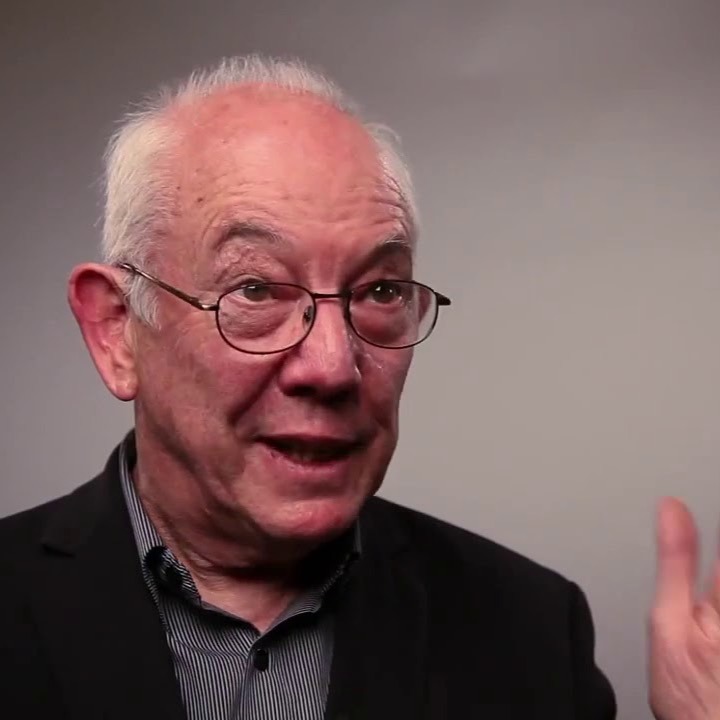
Adaptability is set to be the key skill for the future Jessica Schueller and Hugo Figueiredo 03 July 2021
Adaptability is set to be the key skill for the future
Category Archives: Discussion
A view or perspective on the world
Concept Map — New England Complex Systems Institute
Webinar: System Dynamics for Climate Change Mitigation – and other webinars from the Systems Dynamics Society
| Webinar: System Dynamics for Climate Change MitigationWednesday, July 7 @ 11 am New York | 4 pm London | 11 pm Beijing |
System Dynamics models have long been used used for research and decision support at the intersection of the economy and the environment. Since the seminal work of World Dynamics and Limits to Growth, many others in the field have contributed to this important area of work. Join us on Wednesday as we explore how System Dynamics models continue to support decision-making and public engagement to further efforts toward global sustainability. |
| Join us next Wednesday, July 7 to: Discuss how System Dynamics models support decision-making and public engagement in climate change and sustainabilityReflect on existing models such as Climate Interactive’s En-ROADS and Millennium Institute’s Integrated SDG Simulation (iSDG) toolLearn how the Climate Change Initiative at UMass Lowell uses System Dynamics to raise awareness on climate change. |
Our expert panelists: |
| Free for Members | $25 for Non-members Not a member yet? Join the Society and unlock all benefits |
Fundraising EventA LIVE social event to fundraise for the Student Chapter. Join us to run, walk, bike, row, swim, or just to cheer others on and support the growth of the System Dynamics field |
International System Dynamics ConferenceA fully virtual conference Join people from all over the world to learn, connect, and develop skills at the largest Conference in the field. Check out the detailed schedule |
Introduction to Modeling ProcessIn this FREE seminar, you will be able to build your very first System Dynamics model! This will be a small, quantitative model of Romeo and Juliet’s love for each other. |
Upcoming meetings – Systems Thinking Ontario
91st meeting for Systems Thinking Ontario
Systems Thinking Ontario – 2021-06-14
June 14 (the second Monday of the month) is the 91st meeting for Systems Thinking Ontario. The registration is on Eventbrite at https://synthesis-map-expo-2021-1.eventbrite.ca.
Synthesis Map Expo 2021 (#1), Strategic Foresight and Innovation program
Every year Systems Thinking Ontario hosts a series of summer evening events for presentations of synthesis maps (complex systems maps) created in systemic design courses in OCAD University graduate programs.
- This first evening, June 14, we have three presentations.
- The second evening, July 12, we’re considering to have another three presentations.
- The third evening, August 9, we’re holding if there is more interest
Synthesis maps are rich visualizations that illustrate the real-world complexity of systemic challenges, and typically used to not only “map system problems” but to propose design recommendations for systems change and policies (from health to public policy, from service experiences to social change) from evidence gathered in stakeholder research. Policymakers and organizational stakeholders use synthesis maps for strategic advising, long-term planning, and considering interventions for social and systemic challenges (wicked problems).
While we are still sorting out the final slate of presenters, we are expecting:
- Emerging Possibilities for Users in a Web 3.0 Social Media Ecology
- Aimee Burnett, Alyssa Yuhas, Eduardo Alarcon, Emily Stover, Steph Marcil
- Social Purpose Economy in Canada
- Elisa Arnold, Tejashri Kapura, Elizabeth Lane, Zemina Meghji and Emily Rho
- Why We Buy – A systems study of consumerism
- Amy Morell, Nicole Brkic, Alejandra Farias Fornes, Martha Chomyn, and Razane Hanna
Venue:
- The link for a Zoom conference will be sent upon preregistration.
- It’s really too bad that we can’t use the OCADU Visual Analytics Lab to meet in person!
Suggested pre-reading:
What are Synthesis Maps and Gigamaps? at https://slab.ocadu.ca/project/synthesis-maps-gigamaps
Systems 1: An Introduction to Systems Thinking | updated – Draper Kauffman and Morgan Kauffman
SYSTEMS 1: AN INTRODUCTION TO SYSTEMS THINKING $5.29 The first textbook on systems thinking written for a broad audience, and now updated for the modern reader, Systems 1 is a perfect introduction to the complex systems that make up the world around us. Originally written in 1980, it has remained a classic and a mainstay of workshops and classrooms around the world for 40 years. It has been used in courses for gifted middle schoolers as well as graduate programs. It is the introductory text in Roadmaps, the MIT course on systems theory for educators, and has been incorporated into many business and military training programs. The Chinese translation of the 3rd edition is also widely available. The book begins with a basic summary of systems theory, and proceeds through simple steps to help the reader understand some of the more complex systems that we deal with every day. It concludes with “Kauffman’s Rules,” 30 proverbs that every systems thinker needs to know. The 4th edition has been completely updated, including an entirely new chapter on exponential growth.
Systems 1: An Introduction to Systems Thinking | System Dynamics Society
Meaningful measures of human society in the twenty-first century | Lazer et al (2021)
Meaningful measures of human society in the twenty-first century
Meaningful measures of human society in the twenty-first century | Nature
Meaningful measures of human society in the twenty-first century
- David Lazer,
- Eszter Hargittai,
- Deen Freelon,
- Sandra Gonzalez-Bailon,
- Kevin Munger,
- Katherine Ognyanova &
- Jason Radford
Nature (2021)Cite this article
- 77 Altmetric
- Metricsdetails
Abstract
Science rarely proceeds beyond what scientists can observe and measure, and sometimes what can be observed proceeds far ahead of scientific understanding. The twenty-first century offers such a moment in the study of human societies. A vastly larger share of behaviours is observed today than would have been imaginable at the close of the twentieth century. Our interpersonal communication, our movements and many of our everyday actions, are all potentially accessible for scientific research; sometimes through purposive instrumentation for scientific objectives (for example, satellite imagery), but far more often these objectives are, literally, an afterthought (for example, Twitter data streams). Here we evaluate the potential of this massive instrumentation—the creation of techniques for the structured representation and quantification—of human behaviour through the lens of scientific measurement and its principles. In particular, we focus on the question of how we extract scientific meaning from data that often were not created for such purposes. These data present conceptual, computational and ethical challenges that require a rejuvenation of our scientific theories to keep up with the rapidly changing social realities and our capacities to capture them. We require, in other words, new approaches to manage, use and analyse data.
Journal of Awareness-Based Systems Change
The Journal of Awareness-Based Systems Change
Journal of Awareness-Based Systems Change
About the Journal
Awareness-based systems change is a consciousness-based, action research approach to social transformation. It is an emergent cross-sectoral, inter- and transdisciplinary field that brings a first- and second-person lens to the field of systems thinking and systems change.
The Journal of Awareness-Based Systems Change is a place for creative scholarship that is breaking new ground in research and further evolving this emergent field. The journal aims to reveal and support rigour in these new forms of research. It is also a place for highlighting current interesting examples of promising transformative practices and to co-inquire into these. Instead of providing definite answers, the journal seeks to ask new questions. We believe new understanding will surface through emerging patterns across the range of place-based and viable solutions/approaches provided. This mirrors an important spirit of our time and moment around the collective exploration of transformation from an awareness-based perspective.
The Journal of Awareness-Based Systems Change sees itself as one element of a larger intention which is to co-create a global platform which aligns and brings together a community of researchers and practitioners who, over the next decade, will advance and amplify the field of awareness-based systems change by co-developing the concepts, methods, tools and frames needed to illuminate and catalyze the evolution of social fields.
Social Field
The social field can be defined as the source conditions that give rise to patterns of thinking, conversing, and organizing in systems, which in turn produce practical results. In this way, the social field is the social system seen not only from the outside (the third-person view) but also from within (the first- and second- person views). A social field perspective addresses the less visible levels of individual, social and relational reality creation: the dynamics, processes and particularly the levels of awareness that underlie and shape the behavior we see more readily. It is a theoretical and practical innovation with significant implications for changing practice and taking a fresh look at what is needed to shift social systems.
Awareness-based systems change, therefore, is a process of co-inquiry into the deeper structures of the social systems—the source conditions—in order to see, sense and shift them.
CURRENT ISSUE
Vol. 1 No. 1 (2021): Inaugural Issue of the Journal of Awareness-Based Systems Change
Sense of Coherence – an overview
Sense of Coherence Sense of coherence refers to a person’s ability to use existing and potential resources to combat stress and promote health, and it is measured based on one’s perception of manageability, meaning, and comprehensibility (Antonovsky, 1987). From: International Journal of Nursing Studies, 2020
Sense of Coherence – an overview | ScienceDirect Topics
Sense of Coherence
Sense of coherence refers to a person’s ability to use existing and potential resources to combat stress and promote health, and it is measured based on one’s perception of manageability, meaning, and comprehensibility (Antonovsky, 1987).
From: International Journal of Nursing Studies, 2020
The Handbook of Salutogenesis – Chapter 11 – The Sense of Coherence in the Salutogenic Model of HEalth – Monica Eriksson
https://www.ncbi.nlm.nih.gov/books/NBK435812/
Published online: September 3, 2016.
This section aims to describe the salutogenic construct of the sense of coherence. It begins with a reflection of the ontological and epistemological background of salutogenesis, which is not particularly described and explained to any significant extent in the publications by Antonovsky. The core concepts, the sense of coherence and the generalized resistance resources within the salutogenic model of health are explained. The measurement of the sense of coherence and the validity and reliability of the sense of coherence scales are extensively described. The sense of coherence is a concept that can be applied at different system levels, at an individual level, a group (family), on organizations and societal level. Therefore, a life cycle perspective is adopted for this section, describing sense of coherence in children and families, in adolescents and in older adults. Finally, salutogenesis, a resource-oriented approach on peoples’ abilities, is much more than the measurement of the sense of coherence. The salutogenic umbrella is here used as a metaphor for showing some related concepts.
Keywords:
Antonovsky, Aaron; Salutogenesis; The sense of coherence; Generalized resistance resources
https://positivepsychology.com/sense-of-coherence-scale/
What Does it Mean to Have a Sense of Coherence? (+Scale)
- Leslie Riopel, MSc.
- 01-09-2020
FOOTPRINT Spring/ Summer 2021 | All is in Formation: Architecture, Cybernetics, Ecology
Vol. 15 No. 1 (2021): Issue # 28 | Spring/ Summer 2021 | All is in Formation: Architecture, Cybernetics, Ecology Footprint #28 examines the relation between cybernetics and architecture by focusing on a problem they both share: the production, consumption and flow of information, or, in other terms, of meaning. Therefore, cyberneticisation can set the foundations for a relational account that examines how signs are communicated and how meaning is produced and experienced within systems. This third-order cybernetics extends beyond the original scope of living organisms and their environments in order to include ecologies of ideas, power, institutions, media and so on. In this sense, cyberneticisation is radically environmental, positing the primacy of relations over fixed terms, binary oppositions and linear logics, making it high time for architectural and urban studies to take into consideration its ground-breaking potentials. Issue’s editors: Stavros Kousoulas and Dulmini Perera DOI: https://doi.org/10.7480/footprint.15.1 Published: 2021-06-29
Vol. 15 No. 1 (2021): Issue # 28 | Spring/ Summer 2021 | All is in Formation: Architecture, Cybernetics, Ecology | FOOTPRINT
Footprint 28 is out now. This issue, edited by Stavros Kousoulas and Dulmini Perera, is dedicated to the theme “All is in Formation: Architecture, Cybernetics, Ecology”.
This issue includes research articles by Christian Girard; Rachel Armstrong and Rolf Hughes; Tanja Herdt; Tim Gough; Contingent Collective; Zach Mellas; and Tewfik Hammoudi. It also includes review articles by Liz Gálvez; Iris Giannakopoulou Karamouzi; and Juliana Yat Shun Kei. The issue closes with a dialogue between Jon Goodbun and Ben Sweeting.
You can find the issue online in the following link to our platform:
https://journals.open.tudelft.nl/footprint/issue/view/880
Systemic praxis for water governance: Unnecessary or essential? Online, Open Univetsity – Tue 27 Jul 2021 at 12:00 UK time
JUL 27 Systemic praxis for water governance: Unnecessary or essential? by The Open University, Faculty of STEM
Systemic praxis for water governance: Unnecessary or essential? Tickets, Tue 27 Jul 2021 at 12:00 | Eventbrite
The Systems in Evaluation Topical Interest Group – new website
source:
Home – Systems in Evaluation
| The Systems in Evaluation Topical Interest Group | ||||
| Visit the New SETIG Website The Systems TIG has launched Its new website. The site has been constructed using WordPress to provide greater flexibility and functionality for TIG members and others interested in systems and evaluation. We will be transitioning all current TIG information and activities to this site, so bookmark it now and visit often. It’s easy to become a member of the site – you’ll find a registration box on the right side of the home page under News and Announcements. You may use the site without registering, but, if you wish to post comments, resources, or other materials to the site, you will need to register as a member. We envision the site as an evolving home on the web for those of us with an interest in systems, evaluation, and the intersection of the two. Many of our plans for the site revolve around supporting the Systems TIG and helping members stay connected between annual meetings. We’ll be adding new features as we go along, so come visit us and bookmark the site to keep up with developments. We can be found at www.systemsinevaluation.com. If you have any questions, suggestions, or run into problems, feel free to contact our webmaster Jan Noga. | Who We Are The Systems in Evaluation TIG (SETIG) formed as the result of a series of sessions on systems thinking in evaluation offered during AEA’s 2002 annual meeting in Washington, DC. Created to provide a forum for ongoing conversation about the use of systems thinking and systems theory in evaluation, the TIG has greatly expanded in size and scope, with membership exceeding 450. The TIG focuses on the use of systems thinking and systems theory as a framework for evaluation planning, design, implementation, analysis, and reporting, across a wide range of content areas, and using a diverse array of evaluation approaches, research methods, and data collection and analysis tools. Areas of interest to TIG members include: Evaluation approaches that use systems theory to plan, design, and implement evaluation Discussion about how to ground evaluation methods and approaches in systems thinking and theory The contributions of diverse perspectives in understanding issues related to the use of systems thinking and theory in evaluation Join Us for Our Second Systems (Un)Conference in June The SETIG Leadership Team is pleased to announce the second Systems in Evaluation (Un)Conference to be held June 21. Go to the (Un)Conference page on the Systems TIG website for more information or contact us. |
The Systems in Evaluation Topical Interest Group
Home – Systems in Evaluation
Australasian Change Days 2021 #acdc2021 3 Day Virtual Event 9-11 September 2021
Australasian Change Days 2021 #acdc2021 3 Day Virtual Event Tickets, Thu 09/09/2021 at 3:00 pm | Eventbrite
SEP 09-11
Australasian Change Days 2021 #acdc2021 3 Day Virtual Event
by Sarah Glenister – Change that matters
Following$352 – $440
Event Information
Theme: Steering into and embracing complexity. How might we navigate the true challenge of change with intention and direction.
About this event
Join Change Makers, Managers, Activists, Leaders and Trainers from all over the world as we explore our topic over three days Thursday 9th September and Friday 10th September (3pm – 8:30pm GMT+8) and our Super Saturday that caters for more timezones to join, 11th September 7:30am – 6pm (GMT +8)
What to bring?
- curiosity
- generosity of spirit
- passion for connecting and collaborating
- FUN!
There has been a shift in the last 12 months in the conversations that are happening on the global stage which have certainly been influenced by the escalation of involvement in political and social movements as well as the increase in polarising opinions and extremism.
We would like to explore this shift with you from your role as a Change professional through our theme for #acdc2021: Steering into and Embracing Complexity and to consider how we navigate the true challenge of change with intention and direction.
**Look out for our post conference workshops (face to face in Perth) which will be held on Sunday 12th September 2021.
more and booking at
Australasian Change Days 2021 #acdc2021 3 Day Virtual Event Tickets, Thu 09/09/2021 at 3:00 pm | Eventbrite
SCiO – SC101. Viable System Model – A Beginners Workshop in VSM Modelling with Patrick Hoverstadt, Sat 10 Jul 2021 all day UK time
SC101. Viable System Model – A Beginners Workshop in VSM Modelling Tickets, Sat 10 Jul 2021 at 09:30 | Eventbrite
JUL 10
SC101. Viable System Model – A Beginners Workshop in VSM Modelling
by SCiO – Systems and Complexity in Organisation Following£20 – £50
Event Information
A whole day workshop designed for those relatively new to VSM and provides basic training in building a model of an organisation using VSM.
About this event
The Workshop
This is a whole day workshop designed for those relatively new to the Viable System Model and provides basic training in building a model of an organisation using VSM. The workshop will run from 10am – 5pm (UK time) and will be run online.
The attendees work together in groups to develop their model of a case study organisation and to diagnose weaknesses. The workshop follows a structured approach, with a series of steps that take the groups through a modelling process in (relatively !) easy stages.
The case study is based on a real organisation – a medium sized IT and office supplies company and provides a platform for developing the skills needed to take normal organisational information, show how that relates to the VSM and how the VSM can provide a set of new insights into the company.
The workshop will be run by Patrick Hoverstadt of Fractal.
Booking
The workshop is open to members and non-members of SCiO. The fee for SCiO members and students of TU811 is £20 and for non-members is £50.
Places are limited, so please book early.
book at:
SC101. Viable System Model – A Beginners Workshop in VSM Modelling Tickets, Sat 10 Jul 2021 at 09:30 | Eventbrite
Splitting a Domain Across Multiple Bounded Contexts – Varraes and Wirfs-Brock
source
Splitting a Domain Across Multiple Bounded Contexts
How designing for business opportunities and the rate of change may give you better contexts.
Published on 14 June 2021 by Mathias Verraes and Rebecca Wirfs-Brock
Imagine a wholesaler of parts for agricultural machines. They’ve built a B2B webshop that resellers and machine servicing companies use to order. In their Ubiquitous Language, an Order represents this automated process. It enables customers to pick products, apply the right discounts, and push it to Shipment.
Our wholesaler merges with a competitor: They’re an older player with a solid customer base and a huge catalog. They also have an ordering system, but it’s much more traditional: customers call, and an account manager enters the order, applies an arbitrary discount, and pushes it to Shipment.
continues in source:
Splitting a Domain Across Multiple Bounded Contexts
Mapping Toronto’s Systems Innovation Landscape | Si Network – Aug 11th, 12:00 – 1:15 pm EDT
Mapping Toronto’s Systems Innovation Landscape | Si Network
Mapping Toronto’s Systems Innovation Landscape

Over the past decades, Toronto has emerged as one of the world’s leading cities for social and systems innovation. It has multiple communities rich in diverse expertise but as yet, not well connected into something greater than the sum of its parts. It is a city with huge potential to have a greater impact by leveraging its networks, but lack of connectivity and awareness of what this community looks like limits our capacity for collaboration and development.
The Systems Innovation Toronto Hub has been set up as a platform for developing this ecosystem in Toronto. We believe this starts with getting a view of the whole. To this end, we’ll be hosting a 75-minute co-creation “Mapping Toronto’s Systems Innovation Landscape”. We hope this will be the start of a conversation on how we can enable collaboration and the emergence of a much more robust community over time.
This will be an opportunity for you to network with people interested in innovation and systems change. You will also come away with a co-created map of Toronto’s Systems innovation landscape.
Date : Aug 11th, 12:00 – 1:15 pm EDT
book at source (in Mighty Networks) Mapping Toronto’s Systems Innovation Landscape
Mapping Toronto’s Systems Innovation Landscape | Si Network
System Dynamics models have long been used used for research and decision support at the intersection of the economy and the environment. 


You must be logged in to post a comment.