What is Management Cybernetics? – Barry Clemson (including 22 laws published 1984)

includes the 22 ‘laws’ of which he says:

Allenna Leonard and I articulated these 22 “laws” in 1982 or 1983. I hope we can think about this again in the near future and perhaps add a few more.


Source: What is Management Cybernetics? – Barry Clemson


What is Management Cybernetics?

Big OrganizationsManagement CyberneticsSystems (How things really work) By  October 28, 2011 Tags:  No Comments

Cybernetics, according to Stafford Beer, is the science of effective organization. Clear as mud, you say!

For example, a bacterium that was not effectively organized would quickly die. An ecosystem that was not effectively organized would very shortly be something else. A poorly organized human nervous system would not be able to regulate breathing, heart rate, speech, vision, etc. etc. etc. A poorly organized computer operating system would frequently crash and might have lots of security issues (sounds sort of like Windows, doesn’t it … sorry, as a devoted Mac user I couldn’t resist that one. I’ll try to behave from now on).

Effective organization is the basic requirement for the survival of a complex system.

What makes something a “complex system”?

“Complex system” is hard to define precisely but a common sense definition will do for now. A complex system has many parts which interact in ways that produce results that none of the parts alone can produce. Examples of complex systems include personal computers, a dog, a human being, an organization, and an eco-system.

Restating our original definition we might say that cybernetics is the science of effective organization for complex systems. When you apply the laws of cybernetics to the management of organizations you get management cybernetics. Stafford Beer spent about 60 years working out the implications of cybernetics for management. He wrote about eight books and hundreds of papers on the subject.

In my 1984  introductory book on management cybernetics I said that most books with the words “science” and “management” in the title are neither scientific nor good management. I claimed that management cybernetics, on the other hand, is good science and teaches us how to co-operate with the natural order of things rather than continuously bloodying our heads on stone walls. In that 1984 book, Allenna Leonard and I listed 22 laws, principles, and theorems of management cybernetics. Ern Reynolds then suggested a very useful exercise: paste the name of your organization in place of the word “system” in the 22 laws, principles and theorems. You will then have a useful cybernetic description of your organization.

Here are the 22 laws, principles and theorems.

1. System Holism Principle: A system has holistic properties possessed by none of its parts. Each of the system parts has properties not possessed by the system as a whole.

2. Darkness Principle: no system can be known completely.

3. Eighty-Twenty Principle: In any large, complex system, eighty percent of the output will be produced by only twenty percent of the system.

4. Complementarity Law: Any two different perspectives (or models) about a system will reveal truths about that system that are neither entirely independent nor entirely compatible.

5. Hierarchy Principle: Complex natural phenomena are organized in hierarchies with each level made up of several integral systems.

6. Godel’s Incompleteness Theorem: All consistent axiomatic foundations of number theory include undecidable propositions.

7. Entropy – the Second Law of Thermodynamics: In any closed system the differences in energy can only stay the same or decrease over time; or, in any closed system the amount of order (or organization) can never increase and must eventually decrease.

8. Redundancy of Information Theorem: Errors in information transmission can be protected against (to any level of confidence required) by increasing the redundancy in the messages.

9. Redundancy of Resources Principle: Maintenance of stability under conditions of disturbance requires redundancy of critical resources.

10. Redundancy of Potential Command Principle: In any complex decision network, the potential to act effectively is conferred by an adequate concatenation of information.

11. Relaxation time Principle: System stability is possible only if the system’s relaxation time is shorter than the mean time between disturbances.

12. Circular Causality Principle One: Given positive feedback (i.e., a two-part system in which each stimulates any initial change in the other), radically different end states are possible from the same initial conditions.

13. Circular Causality Principle Two: Given negative feedback (i.e., a two-part system in which each part tends to offset any change in the other), the equiibrial state is invariant over a wide range of initial conditions.

14. Feedback dominance theorem: For high gain amplifiers, the feedback dominates the output over wide variations in input.

15. Homeostasis Principle: A system survives only so long as all essential variables are maintained within their physiological limits.

16. Steady State Principle: If a system is in a state of equilibrium (a steady state), then all sub-systems must be in equilibrium. If all sub-systems are in a state of equilibrium, then the system must be in equilibrium.

17. Requisite Variety Law: The control achievable by a given regulatory sub-system over a given system is limited by 1) the variety of the regulator, and 2) the channel capacity between the regulator and the system.

18. Conant-Ashby theorem: Every good regulator of a system must be a model of that system.

19. Self-Organizing Systems Principle: Complex systems organize themselves; the characteristic structural and behavioral patterns in a complex system are primarily a result of the interactions among the system parts.

20. Basins of Stability Principle: Complex systems have basins of stability separated by thresholds of instability. A system “parked” on a ridge will “roll downhill”.

21. Viability Principle: Viability is a function of the balance maintained along two dimensions: 1) autonomy of sub-systems versus integration of the system as a whole, and 2) stability versus adaptation.

22. Recursive System Theorem: If a viable system contains a viable system, then the organizational structure must be recursive; or, in a recursive organizational structure, any viable system contains, and is contained in, a viable system.

Allenna Leonard and I articulated these 22 “laws” in 1982 or 1983. I hope we can think about this again in the near future and perhaps add a few more.

Chapter eight of my cybernetics book elaborates on these laws and provides lots of examples. My short essay on “Systems Thinking” is a companion piece to this one.


Contact me: I love to hear from readers. Email me at cyberneticapress at gmail dot com. Thanks, Barry Clemson
Coming Concepts: The Cybernetic Glossary for new management – Allenna Leonard (1990/revised 2004)

pdf

Source: https://i2s.anu.edu.au/wp-content/uploads/2009/10/cybernetic_glossary.pdf


Marco Valente on LinkedIn sparked another big discussion on ‘Complexity theories and Systems Thinking: parallels and differences’…

This was over a year ago, but in a recent discussion with Dave Snowden on twitter, it got resumed… I can’t recommend the article per se (though it seems entirely honestly and constructively meant) but the comments are Quite Interesting:

https://www.linkedin.com/feed/update/urn:li:article:8370213503392053397/?commentUrn=urn%3Ali%3Acomment%3A(article%3A8370213503392053397%2C6323841743901036544)&replyUrn=urn%3Ali%3Acomment%3A(article%3A8370213503392053397%2C6553869821061267456)


Autopoiesis Today – Milan Zeleny – and whole of Cybernetics Forum from the American Society for Cybernetics 1981 special autopoeisis issue

https://www.univie.ac.at/aoc/asc/Periodica/X_2_3_1981.pdf#page=9

Limits to growth – Meadows et al, 1972 – full book (pdf)


Click to access Limits-to-Growth-digital-scan-version.pdf

Murmurations: Journal of Transformative Systemic Practice


Source: Murmurations: Journal of Transformative Systemic Practice

A journal for relationally attuned and systemic social constructionist practitioners and practitioner-researchers with a commitment to social responsibility in community, leadership, therapy, education, organisations, health and social care.

Vol 2 No 1 (2019): Volume 2, Issue 1

Published: 2019-04-23

Editorial

i-iii

Lines of flight

Justine van Lawick

1-13

With wings outstretched

Leah Karen Salter

14-27

Children in the Crossfire

Tahereh Barati

28-37

“Each Leaving Something for the Other”

Craig Whisker, Graham Allan, Christopher Chua, Sandie Forsyth, Pam Morrison

38-50

An epilogue to two films

Alys Mendus

51-60

Being Systemic as a Way of Life

Chiara Santin

97-110

Reflections on “Qualitative Research as Activism”

Marilena Karamatsouki, Mark Huhnen, Leah K Salter, Sarah Helps

111-118

View All Issues 

System Effects from Dr Luke Craven


Source: System Effects


When trying to change the world around us, we tend to assume everyone experiences the world in the same way.

That assumption is spectacularly—and scientifically—wrong.

Individuals’ lives are complex, unique and varied. The tools and methodologies we use to understand and address the issues impacting individuals must recognize that complexity.

System Effects helps decision makers respond to complex problems while at the same time embracing the uniqueness of individual experience.

Introducing System Effects

System Effects is a research methodology developed by Dr Luke Craven at UNSW Canberra, that captures the varied nature of individual experience to enable better intervention design. The System Effects platform was developed by Kumu in collaboration with Luke.

Drawing on soft systems, fuzzy cognitive mapping, and graph theory, System Effects can be used to ask a range of questions about a given issue, focusing on how different impacts, barriers, and enablers exist and are perceived within the system that surrounds it.

By beginning from the user-understanding of complex systems, the methodology helps re-centre lived experience in social science and policymaking practice.

System Effects supports the design of effective interventions by giving decision-makers tools to understand patterns that emerge across groups and communities, while at the same time emphasising the varied nature of individual experience.

How does it work?

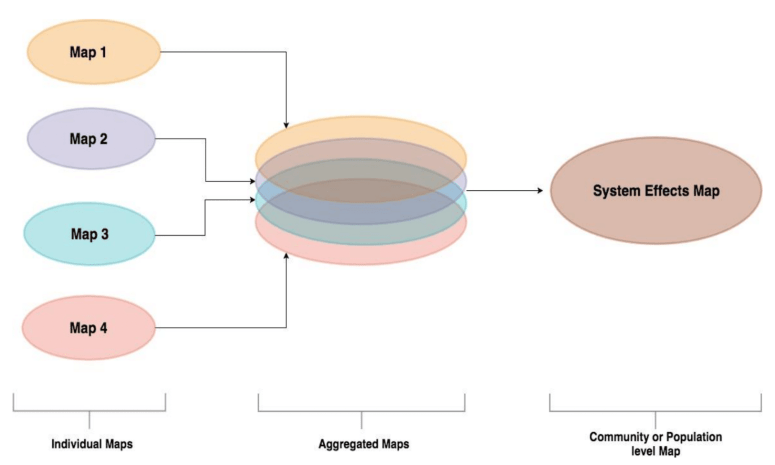
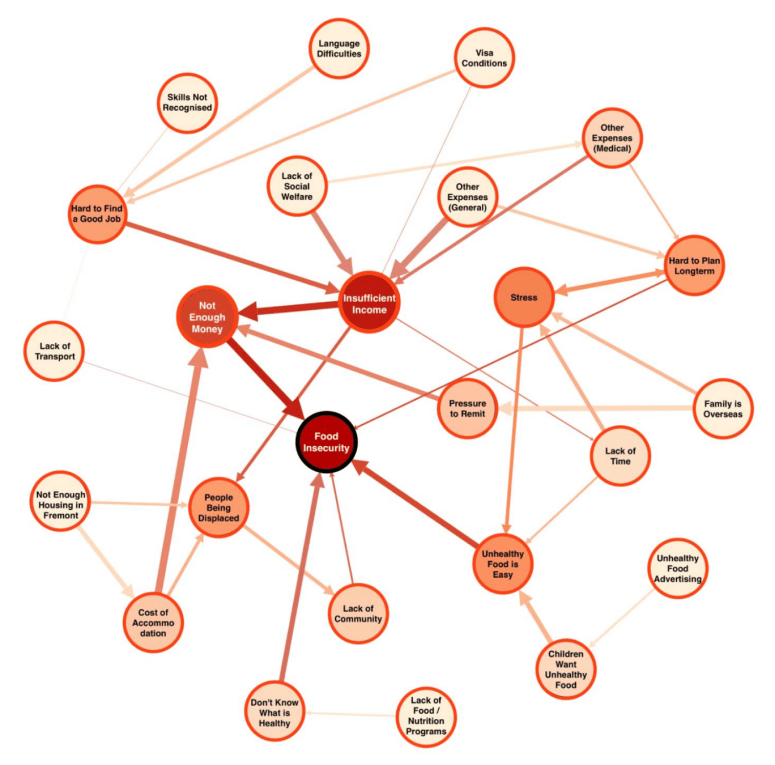
Starting from a common focus, participants are asked to explore the barriers, impacts, and enablers present in their own lives. The result of this process is a personal systems map that captures the individual’s unique understanding and experience of the issue.

We can then layer these individual maps to build a picture of the wider community experience. Aggregating maps this way ensures no individual variable or causal connection is ignored, while highlighting the shared experiences emerging at the population-level.

By beginning from the user-understanding of complex systems, the methodology helps to re-centre lived experience in social science and policymaking practice.

How can it help me?

The results of the System Effects process can be used to:

  • Inform policy and program design

    How can policies most effectively address complex systems, given the diversity of individual experience?

  • Guide intervention implementation

    How can the implementation of policies and programs be effectively tailored to the systemic dynamics of particular contexts?

  • Evaluate systemic impacts

    How can we assess the systemic impact of particular interventions and their interactions with the contexts in which they are deployed?

How has it been used before?

System Effects is being applied to a wide range of issues by national, state, and local decision makers across the world.

  • Understanding the barriers to job market entry in Oslo, in partnership with the Norwegian Labour and Welfare Administration (NAV)
  • Understanding the systemic impact of disaster events in Sydney, in partnership with Resilient Sydney and the NSW Office of Emergency Management
  • Supporting social workers to deliver systemic care to persons facing homelessness in Newcastle, UK, in partnership with Newcastle City Council
  • Supporting the development of policy to prevent food borne disease in Cambodia, in partnership with the International Livestock Research Institute (ILRI) and USAID
  • Supporting effective environmental stewardship in New York, in partnership with the US Forest Service

Run your own System Effects survey

System Effects surveys are available through our online platform for $700/survey*. Each survey explores a single dimension (impacts, enablers, or barriers) of a particular focus and includes an unlimited number of responses.

If you would like help facilitating the survey process, we offer consulting services at $200/hour or $2000/day. Please email info@systemeffects.com to discuss options and explore which route is best for your project.

* All prices in USD

Shifting the conversation from symptoms to systems

preload

Guardians vs. Gardeners: Relocating wolves to help balance ecology — Ideas from CBC Radio (Highlights) — Overcast

More on the continuing saga of wolves – too many, not enough, just right, artificial or natural (see also parachuting cats).

Source: Guardians vs. Gardeners: Relocating wolves to help balance ecology — Ideas from CBC Radio (Highlights) — Overcast

Guardians vs. Gardeners: Relocating wolves to help balance ecology

March 12, 2019


#383

Frequilibrium and the myth of patient safety…

ComplexWales's avatar

Who designed the roof currently over your head? There’s several tonnes of it, dangling there. Who built the roof and how qualified or experienced were they? There are all sorts of designs, materials and ways of putting it together. How likely are you to survive that bloody big thing landing on your head?

To be honest, nobody cares. You’ve probably never given those questions a single thought, ever, despite the number of roofs you’ve been under. Unless of course, you design and build the odd roof, or you’re one of those very rare people who have been under one when it collapsed and survived. Nobody really cares about safety in general and neither should they, because in normal life safety is passive, it’s a hygiene factor at best. Safety is also weirdly context dependent. What’s safe one day is not the next day and nothing obvious has changed. When safety…

View original post 2,800 more words

Systems thinking: a cautionary tale (cats in Borneo) – YouTube

A classic

Find more details in this book “Parachuting Cats into Borneo”: https://goo.gl/JsRJ74 Learn about sustainability for free with short animation videos! Find all sustainability videos and join the community on http://sustainabilityillustrated.com and http://www.youtube.com/learnsustainab… Subscribe to receive the latest videos: http://alturl.com/jc8u6 Become a patron: http://www.patreon.com/sustainability. Extra info & links below… Twitter: http://twitter.com/Sustain_Illustr Facebook: http://www.facebook.com/sustainabilit… Videos are created by Alexandre Magnin using years of experience drawing and working as a sustainability consultant with businesses and communities: http://www.amcreative.org ** This video about systems thinking tells the story of “Operation Cat Drop” that occurred in Borneo in the 1950’s. It is a reminder that when solutions are implemented without a systems perspective they often create new problems. Thank you to The Natural Step Canada and all our patrons for supporting us. Resources: http://catdrop.com/ http://en.wikipedia.org/wiki/Operatio… http://en.wikipedia.org/wiki/Systems_… If you are interested to learn more about systems thinking, check out the Top 15 Systems Thinking Books http://agile.dzone.com/news/top-15-sy… and follow Gene Bellinger @SystemsThinking. Narration: Sarah Brooks Music “The Messenger” by Silent Partner Thank you to our volunteer for Portuguese subtitles: André Ribeiro Winter

SysBoK – a systems body of knowledge, from SCiO (work in progress)

SysBoK is a connected Systems Thinking Body of Knowledge from Systems & Complexity in Organisations (SCiO), www.scio.org.uk.

Rather than attempting to define rigidly the key concepts in Systems Thinking, SysBoK is designed to explore the relationships between these concepts, in particular which are Precedents to a Systems Thinking concept, and which are Dependent Derivatives. This model also includes examples and references for each concept.

Source: SCiO SysBoK v1 • Default view • Kumu


Seeking a small cohort of people to co-learn the RedQuadrant Way ‘tool shed’

A rare personal interest post for me here!

Want to expand your impact in transforming organisations? I’m looking for a small cohort of people to co-learn and help to polish the RedQuadrant Way ‘tool shed’ – meta-contextual, transdisciplinary, systems/complexity informed consulting. There’ll be a cost, but a lower cost because of engagement requirements.

Contact me if you’re interested in participating — benjamin.taylor@redquadrant.com

Source: Seeking a small cohort of people to co-learn the RedQuadrant Way tool shed


The Cybernetics Group 1946-1953 constructing a social science for postwar America – Steve Joshua Heims, 1991 (full book)


Source: https://monoskop.org/images/2/26/Heims_Steve_Joshua_The_Cybernetics_Group_1991.pdf

The Genesis of Complexity by Ralph H. Abraham – 2002

The Genesis of Complexity by Ralph H. Abraham

Visual Math Institute
Santa Cruz, CA 96061-7920 USA
abraham@vismath.org, www.ralph-abraham.org

Dedicated to Heinz Pagels

Abstract.

The theories of complexity comprise a system of great breadth. But what is included under this umbrella? Here we attempt a portrait of complexity theory, seen through the lens of complexity theory itself. That is, we portray the subject as an evolving complex dynamical system, or social network, with bifurcations, emergent properties, and so on. This is a capsule history covering the 20th century. Extensive background data may be seen at www.visual-chaos.org/complexity

[good links]

Click to access complex.pdf

[pdf]

David Chapman on Twitter: “How cognitive science and artificial intelligence went wrong in the ‘50s (excerpt from the Bateson-Mead discussion): from an interactionist approach to a mentalist one. …

I can’t put this better than David in the thread below – but the whole transcript – under the wonderful title ‘for God’s sake, Margaret’ – is well worth a read! http://www.oikos.org/forgod.htm

s
search
c
compose new post
r
reply
e
edit
t
go to top
j
go to the next post or comment
k
go to the previous post or comment
o
toggle comment visibility
esc
cancel edit post or comment