Towards the full recovery of Alexander Bogdanov’s work and ideas

Örsan Şenalp's avatarAlexander Bogdanov (1873-1928)


This blog project is meant to be a personal contribution to the collective process of the recovery of Alexander Bogdanov’s fascinating life work and ideas.

The project follows up and builds on two events I co-organized on 2 and 3 June 2021. I was very lucky to be the principal organizer of these events, which were the outcome of my ongoing research on Bogdanov’s Tektology, and I received great support from precious people like Fabian Tompsett, John Biggart, Gerald Midgley, Amanda Gregory, and Mike Jackson in realising them. The institutional hosts and supporters of the events were the Centre for Systems Studies at the University of Hull, the British Cybernetics Society, and the Financial University of Moscow.

The first of these events was the 2021 Annual Mike Jackson Lecture given online by renowned theoretical physicist Carlo Rovelli. The lecture was entitled ‘The Relational Interpretation of Quantum Mechanics and Alexander Bogdanov’s…

View original post 205 more words

Heinz Von Foerster Papers (Digital Surrogates) | Digital Collections at the University of Illinois at Urbana-Champaign Library

Heinz Von Foerster Papers (Digital Surrogates)

Heinz Von Foerster Papers (Digital Surrogates) | Digital Collections at the University of Illinois at Urbana-Champaign Library

via Mark Johnson, from Thomas Fischer:


Mark Johnson
@mwjtweet

Thank you to @TH0MASF1SCHER – this is an exciting collection of videos on cybernetics with Heinz von Foerster and Humberto Maturana “In cybernetics [] ethics becomes a central part of scientific activity” https://digital.library.illinois.edu/items/ac64fb20-f570-0134-23e3-0050569601ca-0… @rupertwegerif @GubernatorHomo @carlgomb @antlerboy

This link includes two hosted plenary ASC conference recordings with von Foerster and Maturana.

Transcripts

Part one https://otter.ai/u/vVcSttm_NvigVkkVcKARL7ZyL_o

Part two https://otter.ai/u/GEG-hkUrvcawt9XpMPhwempCbd8

This Great Network of Interbeing, with Vince F Horn – Buddhist Geeks podcast

A really nice talk by Vince Horn on holism, networks, interbeing and so on.

This Great Network of Interbeing, with Vince F HornBuddhist GeeksRELIGION & SPIRITUALITYBUDDHISMbuddhismMeditationMindfulnessSocietyTechnologytibetan buddhismvajrayanavipassanazen© https://creativecommons.org/licenses/by/4.0/ Website“‘To be’ is to inter-be.” – Thích Nhất HạnhIn this episode–taken from a Dharma Talk at the Garrison Institute in 2022–Vince Fakhoury Horn teaches on the complexity of Interbeing, looking at “it” from 3 distinct perspectives:Interbeing within OurselvesInterbeing with OthersInterbeing inside NatureTaken together, these three form a great network of Interbeing, one which opens us to the self-similar & fractal nature of interdependence. At every scale, we inter-are.

This Great Network of Interbeing, with Vince F Horn

Video

Overcast

https://overcast.fm/+Fgr-fuRg

Design Foundations For Systems Capital | by Griffith University Yunus Centre | Y Impact | Aug, 2022 | Medium

Griffith University Yunus CentreAug 17·5 min read·ListenLayering portfolios in context. Developed by The Yunus Centre Griffith University & Hatched for Design Foundations for Systems CapitalDesign Foundations For Systems CapitalDesigning an investment approach that fosters systems innovation and transformation

Design Foundations For Systems Capital | by Griffith University Yunus Centre | Y Impact | Aug, 2022 | Medium

h/t Mikael Seppala

Disentangling the evolutionary drivers of social complexity: A comprehensive test of hypotheses – Turchin et al (2022)

Disentangling the evolutionary drivers of social complexity: A comprehensive test of hypotheses | Science Advances

h/t Michael Garfield

PETER TURCHIN HTTPS://ORCID.ORG/0000-0002-1292-8100HARVEY WHITEHOUSE HTTPS://ORCID.ORG/0000-0001-6935-6724 SERGEY GAVRILETSDANIEL HOYER HTTPS://ORCID.ORG/0000-0003-2675-257XPIETER FRANÇOISJAMES S. BENNETT HTTPS://ORCID.ORG/0000-0003-3051-1672KEVIN C. FEENEYPETER PEREGRINE HTTPS://ORCID.ORG/0000-0001-9185-3348GARY FEINMAN HTTPS://ORCID.ORG/0000-0002-4787-2733[…]MAJID BENAM +8 authors Authors Info & Affiliations

SCIENCE ADVANCES

24 Jun 2022

Vol 8, Issue 25

DOI: 10.1126/sciadv.abn3517

Abstract

During the Holocene, the scale and complexity of human societies increased markedly. Generations of scholars have proposed different theories explaining this expansion, which range from broadly functionalist explanations, focusing on the provision of public goods, to conflict theories, emphasizing the role of class struggle or warfare. To quantitatively test these theories, we develop a general dynamical model based on the theoretical framework of cultural macroevolution. Using this model and Seshat: Global History Databank, we test 17 potential predictor variables proxying mechanisms suggested by major theories of sociopolitical complexity (and >100,000 combinations of these predictors). The best-supported model indicates a strong causal role played by a combination of increasing agricultural productivity and invention/adoption of military technologies (most notably, iron weapons and cavalry in the first millennium BCE).

Disentangling the evolutionary drivers of social complexity: A comprehensive test of hypotheses

Disentangling the evolutionary drivers of social complexity: A comprehensive test of hypotheses | Science Advances

Using neuroscience & cybernetics to transform social organisations | Bobby Azarian & Arash Arabi – YouTube

Bobby Azarian has apparently been on the Joe Rogan thing. This was advertised on linkedin (https://www.linkedin.com/posts/arasharabi_using-neuroscience-cybernetics-to-transform-activity-6962555285450211329-U3Wk?utm_source=linkedin_share&utm_medium=member_desktop_web) by Arash Arabi where I said:

“Congrats on a really professional and interesting podcast / video interview…. I must admit I thought it seems like he knows his stuff and was giving a wide overview, but because it was *such* a wide overview, without real reference points to which theory (and which versions) he was referencing, I lost track bit and was unable to see what the ‘new perspective’ was that he was bringing. Perhaps I’m not at my best this evening, or perhaps I’m not the target audience 🙂
Anyway, I’ve subscribed and will share!”

“PS I have a real prejudice against neuroscience (sorry!) so I was quite pleased to see it didn’t seem to really feature – but I don’t think cybernetics (which I am prejudiced in favour of!) really featured either?”

I would value perspectives on this!

Using neuroscience & cybernetics to transform social organisations | Bobby Azarian & Arash Arabi – YouTube

The risks of ‘seeing the whole’

antlerboy - Benjamin P Taylor's avatarchosen path

Join the discussion on LinkedIn https://www.linkedin.com/posts/antlerboy_8-things-to-think-about-systems-complexity-activity-6964845434942959616-R3We/

Have you ever been encouraged to ‘see the whole’, or ‘think holistically’?

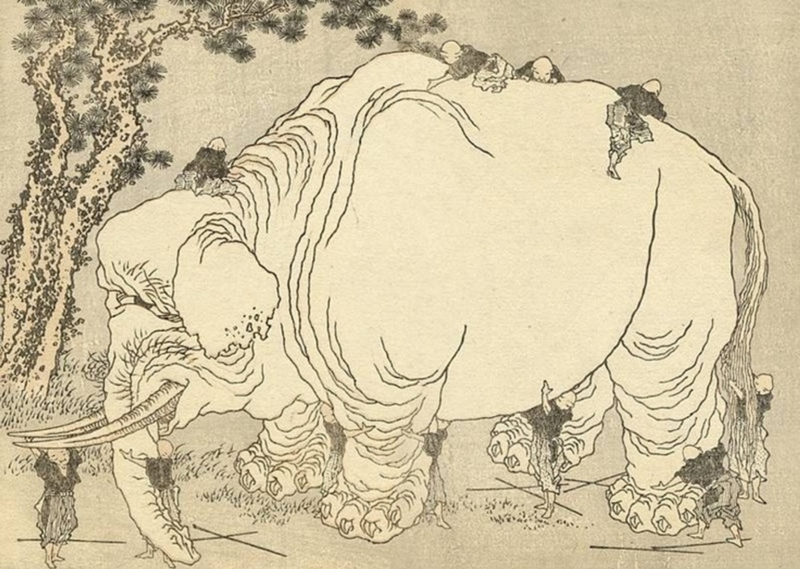
Have you read that it is critical for our #future that we ‘see the whole of the elephant’?

It’s true — but it’s not the whole story.


And because it’s a one-sided argument trying to rebalance a polarised, competitive world — arguments for ‘holism’ can undermine themselves by missing out the reality of people’s lives.


Here are eight things to think about re complexity | systemsthinking | cybernetics. They apply for management, innovation, society, ecology.

1 denying that we are part of a whole

It’s true: we are all connected. You can’t throw anything ‘away’ because there’s no ‘away’.

This insight can change lives — deeply, fundamentally. It can change organisations, and society — usually for the better.

But despite our best wishes and intentions, it somehow doesn’t change the world! Why?

2 believing we have seen the whole when…

View original post 316 more words

Systems thinking is old hat.. Don’t be mistaken. It was there before… | by Philippe Vandenbroeck | Aug, 2022 | Medium

Systems thinking is old hat.. Don’t be mistaken. It was there before… | by Philippe Vandenbroeck | Aug, 2022 | Medium

Lean, with Joy and Mary…

Rude! 😉

ComplexWales's avatar

I prefer to comment on a blog, on the blog itself. It helps to convert them from monologue to dialogue: which all bloggers appreciate. On this occasion, however, I have got too much to say and it would distract from the excellent blog on Lean, published by Joy Furnival.

A few weeks ago, while Joy was musing over Lean ‘being blamed for various supply chain failings’, we exchanged some thoughts on twitter, just to get the creative juices flowing. It looks like, given the tweets and the subsequent blog that we agree on many things, albeit from different perspectives, but I feel obliged to expand on a couple of Joy’s points, opinions, insinuations.

  • Here’s Joy’s honest expression of what Lean means and her dismay at some of the crap that’s spouted, not it its favour. JOY
  • And here’s one of my blatherings that explains Lean (in the middle of…

View original post 2,564 more words

THE origins of THE systems approach

csl4d's avatarCSL4D

Tracing the tracks of C. West Churchman

Last month I reread (and blogged) Churchman’s ‘The Systems Approach’ (1968) and was surprised to see that between the lines it contained practically the whole of the dialectical systems approach (the systems approach) as it finally took shape in 1971 (The design of inquiring systems) and 1979 (Enemies of the systems approach). In ‘The Systems Approach’ Churchman describes in fact how the dialectical systems approach emerged from the scientific systems approach (the “systems approach”) and operations research, something he had been working on very successfully from 1941 onward and the 1950s in particular, culminating in his ‘Introduction to Operations Research’ (IOR, Wiley, 1957; co-written by Russ Ackoff and Leonard Arnoff, one of the big guys behind Ernst & Young). Interestingly and speaking in a general sense, many of the ideas of ‘The Systems Approach’ of 1968 can be traced back in…

View original post 2,279 more words

Luhmann’s systems theory

csl4d's avatarCSL4D

Modern society [1] Niklas Luhmann (1927-1998) was a German sociologist who developed a general systems theory of modern society. The American social systems theorist Talcott Parsons (1902-1979) was a major influence – for the idea of social systems -, but so were the Chileans Humberto Maturana (1928-2021) and his student Francisco Varela (1946-2001) – for the idea of autopoiesis. Steffen Roth (1976) is a very active Luhmann scholar. According to Luhmann modern society evolved from the 16th to 18th century by differentiating largely independent function systems such as law, politics, science, economy, religion, and media. The function systems were not so much human designs as globally emerging patterns of social differentiation in a historically evolving environment, which to a large extent was shaped by those same emerging function systems. ‘Social systems theory does not describe reality as it “essentially” is, but as what it has actually become – and it…

View original post 1,103 more words

The dynamics of transitions in socio-technical systems: A multi-level analysis of the transition pathway from horse-drawn carriages to automobiles (1860–1930) – Geels (2006)

The dynamics of transitions in socio-technical systems: A multi-level analysis of the transition pathway from horse-drawn carriages to automobiles (1860–1930)Dr. Ir. F. W. Geels

The dynamics of transitions in socio-technical systems: A multi-level analysis of the transition pathway from horse-drawn carriages to automobiles (1860–1930): Technology Analysis & Strategic Management: Vol 17, No 4

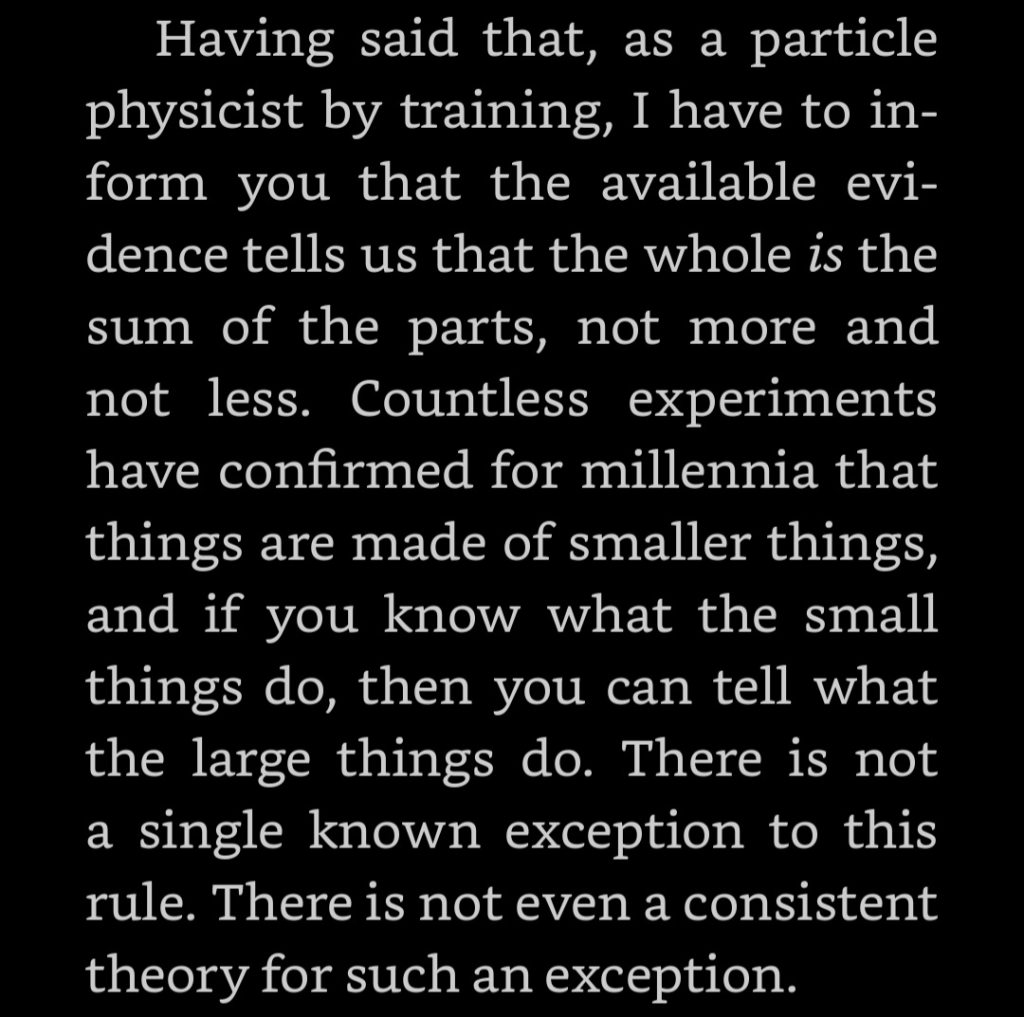
Twitter thread on a new book claiming that reductionism can explain everything

Emergence as the conversion of information: a unifying theory | Varley and Hoel (2022)

Is reduction always a good scientific strategy? The existence of the special sciences above physics suggests not. Previous research has shown that dimensionality reduction (macroscales) can increase the dependency between elements of a system (a phenomenon called ‘causal emergence’). Here, we provide an umbrella mathematical framework for emergence based on information conversion. We show evidence that coarse-graining can convert information from one ‘type’ to another. We demonstrate this using the well-understood mutual information measure applied to Boolean networks. Using partial information decomposition, the mutual information can be decomposed into redundant, unique and synergistic information atoms. Then by introducing a novel measure of the synergy bias of a given decomposition, we are able to show that the synergy component of a Boolean network’s mutual information can increase at macroscales. This can occur even when there is no difference in the total mutual information between a macroscale and its underlying microscale, proving information conversion. We relate this broad framework to previous work, compare it to other theories, and argue it complexifies any notion of universal reduction in the sciences, since such reduction would likely lead to a loss of synergistic information in scientific models.

This article is part of the theme issue ‘Emergent phenomena in complex physical and socio-technical systems: from cells to societies’.

Emergence as the conversion of information: a unifying theoryThomas F. Varley and Erik HoelPublished:23 May 2022

Emergence as the conversion of information: a unifying theory | Philosophical Transactions of the Royal Society A: Mathematical, Physical and Engineering Sciences

34C3- Reflections on the Hacker Ethos // Chaos Engineering

34C3- Reflections on the Hacker Ethos // Chaos Engineering

January 2018m Eirini Malliaraki

Aug 10

“Scepticism does not mean the successive doubting, item by item, of all opinions or of all the pathways that accede to knowledge. It is holding the subjective position that one can know nothing…. Scepticism is something that we no longer know. Scepticism is an ethic. Scepticism is a mode of sustaining man in life, which implies a position so difficult, so heroic, that we can no longer even imagine it — the way of desire.” -Lacan, 1977I spent the last 4 days celebrating hacker culture at the Chaos Communication Congress in Leipzig. The 34C3 is an annual conference organised by the hacking collective Chaos Computer Club. It features a variety of lectures and workshops on technical and political issues related to security, privacy, open source technologies and freedom. The community consists of all people of the web who share the common vision for an open and free technological society: trolls, programmers, activists, artists, philosophers, engineers and every virtual creature in-between. In this post, I’d like to talk about my experience and my interpretation of the hacker ethos.

34C3- Reflections on the Hacker Ethos // Chaos Engineering

(With cybernetics, complexity, and chaos)