A System Change Compass: Implementing the European Green Deal in a time of recovery – Club of Rome

source:

A System Change Compass: Implementing the European Green Deal in a time of recovery – Club of Rome

A System Change Compass: Implementing the European Green Deal in a time of recovery

OverviewShare this post

“A System Change Compass: Implementing the European Green Deal in a time of recovery”, co-written by The Club of Rome and SYSTEMIQ, with a foreword by President of the Commission Ursula von der Leyen, sets out the guiding principles and systemic orientations to help address barriers to a rapid and successful rollout of the EGD along all dimensions of the European policy sphere.

The European Green Deal (EGD) sets a vision for Europe to achieve carbon neutrality by 2050. It is also Europe’s best plan to recover from the Covid-19 crisis by creating a more prosperous, sustainable and resilient economy. But delivering this bold vision requires an equally bold framework for implementation.

Based on the unique Compass framework, the report provides a set of clear policy interventions to redefine prosperity, progress, the metrics used to measure success, governance, leadership and the enabling role of finance. It also identifies over 50 emerging industry “champions” that will drive Europe’s transformation towards a more competitive, resource-efficient economy in line with societal needs. These champions – from urban agriculture to seaweed farming and hydrogen technologies – represent scalable sustainable industries that will form Europe’s economic backbone in a net-zero world.

Recognising that Europe’s environmental, social and health challenges are rooted in the unsustainable use of natural resources, lead authors Sandrine Dixson-Declève, Janez Potočnik and Martin R. Stuchtey demonstrate how radical resource decoupling, dematerialisation and rethinking ownership can lead to human wellbeing and economic resilience.

Download the report here. 

source:

A System Change Compass: Implementing the European Green Deal in a time of recovery – Club of Rome

TODAY – Race-to-Zero Opening Sessions – Club of Rome

source:

Race-to-Zero Opening Sessions – Club of Rome

Race-to-Zero Opening Sessions

Nov 3, 2020OverviewShare this post

On Monday 9 November 2020 between 9.30-10.30 GMT, The Club of Rome and Potsdam Institute of Climate Impact Research are joining forces to host the opening session “Systems Transformation” of the Race to Zero DialoguesWith presentations by the hosts Johan Rockström (Director of PIK), Sandrine Dixson-Declève (Co-President of The Club of Rome) and Kate Raworth (Author of Doughnut Economics) as well as a high-level panel discussion, this online event introduces participants to a new recovery, resilience and renewal agenda for people, planet and prosperity driven by systems change. The opening sets the tone for the sectoral dialogues by demonstrating that net-zero is not limited to zero carbon, but ultimately also stand for zero loss of nature, zero pandemics and zero poverty – with the aim to leave our children nothing (#LeaveOurChildren0).

With COP26 postponed, the Race to Zero Dialogues presents an important landmark in our calendars on the road to Glasgow and COP26. This session will mark the start of a ten-day series of virtual dialogues, with the objective to build momentum around the shift to a decarbonised economy ahead of COP26. These dialogues are a part of the UNFCCC’s Race to Zero global campaign, led by the High- Level Climate Champions for Climate Action – Nigel Topping and Gonzalo Muñoz – and aim to raise the ambition for a Decade of Action.

Complete programme for 9 November opening sessions:

  • 9:00h-9:30GMT      Opening words Race to Zero Dialogues: Nigel Topping and Gonzalo Muñoz, High Level Champions for Climate Action
  • 9:30h-9:45GMT      Emerging from Emergency: The Case for Systems Change: Johan Rockström, Director of the Potsdam Institute for Climate Impact Research & Sandrine Dixson-Declève, Co-President of The Club of Rome
  • 9:45h-9:50GMT      Systems Change in Practice: Kate Raworth, Author of Doughnut Economics, Senior Research Associate at Oxford University’s Environmental Change Institute
  • 9:50h-9:55GMT      Pre-recorded video messages: Chief Raoni Metuktire of the Kayapo people, Climate Activist
  • 9:55-10:20GMT      Live Reflections: Importance of Accelerating Systems Change and Action:
      • Wanjira Mathai, Vice-President and Regional Director for Africa, World Resources Institute
      • Cardinal Peter Turkson, Prefect, Dicastery for the Promotion of Integral Human Development
      • Sheela Patel, Commissioner, Global Commission for Adaptation
      • Luvuyo Madasa, Executive Director, Re Imagine South Africa
      • Moderator: Adélaïde Charlier, Co-Founder, Youth for Climate Belgium
  • 10:20-10:25GMT    Pre-recorded video messages: Christiana Figueres, Founder of Global Optimism
  • 10:25-10:30GMT   Closing Reflections: The Case for Systems Transformation (Climate Action & Health: The Convergence of Tipping Points): Sir Andy Haines, London School of Hygiene and Tropical Medicine & Joy Phumaphi, Executive Secretary of the African Leaders Malaria Alliance – Co-Chairs of the Pathfinder Commission
  • 10:30-11:30GMT    Keynote opening of the Climate & Health Dialogue: The necessary steps to achieve a healthy, equitable recovery from COVID-19 and drive a rapid decarbonisation of the world economy: World Health Organisation, partners and invited guests.

The audience may register for access to the Zoom webinar or watch the opening session live via YouTube.

For more information about the programme click here.

source:

Race-to-Zero Opening Sessions – Club of Rome

How fractals can help you understand the universe | BBC Ideas – YouTube

#bbcideas #fractals #science How fractals can help you understand the universe | BBC Ideas 38,310 views•28 Nov 2019 781 16 SHARE SAVE BBC Ideas 200K subscribers SUBSCRIBED What is a fractal, and how can fractals help us understand the universe? Classic examples of fractals in nature are broccoli and snowflakes. They can offer a fascinating explanation for how the world works! Written by Brandon Pestano, animated by Christopher Brooks. Subscribe to BBC Ideas 👉 https://bbc.in/2F6ipav ——————————————————————————- Do you have a curious mind? You’re in the right place. Our aim on BBC Ideas is to feed your curiosity, to open your mind to new perspectives, and to leave you that little bit smarter. So dive in. Let us know what you think. And make sure to subscribe! 👉https://bbc.in/2F6ipav Visit our website to see all of our videos: https://www.bbc.com/ideas And follow BBC Ideas on Twitter: https://twitter.com/bbcideas #bbcideas #fractals #science SHOW LESS

How fractals can help you understand the universe | BBC Ideas – YouTube

The Hidden Power podcast – Hosted by Ed Straw, Philip Tottenham

https://www.edstraw.com/category/blog/ and

The Hidden Power – Hosted by Ed Straw,Philip Tottenham

The Hidden Power

Why doesn’t government work?

Is it the politicians, the civil servants, the political parties?

Or is it the system in which they all operate?

The Hidden Power goes behind the headlines and the sporting spectacle of modern politicking to find the real villain.

This series of six podcasts, broadcast weekly from October 10th, provides both critique and answers.

Good government is entirely possible but not in its current guise.

Hosted by Ed Straw, former chair of Demos – the cross-party think-tank on democracy, and Philip Tottenham.

Copyright Ed Straw and Philip TottenhamHosted with ❤ by Acast

source:

The Hidden Power – Hosted by Ed Straw,Philip Tottenham

see also: https://www.edstraw.com/category/blog/

System Thinker Notebook | James Shelley

source:

System Thinker Notebook | James Shelley

System Thinker Notebook

by James Shelley

This is the online (now expanded and continually updated) version of a teaching and coaching resource I published in January 2018.

The primary goal of this resource is to foster systemic and holistic reflection. I am especially interested in describing how a systems level approach might inform the way we think about strategic planning, research and analysis, project design, and program evaluation. The System Thinker Notebook aims to provide an accessible, shared ‘lexicon’ for bolstering the strategic capacity of groups and organizations.

A key feature of this project is that it is in perpetual development. I use the word ‘notebook’ intentionally, to differentiate this document from a formal ‘book.’ I will keep adding and adapting this resource as I go along. One of the principle takeaways from studying complexity is an acute sense of how little one person alone can comprehend about the totality of the system around them: to open the door to complexity is to accept a state of personal ignorance indefinitely. Every time I teach or facilitate on this topic, I learn so much from others: pedagogy is a mutual affair. It takes a community to think holistically. Therefore, this is a ‘notebook’ because I have no intentions of ever considering it ‘complete.’

Table of Contents


By James Shelley. Licensed under a Creative Commons Attribution-NonCommercial-ShareAlike 4.0 International License. Permalink: https://jamesshelley.com?p=16939jamesshelley.com › Manuscripts › System Thinker Notebook¶ Other manuscripts

source:

System Thinker Notebook | James Shelley

Complex Adaptive Systems Lab at Western University, Ontario Canada – and James Shelley’s blog

via @daviding on the www.systemschanges.com Open Learning community on MatterMost

source and links:

Western University

Complex Adaptive Systems

  • koala bear

Western’s CAS Lab

western-university-college-tower.jpg

Welcome

Western’s CAS Lab is a network hub where researchers, staff, students, and collaborators studying complex adaptive systems can easily find one another across faculties and departments, learn from one another, and build upon one each other’s work. Interdisciplinarity is at our core: we aim to foster new research activity that reimagines the traditional dividing lines of academic disciplines.

The CAS Lab is a grassroots research development initiative, organized in collaboration with Western Research.

News

sprout-by-Sushobhan-Badhai.jpg

The CAS Lab is Live

Special thanks to all the ‘early adopter’ and visionary facultywho have supported the initiative, the dedicated studentswho have nurtured this project into existence, and the incredible team at Western Research for their collaboration and encouragement.

Opportunities

knowledgeexchange.jpg
  • Research development and networking
  • Guest lecturers on complexity
  • Faculty and student membership
  • Practicum and CEL student placements

LEARN MORE

source and links:

Western University

James Shelley, the project lead, has a very interesting blog at https://jamesshelley.com/

A glimpse at the metaphysics of Bongard problems – Linhares (2000)

source:

(PDF) A glimpse at the metaphysics of Bongard problems

Glimpse at the metaphysics of Bongard problems

DOI: 10.1016/S0004-3702(00)00042-4

Authors:

Alexandre Linhares

Abstract and Figures

Bongard problems present an outstanding challenge to artificial intelligence. They consist of visual pattern understanding problems on which the task of the pattern perceiver is to find an abstract aspect of distinction between two classes of figures. This paper examines the philosophical question of whether objects in Bongard problems can be ascribed an a priori, metaphysical, existence—the ontological question of whether objects, and their boundaries, come pre-defined, independently of any understanding or context. This is an essential issue, because it determines whether a priori symbolic representations can be of use for solving Bongard problems. The resulting conclusion of this analysis is that in the case of Bongard problems there can be no units ascribed an a priori existence—and thus the objects dealt with in any specific problem must be found by solution methods (rather than given to them). This view ultimately leads to the emerging alternatives to the philosophical doctrine of metaphysical realism.

full pdf in source:

(PDF) Glimpse at the metaphysics of Bongard problems

How to understand cells, tissues and organisms as agents with agendas | Aeon Essays – Michael Levin and Daniel Dennett

source:

How to understand cells, tissues and organisms as agents with agendas | Aeon Essays

Cognition all the way down

Biology’s next great horizon is to understand cells, tissues and organisms as agents with agendas (even if unthinking ones)

Close-up detail of the Papilio demoleus malayanus, the lime butterfly. Photo by Joel Sartore/National Geographic

Michael Levin

is the Vannevar Bush chair and Distinguished Professor of biology at Tufts University in Massachusetts, where he directs the Allen Discovery Center and the Tufts Center for Regenerative and Developmental Biology.

Daniel C Dennett

is the Austin B Fletcher professor of philosophy and co-director of the Center for Cognitive Studies at Tufts University. He is the author of more than a dozen books, the latest of which is From Bacteria to Bach and Back: The Evolution of Minds (2017). He lives in Massachusetts.

5,500 words

Edited by Nigel Warburton

Biologists like to think of themselves as properly scientific behaviourists, explaining and predicting the ways that proteins, organelles, cells, plants, animals and whole biota behave under various conditions, thanks to the smaller parts of which they are composed. They identify causal mechanisms that reliably execute various functions such as copying DNA, attacking antigens, photosynthesising, discerning temperature gradients, capturing prey, finding their way back to their nests and so forth, but they don’t think that this acknowledgment of functions implicates them in any discredited teleology or imputation of reasons and purposes or understanding to the cells and other parts of the mechanisms they investigate.

But when cognitive science turned its back on behaviourism more than 50 years ago and began dealing with signals and internal maps, goals and expectations, beliefs and desires, biologists were torn. All right, they conceded, people and some animals have minds; their brains are physical minds – not mysterious dualistic minds – processing information and guiding purposeful behaviour; animals without brains, such as sea squirts, don’t have minds, nor do plants or fungi or microbes. They resisted introducing intentional idioms into their theoretical work, except as useful metaphors when teaching or explaining to lay audiences. Genes weren’t really selfish, antibodies weren’t really seeking, cells weren’t really figuring out where they were. These little biological mechanisms weren’t really agents with agendas, even though thinking of them as if they were often led to insights.

We think that this commendable scientific caution has gone too far, putting biologists into a straitjacket that prevents them from exploring the most promising hypotheses, just as behaviourism prevented psychologists from seeing how their subjects’ measurable behaviour could be interpreted as effects of hopes, beliefs, plans, fears, intentions, distractions and so forth. The witty philosopher Sidney Morgenbesser once asked B F Skinner: ‘You think we shouldn’t anthropomorphise people?’– and we’re saying that biologists should chill out and see the virtues of anthropomorphising all sorts of living things. After all, isn’t biology really a kind of reverse engineering of all the parts and processes of living things? Ever since the cybernetics advances of the 1940s and ’50s, engineers have had a robust, practical science of mechanisms with purpose and goal-directedness – without mysticism. We suggest that biologists catch up.

continues in source:

How to understand cells, tissues and organisms as agents with agendas | Aeon Essays

The Cybernetics’ Difference! CybSights—The President’s Series Tickets, Wed 9 Dec 2020 at 17:00 GMT

source:

The Cybernetics’ Difference! CybSights—The President’s Series Tickets, Wed 9 Dec 2020 at 17:00 | Eventbrite

DEC

09

The Cybernetics’ Difference! CybSights—The President’s Series

by Cybernetics Society — President’s SeriesFollowing£0 – £7.50

Event Information

The President’s Series features distinguished speakers on issues of our time. This explores purposefulness and the ‘world we want to world’

About this Event

Hosted by our President, Dr. John Beckford FCybS, the CybSights President’s Series is a new programme that will bring interesting people together to explore the relevance and contribution of cybernetics to addressing important challenges.

Each event will consist of contributions by two different speakers. Each will be followed by individual Q&A. These are then brought together by the President in a lively and engaging plenary discussion. Each will seek areas of convergence and divergence between the ideas explored.

Events will be held via Zoom on the 2nd Wednesday of each month from 1700 to 1900.

Meetings are open to members of the Cybernetics Society and also the general public. Non-members are invited to join or give a donation. Booking is required.

The Cybernetics Society has been hosting conversations and lectures since the late 1960s.

#PS3 : December 9: The Cybernetics Difference & our Future World

Addressing the distinct “go” of cybernetics and its value for contemporary and future science and society. The two speakers, both fellows of the Society, speak about transformations in thinking: the inverted scientific logic of causality that cybernetics brings, recognising purpose, and the question of what we humans want to do with our purposefulness in the making of the world.

Introduction and Welcome: Dr. John Beckford, FCybS, President of the Cybernetics Society

John Beckford is a partner in Beckford Consulting, Non-Executive Chair of the Board of Rise Mutual CIC, a Non-Executive Director of both Fusion21 and CoreHaus (social enterprises) and Visiting Professor in both the Department of Civil, Environmental and Geomatic Engineering at University College London and the Centre for Information Management, School of Business and Economics, Loughborough University. John holds a PhD in cybernetics from the University of Hull, is a Fellow of the Institution of Engineering and Technology and of the Royal Society for the Arts and a Member of the Institute of Management Services. He is President of the Cybernetics Society.

Angus Jenkinson, FCybS, Secretary of the Cybernetics Society and Director of the Centre for Thinking Futures

Why is cybernetics so important?

So important that it should become a major curriculum subject and essential for every senior manager, policymaker, designer, engineer, or ecologist — and many other disciplines? Angus will argue it does four things that change our understanding of the world. 4 ‘things’ that no other generally accepted science addresses so clearly. 1. Active instead of passive causality. 2. Tame instead of wicked problems. 3. Sensitive solutions to problem situations. 4. Active learning and dynamic design. These lead to the understanding that the world has two great orders of nature.

1 > When science rejected goal-driven behaviour in the 1600s it lost the ability to explain the behaviour of every living creature and every social institution. When cybernetics brought it back in the 20th century it provided the foundation for understanding and resolving the most difficult challenges of our time and times to come.

Conventional science until then — and still for many — thought the world operated on passive causality. Things happen to things and so energy and motion were transferred. Whatever happened was because of something that had already happened being transferred to it. By forces. As cause. Then cybernetics proved and demonstrated that there was active causality. All living creatures actively produce what they do. And do their best to make sure that nothing prevents it. That turns our understanding of the world inside out. And restores common sense.

2 > It turns wicked problems into tame problems. The advanced cybernetic designer knows how to filter the supposed problem to the real issues that will produce the desired outcome. It can do that with exquisite precision. There are many wicked problems. Such a technology is invaluable.

3 > Cybernetics runs on the experience that organisms have of the world. It knows how that works — whether it’s a butterfly or a global enterprise. It’s founded on the join between people and their world, living creatures and their world. That’s why it can help with ecological, social, and design challenges, from AI to saving butterflies and forests.

4 > Cybernetics is the science of living behaviour, achievement of success, and crucially of learning. It is the science — and discipline — that deals with a dynamic world. Old ideas do not work in new situations. Cybernetics explains how the very process of living is a process of learning and how we can turn that into the design of learning and adaptive behaviour.>> The world of the 21st-century therefore has two great orders of nature. The first is the world of passive causality, mechanical objects and technologies, things. Scientific technology has been mostly brilliant at this. (But they can do harm to the living.) The second is the world of active causality, the living, and the technologies that reflect this. Scientific technology has varied from the so-so to the awful at this. This century we need to solve the problems of the past for the sake of the future. The problems and ways to deal with them are social, technical, and eminently practical.

Angus Jenkinson is the Secretary of the Society, a former business professor, tech entrepreneur, systems and thinking tools designer, consultant and CEO/company chair He is an organisational philosopher.and is developing a new scientific theory of organisations, called propriopoiesis. He has had a solo exhibition of photographic artworks.

Followed by discussion and Q & A

SECOND SPEAKER

Professor Peter Kawalek FCybS

Donna Haraway’s Chthulucene – Cybernetics, Wellbeing and the Future of the Planet.

Synopsis: Central to Donna Haraway’s “Staying With The Trouble” is the reconceptualization of autopoiesis as sympoiesis; one of a number of concepts through which she calls the Anthropocene to its end and articulates the Chthulucene – a higher variety, multi-species, ecologically conducive era of diverse relationships. This is not my normal territory as Professor of Information Management but I once sat with Stafford Beer as he expounded on failures of thought, curricula and teaching, and expressed how he felt the impoverishment of thinking impoverished the world. I have reflected on that conversation several times whilst engaging with Donna Haraway’s work and felt, similar to my first reaction to Stafford’s work, a surge of excitement at the complexity and the potential. As Haraway puts it, it is important to consider what worlds world worlds. Look out for the variety expressed in kin, plantations and string figures as I grapple with her latest work.

Bio: Professor Peter Kawalek FCybS is Director of the Centre for Information Management at the School of Business & Economics in Loughborough University. He has additional visiting positions at Letterkenny Institute of Technology, Ireland, and Deusto Business School, Basque Country. Previously of Manchester Business School, Warwick Business School and School of Computer Science at Manchester. He also has wide experience working with organizations including Siemens AG., SAP, IBM, Office an Taoiseach (Prime Minister) in Dublin, the Department of Communities and Local Government (London), City Council, Salford City Council, Lancashire Constabulary, Greater Manchester Police. Peter has held and managed over £2m in research grants from government and research councils. What Peter hopes to be known for is actual contribution – that maybe there is something to show on the ground for his various ideas and projects.

Followed by discussion and Q & A

Plenary Discussion

The aim of this session, moderated by John Beckford, is to draw out the complementary and competing ideas emerging from the two sessions.

Cybernetics Society – a learned society

The Cybernetics Society promotes and offers education and research opportunities in the rich field of cybernetics. In the CybSights series, including the President’s Series, we offer isghts conversations, lectures, case studies, analysis, education, and thoughtful entertainment.,

The Cybernetics Society – http://CybSoc.org – is a specially authorised learned society regulated by the FSA and established by a 1974 Act of Parliament. To join visit our membership system or pick the Join ticket.

Cybernetics plays into and strongly influences many scientific and practice fields including design, epistemology, ecology, biology, psychology and living behaviour, technology and engineering, social policy, and business practice, amongst others. Many feature in this wonderful set of aware and successful designers and thinkers.

Cybernetics offers a distinct “go” — techniques — to address local and global challenges of the 21st century.

book at source:

The Cybernetics’ Difference! CybSights—The President’s Series Tickets, Wed 9 Dec 2020 at 17:00 | Eventbrite

Design Decisions and Police Practice —The President’s Series Tickets, Wed 11 Nov 2020 at 17:00 GMT

source:

Design Decisions and Police Practice —The President’s Series Tickets, Wed 11 Nov 2020 at 17:00 | Eventbrite
NOV 11

Design Decisions and Police Practice —The President’s Series

by Cybernetics Society — President’s SeriesFollowing£0 – £7.50

Event Information

The President’s Series features distinguished speakers on issues of our time, such as these practice questions

About this Event

Hosted by our President, Dr. John Beckford FCybS, the CybSights President’s Series is a new programme that will bring interesting people together to explore the relevance and contribution of cybernetics to addressing important challenges.

Each event will consist of contributions by two different speakers. Each will be followed by individual Q&A. These are then brought together by the President in a lively and engaging plenary discussion. Each will seek areas of convergence and divergence between the ideas explored.

Events will be held via Zoom on the 2nd Wednesday of each month from 1700 to 1900.

Meetings are open to members of the Cybernetics Society and also the general public. Non-members are invited to join or give a donation. Booking is required.

The Cybernetics Society has been hosting conversations and lectures since the late 1960s.

#2 : November 11: Deciding & Intelligence

Addressing the distinct “go” of cybernetics and its value for contemporary and future science and society, the two speakers explore decisions through design and policing, intelligence and ethical choice.

Introduction and Welcome: Dr. John Beckford, FCybS, President of the Cybernetics Society

FIRST SPEAKER: Dr Ben Sweeting, FCybS

Undeciding the decidable

Synopsis: Heinz von Foerster’s distinction between decidable and undecidable decisions is often taken to imply an ethics of personal responsibility, summed up in the phrase ‘only we can decide the undecidable’. Taken together with the invocation to ‘increase the number of choices’, von Foerster implies an ethics that is personal and pluralistic. This approach is helpful as a critique of moralism but it is a limited guide in situations characterised by conflict, inequality, or the need for collective action.

In this presentation, I return to von Foerster’s discussion of undecidability in order to suggest a different way of thinking about its ethical implications. Whereas von Foerster traces undecidability back to foundational metaphysical questions, positioning the ethical within a choice between distinct worldviews, I use the example of design to explore the decidable and undecidable within the context of practical tasks. I argue that it is not enough for us to decide upon (take responsibility for) the undecidable questions that we encounter: we must also undecide the decidable decisions that are given within the contexts in which we are living, increasing the number of choices as a process of critique rather than as a pluralisation of options.

_Dr Ben Sweeting FCybS teaches architecture and design at the University of Brighton. He studied architecture at the University of Cambridge and University College London, completing a PhD at the latter with Neil Spiller and Ranulph Glanville. Ben is an active member of the UK Cybernetics Society, the American Society for Cybernetics (ASC), and the Systemic Design Association and has co-guest edited special issues of Kybernetes, Constructivist Foundations, Cybernetics and Human Knowing, and FormAkademisk. Ben received the Heinz von Foerster Award from the ASC in 2014..

Followed by discussion and Q & A

SECOND SPEAKER: Professor Louise Cooke

Helping the Police with their enquiries: Managing knowledge in law enforcement.

This talk reflects on a varied body of work ‘helping the police with their enquiries’. It is no secret that policing is a knowledge-intensive and intelligence-led occupation. However, despite this focus on intelligence, many police forces would not hesitate to acknowledge gaps in their data, information and knowledge management practices. These include (but are not limited to) lack of uniformity and interoperability of systems, both within and between the 43 UK forces; information recording practices that date back to the turn of the twentieth century (the ‘bobby and his notebook’); information and knowledge silos; and a failure to grasp the opportunities offered by knowledge exchange with other emergency services. The talk will discuss a range of knowledge management-related projects carried out by the speaker in collaboration with a range of law enforcement agencies, and the key lessons learned from each. Bio: Professor Louise Cooke is Professor of Information & Knowledge Management in the School of Business and Economics at Loughborough University. She has a BA in Library Science and Modern European Studies; an MA in Library and Information Science; and a PhD in Information Science. Her working career spans work placements at the ICI Paints Research Centre and the Ministry of Agriculture, Fisheries and Food Pest Infestation Control Laboratory in Slough; the BBC Film & Videotape Library in Brentford; PAS Research; Buckinghamshire Chilterns University College; City University, London; and Loughborough University. Her research interests focus on information and knowledge management in the public sector, and particularly in law enforcement agencies; and regulatory mechanisms in information management.

Followed by discussion and Q & A and then

Plenary Discussion

The aim of this session, moderated by John Beckford, is to draw out the complementary and varied ideas emerging from the two sessions.

Prof John Beckford FCybS is a partner in Beckford Consulting, Non-Executive Chair of the Board of Rise Mutual CIC, a Non-Executive Director of both Fusion21 and CoreHaus (social enterprises) and Visiting Professor in both the Department of Civil, Environmental and Geomatic Engineering at University College London and the Centre for Information Management, School of Business and Economics, Loughborough University. John holds a PhD in cybernetics from the University of Hull, is a Fellow of the Institution of Engineering and Technology and of the Royal Society for the Arts and a Member of the Institute of Management Services. He is President of the Cybernetics Society.

Cybernetics Society – a learned society

The Cybernetics Society promotes and offers education and research opportunities in the rich field of cybernetics. In the CybSights series, including the President’s Series, we offer isghts conversations, lectures, case studies, analysis, education, and thoughtful entertainment.,

The Cybernetics Society – http://CybSoc.org – is a specially authorised learned society regulated by the FSA and established by a 1974 Act of Parliament. To join visit our membership system or pick the Join ticket.

Cybernetics plays into and strongly influences many scientific and practice fields including design, epistemology, ecology, biology, psychology and living behaviour, technology and engineering, social policy, and business practice, amongst others. Many feature in this wonderful set of aware and successful designers and thinkers.

Cybernetics offers a distinct “go” — techniques — to address local and global challenges of the 21st century.

book in source:

Design Decisions and Police Practice —The President’s Series Tickets, Wed 11 Nov 2020 at 17:00 | Eventbrite
Corporate Seagulls, Smart Alecs, & Enterprise Antics in a Cybernetic Lens Tickets, Tue 24 Nov 2020 at 18:00 GMT

Corporate Seagulls, Smart Alecs, & Enterprise Antics in a Cybernetic Lens Tickets, Tue 24 Nov 2020 at 18:00 | Eventbrite

NOV 24

Corporate Seagulls, Smart Alecs, & Enterprise Antics in a Cybernetic Lens

by CybSights: The Insights SeriesFollow£0 – £5

Event Information

A live research conversation about cybernetics, biz and models (etc) between Hon Fellow Stephen J. Brewis and the Secretary, Angus Jenkinson

About this Event

The Insights Series is an eclectic and learned collection of monthly events on the 4th Tuesday of each month. There will be lectures, seminars, conversations, debates, participation, all advancing our knowledge of cybernetics and its applications to real world needs.

It is the science of achievement, the great meta-discipline of our time.

Events are normally curated and hosted by the Secretary, Angus Jenkinson, FCybS. Get in touch of you ahve an idea. Attendance is free. Non-members are invited to make a donation or Join.

The Cybernetics Society has been hosting conversations and lectures since the late 1960s. We also have an Annual Conference. Videos are shared on our YouTube Channel.

Seagulls? Smart Alecs? What is this about?

Corporate Seagullswiki says: The seagull style of management may be indicative of a manager who is untrained, inexperienced or newly-appointed.

Smart Alecsopinion about: Cyberneticians who think they know better. Maybe they do?

Inquiry: Both approaches may lack the praxis, the glue that joins the two together i.e. Theory without practice is useless, practice without theory is dangerous. And expertise that does not reach those who need it is wasted.

This is a conversation between Stephen Brewis HonFCybS and Angus Jenkinson FCybS with audience participation.

It will flow freely to and fro, questioning and probing, exploring and researching together around such vital questions as:

  1. How can cybernetic language become accessible and more powerful?
  2. How does cybernetics solve significant enterprise problems?
  3. What do companies need to work more effectively?
  4. How do we improve both the freedom of individuals and the performance of enterprises?

Stephen J Brewis

Stephen Brewis is an honorary fellow of the Society, a former chief scientist at BT whose cybernetic modelling made huge financial difference, improved quality, and enhanced the working life of people. He now runs his own consultancy as well as having academic fellowships.

Angus Jenkinson FCybS

Angus Jenkinson is the Secretary of the Society, a former Professor, tech entrepreneur, consultant, and business leader. He is researching a new theory of organisations, called propriopoiesis.

Stephen and Angus have regular collegiate research conversations and think that it could be an interesting stimulus to share. Together they have rethought certain ideas, found new language, and challenged each other to go deeper — join in!

Interspersed with audience discussion and Q & A

Cybernetics Society – a learned society to join?

Cybernetics offers a distinct “go” — techniques — to address local and global challenges of the 21st century.

The Cybernetics Society promotes and offers education and research opportunities in the rich field of cybernetics. It is a specially authorised learned society regulated by the FSA and established by a 1974 Act of Parliament. To join visit our membership system or pick the Join ticket. We give MCybS and FCybS postnomal awards.

Cybernetics and the Society seek understanding of the vast domain of active causation, internally controlled behaviour towards outcomes of value in living and non-living organizations. We cultivate the principles and praxis required to design policies, interventions, and innovations for social and ecological weal.

Cybernetics plays into and strongly influences many scientific and practice fields including design, epistemology, ecology, biology, psychology and living behaviour, technology and engineering, social policy, and business practice, amongst others. Many feature in this wonderful set of aware and successful designers and thinkers.

We are interested in people who are learners, advisers, researchers, academics, designers, leaders. Those involved in policy and practice — think tanks, central and local government, enterprises, foundations, academic and civil society institutions. These may range from Rowntree to RSA, Royal Society to the Royal Institute of British Architects, the local housing association to the UN. We place great importance on the value of cybernetics for better business. From startups to global giants, cybernetics offers powerful insight and tools for enterprise.

book at source:

Corporate Seagulls, Smart Alecs, & Enterprise Antics in a Cybernetic Lens Tickets, Tue 24 Nov 2020 at 18:00 | Eventbrite

Ilmari Susiluoto : A Finnish Dissident – The Northern European :: UpNorth – Jukka Mallinen

Jukka Mallinen: A Finnish Dissident – The Northern European :: UpNorth

[original title, which I believe is incorrect: Jukka Mallinen: A Finnish Dissident]

by Jukka Mallinen

Ilmari Susiluoto (left) and Jukka Mallinen (right) 2015. Photo: Aleksi Poutanen, Aamulehti

Juuso Salokorpi (editor): The Arithmetic of the Greatness of Ilmari Susiluoto

Helsinki. 2020. 413 pages.

The twists and turns in the career of Russian researcher Ilmari Susiluoto (1947 – 2016) are themselves a reflection of Finland’s traumatic relationship with Russia. He was an independent researcher and a presidential advisor who became mired in the bureaucratic politics of Finland’s relations with its Eastern neighbour.

Well-known Russian scholars, Soviet trade veterans and journalists take a retrospective look at his career in a memoir titled “The Arithmetic of the Greatness of Ilmari Susiluoto”. The book has been edited by Juuso Salokorpi, Ilmari’s cousin and schoolmate, who was once an international banker in Moscow and London.

1960

In the mid-19th century, Susiluoto was a board member of the Helsinki New Left Schoolboys and Schoolgirls
Society. Several Finnish left-wing politicians and intellectuals emerged from this famous association. But he
maintained (kept) his intellectual and critical freedom, when most of this group betrayed the ideals of “the generation of 1968” accepting communist ideology or careers in service of advancing finlandization.

In 1982, his book, “The Origin and Development of System Thinking in the Soviet Union” which focused on the early

Susiluoto’s “The Origins and Development of Systems Thinking in the Soviet Union: Political and Philosophical Controversies from Bogdanov and Bukharin to Present-Day Re-Evaluations “

stages of Soviet cybernetics, a policy that was internationally regarded as being bold and innovative,  was even noted by Alec Nove in “Soviet Studies”. The issue of cybernetics was politically sensitive in The Soviet Union, because it was invented by Lenin’s opponents Anatoly Bogdanov and  Nikolai Bukharin. They presented an alternative to Stalin’s “barrack style” communism with early Soviet cybernetics, and predicted Norbert Wiener’s theories that appeared in the West, 50 years later.

The challenges of a planned economy provided a peculiar perspective on cybernetics. Cybernetic socialism was accused of being too technocratic. Bogdanov’s and Bukharin’s theory of equilibrium threatened the party’s leading role.

continues in source:

Jukka Mallinen: A Finnish Dissident – The Northern European :: UpNorth

Home – Allen Discovery Center at Tufts UniversityAllen Discovery Center at Tufts University

source:

Home – Allen Discovery Center at Tufts UniversityAllen Discovery Center at Tufts University

Allen Discovery Center at Tufts UniversitySearchEnter search termChoose search location                   This site                     Tufts.edu                   Submit

Reading and Writing the Morphogenetic Code

The Allen Discovery Center at Tufts University is a center of fundamental research on anatomical homeostasis. Dr. Levin and his team focus on reading and editing the biophysical control circuits that underlie the Morphogenetic Code. Explore the concepts outlined in our White Paper, and imagine the breakthroughs to come.

Read the White Paper

The Allen Discovery Center at Tufts University focuses on reading and writing the Morphogenetic Code, which orchestrates how cells communicate to create and repair complex anatomical shapes. Our interdisciplinary effort explores the role that bioelectrical signaling plays in pattern memory and decision-making by somatic cell networks. By understanding these dynamics, the team will create the first quantitative theories of top-down pattern control along with protocols and instrumentation that show how pattern can be rationally modified. Addressing fundamental questions at the intersection of embryogenesis, computation, evolution, and synthetic morphology, this work explores a key frontier within the dark matter of biology: how information processing in cells implements robust control of large-scale patterning.

Led by developmental biologist Michael Levin, the team is comprised of researchers with expertise in biology, computer science, and engineering from Tufts University, Harvard University, Princeton University, University of Chicago, and Tel Aviv University. Together we are using molecular genetics, biophysics, and developmental physiology, as well as techniques from the information sciences and AI to build new tools to exploit endogenous bioelectric pathways. The basic findings will drive diverse applications in regenerative medicine, birth defects, cancer biology, and bioengineering.

Just one of two such centers in the country (the second is at Stanford University), the Allen Discovery Center at Tufts University is generously supported by The Paul G. Allen Frontiers Group, which is committed to funding research at the frontiers of biological sciences.

source:

Home – Allen Discovery Center at Tufts UniversityAllen Discovery Center at Tufts University

The Seeing Systems Blog: Politics: Power versus Love (It’s not what you think) – Barry Oshry

Politics: Power versus Love (It’s not what you think)

The Seeing Systems Blog: Politics: Power versus Love (It’s not what you think)

How Did We Get So Polarized? Memetic Power Law Dynamics

Chuck Pezeshki's avatarIt's About Empathy - Connection Ties Us Together

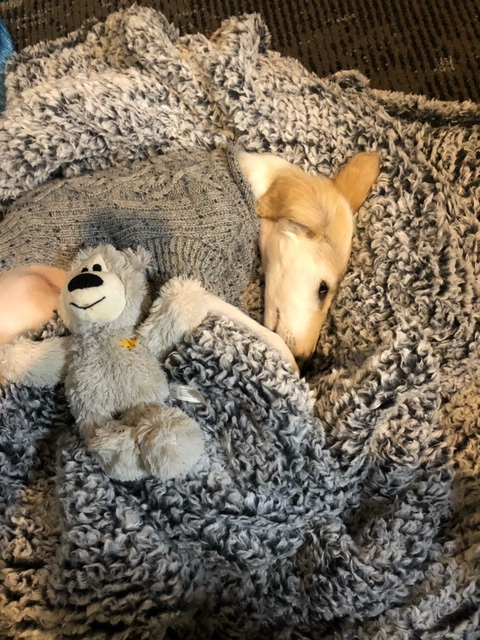
Newest member of the family — the borzoi Thorondor

I’m writing this at the end of our election season, and starting on Friday, November 6. For what it’s worth, it appears that Joe Biden has won the Presidency, Donald Trump is declaring victory and tantruming (as of course, a narcissistic psychopath would be expected to do) and the Senate seems to be in limbo. It does look like the Ds will hang onto the House. While it’s not clear there will be deep change, at least a tired nation can get a bit of a reprieve from chaos. The gangs, Antifa or Proud Boys, didn’t show up storming the polling stations. There were no crazy gangs in the streets. It’s November, for chrissakes, and cold across most of the country.

Donald Trump is busy ranting away, to the point where the various news organizations have decided to censor him. He’s…

View original post 2,239 more words