

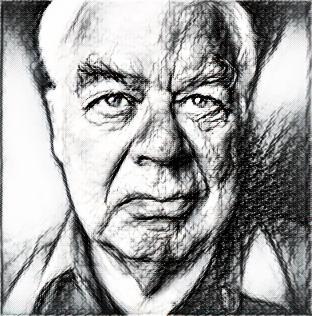
In today’s post, I am using the ideas of the great American pragmatist philosopher, Richard Rorty. Rorty’s most famous work is Contingency, Irony and Solidarity. Rorty as a pragmatist follows the idea of an anti-essentialist. This basically means that there is no intrinsic essence to a phenomenon. Take for example, the idea of “Truth”. The general notion of Truth is that it can be found independent of human cognition. Rorty points out that this idea is not at all useful.
Rorty states:
Truth cannot be out there – cannot exist independently of the human mind – because sentences cannot so exist, or be out there. The world is out there, but descriptions of the world are not. Only descriptions of the world can be true of false. The world on its own – unaided by the describing activities of human beings – cannot.
The suggestion that truth, as well as…
View original post 1,396 more words

 Phumlani Nkontwanais an Associate Lecturer on the MBA & PGDip modules at the USB, Stellenbosch University. He is currently pursuing his PhD in the School of Public Leadership at Stellenbosch University. He also teaches Systems Change and Social Impact Executive Course at the GSB, Cape Town University. He is chief executive officer of Fuata Africa – a small boutique entrepreneurship development consulting outfit mainly practising in six African markets (
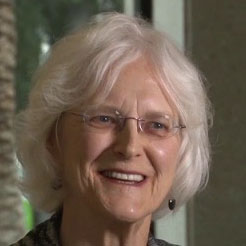
 Dr John van Breda is a Senior Researcher and programme coordinator for transdisciplinary research at the Centre of Complex Systems in Transition (CST). John holds post-graduate degrees in philosophy, theology and sociology as well as PhD with a specific focus on developing context-relevant transdisciplinary research approaches for conducting solution-oriented research in a developing world context. His expertise is in transdisciplinary methodologies and methods for tackling complex social-ecological systems challenges. The title of his PhD is as follows: “Methodological Agility for Sustainability Transitions in the Context of the Anthropocene” which can be accessed here:




You must be logged in to post a comment.