
Introduction to Systems Thinking
developed by Marie Davidová based on a booklet by Crancis Carter and Sofía Bosh Gomes from Carnegie Mellon School of Design, altered and modified by the author for the Welsh School of Architecture 2020
Introduction to Systems Thinking
developed by Marie Davidová based on a booklet by Crancis Carter and Sofía Bosh Gomes from Carnegie Mellon School of Design, altered and modified by the author for the Welsh School of Architecture 2020
via Designing futures during a crisis – Liveworkstudio
It goes without saying that times of crisis are times of change. They can also be times when our outlook shrinks to the near term as we adjust to new conditions and have to invest time in new ways of living and working.
However, for everyone, but especially those in a leadership role, it is important to think about the future and to consider what changes will take place. We need to be prepared to navigate and influence directions and decisions going forward.
Thinking forward is hard right now – not through lack of possibility but because so much is possible. There is a plethora of opinion around how this crisis will play out. Right now this is because the future branches away in front of us in many diverging directions.
This is challenging for two reasons. Firstly, these opinions are not from the perspective of you or your context. They may give you ideas about what the future holds, but you still need to construct your own future. Secondly we have to make decisions about what future to embrace. To do this we need to use possible futures to help us imagine what we would do and what future we want to try to create.
This article provides a framework for imagining possible futures that we can use to provide a longer term perspective. It outlines how we can inform future directions and decisions.
For a frame we draw on some inspiring work from Stewart Brand, founder of the Long Now Foundation. In these compressed timescales it is valuable to draw on someone whose focus is on the long-term. Brand developed the concept of Pace Layers – layers of change that are distinct but separate. These different layers move at different speeds – fast fashion to glacially slow nature. Fast changing fashion, art and technology can be understood as a layer of experimentation that enables us to test and learn. This layer then influences lower layers such as infrastructure, governance and culture. The layering creates a system that is able to respond to and absorb shocks by both adapting to change and rejecting failed experiments. Brand argues that this is a critical quality of complex systems and helps to prevent change from being catastrophic.
Continues in source Designing futures during a crisis – Liveworkstudio
via Improvisation Blog: Beyond Homeostasis: Some thoughts on biology, physics and cybernetics

What do education, cybernetics, music, technology and philosophy have in common?
via Transjectivity – Andrew Sweeny – Medium
Much philosophy over the past couple of centuries has been an attempt to overcome the trauma of Cartesian dualism, which is still the ‘standard grammar’ of our modern worldview. Despite René Descartes importance in the creation of the the modern world, the subject/object divide has to be understood as a radical illusion. It is therefore urgent to invent new terms which better correspond to today’s understanding.
This is one of the great values of John Vervaeke’s ‘Awakening to the Meaning crisis’: the introduction of fresh new language. Vervaeke has invented a word which is very useful here: transjective. This means that ‘relationship’ transcends—or is much more real than—the subject and object in itself. This term helps go beyond the endless culture war between the romantic and the empiricist, or the radical romantic who privileges the muddy pond of his own narcissistic subjectivity, and the radical empiricist who sees only dead mechanical processes.
Continues in source: Transjectivity – Andrew Sweeny – Medium
And a podcast: https://voiceclub.com/a-metaphysical-dialogue-with-john-vervaeke/
E28 | A Metaphysical Dialogue with John Vervaeke
Continues in source: https://voiceclub.com/a-metaphysical-dialogue-with-john-vervaeke/
A systems approach to governance – see more on https://sustainance.ch/en/
via Governance – Systemic Foundation and Framework | Ralf-Eckhard Türke | Springer
Authors: Türke, Ralf-Eckhard
Instead of yet another theory on good governance, this book presents a substantiation of contemporary notions. It builds on the theoretical foundations for taking an overall perspective on social contexts and culminates in a systemic framework that captures social structures based on first principles of viability and sustainability. The framework at hand enables applicants to view social contexts holistically while at the same time envisioning a rich picture of what leverages the implementation of social purposes beyond the boxes of the professional disciplines: social structures can be assessed, strengths and weaknesses identified and measures arrived at. Ultimately, the required structures can be tailor-made to align forces for a joint implementation of purposes. Conventional static hierarchies can be deployed into dynamic social organisms capable of developing and adapting continuously according to the opportunities and challenges faced.
via Webinar Registration – Zoom
|
|||||||||||||||||
|
Building e-Governance: Challenges and Opportunities for Democracy,
Administration and Law (2005)
Series Using the Internet To Influence Society and Politics
International Institute of Administrative Sciences, Belgium
By
National Computerization Agency, Korea
Edited by Pan Suk Kim and Whasun Jho
Just a little bit of interest really since it contains some early work from Ralf-Echkard Turke, with a nice explanation of the Viable Systems Model in governance.
(pdf full book) https://www.nia.or.kr/common/board/Download.do?bcIdx=2360&cbIdx=66361&fileNo=1
COMPLEX NETWORKS 2020
The 9th International Conference on Complex Networks and their Applications
December 1-3, 2020 – Madrid, Spain
IMPORTANT DATESSubmission Deadline
September 02Acceptance Notification
September 28Camera Ready
October 02Author Registration
October 11The International Conference on Complex Networks and their Applications aims at bringing together researchers from different scientific communities working on areas related to complex networks. Two types of contributions are welcome: theoretical developments arising from practical problems, and case studies where methodologies are applied. Both contributions are aimed at stimulating the interaction between theoreticians and practitioners.
TOPICS
Authors are encouraged to submit both theoretical and applied papers on their research in complex networks. Topics for the conference include, but are not limited to:Models of Complex Networks
Structural Network Properties
Complex Networks and Epidemics
Community Structure and Discovery
Motif Discovery
Dynamics on and of Complex Networks
Link Prediction
Multiplex Networks
Network Controllability
Synchronization in Networks
Algorithms for Network Analysis
Complex Networks Mining
Temporal and Spatial Networks
Networks Visual Representation
Large-scale Graph Analytics
Social Reputation, Influence, and Trust
Information Spreading in Social Media
Rumor and Viral Marketing
Financial and Economic Networks
Complex Networks and Mobility
Biological and Technological Networks
Mobile Call Complex Networks
Resilience and Robustness
Graph Signal Processing
Network Medicine
Cognitive Network Science
Networks for Physical Infrastructures
Networks, Smart Cities and Smart Grids
Political Networks
Supply Chain Networks
Complex Networks and Information Systems
Recommendation Systems and Networks
Complex Networks and CPS/IoT
Network Neuroscience
Quantifying Success through Social Network Analysis
Bio-informatics and Earth Sciences Applications
KEYNOTE SPEAKERSLeman AKOGLU
Carnegie Mellon University, USAFosca GIANNOTTI
KDD Lab Pisa, ItalyJános KERTESZ
Central European University, HungaryVito LATORA
Queen Mary, University of London, UKAlex ‘Sandy’ PENTLAND
MIT Media Lab, USANataša PRZULJ
Barcelona Supercomputing Center, SpainTUTORIALS
David GARCIA
Complexity Science Hub Vienna, AustriaMikko KIVELA
Aalto University, FinlandVENUE
Madrid
Madrid is the capital of Spain, and is home to the Spanish Royal family as well as the Spanish Government. It is a modern metropolitan city and an economical and industrial center of Spain, and, with its population of nearly 3,5 million people, is also the biggest city in Spain. It is located in the centre of the Iberian Peninsula, and is surrounded by mountains and natural parks. Although it is located in the centre of the country, it has traditionally been the hub between different areas of Spain.
Madrid has a lot of interesting attractions that offer both culture and amusement. The city is full of great monuments, like the royal palace, the Plaza Mayor or the many statuettes, and for people interested in art, the museums Del Prado, Reina Sofia or Thyssen have some of the most fantastic collections of famous Spanish painters like Velazquez, Goya, Picasso or Miro. If you like going out at night, Madrid has a very interesting nightlife throughout the whole week and which is available all year round. You can either go out for a tapa (Spanish snack), eat at a very nice restaurant, go to the cinema or one of the many theatres, or find nearly any type of bar or disco.The International Conference on Complex Networks and Their Applications
via COMPLEX NETWORKS 2020 | Your story, beautifully told – Created with WordPress managed by IONOS
via Complexity Weekend 2020 | May 22, 2020 – May 24, 2020
Meet new collaborators and learn Complexity Science by doing.
Help to address the unprecedented, interconnected problems created and exposed by this pandemic. Complexity Science is an interdisciplinary and inclusive framework for studying, designing, and controlling Complex systems. Over the course of one weekend, you will learn about Complexity Science from a variety of perspectives while developing solutions in a team setting to address:
Here’s what to expect during this weekend experience:
In-line with social-distancing policy during the COVID-19 pandemic, this weekend event will be entirely virtual
Friday, May 22 – Sunday, May 24
Please plan to participate in the full weekend experience.
Gain exposure to an interdisciplinary perspective on Complexity Science and its application
Work on important problems in small groups, with guidance from experienced mentors and domain experts
Meet potential mentors, coauthors, and cofounders at this unique event, where everyone is open to learning by doing

Carlos leads the Self-organizing Systems Lab. He has been an active researcher since 1997 and has 150 scientific publications in books, journals, and conference proceedings, which have been cited more than 4,500 times. He has given more than 250 presentations at conferences and research group seminars. He has a wide variety of academic interests, including complex systems, self-organization, urbanism, artificial life, evolution, cognition, artificial societies, and philosophy. Carlos is also Editor-in-Chief of Complexity Digest, Associate Editor for the journals Complexity and Frontiers in Robotics and AI, and member of the Board of Advisors for Scientific American.
Check out Complexity Explained by Prof. Gershenson and collaborators.
“Complexity” refers to a large set of interrelated phenomena that have been observed across many academic disciplines, such as physics, biology, sociology, economics, and chemistry.
Aristotle described complex system behavior as when “the whole is more than the sum of the parts.” Such systems contain patterns of nonlinear relationships between their component parts under certain external conditions, causing an unpredictable new phase of system behavior as a whole. The main goal of Complex Systems Theory is to understand the relationship between these patterns of interaction and the properties of the system at higher scales.
This virtual weekend hackathon is for you if you are:
Can you commit to participating all weekend? Teams will be working over the weekend to accomplish a goal together, so out of fairness, we need to be sure everyone who registers can make this commitment.
All backgrounds welcome – your perspective is needed! No direct experience in Complexity Science required.
Attendees will be working in teams over the weekend to accomplish a goal together. We need to make sure everyone who registers can make these time commitments.
5:30 pm – 9:00 pm PST
Get to know the other participants and facilitators, learn about Complexity Science, and co-create Shared Truth with others
9:00 am – 5:00 pm PST
Join a team, choose a Complex problem, and get to work
9:00 am – 3:00 pm PST
Share your team’s hard work, make an impact, and stay connected
Solve Problems Related to COVID-19 and Beyond
Facilitators will move between teams during the conference, supplying Complexity Science references, impactful connections, problem-solving frameworks, tooling, and relevant data sets. Their mission is to guide the “how” to enable each team to reach their highest potential and accomplish their initial goals, whether that be a research proposal, a business plan, or another outcome.

Python • Systems Engineering • Economics • Governance • Blockchain • Data Science
Zargham is the founder and CEO of BlockScience, an engineering, research, and analytics firm focused on design and analysis of complex networks. Dr. Zargham holds a PhD in systems engineering from the University of Pennsylvania, where he studied optimization and control of decentralized networks. He is currently affiliated with the WU Vienna’s Interdisciplinary Research Institute for Cryptoeconomics.

Python • R • Computational/Theoretical Chemistry • Control Theory • Information Theory • Deep Learning
Jared is a “full-stack data scientist” interested in control theory and optimization, information theory, and intelligent (AI) systems of all sorts. His background is in computational and theoretical biophysics. He is currently working with the wonderful team at Atomwise, where he works on deep learning model development. This work aims to predict biological activity of a drug molecule from its X-ray crystal structure.

Python • Education • Technology • Data Analysis • Business Insights • Modeling
In the past six years at EducationSuperHighway, Justine improved data transparency at the FCC by using school broadband data to create new, insightful metrics that had been otherwise impossible to calculate. As a data manager, she blends the stories told by the data with the organization’s expertise to create insights that power change. At DataKind SF, Justine manages a team of 5 data volunteers.

Neuroscience • Microscopy • Education • Collaborative Drawing
Alexandra has a background in translational neuroscience studying brain injury in early development. She is now pursuing a PhD examining how immune molecules regulate the proper establishment of connections in the brain. Her research is inherently interdisciplinary, and she hopes to bridge even more fields through Free Energy thinking and collaborative drawing.
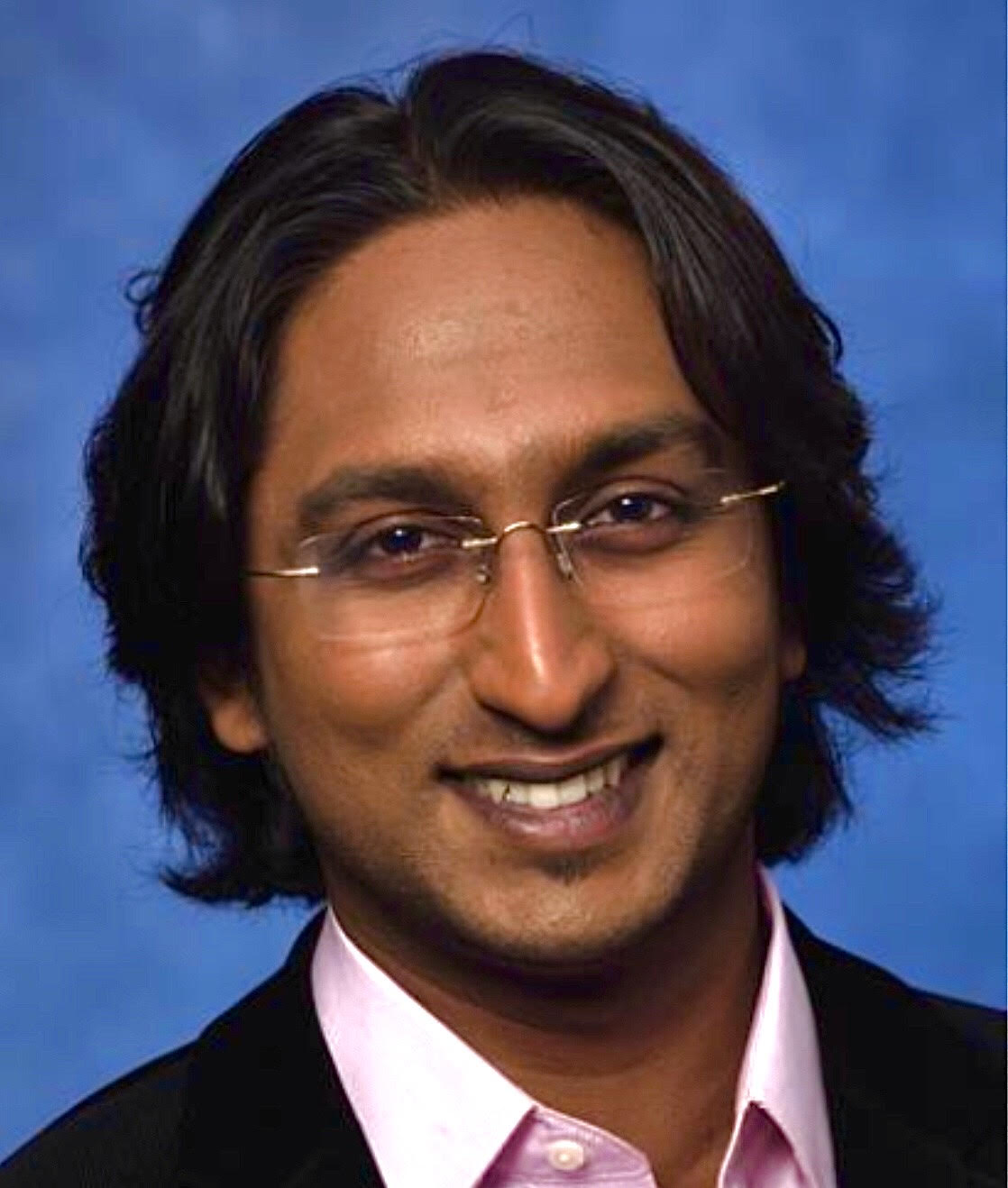
R • Biostatistics • Disease Modeling • Biomedical Imaging • Computational Fluid Dynamics
Dr. Menon’s research is focused on artificial intelligence and data science applied to modeling imaging and time-series data in a variety of areas. He runs the MeDCaVE Lab, which is focused on robust algorithmic analysis of biomedical imaging data augmented with quantitative, physics‐based modeling of cardiovascular mechanics & hemodynamics. He has authored over 75 peer-reviewed publications and abstracts, and has served as a research adviser to dozens of undergraduate and graduate student researchers.

Economics • Statistics • Networks • Data Science
Glenn is an assistant professor of Economics (tenured) at ECARES, ULB. His research agenda focuses on social and economic networks, firm-to-firm relationships, and pricing mechanisms. He is also the founder of Magma, a firm providing data science solutions and strategic consulting to various industries.

Python • Multi-scale Modeling • Research and Publishing Process • Researcher Mental Health
Jason’s background is in multi-scale modeling, in particular the combination of quantum-scale Density Functional Theory with Molecular Dynamics simulations. He seeks to understand general principles behind emergent behavior in complex systems, and has recently focused his attention on understanding the immediate impact of quantum computing systems.

Python • PCR • Neuroscience • Bioinformatics • Optimization • Data Science
Bleu works with a talented team at SavantX that implements augmented intelligence and quantum computing to solve energy reduction problems at scale. Their current focus is global shipping and the industrial supply chain. Her PhD research leveraged RNA sequencing and bioinformatics to explore biological identity, focusing on neural cell types.

Entrepreneurship • Creativity & Innovation • Mental Health • Diversity • Education
Monica Kang, Founder and CEO of InnovatorsBox®, is an educator at heart, transforming workplaces and communities with the power of creativity. Using innovative services and products, she works with industries worldwide including Fortune 500 companies, higher education, government, and nonprofits. Monica is the author of ‘ReThink Creativity’, has organized for Startup Weekend over the past 5 years, and previously worked in nuclear nonproliferation.

Human Evolution • Human-Environment Interaction • Technology Change • Cooperation
Dr. Jenn Huff is an archaeologist with an interest in deep time questions about human evolution, human migrations into new landscapes, exchange networks, technology change, and human-environment interactions. She is currently working on a book that looks at human evolution and recent cultural perspectives to explore how humans cooperate.
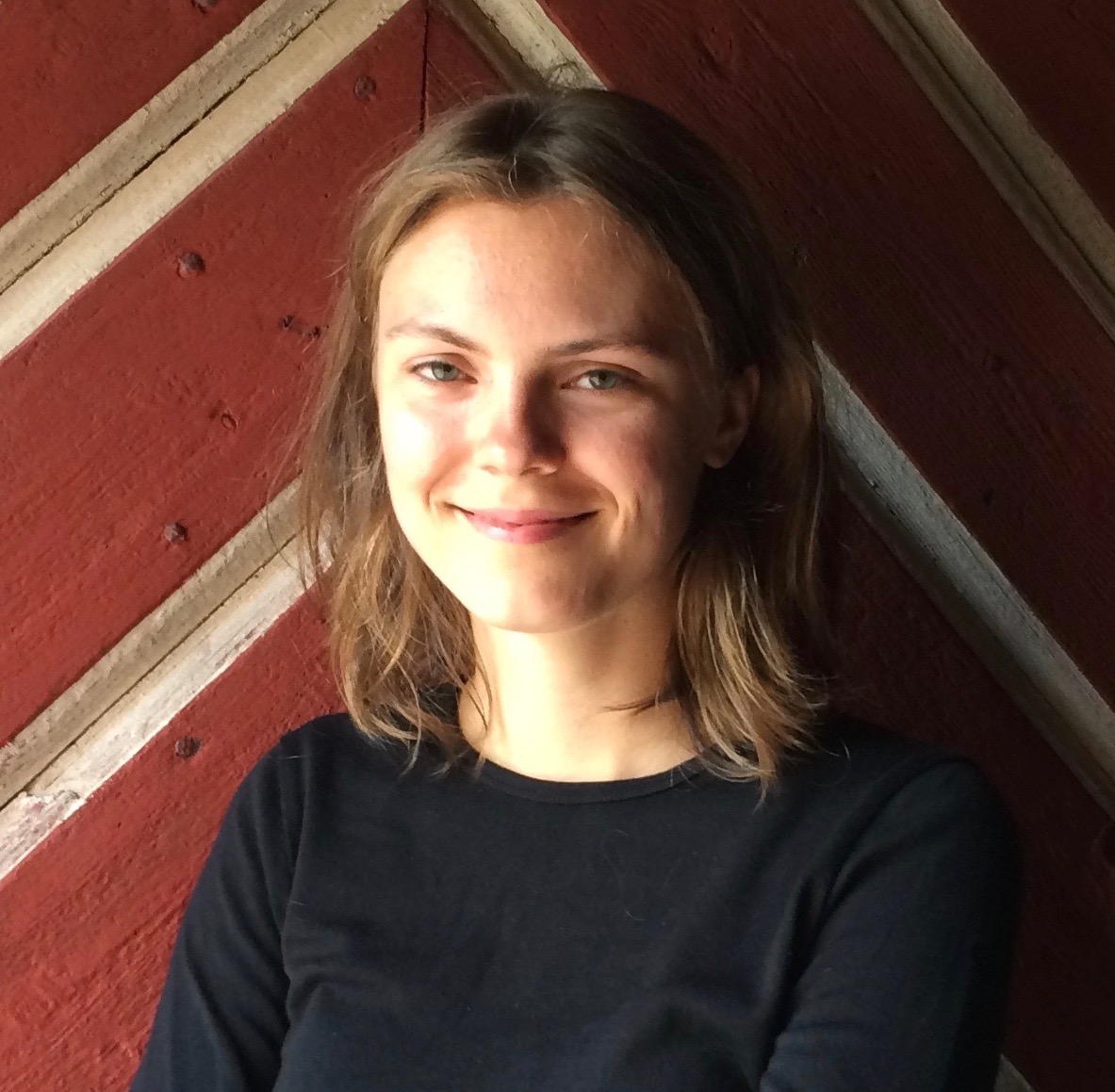
Psychology • Theories of Change • Sustainable Development
Stéphanie approaches the field of complexity from a social science angle, through her background in systems change, sustainable development, and human process design. With a MSc. in Strategic Leadership towards Sustainability, she works as visual facilitator supporting collective thought processes at conferences and meetings by translating them into sweeping illustrated ‘shared mental landscapes’.

Python • Machine Learning • Network Analysis • Natural Language Processing
Will Hamilton is an Assistant Professor at McGill University and a Canada CIFAR AI Chair. His research focuses on the development of machine learning models for network-structured data. His work has been featured in numerous media outlets, including Wired, The New York Times, and The BBC.

Open-source intelligence • Systems Warfare • Distributed Teams
R.J. spends his time infusing complexity science into military and intelligence research to generate best practice for remote teams, civilian or otherwise. He is a serial contributor within the Defense Community, working with complexity-oriented organizations on DARPA grants, research, and inter-agency collaborations. He currently represents Remotor and COGSEC in the information warfare subdivision of a working group on expeditionary warfare in addition to sitting on several other committees and working groups in the IEEE, Department of Defense, and Private Sector.

R • Computational Biology • Data Analysis • Genetics
Chenling has a background in evolutionary genetics and is now pursuing a PhD in applying both simulation and machine learning techniques to single-cell RNA sequencing data. Her current project is focused on the immunological changes in Multiple Sclerosis patients. Through her wandering across different fields of biology, she finds Bayesian statistical thinking and a free imagination to be the common language of discoveries in complex biological systems.
What will I get out of participating?
Network with the Complexity Science community and come away with a healthy exposure to the depth and breadth of the Complexity field from a variety of perspectives. Meet new collaborators, co-authors, mentors, and friends while learning through a hands-on team hackathon experience. Work toward solutions to the complex problems introduced by the COVID-19 pandemic.
Who is this conference for?
This conference is intended for those who are interested in Complexity Science and are eager to have an impact during the COVID-19 pandemic.
What are the prerequisites for attending?
A healthy curiosity and willingness to work outside of your usual expertise and comfort, and a willingness to share your expertise with others. All sections will be held in English.
Should I do anything to prepare for the conference?
Don’t worry about being unprepared, as no one is an expert in all the various fields intersecting with Complexity Science. If you want to consume anything beforehand, perhaps the “Intro to Complexity” course materials from SFI’s Complexity Explorer would be best. We’ll have facilitators on hand to help with whatever blocks your team as you work toward a solution to your chosen problem.
Should I come with a problem in mind that I’d like to work on already?
Feel free to come prepared with a COVID-19 problem you’d like to gather a team around to solve, or let the creativity flow as you interact with the diverse set of Complexity Thinkers during the event. The choice is up to you.
Who will own whatever is created at the conference?
Attendees own their work. Solution proposals generated during the event will have explicit co-ownership defined by the teams, and are private by default. Attendees will be given the opportunity to opt-in to having their proposals summarized into a one-pager emailed to all attendees after the event and posted on the Complexity Weekend website. Teams are encouraged, but not required, to present their results at the end of the hackathon. Any degree of open-sourcing is celebrated, but not required.
How can I become a facilitator?
We are currently seeking facilitators for Complexity Weekend 2021. Please contact team@complexityweekend.com if you are interested.
How can I sponsor annual Complexity Weekend events?
We welcome sponsors for our annual conference. Please contact team@complexityweekend.com for more information.
Who are the conference organizers?
Shaun Applegate-Swanson
Principle Data Scientist at CloudKnox Security
Cofounder at PhD Mentors
John Paul Gonzales
Complexity Education & Community Organization at Santa Fe Institute
Rose Sagun
Co-Chair at Harvard Alumni for Education
Learning Development Manager at The Asia Foundation
Jason Larkin, PhD
Research Scientist at Emerging Technology Center, CMU
Cofounder at PhD Mentors
Jared Thompson, PhD
Senior Machine Learning Engineer at Atomwise
Daniel Ari Friedman, PhD
Postdoctoral Researcher at UC Davis
Previously organized the Stanford Complexity Group
Steven Davis, MBA
Founder at Wicked Innovation Lab
Steering Committee Member at Bay Area Agile Leadership Network
Mark Cicoria
Cofounder at PhD Mentors
Michael Zargham, PhD
Founder at BlockScience
Visiting Scientist at Vienna University of Economics
Marie Applegate-Swanson
Founder and Experience Designer, Creative Compassion Initiative
Experience Designer and Creative Lead, Asian Art Museum
Virtual COVID-19 Hackathon – May 22-24, 2020
Solve Problems Related to COVID-19 and Beyond

Complexity and Collaboration – implications for leadership and practice
The booking sites for the workshops on Friday 5th June and the Complexity and Management Conference on Saturday 6th June are now open to the public.
The workshop Improvising in the complexity of collaboration and conflict on Friday 5th June 9-5pm will explore the enabling constraints of ‘working live’ whilst remaining socially distant from colleagues. The workshop is likely to be most beneficial to delegates who have previously attended one of our programmes or conference, or are familiar with our way of working. Access to Zoom and a desk based PC plus a phone or a tablet is required.
The workshop is convened Prof Karen Norman, Prof Henry Larsen and colleagues from the Universities of Southern Denmark and Hertfordshire and is open to 20 participants (with a wait list if oversubscribed).
The booking site is here.
The workshop An Introduction to Complex Responsive Processes on Friday 5th June…
View original post 183 more words
In the Facebook COVID-19 Resources (Systems Community) (via Facebook https://www.facebook.com/groups/SCA.COVID19/permalink/553322955370095/), Rob Young asks:
I’ve been trying to understand what the movement/ field of ‘Systems change’ is.As a ‘movement’, it seems to have emerged fairly recently, and has been taken up by large, well funded, politically active groups, whose agenda was not clear to me.(apologies for any ignorance of mine)This Harvard Business Review article/ case study has helped me form a (personal, initial) opinion that it is a valid systems approach, and potentially, an important one.(I don’t yet have an opinion on the political/ agenda aspects. – compare with how ideas like ‘climate’, ‘ecology’, ‘woke’ etc get mis-appropriated by hidden agendas).My positive take on ‘systems change’ is that: it is proactive, design and implementation of real world, system based change; It is one of the fields of *systems practice*; It is like a softer version of systems engineering.[Why Social Ventures Need Systems Thinking – Journal article – Harvard Business Review (Vanessa Kirsch , Jim Bildner and Jeff Walker) – Systems Change – 25-Jul-2016]:(Harvard Business Review seems to be behind a registration wall, but does offer viewing of 2 Free articles, without registration]
Otherwise, many links:
https://stream.syscoi.com/?s=%22systems+change%22
It is a large and multiply defined field (especially if you include systems changes, systems innovation, systems weaving, systems convening, systems building etc). I have been building a folder of all key documents related to ‘place-based systems change’ which is edging towards 400 items…
Jake says:
“I’m developing a language for understanding, mapping and measuring systems and system change. Practitioner-oriented document on measuring systemic change is available [in the paper listed bottom, which] also provides a pretty good indication of the language although it doesn’t go into detail. I’m working on a systems mapping guide at the moment, it should be available in a few weeks. I should add that I work in international development and the practitioners targeted follow the ‘market systems development’ approach, but the language is designed to be transferable to any social or socio-environmental context or approach.”
via MECHANISMS OF SOCIAL CHANGE | Jake Lomax | Research Project

In today’s post, I am looking at storytelling. We are sometimes referred to as Homo Narrans or humans who tell stories. Storytelling, oral or otherwise, is part of our culture, and part of who we are. Joseph Campbell, an American literary professor, talks about the universal nature of all stories in his famous book, The Hero with a Thousand Faces. Campbell’s thesis, like those of the ancients—and as put forth also, but in different ways, by Freud, Jung, and others—is that by entering and transforming the personal psyche, the surrounding culture, the life of the family, one’s relational work, and other matters of life can be transformed too. Campbell’s ideas have been distilled into the famous Hero’s Journey. Loosely put, this story structure describes a hero who starts off as ordinary, faces adversities, goes through a transformation, and in the end becomes triumphant. I am inspired by Campbell’s work, but I am looking at the ideas I learned in Cybernetics.
Continues in source: Storytelling at the Gemba: | Harish’s Notebook – My notes… Lean, Cybernetics, Quality & Data Science.




You must be logged in to post a comment.