Free Release – Viable System Model Canvas – Intelligente-Organisationen – Mark Lambertz


Source: Free Release – Viable System Model Canvas – Intelligente-Organisationen


Free Release – Viable System Model Canvas

Startseite/ExperimenteGrundsätzlichesKybernetik/Free Release – Viable System Model Canvas

Free Release – Viable System Model Canvas

The VSM in a nutshell

It’s a very special day for me! Why? Because I am very excited to release  the …

Viable System Model Canvas.

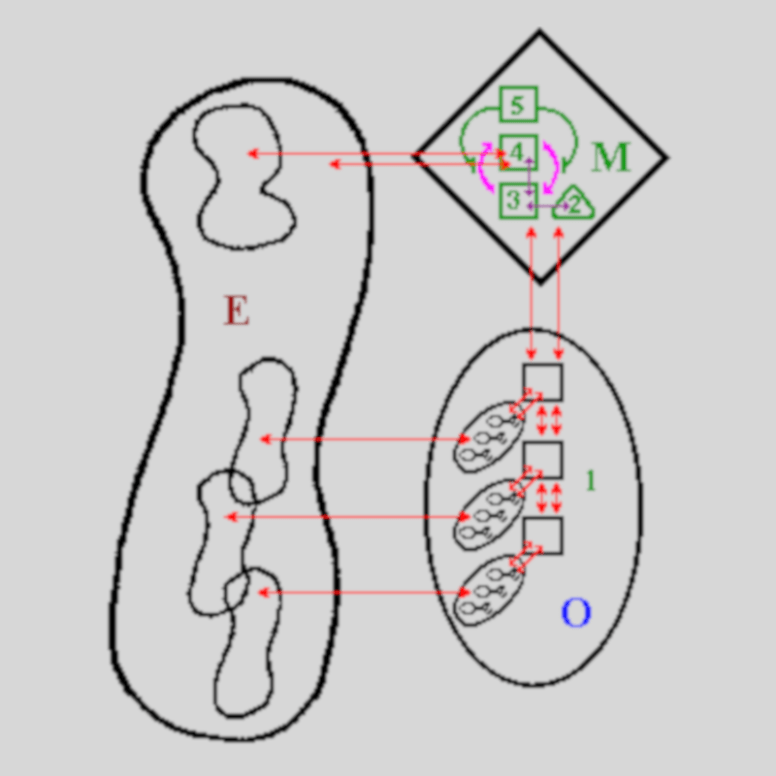
It all began about 24 months ago when I started this project (or product?). This outcome (or output?) is my recent development to get a step closer to make the model more well known, accessible and … applied. So the outcome is hopefully a useful simplification, but not a trivialization of the original ideas and theory. This canvas has been used in Agile/Lean IT and software contexts and served as a map of the organization. The purpose of the canvas: Analyze and design an organization according to the patterns of viability – and create an overview of all the (major) processesrolesmeetings and tools for each system.

<nerd_remark>
For the VSM connoisseurs: The interpretation of System 3* is open for debate. Some people see the function of S3* quite different and associate it with a controlling function, e.g. operated by a Compliance Department or something similar. From my perspective that would create stress for the organization. The argument: If one takes Stafford Beers original approach into account, then it is obvious that 3* as the Parasympathikus has the function to „relax“ the system. Therefore it seems logical to map activities like Retrospectives or Gemba Walks to S3* – the system needs times of action AND reflection. Like Stafford Beer wrote in „Diagnosing the System“: This system operates only sporadic and is not a continuous activity. In other words – a functioning Compliance Department is part of S2. However, sometimes it might be part of 3*. But not always.
</nerd_remark>

The Viable System Model Canvas

Finally, here it is.

Download Viable System Canvas – Easy View

How to use the Canvas

At first I have to state that the following tips are only for those, who have already a general idea of what the VSM is about. Otherwise it could be hard to understand the result of the following exercise. This step-by-step guide may help you if you want to use it with a bunch of people. If your group is too large, you may use some of the Liberating Structures or a World Cafe for each system in the Canvas. It’s up to you. 🙂

  1. Define your System in Focus and the Recursion Level you want to explore.
  2. Project the Canvas on a huge white wall. Take care that everyone has a pen and enough stickies.
  3. Explore the environment and distinct at least the „outer world“ and the „in world“ of the System in Focus. For a deep exploration you can use my environment model.
  4. Start with the value (proposition) production and map the flow of value towards the customer (System 1). Identify the processes, roles, meetings and tools. This sequence of aspects applies to any system within the Canvas. I will refer to this as structural aspects. Think about a color code regarding the structural aspects. This exercise is about ’seeing‘ – not watching. Typical tools: Process Mapping, Material & Information flows
  5. Look at the short term coordination and the supporting infrastructure that „balances“ the System in Focus. Identify the structural aspects of System 2. Examples: Daily or Shopfloor Meeting.
  6. Answer the question, how to coordinate the Value Production in order to create synergies and an explosion of potential. Identify the structural aspects of System 3. Examples: Sprint Planning, Team Weekly, Jour Fixe.
  7. Now ask yourself, how the System in Focus generates insights? How does it inspect and adapt? Typical System 3* activities: Retros, After Action Reviews, Gemba Walks but also Red Teaming.
  8. In this step you look at the long term development, strategies and experiments going on. Again: Find the overarching structural aspects in System 4. Typical tools: PI Planning, Portfolio Management, Theory of Constraints, Strategy and Innovation Methodologies.
  9. Understand the structural aspects which constitute the identity of the System in Focus (System 5, Ethos & Identity). But watch out and keep the formal and informal structure of this system in mind. Typical artifacts: Purpose, Vision, Mission, Values
  10. The last step focuses on the overall picture. Guiding Question: Which misbalances do you see? Too many or too little meetings? Confusion about roles? Bad link between strategy and tactics? Unfair resource bargain? Many aspects could pop up, so I can’t give any further advice – it really depends. A gold mine for consultants and coaches 🙂


The price of simplification

As always in nature there is no advantage with a corresponding disadvantage. Therefore I had to pay a price and abdicate the fractal nature of the model – it is not directly visible. This must be taken into account, if one uses the canvas above.

If you want to be very explicit about the recursion levels, then this template might be useful.

Download Viable System Model Canvas – Nested View

One could also use the above mentioned steps for the nested canvas, which shows two recursion levels. If you need more than the shown two Systems 1, then use a vector program and edit the PDF. All files are compatible with Adobe Illustrator and can be modified.

Kudos

My greatest thanks to Alenna Leonard, Angela Espinosa, Jon Walker, Ralf-Eckhardt Türke and Ivo Velitchkov for their endorsement and support. And my wife Renata – she knows why. 😉

Legal terms

These files are published under the license formerly know as Public Domain. It is free – for any use, no credit necessary (even though I would be glad if I am mentioned as author).

I wish you happy experimenting!

V

Learning in Landscapes of Practice – Etienne Wenger-Trayner, Mark Fenton-O’Creevy, Steven Hutchinson, Chris Kubaik, and Beverly Wenger-Trayner (2015)

subtitle boundaries, identify, and knowledgeability in practice-based learning

(pdf)

Click to access systems-convening


ADAPTIVENESS IN HUMAN SOCIAL ORGANISATION: Michael Church (1990s?)

Time and again I find myself coming back to this paper (even though I have many quibbles with it) – I think it is quite brilliant, opening a lot of pathways.


Source: ADAPTIVENESS IN HUMAN SOCIAL ORGANISATION:


ADAPTIVENESS IN HUMAN SOCIAL ORGANISATION:

SOME GUIDING PRINCIPLES

by

Michael Church


“…it is impossible to represent the organising principles of a higher level by the laws governing its isolated particulars.”

Michael Polanyil (1)

“Those who are obsessed with practice, but have no science, are like a pilot setting out with no tiller or compass,

 who will never know for certain where he is going.”

Leonardo Da Vinci c. 1470 (59)


Abstract

In a world that is becoming increasingly complex, the need to develop a new paradigm of organisation and management is widely recognised. One approach has been to view organisations as complex adaptive systems (CAS); it has been found, repeatedly, that important behaviours of different kinds of CAS can be described simply – the basis of the development of the science of complexity. So far, no set of principles have been proposed to explain what might make any form of human social organisation, more, or less, adaptive; most theorising has been limited to the weaker

and sometimes misleading explanatory levels of metaphor and analogy. In this paper it is suggested that there is an underlying order in the universe, reflected in the phenomena of discontinuity, levels of order, emergence, autonomy and coherence. By understanding this underlying order, six systemic principles can be identified to explain the organisational basis of the unique ability of living systems to respond and adapt to, learn from, and shape a complex environment. It is then shown how these six principles can be applied literally to understand and shape adaptiveness in any human social organisation; two further principles are also identified, necessary to take account of the singular qualities of human beings. Three of these principles – level specific processes, level specific information, and values – are explored in more detail in this paper.

Continues in source: ADAPTIVENESS IN HUMAN SOCIAL ORGANISATION:


How do we help city dwellers psychologically? | Complexity Theory! Mirage News

Source: How do we help city dwellers psychologically? | Mirage News

How do we help city dwellers psychologically?

People who live in the city experience mental health problems such as depression, anxiety and addiction at greater rates than those who live outside urban areas. More than 50% of the world’s population currently live in cities, and that proportion is expected to rise to 66% by 2050. As a result, the need to tackle mental health problems in urban areas is becoming ever more urgent. Despite decades of scientific research and all the treatment and prevention methods currently available, the number of people with mental health problems is not decreasing. The new Centre for Urban Mental Health at the University of Amsterdam (UvA) wants to change this, using a radically different approach, working on a scale not yet seen in this area, and bringing complexity science to bear on the issue. The centre will be launched officially on Friday, 8 November.

Why does one person flourish in the city while another wilts? This question will be the starting point for research at the Centre for Urban Mental Health, in which the UvA will invest 10 million euros in the coming five years. The focus will be on depression, anxiety and addiction – the three most commonly occurring mental health problems.

Insufficient progress

Many factors play a role in mental health problems, including (neuro)biological, genetic, cognitive and socio-economic ones. Family situation and even the neighbourhood where someone lives can also come into play. In addition, there are factors that can increase someone’s vulnerability, for example loneliness, sleep problems or poor physical health. Traditional research into mental health problems has usually focussed on only one specific factor at one particular time, without taking the relationships between the various factors into account. This has meant insufficient insight has been gleaned into how all these different factors influence each other at different times. The lack of focus on these complexities means unsatisfactory progress has been made in treatment and prevention – patients either don’t respond to treatments or they do respond but later experience relapses.

‘In the Centre for Urban Mental Health we will embrace the intertwined nature of psychological problems and disorders with the help of an inter- and transdisciplinary approach,’ says Claudi Bockting, professor of Clinical Psychology in Psychiatry and co-director of the centre. ‘We expect this to lead to new starting points for treatment and prevention. It will give us the possibility to develop treatments that are not only aimed at the patient themselves, but also at social factors, such as the consequences of social inequality.’

‘”Complexity science” will be at the core of all our research at the centre,’ adds co-director and professor of Developmental Psychopathology Reinout Wiers. ‘Our goal is to unravel the complex networks of factors that influence what happens to people’s mental health when they live in the city. We will not succeed if we continue to approach the issue exclusively from the viewpoints of psychology and psychiatry. We are therefore joining forces with our colleagues from other disciplines such as computational science, neurobiology, and communication science.’

‘Game changer’

Peter Sloot, professor of Complex Adaptive Systems and scientific director of the UvA’s Institute for Advanced Study (IAS), has built up a wealth of knowledge in complexity science in recent years. Sloot: ‘The complexity approach allows us to discover causal relationships in all these interlinked factors and to make numerical predictions about the outcomes of possible interventions. We have already demonstrated this with research into, for example, criminal networks or, very recently, with a study into the prevention of obesity in cities. What we are now going to do together in the Centre for Urban Mental Health is of unprecedented scale and could be the game changer when it comes to tackling mental health problems in the city.’

Continues in source: How do we help city dwellers psychologically? | Mirage News

About Scales & Times

caminao's avatarCaminao's Ways

As far as enterprise architecture is concerned, the issue of scale is fogged by two confusions: one between processes and structures, the other between space and time. That square is at the core of the discipline.

Scaling Time (Tycho Brahe)

The Matter of Time

Even before the digital unfolding of environments, everybody was to agree that business is all about timing; and yet, that critical dimension remains a side issue of most enterprise architecture frameworks, which consequently fail to deal with enterprises ability to change and adapt in competitive environments.

With regard to time, the business perspective is said to be synchronic because it must continuously tally with environments constraints, opportunities, and risks.

By contrast, the engineering perspective is said to be diachronic because once fastened to requirements, developments are supposed to proceed according their own time-span.

Mixing Timescales

For enterprise architects, pairing up business and engineering momentum may look…

View original post 289 more words

Multiscale Modelling Tool: Mathematical modelling of collective behaviour without the maths

cxdig's avatarComplexity Digest

Collective behaviour is of fundamental importance in the life sciences, where it appears at levels of biological complexity from single cells to superorganisms, in demography and the social sciences, where it describes the behaviour of populations, and in the physical and engineering sciences, where it describes physical phenomena and can be used to design distributed systems. Reasoning about collective behaviour is inherently difficult, as the non-linear interactions between individuals give rise to complex emergent dynamics. Mathematical techniques have been developed to analyse systematically collective behaviour in such systems, yet these frequently require extensive formal training and technical ability to apply. Even for those with the requisite training and ability, analysis using these techniques can be laborious, time-consuming and error-prone. Together these difficulties raise a barrier-to-entry for practitioners wishing to analyse models of collective behaviour. However, rigorous modelling of collective behaviour is required to make progress in understanding and applying it…

View original post 178 more words

Information Characteristics, Processes, and Mechanisms of Self-Organization Evolution

cxdig's avatarComplexity Digest

Self-organization is a general mechanism for the creation of new structural pattern of systems. A pattern, in essence, is a relationship, an architecture, a way of organizing, and a structure of order, which can only be explained by information activities. The characteristics of self-organization behavior, such as openness, nonlinearity, inner randomness, inner feedback, information network, and holographic construction, provide corresponding conditions and basis for the self-organizing evolution of the system from the aspects of environmental information function, maintenance and construction of the overall information framework of the system, and exploration of new information mode of the system. Based on the general process and mechanism of self-organization system evolution, its corresponding basic stages have the significance and value of information activities. Generally speaking, the process of system elements differentiating from the original system is the decoupling of information association between relevant elements and original systems. The convergence process of forming system…

View original post 198 more words

Information Characteristics, Processes, and Mechanisms of Self-Organization Evolution

cxdig's avatarComplexity Digest

Self-organization is a general mechanism for the creation of new structural pattern of systems. A pattern, in essence, is a relationship, an architecture, a way of organizing, and a structure of order, which can only be explained by information activities. The characteristics of self-organization behavior, such as openness, nonlinearity, inner randomness, inner feedback, information network, and holographic construction, provide corresponding conditions and basis for the self-organizing evolution of the system from the aspects of environmental information function, maintenance and construction of the overall information framework of the system, and exploration of new information mode of the system. Based on the general process and mechanism of self-organization system evolution, its corresponding basic stages have the significance and value of information activities. Generally speaking, the process of system elements differentiating from the original system is the decoupling of information association between relevant elements and original systems. The convergence process of forming system…

View original post 198 more words

website of six silberman

Source: website of six silberman

Systems development is not the creation of discrete, intrinsically meaningful objects, but the cultural production of new forms of material practice.
—L. A. Suchman

The essence of critical technical practice is to evaluate a research project not by its correspondence to one’s own substantive beliefs but by the rigor and insight with which it struggles against the patterns of difficulty inherent in its design.
—P. E. Agre

You can’t change anything from outside it. Standing apart, looking down, taking the overview, you see the pattern. What’s wrong, what’s missing. You want to fix it. But you can’t patch it. You have to be in it, weaving it. You have to be part of the weaving.
—U. K. Le Guin

This is like this, because that is like that.
—T. N. Hanh


This is the website of Six Silberman.

As of July 1, 2015, I work for IG Metall, a labor union in Germany. I am based in Frankfurt.

I share digital copies of texts on request.

Syllabus: Social Design Foundations – Foundations of practice for social design and transition

Foundations of practice for social design and transition

Source: Syllabus: Social Design Foundations – Foundations of practice for social design and transition

School of System Change Program Producer US | Forum for the Future – deadline 17 November


Source: School of System Change Program Producer US | Forum for the Future

Forum for the Future | School of System Change program producer US

Starting salary: ca $61,500 per annum

Location: New York

Do you want to support people from all over the world to learn about systems change approaches for complex challenges? We’re looking for a supremely organized, perceptive, proactive, energetic program manager to join our global team responsible for the School of System Change – one of our organization’s fastest growing and most dynamic areas of work.

About us

Forum for the Future is a leading global sustainability non-profit. For over 20 years we’ve been working in partnership with business, governments and civil society to accelerate the shift toward a sustainable future. We specialize in addressing critical global challenges by catalyzing change in key systems.

About the team

The School of System Change is our learning branch, operating across our three geographies in Europe, the US and Asia, with the aim of growing a global community of changemakers, through offering learning programs, curating resources, and bringing people together.

This post sits within the School of System Change team, which has some dedicated people, and others working primarily in other workstreams, across Forum for the Future’s four offices – London, New York, Mumbai, Singapore.

About the role

The School of System Change Program Producer US will manage, organize, and coordinate planning and implementation, both within and across elements of School of System Change programming, focused on North America.

About you

As the Program Producer you will bring your ability to be both detail-oriented while seeing the big picture. You will have a strategic, visionary mindset to our work – spotting connections and insights gleaned from managing across different elements of the School and leading efforts to capture, document, and act on learning and insight as we continue to grow the School.

You have a passion for learning and sustainability or social change, and a desire help changemakers maximise their impact. You have an entrepreneurial approach, with at least five years of experience managing or leading complex projects or programs, preferably including a focus on sustainability and/or systems change, while also being comfortable with fast-moving, emerging strategies.

You will be someone who loves organizing and multi-tasking, and is a strong team player who doesn’t mind picking up smaller tasks to keep things moving. You will have excellent communication skills, including writing and using digital media.

You are highly IT competent, and are able to prioritize multiple tasks, plan ahead and meet deadlines. We’ll expect you to be a team player – able to work adaptably and effectively across a matrixed structure, geographies, and external partner organizations.

You have experience:

  • Developing relationships and meaningfully engaging with both internal and external stakeholders
  • Supporting or leading fundraising efforts, potentially including nurturing opportunities, grant-writing, overseeing processes and administrative needs
  • Supporting or leading outreach and marketing efforts, engaging new audiences and building communities

You have an ability to:

  • Support thinking on global / long-term strategy, and translate that into regionally-specific project plans
  • Form partnerships that drive mutual value
  • Take a proactive approach to making recommendations, experimentation, and iteration in response to learning, while working toward a long-term vision
  • Take large quantities of content and distil key points, structuring and editing writing for a range of publications: brochures, reports, blog articles, etc.
  • Bring an acute design sensibility, both in terms of visualising complex information, and understanding of design processes

Finally, you’ll bring with you:

  • Commitment to Forum’s purpose, values, culture and a sustainable future
  • Sustainability knowledge and systems thinking
  • An enabling attitude, readily providing support, coaching and inspiration to people inside and outside of Forum
  • Personal resilience, self-reflection, continual learning and development

In return, we offer a unique opportunity to be at the forefront of systems thinking and change making. We work as a close knit, dynamic, and supportive team. We offer various opportunities for flexible working to help you manage your work life balance. We at Forum for the Future believe in being courageous, adaptive, inquisitive, respectful, empathetic and playful.

We look forward to meeting you!


Application process

To find out more details about this vacancy please read the job description.

To apply for this role, please send your up-to-date CV and a cover letter to recruitment@forumforthefuture.org

You should clearly explain your motivation for applying for the post and provide specific evidence demonstrating how you meet the required capabilities as detailed in the job description. We will not consider applications without cover letters tailored to this opportunity. This information will be used to decide whether or not to invite you for interview. Your cover letter should be no longer than two A4 pages.

Forum for The Future US values diversity and is an equal opportunity employer. We strongly encourage and seek applications from women, people of color, including bilingual and bicultural individuals, as well as members of the lesbian, gay, bisexual, and transgender communities. Applicants shall not be discriminated against because of race, religion, sex, national origin, ethnicity, age, disability, political affiliation, sexual orientation, gender identity, color, marital status or medical condition.

We kindly ask you not to attach or insert your photograph in your CV or cover letter, nor put your name or surname anywhere in the letter. By removing these details from the application, it helps our recruiting team to evaluate people on their skills and experience instead of factors that can lead to unconsciously biased decisions.

As part of our recruitment process, when you apply for a job with us, we kindly ask you to please also complete our Equal Opportunities form to assist us in monitoring the effectiveness of our equal opportunities and diversity efforts. Completion of this form is voluntary and if you do not wish to answer any question(s), this will not affect your application in any way. For more information on what personal data we collect and why, please read our Privacy Policy.

Closing date for applications: 11:59 pm BST on November 17, 2019.

Please note we are unable to respond to all applications. If you have not heard from us within the three weeks of the closing date, please assume we are not taking your application further.

Source: School of System Change Program Producer US | Forum for the Future

Where Poka-Yoke and Cybernetics Meet | Quality Digest – Harish Jose

Source: Where Poka-Yoke and Cybernetics Meet | Quality Digest

Harish Jose’s picture

Bio

LEAN

Where Poka-Yoke and Cybernetics Meet

Users ultimately determine the purpose of any device

PUBLISHED: MONDAY, OCTOBER 28, 2019 – 12:02

Today I’m looking at design from a cybernetics viewpoint. My inspirations come from cybernetics and design theorists Ross Ashby, Stafford Beer, Klaus Krippendorff, Paul Pangaro, and Ranulph Glanville. I was curious about how the interface of a device conveys the message to the user on how to interact with it. For example, if you see a button, you are invited to press it. In a similar vein, if you see a dial, you know to twist it. By looking at the ideas of cybernetics, I feel that we can expand on this further.

Ross Ashby, one of the pioneers of cybernetics, defined “variety” as the number of possible elements (or states) of a system. A stoplight, for example, generally has three states—red, green, and yellow. Additional states are possible, such as blinking red, no light, or simultaneous combinations of two or three lights. Of all the possible states identified, the stoplight is constrained to have only three states. If the stoplight is not able to regulate traffic acting in tandem with similar stoplights, traffic gets congested and results in a standstill. Thus, we can say that the stoplight was lacking the requisite variety.

Ashby’s Law of Requisite Variety states that only variety can destroy (i.e., absorb) variety. This means that the regulator should have enough variety to absorb any perturbations in order to truly manage a system. Unfortunately, external variety is always larger than internal variety. So the regulator must have the means to filter out unwanted external variety, and it should amplify internal variety to stay viable. An important concept to grasp here is that the number of distinguishable states (and thus variety) depends on the ability of the observer. In this regard, the variety of a system may be dependent on the observer.

With these concepts in mind, I will introduce two ideas (hypotheses) that I have been playing with:
1) Harish’s purpose hypothesis: The user determines the purpose or use of a device. The user is external to the design of a device. The user at any given point has more variety than the simple device. Thus, the user ultimately determines the purpose of a device. How many times have you used a simple screwdriver for other purposes than screwing or unscrewing a screw?
2) Counteraction hypothesis: When presented with a complex situation, the user generally seeks simplicity. When presented with a simple situation, the user generally seeks complexity.

The user has a tendency to move away from the perceived complexity of a device. If it is viewed as simple, the user will come up with complex ways to use it. If it is viewed as complex, the user will try to come up with simple ways to use the device. Complexity is in the eyes of the beholder. This can be also explained as upon realizing that something isn’t working, a rational being, instead of continuing on the same path, will try to do the opposite. 

A good example is a spreadsheet. In the hands of an expert, the spreadsheet can be used for highly complicated mathematical simulations with numerous macros; alternately, in the hands of a novice, the spreadsheet is just a table with some data points. In a similar way, if something is perceived as complex, the user will find a way to simplify the work to get the bare minimum output.

The cybernetic dance between designer and user

There is a dance between the designer and the user, and the medium of the dance is the interface of the device. The designer must anticipate the different ways the user can interface with the device and make the positive mannerisms attractive and the negative mannerisms unattractive. In cybernetics terms, the designer must amplify the desirable variety of the device so that the user is more likely to choose the correct way the device should be used. The designer also must attenuate the undesirable variety so that the user will not choose incorrect ways of use. If the design interface is providing a consistent message each time, then the entropy of the message is said to be zero. There is no change in the “message” conveyed by the design.

One of the concepts in lean is poka-yoke or error-proofing a device. From what we have seen so far, we can say that a successful poka-yoke device has the requisite variety. The message conveyed by the device is consistent, and the user always chooses the correct sequence of operation.

Krippendorff explains this nicely in terms of affordances of a device:
“When an interface works as expected, one can say with James Gibson (1979) that the artifact in question affords the construction that a user has of it; and when it does not work as expected, one can say that the artifact objects to being treated the way it is, without revealing why this is so.”

Krippendorff also explains that the interface does not carry a message from the designer to the user. This is an interesting concept. Krippendorff further explains that the user assigns the meaning from how the user interacts with the device. The challenge to the designer, then, is to understand the problem and determine the easiest way to solve it.

“Different people may interface rather differently with the same artifact,” wrote Krippendorff in 2006. “What is a screwdriver for one person, may be an ice pick, a lever to pry a can of paint open, and a way to bolt a door for another. Human-centered designers must realize that they interface with their artifacts in anticipation that the result of their interactions affords others to meaningfully interface with their design—without being able to tell them how.

“An interface consists of sequences of ideally meaningful interactions—actions followed by reactions followed by responses to these reactions and so on—leading to a desirable state. This circularity evidently is the same circularity that cybernetics theorizes, including what it converges to, what it brings forth. In human terms, the key to such interactions, such circularities, is their meaningfulness, the understanding of what one does in it, and toward which ends. Probably most important to human-centeredness is the axiom: Humans do not respond to the physical qualities of things but act on what they mean to them.”

Variety costs money

Another concept from the cybernetics viewpoint is that adding variety costs money. In theory, a perfect device could be designed, but this would not be practical from a cost standpoint. After all, a low price is one of the ways the designer can amplify variety. A good story that reflects this is the design of the simple USB. A USB cord is often cited as an example for poka-yoke: There is only way to insert it into the port.

When you think about it, a USB pin has two states for insertion, of which only one is correct. There is no immediate standard way that the user can tell how it can be inserted. Thus, the USB lacks the requisite variety, and it can lead to dissatisfaction from the user. The obvious question is why this isn’t an issue on a different connector, such as Apple’s lightning cord, which can be inserted either way. It turns out that the lack of variety for the USB is intentional. It was an effort to save money. A USB that can plug in correctly both ways would have required double the wires and circuits, which would have then doubled the cost. The Intel team led by Ajay Bhatt anticipated the user frustration and opted for a rectangular design and a 50–50 chance to plug it in correctly, vs. a round connector with less room for error.

Feedback must be instantaneous

Pangaro defines cybernetics as “having a goal and taking action to achieve that goal. Knowing whether you have reached your goal (or at least are getting closer to it) requires ‘feedback,’ a concept that was made rigorous by cybernetics.”

Thus, we can see that the device should be designed so that any error must be made visible to the user immediately, and the user can correct the error to proceed. Any delay in this can only add to the user’s confusion. The designer must take extreme care to reduce the user’s cognitive load when interfacing with the device. Paraphrasing Michael Jackson (not the singer) from a cybernetics standpoint, “The organization of the device should have the best possible model of the environment relevant to its purposes. The organization’s structure and information flows should reflect the nature of that environment so that the organization is responsive to it.”

Final words

I will finish with wise words from Krippendorff regarding how the user perceives meaning by interfacing with a device.

“Unlike what semiotics conceptualizes, from a cybernetic perspective, artifacts do not ‘carry’ meanings from designers to their users. They do not ‘contain’ messages or ‘represent’ meanings….

“For example, the meaning of a button is what pressing it sets in motion: ringing an alarm, saving a file, or starting a car. The meaning of a soccer ball is the role it plays in a game of soccer and especially what its players can do with it. The meaning of an architectural space is what it encourages its inhabitants to do in it, including how comfortable they feel. The meaning of a chair is the perceived ability to sit on it for a while, stand on it to reach something high up, keep books on it handy, for children to play house by covering it with a blanket, and staple several of them for storage. For its manufacturer, a chair is a product; for its distributor, a problem of getting it to a retailer; for a merchant it means profit; for its user, it may also be a conversation piece, an investment, a way to complete a furniture arrangement, an identity marker, and more.

“Typically, artifacts afford many meanings for different people, in different situations, at different times, and in the context of other artifacts. Although someone may consider one meaning more important than another, even by settling on a definition—like a chair in terms of affording sitting on it—it would be odd if an artifact could not afford its associated uses. One can define the meaning of any artifact as the set of anticipated uses as recognized by a particular individual or community of users. One can list these uses and empirically study whether this set is afforded by particular artifacts and how well. Taking the premise of second-order cybernetics seriously and applying the axioms of human-centeredness to designers and users alike calls on designers to conceive of their job not as designing particular products, but to design affordances for users to engage in the interfaces that are meaningful to them, the very interfaces that constitute these users’ conceptions of an artifact—for example, a chair, a building or a place of work.”

Always keep on learning….

First published Aug. 5, 2019, on Harish’s Notebook.

ABOUT THE AUTHOR

Harish Jose’s picture

Harish Jose

Harish Jose has more than seven years experience in the medical device field. He is a graduate of the University of Missouri-Rolla (U.S.), where he obtained a master’s degree in manufacturing engineering and published two articles. Harish is an ASQ member with multiple ASQ certifications, including Quality Engineer, Six Sigma Black Belt, and Reliability Engineer. He is a subject matter expert in lean, data science, database programming, and industrial experiments. Harish publishes frequently on his blog harishnotebook. He can be reached on LinkedIn.

Source: Where Poka-Yoke and Cybernetics Meet | Quality Digest


some quotes on the theme #complexitythinking is #systemsthinking (is #cybernetics)

Lewes 1875: ‘The emergent is unlike its components insofar as these are incommensurable, and it cannot be reduced to their sum or their difference.’

Smuts 1890 – 1926: ‘the tendency in nature to form wholes, that are greater than the sum of its parts, through creative evolution’

‘One of the two most important ideas for the next millennium’ – Einstein

Bertalanffy developed the concepts of open systems in 1934

Ashby’s Self Organising Principle: ‘Complex systems organise themselves’

Beer: ‘the output of a complex probabilistic system (such as a society) is a function of a self regulating, self organizing organization …in which regulatory power is not vested in a ‘controller’ but in the structure of that organization itself.’

Socio-technical systems is the study of how social groups self-organise

Autopoiesis is self-organisation

The viable systems model works with autopoietic & self-organising systems

Meadows: ‘self-organizing, nonlinear feedback systems are inherently unpredictable. They are not controllable.’

Ashby’s 1st Circular Causality Principle: ‘Given positive feedback, radically different end states are possible from the same initial conditions’ Skyttner, 2001

Darkness Principle: ‘No system can be known completely’ Clemson, 1984 (ie ‘compressability’)

Stafford Beer: ‘It is terribly important to appreciate that some things remain obscure to the bitter end.’

Stafford Beer ‘Instead of trying to specify it in full detail, you specify it only somewhat. You then ride on the dynamics of the system in the direction you want to go.’

Smuts: ‘A whole, which is more than the sum of its parts, has something internal, some inwardness of structure and function…some internality of nature that constitutes that ‘more”

Ashby: ‘the characteristic structural and behavioural patterns in a complex system are primarily a result of the interactions amongst the system parts.’

Beer: ‘Relation is the stuff of system’

Ackoff : ‘Never improve any portion of the system unless is also improves the whole.’

Iberal: ‘System stability is possible only if the system’s relaxation time is shorter than the mean time between disturbances.’

Beer: ‘If we cannot adapt, we cannot evolve. Then the instability threatens to be like the wave’s instability – catastrophic’
4th Principle of organization: ‘The operation of the first three principles must be cyclically maintained through time without hiatus or lags.’

Canon: ‘A system survives only so long as all essential variables are maintained within their physiological limits.’

Ashby: ‘The upper limit on the amount of regulation achievable is given by the variety of the regulatory system divided by the variety of the regulated system’

Varela: what is the meaning of ‘wholeness?’ This relates to two key processes. One is the process of recognizing the stable properties of wholes, by interacting with them. The other is the recognition that the stability we see arises from the self-referential, mutual, reciprocal interactions that constitute the system. Thus, the three notions I mentioned are distinction, stability and closure, and are really one and the same.

#complexitythinking, #cybernetics, #systemsthinking

“my electronic image in the machine may be more real than I am” – Stafford Beer, Platform for Change

From Platform for Change by Stafford Beer, 1975

the data trail

The Anti-Socialist Origins of Big Data | The Nation – Greg Grandin


Source: The Anti-Socialist Origins of Big Data | The Nation

The Anti-Socialist Origins of Big Data

The genesis for the data-driven society of today can be traced to socialist Chile in the 1970s.

The New Yorker last week published an essay by Evgeny Morozov on socialist Chile’s fascinating Project Cybersyn. Cybersyn was short for cybernetics synergy, an attempt by Salvador Allende’s economic planners to create a state-of-the art information system that could rationalize economic decisions—a networked of linked telex machines with state-of-the-art software that would keep track of real-time economic indicators, availability of raw material, shortages, factory output, consumer demand and so on.

In was the early 1970s, and so at the center of the project was the “Operations Room,” designed by Gui Bonsiepe, a German industrial designer whose work, according to Morozov, inspired Steve Jobs. Here’s Morozov’s description: “it was a hexagonal space, thirty-three feet in diameter, accommodating seven white fiberglass swivel chairs with orange cushions and, on the walls, futurist screens. Tables and paper were banned.” It looked something like the deck of the USS Enterprise, from Star Trek, which had just ended its run the year before Allende’s 1970 election. “Four screens could show hundreds of pictures and figures at the touch of a button, delivering historical and statistical information about production—the Datafeed.”

Most of the program was meant to coordinate a command economy, and was to include programs to run stimulations of economic decisions: “before you set prices, established production quotas, or shifted petroleum allocations, you could see how your decisions would play out.”

But there’s this lovely addition, which indicates how humanist was Chile’s socialist humanist tradition, of which Allende was the standard-bearer:

One wall was reserved for Project Cyberfolk, an ambitious effort to track the real-time happiness of the entire Chilean nation in response to decisions made in the op room. Beer [Stafford Beer, the computer futurist brought in to run the project] built a device that would enable the country’s citizens, from their living rooms, to move a pointer on a voltmeter-like dial that indicated moods ranging from extreme unhappiness to complete bliss. The plan was to connect these devices to a network—it would ride on the existing TV networks—so that the total national happiness at any moment in time could be determined. The algedonic meter, as the device was called (from the Greek algos, “pain,” and hedone, “pleasure”), would measure only raw pleasure-or-pain reactions to show whether government policies were working.

Morozov makes the case that, ironically, it is in Allende’s Project Cybersyn that one can trace the beginning of today’s use of computers by our hyper-linked, consumer-desire economy, by Amazon’s “anticipatory shipping,” Uber and the like, as well as new schemes of “algorithmic regulation” cooked up by neoliberal urban planners, who want to “replace rigid rules issued by out-of-touch politicians with fluid and personalized feedback lops generated by gadget-wielding customers.” Project Cybersyn looks like a “dispatch from the future.” “The socialist origins of big data,” runs a teaser for Morozov’s essay.

But there’s a part of the story that Morozov misses, concerning the darker side of the pervasiveness of “big data” in our daily lives. He writes that when Augusto Pinochet staged his Washington-backed coup on September 11, 1973, overthrowing Allende and installing his long dictatorship, he dismantled Project Cybersyn. “Pinochet,” Morozov writes, “had no need for real-time centralized planning.”

But he did have a need for computers, which, Cybersyn notwithstanding, were rare in Latin America in the early 1970s. Washington began to provide Latin America’s right-wing dictatorships with the latest in computer technology, as part of its larger campaign to “modernize” and “professionalize” their intelligence agencies.

Here’s a passage from John Dinges’s The Condor Years:

The feature of Condor most openly described in the founding documents…was the establishment of a central data bank to which all member countries would contribute intelligence. The data bank was located in the headquarters’ Coordinating Center in Chile, designated as “Condor One.” The data bank was designed to gather in one place the best information from each country, and from countries outside the system, about “people…organizations and other activities, directly or indirectly connected with subversion.” Computers were almost nonexistent in South America in the mid-1970s…that the data bank would be computerized was itself a revolutionary step forward. FBI Agent Scherrer said he learned that the CIA provided DINA with computer systems and training that he presumed were used in the Condor data bank. Several U.S. intelligence documents refer to computer use in Condor. A diagram in the Condor Agenda of the “System of Coordination” indicates the information center was to be organized in four divisions: data bank, police records, microfilm, and computers.

Patrice McSherry, in Predatory States, likewise writes that the “CIA provided state-of-the-art computers,” both to the intelligence services of individual nations that ran the death squads and to the centralized Condor apparatus, which coordinated their activities. In Uruguay, computers were used to classify all citizens according to their “degree of dangerousness.”

Even before the fall of Allende and the demise of Operation Cybersyn, Washington had been working to turn lethargic, untrained national intelligence units of limited range into an international network capable of efficiently managing information. American advisers helped coordinate the work of the competing branches of a country’s intelligence, police and military forces, urging them to overcome differences and cooperate. Washington, through various military and commercial programs, supplied phones, radios, cars, guns, ammunition, surveillance equipment, explosives, cattle prods, cameras, typewriters, carbon paper and filing cabinets—and teletypes and computers.

And not just to Latin America. In 1979, Michael Klare documented what he called a US-supplied “international repression trade” to frontline countries around the world—Iran, Pakistan, Libya, Malaysia and other countries—and included equipment such as “surveillance systems and telephone-tapping equipment; riot batons and water cannon; thumbscrews and electric shock devices; and computerized intelligence systems,” including software. Brazil received “three Rockwell International ‘Printrack-250’ computerized fingerprint identification systems.”

The information being handled by this equipment might not have been “big data,” but the idea was the same: to gather real-time intelligence from as many sources as possible, analyze it, act as quickly and in as coordinated a manner as possible, and then store it for future use. These upgrades allowed intelligence agencies, either working in tandem through Condor or individually, to kill or disappear more than 100,000 Latin American citizens and torture maybe an equal number.

So we rightly think of Chile’s 1973 coup as a turning point in modern history, where Hayekians and Friedmanites were able to first fully apply neoliberals’ “Shock Doctrine.” The “price system”—and not central planners sitting in fiberglass chairs getting inputs from nationalized factories run by worker committees—would determine the proper distribution of resources and profit.

But the coup should also be memorialized as marking a related historical turning point, when cyber-utopia transmuted into cyber-terror, and technology was used not to increase “real-time happiness”—unto “complete bliss”—but to instill raw pain. “Voltmeter” dials wouldn’t record people’s satisfaction with the government’s social-welfare policies. They’d be hooked up to electrodes and attached to victim’s bodies—a common Condor practice. (Even before Condor was up and running, Dan Mitrione, a US agent stationed in Brazil and Uruguay, is believed to have invented the infamous “Dragon’s Chair,” an electric torture chair; for three years, the current president of Brazil, Dilma Rousseff—up for re-election this Sunday in a runoff vote—“was incarcerated in a military prison, stripped naked, bound upside down, and administered electric shocks to her breasts, inner thighs, and head.”)

Thus with US-supplied computers and telexes (along with other equipment), Latin America’s anti-communist terror states updated the Spanish Inquisition to the digital era—creating a command economy of terror.


Source: The Anti-Socialist Origins of Big Data | The Nation

s
search
c
compose new post
r
reply
e
edit
t
go to top
j
go to the next post or comment
k
go to the previous post or comment
o
toggle comment visibility
esc
cancel edit post or comment