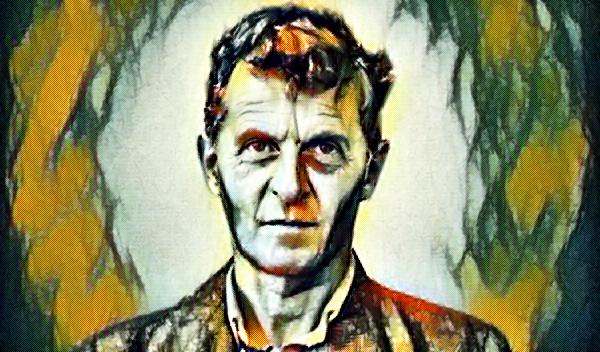
Why “Deep Thinking” is not a natural act | Meetup – Systems Thinking Toronto, April 28, 6.30-8pm EDT

via Why “Deep Thinking” is not a natural act | Meetup


Why “Deep Thinking” is not a natural act

SystemsThinkingTO

Details

Topic: Why Deep Thinking is not a natural act

Agenda:

Part 1: (60 minutes)

= Introduce concepts
= What is thinking?
= Deductive, Inductive, Abductive reasoning with examples
= Some surveys with PollEV with instant results and discussions around results
= Video exercise with results on Poll EV
= Introduce System 1 and System 2 thinking
= Various types of thinking tools: Systems Thinking, Scientific Thinking and CAS – a brief introduction

Part 2: (Breakout and summary: 30 minutes – large group)

= Break out and discuss why it is difficult to apply these tools
= Ability for participants to put together and document their thoughts using collaborative tools
= participants would have access to the previous slides in the breakout groups for discussing
= Use of 4-8-all (Liberating structures) regrouping based on how many participants register
= Bring everyone together to summarize learnings from the session
= Point them to further learning resources

Outcomes:

= Types of thinking and when to use
= Thinking tools – Complexity, Systems Thinking and Scientific thinking
= When to use what tool in what context?
= Why is it hard to apply such “Deep Thinking” in day-to-day life and at work – the group summary
= Where do I find more information and/or learn more about these tools and techniques – resources: books, videos, free online courses, blogs for each of the items talked about

Follow-up: Embracing Complexity session at #SkollGoesVirtual

Email from the session, with rich pickings:

___

Thank you for attending our #SkollGoesVirtual session on Embracing Complexity!

We uploaded the materials in case you couldn’t make it:

You are also most welcome to join us at one of our next two webinars on Embracing Complexity:

Four documents were mentioned during the sessions:

Here are the invitations for follow-ups from the partners:

  • Catalyst 2030 invites you to join their network (see http://catalyst2030.net).
  • If you want to promote ideas and practices around systems change funding, join the working group on that topic within Catalyst 2030. Reach out to Florian Rutsch (frutsch@ashoka.org) if you want to learn more.
  • The failures of systems—from healthcare to social welfare to wage inequality & food insecurity—are exacerbating the COVID crisis. Ashoka finds and supports systems changing social entrepreneurs who work on these issues across the world. The program is an easy way to get started with systems change funding. Reach out to Manmeet Mehta (mmehta@ashoka.org) if you want to learn more.

Since this was the first time the Skoll Foundation hosted a virtual week-long experience, they are eager to learn from it. If you have not already received this request from the Skoll Foundation, please complete the following surveyhttps://www.surveymonkey.com/r/ZYY6BR5.

Best wishes to you and your colleagues,
Odin Mühlenbein on behalf of Ashoka, Catalyst 2030, Co-Impact, Echoing Green, Schwab Foundation, Skoll Foundation, and Systemiq


Projects: Transmission: SFI insights into COVID-19 | Santa Fe Institute

via Projects: Transmission: SFI insights into COVID-19 | Santa Fe Institute

Systemic change: A dance between structures and events | Marcus Jenal

via Systemic change: A dance between structures and events | Marcus Jenal

Benjamin Taylor on Twitter: “Does anyone have a good link or piece of their own on ‘the problem with mental models’? Or do I have to write it? :-)” / Twitter

via 🕷BenjaminP.Taylor🇪🇺 on Twitter: “Does anyone have a good link or piece of their own on ‘the problem with mental models’? Or do I have to write it? :-)” / Twitter

Quite an enthusiastic response on twitter to this loaded question of mine. I envisage there will be many more here and when I share this on the social medias.

Lots of responses seemed to at least partially interpret ‘the problem with mental models’ in ways I had not intended:

  • assuming the mental model framing and talking about how mental models can be good or bad or limited or improved
  • informing me about the limits of mental models
  • talking about the process by which people understand and retain or develop spatial models
  • talking about the neuroscience of how the brain works in some way
  • assuming there is no real alternative to mental models (so I must be talking about
  • saying something clever about my mental model 🙂
  • arguing for or against dualism or solipsism
  • arguing about why metaphors are necessary (this is sort of relevant to my point)

My view is that the ‘mental models’ phrase, while well-intentioned and calling attention to various useful aspects of the ways people make sense, act, interact, and account for all of these things, is fundamentally misconceived and has been the basis for quite significant and misguided assumptions and activity based on falling over the inherent mistakes in the concept itself.

I won’t attempt to make my full argument here, since I am not confident I understand it yet, but/and a few preliminary points would be:

  • there are no actual models in heads
  • there is nothing like a model in heads
  • human understanding and perspectives work very differently from ‘having models’
  • the reification of this idea of ‘mental models’ deeply misleads

And that the name ‘mental model’ makes it seem that these are:

  • rational and changeable through rationality
  • in some sense a model
  • comparable/additive to others
  • extractable/reportable
  • capable of objectivisation
  • personal and owned and contained

And gives rise to the ‘whole elephant’ fallacy (as if just ‘bringing together mental models’ – or doing simplistic mapping of what people tell you is their understanding of a ‘system’ – can let everyone share the same ‘God’s eye view’).

Going back to the beginning, there’s something(s) which the ‘mental model’ concept is pointing at – individuals’ and groups ways of making sense, deciding, acting, interacting, being, and accounting for/expressing all of these things in a particular context. Yet each of these (making sense, deciding, etc) may operate in a different way – and the way people account for these or explain or narrate them may be different again. ‘Mental models’ can be a relevant simplification or Lie-to-Children in some settings, but we might be better off without one laden metaphor for this complexity and diversity, which then gets reified and leads to all kinds of misunderstandings.

Ivo Velitchkov (@kvistgaard on twitter) kindly gave both a clear definition of some of these problems:

  • That the cognition (incl. whatever happens in the brain) doesn’t work by processing representations of any kind, symbolic or other. When we ride a bike we don’t have (and don’t need) a model of the bike in our heads.

And a powerful reading list:

(they should be read in this order as each one refines and develops the arguments)

  • The Embodied Mind https://buff.ly/2VlvPas
  • Enaction https://buff.ly/2XIR2wG
  • Mind in Life  https://buff.ly/2KjJacW
  • Linguistic Bodies

Also recommended:

via Abeba Birhane on Twitter: “Linguistic Bodies: The Continuity between Life and Language – Ezequiel A. Di Paolo, Elena Clare Cuffari & Hanne De Jaegher #amreading https://t.co/RRdo43CeFG” / Twitter

(BTW, one of the responses led me to https://www.modeltheory.org/, ‘The Mental Models Global Laboratory’, which to its credit has a list of critics – http://www.modeltheory.org/about/critics/#1547415412958-f2bc048e-b38c – but which seems to me to be very much about the things I see as problematic! – https://www.modeltheory.org/about/what-are-mental-models/#1567055674764-d814d78e-5cd5)


#2ndordercybernetics, #systemsthinking

The System in the Box:

Harish's avatarHarish's Notebook - My notes... Lean, Cybernetics, Quality & Data Science.

W

In today’s post, I am looking at the brilliant philosopher Ludwig Wittgenstein’s “The Beetle in the Box” analogy.

Wittgenstein rose to fame with his first book, Tractatus Logico-Philosophicus, in which he proposed the idea of a picture theory for words. Very loosely put, words correspond to objects in the real world, and any statement should be a picture of these objects in relation to one another. For example, “the cat is on the mat.” However, in his later years Wittgenstein turned away from his ideas. He came to see the meaning of words in how they are used. The meaning is in its use by the public. He came to realize that private language is not possible. To provide a simple explanation, we need an external reference to calibrate meanings to our words. If you are experiencing pain, all you can say is that you are experience pain. While…

View original post 1,228 more words

Human Error: A Problem With the Envelope

via Human Error: A Problem With the Envelope

A Problem With the Envelope

Human error

On February 26th 2017, The Academy of Motion Picture Arts and Sciences held its 89th award ceremony, celebrating the best films of 2016. The ceremony went swimmingly until the very last award for best picture.

Faye Dunaway and Warren Beatty mounted the stage. They read aloud the nominees, then Warren Beatty opened the envelope that held the name of the winner. He looked a bit puzzled. He checked the inside of the envelope to make sure he wasn’t missing something and gave Faye Dunaway a quizzical look. Then he started to announce the award, and stopped. With a bemused expression on his face he looked inside the envelope again.

Mr Beatty passed the card to Faye Dunaway to see what she made of it. Thinking he was clowning about and not genuinely confused Ms Dunaway stated the winner.

“La La Land”

Two minutes later, halfway through the acceptance speeches, all hell broke loose. Stage managers and organisers crowded onto the stage. Faye Dunaway had read out the wrong card.

La La Land’s producer rectified the error.

I’m sorry, no, there has been a mistake, Moonlight, you guys won best picture.

Jordan Horowitz

What did you do Warren?

Jimmy Kimmel, the shows host regained control of the situation and asked in mock outrage “What did you do Warren?”

Continues in source: Human Error: A Problem With the Envelope

Alexandrian Pattern Languages online – Pattern Language – Open Learning Commons – David Ing

via Alexandrian Pattern Languages online – Pattern Language – Open Learning Commons

The master site for pattern language is at https://www.patternlanguage.com/ . The web site is a good archive for Christopher Alexander’s papers – some unpublished – and pointers to the books.

On the Internet Archive, there’s a copy of A Pattern Language at https://archive.org/details/patternlanguage00chri that can be borrowed for 14 days. There also seems to be another version labelled as “Ecological Building” that could be less restrictive at https://archive.org/details/eb_A_Pattern_Language/ 1 . However, since the patterns are often used non-linearly, a sequential text may not be the best presentation for synthesizing patterns into a design.

One site that was really great at providing links to “higher order” and “lower order” patterns was on the Jacana House site. It now seems to be offline, but since it seems to have been coded in days of simpler HTML, the version archived at https://web.archive.org/web/20190906082635/http://www.jacana.plus.com/pattern/P0.htm 1 still surfs well.

On a more modern infrastructure is a collection that might have been the impetus for a set of New Patterns, at https://patterns-dev.github.io/patterns/newpat/newpat0/new-patterns-introduction.htm . This was dated 2012, from Theo Armour.

Many of the constraints on electronic publishing of A Pattern Language come from original agreements on the 1977 edition from Oxford University Press. From that site, there’s a “Google Preview” that is searchable, if you want to search and view specific pages.

via Alexandrian Pattern Languages online – Pattern Language – Open Learning Commons


‘COVID-19: Safety-II in action’ – with Suzette Woodward, Simon Gill and Paul Stretton | Q Community – 23 April 2020, 12:30pm BST

via ‘COVID-19: Safety-II in action’ – with Suzette Woodward, Simon Gill and Paul Stretton | Q Community

23 Apr 2020
12:30 – 13:30

Zoom video call – online/phone (all welcome) *12.30pm*

The COVID-19 crisis has swept aside business as usual – confronting us with an urgent need to respond effectively, and also to share and learn quickly across departmental/organisational/national boundaries.

** Please register here to receive your personal login for the meeting **

Our usual simplistic and reactive ‘find and fix’ approach of looking for error and variation compared to ‘work as prescribed’ in clinical practice guidelines etc does not foster the rapid learning and innovation needed in today’s complex – even chaotic – coronavirus situation.

The focus of the emerging Safety-II movement on learning from ‘work as done’ – the work of the frontline (in all its complexity) – and from what goes well rather than error, is particularly suited to today’s current need for rapid cross-boundary learning. (It has inspired movements such as ‘Learning from Excellence’).

This session will offer a space for us to share our practical knowing-as-doing, what we’re learning in the current work situation – and look at ways we can do it better. To notice these things that are new that will shortly become the ‘new normal’, the new habits that we will develop.

This will help us to adapt, and a new order emerge from the unpredictability and chaos – fostering team-wide, even system-wide resilience, and reducing burnout.

Further reading

Bios

Suzette Woodward
Suzette is an internationally renowned expert in patient safety, who worked in the NHS for 40 years, as a general nurse at St Thomas’ Hospital and a paediatric intensive care nurse at Guy’s Hospital. For the last five years she was the National Clinical Director for the Sign up to Safety Campaign. She is also a Visiting Professor for the Institute of Global Health Innovation at Imperial College University London. Her main area of interest and research relates to translating policy into action and the implementation of a just culture and Safety II. She is the author of two books, Rethinking Patient Safety and Implementing Patient Safety. She is a Q Community member.
To find out more about Suzette, visit her website; @SuzetteWoodward

Simon Gill
Simon’s background is in risk, safety and resilience within the aviation industry. With a degree in engineering and a PhD in psychology, he has always sought a better way of developing products and services to put people at the centre, preventing error and managing risks to individuals and organisations. He now lectures on Safety Risk Management for City University, London and continues to research and implement these concepts in aviation.

Simon now adapts concepts of risk and resilience for critical infrastructure and specifically within a health and social care setting, training practitioners, developing policies, methods iand software and also supporting decision-makyers.

Simon is the convenor of the Q Community’s Organisational Resilience group all welcome to join)

Paul Stretton
Paul is a trainer, teacher, writer, award winning speaker, coach and insatiable boundary pusher.

He has developed the Quantum Safety approach developed over years of working with risk industries. Despite what we are conventionally taught, he found that the approaches and models we are expected to use were inadequate. Safety Triangles, Swiss Cheese Models, Dominos – they are all linear models and often apply outdated or overly simplistic methodology.

Quantum Safety is an approach that evolves our understanding of safety outcomes so that they offer real insight within high risk industries and complex adaptive systems.

His most recent paper explores the idea of causation in greater detail within the Lilypond Model. It challenges ideas used in non complex systems such as Root Cause Analysis, 5 Whys, and offers a new approach to greater learning within complex adaptive systems.

See Paul’s website.


via ‘COVID-19: Safety-II in action’ – with Suzette Woodward, Simon Gill and Paul Stretton | Q Community

Colectivo de Impacto – videos with Humberto Maturana

via Colectivo de Impacto – YouTube

https://www.youtube.com/channel/UCoJ1a0NDc-BfL9appBEX3RA/videos

Whom, when + where do Systems Changes situate? – Coevolving Innovations – David Ing

A series of pieces on coevolving.com from January-March of this year, which I’ll be linking out one per week (but all are on David Ing’s blog already). Here is 4/5

via Whom, when + where do Systems Changes situate? – Coevolving Innovations

Whom, when + where do Systems Changes situate?

Covering practical wisdom (phronesis), the third of four lectures again was compressed for the Systemic Design course in the Master’s program in Strategic Foresight and Innovation at OCAD University. The students in the part-time session on February 7 extended their discussion period longer than those in the full-time session on February 5. I again jumped slides in the sequence to stay within the timebox.

The agenda was in four sections:

  • [preamble] Episteme, Techne, Phronesis (reordered)
    • Intellectual Pursuits (Rethinking Systems Thinking)
    • Systems changes as situated c.f. ideal-seeking
  • A. Value(s), Judgment, Soft Systems Thinking
    • Appreciative Systems (Vickers, Checkland)
    • Policy, impacts and consequences of systems changes
  • B. Service Systems (c.f. Production Systems)
    • Science of Service Systems (Spohrer, Kijima)
    • Material-products c.f. information-services as systems changes
  • C. Socio-Technical Systems Perspective
    • Tavistock Institute + Legacy (Trist, Emery, Ramirez)
    • Coproduction and design principles guiding systems changes

The web video can be streamed on Youtube.

Copies of the video files are downloadable for disconnected viewing.

Video H.264 MP4 WebM
February 7
(1h21m)
[20200207_OCADU_Ing HD m4v]
(HD 2477kbps 1.6GB)
[20200207_OCADU_Ing nHD m4v]
(nHD 1344kps 866MB)
[20200207_OCADU_Ing HD webm]
(HD VP8 375kbps 349MB)
[20200207_OCADU_Ing nHD webm]
(nHD VP8 139kbps 206MB)

Readers who want to follow through on web link references may want to review the slides directly.

Whom, when + where do Systems Changes situated?

The same presentation slides were used for both lectures.  The questions from the students were considerably different across the class sections, so the diligent listener might want to compare them.  Versions boosted by 3db may make the audience discussion more audible.

Audio
February 5
(57m12s)
[202002-5_OCADU_Ing ValuesServicesSociotechnical .mp3]
(53MB)
[20200205_OCADU_Ing ValuesServicesSociotechnical plus3db.mp3]
(53MB)
February 7
(1h21m)
[2020207_OCADU_Ing ValuesServicesSociotechnical.mp3]
(75MB)
[20200207_OCADU_Ing ValuesServicesSociotechnical plus3db.mp3]
(75MB)

Whereas the second lecture tended to focus outside a system of interest towards other systems of influence, this third lecture oriented more inside the system of interest.

Don’t put too much faith in Covid-19 metrics – UnHerd – Tom Chivers

via Don’t put too much faith in Covid-19 metrics – UnHerd

Don’t put too much faith in Covid-19 metrics

Facts and figures are vital to fighting the pandemic, but they can also be hugely misleading

BY 

April 14, 2020

In this new era, we’re all becoming data nerds, or hobby-level epidemiologists. We’re all suddenly conversant in things like case fatality rates and R0.

It makes for an attractive amateur pastime because lots of the things we are trying to know — such as how many people are infected, or how deadly the disease is — are hugely uncertain. But there’s another problem, which is that the things we measure are affected by the simple fact that we’re measuring them — and that the right things to measure change with every passing day.

For instance, we’re all wondering about the “exit strategy” — how, now that we’re all in lockdown, we’re going to get out of it. It’s going to involve some combination of testing, contact tracing, perhaps (eventually) immunity passports, and hopefully in the not-too-distant future vaccines and treatments.

But it’s also going to involve — probably — see-sawing back and forth between tight controls and more relaxed ones, trying to eke out the cases over months to avoid overwhelming the NHS. And those controls will have to be imposed and relaxed, to some degree, on the basis of metrics.

In the UK, it might look a bit like this. The 16 March Imperial modelproposed a sequence of automated triggers: specifically, when the number of ICU cases in a week reaches a certain number, say 100, the lockdown (school closures, social distancing, etc) is imposed; when they drop below another certain number, say 60, they are relaxed. The outcome — hopefully — will be a saw-toothed line on the chart: ICU cases jagging up, coming down, jagging up, coming down, but never breaching the line of health service capacity.

But once you start using ICU beds as a metric, you hit a problem. There’s this thing, “Goodhart’s law”. It’s named after the economist Charles Goodhart, and is usually formulated as “When a measure becomes a target, it ceases to be a good measure.” Goodhart proposed it (in more technical language) when discussing Margaret Thatcher’s economic policies, but it applies everywhere.


Continues in source: Don’t put too much faith in Covid-19 metrics – UnHerd


When it comes to solving complex problems, collaborating isn’t enough – Adam Jones blog, Systems Unit, UK government

A very Senge-flavoured blog!

via When it comes to solving complex problems, collaborating isn’t enough – Systems thinking

When it comes to solving complex problems, collaborating isn’t enough

Adam Jones

‘Collaborate’ has become something of a rallying cry in the public sector over the past few years. We’ve heard how collaboration leads to better outcomes for citizens, how it has enabled civil servants to better spot (and avoid) unnecessary duplication and how it can improve morale. All good things.

However, when it comes to designing systemic policy solutions to complex problems, I believe that collaboration, on its own, is not enough. So what is needed beyond collaboration? I thought I’d share my thoughts in a blog post and share three concepts that might help you engage with stakeholders on the topic.


more and add comments When it comes to solving complex problems, collaborating isn’t enough – Systems thinking

Trespassing Horizons – The New Inquiry

An unclear and, I think, misunderstood take on cybernetics – unfortunately the author passed away last year, and the note of introduction explains this as the cause of some lack of clarity. It is interesting to see what people think, and both the facts and arguments in here are fascinating, but should be treated separately, I think.

via Trespassing Horizons – The New Inquiry

The Axelrod Tournaments | The Law Rules Blog

via The Axelrod Tournaments | The Law Rules Blog

s
search
c
compose new post
r
reply
e
edit
t
go to top
j
go to the next post or comment
k
go to the previous post or comment
o
toggle comment visibility
esc
cancel edit post or comment