Have you ever read something, say a novel, a poem, or a quote, and to your surprise you discovered a completely different meaning? It’s a strange experience, and one I’ve been having daily. For example, I once thought I understood the American filmmaker George Lucas when he said:
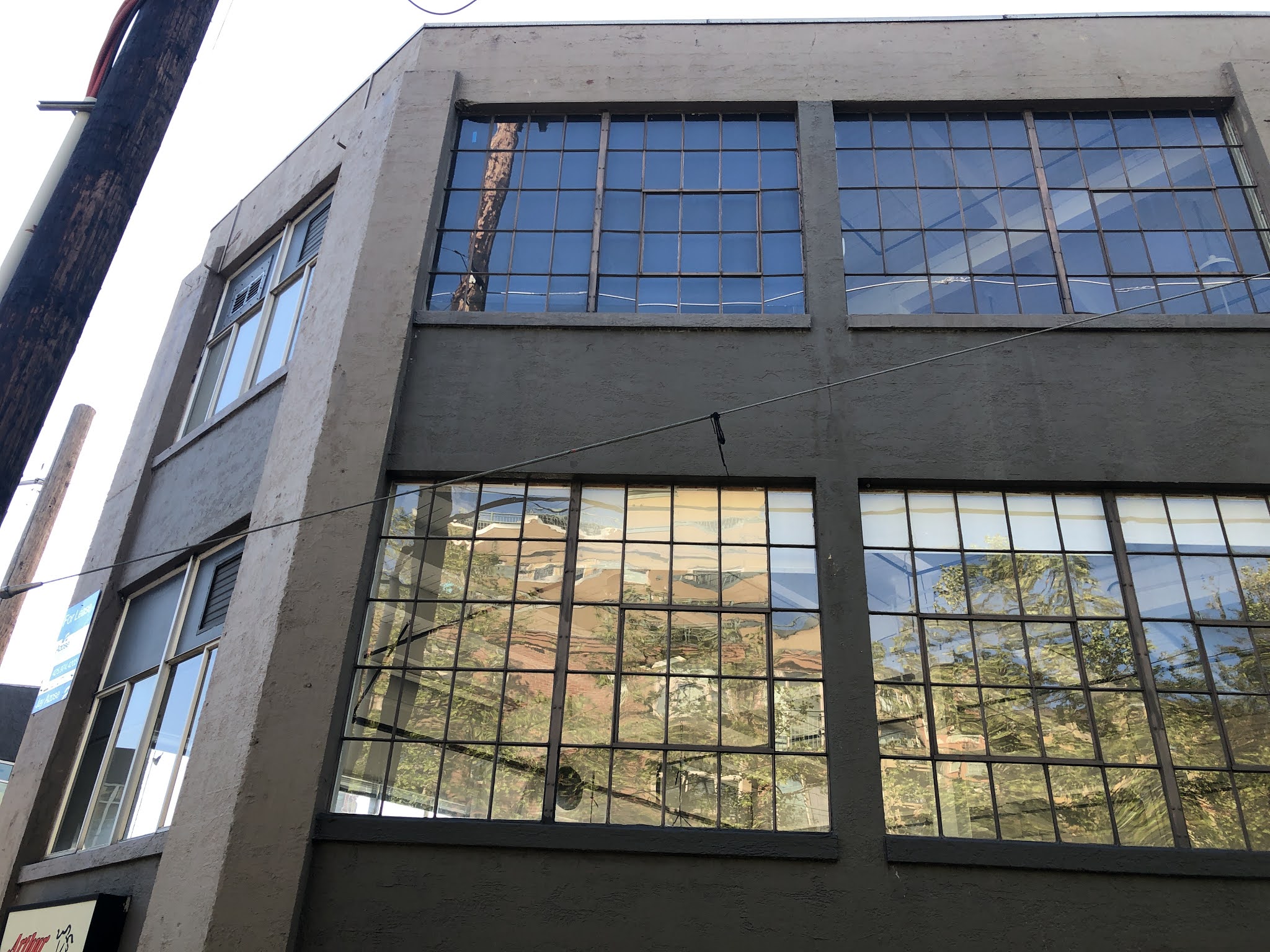
I was waiting at the crosswalk. Across the street was a building of windows. Behind me was a future building of windows, yet another downtown residential tower under construction. I could see a multitude of reflections of the building behind me in the windows of the building across from me. Then, in a flash, I was bewildered as it seemed that the building I was looking at, or its windows, or something strange inside of it, began to, it seemed, undulate or vibrate or wiggle. Was the building falling? Shaking? Were we having an earthquake that I somehow couldn’t feel, but only see? Was some magic afoot? My confusion ended in a moment as I realized I was seeing a construction elevator ascending in those reflections across the street, it’s image flashing first in one set of window panes, then another, as it rose. The moment of disorientation had lasted but a second, and now, on the other side of perplexity, I’d created comprehension. I don’t remember a time when I didn’t, at least intuitively, comprehend reflections in glass surfaces, but certainly there was that time. I think of my own infant daughter who would sometimes seem startled by her own reflection in the mirrors of our home. That construction elevator, reflected in dozens of windows, had likewise startled me before, as the mind does, I made sense of the nonsense. But, of course, all those reflections were not nonsense and there is no guarantee that what I’d constructed as comprehension had anything to do with reality. I mean, it might seen ludicrous, but it’s quite possible that the entirety of what we perceive is simply a mosaic of infinite reflections, that we each, individually, assemble into “sense.” Scientists assure us that we can never really know what we are “seeing,” the inadequacy of our senses limit what we can really know about the universe, and “comprehension,” as we know it, isn’t a way toward greater truth, but rather a way out of bewilderment. Martin Luther, the original Protestant, wrote, “Bewilderment is the true comprehension. Not to know where you are going it the true knowledge.” When I think of human history, or at least the tiny sliver that I know about, I see a species constantly seeking to overcome its bewilderment, to create sense from the nonsense, to comprehend the incompressible. I also see a species constantly trading one perplexity for another, understanding (or thinking we understand) one thing only to find something beyond it that we don’t understand. We delude ourselves when we believe that we are coming somehow closer to a universal and final understanding. Confusion, bewilderment, perplexity, not knowing: that is the true nature of life. It’s easy to see this in young children who have been entrusted with the freedom to play, children who are not being constantly instructed on how they ought to overcome their bewilderment, but rather left to pursue “true knowledge” on their own. Children move from bewilderment to bewilderment. Sometimes it startles or alarms them. Sometimes it intrigues them, peaking their curiosity. Sometimes children approach their bewilderment with caution, taking their slow, deliberate time, while at other times they throw themselves into it. As adults we too often see their bewilderment as something we must fix, so we tell them how, or show them why, or hurry their process with tips and hints that point them in the “right” direction. When we do that, I wonder if we aren’t robbing them of their true knowledge, which is, their bewilderment. We tend to cast bewilderment in a negative light, as something to be avoided. I’m thinking now of a loved one suffering from dementia. This is a woman who, in her prime, was an intellectual giant, a person gifted in the art of creating sense from nonsense. But it’s not the bewilderment that disturbs her. No, it’s rather that dementia has taken away her ability to construct comprehension the way she once did with such panache. That is, to me, the real tragedy of dementia, not the bewilderment, but the inability to move beyond it. As I watched that construction elevator’s many reflections, each slightly different than the other, create the illusion of movement up the side of the building across the street, I found myself trying to return to that initial moment of bewilderment, to again see what I’d originally seen. I couldn’t do it, of course, but I’ve been thinking about it for weeks now. There was, for me, a moment of sheer delight in my bewilderment, when the world suddenly didn’t make sense to me, when reality gave me a glimpse into its true nature which is to be fully, joyfully, and completely incomprehensible. We are the sense makers, each of us, all of us. We are windows that reflect according to our own, unique angle and perspective, each possessing true, but incomplete knowledge. Tom Hunter sang, “Build it up and knock it down, and build it up again. Knock it down and build it up and knock it down again.” It’s song that goes around and around, infinitely, reflecting the true knowledge that every preschooler knows. From bewilderment we construct comprehension, but being incomplete it cannot lasts, and then we do it again.
Free for All
Published Online:1 Dec 1967https://doi.org/10.1287/mnsc.14.4.B141
Abstract
—Editorial by C. West Churchman, University of California, Berkeley
JUN
30
Soft Systems Networking Meet Up
by RCA Textiles Research
Follow
Free
Actions and Detail Panel
Share this event
Register
Event Information
Our second online networking meeting for researchers exploring all notions of SOFT SYSTEMS in their academic or industrial research practice
About this event
After a highly stimulating and cross disciplinary introductory meeting, we invite past participants and new attendees to join the second meetup. There will be opportunities for more in depth sharing of our research process; successes, struggles and ideas-in-progress. Further details will follow.
What science can do for democracy: a complexity science approach
Don Ross
Patricia Palacios
Karoline Wiesner
2020, Humanities and Social Science Communications
El Centro de Ciencias de la Complejidad (C3) es un espacio de encuentro en la UNAM donde buscamos reunir a los científicos, artistas, humanistas y técnicos de Facultades, Escuelas, Centros e Institutos para colaborar y enfrentar, con un enfoque integrador, desafíos transdisciplinarios de relevancia nacional aprovechando la sinergia resultante de la interacción entre diferentes áreas del conocimiento.
Con la creación del C3, la UNAM busca apoyarse en su enorme capital científico y técnico para integrar, el rigor y el espíritu inquisitivo que caracterizan a la investigación científica, a la búsqueda de soluciones para los complejos desafíos que enfrenta el país.
Misión
Estamos comprometidos con la sociedad para la solución de problemas complejos a través de proyectos trans-disciplinarios, de la formación de recursos humanos y del desarrollo de conocimiento en las ciencias de la complejidad.
Visión
Ser un centro académico adaptable que promueve la sinergia en la generación y gestión de proyectos con enfoque sistémico que impacta en el avance de las ciencias de la complejidad y en la comprensión, prevención de problemas sociales y ambientales. Ser un espacio de encuentro que integra capital intelectual para investigar y solucionar problemas complejos, de relevancia social, de forma flexible, pertinente y adaptativa.
Downward causation is the controversial idea that `higher’ levels of organization can causally influence behaviour at `lower’ levels of organization. Here I propose that we can gain traction on downward causation by being operational and examining how adaptive systems identify regularities in evolutionary or learning time and use these regularities to guide behaviour. I suggest that in many adaptive systems components collectively compute their macroscopic worlds through coarse-graining. I further suggest we move from simple feedback to downward causation when components tune behaviour in response to estimates of collectively computed macroscopic properties. I introduce a weak and strong notion of downward causation and discuss the role the strong form plays in the origins of new organizational levels. I illustrate these points with examples from the study of biological and social systems and deep neural networks.This article is part of the themed issue ‘Reconceptualizing the origins of life’. Publication: Philosophical Transactions of the Royal Society A: Mathematical, Physical and Engineering Sciences, vol. 375, issue 2109, p. 20160338 Pub Date: November 2017 DOI: 10.1098/rsta.2016.0338 Bibcode: 2017RSPTA.37560338F
∗I am grateful to Prof. Silvana Bettelli Biolchini, who disclosed to me the beauty of science and introduced me to fractals, chaos and dynamical systems when I was a student at the high school. I would like to dedicate her these notes, hoping that she will enjoy reading them, remembering those pioneer times in which we had to wait a whole day to get the first fractal image on a computer monitor. campus.unibo.itSave to LibraryCreate AlertCiteLaunch Research FeedShare This Paper
Heinz von Foerster’s Demons The Emergence of Second-Order Systems Theory
Bruce Clarke 2009, Emergence and Embodiment: New Essays on Second-Order Systems Theory (Duke).65 Views14 Pages1 File ▾Constructivism,Cybernetics,Systems Theory,Niklas Luhmann,Second-Order Cybernetics …more ▾Show more ▾“Heinz von Foerster’s Demons: The Emergence of Second-Order Systems Theory” examines some of the prehistory of neocybernetics by reading von Foerster’s key 1959 paper on self-organization through the hindsight of his early-1970s work that launched second-order cybernetics proper. Not one but two Maxell’s Demons bind thermodynamic to informatic self-organization in the 1959 paper, and his own creation, the Man with the Bowler Hat, links that earlier paper with “On Constructing a Reality” of 1973, by way of contrasting the singularity of metaphysical solipsism with the multiplicities of epistemological constructivism. Not only does it take multiple Demons to conceptualize negentropy in informational systems; it also takes the co-construction of at least two operationally-closed observers to produce a reality: “reality appears as a consistent reference frame for at least two observers.” The concluding section of the essay unfolds this powerful statement from the 1959 paper as a prefiguration of the neocybernetic concept of reentry, by which the systems/environment dyad recurs upon and ramifies within the system itself. In Luhmann’s theory, the dyad of mutually closed psychic and social systems is capable of interpenetration and meaningful resonance just because they share this same paradigmatic operation, becoming “two observers” that construct out of their coupled autonomies the world as a reference frame for psychic and social realities.
I aim to show that models, classification or generating functions, invariances and datasets are algorithmically equivalent concepts once properly defined, and provide some concrete examples of them. I then show that a) neural networks (NNs) of different kinds can be seen to implement models, b) that perturbations of inputs and nodes in NNs trained to optimally implement simple models propagate strongly, c) that there is a framework in which recurrent, deep and shallow networks can be seen to fall into a descriptive power hierarchy in agreement with notions from the theory of recursive functions. The motivation for these definitions and following analysis lies in the context of cognitive neuroscience, and in particular in Ruffini (2016), where the concept of model is used extensively, as is the concept of algorithmic complexity.
Beyond the Great Reset: The Systems Change SummitDear friends,
Beyond the Great Reset: the Systems Change Summit is happening tomorrow! To those of you who have registered, thank you for your vote of trust, and to those who haven’t, today is the last opportunity to join us for a day of great talks by some of the best thinkers and activists of our time, and to participate in creating a joint Declaration for Planetary Systems Change!The Full LineupHear from this great lienup of speakers on how we can create a world beyond “corporate sustainability” and move toward regenerative cultures and needs-based economies. First Session
7.00-8.00 UTCHelena Norberg-Hodge
Strengthening Local Economies worldwide – The path to healing ourselves and the planet
8.00-8.45 UTCSohail Inayatullah
Alternative Futures for Capitalism
8.45-9.30 UTCByron Joel
The Great Reset: Sovereignty and Servitude in the Age Of Surveillance
Discussions and Networking Event
11.00-13.00 UTCSpeed Networking
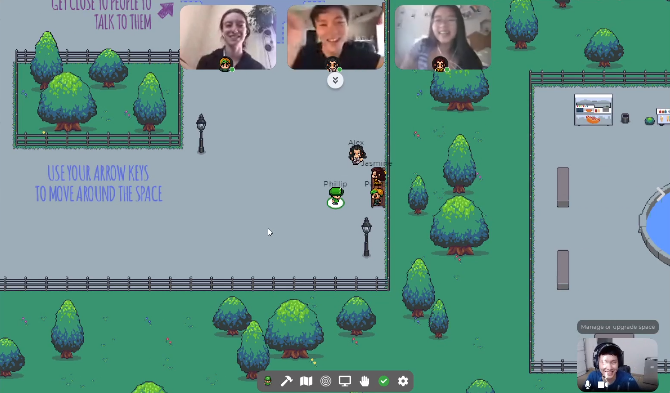
Get paired up with a different systems changemaker every few minutes, or use the gather.town space freely to start conversations on your own!
Second Session
15.00-15.45 UTCClare Politano
Technology as a Commons: Why Systems Change Requires Cooperative Technology
15.45-16.30 UTCDaniel Christian Wahl
Regenerative Cultures and Economies of Place
16.30-17.15 UTCRichard Heinberg
Clean Energy Shift
Discussions and Networking Event
17.30-19.30 UTCDiscussions and Speed Networking
Participate in the discussion rooms to help co-create the Planetary Declaration for Systems Change, or join the networking rooms if you are in a more social mood!
Third Session
20.00-20.45 UTCJames Quilligan
The Global Shift to Distributive Value: From Supply-Side to Needs-Based Economies
20.45-21.30 UTCEmily Kawano
Solidarity Economy and System Change
21.30-22.30 UTC Priscella Kinney
Environmental and Community Stewardship
All the talks will be livestreamed and are free to watch, but you can also opt to join the gather.town virtual space, which will be open for 24 hours, to freely interact with other summit participants, join discussions and participate in structured networking!Learn More and Register Here
Talking Systems – Organisational Design in a Systems Context
15 July 2021 2:00pm – 3:00pm BST (+01:00)
Location TBC
FREE
We are delighted that Dr Naomi Stanford has agreed to launch our Talking Systems series of events for 2021-22.
Naomi is a leading light in her field, as her biography amply demonstrates. She is an internationally recognised organization design practitioner, teacher, and author.
During her earlier UK career, Dr Stanford was an employee of large multinational companies, including Price Waterhouse, British Airways, Marks & Spencer, and Xerox. She then moved to the US working as an organization design consultant to a range of organizations in the government, non-profit and private sectors.
Six years ago she returned to the UK work in the government sector as a Civil Servant. Naomi is now free-lancing as an organization design consultant. Currently she is writing a third edition of her Economist book A Guide to Organization Design. Additionally, she writes books, articles, speaks at conferences, and tweets regularly on organization design.
For this session, Naomi will be addressing the challenges of practising “organisation design” in a system context – and will touch upon the highly topical issue of org design in relation to “hybrid working”.
As ever with these hour-long sessions, Naomi will initially be invited to offer some insights into her recent experiences in the field and her latest thinking on her topic. Thereafter, we will engage her in conversation, using themes and questions submitted by the audience in advance of the session. We will also use the chat box in real-time to channel further questions to Naomi in the course of that exchange. Just before the end, we will invite her to sum up on the basis of the discussion that we have had.
We hope that you are able to find the time to join us for what promises to be a fascinating session.



 Beyond the Great Reset:






You must be logged in to post a comment.