
via Webinar Registration – Zoom
|
|||||||||||||||||
|
A view or perspective on the world
via Webinar Registration – Zoom
|
|||||||||||||||||
|
Building e-Governance: Challenges and Opportunities for Democracy,
Administration and Law (2005)
Series Using the Internet To Influence Society and Politics
International Institute of Administrative Sciences, Belgium
By
National Computerization Agency, Korea
Edited by Pan Suk Kim and Whasun Jho
Just a little bit of interest really since it contains some early work from Ralf-Echkard Turke, with a nice explanation of the Viable Systems Model in governance.
(pdf full book) https://www.nia.or.kr/common/board/Download.do?bcIdx=2360&cbIdx=66361&fileNo=1
COMPLEX NETWORKS 2020
The 9th International Conference on Complex Networks and their Applications
December 1-3, 2020 – Madrid, Spain
IMPORTANT DATESSubmission Deadline
September 02Acceptance Notification
September 28Camera Ready
October 02Author Registration
October 11The International Conference on Complex Networks and their Applications aims at bringing together researchers from different scientific communities working on areas related to complex networks. Two types of contributions are welcome: theoretical developments arising from practical problems, and case studies where methodologies are applied. Both contributions are aimed at stimulating the interaction between theoreticians and practitioners.
TOPICS
Authors are encouraged to submit both theoretical and applied papers on their research in complex networks. Topics for the conference include, but are not limited to:Models of Complex Networks
Structural Network Properties
Complex Networks and Epidemics
Community Structure and Discovery
Motif Discovery
Dynamics on and of Complex Networks
Link Prediction
Multiplex Networks
Network Controllability
Synchronization in Networks
Algorithms for Network Analysis
Complex Networks Mining
Temporal and Spatial Networks
Networks Visual Representation
Large-scale Graph Analytics
Social Reputation, Influence, and Trust
Information Spreading in Social Media
Rumor and Viral Marketing
Financial and Economic Networks
Complex Networks and Mobility
Biological and Technological Networks
Mobile Call Complex Networks
Resilience and Robustness
Graph Signal Processing
Network Medicine
Cognitive Network Science
Networks for Physical Infrastructures
Networks, Smart Cities and Smart Grids
Political Networks
Supply Chain Networks
Complex Networks and Information Systems
Recommendation Systems and Networks
Complex Networks and CPS/IoT
Network Neuroscience
Quantifying Success through Social Network Analysis
Bio-informatics and Earth Sciences Applications
KEYNOTE SPEAKERSLeman AKOGLU
Carnegie Mellon University, USAFosca GIANNOTTI
KDD Lab Pisa, ItalyJános KERTESZ
Central European University, HungaryVito LATORA
Queen Mary, University of London, UKAlex ‘Sandy’ PENTLAND
MIT Media Lab, USANataša PRZULJ
Barcelona Supercomputing Center, SpainTUTORIALS
David GARCIA
Complexity Science Hub Vienna, AustriaMikko KIVELA
Aalto University, FinlandVENUE
Madrid
Madrid is the capital of Spain, and is home to the Spanish Royal family as well as the Spanish Government. It is a modern metropolitan city and an economical and industrial center of Spain, and, with its population of nearly 3,5 million people, is also the biggest city in Spain. It is located in the centre of the Iberian Peninsula, and is surrounded by mountains and natural parks. Although it is located in the centre of the country, it has traditionally been the hub between different areas of Spain.
Madrid has a lot of interesting attractions that offer both culture and amusement. The city is full of great monuments, like the royal palace, the Plaza Mayor or the many statuettes, and for people interested in art, the museums Del Prado, Reina Sofia or Thyssen have some of the most fantastic collections of famous Spanish painters like Velazquez, Goya, Picasso or Miro. If you like going out at night, Madrid has a very interesting nightlife throughout the whole week and which is available all year round. You can either go out for a tapa (Spanish snack), eat at a very nice restaurant, go to the cinema or one of the many theatres, or find nearly any type of bar or disco.The International Conference on Complex Networks and Their Applications
via COMPLEX NETWORKS 2020 | Your story, beautifully told – Created with WordPress managed by IONOS
via Complexity Weekend 2020 | May 22, 2020 – May 24, 2020
Meet new collaborators and learn Complexity Science by doing.
Help to address the unprecedented, interconnected problems created and exposed by this pandemic. Complexity Science is an interdisciplinary and inclusive framework for studying, designing, and controlling Complex systems. Over the course of one weekend, you will learn about Complexity Science from a variety of perspectives while developing solutions in a team setting to address:
Here’s what to expect during this weekend experience:
In-line with social-distancing policy during the COVID-19 pandemic, this weekend event will be entirely virtual
Friday, May 22 – Sunday, May 24
Please plan to participate in the full weekend experience.
Gain exposure to an interdisciplinary perspective on Complexity Science and its application
Work on important problems in small groups, with guidance from experienced mentors and domain experts
Meet potential mentors, coauthors, and cofounders at this unique event, where everyone is open to learning by doing

Carlos leads the Self-organizing Systems Lab. He has been an active researcher since 1997 and has 150 scientific publications in books, journals, and conference proceedings, which have been cited more than 4,500 times. He has given more than 250 presentations at conferences and research group seminars. He has a wide variety of academic interests, including complex systems, self-organization, urbanism, artificial life, evolution, cognition, artificial societies, and philosophy. Carlos is also Editor-in-Chief of Complexity Digest, Associate Editor for the journals Complexity and Frontiers in Robotics and AI, and member of the Board of Advisors for Scientific American.
Check out Complexity Explained by Prof. Gershenson and collaborators.
“Complexity” refers to a large set of interrelated phenomena that have been observed across many academic disciplines, such as physics, biology, sociology, economics, and chemistry.
Aristotle described complex system behavior as when “the whole is more than the sum of the parts.” Such systems contain patterns of nonlinear relationships between their component parts under certain external conditions, causing an unpredictable new phase of system behavior as a whole. The main goal of Complex Systems Theory is to understand the relationship between these patterns of interaction and the properties of the system at higher scales.
This virtual weekend hackathon is for you if you are:
Can you commit to participating all weekend? Teams will be working over the weekend to accomplish a goal together, so out of fairness, we need to be sure everyone who registers can make this commitment.
All backgrounds welcome – your perspective is needed! No direct experience in Complexity Science required.
Attendees will be working in teams over the weekend to accomplish a goal together. We need to make sure everyone who registers can make these time commitments.
5:30 pm – 9:00 pm PST
Get to know the other participants and facilitators, learn about Complexity Science, and co-create Shared Truth with others
9:00 am – 5:00 pm PST
Join a team, choose a Complex problem, and get to work
9:00 am – 3:00 pm PST
Share your team’s hard work, make an impact, and stay connected
Solve Problems Related to COVID-19 and Beyond
Facilitators will move between teams during the conference, supplying Complexity Science references, impactful connections, problem-solving frameworks, tooling, and relevant data sets. Their mission is to guide the “how” to enable each team to reach their highest potential and accomplish their initial goals, whether that be a research proposal, a business plan, or another outcome.

Python • Systems Engineering • Economics • Governance • Blockchain • Data Science
Zargham is the founder and CEO of BlockScience, an engineering, research, and analytics firm focused on design and analysis of complex networks. Dr. Zargham holds a PhD in systems engineering from the University of Pennsylvania, where he studied optimization and control of decentralized networks. He is currently affiliated with the WU Vienna’s Interdisciplinary Research Institute for Cryptoeconomics.

Python • R • Computational/Theoretical Chemistry • Control Theory • Information Theory • Deep Learning
Jared is a “full-stack data scientist” interested in control theory and optimization, information theory, and intelligent (AI) systems of all sorts. His background is in computational and theoretical biophysics. He is currently working with the wonderful team at Atomwise, where he works on deep learning model development. This work aims to predict biological activity of a drug molecule from its X-ray crystal structure.

Python • Education • Technology • Data Analysis • Business Insights • Modeling
In the past six years at EducationSuperHighway, Justine improved data transparency at the FCC by using school broadband data to create new, insightful metrics that had been otherwise impossible to calculate. As a data manager, she blends the stories told by the data with the organization’s expertise to create insights that power change. At DataKind SF, Justine manages a team of 5 data volunteers.

Neuroscience • Microscopy • Education • Collaborative Drawing
Alexandra has a background in translational neuroscience studying brain injury in early development. She is now pursuing a PhD examining how immune molecules regulate the proper establishment of connections in the brain. Her research is inherently interdisciplinary, and she hopes to bridge even more fields through Free Energy thinking and collaborative drawing.
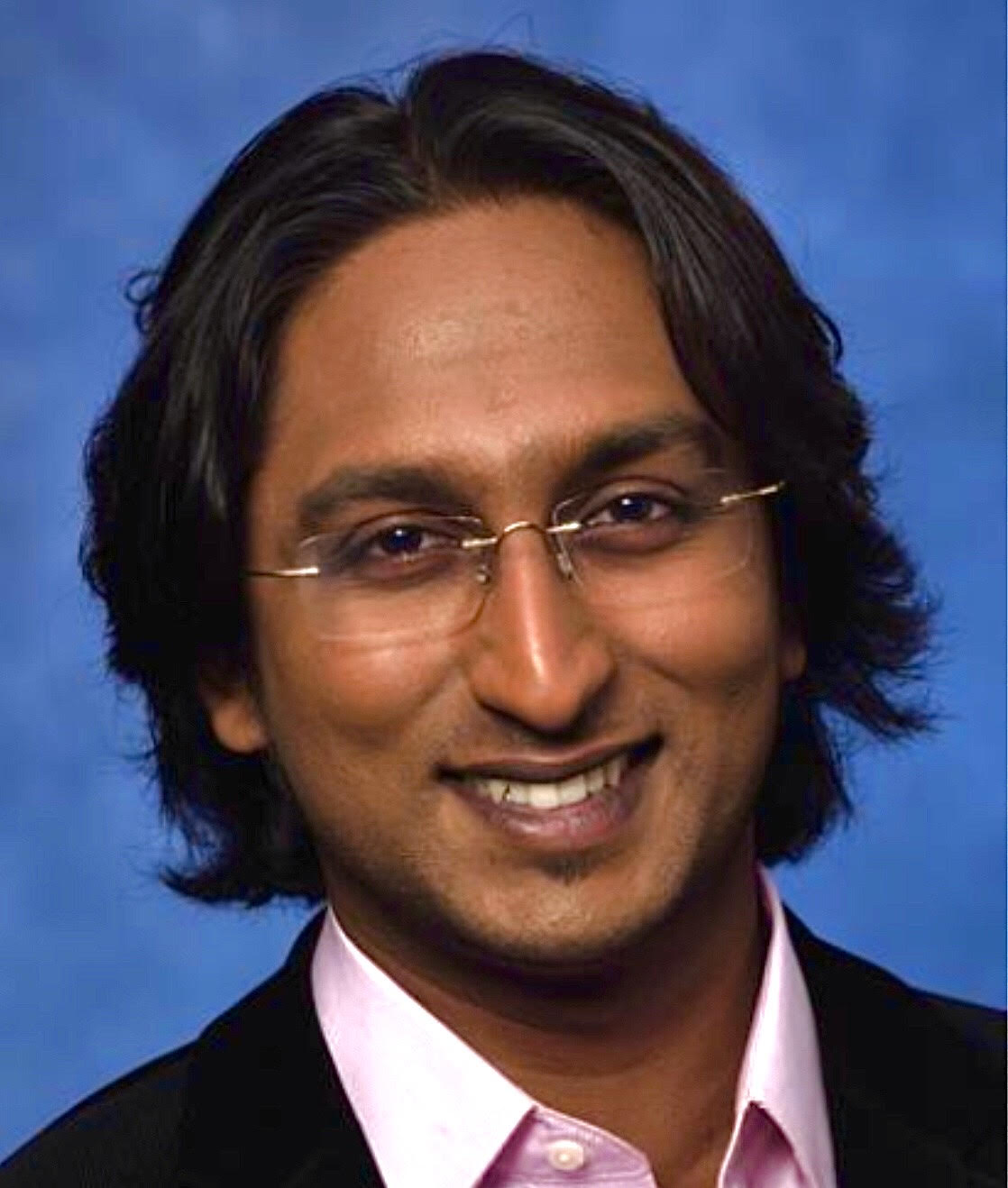
R • Biostatistics • Disease Modeling • Biomedical Imaging • Computational Fluid Dynamics
Dr. Menon’s research is focused on artificial intelligence and data science applied to modeling imaging and time-series data in a variety of areas. He runs the MeDCaVE Lab, which is focused on robust algorithmic analysis of biomedical imaging data augmented with quantitative, physics‐based modeling of cardiovascular mechanics & hemodynamics. He has authored over 75 peer-reviewed publications and abstracts, and has served as a research adviser to dozens of undergraduate and graduate student researchers.

Economics • Statistics • Networks • Data Science
Glenn is an assistant professor of Economics (tenured) at ECARES, ULB. His research agenda focuses on social and economic networks, firm-to-firm relationships, and pricing mechanisms. He is also the founder of Magma, a firm providing data science solutions and strategic consulting to various industries.

Python • Multi-scale Modeling • Research and Publishing Process • Researcher Mental Health
Jason’s background is in multi-scale modeling, in particular the combination of quantum-scale Density Functional Theory with Molecular Dynamics simulations. He seeks to understand general principles behind emergent behavior in complex systems, and has recently focused his attention on understanding the immediate impact of quantum computing systems.

Python • PCR • Neuroscience • Bioinformatics • Optimization • Data Science
Bleu works with a talented team at SavantX that implements augmented intelligence and quantum computing to solve energy reduction problems at scale. Their current focus is global shipping and the industrial supply chain. Her PhD research leveraged RNA sequencing and bioinformatics to explore biological identity, focusing on neural cell types.

Entrepreneurship • Creativity & Innovation • Mental Health • Diversity • Education
Monica Kang, Founder and CEO of InnovatorsBox®, is an educator at heart, transforming workplaces and communities with the power of creativity. Using innovative services and products, she works with industries worldwide including Fortune 500 companies, higher education, government, and nonprofits. Monica is the author of ‘ReThink Creativity’, has organized for Startup Weekend over the past 5 years, and previously worked in nuclear nonproliferation.

Human Evolution • Human-Environment Interaction • Technology Change • Cooperation
Dr. Jenn Huff is an archaeologist with an interest in deep time questions about human evolution, human migrations into new landscapes, exchange networks, technology change, and human-environment interactions. She is currently working on a book that looks at human evolution and recent cultural perspectives to explore how humans cooperate.
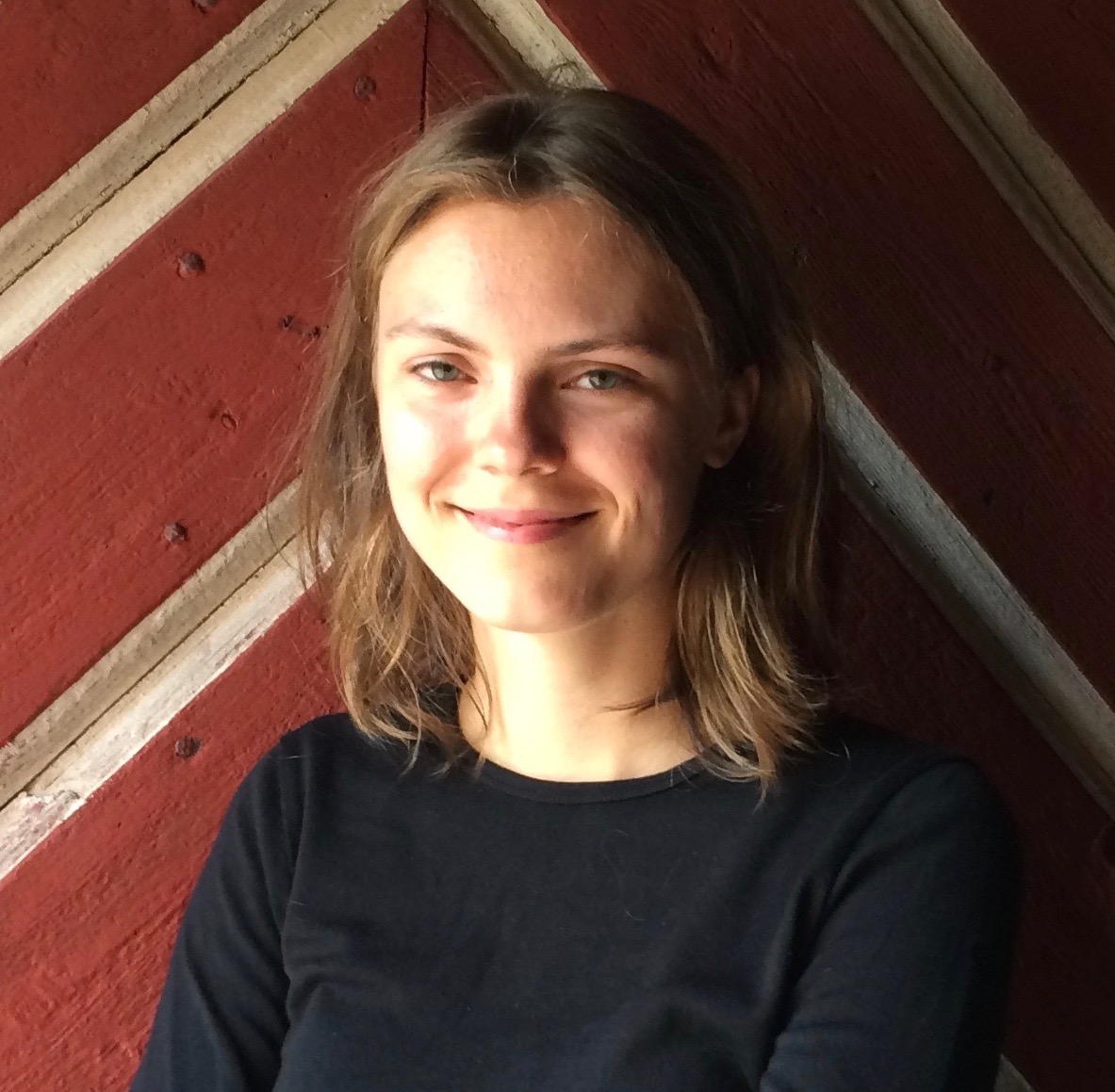
Psychology • Theories of Change • Sustainable Development
Stéphanie approaches the field of complexity from a social science angle, through her background in systems change, sustainable development, and human process design. With a MSc. in Strategic Leadership towards Sustainability, she works as visual facilitator supporting collective thought processes at conferences and meetings by translating them into sweeping illustrated ‘shared mental landscapes’.

Python • Machine Learning • Network Analysis • Natural Language Processing
Will Hamilton is an Assistant Professor at McGill University and a Canada CIFAR AI Chair. His research focuses on the development of machine learning models for network-structured data. His work has been featured in numerous media outlets, including Wired, The New York Times, and The BBC.

Open-source intelligence • Systems Warfare • Distributed Teams
R.J. spends his time infusing complexity science into military and intelligence research to generate best practice for remote teams, civilian or otherwise. He is a serial contributor within the Defense Community, working with complexity-oriented organizations on DARPA grants, research, and inter-agency collaborations. He currently represents Remotor and COGSEC in the information warfare subdivision of a working group on expeditionary warfare in addition to sitting on several other committees and working groups in the IEEE, Department of Defense, and Private Sector.

R • Computational Biology • Data Analysis • Genetics
Chenling has a background in evolutionary genetics and is now pursuing a PhD in applying both simulation and machine learning techniques to single-cell RNA sequencing data. Her current project is focused on the immunological changes in Multiple Sclerosis patients. Through her wandering across different fields of biology, she finds Bayesian statistical thinking and a free imagination to be the common language of discoveries in complex biological systems.
What will I get out of participating?
Network with the Complexity Science community and come away with a healthy exposure to the depth and breadth of the Complexity field from a variety of perspectives. Meet new collaborators, co-authors, mentors, and friends while learning through a hands-on team hackathon experience. Work toward solutions to the complex problems introduced by the COVID-19 pandemic.
Who is this conference for?
This conference is intended for those who are interested in Complexity Science and are eager to have an impact during the COVID-19 pandemic.
What are the prerequisites for attending?
A healthy curiosity and willingness to work outside of your usual expertise and comfort, and a willingness to share your expertise with others. All sections will be held in English.
Should I do anything to prepare for the conference?
Don’t worry about being unprepared, as no one is an expert in all the various fields intersecting with Complexity Science. If you want to consume anything beforehand, perhaps the “Intro to Complexity” course materials from SFI’s Complexity Explorer would be best. We’ll have facilitators on hand to help with whatever blocks your team as you work toward a solution to your chosen problem.
Should I come with a problem in mind that I’d like to work on already?
Feel free to come prepared with a COVID-19 problem you’d like to gather a team around to solve, or let the creativity flow as you interact with the diverse set of Complexity Thinkers during the event. The choice is up to you.
Who will own whatever is created at the conference?
Attendees own their work. Solution proposals generated during the event will have explicit co-ownership defined by the teams, and are private by default. Attendees will be given the opportunity to opt-in to having their proposals summarized into a one-pager emailed to all attendees after the event and posted on the Complexity Weekend website. Teams are encouraged, but not required, to present their results at the end of the hackathon. Any degree of open-sourcing is celebrated, but not required.
How can I become a facilitator?
We are currently seeking facilitators for Complexity Weekend 2021. Please contact team@complexityweekend.com if you are interested.
How can I sponsor annual Complexity Weekend events?
We welcome sponsors for our annual conference. Please contact team@complexityweekend.com for more information.
Who are the conference organizers?
Shaun Applegate-Swanson
Principle Data Scientist at CloudKnox Security
Cofounder at PhD Mentors
John Paul Gonzales
Complexity Education & Community Organization at Santa Fe Institute
Rose Sagun
Co-Chair at Harvard Alumni for Education
Learning Development Manager at The Asia Foundation
Jason Larkin, PhD
Research Scientist at Emerging Technology Center, CMU
Cofounder at PhD Mentors
Jared Thompson, PhD
Senior Machine Learning Engineer at Atomwise
Daniel Ari Friedman, PhD
Postdoctoral Researcher at UC Davis
Previously organized the Stanford Complexity Group
Steven Davis, MBA
Founder at Wicked Innovation Lab
Steering Committee Member at Bay Area Agile Leadership Network
Mark Cicoria
Cofounder at PhD Mentors
Michael Zargham, PhD
Founder at BlockScience
Visiting Scientist at Vienna University of Economics
Marie Applegate-Swanson
Founder and Experience Designer, Creative Compassion Initiative
Experience Designer and Creative Lead, Asian Art Museum
Virtual COVID-19 Hackathon – May 22-24, 2020
Solve Problems Related to COVID-19 and Beyond

Complexity and Collaboration – implications for leadership and practice
The booking sites for the workshops on Friday 5th June and the Complexity and Management Conference on Saturday 6th June are now open to the public.
The workshop Improvising in the complexity of collaboration and conflict on Friday 5th June 9-5pm will explore the enabling constraints of ‘working live’ whilst remaining socially distant from colleagues. The workshop is likely to be most beneficial to delegates who have previously attended one of our programmes or conference, or are familiar with our way of working. Access to Zoom and a desk based PC plus a phone or a tablet is required.
The workshop is convened Prof Karen Norman, Prof Henry Larsen and colleagues from the Universities of Southern Denmark and Hertfordshire and is open to 20 participants (with a wait list if oversubscribed).
The booking site is here.
The workshop An Introduction to Complex Responsive Processes on Friday 5th June…
View original post 183 more words
In the Facebook COVID-19 Resources (Systems Community) (via Facebook https://www.facebook.com/groups/SCA.COVID19/permalink/553322955370095/), Rob Young asks:
I’ve been trying to understand what the movement/ field of ‘Systems change’ is.As a ‘movement’, it seems to have emerged fairly recently, and has been taken up by large, well funded, politically active groups, whose agenda was not clear to me.(apologies for any ignorance of mine)This Harvard Business Review article/ case study has helped me form a (personal, initial) opinion that it is a valid systems approach, and potentially, an important one.(I don’t yet have an opinion on the political/ agenda aspects. – compare with how ideas like ‘climate’, ‘ecology’, ‘woke’ etc get mis-appropriated by hidden agendas).My positive take on ‘systems change’ is that: it is proactive, design and implementation of real world, system based change; It is one of the fields of *systems practice*; It is like a softer version of systems engineering.[Why Social Ventures Need Systems Thinking – Journal article – Harvard Business Review (Vanessa Kirsch , Jim Bildner and Jeff Walker) – Systems Change – 25-Jul-2016]:(Harvard Business Review seems to be behind a registration wall, but does offer viewing of 2 Free articles, without registration]
Otherwise, many links:
https://stream.syscoi.com/?s=%22systems+change%22
It is a large and multiply defined field (especially if you include systems changes, systems innovation, systems weaving, systems convening, systems building etc). I have been building a folder of all key documents related to ‘place-based systems change’ which is edging towards 400 items…
Jake says:
“I’m developing a language for understanding, mapping and measuring systems and system change. Practitioner-oriented document on measuring systemic change is available [in the paper listed bottom, which] also provides a pretty good indication of the language although it doesn’t go into detail. I’m working on a systems mapping guide at the moment, it should be available in a few weeks. I should add that I work in international development and the practitioners targeted follow the ‘market systems development’ approach, but the language is designed to be transferable to any social or socio-environmental context or approach.”
via MECHANISMS OF SOCIAL CHANGE | Jake Lomax | Research Project

In today’s post, I am looking at storytelling. We are sometimes referred to as Homo Narrans or humans who tell stories. Storytelling, oral or otherwise, is part of our culture, and part of who we are. Joseph Campbell, an American literary professor, talks about the universal nature of all stories in his famous book, The Hero with a Thousand Faces. Campbell’s thesis, like those of the ancients—and as put forth also, but in different ways, by Freud, Jung, and others—is that by entering and transforming the personal psyche, the surrounding culture, the life of the family, one’s relational work, and other matters of life can be transformed too. Campbell’s ideas have been distilled into the famous Hero’s Journey. Loosely put, this story structure describes a hero who starts off as ordinary, faces adversities, goes through a transformation, and in the end becomes triumphant. I am inspired by Campbell’s work, but I am looking at the ideas I learned in Cybernetics.
Continues in source: Storytelling at the Gemba: | Harish’s Notebook – My notes… Lean, Cybernetics, Quality & Data Science.
via Hayek: The Knowledge Problem – Foundation for Economic Education

F.A. Hayek is an epic figure in the history of human freedom. He stood for liberty at a time when most intellectuals in the world embraced ideologies of command and control. His literary legacy continues to provide some of the most powerful arguments ever made for the depoliticization of the social order, including its commercial life.
But, in my personal experience, he can also be one of the most difficult thinkers to grasp.
After F.A. Hayek died in 1992, for example, a magazine commissioned me to do a final tribute to his life and work, summing up his main contributions. It was supposed to be for a popular audience. There’s nothing like such a writing assignment to reveal how much you actually know — or do not know — about a subject.
I thought it was going to be a snap. I covered his biography and politics just fine; I mentioned his business-cycle studies and his work on capital theory. But of course his main contribution to the world of social science is summed up in the phrase “the knowledge problem.” Even though I read most of his major work, and read his seminal articles on the problem of knowledge, I was stunned to find myself with writer’s block.
What I came to realize is that I didn’t understand, much less appreciate, his writing on this topic. So I covered the basics (the knowledge needed to run the social order is distributed in individual minds and inaccessible to planners), but my heart wasn’t in it. That’s where matters stood for me for about twenty years.
I tried to make an effort to get how it was that Hayek was able to write vast literature on this one subject, why his seminal article “The Use of Knowledge in Society” was the most cited article in the second half of the twentieth century, why innumerable dissertations have been written on Hayek’s insight, and why he has influenced countless scholars in so many disciplines for so long.
Part of the problem is that Hayek did not always write with his logic and conclusions on his sleeve. His rhetorical style is not so much hortatory or doctrinaire as it is searching and exploratory. You get the sense that he is thinking through an issue as he writes, struggling to find the right combination of words, the right phrasing, the right examples, to capture his insight — which always seems to be unfolding in real time rather than stated like a final product for consumption.
For someone who is looking for final answers and pure theory, this type of writing can be frustrating. There was the additional problem that Hayek can just be downright annoying in places, contradicting himself by endorsing political programs at odds with his own theory. He also has a habit of backing away from the hardest conclusions of his own narrative. If you seek a clear definition of ideas like freedom or property rights in Hayek’s work, you will come away disappointed. He often seemed so consumed by the complexity of the world that he shied away from clarity for fear that he had missed something. For readers looking for ironclad deductions and arguments, his approach can give the impression of being an elaborate display of obscurantism.
In order to understand Hayek and to learn from him, you have to be prepared to think alongside him as he writes. His work presumes an open mind that is ready to think about complex topics, most often from the inside out. He is asking and seeking to answer a completely different set of questions than most people are even willing to consider. Most readers are not prepared to consider them. This is a point it took me many years to understand.
What changed for me? I needed a visual application of the knowledge problem, something that connected the theory with reality. This happened to me at a bar atop one of the highest spots in São Paulo, Brazil, a spot where you could make a complete turn and see the lights of the city as far as you looked. It was a world without end, in all directions.
I was overwhelmed at its utter incomprehensibility. It was too much for my mind because it is too much for any mind. The revelation hit me like a truck: this is an order that no one can possibly comprehend in either its totality or its parts, and, as such, an order that no one can possibly control. It cannot be built by anyone in particular; it is built only by an extended and hyper-complex process that is driven by individual minds that takes many generations to unfold.
It can only be harmed by those who would presume to control it — and the bureaucrats and politicians in this city surely do. The regulators can pass regulations. The planners can order buildings built and torn down. They can loot those who are willing to comply. But, in the end, in this city of more than 11 million people, even in the presence of overweening government, society somehow takes its own course. How this happens and why cries out for explanation.
“The knowledge of the circumstances of which we must make use never exists in concentrated or integrated form,” explains Hayek, “but solely as the dispersed bits of incomplete and frequently contradictory knowledge which all the separate individuals possess.”
I came to realize, right there, that this is not just about São Paulo. It’s about any city in the world. In fact, it’s about every social setting, large or small. It’s about the whole world. Only individuals possess the knowledge that nearly all social scientists — and bureaucracies — imagine that they can, must, and do possess. Anyone who seeks to control the social order is presuming that the unanswerable questions are already answered and proceeds from that point. Hayek is digging deeper to observe that we cannot possibly know what we must know if we seek to design much less rule the world. The knowledge is dispersed and, by its nature, uncollectible.
Is Hayek describing a world of disconnected chaos and uncoordinated randomness, a nihilistic social order of swirling unpredictability? That is not the world in which we live. Why not? Because of the existence of institutions like prices, mores, habits, signaling systems of culture and learning — of knowledge that we all possess, not always consciously but mostly inchoately. They are institutions that we ourselves have not created, but they assist us in making the most of our lives.
“We make constant use of formulas, symbols, and rules whose meaning we do not understand,” writes Hayek, “and through the use of which we avail ourselves of the assistance of knowledge which individually we do not possess. We have developed these practices and institutions by building upon habits and institutions which have proved successful in their own sphere and which have in turn become the foundation of the civilization we have built up.”
As I stood at the same bar in São Paulo looking all around me, my vision changed from macrocosm to microcosm. I observed two people standing close by. They were embracing, kissing intimately. I wondered whether this was a first date or if they had been together for many years. I had no access to that information, and nothing they did gave me the answer. They seemed to be courting each other but at what level and in what way I could not know. And yet this information was foundational to everything both of them were thinking at the time. To truly understand this relationship, I would have to know not just something but countless bits of information I could not really know.
What’s more, even this two-person society was not comprehensible to the two people themselves. Part of the spark of their relationship was the emotional dance they were engaged in right there on the spot. Their intimacy was their means of accessing, however incompletely and briefly, the true spirit of the other’s intellectual and emotional state of mind. They can come close, through every means available, but never entirely achieve that oneness for which true love strives.
Even so, both people in this two-person society were seeking longingly and lovingly for the ideal, coordinating their actions through shared cues, language, and symbols. And in so doing, they created their own micro-order right there, as had everyone else in that bar, as has every one of the 11 million people in that city, as has every one of the 7 billion people on this planet.
We all seek some form of individuality but also a connection to others. We can create institutions to make this possible, but mostly we embed ourselves within them. The institutions emerge from within the structure of our shared experience, chosen and not imposed, and we gravitate toward those who work and eschew those who don’t, in an ever-evolving process of discovery.
Let’s say you set out to plan the world. “If we possess all the relevant information,” writes Hayek, “if we can start out from a given system of preferences, and if we command complete knowledge of available means, the problem which remains is purely one of logic.” We only need to plug in the right data into our calculus and issue orders. The problem is that this solution presumes that the unsolvable problem — gaining that information — has already been solved.
What is the significance of this revelation? It lays waste to a century — or many centuries — of intellectual pretense. The social order is built by the coordination of plans. If those plans are always individual plans, radically individuated and subjectivized, coordinated only through evolved institutions created by no one in particular, the dreams of every would-be master of the universe come crashing down.
The most obvious conclusion is also the most powerful one from a political point of view. The source of order is not the government, even though people continue to believe that despite all evidence. The bureaucratic class and the politicians who empower that class are no more or less smart than you and I are. They are just people with no special insight. Because of government’s legal right to plunder, the government is corrupt and exploitative. It takes stuff from people. That’s about the whole of it. It is not the source of anyone’s order.
What then is the source of social order? It is our individual minds, however imperfect they may be in making judgments about our world. Freedom is the only real option there is. Anything else is based on a lie — a “pretense of knowledge,” as Hayek would say. Anything that subverts that freedom, which means any state at all, amounts to an attack on the very source of social order.
“If we can agree that the economic problem of society is mainly one of rapid adaptation to changes in the particular circumstances of time and place,” Hayek concludes, “it would seem to follow that the ultimate decisions must be left to the people who are familiar with these circumstances, who know directly of the relevant changes and of the resources immediately available to meet them.
We cannot expect that this problem will be solved by first communicating all this knowledge to a central board which, after integrating all knowledge, issues its orders. We must solve it by some form of decentralization. But this answers only part of our problem. We need decentralization because only thus can we insure that the knowledge of the particular circumstances of time and place will be promptly used.
I’m drawn to Hayek’s use of the terms “immediately” and “promptly.” With these words he introduces the ultimate enemy of all those who would control the world: the passage of time. With the existence of time comes change, and with change comes new and different knowledge. Even if it were possible somehow to gain a complete snapshot of the world with all its existing knowledge, by the time it could be used for any purpose to bend the world from its course to another, that knowledge would be outdated and hence useless. Even under the best circumstances, the planners would only be planning the past.
Here, then, is the knowledge problem. It is about more than the ability to plan an economy. It is about the whole of our lives. It is about the ability to plan and direct the course of civilization. That capacity to manage the world, even the smallest part of it, will always and everywhere elude our grasp. That’s a beautiful insight, because it reveals the truth about human freedom.
Freedom is not just one way to organize society. It is the only way.
Jeffrey Tucker is a former Director of Content for the Foundation for Economic Education. He is the Editorial Director at the American Institute for Economic Research, the founder of Liberty.me, Distinguished Honorary Member of Mises Brazil, economics adviser to FreeSociety.com, research fellow at the Acton Institute, policy adviser of the Heartland Institute, founder of the CryptoCurrency Conference, member of the editorial board of the Molinari Review, and author of five books.
via Hayek: The Knowledge Problem – Foundation for Economic Education
via Social Labs and Collaborative Approaches to Systems Change: Live Discussion – YouTube
Social Labs and Collaborative Approaches to Systems Change: Live Discussion
March 13, 2020, 1:30-2:30pm EDT/17:30-18:30 GMT | Cost: Free
In this live discussion, we will be exploring collaborative approaches to systems change, in particular the idea and practice of social labs. Variously referred to as systems innovation labs, living labs, change labs, collaborative innovation networks, co-labs, or social labs all may be thought of as a way of doing social innovation and systems change in practice through creating platforms for collaboration. Hosted by Systems Innovation.
Panelists:
Zaid Hassan of 10 in 10,
Charlotte Hochman of Wow!Labs,
Russ Gaskin of CoCreative, and
Stephanie Daniels of Sustainable Food Labs.
Youtube event link (for viewers): https://www.youtube.com/watch?v=fNpVXzjAIjg

52.1K subscribers
via Speech Acts | On living and working
 Search

One of the great contributions of the philosophers John Austin, in the mid-20th century, and John Searle, who is still active today, has been an important claim about language. While a large part of philosophy of language looked at how language describes the world, they became interested in how language changes the world.
All human action, they point out, is coordinated through language. Speaking is rarely just speaking about something. It’s more often an act through which we make it possible to do things in conjunction with others, taking up and putting down commitments so we can pursue the possibilities that are important to us.
This week’s writing here will be dedicated to this topic. We’ll start by exploring three different conversations that make action with others possible, and the many muddles and mistakes that can be avoided by knowing which is which, and which is called for in any moment.
And then we’ll explore conversations for action in more depth – in particular how requests and promises work and don’t work, and what we can do to improve our use of them.
There’s so much to discover by looking closely at all this, because many of the difficulties we face, and much of our wastefulness, can be tackled by developing skill in speaking and listening.
You could start to explore this topic by observing yourself closely over the next few days. Look for all the ways in which you run into difficulty in coordinating with other people. Look closely in particular at all the times what you asked of others didn’t happen, or at least not in the way you intended.
And look too at all those times when you brought your best effort and intentions to a project only to find that it wasn’t needed, wasn’t appreciated, or that what you’d been doing was not quite what other people had hoped.
And let’s see if, by studying this topic, we can improve things together.
—
You can read more on ‘Speech Acts’ – conversations, requests and promises – here.
via CFA Playground | Conversations for Action
An interactive website from 2016 (or possibly earlier?) with overviews of each chapter, sample downloads and interactive tools:
In order for action to occur between two people, one person must make a request or an offer to get things started. If no one makes a request, or no one makes an offer, nothing is going to happen between them!
Once a request or an offer is made, then the ball is on the other person to determine what happens next, and so forth, until the person making the request, or accepting an offer, is satisfied.
This playground will let you select the action of the customer or performer by letting you click the circle that represent the actions.Just try it out to get the flow. For example, after a request is made, typically the performer will agree to it, but she may also counter-offer or just decline it.
If you engage with the tool, we would appreciate your feedback
via System Thinking for Service Design Inspirations – Yulya’s blog – Medium

As a designer with a master degree in Product-Service System Design I was always interested in systems thinking and its applications to my professional practice. At Oblo, where I work as a service designer, we always try to integrate it in our way of doing service design by mixing ethnography, visual storytelling and participatory design.
This year I was lucky to attend Interaction18 conference and got very much moved by the fact that half of keynote speeches were about the various aspects of systems thinking in design. And so I wanted to share some interesting insights from the talk that can help us in the practice
Continues in source: System Thinking for Service Design Inspirations – Yulya’s blog – Medium




 Systems Community of Inquiry
You must be logged in to post a comment.