Will Robots Change Human Relationships?

cxdig's avatarComplexity Digest

But adding artificial intelligence to our midst could be much more disruptive. Especially as machines are made to look and act like us and to insinuate themselves deeply into our lives, they may change how loving or friendly or kind we are—not just in our direct interactions with the machines in question, but in our interactions with one another.

[…]

The bots thus converted a group of generous people into selfish jerks.

Source: www.theatlantic.com

View original post

Complex Thinking, Complex Practice: The Case for a Narrative Approach to Organizational Complexity – Tsoukas and Hatch, 2001

Source: Complex Thinking, Complex Practice: The Case for a Narrative Approach to Organizational Complexity

Complex Thinking, Complex Practice: The Case for a Narrative Approach to Organizational Complexity

  • August 2001
  • Human Relations 54(8)
  • DOI: 10.1177/0018726701548001
Abstract
Complexity is not only a feature of the systems we study, it is also a matter of the way in which we organize our thinking about those systems. This second-order complexity invites consideration of the modes of thinking we use to theorize about complexity, and in this article we develop the idea of second-order complexity using Jerome Bruner’s contrast between logico-scientific and narrative modes of thinking. Using Bruner’s framework, we examine and critique domi-nant forms of thinking about organizational complexity that are rooted in the logico-scientific mode, and suggest alternatives based in the narrative mode. Our evidence for the value of doing this comes from the logic of complexity theory itself, which we claim indi-cates and supports the use of the narrative mode. The potential con-tribution of the narrative approach to developing second-order thinking about organizational complexity is demonstrated by taking a narrative approach to the matter of recursiveness. By extension, similar insights are indicated for other features that logico-scientific thinkers commonly attribute to complex systems, including, non-linearity, indeterminacy, unpredictability and emergence.

perceiving a complex whole

Animate Arts's avatarNavigating Complexity

Image by Jip Bosch, CC BY-SA 3.0 nl
https://commons.wikimedia.org/w/index.php?curid=33675607

comprehensive ways of knowing

How can we understand a complex whole when it is more than the sum of it’s parts? I would say this calls for a comprehensive way of seeing, but you could also call it holistic. Most people think this involves understanding all aspects of something (in the example of healthcare, people think of not only physical, but also emotional and spiritual aspects of a person’s health). Many people also think of an understanding that includes the context that the thing is in (the person’s environment in the case of healthcare). However, not many people think in the Goethean sense of holism where you are looking to also become aware of the potential that an entity has in how it can respond in different contexts by getting a sense of it’s core essence. The Goethean method may seem…

View original post 601 more words

Self-Organisation and Kyocera’s Amoeba Management System

Simon's avatarTransition Consciousness

A couple of weeks ago Maria and I ran a two-day international seminar on Customer Experiences with Soul at Sustentare Business School in Joinville in the south of Brazil. We love teaching there and we always love discussing Holonomics with the students.

Source: Pixabay

When we discuss cultural transformation, new ways of working, and the evolution of business from command-and-control to more agile ways of working, we always discuss the way in which we can be inspired by the systems we find in nature, one in particular being slime mould.

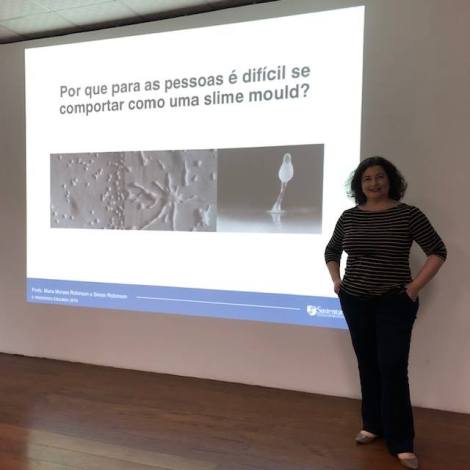
The picture of Maria above is one of the slides from our seminars, and it asks the question “Why is it that people have so much difficulty behaving like slime mould?”

Slime mould is a fascinating organism to study, since it has two distinctive phases in its lifecycle. When food is plentiful, in the form of bacteria, this species exists…

View original post 836 more words

Expanded understandings of place making through genre painting : a heuristic study in the Mid North of South Australia – Susan Mary Michael – University of South Australia

Source: Expanded understandings of place making through genre painting : a heuristic study in the Mid North of South Australia – University of South Australia

THESIS

Expanded understandings of place making through genre painting : a heuristic study in the Mid North of South Australia

Susan Mary Michael ; University of South Australia. School of Art, Architecture and Design. ; 2018
OPEN ACCESS – full text available at link

Details

Title
Expanded understandings of place making through genre painting : a heuristic study in the Mid North of South Australia
Abstract
The poorly understood but often used term ‘place’ refers to a location where meaning has been ascribed, and in visual art has commonly been associated with landscape painters’ subjective impressions of a location. To broaden painting’s capability to explicate aspects of place, this research has aligned with humanistic geography, whose main focus is place and space (where meaning has not been attributed). The formation of the artist-as-geographer has thus been facilitated in this research by using genre paintings of often elusive and under-examined aspects of domestic life. The Mid North of South Australia was selected for documenting the long-observed place making attributes, the researcher’s family having lived in the region since colonial times. In order to avoid a reliance on childhood memories alone, wider understandings of place were sought from the array of entry points, perceived characteristics and complexities of place. Painted canvases of architecture, gardens and home decor were used as the eminent theme, thus looking obliquely at people’s adaptions to, and the meanings within, their rural location
Terms of Use
Copyright 2018 Susan Mary Michael..
Course/Series
Series: School of Art, Architecture and Design.
Publisher
Thesis (PhD(Visual Arts))–University of South Australia, 2018.
Creation Date
2018
Format
1 ethesis (ix, 157 pages) : colour illustrations, colour maps, photographs (mostly colour).
Identifier
Handle : https://hdl.handle.net/11541.2/133151
Bibliographic Id
9916222306601831

Modeling cocaine traffickers and counterdrug interdiction forces as a complex adaptive system

cxdig's avatarComplexity Digest

The US government’s cocaine interdiction mission in the transit zone of Central America is now in its fifth decade despite its long-demonstrated ineffectiveness, both in cost and results. We developed a model that builds an interdisciplinary understanding of the structure and function of narco-trafficking networks and their coevolution with interdiction efforts as a complex adaptive system. The model produced realistic predictions of where and when narco-traffickers move in and around Central America in response to interdiction. The model demonstrated that narco-trafficking is as widespread and difficult to eradicate as it is because of interdiction, and increased interdiction will continue to spread traffickers into new areas, allowing them to continue to move drugs north.


Modeling cocaine traffickers and counterdrug interdiction forces as a complex adaptive system

Nicholas R. Magliocca, Kendra McSweeney, Steven E. Sesnie, Elizabeth Tellman, Jennifer A. Devine, Erik A. Nielsen, Zoe Pearson, and David J. Wrathall
PNAS published…

View original post 10 more words

Organisational Maturity Model | SCiO

A VSM-based diagnostic model


Source: Organisational Maturity Model | SCiO

Organisational Maturity Model

The SCiO Organisational Maturity Model

The Organisational Maturity Model (OMM) has been developed by SCiO. It is driven by a questionnaire and is designed to show the structural integrity of your organisation (currently from a single user perspective). The OMM allows managers to improve the capability of their organisation to operate more effectively and adapt to change. It does this by providing a framework to develop the structural integrity of the organisation. For an individual having an explanation of the systemic causes of the problems faced can suggest alternative ways forward. The OMM provides reassurance about aspects of the organisation that are working well and insights into those aspects of your working life that are caused by the system rather than individuals.

Who should use this?

  • If you want to assess the strengths and weaknesses in your organisation’s structure
  • If you sense your organisation is not running as effectively as it might
  • If you are concerned about the long term viability of your organisation
  • If you sense that actions being taken are ‘treating’ symptoms rather than the underlying causes

. . . . . then you will find The Organisational Maturity Model useful. The Organisational Maturity Model is based on the Viable Systems Model. This first release is limited to a single user version with 24 questions available as a web based or paper versions for you to choose from (see below). An enterprise version for multiple users with an extended and more detailed questionnaire is planned, but the current OMM has proved remarkably powerful in initial testing, despite the 24 question limitation.

Click here to launch the Interactive Questionnaire (OMM Homepage)

Team Cognition as Interaction – Nancy J. Cooke, 2015

Via Arthur Battram

Source: Team Cognition as Interaction – Nancy J. Cooke, 2015

pdf: https://drive.google.com/file/d/1X05ahHdLhqtZbc0-_bOGV2mVscXc4PLZ/view


Teams perform cognitive activities such as making decisions and assessing situations as a unit. The team cognition behind these activities has traditionally been linked to individual knowledge and its distribution across team members. The theory of interactive team cognition instead argues that team cognition resides in team interactions and that it is an activity that takes place in a rich context that needs to be measured at the team level. This article describes this dynamic perspective on team cognition, some research that supports it, and the implications for measuring, understanding, and improving team cognition.

System Safety: Seven Friends of Intervention – Steven Shorrock

Really good safety thinking has always encompassed sensemaking and systems thinking – and Steven Shorrock is a good example of this.

System Safety: Seven Friends of Intervention

Toolkit: Systems Thinking for Safety: Ten Principles – SKYbrary Aviation Safety

Source: Toolkit:Systems Thinking for Safety: Ten Principles – SKYbrary Aviation Safety


If you wish to contribute or participate in the discussions about articles you are invited to join SKYbrary as a registered user

 Actions

Toolkit

Systems Thinking for Safety: Ten Principles

Toolkit Navigation

Executive Summary

System Focus

“To understand and improve the way that organisations work, we must think in systems.” Image: NATS Press Office CC BY-NC-ND 2.0

To understand and improve the way that organisations work, we must think in systems. This means considering the interactions between the parts of the system (human, social, technical, information, political, economic and organisational) in light of system goals. There are concepts, theories and methods to help do this, but they are often not used in practice. We therefore continue to rely on outdated ways of thinking in our attempts to understand and influence how sociotechnical systems work. This White Paper distills some useful concepts as principles to encourage a ‘systems thinking’ approach to help make sense of – and improve – system performance. It is hoped that these will give new ways of thinking about systems, work and safety, and help to translate theory into practice.

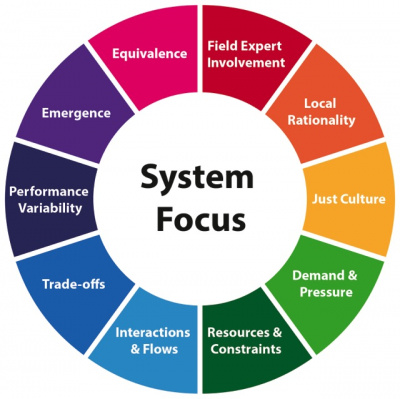
Principles 1, 2 and 3 relate to the view of people within systems – our view from the outside and their view from the inside. To understand and design systems, we need to understand work-as-done. This requires the involvement of those who do the work in question – the field experts. (Principle 1. Involvement of Field Experts). It follows that our understanding of work-as-done – past, present and future – must assimilate the multiple perspectives of those who do the work. This includes their goals, knowledge, understanding of the situation and focus of attention situated at the time of performance (Principle 2. Local Rationality). We must also assume that people set out to do their best – they act with good intent. Organisations and individuals must therefore adopt a mindset of openness, trust and fairness (Principle 3. Just Culture).

Principles 4 and 5 relate to the system conditions and context that affect work. Understanding demand is critical to understanding system performance. Changes in demands and pressure relating to efficiency and capacity, from inside or outside the organisation, have a fundamental effect on performance. (Principle 4. Demand and Pressure). This has implications for the utilisation of resources (e.g. staffing, competency, equipment) and constraints (e.g. rules and regulations) (Principle 5. Resources and Constraints), which can increase or restrict the ability to meet demand.

Principles 6, 7 and 8 concern the nature of system behaviour. When we look back at work, we tend to see discrete activities or events, and we consider these independently. But work-as-done progresses in a flow of interrelated and interacting activities (Principle 6. Interactions and Flows). Interactions (e.g. between people, equipment, procedures) and the flow of work through the system are key to the design and management of systems. The context of work requires that people make trade-offs to resolve goal conflicts and cope with complexity and uncertainty (Principle 7. Trade-offs). Finally, continual adjustments are necessary to cope with variability in system conditions. Performance of the same task or activity will and must vary. Understanding the nature and sources of variability is vital to understanding system performance (Principle 8. Performance Variability).

Principles 9 and 10 also relate to system behaviour, in the context of system outcomes. In complex systems, outcomes are often emergent and not simply a result of the performance of individual system components (Principle 9. Emergence). Hence, system behaviour is hard to understand and often not as expected. Finally, success and failure are equivalent in the sense that they come from the same source – everyday work, and performance variability in particular (Principle 10. Equivalence). We must therefore focus our attention on work-as-done and the system-as-found.

Each principle is explained briefly in this White Paper, along with ‘views from the field’ from frontline operational staff, senior managers and safety practitioners. While we are particularly interested in safety (ensuring that things go right), the principles apply to all system goals, relating to both performance and wellbeing. It is expected that the principles will be relevant to anyone who contributes to, or benefits from, the performance of a system: front-line staff and service users; managers and supervisors; CEOs and company directors; specialist and support staff. All have a need to understand and improve organisations and related systems

Systems Thinking for Safety: Ten Principles.

Source: Systems Thinking for Safety: Ten Principles. A White Paper. Moving towards Safety-II, EUROCONTROL, 2014.

The following Systems Thinking Learning Cards: Moving towards Safety-II can be used in workshops, to discuss the principles and interactions between them for specific systems, situations or cases.

From networks to optimal higher-order models of complex systems

I’m trying to get access to this article… seems on the face of it to be a rediscovery of emergence?

cxdig's avatarComplexity Digest

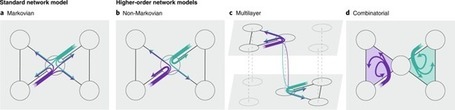
Rich data are revealing that complex dependencies between the nodes of a network may not be captured by models based on pairwise interactions. Higher-order network models go beyond these limitations, offering new perspectives for understanding complex systems.


From networks to optimal higher-order models of complex systems
Renaud Lambiotte, Martin Rosvall & Ingo Scholtes
Nature Physics volume 15, pages 313–320 (2019)

Source: www.nature.com

aka hypergraphs

View original post

Best of Ourselves Podcast – Barry Oshry on Encounters with Others

I had no idea Marcia Hyatt, a stalwart of the power+systems community (and otherwise all-round expert and experience OD type) had a podcast which has nearly reach 200 episodes! This one with Barry Oshry, the originator of power+systems, will be good.

Source: BOO192 – Encounters with Others | Best of Ourselves Podcast


BOO192 – Encounters with Others
Play

In Barry Oshry’s latest book, Encounters with the “Others”, he succinctly shows how we get into trouble and can do great harm. Seeing patterns helps us see our choices. Then the challenge is learning how to navigate the tensions.

Resources

Encounter with the “Others”

Barry Oshry’s Blog

Interview with Barry Oshry on Systems Thinking

Interview with Adam Kahane about Power and Love

Model of hierarchical complexity – Wikipedia


Source: Model of hierarchical complexity – Wikipedia


Model of hierarchical complexity

From Wikipedia, the free encyclopedia

The model of hierarchical complexity is a framework for scoring how complex a behavior is, such as verbal reasoning or other cognitive tasks.[1] It quantifies the order of hierarchical complexity of a task based on mathematical principles of how the information is organized, in terms of information science.[2] This model has been developed by Michael Commons and others since the 1980s.

Overview[edit source]

The model of hierarchical complexity (MHC) is a formal theory and a mathematical psychology framework for scoring how complex a behavior is.[3]Developed by Michael Lamport Commons and colleagues,[4] it quantifies the order of hierarchical complexity of a task based on mathematical principles of how the information is organized,[5] in terms of information science.[6][7][8] Its forerunner was the general stage model.[6]

Behaviors that may be scored include those of individual humans or their social groupings (e.g., organizations, governments, societies), animals, or machines. It enables scoring the hierarchical complexity of task accomplishment in any domain.[9] It is based on the very simple notions that higher order task actions:[2]

  1. are defined in terms of the next lower ones (creating hierarchy);
  2. organize the next lower actions;
  3. organize lower actions in a non-arbitrary way (differentiating them from simple chains of behavior).

It is cross-culturally and cross-species valid. The reason it applies cross-culturally is that the scoring is based on the mathematical complexity of the hierarchical organization of information. Scoring does not depend upon the content of the information (e.g., what is done, said, written, or analyzed) but upon how the information is organized.

The MHC is a non-mentalistic model of developmental stages.[2] It specifies 16 orders of hierarchical complexity and their corresponding stages. It is different from previous proposals about developmental stage applied to humans;[10] instead of attributing behavioral changes across a person’s age to the development of mental structures or schema, this model posits that task sequences of task behaviors form hierarchies that become increasingly complex. Because less complex tasks must be completed and practiced before more complex tasks can be acquired, this accounts for the developmental changes seen, for example, in individual persons’ performance of complex tasks. (For example, a person cannot perform arithmetic until the numeral representations of numbers are learned. A person cannot operationally multiply the sums of numbers until addition is learned).

The creators of the MHC claim that previous theories of stage have confounded the stimulus and response in assessing stage by simply scoring responses and ignoring the task or stimulus.[2] The MHC separates the task or stimulus from the performance. The participant’s performance on a task of a given complexity represents the stage of developmental complexity.

Vertical complexity of tasks performed[edit source]

One major basis for this developmental theory is task analysis. The study of ideal tasks, including their instantiation in the real world, has been the basis of the branch of stimulus control called psychophysics. Tasks are defined as sequences of contingencies, each presenting stimuli and each requiring a behavior or a sequence of behaviors that must occur in some non-arbitrary fashion. The complexity of behaviors necessary to complete a task can be specified using the horizontal complexity and vertical complexity definitions described below. Behavior is examined with respect to the analytically-known complexity of the task.

Tasks are quantal in nature. They are either completed correctly or not completed at all. There is no intermediate state (tertium non datur). For this reason, the model characterizes all stages as P-hard and functionally distinct. The orders of hierarchical complexity are quantized like the electron atomic orbitalsaround the nucleus: each task difficulty has an order of hierarchical complexity required to complete it correctly, analogous to the atomic Slater determinant. Since tasks of a given quantified order of hierarchical complexity require actions of a given order of hierarchical complexity to perform them, the stage of the participant’s task performance is equivalent to the order of complexity of the successfully completed task. The quantal feature of tasks is thus particularly instrumental in stage assessment because the scores obtained for stages are likewise discrete.

Every task contains a multitude of subtasks.[11] When the subtasks are carried out by the participant in a required order, the task in question is successfully completed. Therefore, the model asserts that all tasks fit in some configured sequence of tasks, making it possible to precisely determine the hierarchical order of task complexity. Tasks vary in complexity in two ways: either as horizontal (involving classical information); or as vertical (involving hierarchical information).[2]

Horizontal complexity[edit source]

Classical information describes the number of “yes–no” questions it takes to do a task. For example, if one asked a person across the room whether a penny came up heads when they flipped it, their saying “heads” would transmit 1 bit of “horizontal” information. If there were 2 pennies, one would have to ask at least two questions, one about each penny. Hence, each additional 1-bit question would add another bit. Let us say they had a four-faced top with the faces numbered 1, 2, 3, and 4. Instead of spinning it, they tossed it against a backboard as one does with dice in a game of craps. Again, there would be 2 bits. One could ask them whether the face had an even number. If it did, one would then ask if it were a 2. Horizontal complexity, then, is the sum of bits required by just such tasks as these.

Vertical complexity[edit source]

Hierarchical complexity refers to the number of recursions that the coordinating actions must perform on a set of primary elements. Actions at a higher order of hierarchical complexity: (a) are defined in terms of actions at the next lower order of hierarchical complexity; (b) organize and transform the lower-order actions (see Figure 2); (c) produce organizations of lower-order actions that are qualitatively new and not arbitrary, and cannot be accomplished by those lower-order actions alone. Once these conditions have been met, we say the higher-order action coordinates the actions of the next lower order.

To illustrate how lower actions get organized into more hierarchically complex actions, let us turn to a simple example. Completing the entire operation 3 × (4 + 1) constitutes a task requiring the distributive act. That act non-arbitrarily orders adding and multiplying to coordinate them. The distributive act is therefore one order more hierarchically complex than the acts of adding and multiplying alone; it indicates the singular proper sequence of the simpler actions. Although simply adding results in the same answer, people who can do both display a greater freedom of mental functioning. Additional layers of abstraction can be applied. Thus, the order of complexity of the task is determined through analyzing the demands of each task by breaking it down into its constituent parts.

The hierarchical complexity of a task refers to the number of concatenation operations it contains, that is, the number of recursions that the coordinating actions must perform. An order-three task has three concatenation operations. A task of order three operates on one or more tasks of vertical order two and a task of order two operates on one or more tasks of vertical order one (the simplest tasks).

Stages of development[edit source]

Stage theories describe human organismic and/or technological evolution as systems that move through a pattern of distinct stages over time. Here development is described formally in terms of the model of hierarchical complexity (MHC).

Formal definition of stage[edit source]

Since actions are defined inductively, so is the function h, known as the order of the hierarchical complexity. To each action A, we wish to associate a notion of that action’s hierarchical complexity, h(A). Given a collection of actions A and a participant S performing A, the stage of performance of S on A is the highest order of the actions in A completed successfully at least once, i.e., it is: stage (SA) = max{h(A) | A ∈ A and A completed successfully by S}. Thus, the notion of stage is discontinuous, having the same transitional gaps as the orders of hierarchical complexity. This is in accordance with previous definitions.[4][12][3]

Because MHC stages are conceptualized in terms of the hierarchical complexity of tasks rather than in terms of mental representations (as in Piaget’s stages), the highest stage represents successful performances on the most hierarchically complex tasks rather than intellectual maturity.

Stages of hierarchical complexity[edit source]

The following table gives descriptions of each stage in the MHC.

Stages described in the model of hierarchical complexity (adapted from Commons, Crone-Todd, & Chen, 2014)
Order or stage What they do How they do it End result
0 – calculatory Exact computation only, no generalization Human-made programs manipulate 0, 1, not 2 or 3. Minimal human result. Literal, unreasoning computer programs (at Turing‘s alpha layer) act in a way analogous to this stage.
1 – automatic Engage in a single “hard-wired” action at a time, no respondent conditioning Respond, as a simple mechanism, to a single environmental stimulus Single celled organisms respond to a single stimulus in a way analogous to this stage
2 – sensory or motor Discriminate in a rotefashion, stimuligeneralization, move Move limbs, lips, toes, eyes, elbows, head; view objects or move Discriminative establishing and conditionedreinforcing stimuli
3 – circular sensory-motor Form open-ended proper classes Reach, touch, grab, shake objects, circular babble Open ended proper classes, phonemes, archiphonemes
4 – sensory-motor Form concepts Respond to stimuli in a class successfully and non-stochastically Morphemes, concepts
5 – nominal Find relations among concepts Use names for objects and other utterances as successful commands Single words: ejaculatives & exclamations, verbs, nouns, number names, letter names
6 – sentential Imitate and acquire sequences; follow short sequential acts Generalize match-dependent task actions; chain words Various forms of pronouns: subject (I), object (me), possessive adjective (my), possessive pronoun (mine), and reflexive (myself) for various persons (I, you, he, she, it, we, y’all, they)
7 – preoperational Make simple deductions; follow lists of sequential acts; tell stories Count event roughly events and objects; connect the dots; combine numbers and simple propositions Connectives: as, when, then, why, before; products of simple operations
8 – primary Simple logical deduction and empirical rules involving time sequence; simple arithmetic Adds, subtracts, multiplies, divides, counts, proves, does series of tasks on own Times, places, counts acts, actors, arithmetic outcome, sequence from calculation
9 – concrete Carry out full arithmetic, form cliques, plan deals Does long division, short division, follows complex social rules, ignores simple social rules, takes and coordinates perspective of other and self Interrelations, social events, what happened among others, reasonable deals, history, geography
10 – abstract Discriminate variables such as stereotypes; logical quantification; (none, some, all) Form variables out of finite classes; make and quantify propositions Variable time, place, act, actor, state, type; quantifiers (all, none, some); categorical assertions (e.g., “We all die”)
11 – formal Argue using empirical or logical evidence; logic is linear, 1-dimensional Solve problems with one unknown using algebralogicand empiricism Relationships (for example: causality) are formed out of variables; words: linear, logical, one-dimensional, if then, thus, therefore, because; correct scientific solutions
12 – systematic Construct multivariate systems and matrices Coordinate more than one variable as input; consider relationships in contexts. Events and concepts situated in a multivariate context; systems are formed out of relations; systems: legalsocietalcorporateeconomicnational
13 – metasystematic Construct multi-systems and metasystems out of disparate systems Create metasystems out of systems; compare systems and perspectives; name properties of systems: e.g. homomorphicisomorphiccomplete, consistent (such as tested by consistency proofs), commensurable Metasystems and supersystems are formed out of systems of relationships, e.g. contractsand promises
14 – paradigmatic Fit metasystems together to form new paradigms; show “incomplete” or “inconsistent” aspects of metasystems Synthesize metasystems Paradigms are formed out of multiple metasystems
15 – cross-paradigmatic Fit paradigms together to form new fields Form new fields by crossing paradigms, e.g. evolutionary biology + developmental biology = evolutionary developmental biology New fields are formed out of multiple paradigms
16 – meta-cross-paradigmatic (performative-recursive) Reflect on various properties of cross-paradigmatic operations Explicate the dynamics of, and limitations of, cross-paradigmatic thinking The dynamics and limitations of cross-paradigmatic thinking are explained as they are recursively enacted


Continues in source: Model of hierarchical complexity – Wikipedia

Power Mapping for Campaigners – The Social Change Agency


Source: Power Mapping for Campaigners – The Social Change Agency


Power Mapping for Campaigners

Power mapping is a method that visualises how power is exercised in relation to its context and other power players. In order to run effective campaigns, we must be always aware of our relationship to power and how it is operating.

This session will introduce you to the power mapping tool to help you understand current power relationships. From there, we’ll help you develop strategies for shifting those relationships to increase your power, and ultimately shift power relationships to sustain the change you are working to achieve. These tools and methodologies allow your organisation to make more strategic campaign plans, create a shared framework for understanding power, and connect short term campaign strategies to long term goals.

This technique is an extension of the Four Expressions of Power and Forms of Power which campaigners may be familiar with. Our power mapping technique helps you identify and prioritise stakeholders to target for legislative or corporate campaigns. Crucially though, it helps you understand the levers and relational ties between actors. This shows you how you can manoeuvre your campaign or movement and ultimately persuade different actors in ways which will achieve your goal.

Sign up for one of the pay-what-you-can training dates listed below or email hello@thesocialchangeagency.org to request on-site training at your location.

Meet the trainers

Betsy DillnerBetsy Dillner: Betsy has over 10 years of campaigning, fundraising and social change experience. She specialises in developing community leadership and understanding, developing, and ultimately challenging systems of power for social change. She has directed successful user-led campaigns from small charities across the Atlantic that have resulted in bans on letting fees for tenants, the preservation of affordable housing and remuneration for victims of the foreclosure crisis. She won 2017 Campaigner of the Year from the Sheila McKechnie Foundation. She is an avid podcast listener and hiker and is a trustee of Generation Rent.

Esther ForemanEsther Foreman: Esther has spent over 15 years working in the not for profit, social enterprise and business sectors, running award-winning campaigns, supporting enterprise and building teams. She founded the Social Change Agency in 2013 with a desire to combine organising, technology, comms and social enterprise to create a leading non sector-specific agency to improve movement building across the world. Esther is a 2011 Clore Social Fellow, 2012 Winston Churchill Fellow and 2013 SSE Fellow and was recently placed in the top Women in Social Enterprise. She is a Trustee of the National MS Society and the House of St Barnabas.

Sara Bloch: Sara has 5 years’ experience in community organising, event management, and informal education. She has worked on community projects aimed at young people for Noam Masorti Youth, Citizens UK, and The Skip Garden. She has also worked as a facilitator for Diversity Role Models teaching about homophobia in schools, and for The Anne Frank Trust educating communities about all forms of prejudice and discrimination. She strongly believes in the power of community to make the change they want to see. She enjoys bringing people together with her love of cooking and food, and has a business selling homemade pickled vegetables. Sara has a BA in Social Sciences and Religious Studies and Comparative Religion from The University of Manchester.

Available Dates:

  • Wednesday 8th May
    08/05/2019
    10:00 am – 2:00 pm

Ticket Availability:

Details Price Qty
Wednesday 8th May £80.00 (GBP) Quantity
 0 
 1 
 2 
 3 
 4 
 5 
 6 
 7 
 8 

The Ark

Address:
The Ark, 237 Pentonville Road, London, N1 9NJ, United Kingdom

Analysis and Applications of Complex Social Networks 2018

cxdig's avatarComplexity Digest

The research space in complex social networks grows every year as they are systems with many levels of complexity and there is a constant need to challenge our current understanding in the field. The results of the community research efforts enable the understanding of different social phenomena including social structures evolution, communities, spread over networks, and control in and of complex networks. This huge interest in the analysis of large-scale social networks resulted in a lot of new approaches, methods, and techniques but with every advancement in this area, we uncover new challenges and new levels of complexity in the network universe that are far from being explored and addressed. The increasing complexity of the tasks to be performed in terms of network analysis together with the volume, variety of social data about people and their interactions, and velocity with which this data is generated in the online world poses…

View original post 80 more words

s
search
c
compose new post
r
reply
e
edit
t
go to top
j
go to the next post or comment
k
go to the previous post or comment
o
toggle comment visibility
esc
cancel edit post or comment